MONTGOMERY, Ala. (AP) — Some Republican legislators are looking to restrict their state's ability to set environmental regulations, a move that comes as President Donald Trump ’s administration pushes to roll back environmental rules on power plants, water and greenhouse gases.
The Alabama Legislature on Tuesday approved legislation backed by business groups that would prevent state agencies from setting restrictions on pollutants and hazardous substances exceeding those set by the federal government. In areas where no federal standard exists, the state could adopt new rules only if there is a “direct causal link” between exposure to harmful emissions and “manifest bodily harm” to humans.
Supporters said the Alabama measure would ground standards in “sound science” and prevent regulatory overreach. Environmental groups said it would cripple the state’s ability to respond to environmental or health risks, including a group of chemicals known as PFAS, or forever chemicals, that has contaminated swaths of the South.
Sarah Stokes, a senior attorney with the Southern Environmental Law Center, said the bill sets an "impossible hurdle" for state regulations since the bill specifies that an “increased risk of disease” is not enough to demonstrate harm to humans.
“It’s a blank check to businesses. We’re basically sacrificing human health for businesses," Stokes said. “That doesn’t seem like the best calculation for our citizens.”
The U.S. Chamber of Commerce and business groups supported the legislation, and the bill's sponsor, Republican Sen. Donnie Chesteen, told a legislative committee this month that his bill is a “pro-business” piece of legislation.
“If we’re going to be able to compete with states in the Southeast to attract and bring some of these businesses in, then we need to have these standards adopted so that it’s clearly defined what our companies are working with,” Chesteen said. Supporters also argued the bill follows Trump’s deregulatory agenda.
“This does not remove the use of sound science and legitimate science,” Republican Rep. Troy Stubbs said during debate. “What it does is protect Alabama and the people of Alabama from runaway government that can become overly burdensome and regulatory to a point that it drives the cost of living way up.”
Stubbs disputed that it would weaken existing rules, saying current state regulations would stay in place. However, the environmental lawyer Stokes said she is concerned that businesses could use it as a basis to challenge existing rules.
The measure is the latest effort to restrict state-level environmental regulations. Indiana Gov. Mike Braun signed an executive order last year saying Indiana can’t have new environmental rules stricter than federal ones unless deemed necessary by state law or the governor. Tennessee lawmakers last year passed legislation requiring any regulations that are more stringent than federal regulations to be based on links to “manifest bodily harm in humans.”
Stokes said the Alabama proposal goes farther than the Tennessee law. A similar bill has been introduced in Utah.
Stokes said the Alabama legislation was introduced after advocacy groups persuaded the Alabama Environmental Management Commission to consider updating state standards for arsenic and cyanide and 11 other toxic pollutants.
Cara Horowitz, an environmental law professor and executive director of the Emmett Institute on Climate Change and the Environment at UCLA School of Law, said the legislation would prevent state agencies from making “independent decisions about how much to protect public health from things like water pollution, air pollution, and toxics.”
“Alabama could adopt its own pollution standard only where the state’s rationale for doing so relies on a very particular kind of science," Horowitz wrote in an email. “Alabama could not rely, for example, on studies showing a correlation between pollution exposure and an increased risk of disease.”
The bill also bars agencies from using the EPA’s Integrated Risk Information System, which characterizes the health hazards of chemicals found in the environment, as the default basis for water quality standards. A lobbying group for the chemical industry has criticized the system as overly burdensome and scientifically flawed.
Democrats in the Alabama Legislature spoke against the bill for two hours until GOP lawmakers voted to end debate and force a vote.
Democratic Rep. Chris England said the bill turns Alabama residents into test subjects. “We are a petri dish for businesses to do as they will until they kill people,” England said.
Rep. Neil Rafferty, also a Democrat, said the bill is “defining sound science just to gut our ability to use it to drive science-based and data-driven policy.”
The state House of Representatives voted 88-34 for the bill, which now goes to Republican Gov. Kay Ivey. Her office did not immediately respond to an email seeking comment.

President Donald Trump listens to a question from a reporter during an event with Environmental Protection Agency director Lee Zeldin to announce the EPA will no longer regulate greenhouse gases, in the Roosevelt Room of the White House, Thursday, Feb. 12, 2026, in Washington. (AP Photo/Evan Vucci)
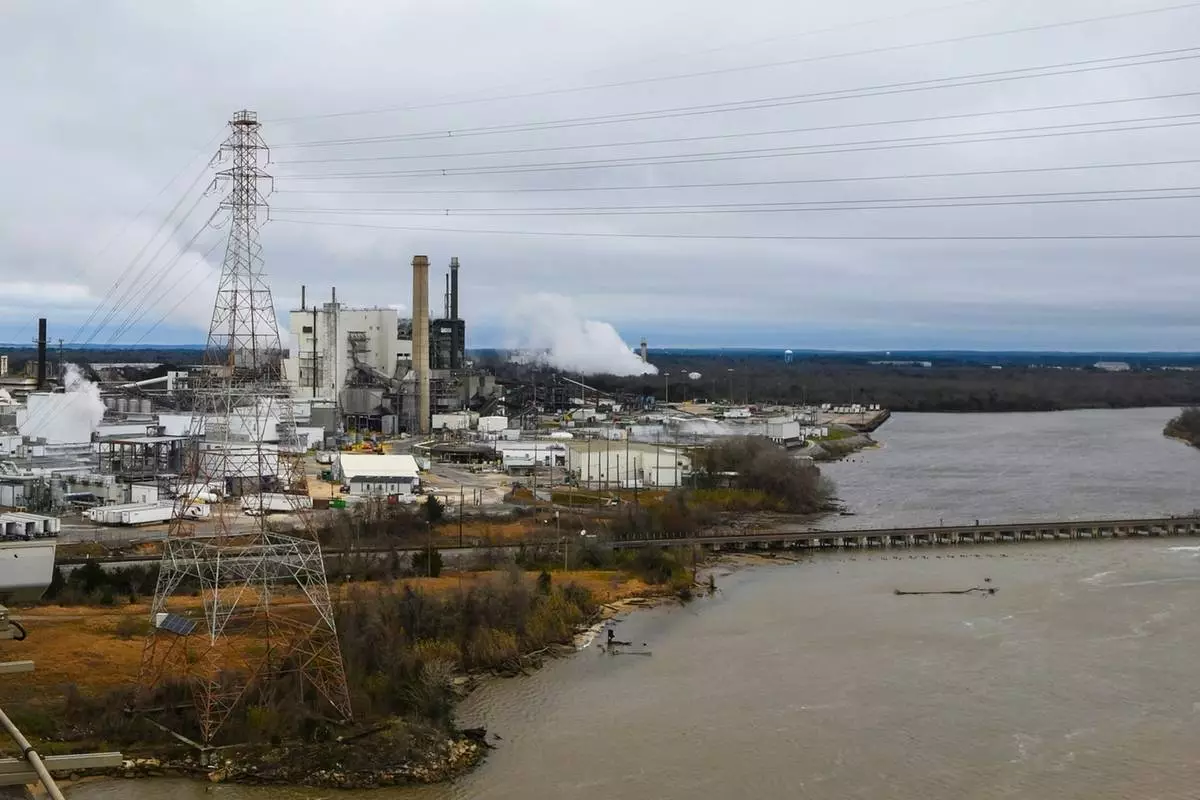
FILE - Industrial development is seen along the Mobile River near Mobile, Ala., on Jan. 29, 2019. (AP Photo/Julie Bennett, File)
CORTINA D'AMPEZZO, Italy (AP) — Mikaela Shiffrin closed her eyes, gave a deep breath and took a big step back onto the top of an Olympic podium.
The American skiing standout was a gold medalist at the Winter Games once again — and she couldn’t quite believe it.
Shiffrin put in two dominant runs in gorgeous conditions amid the jagged peaks of the Dolomites to win the women's slalom by a massive 1.50 seconds, ending her eight-year medal drought at the Winter Games and showing why she is widely regarded as the greatest Alpine skier of all time.
In emotional scenes after the race, the 30-year-old Shiffrin was embraced by Camille Rast of Switzerland, who took silver, and bronze-medalist Anna Swenn Larsson before fighting back tears as she approached her mom and coach, Eileen, for a long, deep hug next to the finish area.
She also said she was thinking about her father, Jeff, who died at the age of 65 in an accident at the family home in Colorado in February 2020.
“This was a moment I have dreamed about — I’ve also been very scared of this moment,” Shiffrin said. "Everything in life that you do after you lose someone you love is like a new experience. It’s like being born again.
“And I still have so many moments where I resist this. I don’t want to be in life without my dad,” she added, her voice trembling. “And maybe today was the first time that I could actually accept this, like, reality.”
The victory made Shiffrin the first American skier to win three Alpine golds and was the third-largest margin of victory in a women’s Olympic slalom — the event she won as a fresh-faced teenager in Sochi in 2014 to underline her status as a skiing star.
Twelve years later, and having gone through so many highs and lows on and off the course, she delivered again in her favorite race as her skiing career came full circle.
“Maybe,” she added, “just today, I realized what happened in Sochi. It’s crazy.”
A the medal ceremony, she shook both of her hands as she was about to receive her gold medal, clearly overcome by emotion. When it was placed around her neck, she looked down at it almost in disbelief.
Maybe it was a release of all the pressure on Shiffrin after she failed to win an Olympic medal in eight races since adding gold and silver to her collection in Pyeongchang in 2018.
A nightmarish 0-for-6 performance in Beijiing was followed in Cortina d’Ampezzo this year by a fourth-place finish with Breezy Johnson in the team combined, in which Shiffrin placed 15th in the slalom portion, and an 11th place in the giant slalom.
It was fodder for the “keyboard warriors,” Shiffrin acknowledged, but she ignored all of them
That's all in the past.
Shiffrin has now won three golds and a silver at the Olympics to add to her record total on World Cup wins — it's 108 and counting, including 71 in slalom. There's also world titles in slalom (four), giant slalom and super-G to fill out arguably the greatest career in Alpine racing.
“In another league,” was how Larsson put it.
Shiffrin led by 0.82 seconds after the first run on a mostly flat course that Team USA officials described to her over the radio as a “high-tempo ripper.”
There was one wobble when she struck a gate and for a fraction of a second, it appeared she was headed for another Olympic disappointment.
Not this time.
She snapped back into form to post a time, in the No. 7 bib, no one could get near.
“When I saw one second (behind) after the first run," Rast said, "I was like, ‘OK, the gold is gone.'"
Shiffrin's second run was also smooth, getting through the tough top section without a hitch and pushing through the slower middle section. When she leaned forward to cross the line, Shiffrin had the largest margin of victory in any Olympic Alpine skiing event since 1998.
“I just wanted to feel those two runs — I'm proud but I'm also very grateful,” Shiffrin said.
“A big thing I've been working on with my team and my psychologist is, like, you have what you need within yourself. And I can't say that for giant slalom yet. I can't always say that in the start gate. But in the start gate today, I could.”
AP Olympics: https://apnews.com/hub/milan-cortina-2026-winter-olympics
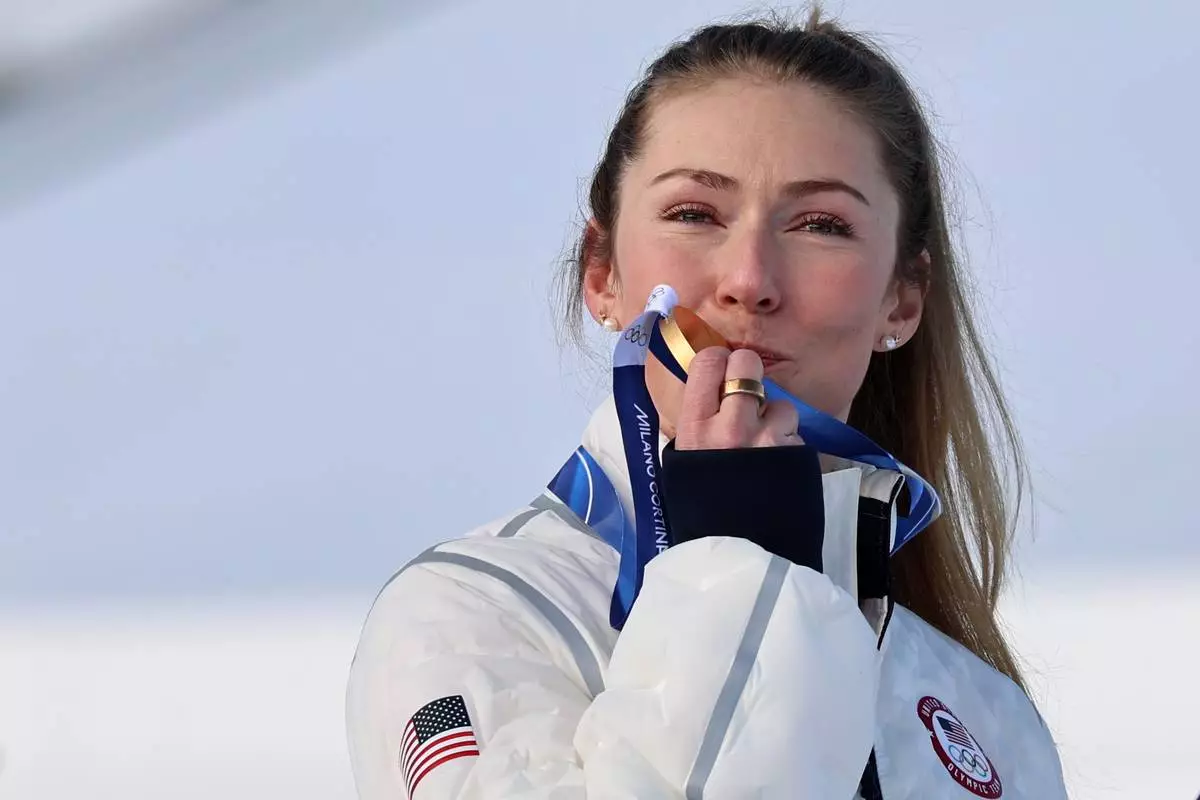
United States' Mikaela Shiffrin kisses the gold medal of the alpine ski, women's slalom race, at the 2026 Winter Olympics, in Cortina d'Ampezzo, Italy, Wednesday, Feb. 18, 2026. (AP Photo/Marco Trovati)
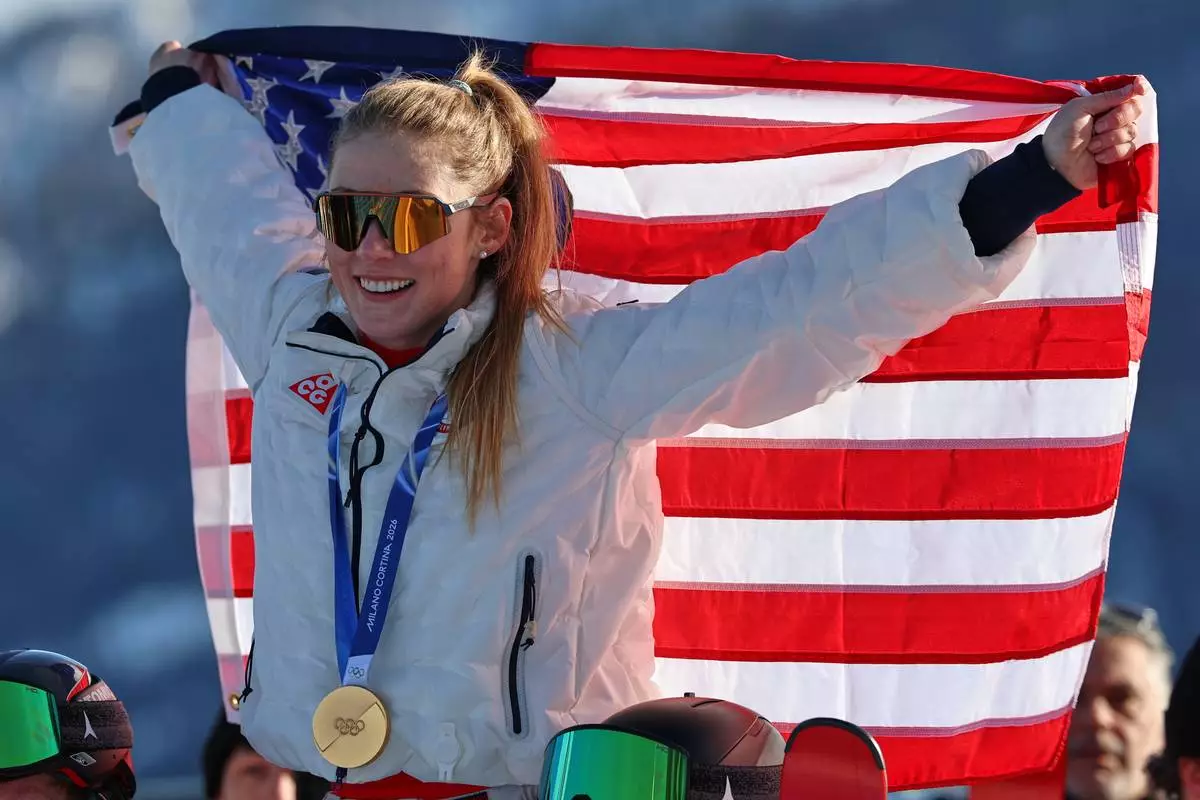
United States' Mikaela Shiffrin celebrates winning the gold medal of the alpine ski, women's slalom race, at the 2026 Winter Olympics, in Cortina d'Ampezzo, Italy, Wednesday, Feb. 18, 2026. (AP Photo/Marco Trovati)

United States' Mikaela Shiffrin shows her gold medal of the alpine ski, women's slalom race, at the 2026 Winter Olympics, in Cortina d'Ampezzo, Italy, Wednesday, Feb. 18, 2026. (AP Photo/Robert F. Bukaty)
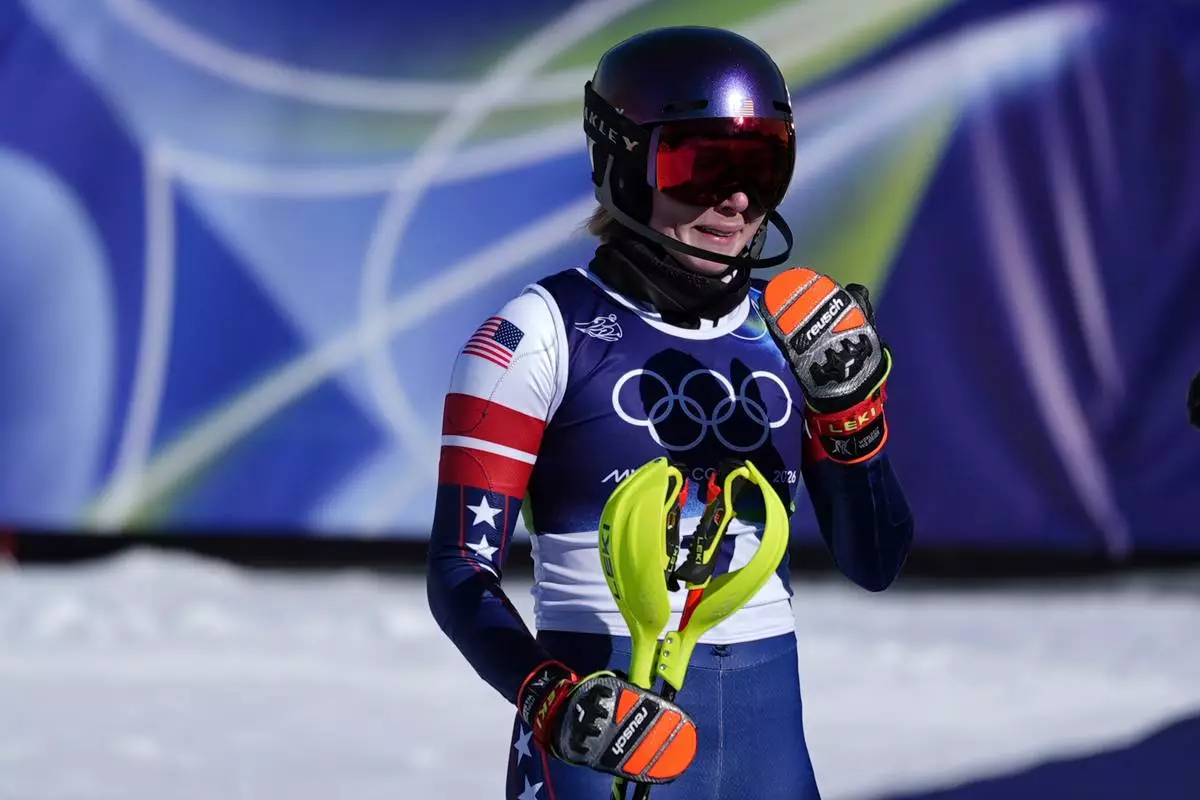
United States' Mikaela Shiffrin is overcome with emotion after winning an alpine ski, women's slalom race, at the 2026 Winter Olympics, in Cortina d'Ampezzo, Italy, Wednesday, Feb. 18, 2026. (AP Photo/Jacquelyn Martin)

United States' Mikaela Shiffrin, center, winner of an alpine ski, women's slalom race, celebrates with second-placed Switzerland's Camille Rast, left, and third-placed Sweden's Anna Swenn Larsson, at the 2026 Winter Olympics, in Cortina d'Ampezzo, Italy, Wednesday, Feb. 18, 2026. (AP Photo/Andy Wong)
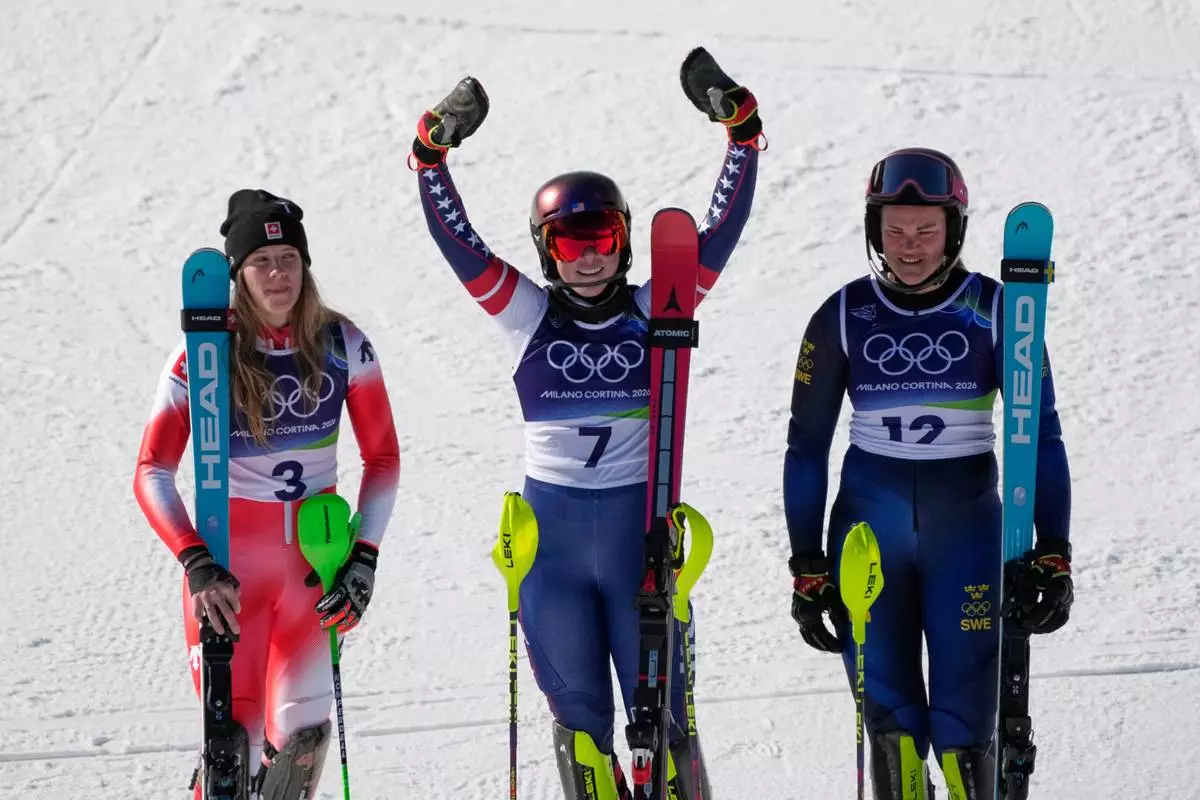
United States' Mikaela Shiffrin, center, winner of an alpine ski, women's slalom race, celebrates with second-placed Switzerland's Camille Rast, left, and third-placed Sweden's Anna Swenn Larsson, at the 2026 Winter Olympics, in Cortina d'Ampezzo, Italy, Wednesday, Feb. 18, 2026. (AP Photo/Andy Wong)
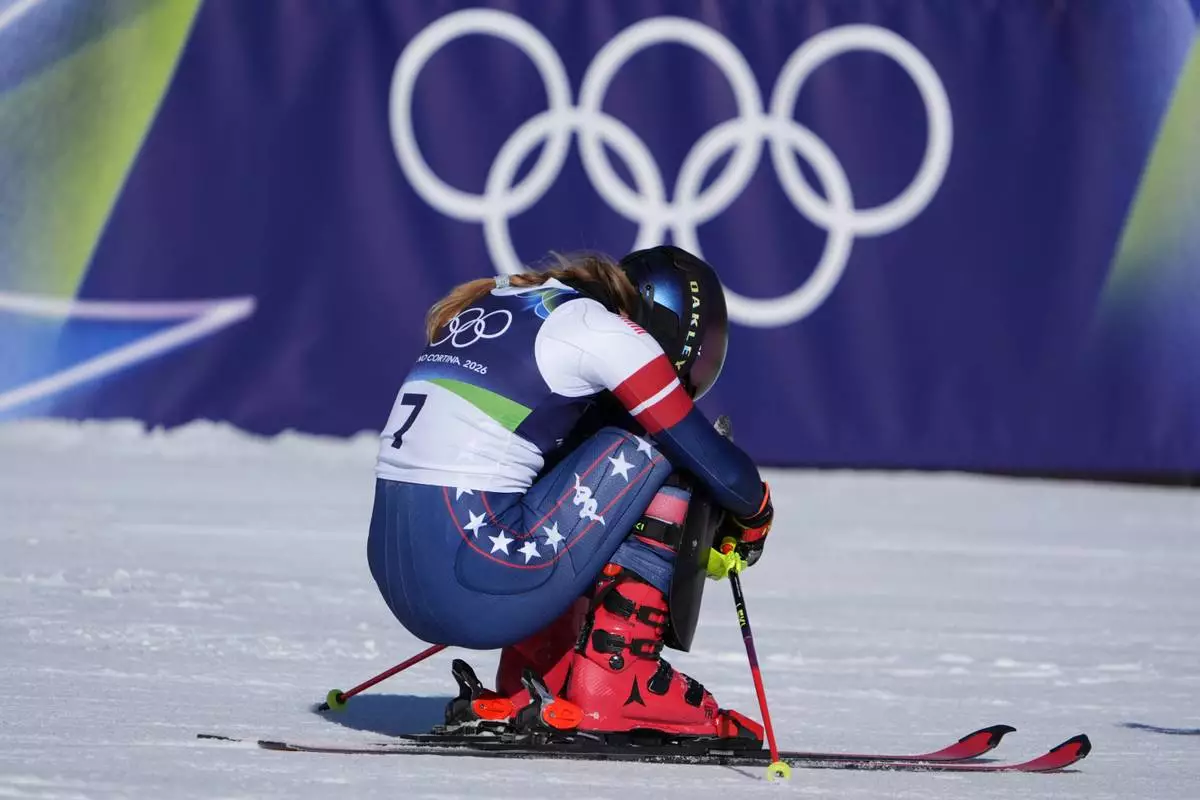
United States' Mikaela Shiffrin celebrates at the finish area of an alpine ski, women's slalom race, at the 2026 Winter Olympics, in Cortina d'Ampezzo, Italy, Wednesday, Feb. 18, 2026. (AP Photo/Jacquelyn Martin)

United States' Mikaela Shiffrin, center, winner of an alpine ski, women's slalom race, is congratulated by second-placed Switzerland's Camille Rast, right, and third-placed Sweden's Anna Swenn Larsson, at the 2026 Winter Olympics, in Cortina d'Ampezzo, Italy, Wednesday, Feb. 18, 2026. (AP Photo/Jacquelyn Martin)
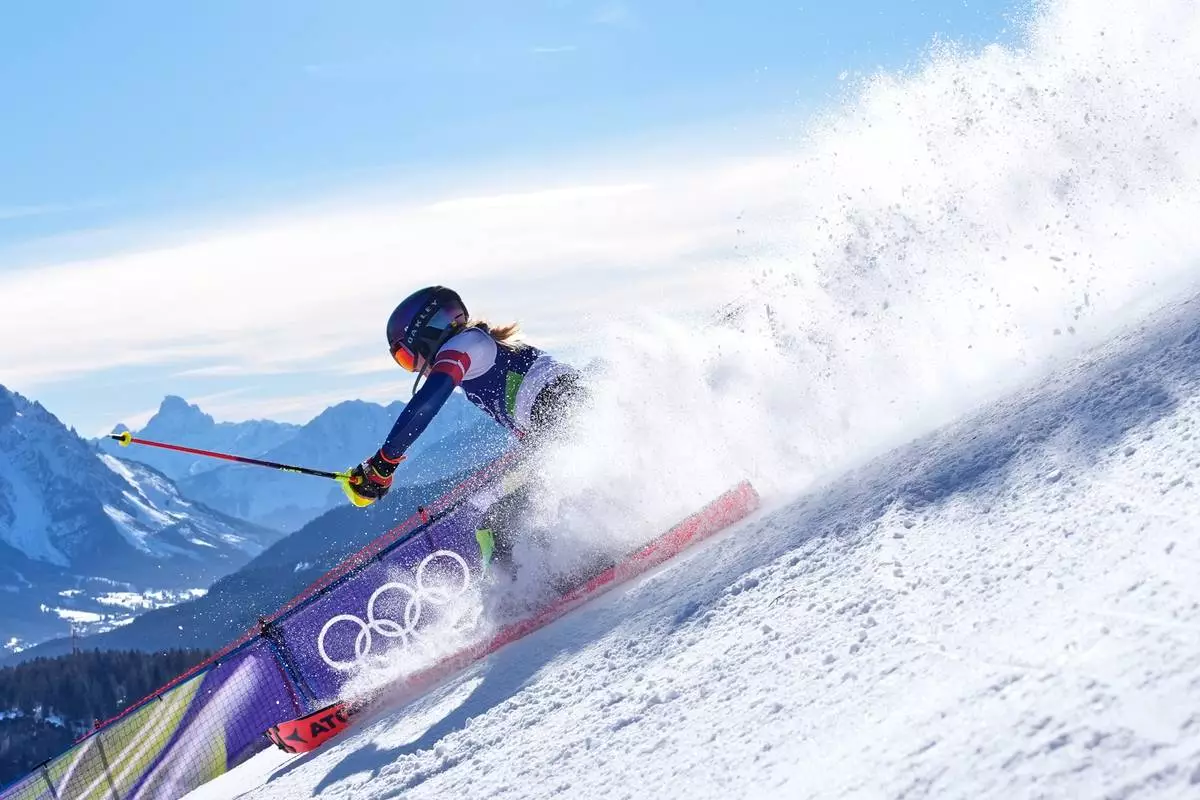
United States' Mikaela Shiffrin speeds down the course during an alpine ski, women's slalom race, at the 2026 Winter Olympics, in Cortina d'Ampezzo, Italy, Wednesday, Feb. 18, 2026. (AP Photo/Robert F. Bukaty)

United States' Mikaela Shiffrin arrives at the finish area of an alpine ski, women's slalom race, at the 2026 Winter Olympics, in Cortina d'Ampezzo, Italy, Wednesday, Feb. 18, 2026. (AP Photo/Andy Wong)
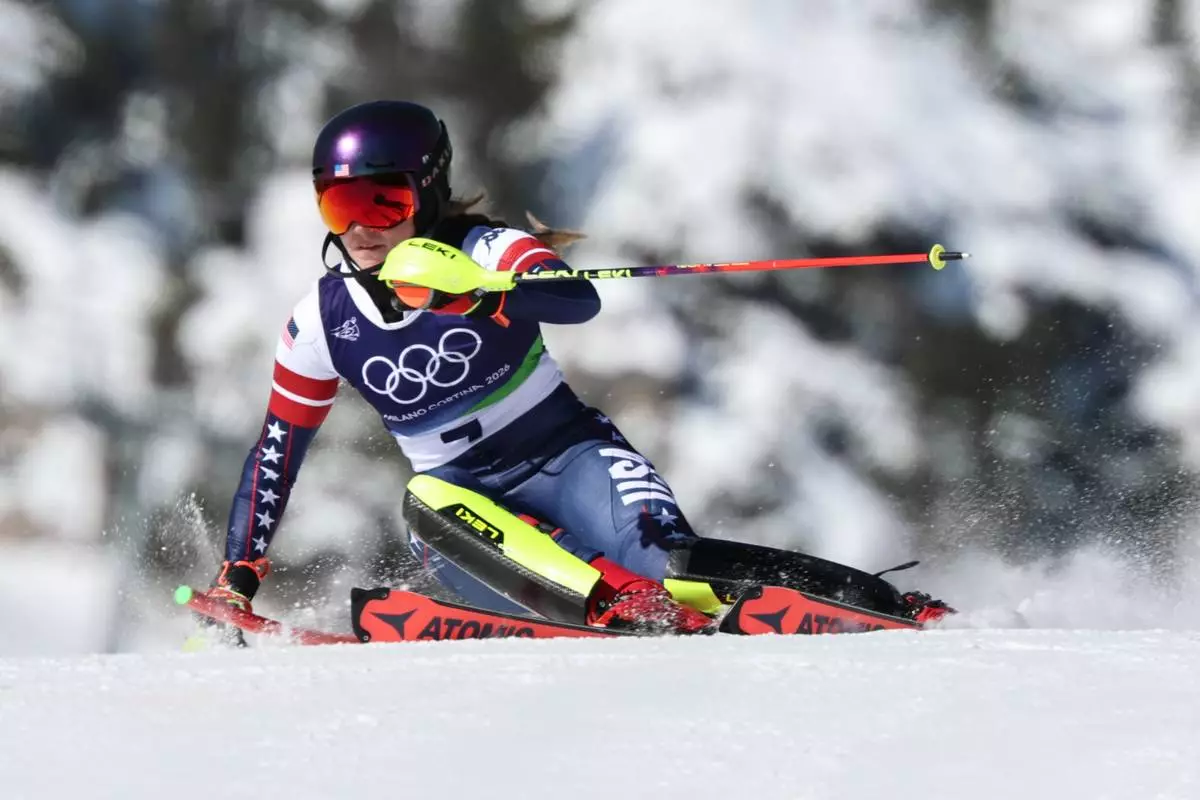
United States' Mikaela Shiffrin speeds down the course during an alpine ski, women's slalom race, at the 2026 Winter Olympics, in Cortina d'Ampezzo, Italy, Wednesday, Feb. 18, 2026. (AP Photo/Marco Trovati)
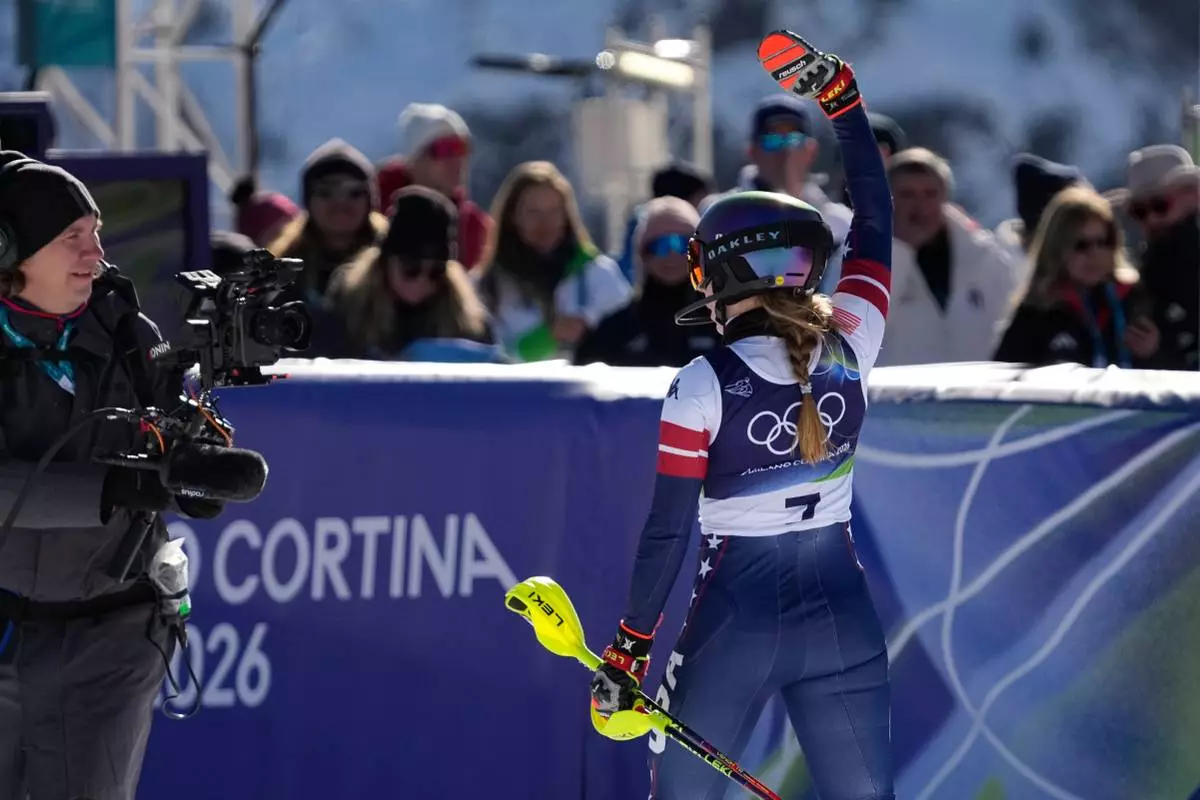
United States' Mikaela Shiffrin at the finish area of an alpine ski, women's slalom race, at the 2026 Winter Olympics, in Cortina d'Ampezzo, Italy, Wednesday, Feb. 18, 2026. (AP Photo/Andy Wong)
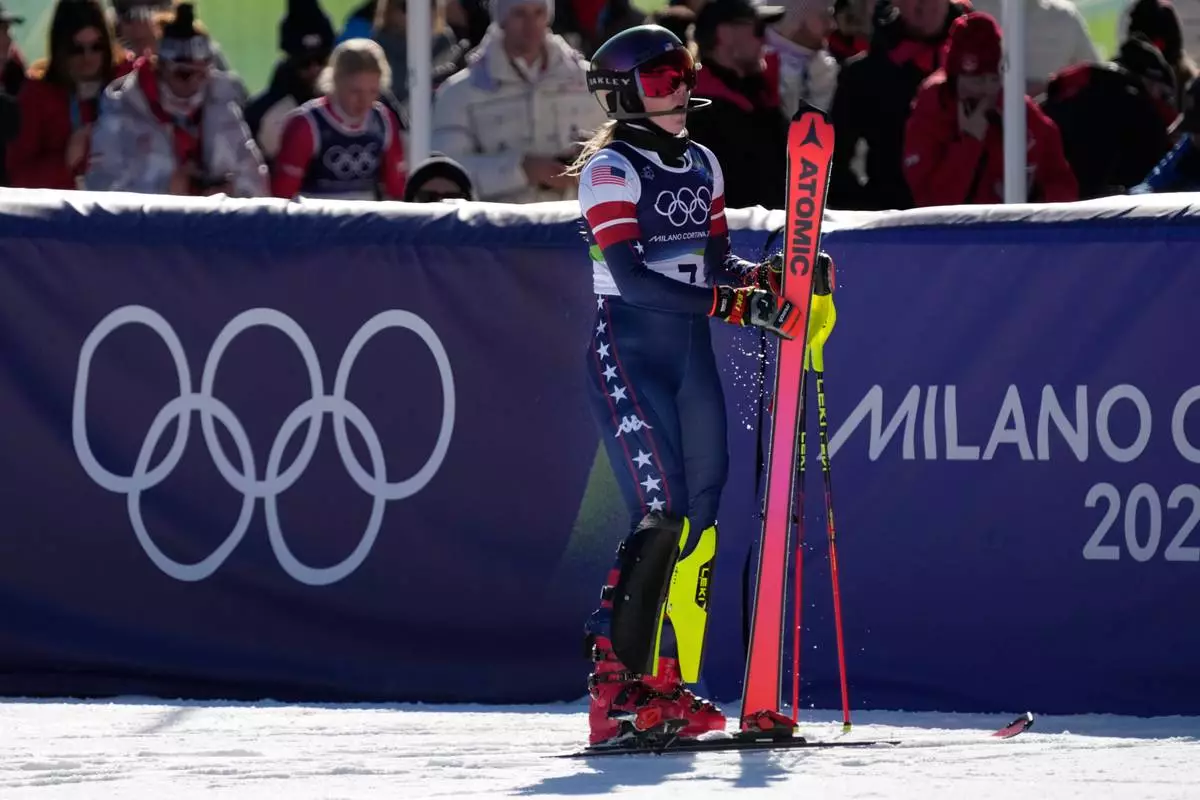
United States' Mikaela Shiffrin at the finish area of an alpine ski, women's slalom race, at the 2026 Winter Olympics, in Cortina d'Ampezzo, Italy, Wednesday, Feb. 18, 2026. (AP Photo/Andy Wong)

United States' Mikaela Shiffrin speeds down the course during an alpine ski, women's slalom race, at the 2026 Winter Olympics, in Cortina d'Ampezzo, Italy, Wednesday, Feb. 18, 2026. (AP Photo/Marco Trovati)