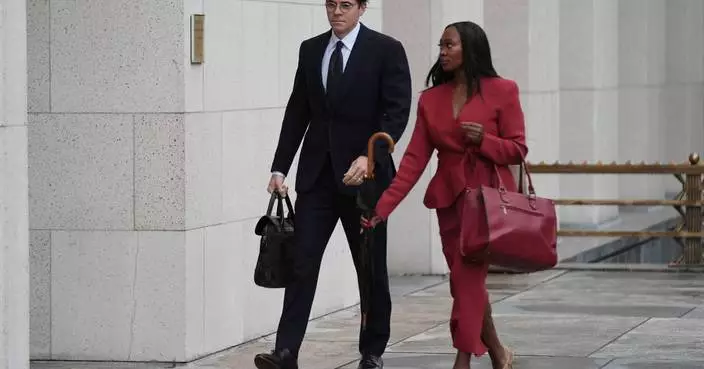
TRENTON, N.J. (AP) — A New Jersey Catholic diocese this week agreed to a $180 million settlement to resolve allegations of clergy sexual abuse, a figure far exceeding agreements in some large dioceses but still dwarfed by other massive settlements.
Bishop Joseph Williams of the Diocese of Camden, covering southern New Jersey and its Philadelphia suburbs, announced the settlement Tuesday in a letter.
“For the survivors of South Jersey, this day is long overdue and represents a milestone in their journey toward restored justice and the healing and recognition they have long sought and deserve,” Williams said.
Mark Crawford, state director of the Survivors Network for those Abused by Priests, said in a phone interview Wednesday that the settlement was long overdue but he was glad the ordeal was coming to an end. He praised the bishop for listening to survivors and for pledging transparency, contrasting him with his predecessor, who fought a legal battle over a state investigation into alleged clergy abuse.
"This settlement and this bishop have acted very differently," Crawford said. “I hope it sends a message that this is possible, that this is right.”
Greg Gianforcaro, one of the attorneys representing victims suing the diocese, credited survivors' persistence in reaching the agreement. The diocese has said there about 300 survivors of abuse raising claims.
“It’s been an extremely long and arduous battle,” he said in a phone interview.
It's the latest agreement in a scandal set off more than two decades ago when the scale of the abuse and the church's effort to hide it came to light in Boston. The New Jersey settlement agreement is more than the roughly $80 million settlements in Boston and Philadelphia, though settlements in California ranged much higher. In 2024, the Los Angeles Archdiocese agreed to an $880 million payment.
The Camden settlement comes less than a year after the diocese withdrew its objection to the state of New Jersey's grand jury investigation into decades of alleged sexual abuse of children by religious. The state Supreme Court has since ruled the state's investigation could move ahead.
The Camden diocese, like others nationwide, filed for bankruptcy amid a torrent of lawsuits after the statute of limitations was relaxed.
In 2022, the diocese agreed to pay $87.5 million to settle allegations involving clergy sex abuse against some 300 accusers, one of the largest cash settlements involving the Catholic church in the U.S. The latest settlement announcement includes these funds, according to victims' attorneys.
The diocese of Camden covers six southern New Jersey counties outside Philadelphia. The agreement must still be approved by a bankruptcy court.
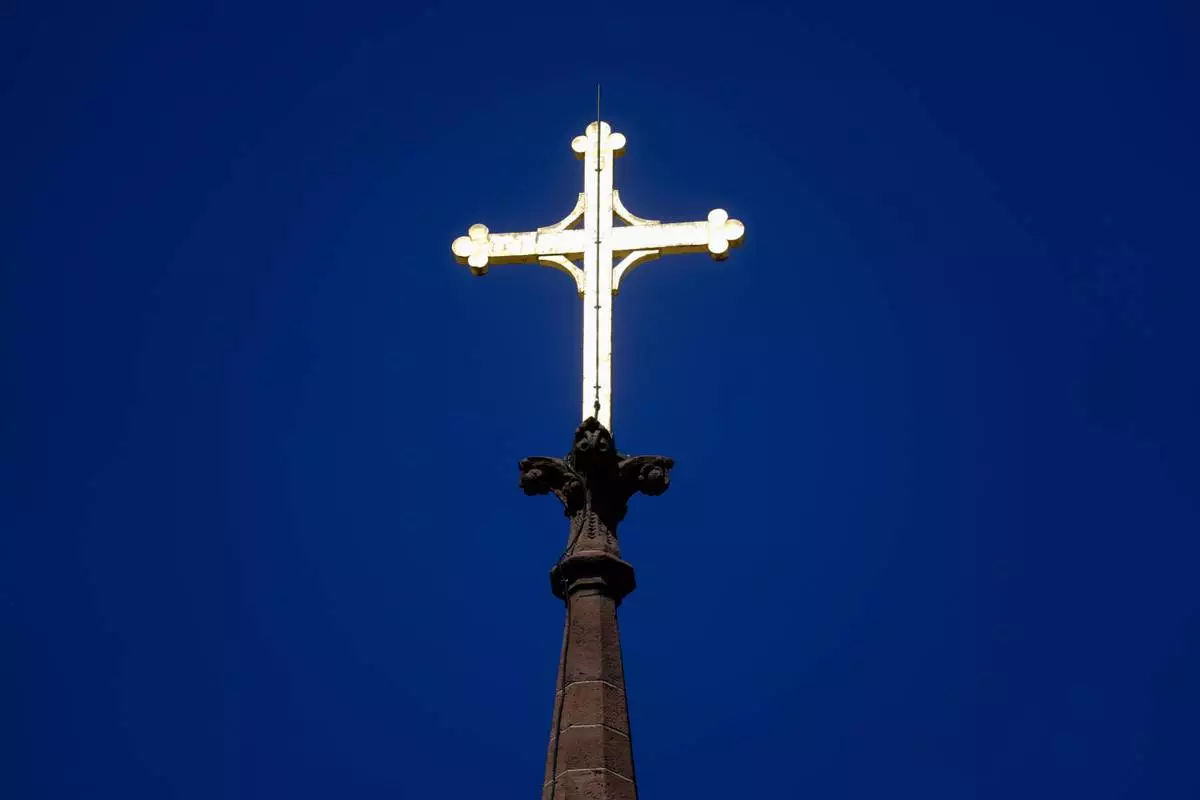
FILE - The Cathedral of the Immaculate Conception is seen in Camden, N.J., April 20, 2022. (AP Photo/Matt Rourke, File)
MELBOURNE, Australia (AP) — Australia's government banned an Australian citizen with alleged ties to the militant Islamic State group from returning home from a detention camp in Syria, the latest development in the case of fraught repatriation of families of IS fighters.
The woman was planning to join another 33 Australians — 10 women and 23 children — and fly on Monday from Damascus, Syria, to Australia, Home Affairs Minister Tony Burke said Wednesday.
But the group was turned back by Syrian authorities to the Roj detention camp, due to unspecified procedural problems.
The Australian government had acted on news that the group planned to leave Syria, Burke said. He said the woman, whom he did not identify, had been issued with a temporary exclusion order on Monday and her lawyers had been provided with the paperwork on Wednesday.
She was an immigrant who left Australia for Syria sometime between 2013 and 2015, Burke said, declining to elaborate on whether she had children — though he generally blamed the parents for the predicaments of their offspring stranded in Syria.
“These are horrific situations that have been brought on those children by actions of their parents. They are terrible situations. But they have been brought on entirely by horrific decisions that their parents made,” Burke told Australian Broadcasting Corp.
Burke has the power to use temporary exclusion orders to prevent high-risk citizens from returning to Australia for up to two years.
The laws were were introduced to in 2019 to prevent defeated Islamic State fighters from returning to Australia. There are no public reports of an order being issued before.
Burke said security agencies had not advised that any of the other Australians in the group warranted an exclusion order. Such orders can't be made against children younger than 14.
At the Roj camp, tucked in Syria's northeastern corner near the border with Iraq, the Australian women who had expected to travel home refused to speak to The Associated Press on Wednesday.
One of the women, Zeinab Ahmad, said they had been advised by an attorney not to talk to journalists.
A security official at the camp, Chavrê Rojava, said that family members of the detainees — who she said were Australians of Lebanese origin — had traveled to Syria to arrange their return. They brought temporary passports that had been issued for the would-be returnees, Rojava said.
“We have no contact with the Australian government regarding this matter, as we are not part of the process,” she said. “We have left it to the families to resolve.”
Rojava said that after the group had departed the camp to travel to Damascus, they were contacted by a Syrian government official and warned to turn back. The families were “very disappointed” upon returning to the camp, she said.
“We recently requested that all countries and families come and take back their citizens,” Rojava said.
She added that Syrian authorities do not want to see a “repeat of what happened in al-Hol camp” — a much larger camp, also in northeastern Syria that once housed tens of thousands of people, mostly women and children, with alleged ties to IS.
Last month, during fighting between Syrian government forces and the Kurdish-led Syrian Democratic Forces, which had controlled al-Hol, guards abandoned their posts and many of the camp's residents fled.
That raised concerns that IS members would regroup and stage new attacks in Syria.
The Syrian government then established control of al-Hol and has begun moving its remaining residents to another camp in Aleppo province. The Kurdish-led force remains in control of Roj camp and a ceasefire is now in place.
Former Islamic State fighters from multiple countries, their wives and children have been detained in camps since the militant group lost control of its territory in Syria in 2019. Though defeated, the group still has sleeper cells that carry out deadly attacks in both Syria and Iraq.
Australian governments have repatriated Australian women and children from Syrian detention camps on two occasions. Other Australians have also returned without government assistance.
Australia's Prime Minister Anthony Albanese on Wednesday reiterated his position announced a day earlier that his government would not help repatriate the latest group.
“These are people who chose to go overseas to align themselves with an ideology which is the caliphate, which is a brutal, reactionary ideology and that seeks to undermine and destroy our way of life,” Albanese told reporters.
He was referring to the militants’ capture of wide swaths of land more than a decade ago that stretched across Syria and Iraq, territory where IS established its so-called caliphate. Jihadis from foreign countries traveled to Syria at the time to join the IS. Over the years, they had families and raised children there.
“We are doing nothing to repatriate or to assist these people. I think it’s unfortunate that children are caught up in this, that’s not their decision, but it’s the decision of their parents or their mother,” Albanese added.
Al Abdo reported from Roj Camp, Syria.
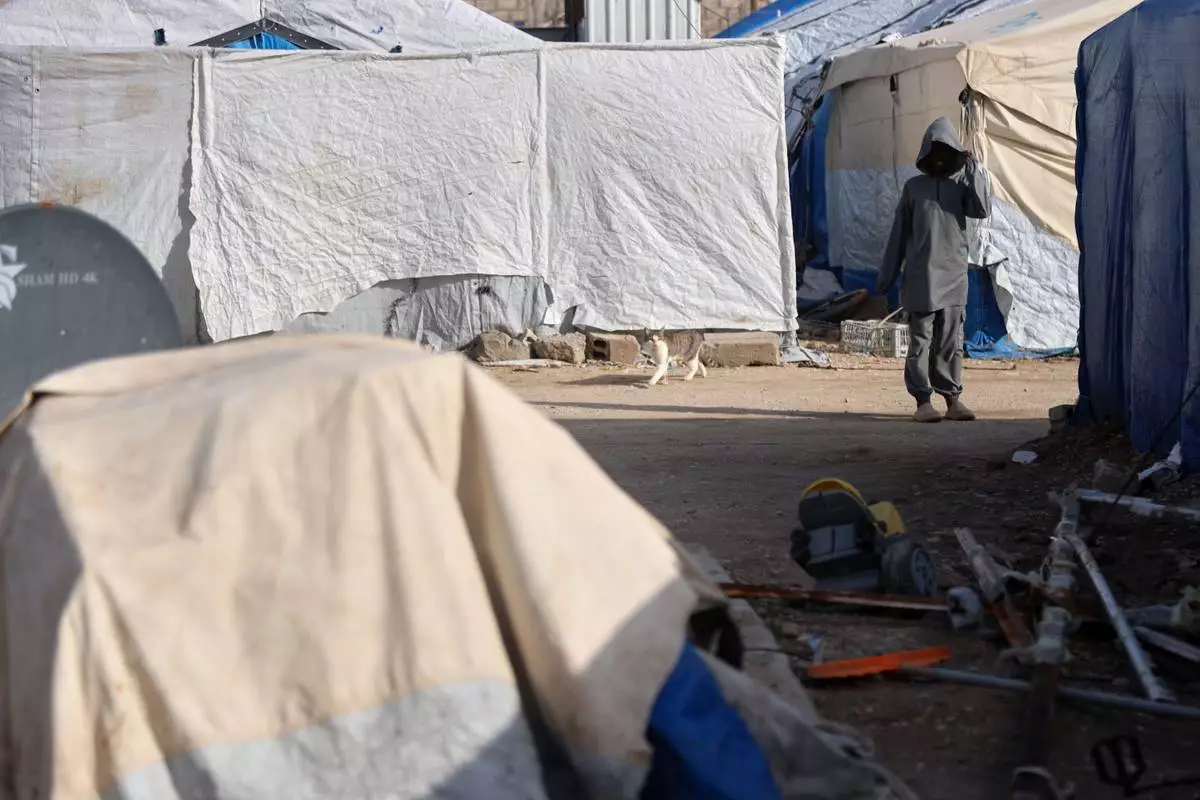
An unidentified boy stands in a section of the camp housing Australian family members of suspected Islamic State militants who were returned to due to unspecified procedural issues following an attempted repatriation by Syrian authorities, in the Roj Camp in eastern Syria, Monday, Feb. 16, 2026. (AP Photo/Baderkhan Ahmad)
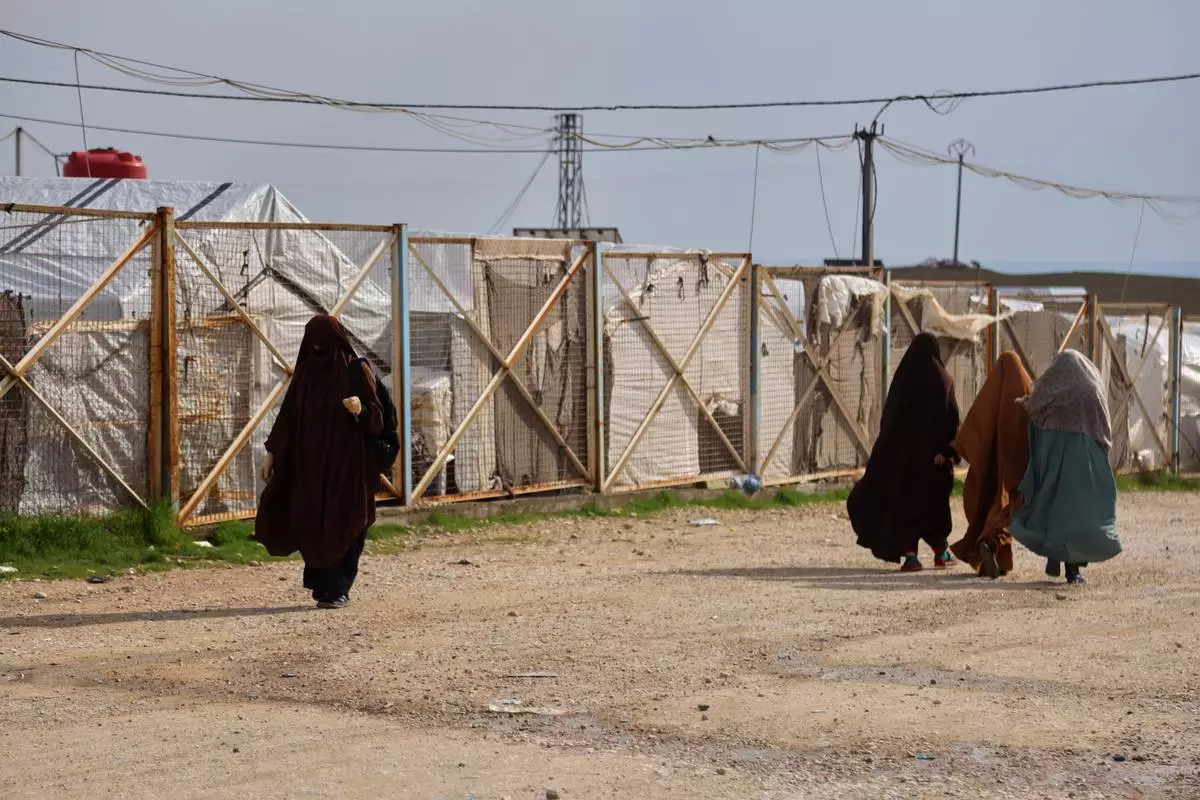
Unidentified women move through the camp holding family members of suspected Islamic State militants in the Roj Camp in eastern Syria, Monday, Feb. 16, 2026. (AP Photo/Baderkhan Ahmad)
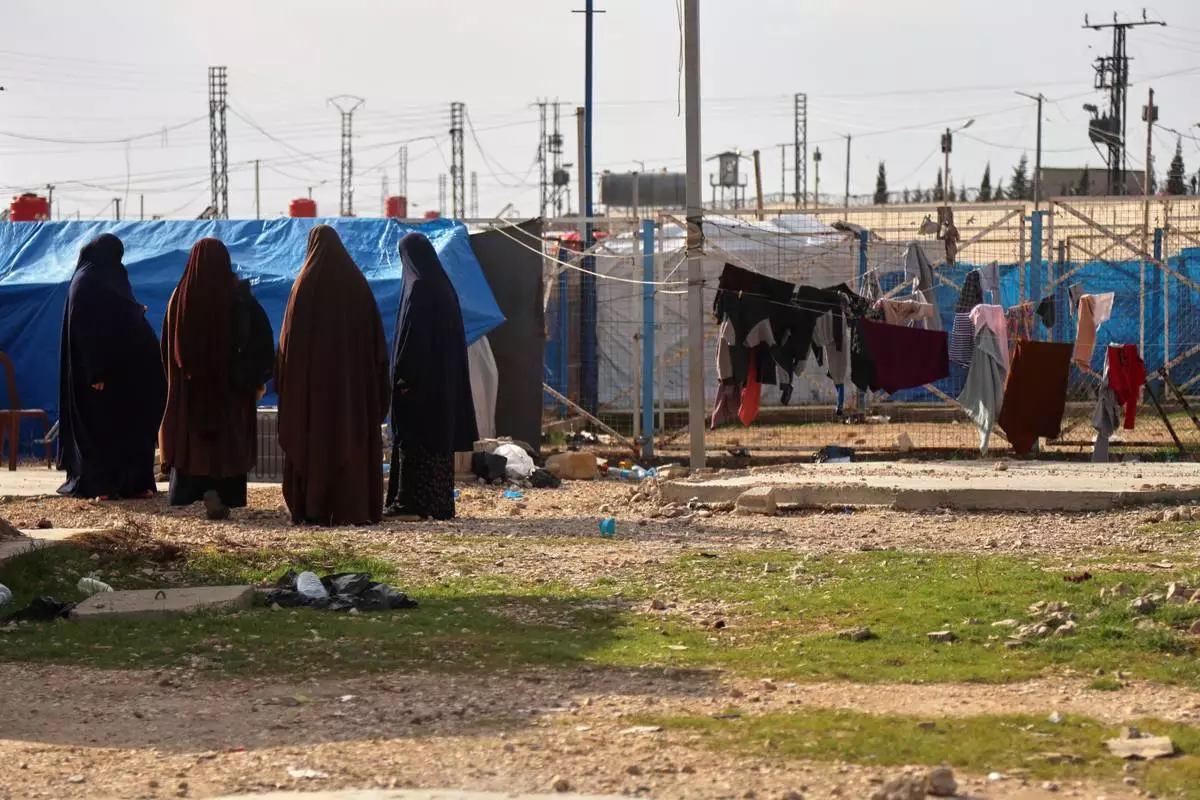
Unidentified women stand in a section of the camp housing Australian family members of suspected Islamic State militants who were returned to due to unspecified procedural issues following an attempted repatriation by Syrian authorities, in the Roj Camp in eastern Syria, Monday, Feb. 16, 2026. (AP Photo/Baderkhan Ahmad)
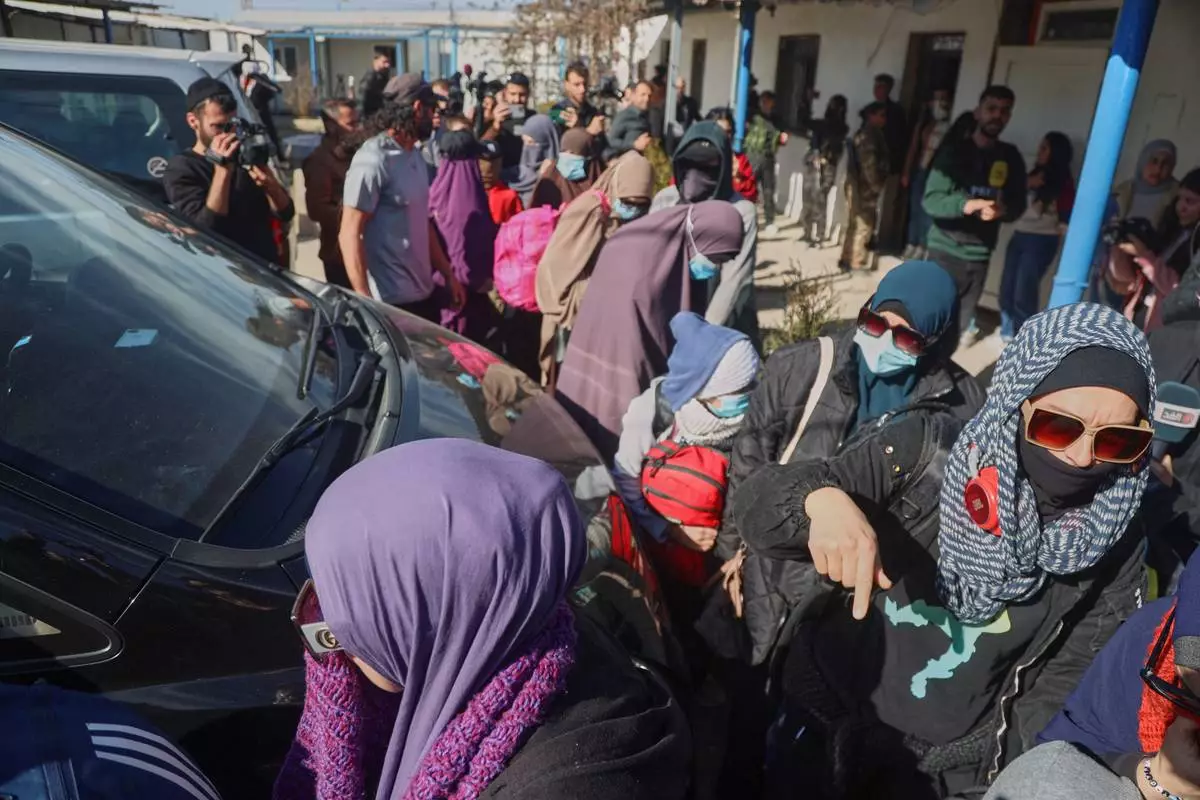
Family members of suspected Islamic State militants who are Australian nationals walk toward a van bound for the airport in Damascus during the first repatriation operation of the year at Roj Camp in eastern Syria, Monday, Feb. 16, 2026. Thirty-four Australian citizens from 11 families departed the camp. (AP Photo/Baderkhan Ahmad)
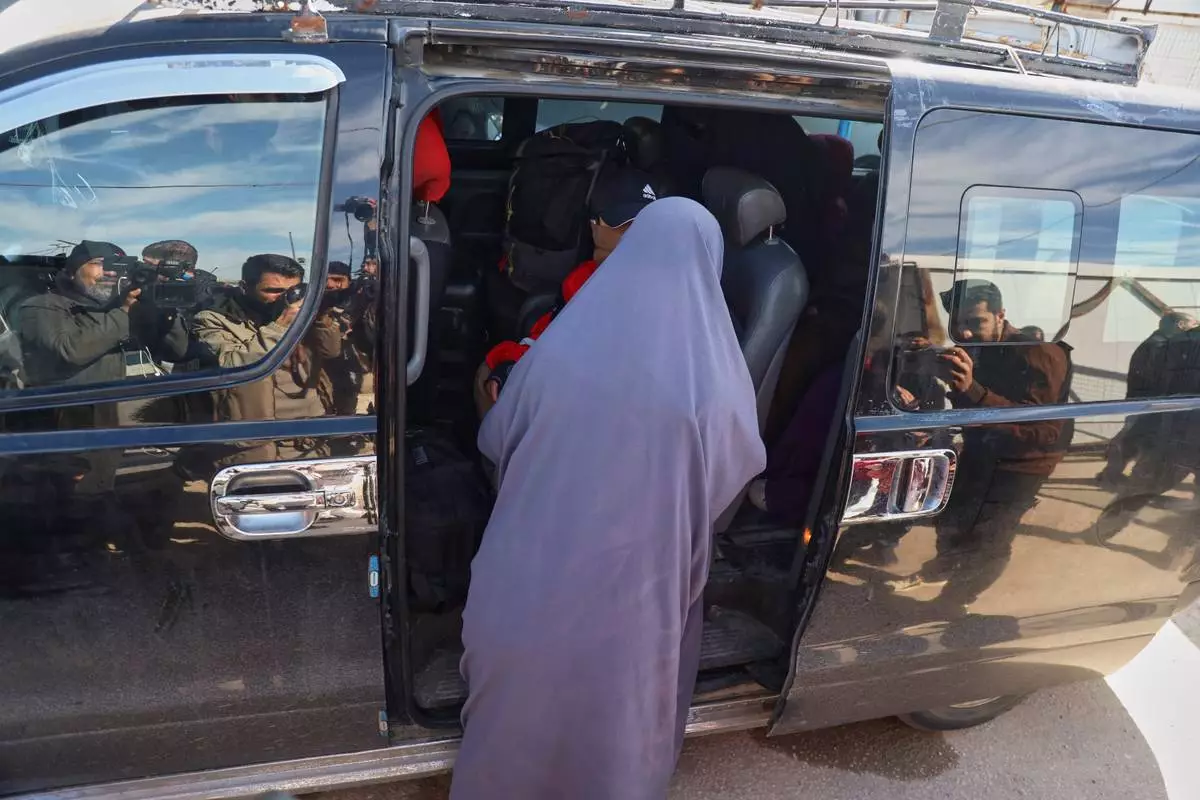
Family members of suspected Islamic State militants who are Australian nationals board a van heading to the airport in Damascus during the first repatriation operation of the year, at Roj Camp in eastern Syria, Monday, Feb. 16, 2026. Thirty-four Australian citizens from 11 families departed the camp. (AP Photo/Baderkhan Ahmad)