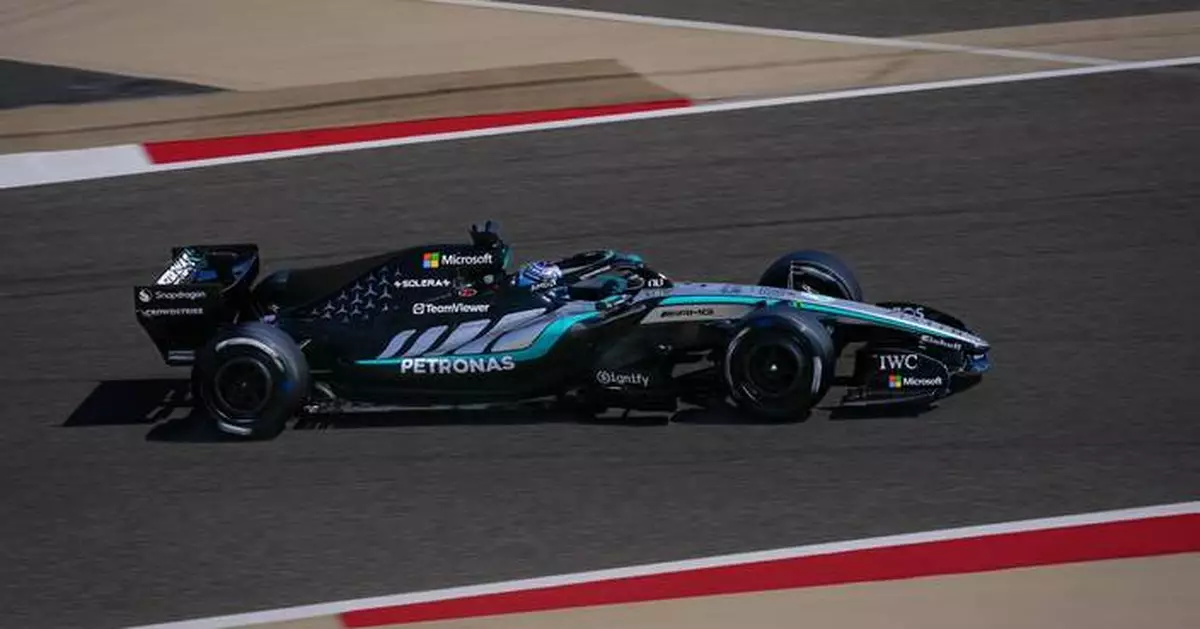
SAKHIR, Bahrain (AP) — Mercedes driver George Russell was fastest on the first day of Formula 1's final testing event ahead of the new season, edging McLaren's Oscar Piastri and Ferrari's Charles Leclerc on Wednesday.
In the afternoon session at the Bahrain International Circuit, Russell had a time of 1:33.459, surpassing Piastri’s 1:33.739 achieved in the morning. Leclerc finished 0.28 behind the leader.
“Overall, it has been a productive day," Piastri said. "My running in the afternoon felt solid and we made good progress. I am feeling more comfortable with each lap, so I am looking forward to getting back out on the track tomorrow afternoon.”
World champion Lando Norris was half a second back in fourth place.
“We got some good laps under our belts this morning, working though varying runs and getting more comfortable in the car,” Norris said. "We’re learning more each day. But there are still a lot of things to get our heads around, so we’ll keep putting the car through its paces in the last two days of testing.”
It is the second three-day testing event to be held in Bahrain this year ahead of the opening race of the season in Australia next month.
The teams tested their new cars earlier in the year at the Circuit de Barcelona-Catalunya. Regulation changes have made cars smaller and lighter, with key roles being the charging of an on-board battery and using electrical energy to boost speed.
The FIA, Formula 1’s governing body, said “regulations were agreed” following meetings of the F1 Commission and the F1 Power Unit Advisory Committee.
“In common with the introduction of such significant regulatory changes, there are still collective learnings to be taken from pre-season testing,” read a statement on the F1 Commission meeting.
"Topics covered included overall car characteristics, energy and power unit, aerodynamics, overtaking and racing, tyres and mechanical grip. It was agreed that no immediate major regulatory changes were required given that initial evidence and feedback remains immature and that premature change carried the risk of increased instability ahead of the first race.
"Further reviews will be carried out once more data becomes available."
Max Verstappen, who last week said the new cars are no fun to drive and that the series no longer feels like F1, sat out both sessions.
Red Bull teammate Isack Hadjar finished sixth fastest despite managing just 13 laps in the morning session with a water system issue.
Verstappen will be involved in a full session on Thursday.
“We had a slow start to the day with low mileage in the morning after losing pressure in one of the coolant circuits,” Hadjar said. “We made the most of the afternoon with a really packed programme, and I feel better than last week already with the car.”
Aston Martin's Fernando Alonso was limited to 28 laps due to a power unit issue in the morning session.
AP auto racing: https://apnews.com/hub/auto-racing
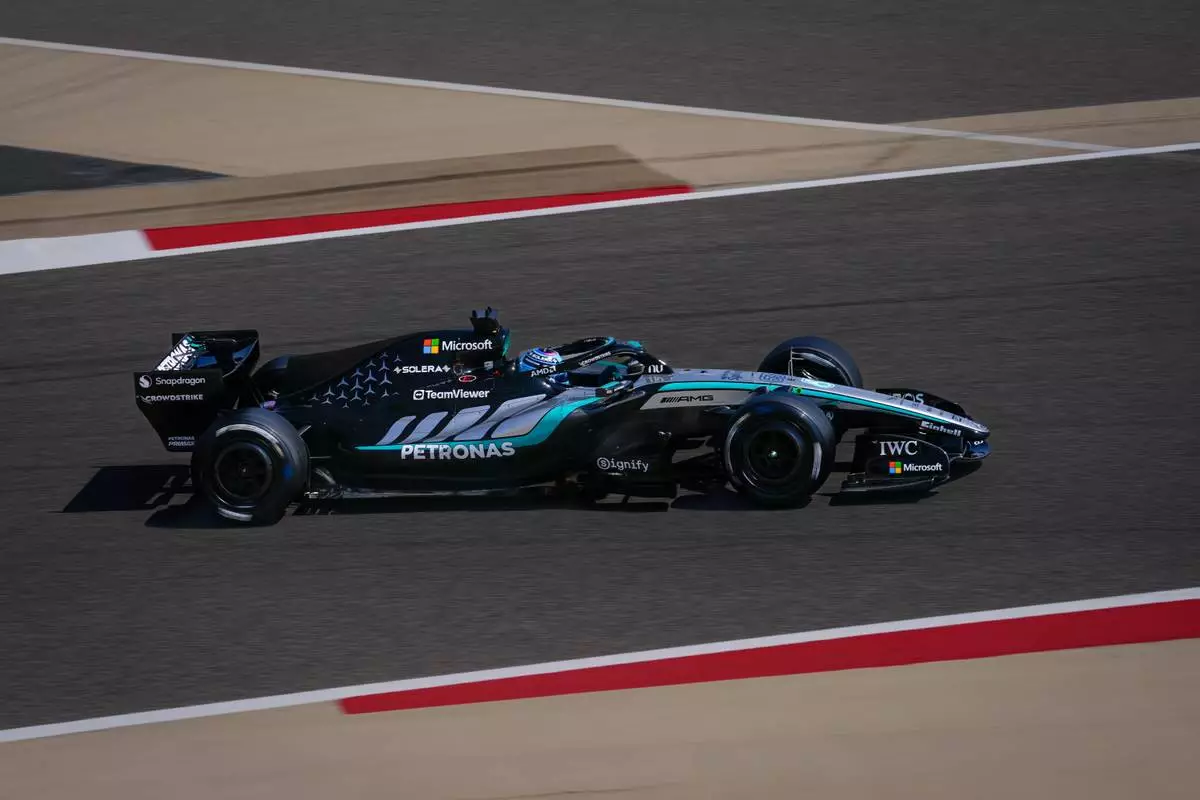
Mercedes driver George Russell of Britain steers his car on the third day of Formula One pre-season test at the Bahrain International Circuit in Sakhir, Bahrain, Friday, Feb. 13, 2026. (AP Photo/Altaf Qadri)
WASHINGTON (AP) — A delegation of U.S. senators was returning Wednesday from a trip to Ukraine, hoping to spur action in Congress for a series of sanctions meant to economically cripple Moscow and pressure President Vladimir Putin to make key concessions in peace talks.
It was the first time U.S. senators have visited Odesa, Ukraine’s third-most populous city and an economically crucial Black Sea port that has been particularly targeted by Russia, since the war began nearly four years ago. Democratic Sens. Jeanne Shaheen, Chris Coons, Richard Blumenthal and Sheldon Whitehouse made the trip. Republican Sen. Thom Tillis had planned to join but was unable to for personal reasons.
"One of the things we heard wherever we stopped today was that the people of Ukraine want a peace deal, but they want a peace deal that preserves their sovereignty, that recognizes the importance of the integrity of Ukraine,” Shaheen said on a phone call with reporters.
The visit and the push for Congress to take up sanctions on Russia come at a crucial moment in the conflict. Delegations for the two sides were also meeting in Switzerland for two days of U.S.-brokered talks, but neither side appeared ready to budge on key issues like territory and future security guarantees. The sanctions, senators hoped, could prod Putin toward settling for peace, as the U.S. has set a June deadline for settlement.
“Literally nobody believes that Russia is acting in good faith in the negotiations with our government and with the Ukrainians,” Whitehouse said. “And so pressure becomes the key.”
Still, legislation to impose tough sanctions on Russia has been on hold in Congress for months.
Senators have put forward a range of sanction measures, including one sweeping bill that would allows the Trump administration to impose tariffs and secondary sanctions on countries that purchase Russia’s oil, gas, uranium and other exports, which are crucial to financing Russia's military. The Senate Foreign Relations Committee has also advanced a series of more-targeted bills that would sanction China's efforts to support Russia's military, commandeer frozen Russian assets and go after what's known as Moscow's “shadow fleet” of oil tankers being used to circumvent sanctions already in place.
Republican Sen. Lindsey Graham, who has co-sponsored the Senate's sweeping sanctions and tariff legislation, also released a statement during the Munich Security Conference this weekend saying that Senate Majority Leader John Thune had committed to bringing up the sanctions bill once it clearly has the 60 votes needed to move through the Senate.
“This legislation will be a game changer,” Graham said. “President Trump has embraced it. It is time to vote.”
Blumenthal, who co-sponsored that bill alongside Graham, also said there is bipartisan support for the legislation, which he called a “very tough sledgehammer of sanctions and tariffs," but he also noted that “we need to work out some of the remaining details.” Democrats, and a handful of Republicans, have been opposed to President Donald Trump's campaign to impose tariffs around the world in an effort to strike trade deals and spur more manufacturing in the U.S.
In the House, Democrats are opposed to the tariff provisions of that bill. Instead, a bipartisan group of lawmakers, led by Republican Rep. Brian Fitzpatrick, has proposed separate legislation that makes it more difficult for Trump to waive sanctions, but does away with the tariff provisions.
A separate bill, led by the top Democrat on the House Foreign Affairs Committee, Rep. Gregory Meeks, would bolster U.S. military support for Ukraine by $8 billion. Democrats currently need one more Republican to support an effort to force a vote on that bill.
Once they return to the U.S., the senators said they would detail how U.S. businesses based in Ukraine have been attacked by Russia. The Democrats are also hoping to build pressure on Trump to send more U.S. weapons to Ukraine. “Putin understands weapons, not words,” Blumenthal said.
Still, the lawmakers will soon return to a Washington where the Trump administration is ambivalent about its long-term commitments to securing peace in Ukraine, as well as Europe. For now, at least, they were buoyed by the conversations from their European counterparts and Republican colleagues.
“We and the Republican senators who were with us in Munich spoke with one voice about our determination to continue to support Ukraine,” Coons said.
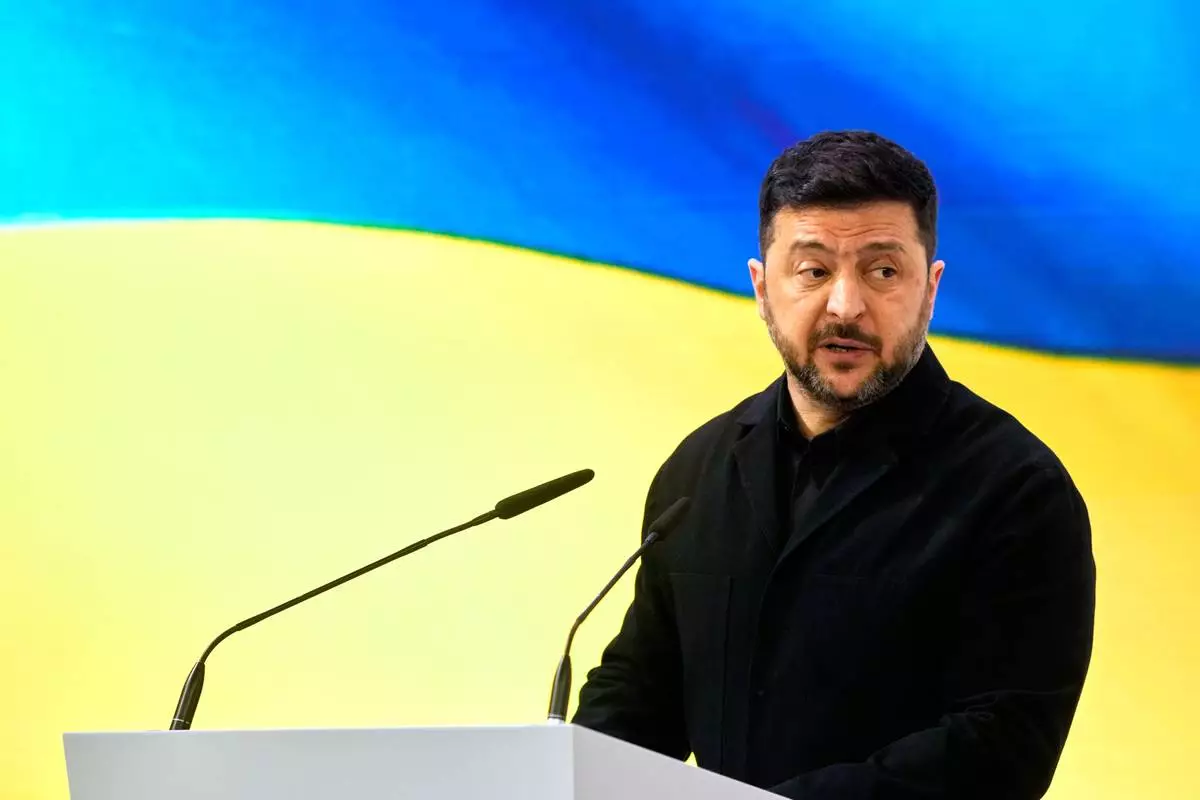
Ukraine's President Volodymyr Zelenskyy addresses the audience during a session at the Munich Security Conference in Munich, Germany, Saturday, Feb. 14, 2026. (AP Photo/Michael Probst)
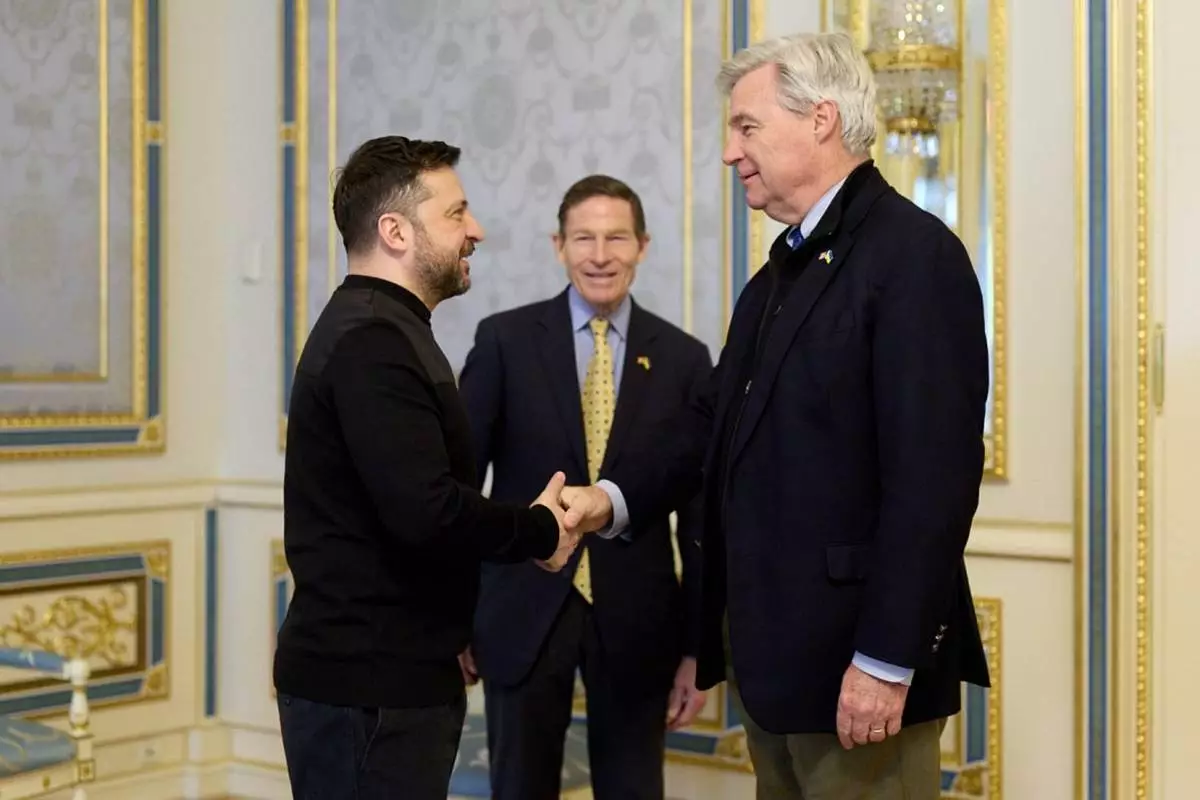
In this photo provided by the Ukrainian Presidential Press Office, Ukrainian President Volodymyr Zelenskyy, left, greets Sen. Sheldon Whitehouse D-R.I. and Sen. Richard Blumenthal, D-Ct., center, in Kyiv, Ukraine, Monday, Feb. 16, 2026. (Ukrainian Presidential Press Office via AP)