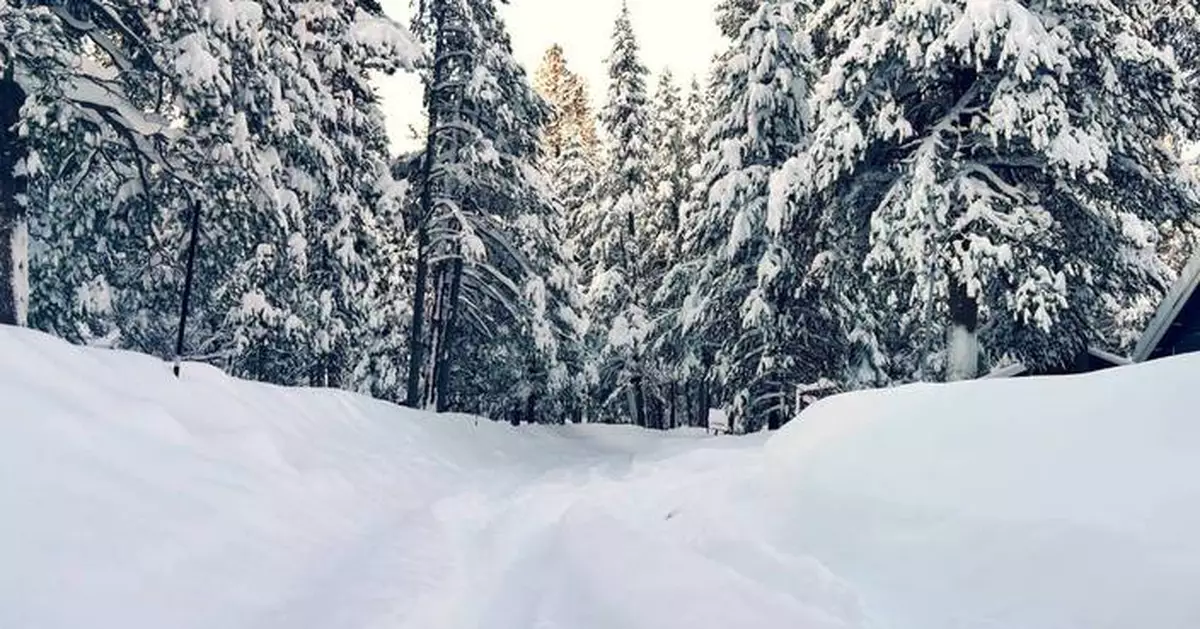
The group of 15 backcountry skiers was on a three-day trek organized by Blackbird Mountain Guides into pristine wilderness near Frog Lake in California's Sierra Nevada near Lake Tahoe.
The skiers set out on Sunday, carrying their own food and overnighting in huts situated at 7,600 feet (3,415 meters) in Tahoe National Forest, where a winter storm arrived and an avalanche watch was issued that morning.
“If you’ve booked the Frog Lake Huts in Truckee, trust our guides to elevate your trip to the next level,” the business said on its website, advertising the trip. “We’ll navigate in and out of the huts, manage the risks, and find the best terrain and snow quality for you and your group!”
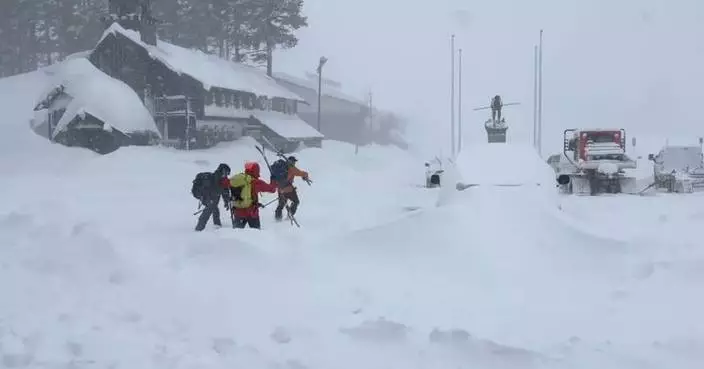
On Tuesday, the group was trapped by an avalanche. Authorities said Wednesday that eight people were killed and one person remained missing. Six skiers were rescued after sheltering in place for hours as crews battled blizzard conditions.
Blackbird Mountain Guides said in a statement that it was coordinating with authorities. It said the group, including four guides, was returning to the trailhead when the avalanche occurred near Castle Peak. Three of the guides were among those killed, officials said.
The company, with offices in California and Washington state, offers mountaineering and backcountry ski trips across the U.S. West Coast as well as in Europe and Japan. The tour outfit also offers safety courses like wilderness skills and first aid.
The rugged terrain where the skiers died had been closed to the public for a century before the Truckee Donner Land Trust bought it and opened the huts, which are outfitted with basic accommodations such as sleeping pads, gas stoves and flush toilets.
An avalanche watch had been issued Sunday morning as a powerful winter storm moved into the state. The Sierra Avalanche Center issued a more severe avalanche warning for the Central Sierra Nevada, including the Greater Lake Tahoe region, starting at 5 a.m. Tuesday with large slides expected into Wednesday.
Nevada County Sheriff Shannan Moon said investigators would look into the decision to proceed with the trip despite the concern over potential avalanches.
“We’re still in conversation with them on the decision factors that they made," Moon said at a Wednesday news conference announcing the deaths.
The sheriff said the search occurred during “horrific conditions” in an area where rescue missions are common.
The tour, which cost $1,165.00 per person, was rated for intermediate-to-expert skiers with at least 20 days of backcountry experience who should be prepared to climb up to 2,500 vertical feet (760 meters) throughout the course of a day, according to the company’s website. Guides carry first aid kits and “wag bags” for human waste disposal, but participants must bring their own ski equipment and avalanche gear, including a beacon, shovel and probe.
“Generally our guides are able to find excellent backcountry snow conditions, but often we need to travel through difficult conditions to access the goods,” the website description said. “This requires riders to be adept with their backcountry touring skills and have a solid foundation of touring before the trip.”
Rapidly accumulating snow piling on fragile snowpack layers, along with strong winds, contributed to the treacherous conditions.
The town of Soda Springs, near where the avalanche took place, recorded at least 30 inches (76 centimeters) of snow during a 24-hour period, according to the Soda Springs Mountain Resort.
Associated Press writer Julie Watson in San Diego contributed to this report.
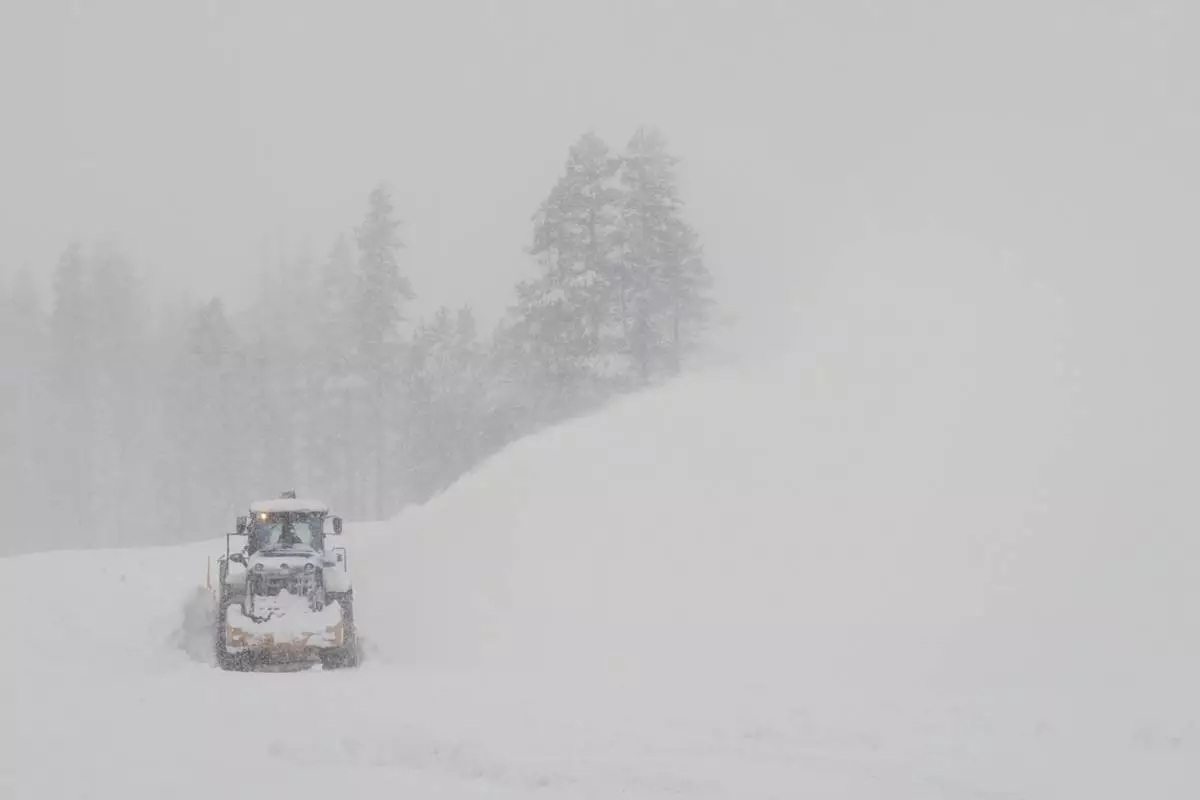
A road is cleared during a snow storm on Wednesday, Feb. 18, 2026 near Soda Springs, Calif. (AP Photo/Brooke Hess-Homeier)
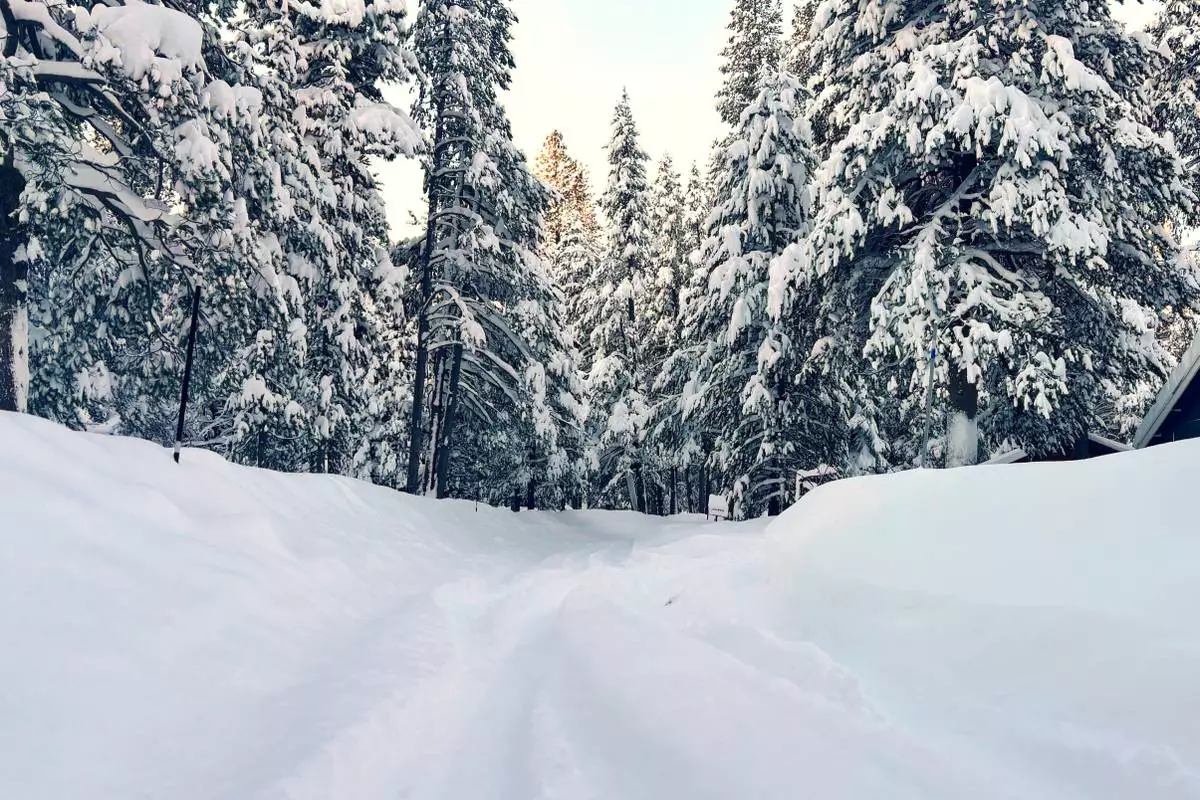
A street is covered in snow on Wednesday, Feb. 18, 2026 in Truckee Calif. (AP Photo/Brooke Hess-Homeier)
CAIRO (AP) — A surge in drone strikes in the Sudanese region of Kordofan has taken a growing toll on civilians and hampered aid operations, analysts and humanitarian workers said Wednesday, as the war in Sudan nears the three-year mark.
At least 77 people were killed and dozens injured in various attacks, mostly by the paramilitary Rapid Support Forces, in densely populated areas, according to Sudan Doctors Network, a group that tracks violence through the war. Many of the victims were civilians.
The conflict between the RSF and the Sudanese military erupted into a full-blown war in April 2023. So far, at least 40,000 people have been killed and 12 million displaced, according to the World Health Organization. Aid groups say the true toll could be many times higher, as the fighting in vast and remote areas impedes access.
The military increased its use of drones and airstrikes in Kordofan over the past year as the conflict shifted westward, making the region “a primary theater of operations,” said Jalale Getachew Birru, senior analyst for East Africa at the nonprofit Armed Conflict Location & Event Data, ACLED.
Two weeks ago, the military said it broke the RSF siege of Kadugli, the capital of South Kordofan province, and the neighboring town of Dilling after more than two years.
However, Birru said the sieges were not fully broken. “These cities are still encircled, and the fight for the control of these cities and the wider region is ongoing,” he told The Associated Press.
Walid Mohamed, a resident of Kadugli, told the AP that breaking the siege allowed more goods and medicines to enter the city, reopening the corridor with Dilling and driving down food prices after a dire humanitarian situation unfolded there. However, he said RSF drone strikes have since occurred almost daily, mainly targeting hospitals, markets and homes.
Omran Ahmed, a resident of Dilling, also said drone strikes had increased, “spreading fear and terror among residents as they see more civilians become victims.”
U.N. High Commissioner for Human Rights Volker Türk on Wednesday sounded the alarm that drone strikes killed more than 50 civilians over two days this week.
“These latest killings are yet another reminder of the devastating consequences on civilians of the escalating use of drone warfare in Sudan,” said Türk, condemning the attacks on civilian sites including markets, health facilities and schools.
U.N. spokesperson Stéphane Dujarric said there was evidence that both sides had used drones against civilians in this week's attacks.
“These civilians have been at one time or another in government-controlled areas and areas controlled by the RSF, which would make us believe that both sides are using them,” he said.
Two military officials, who spoke on condition of anonymity because they weren’t authorized to brief the media, told the AP this week that the army doesn’t target civilian infrastructure.
A U.N. convoy reached Dilling and Kadugli with aid for more than 130,000 people, the first major delivery in three months, United Nations agencies said Wednesday. However, aid workers are concerned about escalating violence.
Mathilde Vu, an advocacy manager with the Norwegian Refugee Council told the AP there’s “huge concern” about the “unacceptable” escalation in Kordofan and that it could “shatter lives and obstruct any hope to reverse the famine/ starvation” in the region.
“It’s very indiscriminate. Between Kordofan, Darfur and the east (Sennar), it’s now every other day we receive messages like 'drone attack here, hit a civilian infrastructure, killed people,’” Vu said.
Much of the recent fighting in Sudan has been centered in Kordofan, where the army wants to create a route into the neighboring region of Darfur, Kholood Khair, founding director of Confluence Advisory, a think tank, told the AP.
El-Fasher city, the capital of North Darfur, was the army’s last stronghold in the region but fell to the RSF in October. Its recapture could allow the army to restore important supply and logistic lines between Kordofan and Darfur.
Meanwhile, the RSF wants to create a route out of Kordofan, back to the center of the country and the capital, Khartoum, Khair said.
Both the military and the RSF have used drones, especially in North Kordofan. Civilians have been hard-hit.
Last year, 163 air and drone strikes across the country targeted civilians, killing 1,032 people, according to ACLED data. The army reportedly carried out 83 strikes that caused 568 deaths, while the RSF conducted 66 strikes that killed 288 people.
Both sides have stepped up their use of drones in Kordofan over the past few weeks, according to Federico Donelli, associate professor of international relations at the University of Trieste.
Donelli said several factors are driving the increase, including the army’s acquisition of new weapons and drones manufactured and supplied by foreign actors.
“This has enabled the army to rely more heavily on precision strikes, mirroring tactics that the Rapid Support Forces have been using for some time,” he said,
Both sides may be struggling to maintain troop strength, he said. “Consequently, drones are favored over deploying armed units on the ground, particularly in contested areas such as Kordofan.”
Khair, from Confluence Advisory, said the fighting in Kordofan could shift in the upcoming period, with the army potentially seeking to push into Darfur, particularly toward el-Fasher, where war crimes have been reported.
“We expect to see the bombing campaigns not only continue but increase in frequency and volume,” she said.
——-
Associated Press writer Edith M. Lederer contribued from the United Nations, and freelancer Yasir Abdalla from Khartoum.
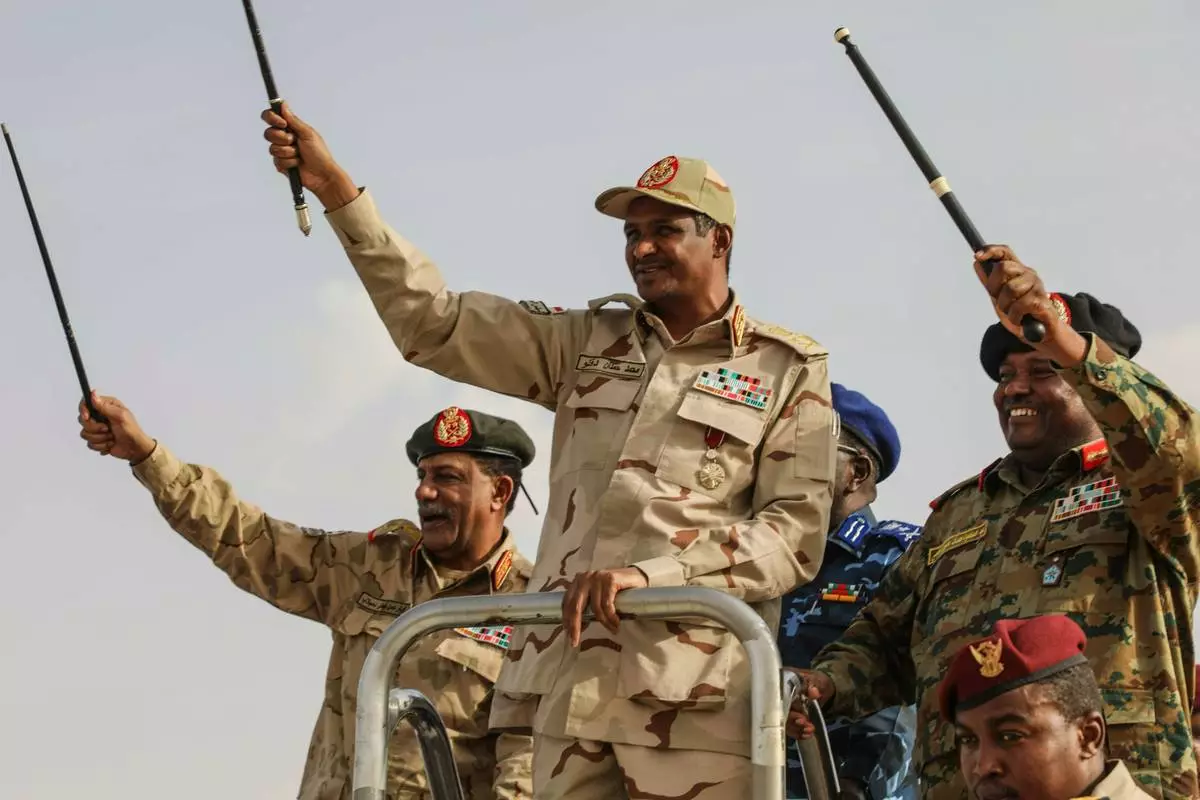
FILE - Gen. Mohammed Hamdan Dagalo, center, greets the crowd during a military-backed tribes' rally in the Nile River State of Sudan, on Saturday, July 13, 2019. (AP Photo/Mahmoud Hjaj,File)