WASHINGTON (AP) — The number of days when the weather gets hot, dry and windy — ideal to spark extreme wildfires — has nearly tripled in the past 45 years across the globe, with the trend increasing even higher in the Americas, a new study shows.
And more than half of that increase is caused by human-caused climate chang e, researchers calculated.
Click to Gallery
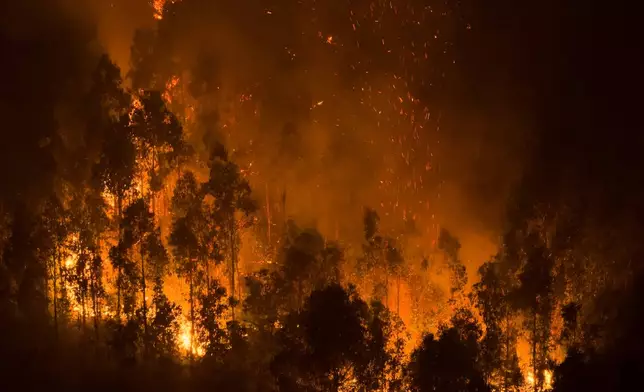
FILE - A wildfire burns near Concepcion, Chile, Jan. 19, 2026. (AP Photo/Javier Torres, File)
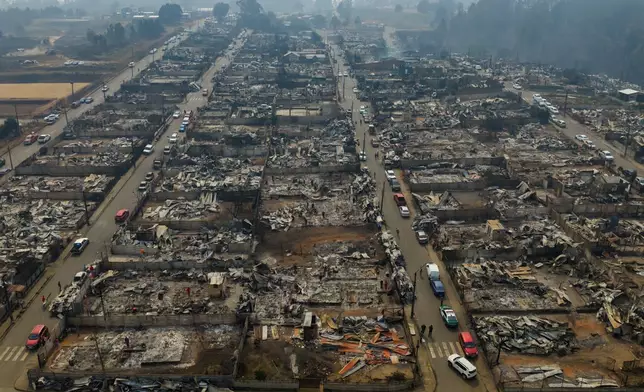
FILE - Cars line the streets near wildfire-burned homes in Tome, Chile, Jan. 19, 2026. (AP Photo/Javier Torres, FIle)
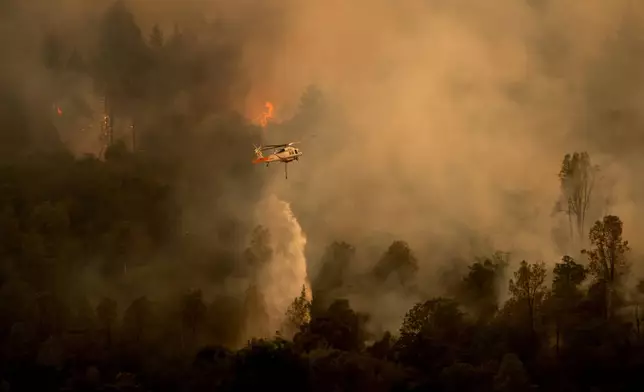
FILE - A helicopter drops water on the Pickett Fire as it burns into the Aetna Springs area of Napa County, Calif., Aug. 23, 2025. (AP Photo/Noah Berger, File)
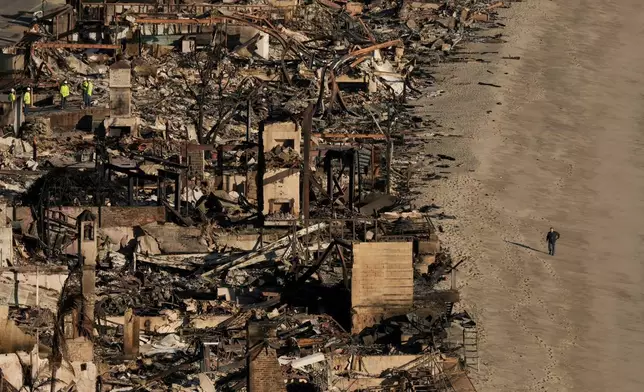
FILE - A person walks on the beach next to homes damaged by the Palisades Fire, Jan. 16, 2025, in Malibu, Calif. (AP Photo/Jae C. Hong, File)
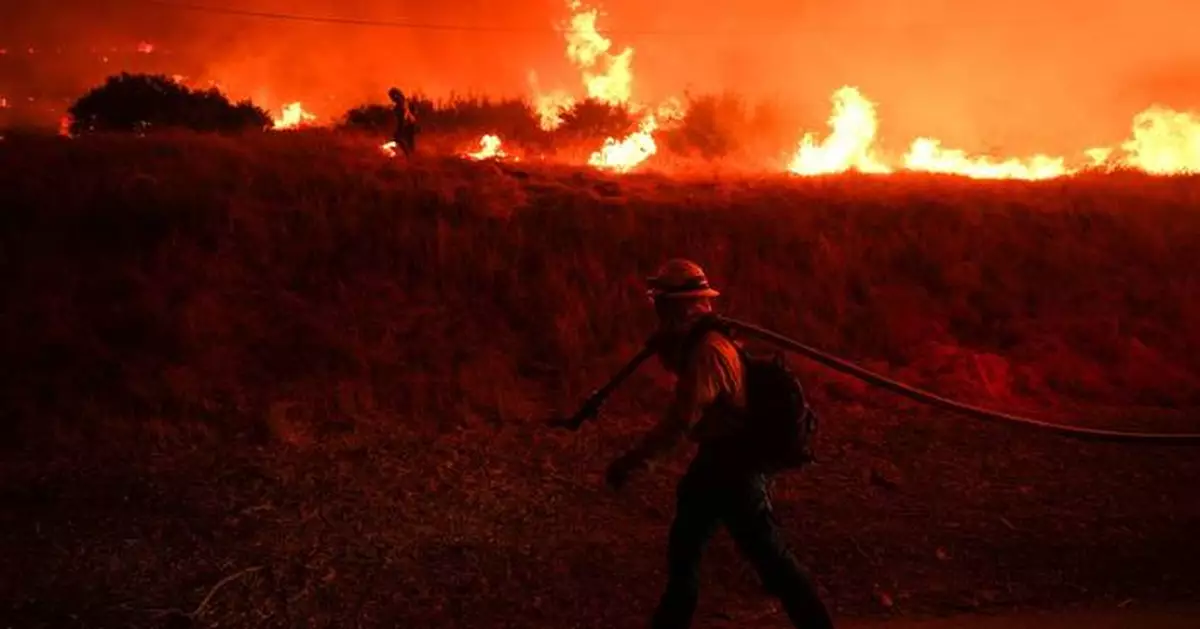
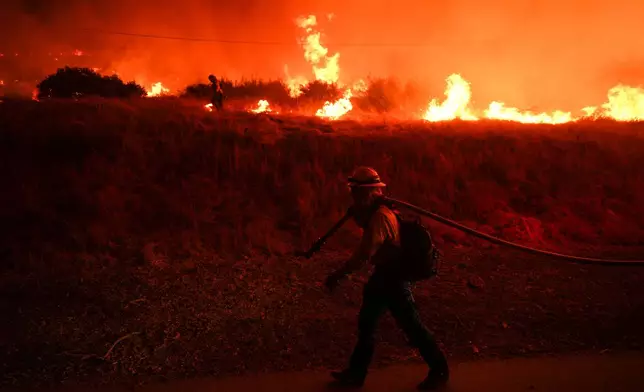
FILE - A firefighter monitors flames caused by the Hughes Fire along Castaic Lake in Castaic, Calif., Jan. 22, 2025. (AP Photo/Jae C. Hong, File)
What this means is that as the world warms, more places across the globe are prone to go up in flames at the same time because of increasingly synchronous fire weather, which is when multiple places have the right conditions to go up in smoke. Countries may not have enough resources to put out all the fires popping up and help won't be as likely to come from neighbors busy with their own flames, according to the authors of a study in Wednesday's Science Advances.
In 1979 and for the next 15 years, the world averaged 22 synchronous fire weather days a year for flames that stayed within large global regions, the study found. In 2023 and 2024, it was up to more than 60 days a year.
“These sorts of changes that we have seen increase the likelihood in a lot of areas that there will be fires that are going to be very challenging to suppress,” said study co-author John Abatzoglou, a fire scientist at the University of California, Merced.
The researchers didn't look at actual fires, but the weather conditions: warm, with strong winds and dry air and ground.
“It increases the likelihood of widespread fire outbreaks, but the weather is one dimension,” said study lead author Cong Yin, a fire researcher at University of California, Merced. The other big ingredients to fires are oxygen, fuel such as trees and brush, and ignition such as lightning or arson or human accidents.
This study is important because extreme fire weather is the primary — but not only — factor in increasing fire impacts across the globe, said fire scientist Mike Flannigan of Thompson Rivers University in Canada, who wasn't part of the study. And it's also important because regions that used to have fire seasons at different times and could share resources are now overlapping, he said.
Abatzoglou said: “And that’s where things begin to break.”
More than 60% of the global increase in synchronous fire weather days can be attributed to climate change from the burning of coal, oil and natural gas, Yin said. He and his colleagues know this because they used computer simulations to compare what’s happened in the last 45 years to a fictional world without the increased greenhouse gases from burning fossil fuels.
The continental United States, from 1979 to 1988, averaged 7.7 synchronous fire weather days a year. But in the last 10 years that average was up to 38 days a year, according to Yin.
But that is nothing compared to the southern half of South America. That region averaged 5.5 synchronous fire weather days a year from 1979 to 1988; over the last decade, that's risen to 70.6 days a year, including 118 days in 2023.
Of 14 global regions, only Southeast Asia saw a decrease in synchronous fire weather, probably because it is getting more humid there, Yin said.
The Associated Press’ climate and environmental coverage receives financial support from multiple private foundations. AP is solely responsible for all content. Find AP’s standards for working with philanthropies, a list of supporters and funded coverage areas at AP.org.
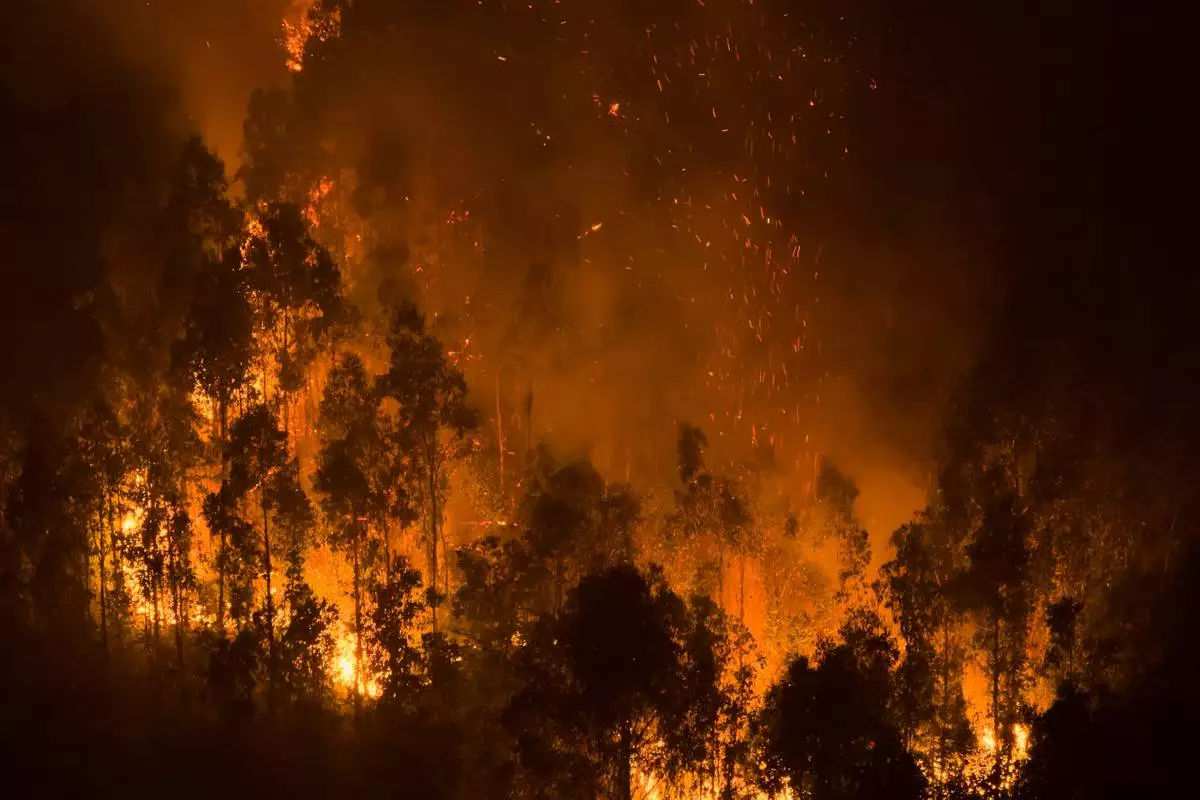
FILE - A wildfire burns near Concepcion, Chile, Jan. 19, 2026. (AP Photo/Javier Torres, File)
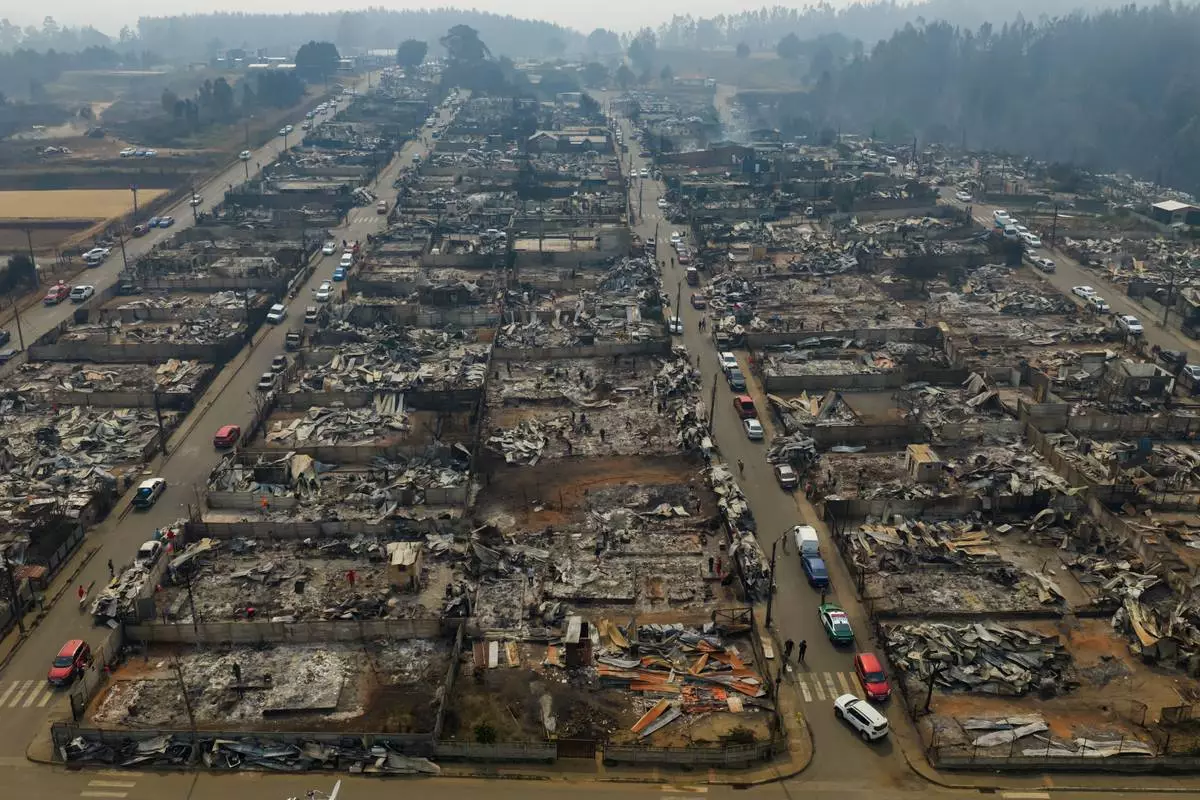
FILE - Cars line the streets near wildfire-burned homes in Tome, Chile, Jan. 19, 2026. (AP Photo/Javier Torres, FIle)
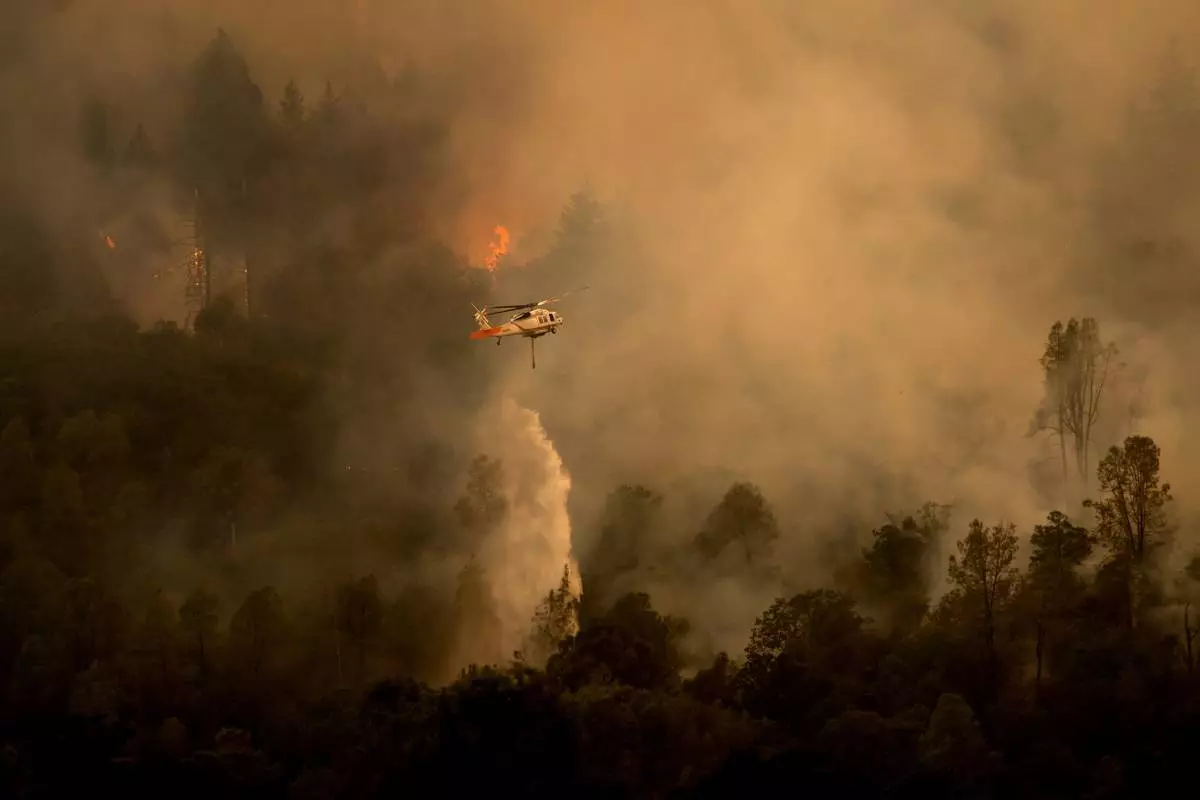
FILE - A helicopter drops water on the Pickett Fire as it burns into the Aetna Springs area of Napa County, Calif., Aug. 23, 2025. (AP Photo/Noah Berger, File)
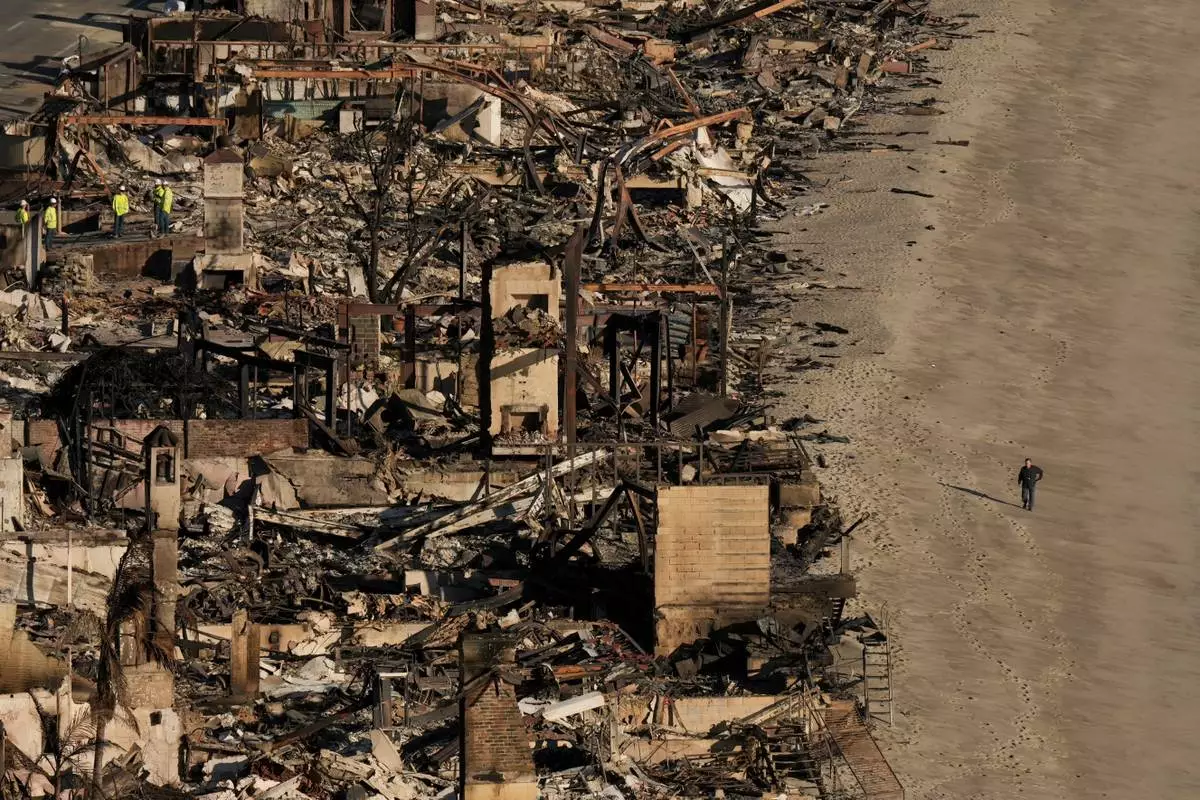
FILE - A person walks on the beach next to homes damaged by the Palisades Fire, Jan. 16, 2025, in Malibu, Calif. (AP Photo/Jae C. Hong, File)
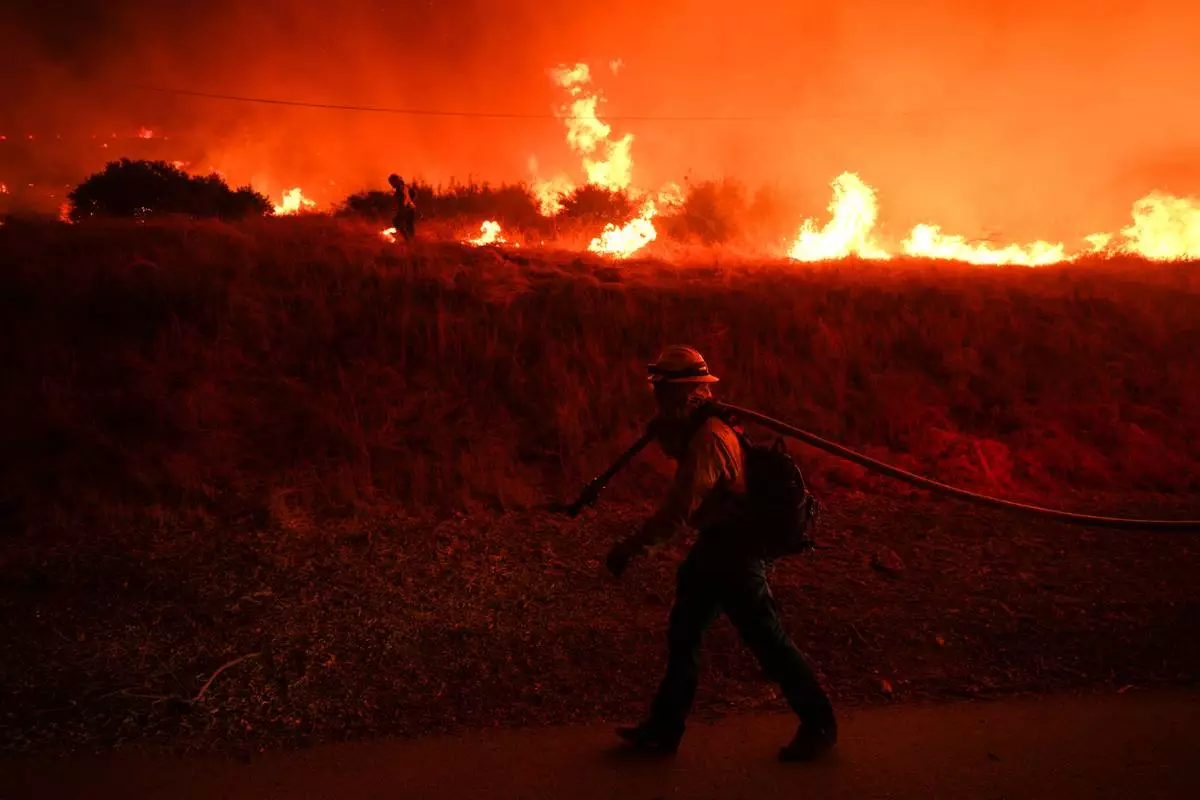
FILE - A firefighter monitors flames caused by the Hughes Fire along Castaic Lake in Castaic, Calif., Jan. 22, 2025. (AP Photo/Jae C. Hong, File)
NEVADA CITY, Calif. (AP) — Crews found the bodies of eight backcountry skiers near California's Lake Tahoe and were searching for one more after they were caught in an avalanche, the nation's deadliest in nearly half a century, authorities said Wednesday.
Authorities said the skiers had little time to react.
“Someone saw the avalanche, yelled ‘Avalanche!’ and it overtook them rather quickly,” said Capt. Russell “Rusty” Greene, of the Nevada County sheriff’s office.
Six from the guided tour were rescued six hours after the avalanche hit Tuesday morning during a three-day trek in Northern California’s Sierra Nevada, as a monster winter storm pummeled the West Coast.
Nevada County Sheriff Shannan Moon said investigators would look into the decision to proceed with the trip on Sunday despite the forecast for a major storm. That morning at 6:49 a.m., the Sierra Avalanche Center issued an avalanche watch, indicating that large avalanches were likely in the next 24 to 48 hours.
The center increased the watch to a warning hours before the avalanche hit. It’s not known if the guides would have known about the warning before they ventured out.
Authorities have told the families the mission has moved from rescuing people to recovering bodies, Moon said during a news conference.
The victims, including three guides, were found fairly close together, Greene said. The dead and missing include seven women and two men, ranging in ages from 30 to 55. The crews have not yet been able to remove the victims from the mountain because of the extreme conditions, the sheriff said.
Three to 6 feet (0.9 to 1.8 meters) of snow has fallen since Sunday. The area was also hit by subfreezing temperatures and gale force winds. The Sierra Avalanche Center said the threat of more avalanches remained Wednesday and left the snowpack unstable and unpredictable in an area known for its steep, craggy cliffs.
Rescuers reached the survivors just before sunset on Tuesday.
The skiers all had beacons that can send signals to rescuers and at least one of the guides was able to send texts, but it wasn't clear if they were wearing avalanche bags, which are inflatable devices that can keep skiers near the surface, Greene said.
While they waited to be rescued, the survivors used equipment to shelter themselves and fend off temperatures dipping below freezing. The survivors located three others who had died during the wait, Moon said.
Rescuers used a snowcat to get within 2 miles (3.2 kilometers) of the survivors, then skied in carefully so they didn't set off another avalanche, the sheriff said.
One of those rescued remains in a hospital Wednesday, Moon said. A guide was among the survivors.
The area near Donner Summit is one of the snowiest places in the Western Hemisphere and until just a few years ago was closed to the public. It sees an average of nearly 35 feet (10 meters) of snow a year, according to the Truckee Donner Land Trust, which owns a cluster of huts where the group was staying near Frog Lake.
The avalanche is the deadliest in the U.S. since 1981, when 11 climbers were killed on Mount Rainier in Washington state. Each winter, 25 to 30 people die in avalanches in the U.S., according to the National Avalanche Center.
It was the second deadly avalanche near California's Castle Peak this year, after a snowmobiler was buried by one in January.
Greene said authorities were notified about the avalanche by Blackbird Mountain Guides, which was leading the expedition, and the skiers’ emergency beacons. The sheriff’s office said Tuesday night that 15 backcountry skiers had been on the trip, not 16 as initially believed.
One skier had pulled out at the last minute, Moon said.
Authorities were waiting to release the victims' names to give the families time. “They’re still reeling,” Moon said. “I could not imagine what they’re going through.”
The skiers were on the last day of the backcountry trip and had spent two nights in the huts, said Steve Reynaud, an avalanche forecaster with the Sierra Avalanche Center.
Reaching the huts in winter takes several hours and requires backcountry skills, avalanche training and safety equipment, the land trust says on its website. Blackbird said the tour was for intermediate-to-expert skiers.
The area near Donner Summit was closed for nearly a century before it was reopened by the land trust and its partners in 2020. Donner Summit is named for the infamous Donner Party, a group of pioneers who resorted to cannibalism after getting trapped there in the winter of 1846-1847.
Blackbird Mountain Guides said in a statement that the group, including four guides, was returning to the trailhead when the avalanche occurred.
When asked what went through her mind as her staff and volunteers responded to the scene, Moon said she was hoping they would be able to make it there safely. Once they did, she said she was “immediately thinking of the folks that didn’t make it, and knowing our mission now is to get them home.”
Watson reported from San Diego and Seewer from Toledo, Ohio. Associated Press writers Audrey McAvoy in Honolulu; Christopher Weber in Los Angeles; and Olga Rodriguez in San Francisco contributed.
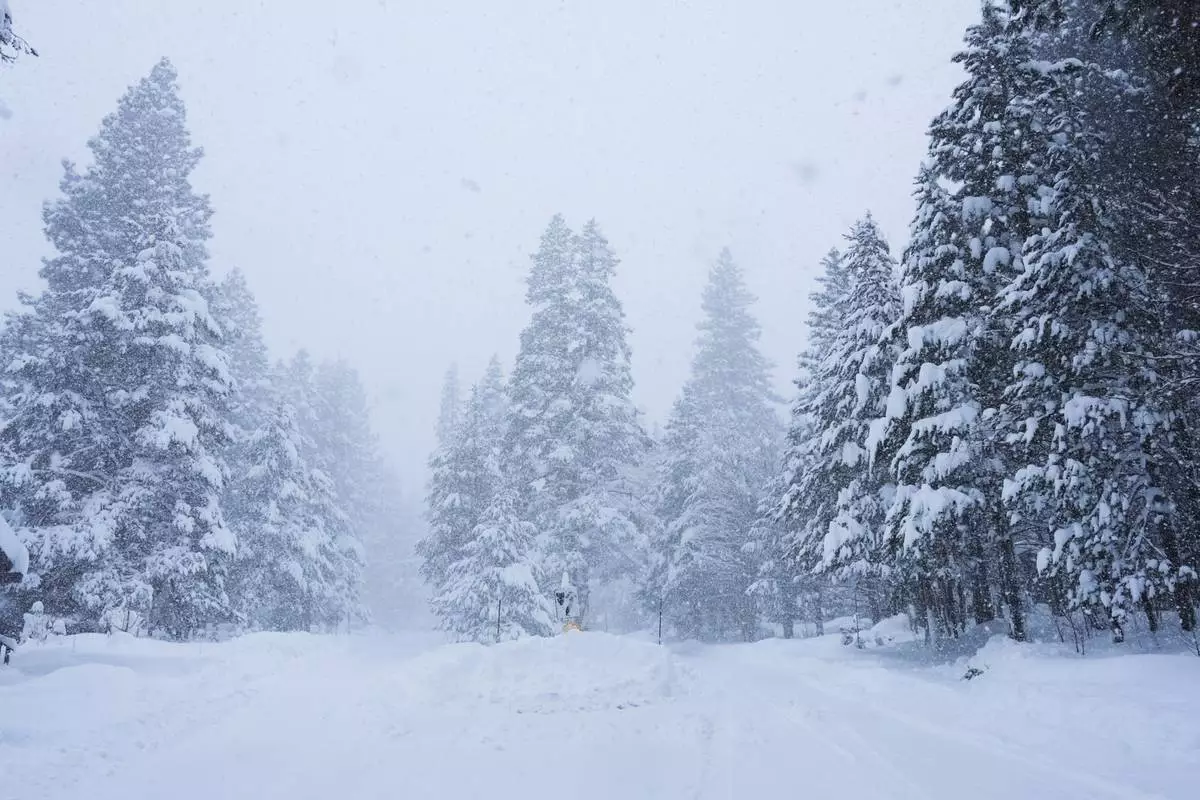
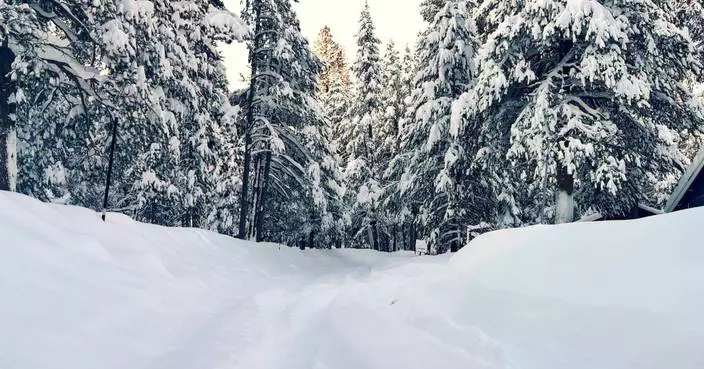
Pine trees are covered in snow during a storm on Tuesday, Feb. 17, 2026 in Truckee Calif. (AP Photos/Brooke Hess-Homeier)
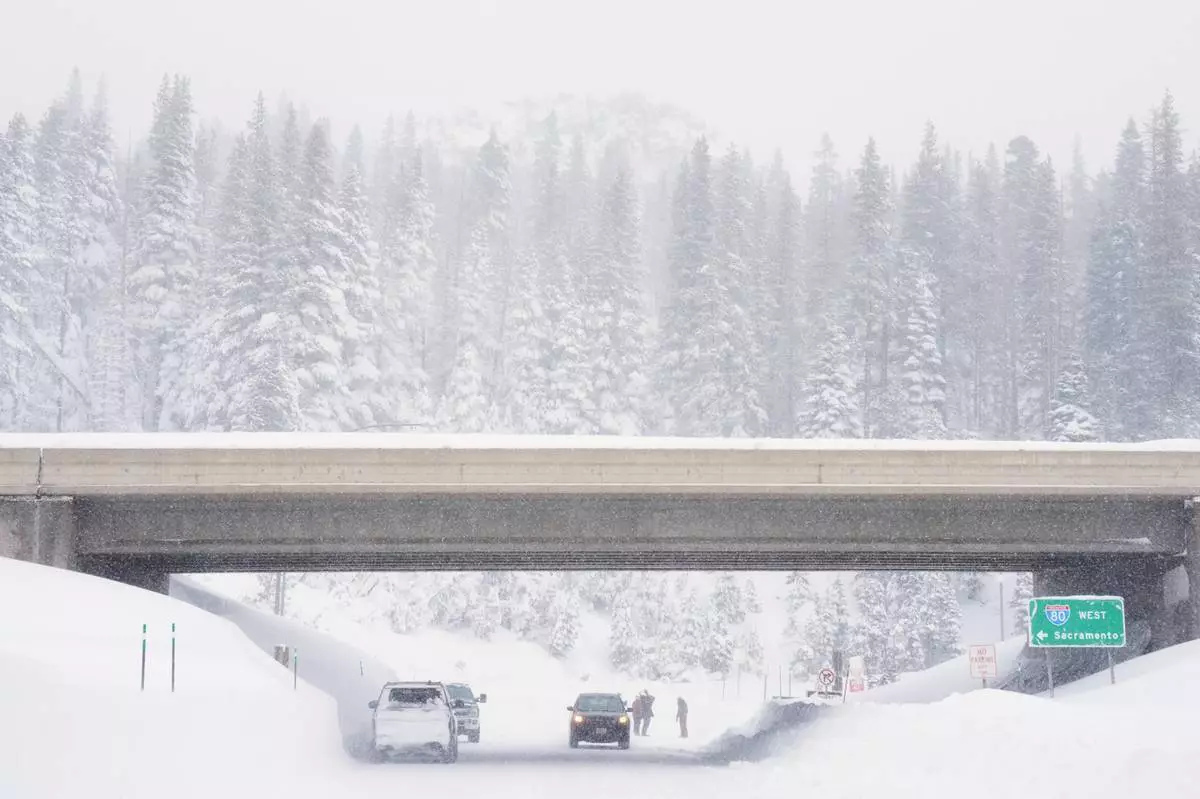
Snow covers a road on an underpass along interstate 80 on Wednesday, Feb. 18, 2026 near Soda Springs, Calif. (AP Photo/Brooke Hess-Homeier)
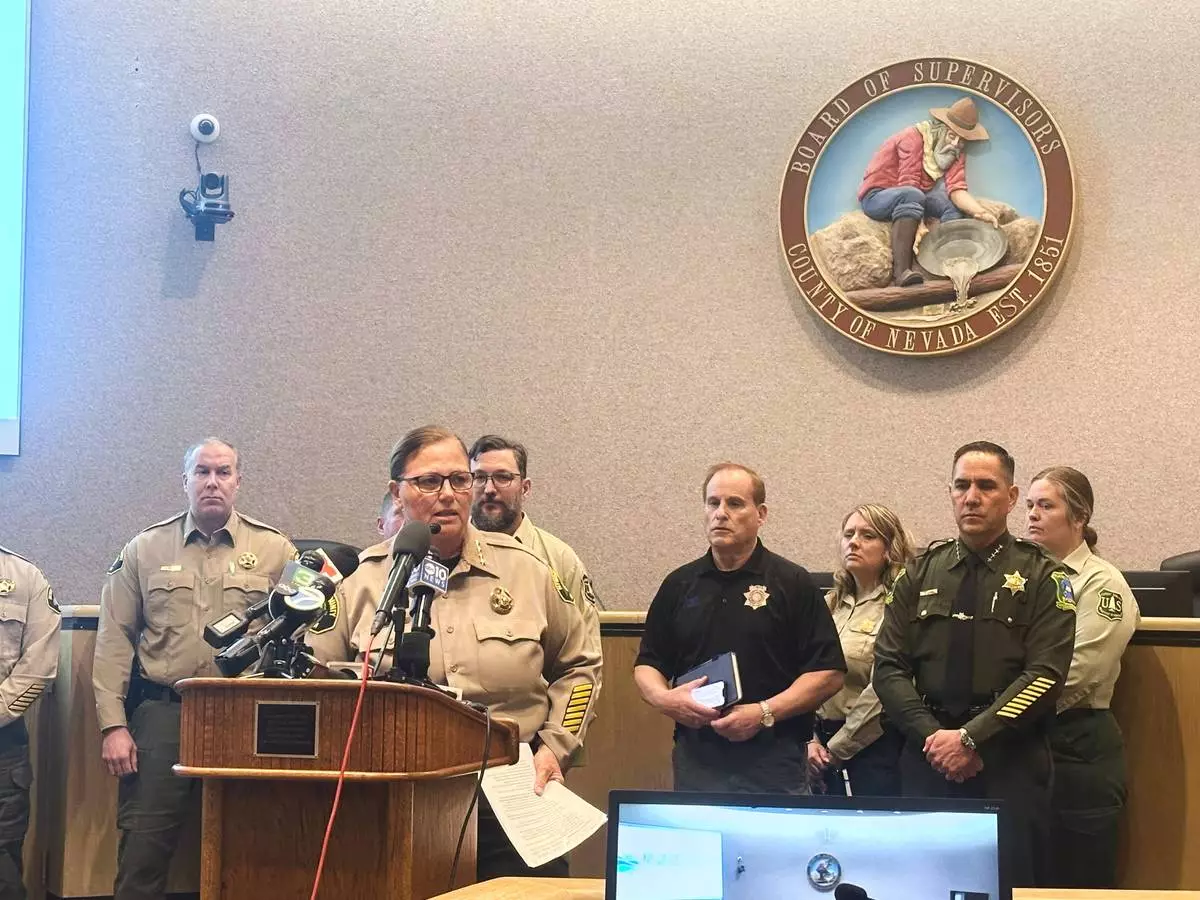
Nevada County Sheriff Shannan Moon updates media on rescue efforts following an avalanche at a news conference in Nevada City, Calif. on Wednesday, Feb. 18, 2026. (AP Photo/Tran Nguyen)
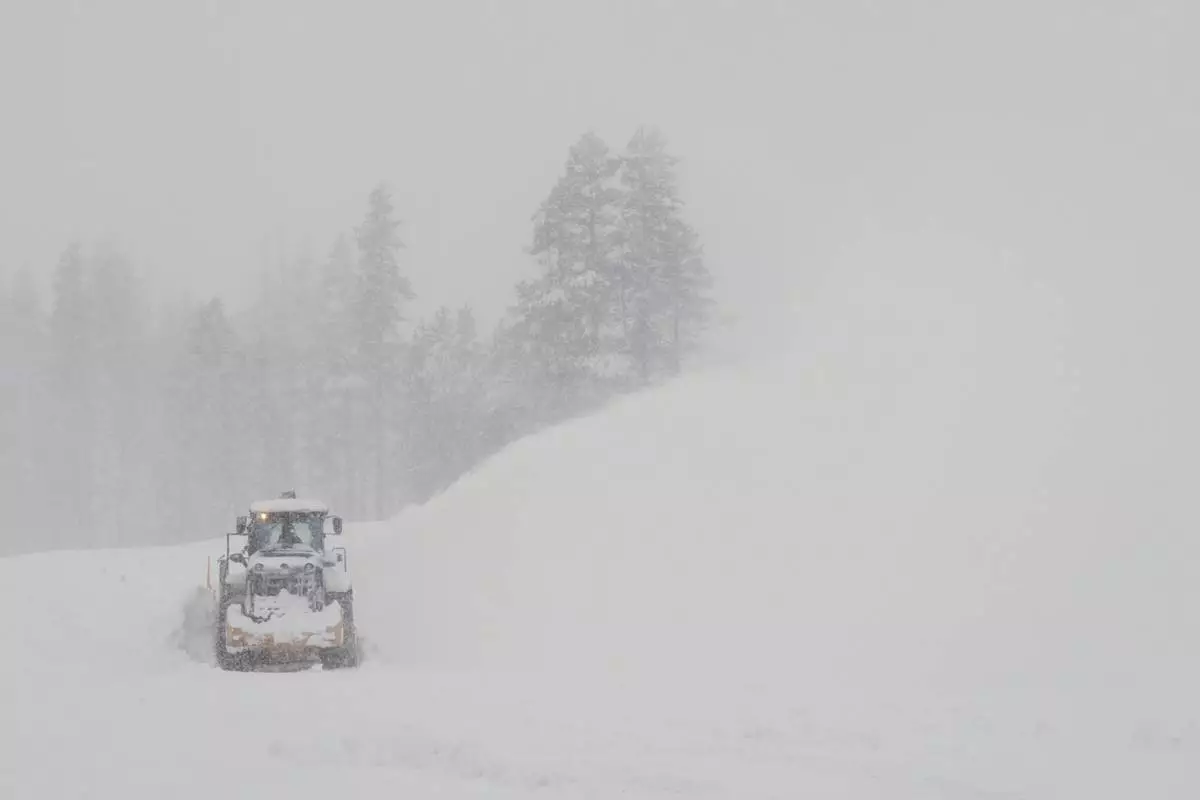
A road is cleared during a snow storm on Wednesday, Feb. 18, 2026 near Soda Springs, Calif. (AP Photo/Brooke Hess-Homeier)
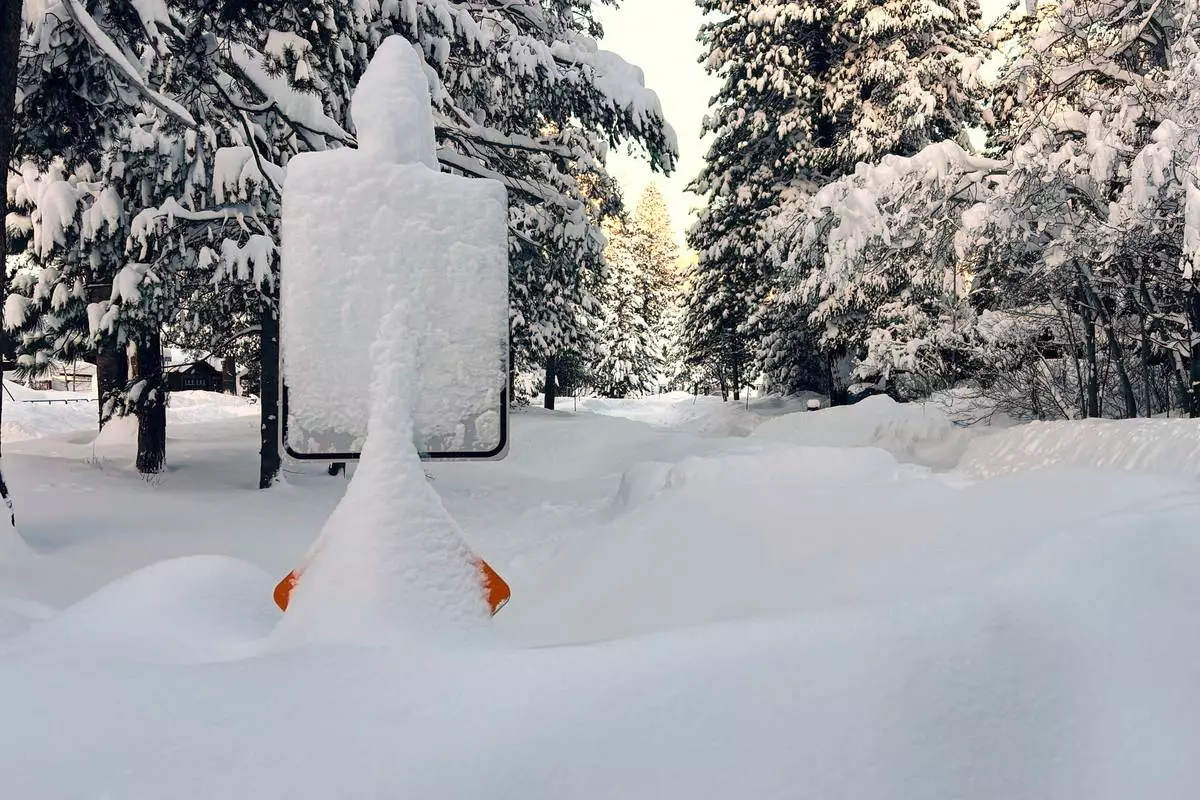
Snow covers a street sign on Wednesday, Feb. 18, 2026 in Truckee Calif. (AP Photo/Brooke Hess-Homeier)
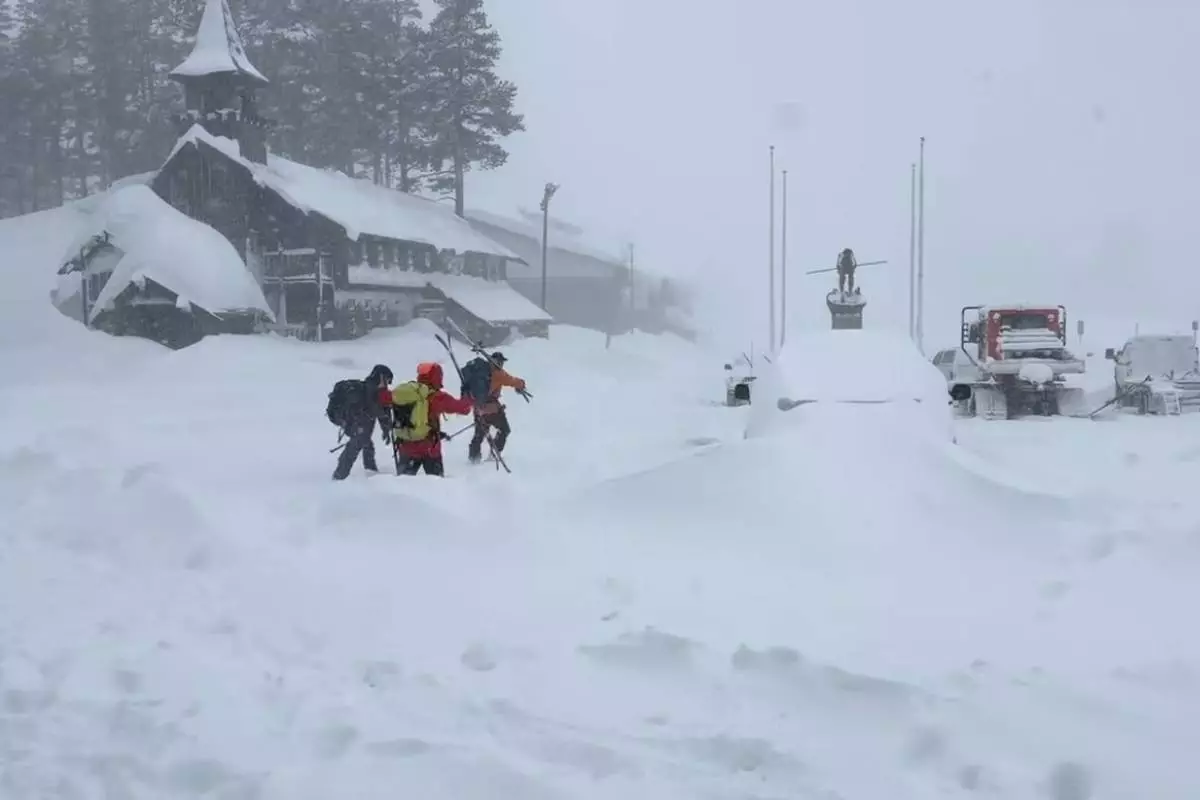
This image provided by the Nevada County Sheriff's Office shows members of a rescue team in Soda Springs, California on Tuesday, Feb. 17, 2026. (Nevada County Sheriff's Office via AP)
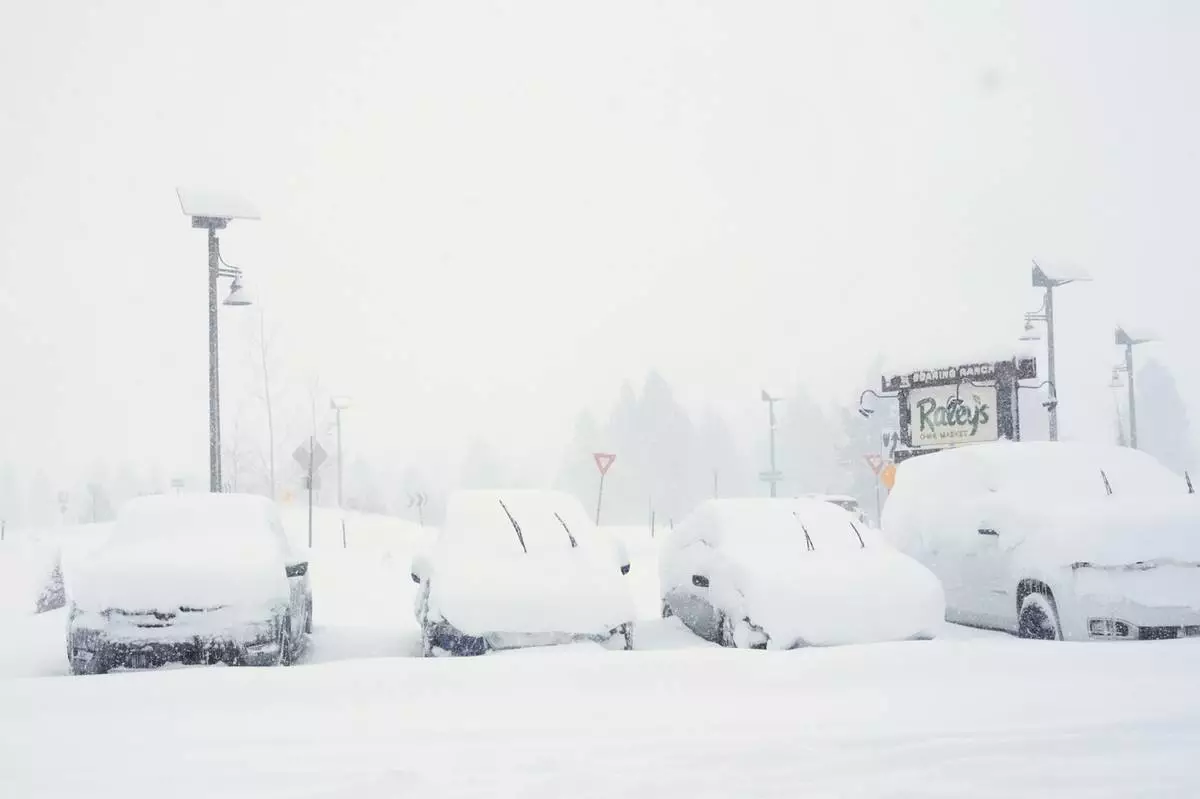
Cars are covered in snow during a snow storm on Tuesday, Feb. 17, 2026 in Truckee Calif. (AP Photos/Brooke Hess-Homeier)
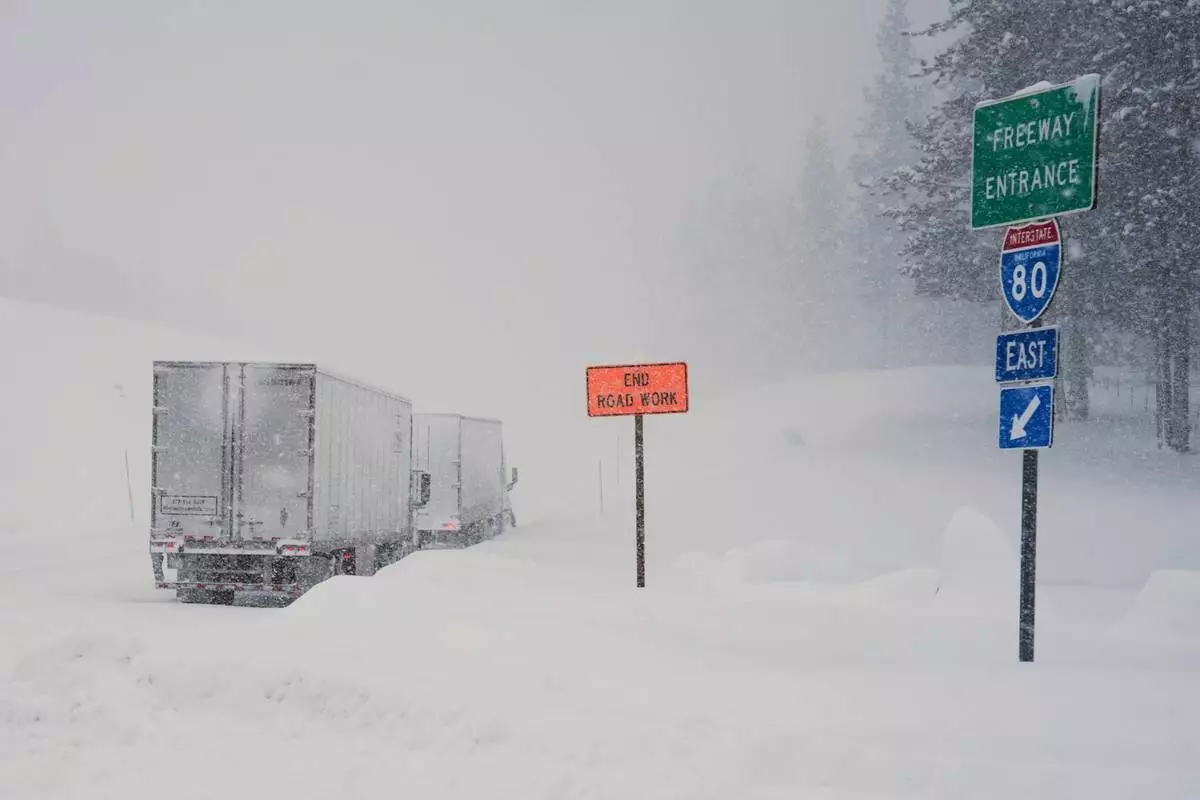
Trucks are lined up along Interstate 80 during a storm on Tuesday, Feb. 17, 2026 in Truckee Calif. (AP Photos/Brooke Hess-Homeier)
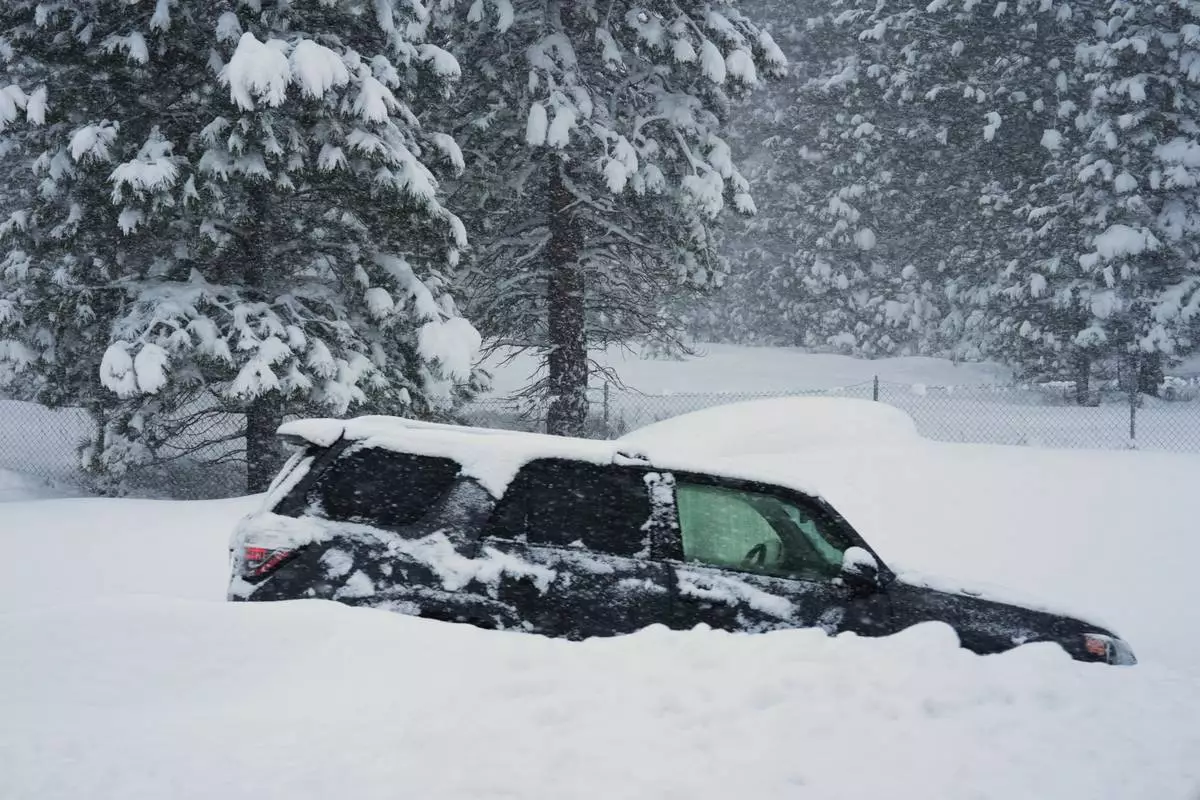
A vehicle is buried in snow during a storm on Tuesday, Feb. 17, 2026 in Truckee Calif. (AP Photos/Brooke Hess-Homeier)
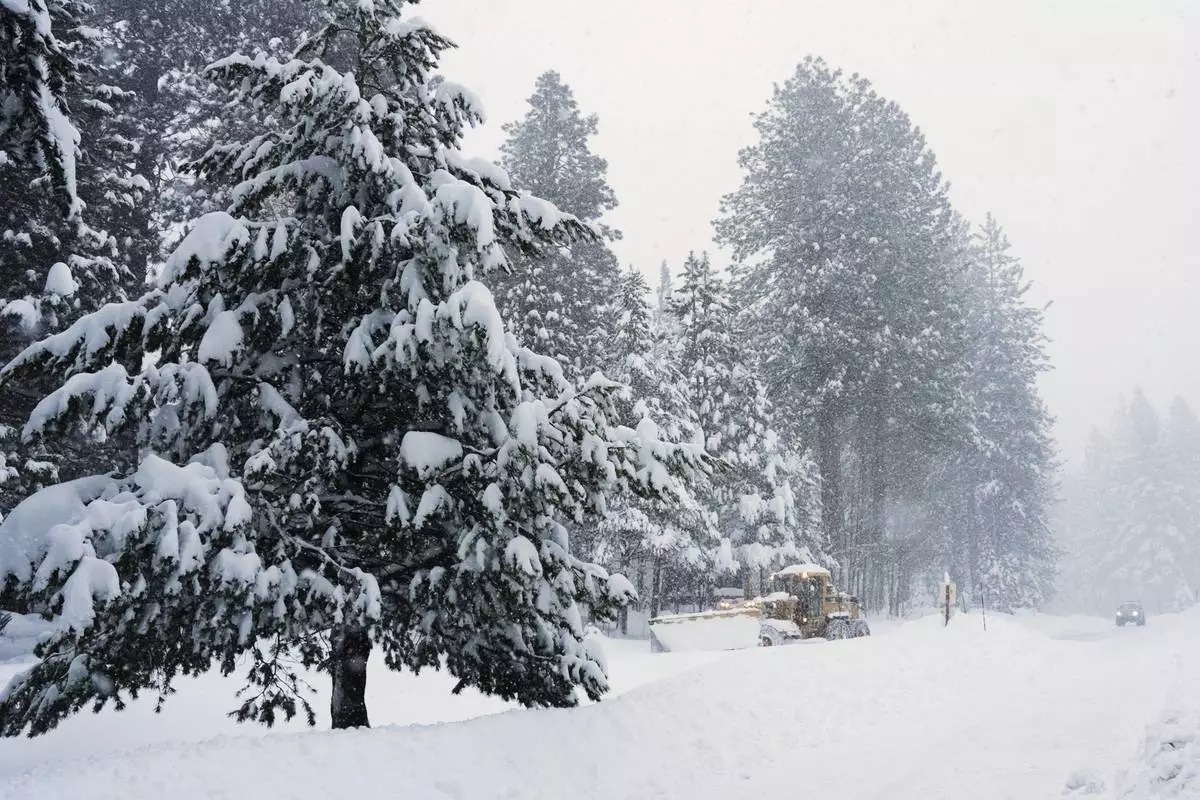
A road is plowed during a snow storm on Tuesday, Feb. 17, 2026 in Truckee Calif. (AP Photos/Brooke Hess-Homeier)
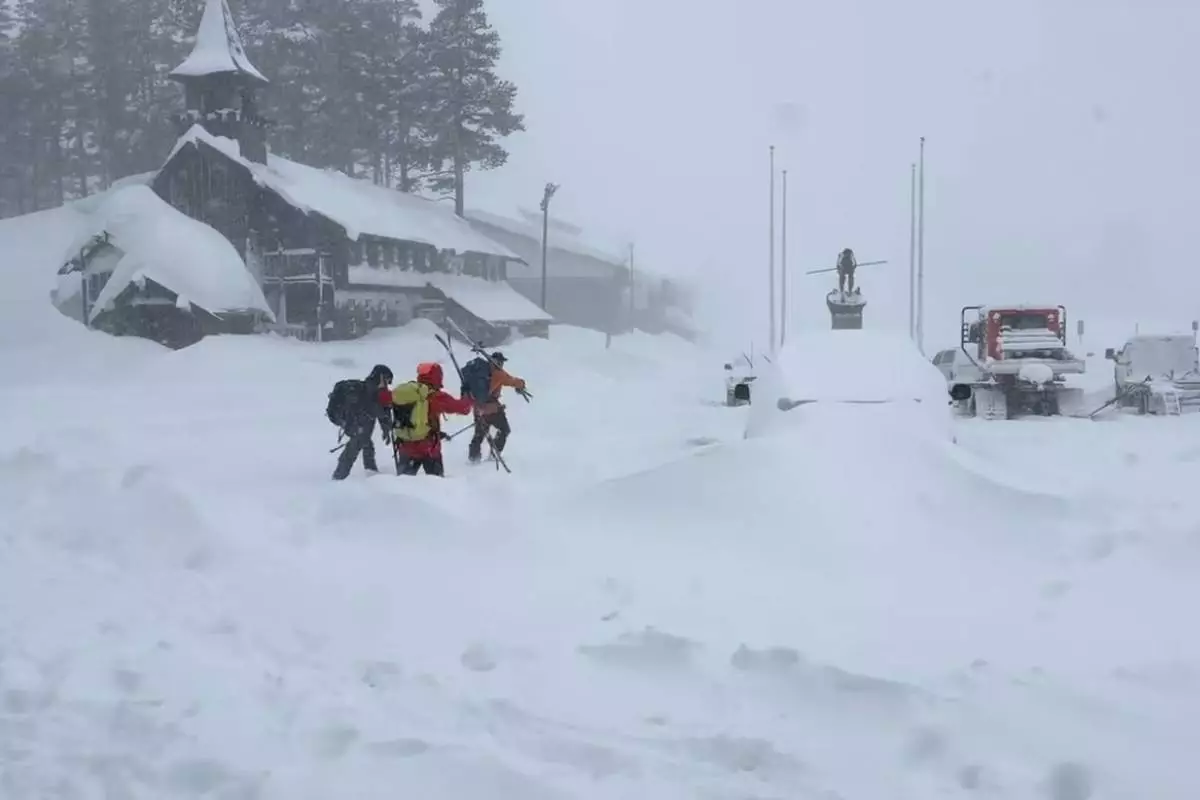
This image provided by the Nevada County Sheriff's Office shows members of a rescue team in Soda Springs, California on Tuesday, Feb. 17, 2026. (Nevada County Sheriff's Office via AP)