More than 40,000 fireworks illuminated the night skies of the coastal mainland city of Xiamen in Fujian Province and Kinmen Island in the Taiwan region on Tuesday as the two neighbors staged a joint fireworks display to mark the Spring Festival.
The 30-minute show started at 20:00 on the first day of the Year of the Horse, with fireworks bursting from both Xiamen and Kinmen, which are less than two kilometers apart at their closest point.
Launched in 1987, the annual event has become a longstanding tradition highlighting close ties between Xiamen and Kinmen.
Crowds gathered along waterfronts on both sides to watch the show, accompanied by festive music. Kinmen residents also staged traditional lion dances to bring good fortune for the Chinese New Year.
"This is my third time to see the Xiamen-Kinmen joint fireworks display, where we enjoy the fireworks under the same sky over the same sea area. The mutual exchange and joint celebrations of Spring Festival filled us with warmth. We Chinese on both sides of the Taiwan Strait share the same culture, the same memory and a bond of blood and kinship. It's true that blood is thicker than water," said Chang Yang-yang, a young man in Kinmen.
New Year celebrations are also held between Fuzhou, provincial capital of Fujian, and neighboring Matsu Island, where residents display lanterns to showcase shared folk traditions. This year marks the 24th edition of such celebrations.
These celebrations come as cross-Strait travel continues to recover driven by the Chinese mainland's sustained efforts to promote tourism and facilitate travel for Taiwan residents. In 2025, cross-Strait visits exceeded 5 million, reaching a six-year high.
Fujian resumed group tours to Kinmen and Matsu in 2024. Earlier this month, the mainland announced that it would soon restart similar tours for residents of Shanghai.

Cross-Strait bonds shine at Spring Festival fireworks show
Days before the fourth anniversary of the start of the Ukraine-Russia conflict, the two-day talks among Ukraine, the United States and Russia, marking the third round of trilateral talks this year, concluded in Geneva on Wednesday with no breakthrough on key issues.
The first-day talks lasted six hours in both bilateral and trilateral formats, while the second-day talks lasted two hours, Russian media reported.
Ukrainian President Volodymyr Zelensky said that no agreement on key issues was reached, according to media reports.
"We can see that some groundwork has been done, but for now, positions differ because the negotiations were not easy," Zelensky told reporters on Wednesday.
Zelensky also told Ukrainian media that monitoring of a ceasefire with U.S. participation, as well as sensitive political issues such as Donbas and the Zaporizhzhia Nuclear Power Plant, were all discussed during the talks.
Ukraine's chief negotiator Rustem Umerov, also Ukraine's National Security and Defense Council Secretary, said that the work was intense and subjective.
"There is progress, but no details at this stage," he wrote in a Facebook post.
Umerov said on Facebook that the next stage is to reach the required level of consensus to make well-known decisions for the presidents' consideration. He emphasized that the ultimate goal remains unchanged: a just and sustainable peace.
A separate meeting with representatives of the United States and European countries, including France, Britain, Germany, Italy and Switzerland, was also held on Tuesday, Umerov wrote in a Facebook post on Tuesday.
Describing the talks as difficult but business-like, Russia's presidential aide Vladimir Medinsky noted that a new round of negotiations will be held in the near future. No documents were signed during the talks, RIA Novosti reported Wednesday.
The Russian Foreign Ministry announced on Wednesday that the Russian delegation had clear instructions to act within the framework of understanding from the meeting between Russian President Vladimir Putin and U.S. President Donald Trump that was held in the U.S. city of Anchorage, Alaska in August last year.
Two previous rounds of trilateral talks, held in Abu Dhabi on Jan 23-24 and Feb 4-5, did not resolve key territorial issues.
The latest talks focused on key issues including a ceasefire mechanism, security guarantees, humanitarian issues and territorial disputes.
Analysts said that although some limited progress was achieved, the parties' wide gaps on key issues make a major breakthrough in the near term unlikely.
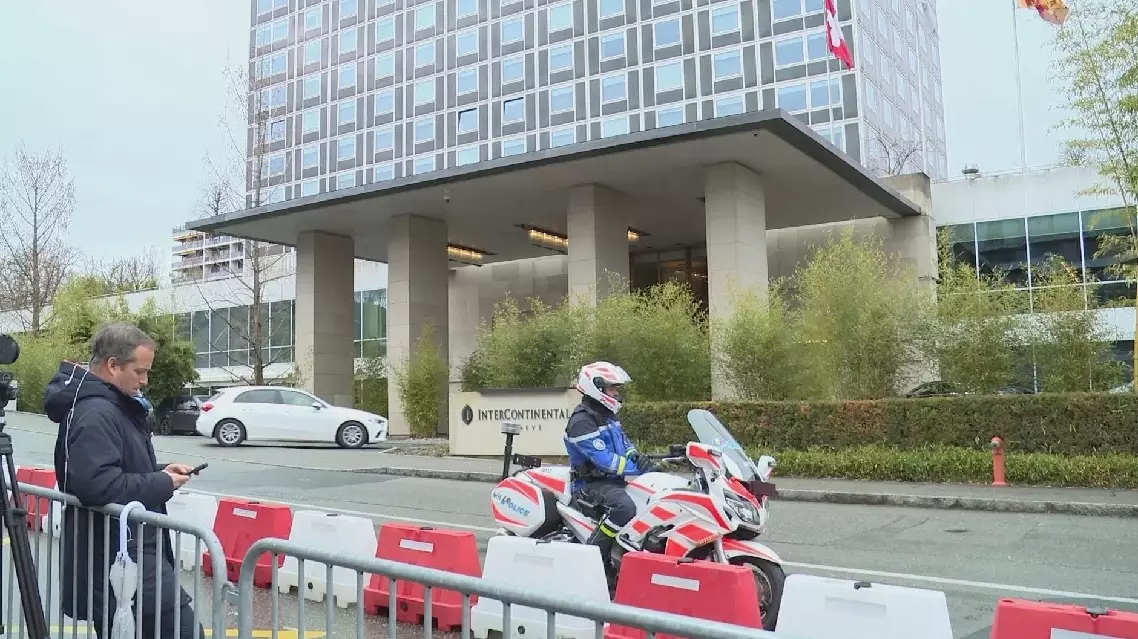
Latest round of trilateral talks on Ukraine ends without agreement on key issues