AUSTIN, Texas (AP) — A Texas prosecutor on Thursday asked a judge for a formal declaration of innocence for the four men who were wrongfully accused of the 1991 Austin yogurt shop murders, including one man who was initially convicted and sent to death row in the killing of four teenagers in a crime that haunted the city for decades.
An exoneration ruling would close a dark chapter for the men and their families, and for a city that was shaken by the brutality of the crime and investigators' inability to solve it for decades.
Cold case detectives announced last year that they had connected the killings to a suspect who died in a 1999 standoff with police in Missouri.
That led to Thursday's hearing before state District Judge Dayna Blazey. Two of the original four suspects, Michael Scott and Forrest Welborn, were in the packed courtroom with family members to hear prosecutors declare that they are innocent.
Robert Springsteen, who was initially convicted and spent several years on death row, was not expected to attend. Maurice Pierce died in 2010.
“Over 25 years ago, the state prosecuted four innocent men ... (for) one of the worst crimes Austin has ever seen,” Travis County First Assistant District Attorney Trudy Strassburger said at the opening of the hearing. “We could not have been more wrong.”
A declaration of “actual innocence” would also be a key step for the men and their families to seek financial compensation for years they spent in jail or in prison.
“All four lived under the specter of the yogurt shop murders. These four never had the chance to live normal lives,” Strassburger said.
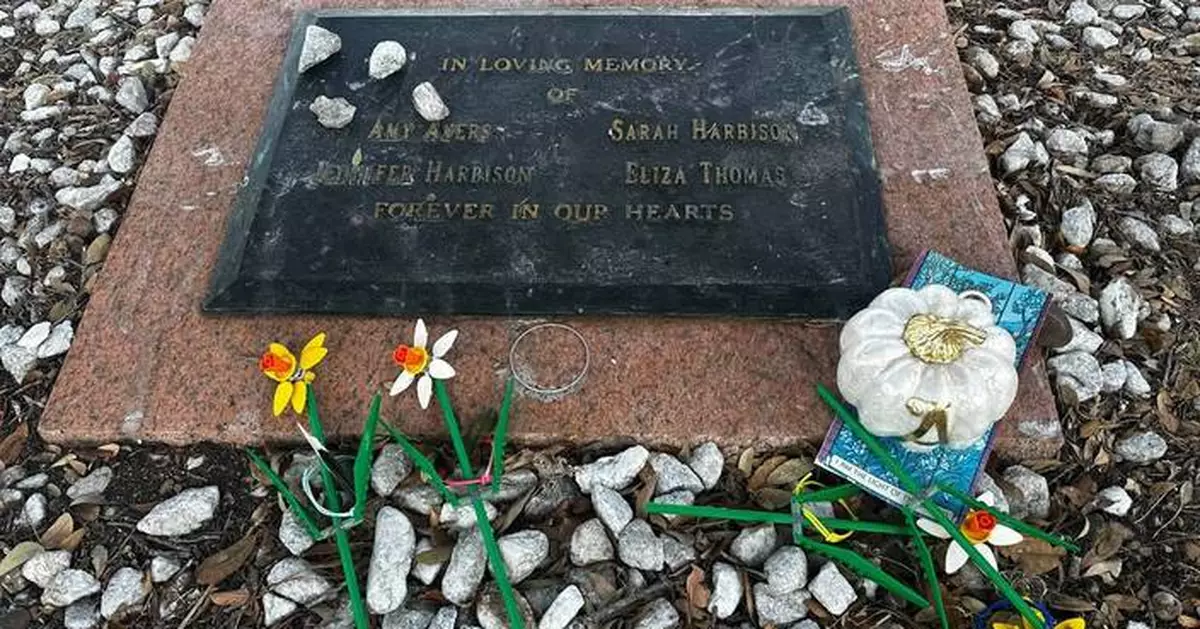
Amy Ayers, 13; Eliza Thomas, 17; and sisters Jennifer and Sarah Harbison, ages 17 and 15, were bound, gagged and shot in the head at the “I Can’t Believe It’s Yogurt” store where two of them worked. The building was set on fire.
Investigators chased thousands of leads and several false confessions before the four men were arrested in late 1999.
Springsteen and Scott were convicted based largely on confessions they insisted were coerced by police. Both convictions were overturned in the mid-2000s.
Welborn was charged but never tried after two grand juries refused to indict him. Pierce spent three years in jail before the charges were dismissed and he was released.
Prosecutors wanted to try Springsteen and Scott again, but a judge ordered the charges dismissed in 2009 when new DNA tests that were unavailable in 1991 had revealed another male suspect.
“Let us not forgot that Robert Springsteen could be dead right now, executed at the hands of the state of Texas,” Springsteen attorney Amber Farrelly said at the hearing.
The case effectively went cold until 2025. It got new public attention when an HBO documentary series explored the unsolved crime.
Investigators announced in September that new evidence and reviews of old evidence pointed to Robert Eugene Brashers as the killer.
Since 2018, authorities had used advanced DNA evidence to link Brashers to the strangulation death of a South Carolina woman in 1990, the 1997 rape of a 14-year-old girl in Tennessee and the shooting of a mother and daughter in Missouri in 1998.
The link to the Austin case came when a DNA sample taken from under Ayers’ fingernail came back as a match to Brashers from the 1990 murder in South Carolina.
Austin investigators also found that Brashers had been arrested at a border checkpoint near El Paso two days after the yogurt shop killings. In his stolen car was a pistol that matched the same caliber used to kill one of the girls in Austin.
Police also noted similarities in the yogurt shop case to Brashers' other crimes: The victims were tied up with their own clothing, sexually assaulted and some crime scenes were set on fire.
Brashers died in 1999 when he shot himself during an hourslong standoff with police at a motel in Kennett, Missouri.
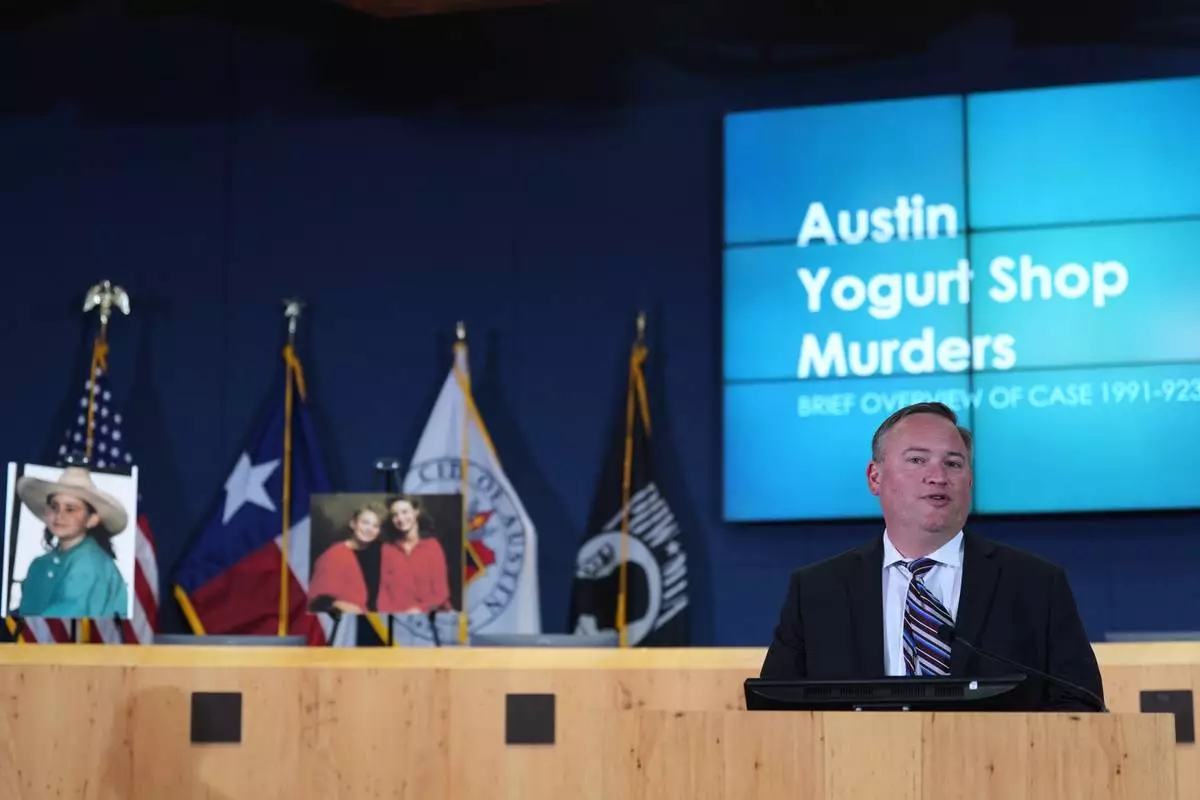
FILE - Austin Police Cold Case Detective Daniel Jackson speaks during a news conference regarding a breakthrough in the 1991 I Can't Believe It's Yogurt murder case, Sept. 29, 2025, in Austin, Texas. (AP Photo/Eric Gay, File)
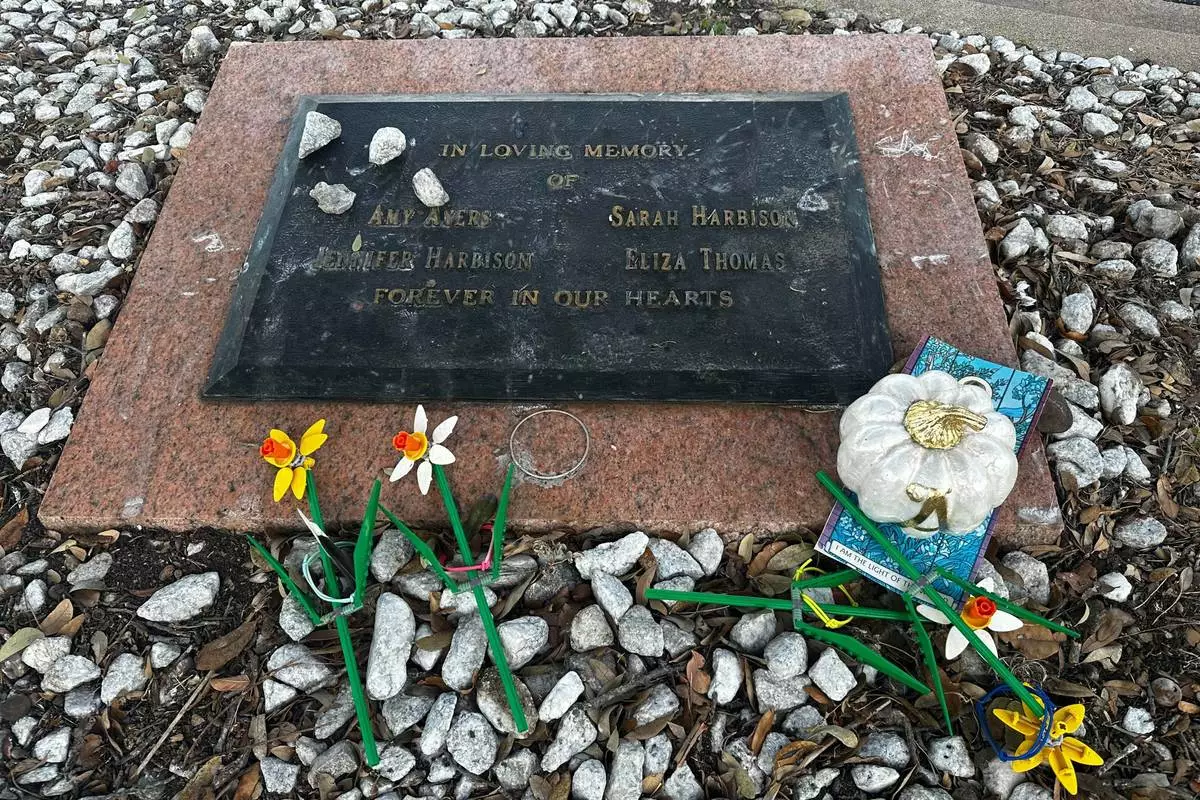
FILE - Tributes lay on a memorial Sept. 26, 2025, for four teenage girls who were killed in a yogurt shop in 1991 in Austin, Texas. (AP Photo/Paul J. Weber, File)
WASHINGTON (AP) — President Donald Trump announced Thursday at the inaugural Board of Peace meeting that nine members of the body have agreed to pledge $7 billion toward a Gaza relief package for a war-battered Gaza, where a shaky ceasefire deal persists.
Kazakhstan, Azerbaijan, UAE, Morocco, Bahrain, Qatar, Saudi Arabia, Uzbekistan and Kuwait are the countries that are making pledges, Trump added.
“Every dollar spent is an investment in stability and the hope of new and harmonious (region),” said Trump in thanking the donors.
The amount, while significant, represents a fraction of the estimated $70 billion needed to rebuild the Palestinian territory decimated after two years of war.
Trump also announced the U.S. was pledging $10 billion for the Board of Peace, but didn’t specify what the money will be used for.
“The Board of Peace is showing how a better future can be built, starting right here in this room,” Trump said.
The board was initiated as part of Trump's 20-point peace plan to end the conflict in Gaza. But since the October ceasefire, Trump's vision for the board has morphed and he wants it to have an even more ambitious remit — one that will not only complete the Herculean task of bringing lasting peace between Israel and Hamas but will also help resolve conflicts around the globe.
But the Gaza ceasefire deal remains fragile and Trump's expanded vision for it has triggered fears the U.S. president is looking to create a rival to the United Nations.
Trump, pushing back against the criticism, said the creation of his board would help make the U.N. viable in the future.
“Someday I won’t be here. The United Nations will be,” Trump said. “I think it is going to be much stronger, and the Board of Peace is going to almost be looking over the United Nations and making sure it runs properly.”
Trump started the meeting by taking part in a family photo with officials from nations that have joined the board.
Most countries sent high-level officials, but a few leaders—including Indonesian President Prabowo Subianto, Argentinian President Javier Milei, and Hungarian President Viktor Orbán—traveled to Washington for the gathering.
More than 40 countries and the European Union confirmed they were sending officials to Thursday’s meeting, according to a senior administration official who was not authorized to comment publicly. Germany, Italy, Norway, Switzerland and the United Kingdom are among more than a dozen countries that have not joined the board but are taking part as observers.
“Almost everybody’s accepted, and the ones that haven’t, will be," Trump predicted. "And some are playing a little cute -- it doesn’t work. You can’t play cute with me.”
The U.N. Security Council held a high-level meeting Wednesday on the ceasefire deal and Israel’s efforts to expand control in the West Bank. The U.N. session in New York was originally scheduled for Thursday but was moved up after Trump announced the board’s meeting for the same date and it became clear that it would complicate travel plans for diplomats planning to attend both.
Vatican Secretary of State Cardinal Pietro Parolin told reporters earlier this week that “at the international level it should above all be the U.N. that manages these crisis situations.” The Trump administration on Wednesday pushed back on the Vatican's concerns.
“This president has a very bold and ambitious plan and vision to rebuild and reconstruct Gaza, which is well underway because of the Board of Peace,” White House press secretary Karoline Leavitt said. “This is a legitimate organization where there are tens of member countries from around the world.”
Mike Waltz, the U.S. ambassador to the U.N., also pushed back on skeptical allies, saying the board is “not talking, it is doing.”
“We are hearing the chattering class criticizing the structure of the board, that it’s unconventional, that it’s unprecedented,” Waltz said. “Again, the old ways were not working.”
Central to Thursday's discussions will be creating an armed international stabilization force to keep security and ensure the disarming of the militant Hamas group, a key demand of Israel and a cornerstone of the ceasefire deal.
But thus far, only Indonesia has offered a firm commitment to Trump for the proposed force. And Hamas has provided little confidence that it is willing to move forward on disarmament. The administration is “under no illusions on the challenges regarding demilitarization” but has been encouraged by what mediators have reported back, according to a U.S. official who was not authorized to comment publicly and spoke on condition of anonymity.
Subianto, the Indonesian president, pledged to work closely with other leading Islamic countries invited by Trump to “join in the endeavors to try to achieve lasting peace in Palestine.”
“We recognize there are still obstacles to be overcome, but at least my position is at least we have to try, and we have to do our best,” he said at an event at the U.S. Chamber of Commerce on Wednesday, where he met with members of the business community.
On Thursday, updates are expected from the Gaza Executive Board, the operational arm of the board, about its efforts to create a functioning government system and services for the territory, according to the official who spoke on condition of anonymity to preview the broad outlines of the meeting.
Michael Hanna, U.S. program director at the International Crisis Group, a nonprofit group focused on preventing conflicts, suggested the skepticism some U.S. allies are showing is not unwarranted.
"Without any clear authorization for the expansion of its mandate beyond Gaza, it is unsurprising that many U.S. allies and partners have chosen to decline Trump’s offer to join the board," Hanna said. “Instead, many of the states most invested in Gaza’s future have signed up with the hope of focusing U.S. attention and encouraging Trump himself to use the influence and leverage he has with Israel.”
Associated Press writers Didi Tang in Washington, Farnoush Amiri at the United Nations and Nicole Winfield in Rome contributed reporting.
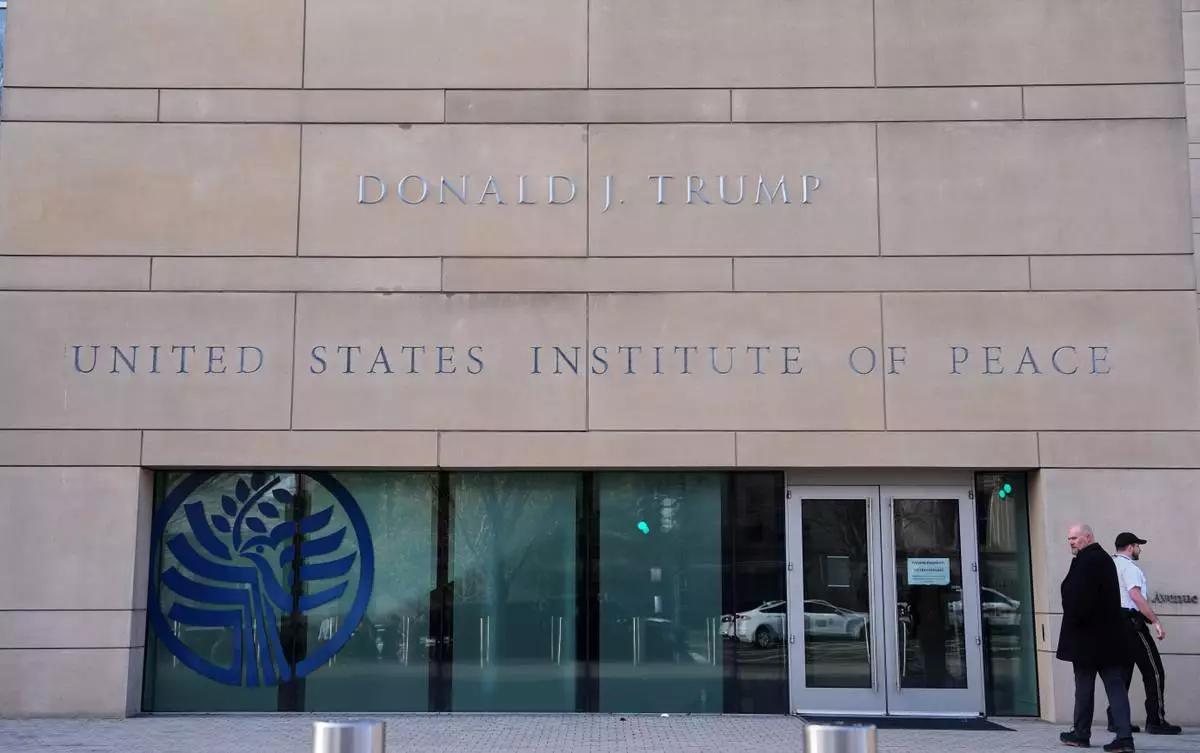
FILE - President Donald Trump's name is seen on the U.S. Institute of Peace building, Dec. 4, 2025, in Washington. (AP Photo/Evan Vucci, File)