Skip to Content Facebook Feature Image

The travertine quarries that built ancient Rome are carving rock for a new generation of temples

ENT

The travertine quarries that built ancient Rome are carving rock for a new generation of temples
ENT

ENT

The travertine quarries that built ancient Rome are carving rock for a new generation of temples

2026-02-19 16:12 Last Updated At:16:20

TIVOLI, Italy (AP) — Long ago, when Romans wanted to build a new temple, they would head to the nearby quarries of Tivoli, chisel out blocks of porous rock called lapis tiburtinus — now known as travertine — and float the cargo downstream on rafts to craftsmen in town.

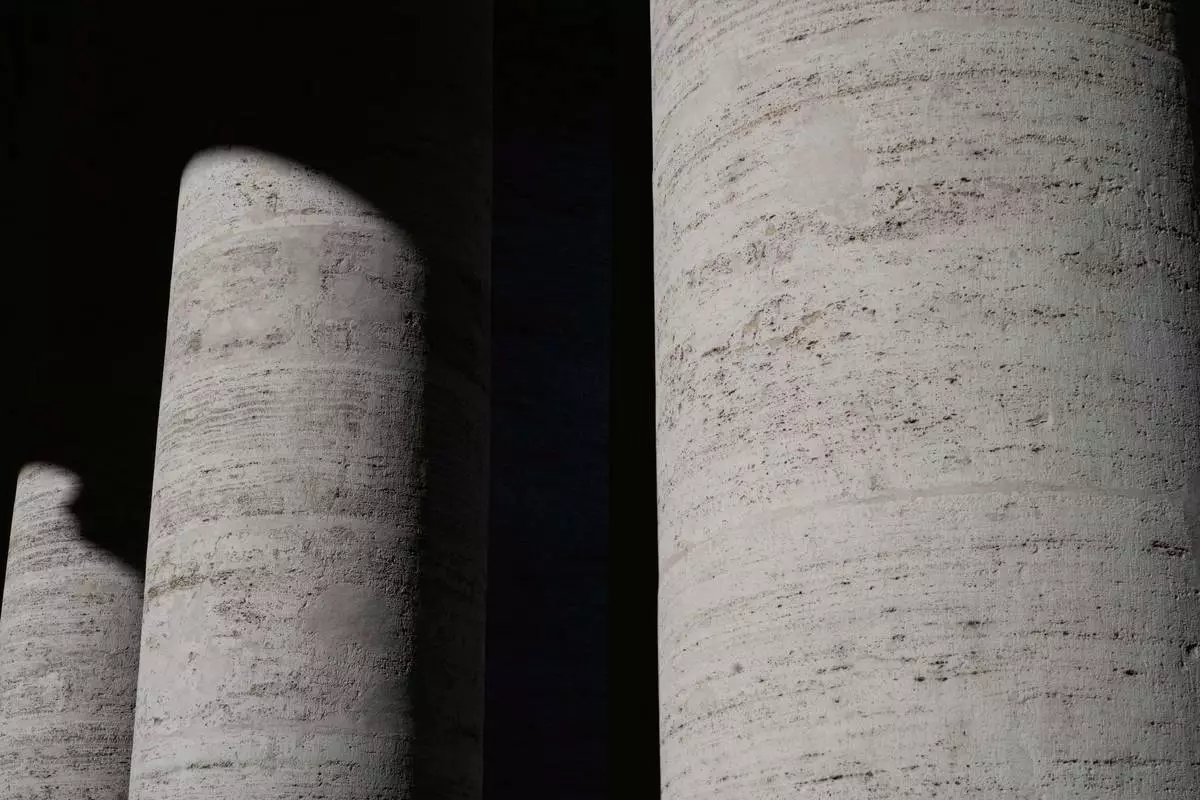
That’s how they made the Colosseum 2,000 years ago. That’s how they made St. Peter’s Basilica and Bernini’s great colonnade hundreds of years later.

More Images
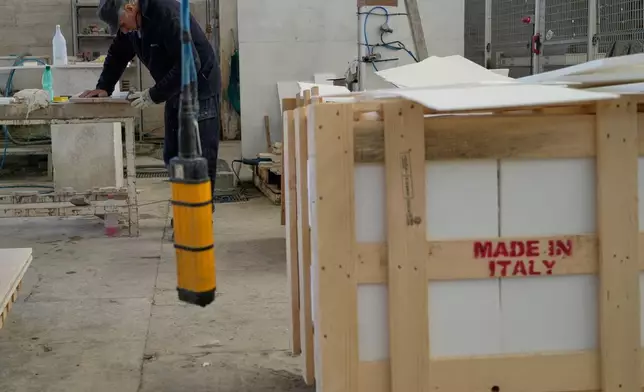
Pieces of travertine that will be used to adorn the tower of the new Manhattan temple in New York City are wrapped for shipping at the Mariotti Carlo SpA stonecutting firm near Tivoli, Italy, 35 kilometers east of Rome, on Friday, Feb. 13, 2026, (AP Photo/Gregorio Borgia)
Pieces of travertine that will be used to adorn the tower of the new Manhattan temple in New York City are wrapped for shipping at the Mariotti Carlo SpA stonecutting firm near Tivoli, Italy, 35 kilometers east of Rome, on Friday, Feb. 13, 2026, (AP Photo/Gregorio Borgia)

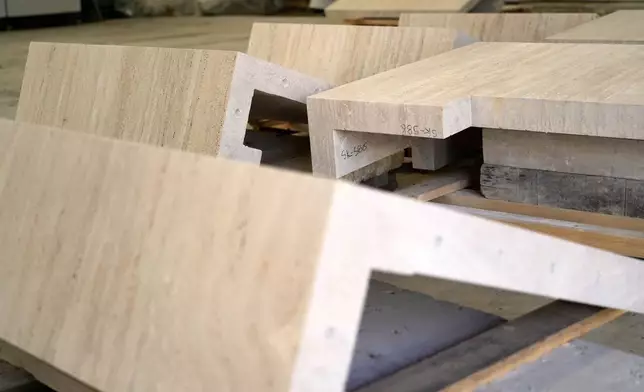
Sections of travertine that will be used to adorn the tower of the new Manhattan Mormon temple in New York City are seen inside the Mariotti Carlo SpA stonecutting firm near Tivoli, Italy, 35 kilometers east of Rome, on Friday, Feb. 13, 2026. (AP Photo/Gregorio Borgia)
Sections of travertine that will be used to adorn the tower of the new Manhattan Mormon temple in New York City are seen inside the Mariotti Carlo SpA stonecutting firm near Tivoli, Italy, 35 kilometers east of Rome, on Friday, Feb. 13, 2026. (AP Photo/Gregorio Borgia)

A man sands and polishes a slab of travertine at the Mariotti Carlo SpA stonecutting firm near Tivoli, Italy, 35 kilometers east of Rome, on Friday, Feb. 13, 2026, that will be used to adorn the new Manhattan temple in New York City. (AP Photo/Gregorio Borgia)
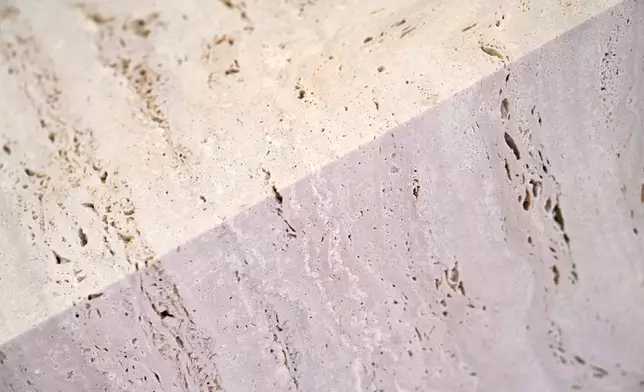
A man sands and polishes a slab of travertine at the Mariotti Carlo SpA stonecutting firm near Tivoli, Italy, 35 kilometers east of Rome, on Friday, Feb. 13, 2026, that will be used to adorn the new Manhattan temple in New York City. (AP Photo/Gregorio Borgia)

Light reverberates on a travertine block at the Mariotti Carlo SpA stonecutting firm in Tivoli, Italy, on Friday, Feb. 13, 2026; the block will be used to adorn the tower of the new Manhattan temple in New York City. (AP Photo/Gregorio Borgia)
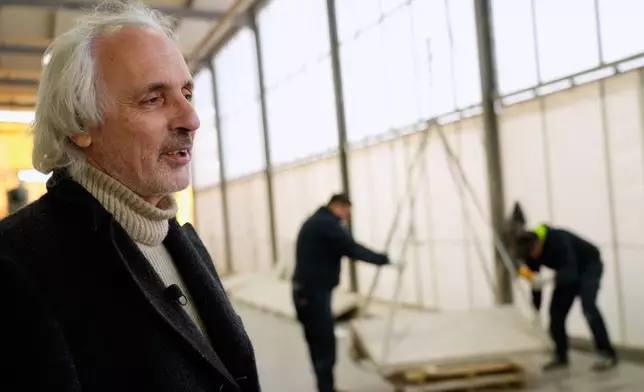
Light reverberates on a travertine block at the Mariotti Carlo SpA stonecutting firm in Tivoli, Italy, on Friday, Feb. 13, 2026; the block will be used to adorn the tower of the new Manhattan temple in New York City. (AP Photo/Gregorio Borgia)
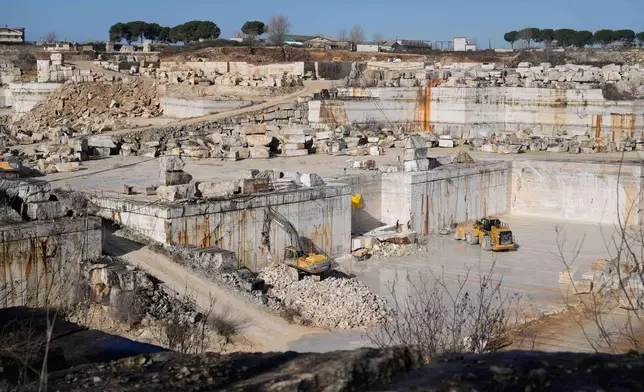
Fabrizio Mariotti is interviewed by The Associated Press at the Mariotti Carlo SpA stonecutting firm in Tivoli, Italy, on Friday, Feb. 13, 2026, as workers stack pieces of travertine that will be used to adorn the tower of the new Manhattan temple in New York City. (AP Photo/Gregorio Borgia)

Fabrizio Mariotti is interviewed by The Associated Press at the Mariotti Carlo SpA stonecutting firm in Tivoli, Italy, on Friday, Feb. 13, 2026, as workers stack pieces of travertine that will be used to adorn the tower of the new Manhattan temple in New York City. (AP Photo/Gregorio Borgia)

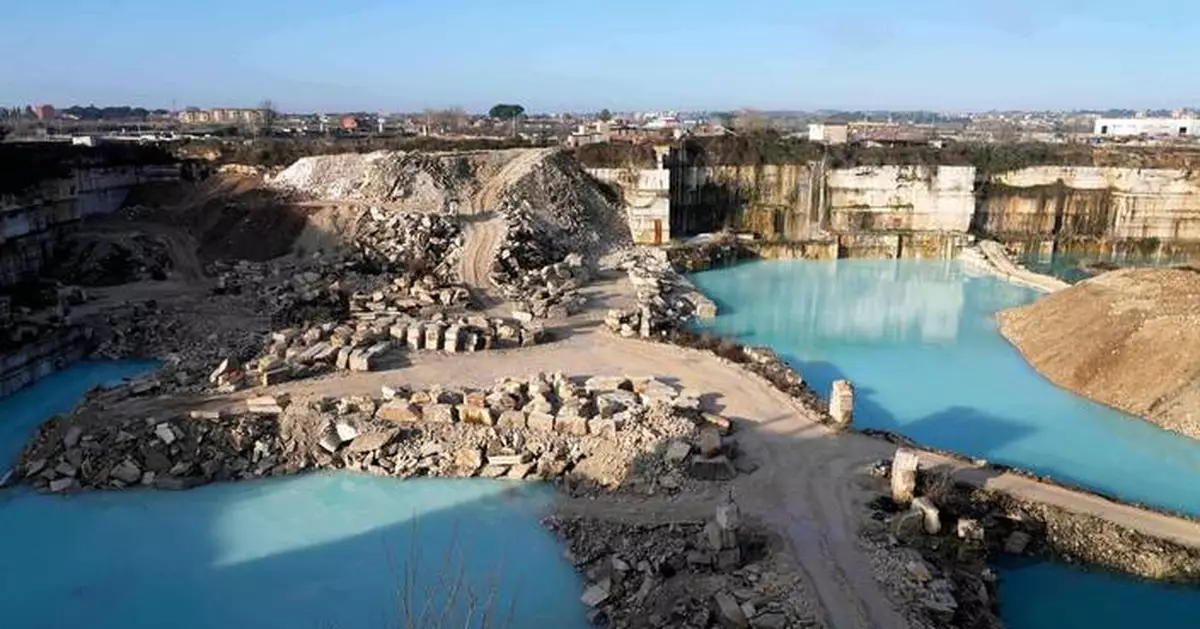
A general view of the Degemar Quarry near Tivoli, Italy, 35 kilometers east of Rome, on Friday, Feb. 13, 2026, where 17th-century Baroque architect Gian Lorenzo Bernini selected travertine for the colonnade of St. Peter's Square. (AP Photo/Gregorio Borgia)
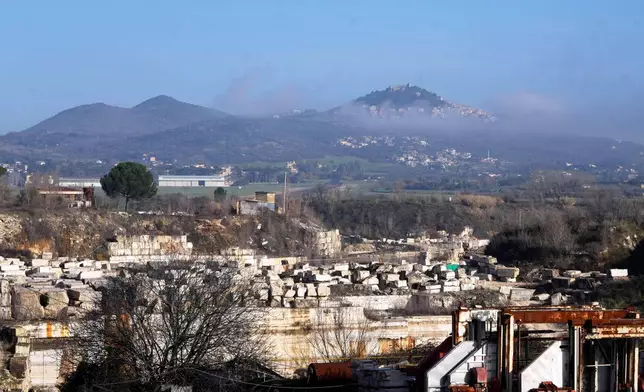
A general view of the Degemar Quarry near Tivoli, Italy, 35 kilometers east of Rome, on Friday, Feb. 13, 2026, where 17th-century Baroque architect Gian Lorenzo Bernini selected travertine for the colonnade of St. Peter's Square. (AP Photo/Gregorio Borgia)
A general view of the Degemar Quarry near Tivoli, Italy, 35 kilometers east of Rome, on Friday, Feb. 13, 2026, where 17th-century Baroque architect Gian Lorenzo Bernini selected travertine for the colonnade of St. Peter's Square. (AP Photo/Gregorio Borgia)
A general view of the Degemar Quarry near Tivoli, Italy, 35 kilometers east of Rome, on Friday, Feb. 13, 2026, where 17th-century Baroque architect Gian Lorenzo Bernini selected travertine for the colonnade of St. Peter's Square. (AP Photo/Gregorio Borgia)
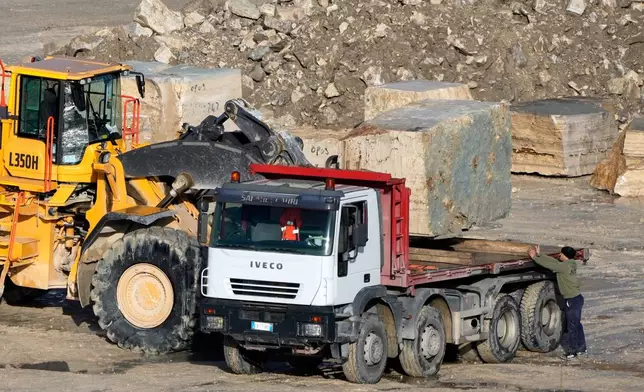
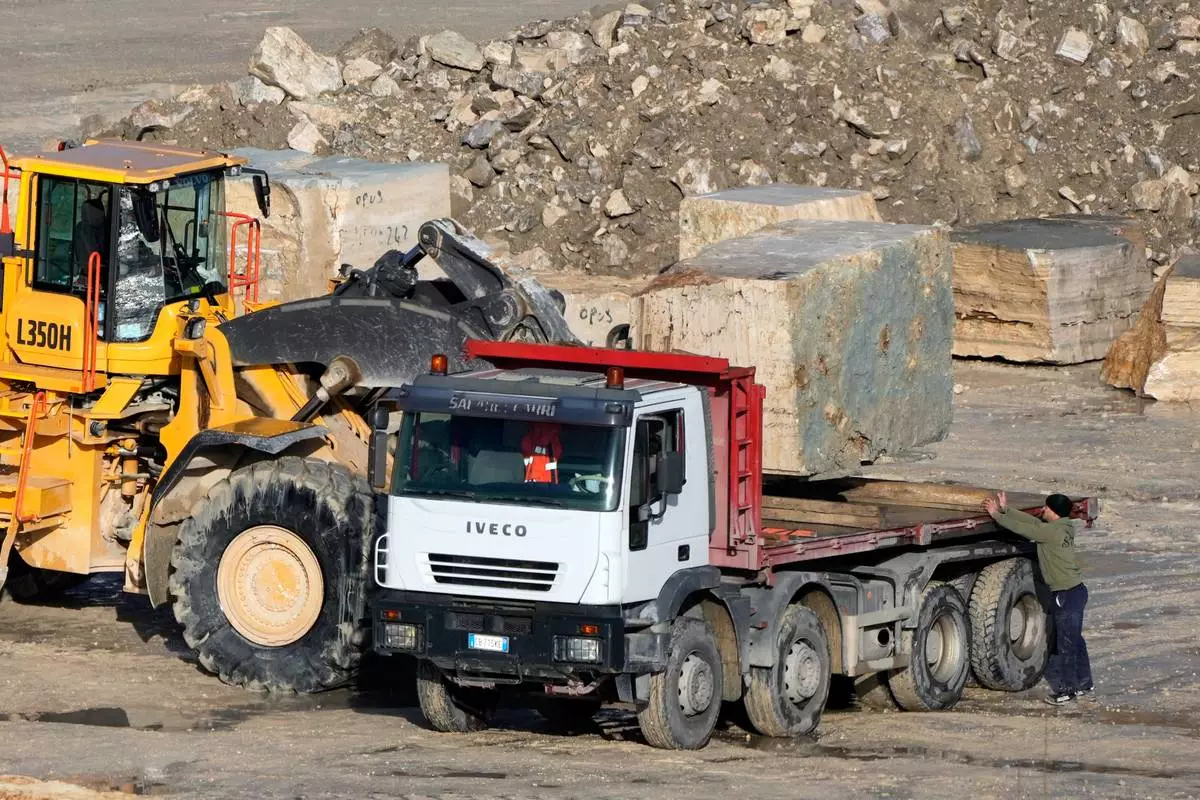
A wheel loader loads a block of travertine onto a truck at the Degemar Quarry near Tivoli, Italy, 35 kilometers east of Rome, on Friday, Feb. 13, 2026, where 17th-century Baroque architect Gian Lorenzo Bernini selected travertine for the colonnade of St. Peter's Square. (AP Photo/Gregorio Borgia)
A wheel loader loads a block of travertine onto a truck at the Degemar Quarry near Tivoli, Italy, 35 kilometers east of Rome, on Friday, Feb. 13, 2026, where 17th-century Baroque architect Gian Lorenzo Bernini selected travertine for the colonnade of St. Peter's Square. (AP Photo/Gregorio Borgia)
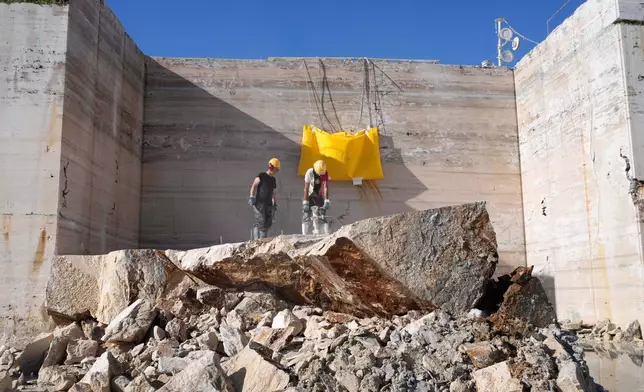
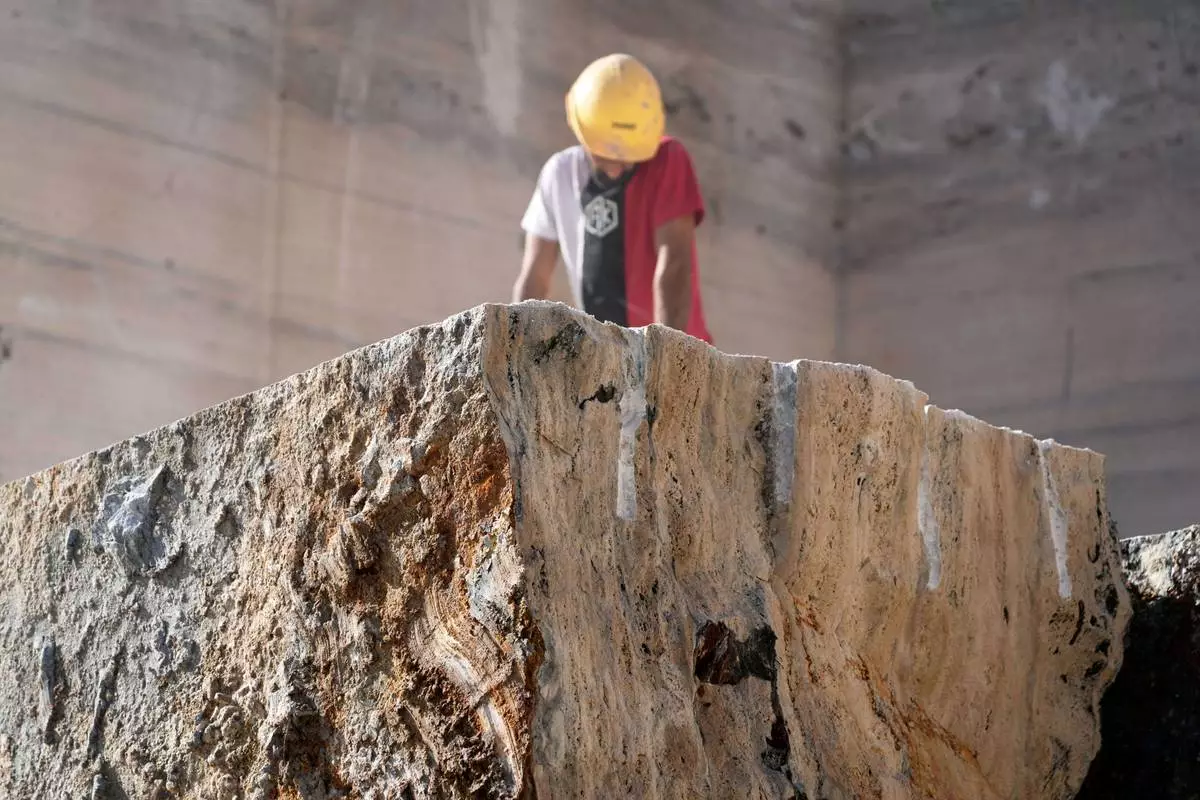
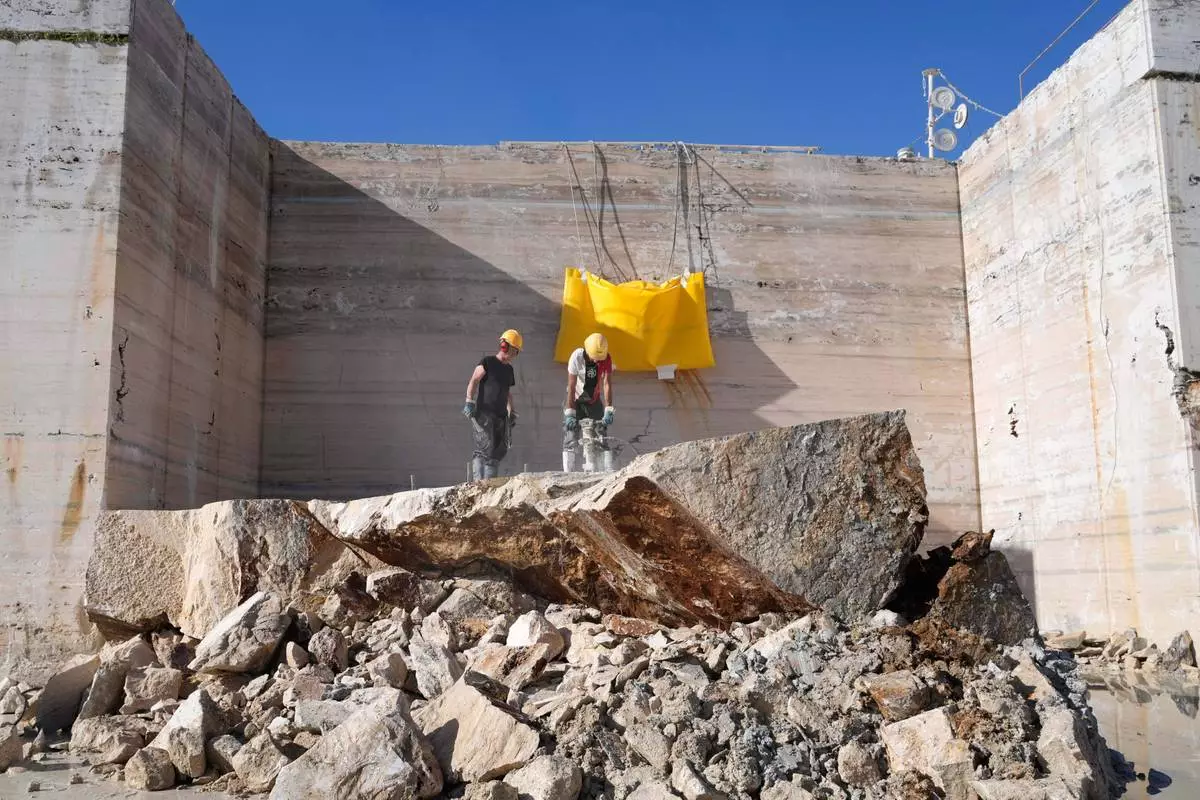
Workers use a jackhammer to break a block of travertine at the Degemar Quarry near Tivoli, Italy, 35 kilometers east of Rome, on Friday, Feb. 13, 2026, where 17th-century Baroque architect Gian Lorenzo Bernini selected travertine for the colonnade of St. Peter's Square. (AP Photo/Gregorio Borgia)

Workers use a jackhammer to break a block of travertine at the Degemar Quarry near Tivoli, Italy, 35 kilometers east of Rome, on Friday, Feb. 13, 2026, where 17th-century Baroque architect Gian Lorenzo Bernini selected travertine for the colonnade of St. Peter's Square. (AP Photo/Gregorio Borgia)

Workers use a jackhammer to break a block of travertine at the Degemar Quarry near Tivoli, Italy, 35 kilometers east of Rome, on Friday, Feb. 13, 2026, where 17th-century Baroque architect Gian Lorenzo Bernini selected travertine for the colonnade of St. Peter's Square. (AP Photo/Gregorio Borgia)

Workers use a jackhammer to break a block of travertine at the Degemar Quarry near Tivoli, Italy, 35 kilometers east of Rome, on Friday, Feb. 13, 2026, where 17th-century Baroque architect Gian Lorenzo Bernini selected travertine for the colonnade of St. Peter's Square. (AP Photo/Gregorio Borgia)

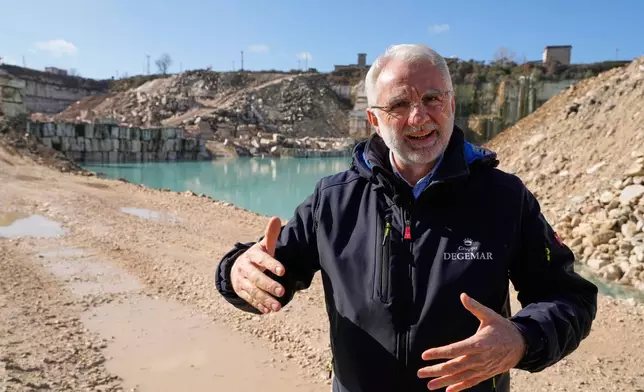
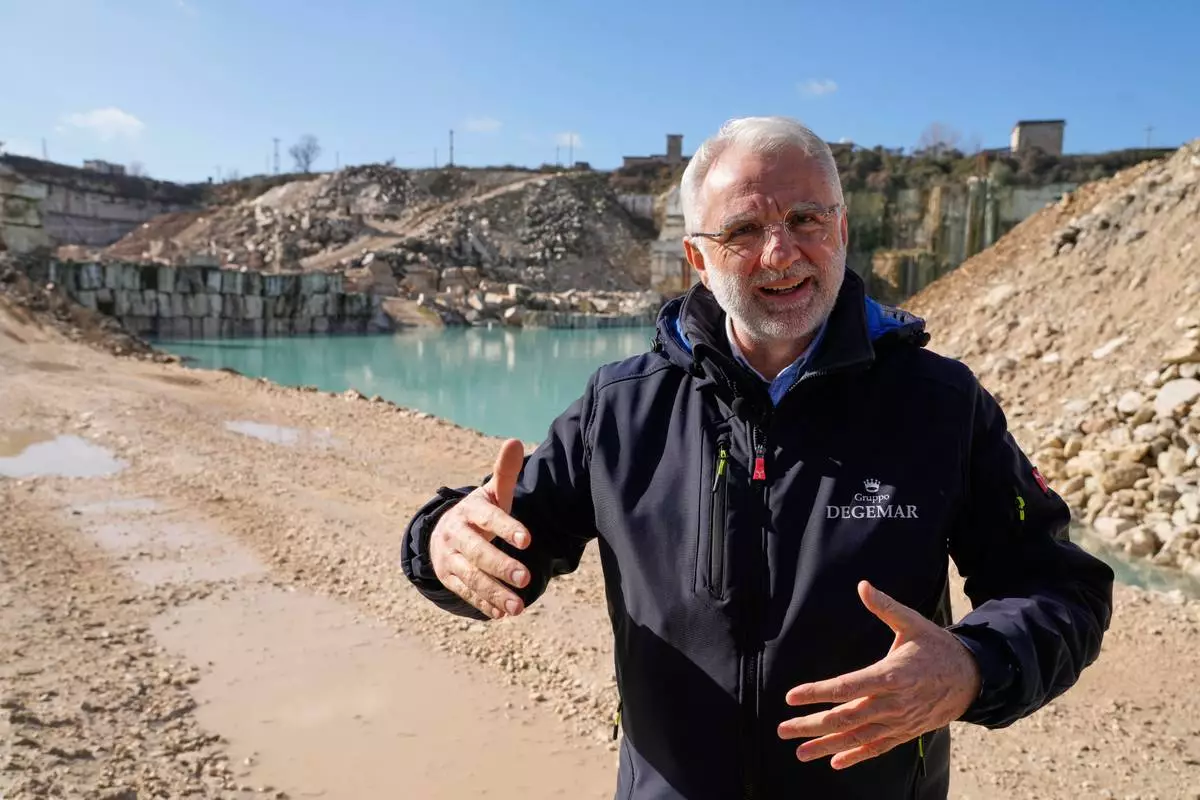
Vincenzo De Gennaro, owner of the Degemar Quarry, is interviewed by The Associated Press at his quarry near Tivoli, Italy, 35 kilometers east of Rome, on Friday, Feb. 13, 2026, where 17th-century Baroque architect Gian Lorenzo Bernini selected travertine for the colonnade of St. Peter's Square. (AP Photo/Gregorio Borgia)

Vincenzo De Gennaro, owner of the Degemar Quarry, is interviewed by The Associated Press at his quarry near Tivoli, Italy, 35 kilometers east of Rome, on Friday, Feb. 13, 2026, where 17th-century Baroque architect Gian Lorenzo Bernini selected travertine for the colonnade of St. Peter's Square. (AP Photo/Gregorio Borgia)

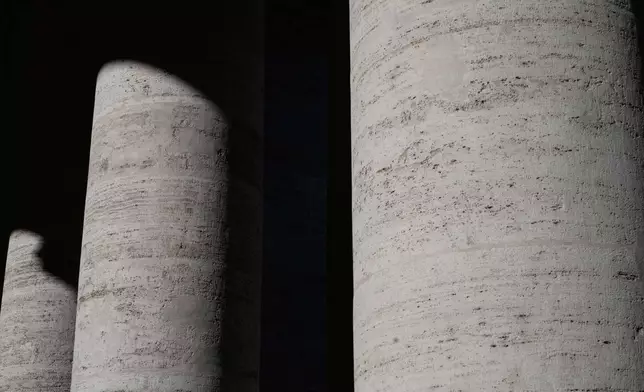
A view of Gian Lorenzo Bernini's 17th-century colonnade in St. Peter's Square in Vatican City, on Sunday, Feb. 15, 2026, which was built with travertine from Tivoli, Italy, 35 kilometers east of Rome. (AP Photo/Gregorio Borgia)
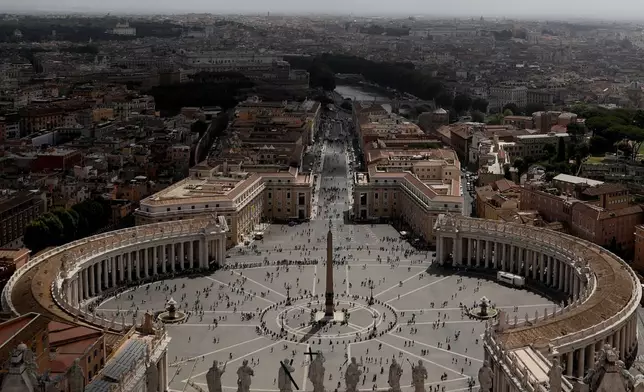
A view of Gian Lorenzo Bernini's 17th-century colonnade in St. Peter's Square in Vatican City, on Sunday, Feb. 15, 2026, which was built with travertine from Tivoli, Italy, 35 kilometers east of Rome. (AP Photo/Gregorio Borgia)
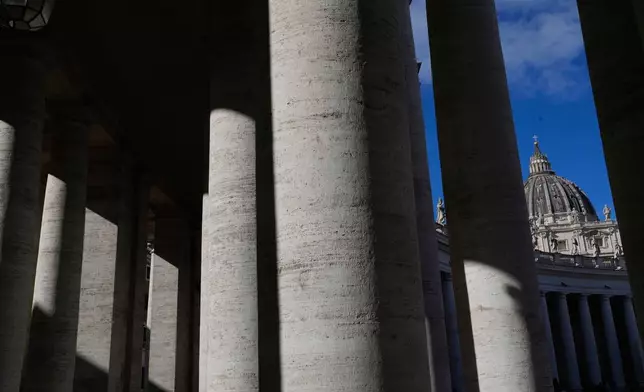
A view of Gian Lorenzo Bernini's 17th-century colonnade in St. Peter's Square in Vatican City, on Sunday, Feb. 15, 2026, which was built with travertine from Tivoli, Italy, 35 kilometers east of Rome. (AP Photo/Gregorio Borgia)
A view of Gian Lorenzo Bernini's 17th-century colonnade in St. Peter's Square in Vatican City, on Sunday, Feb. 15, 2026, which was built with travertine from Tivoli, Italy, 35 kilometers east of Rome. (AP Photo/Gregorio Borgia)

A view of Gian Lorenzo Bernini's 17th-century colonnade in St. Peter's Square in Vatican City, on Sunday, Feb. 15, 2026, which was built with travertine from Tivoli, Italy, 35 kilometers east of Rome. (AP Photo/Gregorio Borgia)

A view of Gian Lorenzo Bernini's 17th-century colonnade in St. Peter's Square in Vatican City, on Sunday, Feb. 15, 2026, which was built with travertine from Tivoli, Italy, 35 kilometers east of Rome. (AP Photo/Gregorio Borgia)

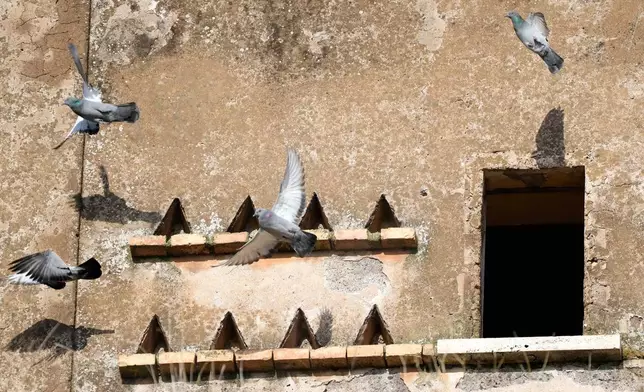
Pigeons fly away from the farmhouse at the Degemar Quarry near Tivoli, Italy, 35 kilometers east of Rome, on Friday, Feb. 13, 2026, where 17th-century Baroque architect Gian Lorenzo Bernini selected travertine for the colonnade of St. Peter's Square. (AP Photo/Gregorio Borgia)
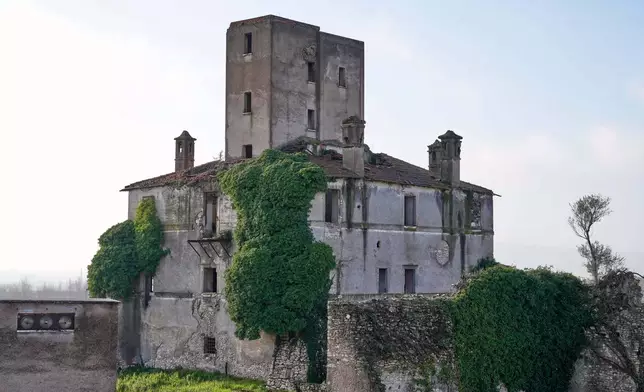
Pigeons fly away from the farmhouse at the Degemar Quarry near Tivoli, Italy, 35 kilometers east of Rome, on Friday, Feb. 13, 2026, where 17th-century Baroque architect Gian Lorenzo Bernini selected travertine for the colonnade of St. Peter's Square. (AP Photo/Gregorio Borgia)

View of the farmhouse at the Degemar Quarry near Tivoli, Italy, 35 kilometers east of Rome, where 17th-century Baroque architect Gian Lorenzo Bernini selected travertine for the colonnade of St. Peter's Square, is shown on Friday, Feb. 13, 2026. (AP Photo/Gregorio Borgia)
View of the farmhouse at the Degemar Quarry near Tivoli, Italy, 35 kilometers east of Rome, where 17th-century Baroque architect Gian Lorenzo Bernini selected travertine for the colonnade of St. Peter's Square, is shown on Friday, Feb. 13, 2026. (AP Photo/Gregorio Borgia)

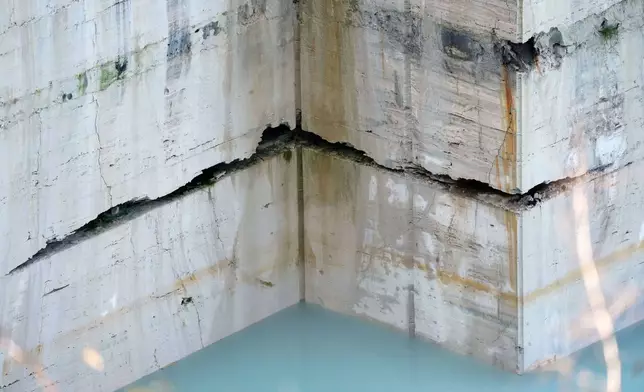
A wall of sectioned travertine is seen at the Degemar Quarry near Tivoli, Italy, 35 kilometers east of Rome, on Friday, Feb. 13, 2026, where 17th-century Baroque architect Gian Lorenzo Bernini selected travertine for the colonnade of St. Peter's Square. (AP Photo/Gregorio Borgia)
A wall of sectioned travertine is seen at the Degemar Quarry near Tivoli, Italy, 35 kilometers east of Rome, on Friday, Feb. 13, 2026, where 17th-century Baroque architect Gian Lorenzo Bernini selected travertine for the colonnade of St. Peter's Square. (AP Photo/Gregorio Borgia)
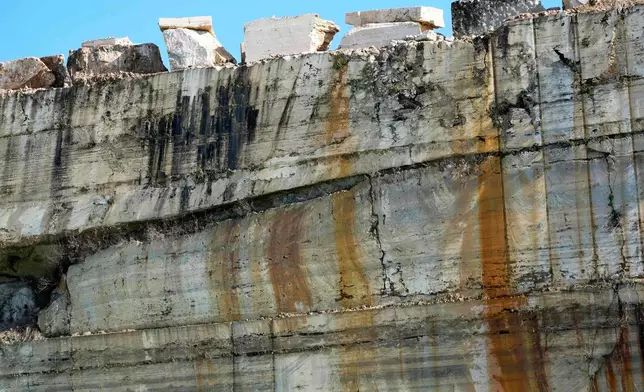
A wall of sectioned travertine is seen at the Degemar quarry near Tivoli, Italy, on Friday, Feb. 13, 2026, where 17th-century Baroque architect Gian Lorenzo Bernini selected travertine for the colonnade of St. Peter's Square. (AP Photo/Gregorio Borgia)
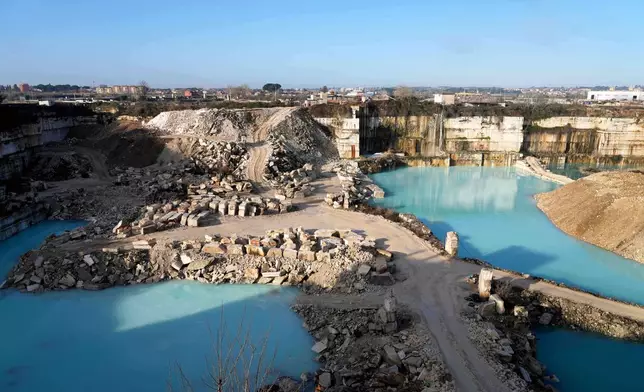
A wall of sectioned travertine is seen at the Degemar quarry near Tivoli, Italy, on Friday, Feb. 13, 2026, where 17th-century Baroque architect Gian Lorenzo Bernini selected travertine for the colonnade of St. Peter's Square. (AP Photo/Gregorio Borgia)

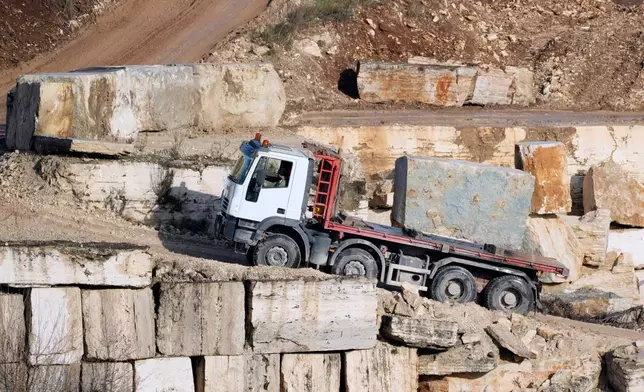
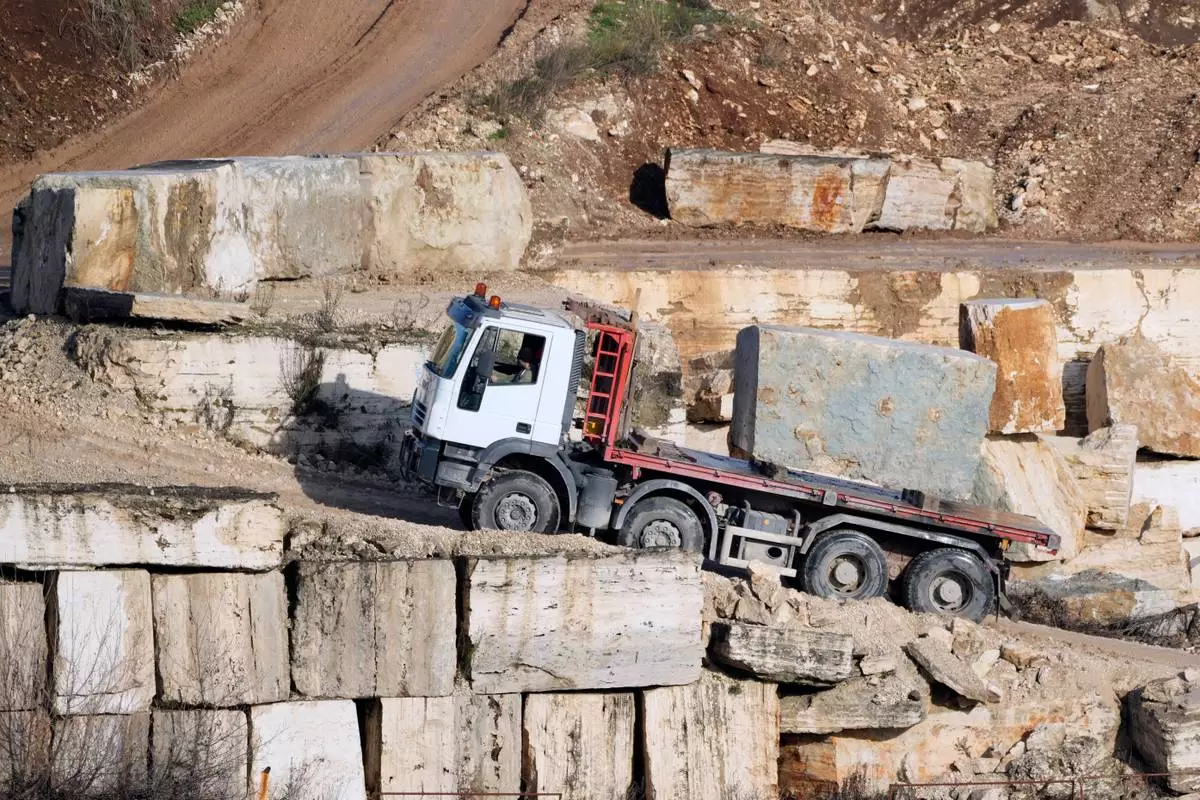
A truck carries a block of travertine at the Degemar Quarry near Tivoli, Italy, 35 kilometers east of Rome, on Friday, Feb. 13, 2026, where 17th-century Baroque architect Gian Lorenzo Bernini selected travertine for the colonnade of St. Peter's Square. (AP Photo/Gregorio Borgia)

A truck carries a block of travertine at the Degemar Quarry near Tivoli, Italy, 35 kilometers east of Rome, on Friday, Feb. 13, 2026, where 17th-century Baroque architect Gian Lorenzo Bernini selected travertine for the colonnade of St. Peter's Square. (AP Photo/Gregorio Borgia)

A general view of the Degemar Quarry near Tivoli, Italy, 35 kilometers east of Rome, on Friday, Feb. 13, 2026, where 17th-century Baroque architect Gian Lorenzo Bernini selected travertine for the colonnade of St. Peter's Square. (AP Photo/Gregorio Borgia)

A general view of the Degemar Quarry near Tivoli, Italy, 35 kilometers east of Rome, on Friday, Feb. 13, 2026, where 17th-century Baroque architect Gian Lorenzo Bernini selected travertine for the colonnade of St. Peter's Square. (AP Photo/Gregorio Borgia)

Today, the same quarries that built Rome with their distinctive pock-marked travertine are still being dug out to build a new generation of churches, temples and mosques around the world — as well as banks, museums, government buildings and private homes.

While other countries have versions of the sedimentary limestone, Roman travertine is unique because it is quarried underground in the sulfuric springs and basins around Tivoli. Made up mostly of calcium carbonate minerals, Roman travertine was formed hundreds of thousands of years ago by deposits of calcium, sulfur and other minerals, and shows the region's history of volcanic eruptions, forests and fossils in its striated layers.

It is prized by architects for a number of reasons: It’s strong, plentiful and can withstand any number of climactic and environmental assaults. Depending on how and where it’s cut, it has a variety of looks: rough or sleek, from a warm white with irregular black holes to sandy beige with gray, brown or even greenish veins.

For four generations, the Mariotti Carlo SpA stonecutting firm has been carving travertine to order, fulfilling some of the world’s most distinctive architectural commissions: the Getty Center in Los Angeles, the Bank of China headquarters in Beijing, the Great Mosque in Algiers, Algeria, to name a few.

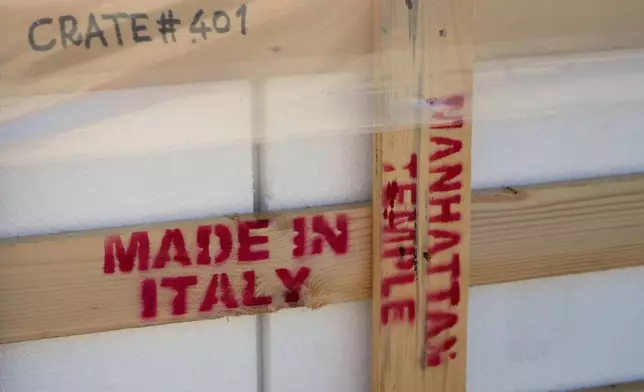
On a recent workday, pieces of a temple being rebuilt by The Church of Jesus Christ of Latter-day Saints, widely known as the Mormon church, are lying neatly on the floor of Mariotti's Tivoli warehouse — hunks of travertine carved from the nearby quarries and cut in made-to-measure puzzle pieces that will be assembled on-site in New York City.

After providing the travertine for the Latter-day Saint temple in Rome, Mariotti was chosen by the church’s architects to restore the temple on Manhattan’s Upper West Side. The temple sits across Broadway from Lincoln Center and the Julliard School, both built with Mariotti-cut travertine decades ago when the rock first reached the U.S. market.

“Travertine is a classic stone known all over the world. It’s a bit like carrying the light of Rome everywhere, because the way travertine reflects light is very special,” said Fabrizio Mariotti, head of the family business.

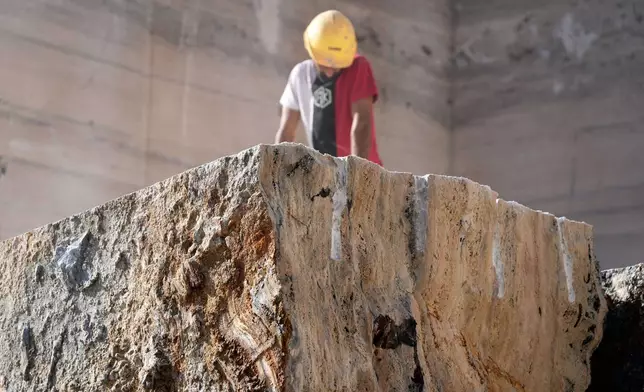
All around the Tivoli quarries, the air is heavy with the stench of sulfur and the constant pounding, clinking and cracking of giant jackhammers blasting ancient rock into pieces.

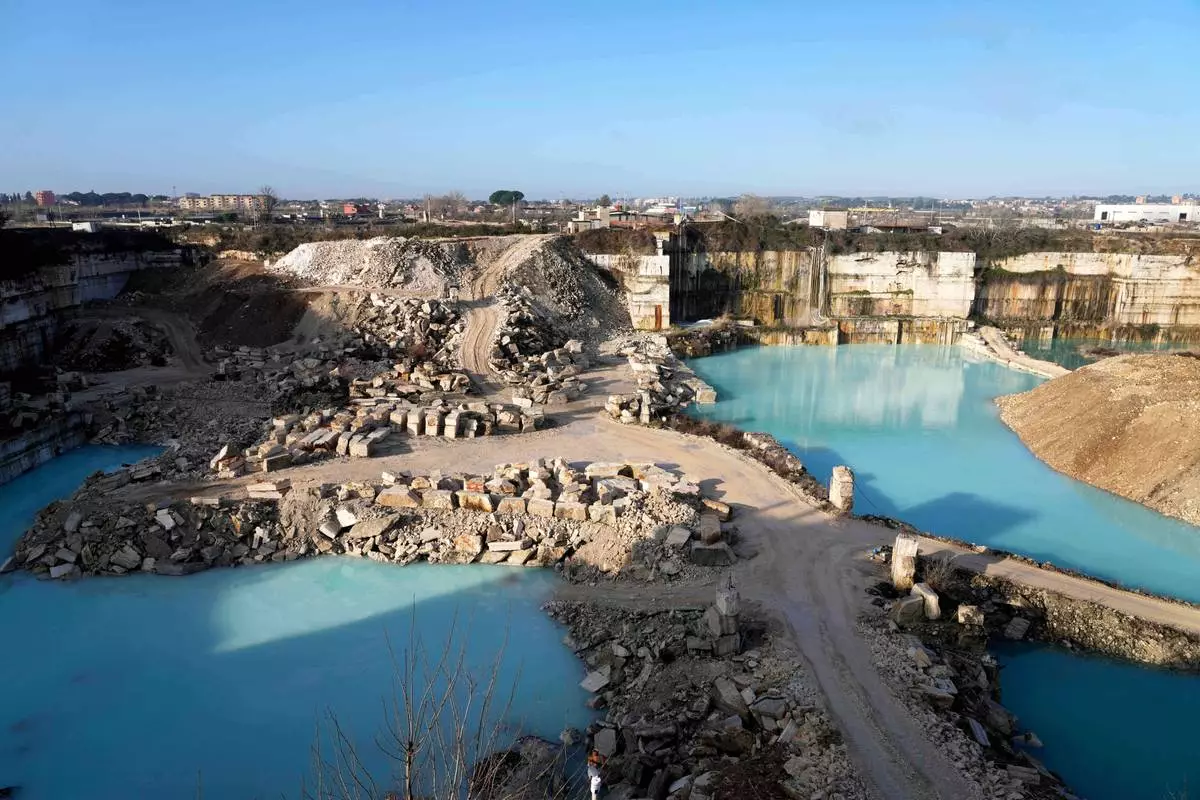
At the Degemar quarries, drilled down to 30 meters (yards) under sea level, bright blue ponds of sulfur springs pool the travertine residue as flat-bed trucks haul stone slabs weighing 33 tons up to street level.

It was here that Gian Lorenzo Bernini, the great Baroque sculptor and architect, sourced the brilliant white travertine for the 284 columns and 88 pillars of the colonnade embracing St. Peter’s Square, as well as his other Catholic and Roman marvels.

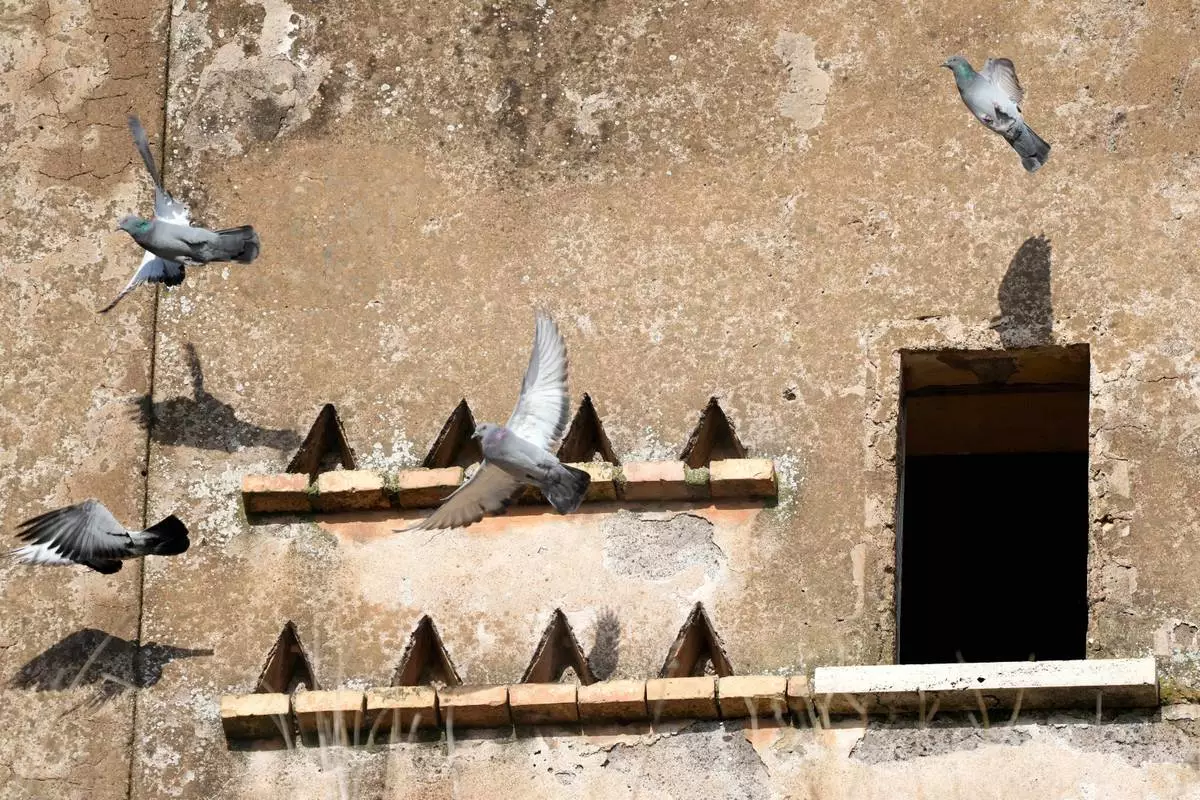
Bernini spent so much time here selecting his rock that he had a home overlooking the quarry, which still stands today.

The quarry’s current head, Vincenzo De Gennaro, reminds visitors that Bernini’s tower still features the coop for the homing pigeons that would transport the orders to the quarry from Rome for the measurements of rocks that were needed.

Nowadays, the quarry is filling orders much farther afield: the new airport in Riyadh, Saudi Arabia, the new headquarters of China's governing party in Shenzhen, among others.

“It is special, a special stone because it is a living stone, a stone that is born in a cocktail of mineral waters,” De Gennaro said as he dodged earth movers and walked among the sulfur pools.

Lest anyone question travertine's durability, they need only look to Rome, he said.

“There is the concrete experience of a civilization dating back thousands of years that stands in the light of day and has been shining undisturbed for 2,000 years,” he said. “That is the guarantee.”

Marco Ferrero, professor of civil engineering at Rome’s La Sapienza University, said part of travertine’s appeal is that it harks back to ancient Rome “and therefore also to the magic of the classical world.”

He said it embodies Rome's spirit in many ways: Travertine is solid, resistant and noble but not showy like its cousin, marble, which doesn’t fare as well over time when exposed to the elements.

“We can make this comparison: Marble speaks to us in beautiful Italian, in literary Italian, while travertine speaks to us in Roman dialect,” he said. “It is truly the stone of the Romans. And like Roman cuisine, which is made up of simple dishes, often using discarded ingredients, travertine is a genuine and traditional stone.”

Associated Press religion coverage receives support through the AP’s collaboration with The Conversation US, with funding from Lilly Endowment Inc. The AP is solely responsible for this content.
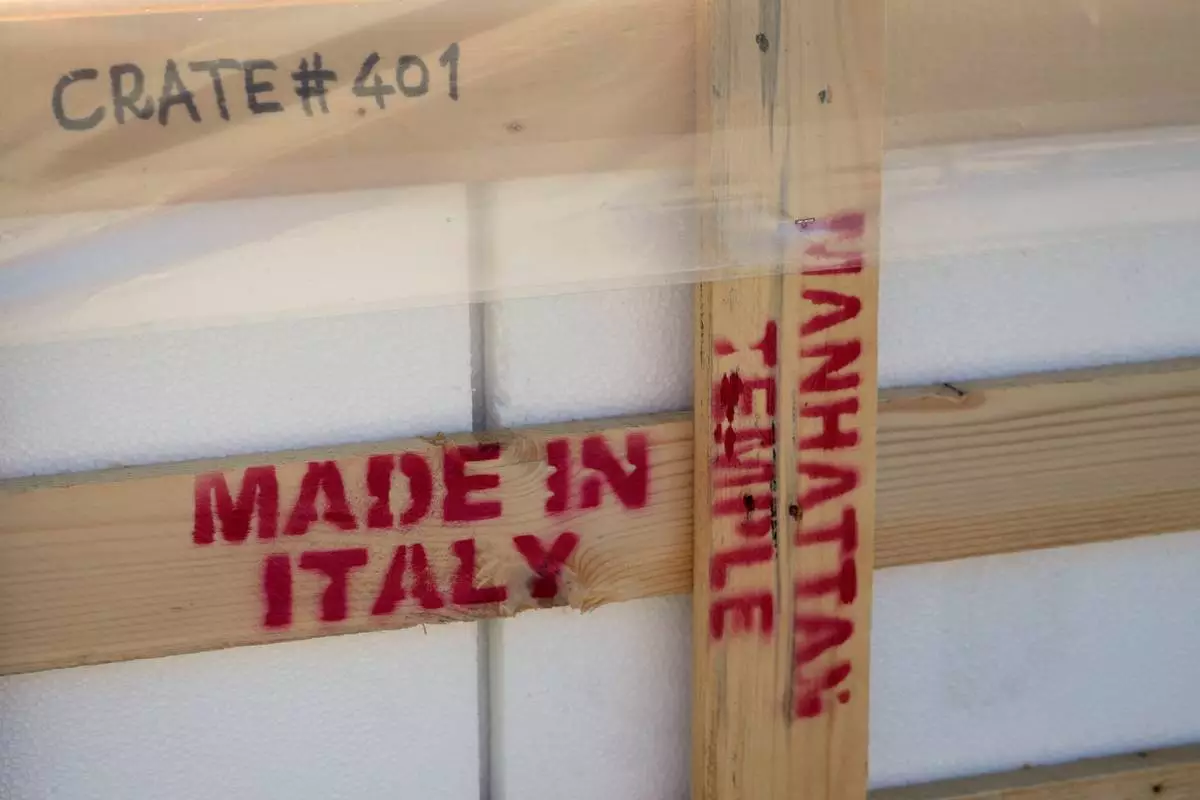
Pieces of travertine that will be used to adorn the tower of the new Manhattan temple in New York City are wrapped for shipping at the Mariotti Carlo SpA stonecutting firm near Tivoli, Italy, 35 kilometers east of Rome, on Friday, Feb. 13, 2026, (AP Photo/Gregorio Borgia)
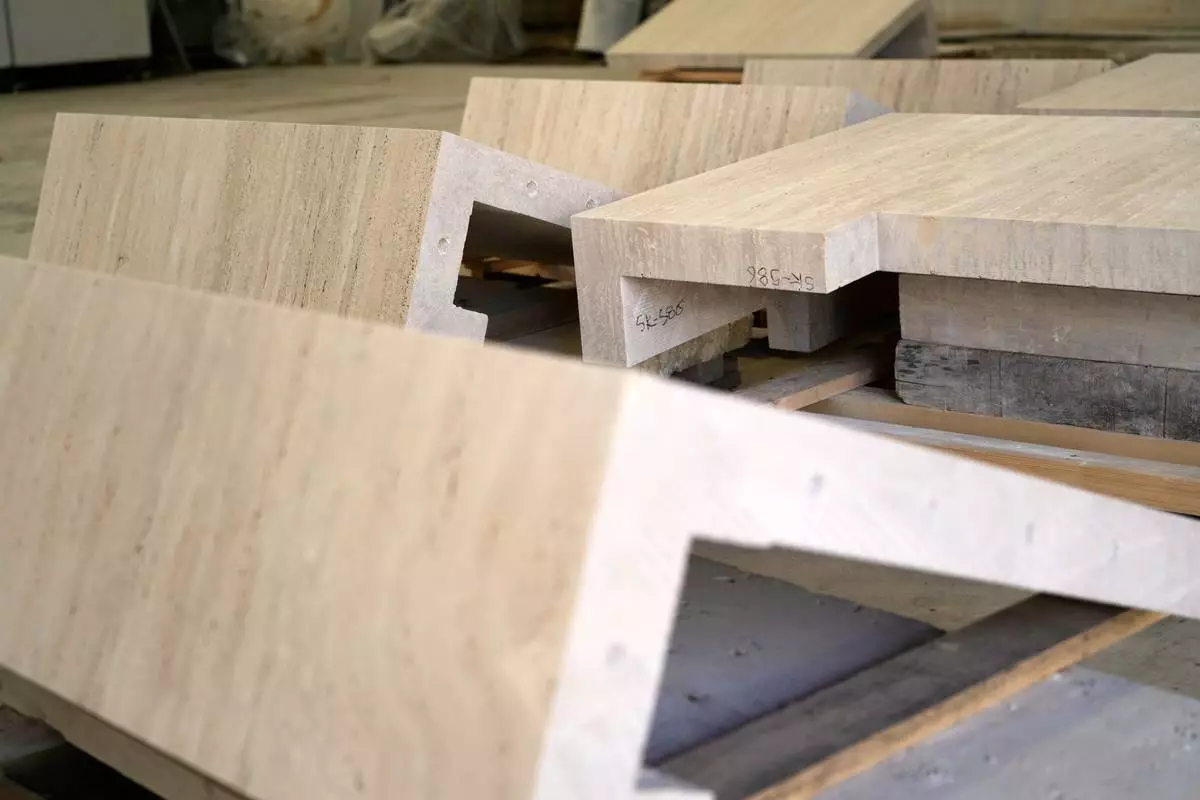
Pieces of travertine that will be used to adorn the tower of the new Manhattan temple in New York City are wrapped for shipping at the Mariotti Carlo SpA stonecutting firm near Tivoli, Italy, 35 kilometers east of Rome, on Friday, Feb. 13, 2026, (AP Photo/Gregorio Borgia)

Sections of travertine that will be used to adorn the tower of the new Manhattan Mormon temple in New York City are seen inside the Mariotti Carlo SpA stonecutting firm near Tivoli, Italy, 35 kilometers east of Rome, on Friday, Feb. 13, 2026. (AP Photo/Gregorio Borgia)
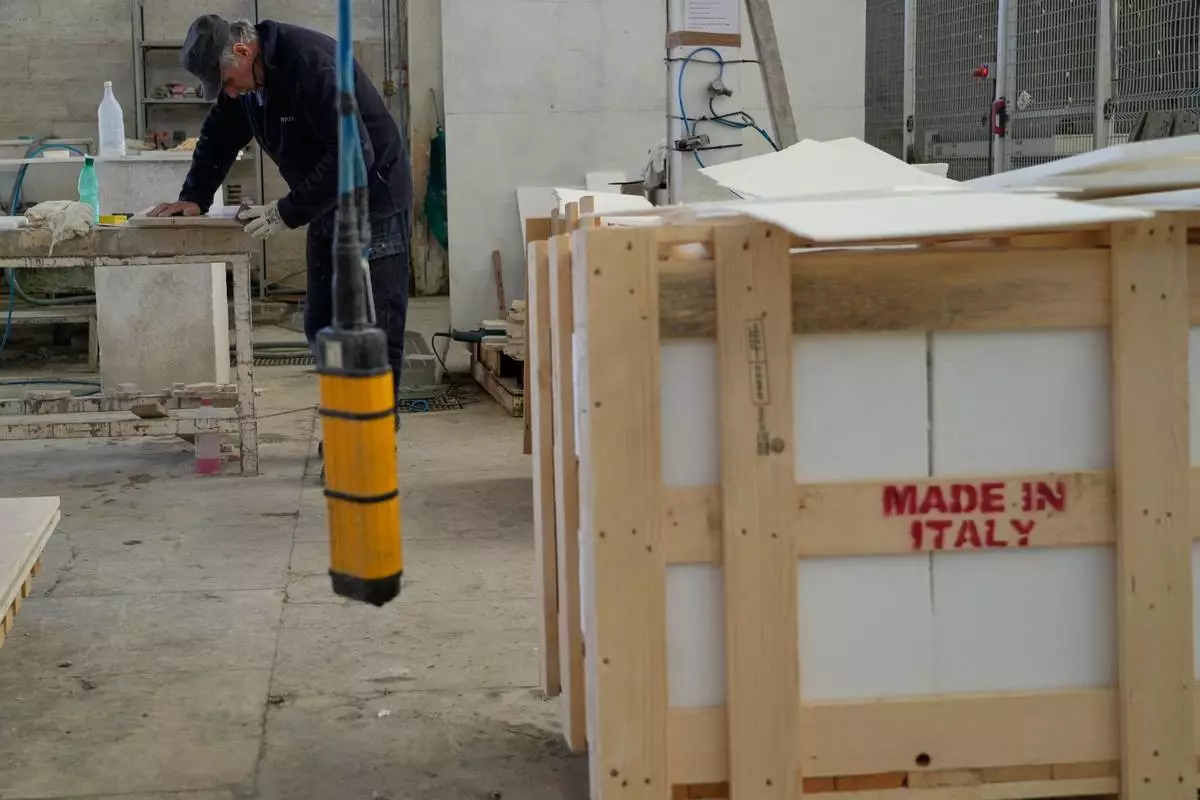
Sections of travertine that will be used to adorn the tower of the new Manhattan Mormon temple in New York City are seen inside the Mariotti Carlo SpA stonecutting firm near Tivoli, Italy, 35 kilometers east of Rome, on Friday, Feb. 13, 2026. (AP Photo/Gregorio Borgia)

A man sands and polishes a slab of travertine at the Mariotti Carlo SpA stonecutting firm near Tivoli, Italy, 35 kilometers east of Rome, on Friday, Feb. 13, 2026, that will be used to adorn the new Manhattan temple in New York City. (AP Photo/Gregorio Borgia)
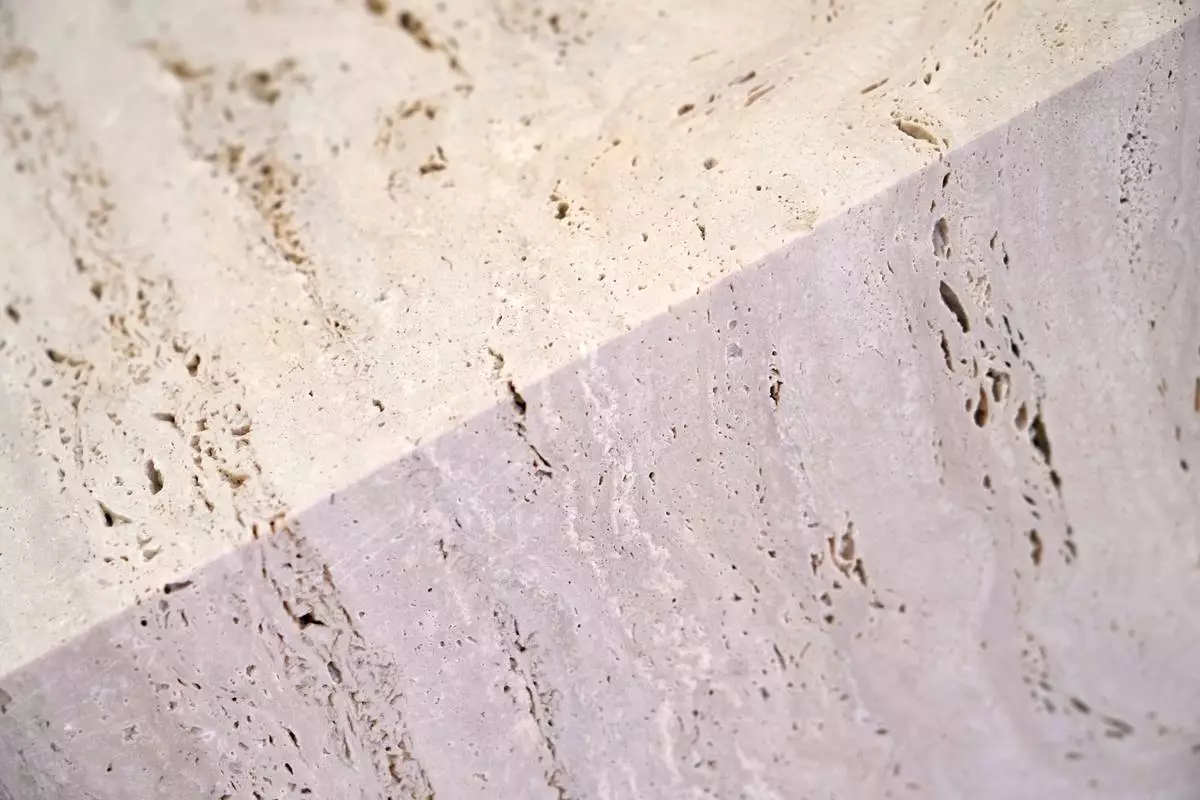
A man sands and polishes a slab of travertine at the Mariotti Carlo SpA stonecutting firm near Tivoli, Italy, 35 kilometers east of Rome, on Friday, Feb. 13, 2026, that will be used to adorn the new Manhattan temple in New York City. (AP Photo/Gregorio Borgia)

Light reverberates on a travertine block at the Mariotti Carlo SpA stonecutting firm in Tivoli, Italy, on Friday, Feb. 13, 2026; the block will be used to adorn the tower of the new Manhattan temple in New York City. (AP Photo/Gregorio Borgia)
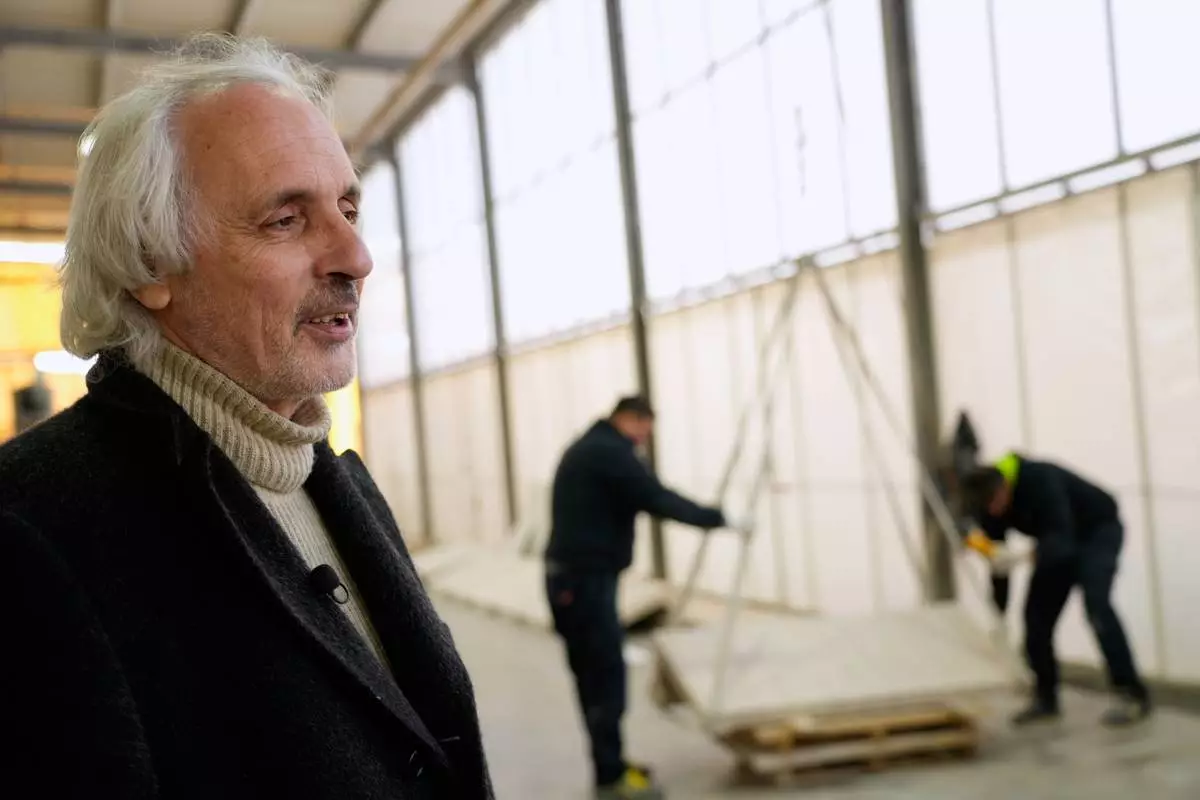
Light reverberates on a travertine block at the Mariotti Carlo SpA stonecutting firm in Tivoli, Italy, on Friday, Feb. 13, 2026; the block will be used to adorn the tower of the new Manhattan temple in New York City. (AP Photo/Gregorio Borgia)
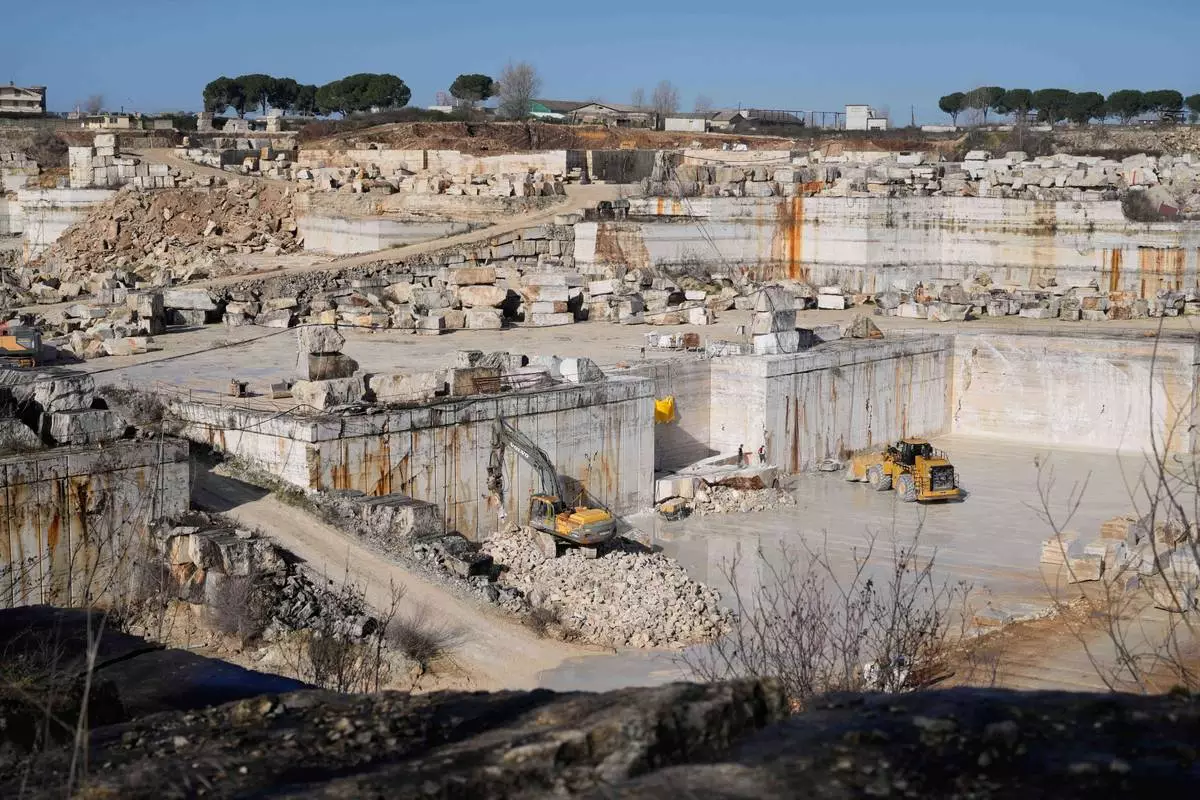
Fabrizio Mariotti is interviewed by The Associated Press at the Mariotti Carlo SpA stonecutting firm in Tivoli, Italy, on Friday, Feb. 13, 2026, as workers stack pieces of travertine that will be used to adorn the tower of the new Manhattan temple in New York City. (AP Photo/Gregorio Borgia)

Fabrizio Mariotti is interviewed by The Associated Press at the Mariotti Carlo SpA stonecutting firm in Tivoli, Italy, on Friday, Feb. 13, 2026, as workers stack pieces of travertine that will be used to adorn the tower of the new Manhattan temple in New York City. (AP Photo/Gregorio Borgia)

A general view of the Degemar Quarry near Tivoli, Italy, 35 kilometers east of Rome, on Friday, Feb. 13, 2026, where 17th-century Baroque architect Gian Lorenzo Bernini selected travertine for the colonnade of St. Peter's Square. (AP Photo/Gregorio Borgia)
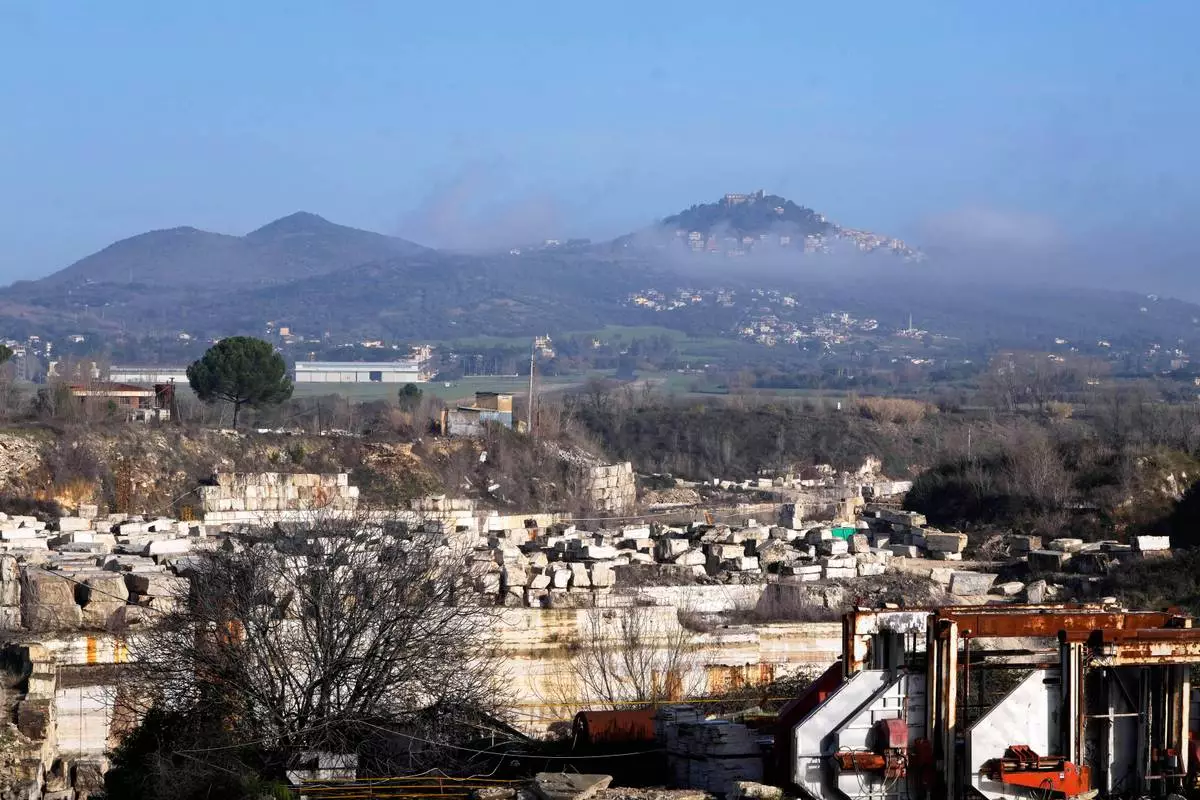
A general view of the Degemar Quarry near Tivoli, Italy, 35 kilometers east of Rome, on Friday, Feb. 13, 2026, where 17th-century Baroque architect Gian Lorenzo Bernini selected travertine for the colonnade of St. Peter's Square. (AP Photo/Gregorio Borgia)
A general view of the Degemar Quarry near Tivoli, Italy, 35 kilometers east of Rome, on Friday, Feb. 13, 2026, where 17th-century Baroque architect Gian Lorenzo Bernini selected travertine for the colonnade of St. Peter's Square. (AP Photo/Gregorio Borgia)
A general view of the Degemar Quarry near Tivoli, Italy, 35 kilometers east of Rome, on Friday, Feb. 13, 2026, where 17th-century Baroque architect Gian Lorenzo Bernini selected travertine for the colonnade of St. Peter's Square. (AP Photo/Gregorio Borgia)
A wheel loader loads a block of travertine onto a truck at the Degemar Quarry near Tivoli, Italy, 35 kilometers east of Rome, on Friday, Feb. 13, 2026, where 17th-century Baroque architect Gian Lorenzo Bernini selected travertine for the colonnade of St. Peter's Square. (AP Photo/Gregorio Borgia)
A wheel loader loads a block of travertine onto a truck at the Degemar Quarry near Tivoli, Italy, 35 kilometers east of Rome, on Friday, Feb. 13, 2026, where 17th-century Baroque architect Gian Lorenzo Bernini selected travertine for the colonnade of St. Peter's Square. (AP Photo/Gregorio Borgia)
Workers use a jackhammer to break a block of travertine at the Degemar Quarry near Tivoli, Italy, 35 kilometers east of Rome, on Friday, Feb. 13, 2026, where 17th-century Baroque architect Gian Lorenzo Bernini selected travertine for the colonnade of St. Peter's Square. (AP Photo/Gregorio Borgia)

Workers use a jackhammer to break a block of travertine at the Degemar Quarry near Tivoli, Italy, 35 kilometers east of Rome, on Friday, Feb. 13, 2026, where 17th-century Baroque architect Gian Lorenzo Bernini selected travertine for the colonnade of St. Peter's Square. (AP Photo/Gregorio Borgia)

Workers use a jackhammer to break a block of travertine at the Degemar Quarry near Tivoli, Italy, 35 kilometers east of Rome, on Friday, Feb. 13, 2026, where 17th-century Baroque architect Gian Lorenzo Bernini selected travertine for the colonnade of St. Peter's Square. (AP Photo/Gregorio Borgia)

Workers use a jackhammer to break a block of travertine at the Degemar Quarry near Tivoli, Italy, 35 kilometers east of Rome, on Friday, Feb. 13, 2026, where 17th-century Baroque architect Gian Lorenzo Bernini selected travertine for the colonnade of St. Peter's Square. (AP Photo/Gregorio Borgia)

Vincenzo De Gennaro, owner of the Degemar Quarry, is interviewed by The Associated Press at his quarry near Tivoli, Italy, 35 kilometers east of Rome, on Friday, Feb. 13, 2026, where 17th-century Baroque architect Gian Lorenzo Bernini selected travertine for the colonnade of St. Peter's Square. (AP Photo/Gregorio Borgia)

Vincenzo De Gennaro, owner of the Degemar Quarry, is interviewed by The Associated Press at his quarry near Tivoli, Italy, 35 kilometers east of Rome, on Friday, Feb. 13, 2026, where 17th-century Baroque architect Gian Lorenzo Bernini selected travertine for the colonnade of St. Peter's Square. (AP Photo/Gregorio Borgia)

A view of Gian Lorenzo Bernini's 17th-century colonnade in St. Peter's Square in Vatican City, on Sunday, Feb. 15, 2026, which was built with travertine from Tivoli, Italy, 35 kilometers east of Rome. (AP Photo/Gregorio Borgia)
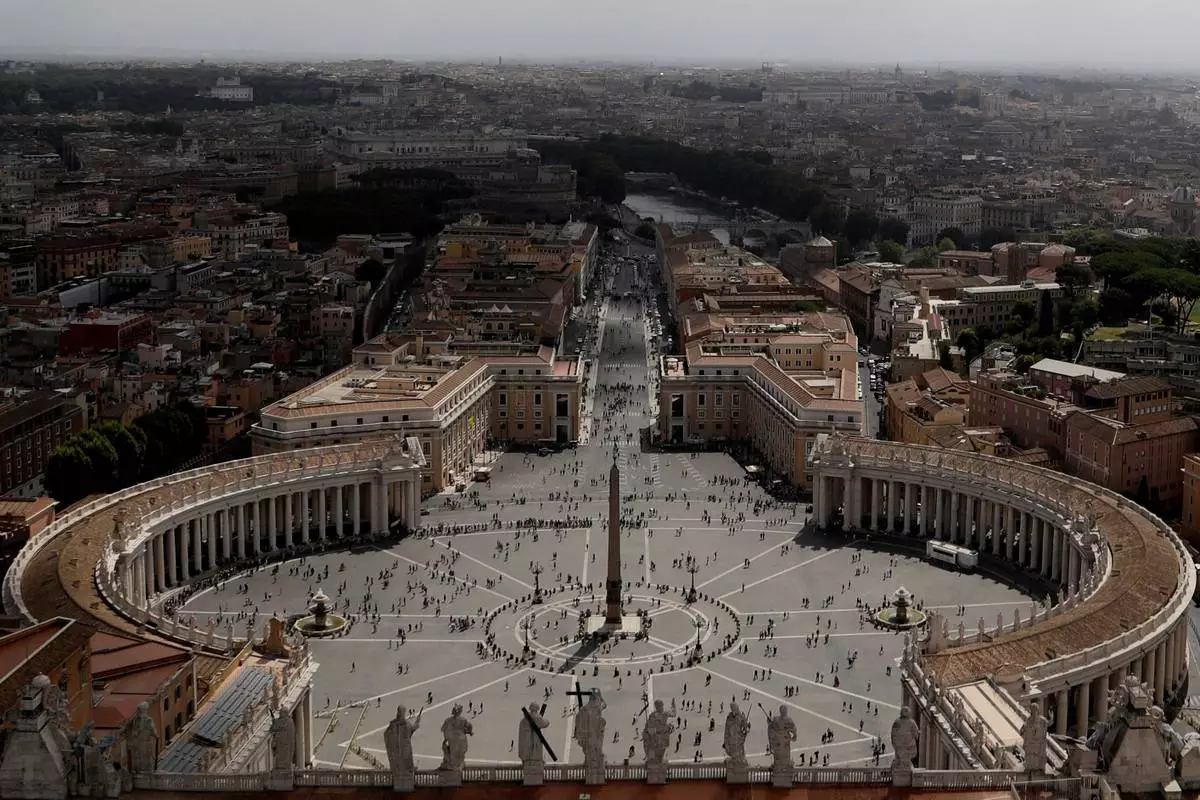
A view of Gian Lorenzo Bernini's 17th-century colonnade in St. Peter's Square in Vatican City, on Sunday, Feb. 15, 2026, which was built with travertine from Tivoli, Italy, 35 kilometers east of Rome. (AP Photo/Gregorio Borgia)
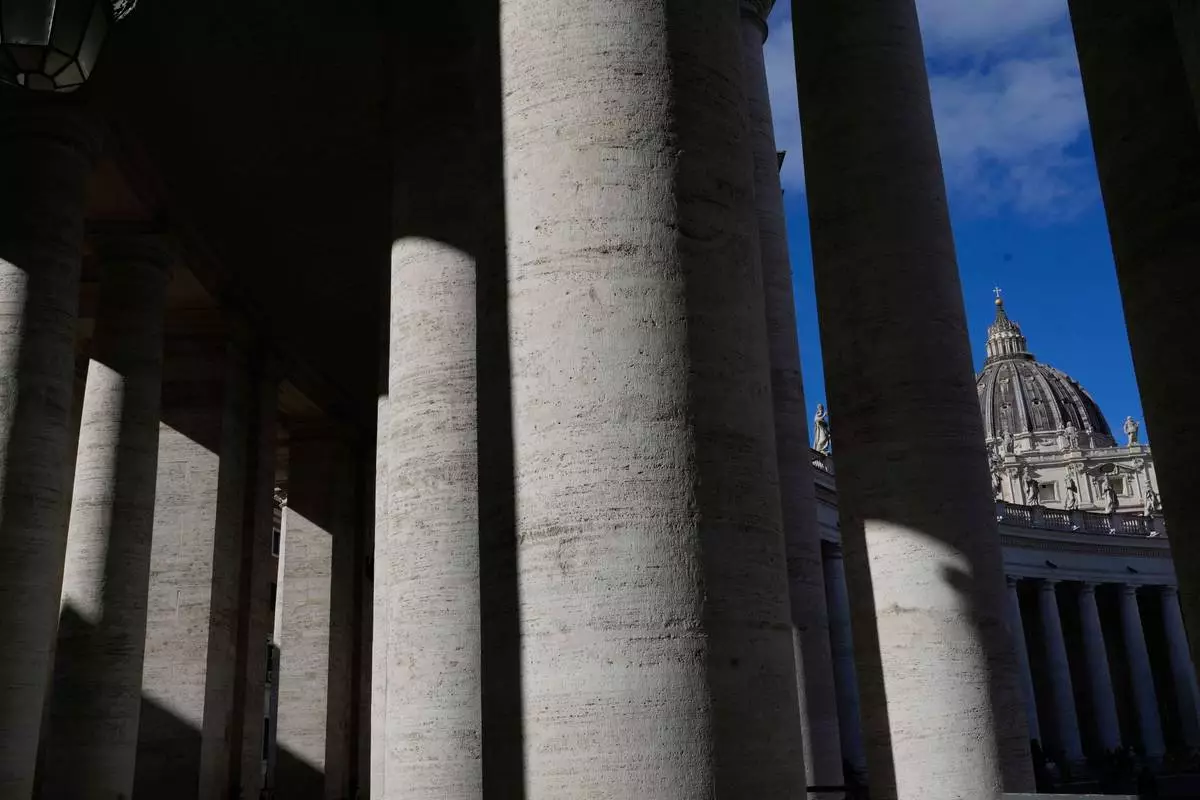
A view of Gian Lorenzo Bernini's 17th-century colonnade in St. Peter's Square in Vatican City, on Sunday, Feb. 15, 2026, which was built with travertine from Tivoli, Italy, 35 kilometers east of Rome. (AP Photo/Gregorio Borgia)
A view of Gian Lorenzo Bernini's 17th-century colonnade in St. Peter's Square in Vatican City, on Sunday, Feb. 15, 2026, which was built with travertine from Tivoli, Italy, 35 kilometers east of Rome. (AP Photo/Gregorio Borgia)

A view of Gian Lorenzo Bernini's 17th-century colonnade in St. Peter's Square in Vatican City, on Sunday, Feb. 15, 2026, which was built with travertine from Tivoli, Italy, 35 kilometers east of Rome. (AP Photo/Gregorio Borgia)

A view of Gian Lorenzo Bernini's 17th-century colonnade in St. Peter's Square in Vatican City, on Sunday, Feb. 15, 2026, which was built with travertine from Tivoli, Italy, 35 kilometers east of Rome. (AP Photo/Gregorio Borgia)

Pigeons fly away from the farmhouse at the Degemar Quarry near Tivoli, Italy, 35 kilometers east of Rome, on Friday, Feb. 13, 2026, where 17th-century Baroque architect Gian Lorenzo Bernini selected travertine for the colonnade of St. Peter's Square. (AP Photo/Gregorio Borgia)
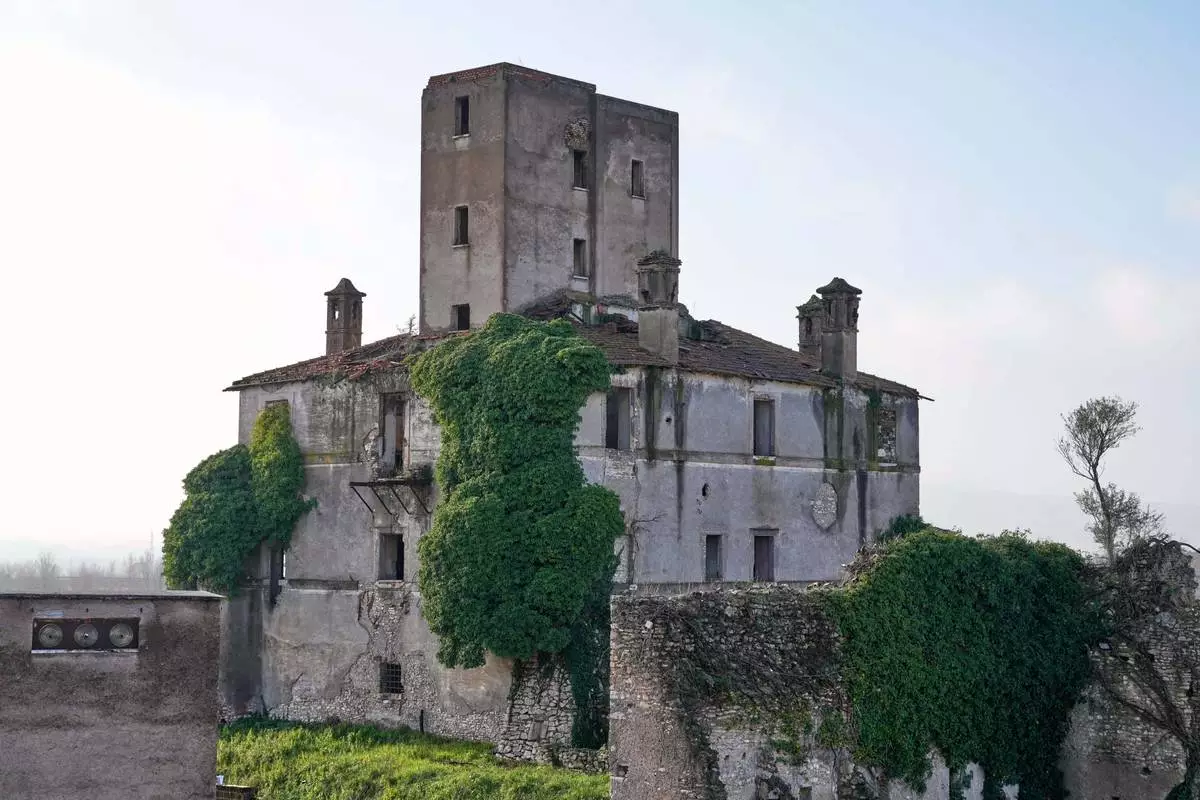
Pigeons fly away from the farmhouse at the Degemar Quarry near Tivoli, Italy, 35 kilometers east of Rome, on Friday, Feb. 13, 2026, where 17th-century Baroque architect Gian Lorenzo Bernini selected travertine for the colonnade of St. Peter's Square. (AP Photo/Gregorio Borgia)

View of the farmhouse at the Degemar Quarry near Tivoli, Italy, 35 kilometers east of Rome, where 17th-century Baroque architect Gian Lorenzo Bernini selected travertine for the colonnade of St. Peter's Square, is shown on Friday, Feb. 13, 2026. (AP Photo/Gregorio Borgia)
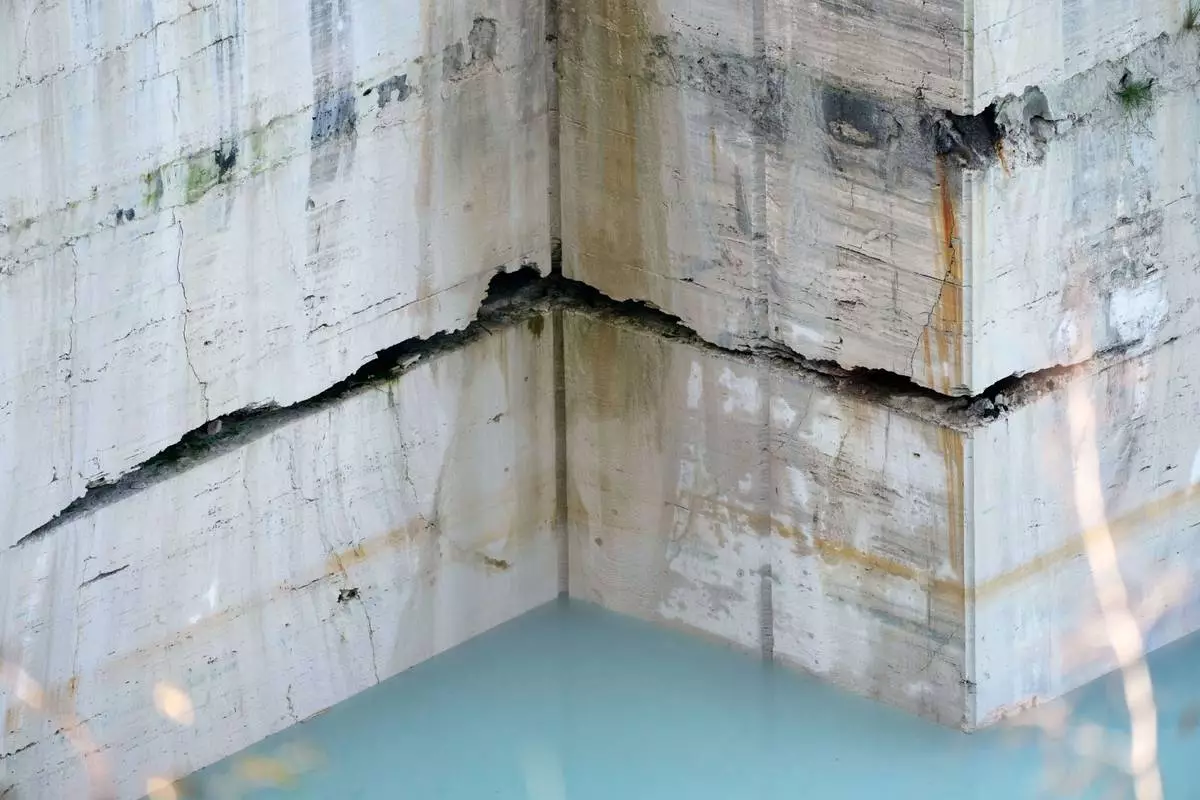
View of the farmhouse at the Degemar Quarry near Tivoli, Italy, 35 kilometers east of Rome, where 17th-century Baroque architect Gian Lorenzo Bernini selected travertine for the colonnade of St. Peter's Square, is shown on Friday, Feb. 13, 2026. (AP Photo/Gregorio Borgia)

A wall of sectioned travertine is seen at the Degemar Quarry near Tivoli, Italy, 35 kilometers east of Rome, on Friday, Feb. 13, 2026, where 17th-century Baroque architect Gian Lorenzo Bernini selected travertine for the colonnade of St. Peter's Square. (AP Photo/Gregorio Borgia)
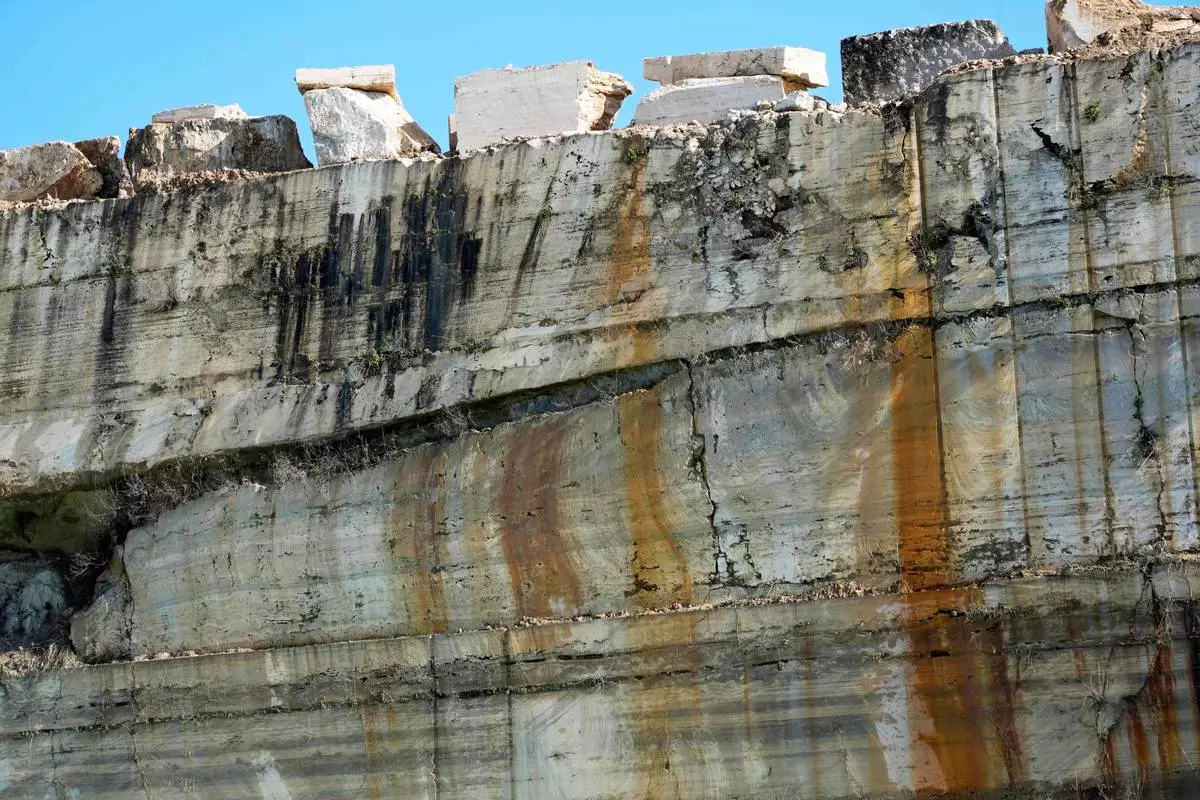
A wall of sectioned travertine is seen at the Degemar Quarry near Tivoli, Italy, 35 kilometers east of Rome, on Friday, Feb. 13, 2026, where 17th-century Baroque architect Gian Lorenzo Bernini selected travertine for the colonnade of St. Peter's Square. (AP Photo/Gregorio Borgia)
A wall of sectioned travertine is seen at the Degemar quarry near Tivoli, Italy, on Friday, Feb. 13, 2026, where 17th-century Baroque architect Gian Lorenzo Bernini selected travertine for the colonnade of St. Peter's Square. (AP Photo/Gregorio Borgia)
A wall of sectioned travertine is seen at the Degemar quarry near Tivoli, Italy, on Friday, Feb. 13, 2026, where 17th-century Baroque architect Gian Lorenzo Bernini selected travertine for the colonnade of St. Peter's Square. (AP Photo/Gregorio Borgia)


A truck carries a block of travertine at the Degemar Quarry near Tivoli, Italy, 35 kilometers east of Rome, on Friday, Feb. 13, 2026, where 17th-century Baroque architect Gian Lorenzo Bernini selected travertine for the colonnade of St. Peter's Square. (AP Photo/Gregorio Borgia)

A truck carries a block of travertine at the Degemar Quarry near Tivoli, Italy, 35 kilometers east of Rome, on Friday, Feb. 13, 2026, where 17th-century Baroque architect Gian Lorenzo Bernini selected travertine for the colonnade of St. Peter's Square. (AP Photo/Gregorio Borgia)
A general view of the Degemar Quarry near Tivoli, Italy, 35 kilometers east of Rome, on Friday, Feb. 13, 2026, where 17th-century Baroque architect Gian Lorenzo Bernini selected travertine for the colonnade of St. Peter's Square. (AP Photo/Gregorio Borgia)

A general view of the Degemar Quarry near Tivoli, Italy, 35 kilometers east of Rome, on Friday, Feb. 13, 2026, where 17th-century Baroque architect Gian Lorenzo Bernini selected travertine for the colonnade of St. Peter's Square. (AP Photo/Gregorio Borgia)

DUBAI, United Arab Emirates (AP) — Iran and the United States leaned into gunboat diplomacy Thursday as nuclear talks between the nations hung in the balance, with Tehran holding drills with Russia and the Americans bringing another aircraft carrier closer to the Mideast.

The Iranian drill and the arrival of the USS Gerald R. Ford aircraft carrier near the mouth of the Mediterranean Sea underscore the tensions between the nations. Iran earlier this week also launched a drill that involved live-fire in the Strait of Hormuz, the narrow opening of the Persian Gulf through which a fifth of the world's traded oil passes.

The movements of additional American warships and airplanes don't guarantee a U.S. strike on Iran — but it does give President Donald Trump the ability to carry out one should he choose to do so. He's so far held off on striking Iran after setting red lines over the killing of peaceful protesters and Tehran holding mass executions, while reengaging Tehran in nuclear talks earlier disrupted by the Iran-Israel war in June.

“Should Iran decide not to make a Deal, it may be necessary for the United States to use Diego Garcia, and the Airfield located in Fairford, in order to eradicate a potential attack by a highly unstable and dangerous Regime,” Trump wrote on his Truth Social website, seeking to pressure the United Kingdom over its plans to settle the future of the Chagos Islands with Mauritius.

Meanwhile, Iran struggles with unrest at home following its crackdown on protests, with mourners now holding ceremonies honoring their dead 40 days after their killing by security forces. Some of the gatherings have included anti-government cries, despite threats from authorities.

The drill Thursday saw Iranian forces and Russian sailors conduct operations in the Gulf of Oman and the Indian Ocean, Iran's state-run IRNA news agency reported. The drill will be aimed at “upgrading operational coordination as well as exchange of military experiences," IRNA added.

China had joined the “Security Belt” drill in previous years, but there was no acknowledgment it participated in this round. In recent days, a vessel that appeared to be a Steregushchiy-class Russian corvette had been seen at a military port in the Iranian city of Bandar Abbas.

Iran also issued a rocket-fire warning to pilots in the region, suggesting they planned to launch anti-ship missiles in the exercise.

Meanwhile, tracking data showed the Ford off the coast of Morocco in the Atlantic Ocean midday Wednesday, meaning the carrier could transit through Gibraltar and potentially station in the eastern Mediterranean with its supporting guided-missile destroyers.

Having the carrier there could allow American forces to have extra aircraft and anti-missile power to potentially protect Israel and Jordan should a conflict break out with Iran. The U.S. similarly placed warships there during the Israel-Hamas war in the Gaza Strip to protect against Iranian fire.

Mourning ceremonies for those killed by security forces in the protests last month also have increased. Iranians traditionally mark the death of a loved one 40 days after the loss. Both witnesses and social media videos showed memorials taking place at Tehran's massive Behesht-e Zahra cemetery. Some memorials included people chanting against Iran's theocracy while singing nationalistic songs.

The demonstrations began Dec. 28 at Tehran’s historic Grand Bazaar, initially over the collapse of Iran’s currency, the rial, then spread across the country. Tensions exploded on Jan. 8, with demonstrations called for by Iran’s exiled crown prince, Reza Pahlavi.

Iran's government has offered only one death toll for the violence, with 3,117 people killed. The U.S.-based Human Rights Activists News Agency, which has been accurate in previous rounds of unrest in Iran, puts the death toll at over 7,000 killed, with many more feared dead.

Associated Press writer Nasser Karimi in Tehran, Iran, contributed to this report.

U.S. Secretary of State Marco Rubio speaks during a joint news conference with Hungary's Prime Minister Viktor Orban in Budapest, Hungary, Monday, Feb. 16, 2026. (AP Photo/Alex Brandon, Pool)

U.S. Secretary of State Marco Rubio speaks during a joint news conference with Hungary's Prime Minister Viktor Orban in Budapest, Hungary, Monday, Feb. 16, 2026. (AP Photo/Alex Brandon, Pool)

FILE - In this photo provided by the U.S. Navy, the USS Gerald R. Ford embarked on the first of its sea trials to test various state-of-the-art systems on its own power for the first time, April 8, 2017, from Newport News, Va. (Mass Communication Specialist 2nd Class Ridge Leoni/U.S. Navy via AP, File)

FILE - In this photo provided by the U.S. Navy, the USS Gerald R. Ford embarked on the first of its sea trials to test various state-of-the-art systems on its own power for the first time, April 8, 2017, from Newport News, Va. (Mass Communication Specialist 2nd Class Ridge Leoni/U.S. Navy via AP, File)

Recommended Articles