NEW YORK (AP) — Walmart delivered another impressive quarter as the promise of lower prices and speedy deliveries attracted a broader spectrum of Americans from cash-strapped to wealthier households during the critical holiday shopping period.
The subdued outlook, offered Thursday, from the Bentonville, Arkansas, company, however, hinted at a volatile economic environment ahead.
“Given that we are as large as we are and so tied to consumer health and the economy, we want to maintain maximum flexibility and not get out ahead of ourselves at this point in the year, ” Walmart's chief financial officer John David Rainey told investors during the earnings call.
He cited subdued consumer sentiment, a fragile job market and student loan delinquencies among other issues it's monitoring.
Still, Walmart’s impressive quarter wasn’t enough to postpone what was coming.
For the first time, Walmart recorded annual sales that were lower than online behemoth Amazon, dethroning the discounter from its status as the nation’s largest company by revenue, according to Fortune, which compiles a ranking of the top 500 U.S. corporations by total revenue for their respective fiscal years.
For the full year, Walmart’s sales reached $713.2 billion, while Amazon earlier this month delivered net sales of $716.9 billion, helped by its surging cloud service unit, advertising and massive ecommerce business.
The quarterly results were Walmart’s first in more than a decade to get reported under a new chief executive.
John Furner, 51, who headed the company’s U.S. operations, took over for Doug McMillon this month. McMillon had turned America’s largest retailer into a tech-powered giant and spearheaded an era of robust sales growth after being named Walmart’s CEO in 2014.
Walmart’s shares rose more than 25% since its last quarterly earnings report and earlier this month it became the first non-tech company to reach a valuation of more than a $1 trillion. Shares rose nearly 1% in afternoon trading.
Walmart has resonated with many Americans who are carefully considering where they spend money because of inflation and how the company performs is considered a barometer of consumer spending given its vast customer base. More than 150 million customers are on its website or in its stores every week, according to Walmart.
While inflation has cooled, consumer prices have soared about 25% over the past five years. Many economists expect more companies will begin passing on higher costs from higher U.S. tariffs to their customers in coming months.
Walmart’s promise of lower prices, improved merchandise and faster delivery has broadened its base to include wealthier shoppers in that environment, with the biggest gains in market share coming from households with annual income over $100,000. That has happened as lower-income shoppers have become more restrained, reflecting what economists call a K-shaped economy phenomenon.
Furner said shoppers overall remain resilient, but customers with household income below $50,000 are under financial strain.
“We continue to see (their) wallets are stretched, and in some cases, people are managing spending paycheck to paycheck,” he said during a conference call. “That said, even these households are emphasizing convenience nearly as much as price.”
Walmart has managed higher costs from President Donald Trump's tariffs by shifting what it offers on store shelves while absorbing some higher costs and diversifying sourcing.
Rainey told The Associated Press during a phone call Thursday that for the latest quarter, average prices for identical items at the retailer rose a little above 1%, with prices for food up a little less than that and general merchandise inflation was up more than 3%. Managing costs for general merchandise items like TVs and vacuum cleaners has been more challenging since most are foreign imports, he said.
Still, Rainey acknowledged that he had a lot more trepidation nine months ago when tariffs were just starting to hit, but he said the company has done a good job in minimizing the impact to the consumer.
Walmart reported fourth-quarter earnings of $4.24 billion, or 53 cents per share, for the quarter ended Jan. 31. Adjusted per-share results were 74 cents, a penny better than Wall Street expected, according to FactSet.
Last year, the company reported net income of $5.25 billion, or 65 cents per share.
Sales rose 5.6% to $190.7 billion from $180.6 billion, also edging out expectations.
Comparable sales at Walmart stores, including online sales, rose 4.6% after a 4.5% increase in the previous quarter. Sales were broadly stronger, particularly groceries, which have been an enormous generator of traffic for Walmart, the company said. It cited fashion as a bright spot, too.
And Walmart said speedier deliveries helped fuel the sales momentum, with expedited deliveries under three hours accounting for 35% of orders from stores.
U.S. e-commerce business increased 27% during the quarter, accounting for 23% of overall sales.
Walmart said that for the current quarter, it expects sales to increase anywhere from 3.5% to 4.5% and earnings per share to be in the range of 63 cents to 65 cents. For the year, it expects sales to reach $706.4 billion and earnings per share to be $2.64.
That is a little cooler than Wall Street had been projecting. Analysts polled by FactSet had been expecting per-share earnings of 68 cents in the first quarter. For the year, they have been projecting earnings of $2.64 per share on sales of $712.6 billion.

FILE - A shopper heads into a Walmart store Thursday, Oct. 16, 2025, in Englewood, Colo. (AP Photo/David Zalubowski, File)
GENEVA (AP) — A "campaign of destruction" in October by Sudanese paramilitary forces against non-Arab communities in and near a city in the western region of Darfur shows “hallmarks of genocide,” U.N.-backed human rights experts said Thursday, a dramatic finding in the country's devastating war.
The paramilitary Rapid Support Forces — known as RSF and at war with the Sudanese military — carried out mass killings and other atrocities in the city of el-Fasher after an 18-month siege during which they imposed conditions “calculated to bring about the physical destruction" of non-Arab communities, in particular the Zaghawa and the Fur communities, the independent fact-finding mission on Sudan reported.
U.N. officials say several thousand civilians were killed in the RSF takeover of el-Fasher, the Sudanese army’s only remaining stronghold in the Darfur. Only 40% of the city’s 260,000 residents managed to flee the onslaught alive, thousands of whom were wounded, the officials said. The fate of the rest remains unknown.
Sudan plunged into conflict in mid-April 2023, when long-simmering tensions between its military and paramilitary leaders broke out in the capital of Khartoum and spread to other regions, including Darfur. So far, the war has killed more than 40,000 people, according to U.N. figures, but aid groups say that's an undercount and the true number could be many times higher.
The RSF overran el-Fasher last October and rampaged through the city in an offensive marked by widespread atrocities that included mass killings, sexual violence, torture and abductions for ransom, according to the U.N. Human Rights Office.
They killed more than 6,000 people between Oct. 25 and Oct. 27, the office said. Ahead of the attack, the paramilitary forces ran riot in the Abu Shouk displacement camp, just outside el-Fasher, and killed at least 300 people in two days, it said.
The RSF did not respond to an e-mailed request for comment. The group's commander, Gen. Mohammed Hamdan Dagalo, has previously acknowledged abuses by his fighters, but disputed the scale of atrocities.
The report cited a systematic pattern of ethnically targeted killings, sexual violence and destruction and public statements explicitly calling for the elimination of non-Arab communities.
An international convention known colloquially as the “Genocide Convention” — adopted in 1948, three years after the end of World War II and the Holocaust — sets out five criteria to assess whether genocide has taken place. They include killing or seriously harming members of a group, preventing births or forcibly transferring children from the group, and inflicting measures to bring about the “physical destruction” of the group.
The fact-finding team said it found at least three of those five were met in the actions of the RSF: Killing members of a protected ethnic group; causing serious bodily and mental harm; and deliberately inflicting conditions of life calculated to bring about the group’s physical destruction in whole or in part.
Under the convention, a genocide determination could be made even if only one of the five were met. The United Nations says a determination of genocide must be made by an international tribunal.
The head of the fact-finding team, Mohamed Chande Othman, a former chief justice of Tanzania, said the RSF operation were not “random excesses of war” but a planned and organized operation that bore the characteristics of genocide.
El-Fasher's residents were "physically exhausted, malnourished, and in part unable to flee, leaving them defenseless against the extreme violence that followed,” the team's report said. “Thousands of persons, particularly the Zaghawa, were killed, raped or disappeared during three days of absolute horror.”
The report documented cases of survivors quoting RSF fighters as saying things like: “Is there anyone Zaghawa among you? If we find Zaghawa, we will kill them all” and “We want to eliminate anything black from Darfur.”
It also pointed to “selective targeting” of Zaghawa and Fur women and girls, “while women perceived as Arab were often spared."
Mona Rishmawi, a member of the fact-finding team, told a news conference in Geneva on Thursday that the team's conclusion was based on evidence of mass killings, patterns of ethnic targeting and statements by perpetrators expressing intent to eliminate and destroy the targeted communities.
“When you basically prevent the population from food ... drinking water and medical attention and prevent them from humanitarian assistance," she said. "What do you want? You want to destroy them. You want to kill them.”
“We reached the point of genocide now,” Rishmawi told reporters, adding that her team expects the parties in Sudan’s war to get the message that “enough is enough.”
At a meeting of the U.N. Security Council on Sudan later Thursday, U.N. political chief Rosemary DiCarlo said that the “horrific events" in el-Fasher "were preventable.”
While el-Fasher was under siege, she said U.N. human rights chief Volker Türk repeatedly warned of the risk of mass atrocities, “but the warnings were not heeded.”
Türk has now also alerted the global community to the possibility of similar crimes in Sudan's Kordofan region, where the military and the RSF are fighting, DiCarlo said, urging action now to prevent a repeat of atrocities.
British Foreign Secretary Yvette Cooper called the report's findings “truly horrific” and took them to the Security Council, saying she wanted to “ensure that the voices of women of Sudan who have endured so much are heard by the world.”
“Today’s report describes the most unimaginable and chilling horrors,” she said, citing the case of a woman asked by an RSF soldier how far she was in her pregnancy. “When she responded seven months, he fired seven bullets into her abdomen killing her,“ Cooper told the council.
“This is the worst humanitarian crisis of the 21st Century, a war that has left 33 million people in need of humanitarian assistance, 14 million people forced to flee their homes, famine stalking millions of malnourished children,” Cooper said.
“The world is still failing the people of Sudan,” she added.
The fact-finding team was created in 2023 by the Geneva-based Human Rights Council, the U.N.'s leading human rights body, which has 47 member nations.
The team called for accountability for perpetrators and warned that protection of civilians is needed “more than ever” because the conflict is expanding to other regions in Sudan.
Over the course of the conflict, the warring parties were accused of violating international law. But most of the atrocities were blamed on the RSF: The Biden administration, in one of its last decisions, said the paramilitary force committed genocide in Darfur.
U.N. experts and rights groups say the RSF has had the backing of the United Arab Emirates over the course of the war, allegations that the UAE denies.
The RSF grew out of the Janjaweed militias, notorious for atrocities they committed in the early 2000s in a ruthless campaign in Darfur that killed some 300,000 people and drove 2.7 million from their homes. Sudan's former autocratic ruler Omar al-Bashir is still sought by the International Criminal Court for genocide and other crimes committed at that time.
Magdy reported from Cairo. Associated Press writers Edith M. Lederer at the United Nations and Fatma Khaled in Cairo contributed to this report.
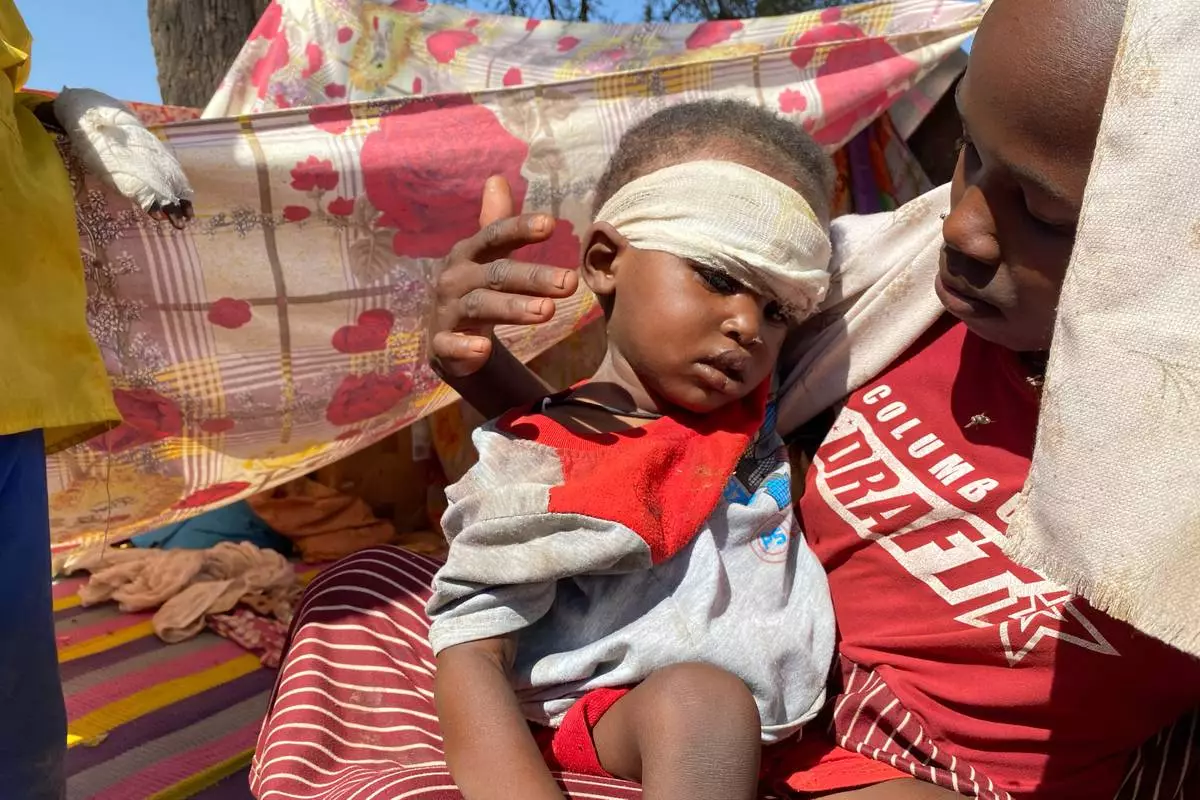
FILE - A Sudanese child, who fled el-Fasher city with family after Sudan's paramilitary forces attacked the western Darfur region, receives treatment at a camp in Tawila, Sudan, Nov. 2, 2025. (AP Photo/Mohammed Abaker, File)
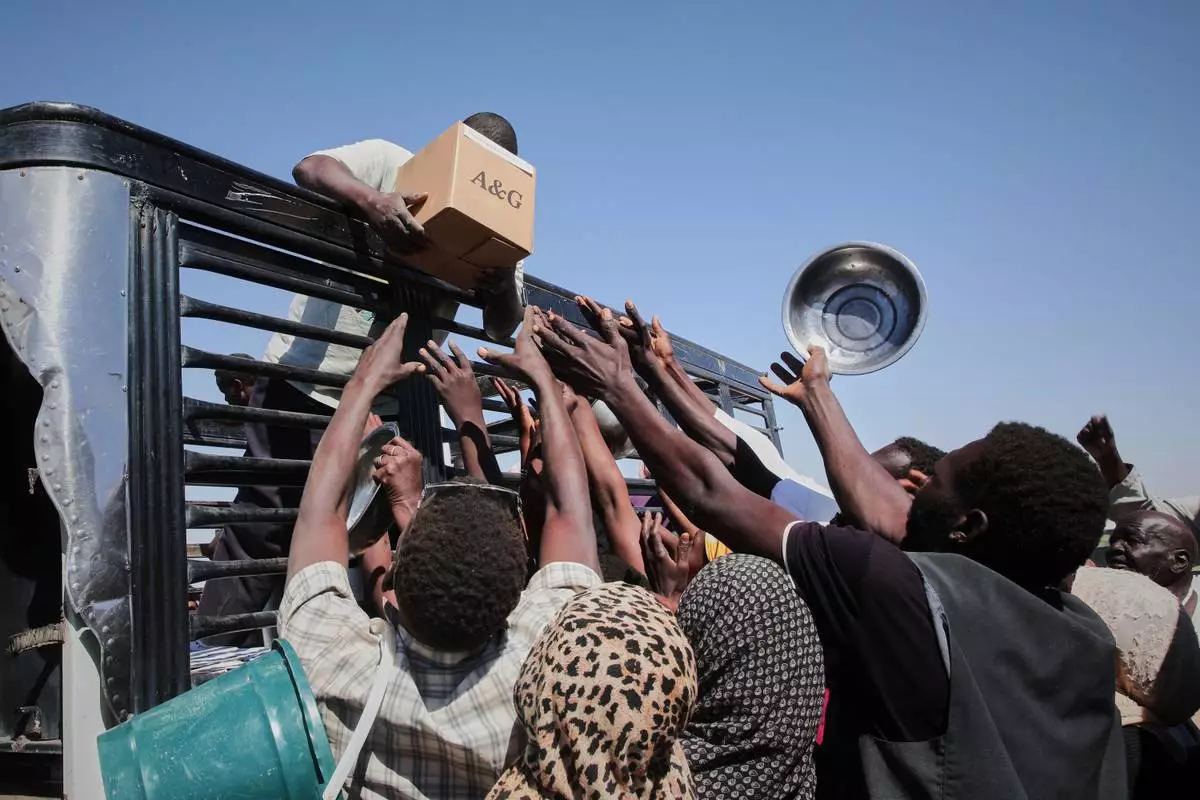
FILE - Sudanese families displaced from El-Fasher reach out as aid workers distribute food supplies at the newly established El-Afadh camp in Al Dabbah, Sudan's Northern State, Nov. 16, 2025. (AP Photo/Marwan Ali, File)
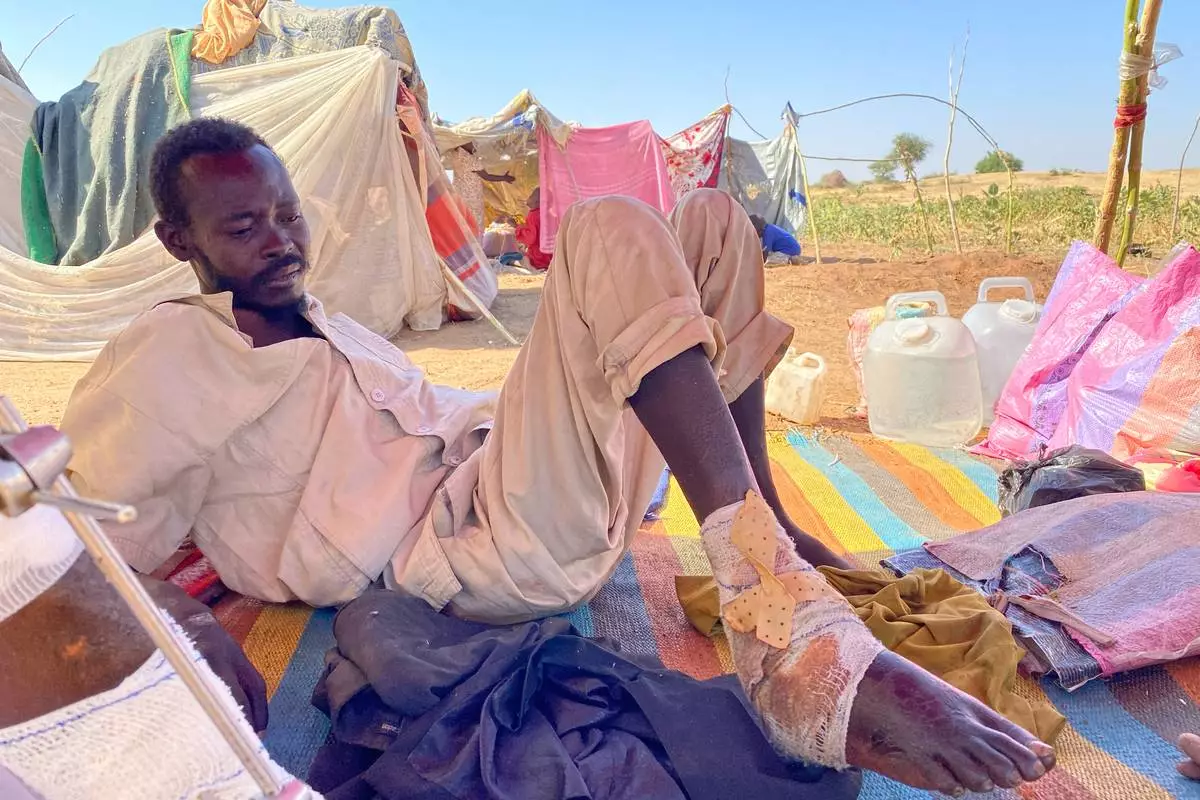
FILE - Al Shafiea Abdallah Holy, an injured Sudanese man who fled el-Fasher city after Sudan's paramilitary forces attacked the western Darfur region, receives medical care at a camp in Tawila, Sudan, Oct. 30, 2025. (AP Photo/Mohammed Abaker, File)
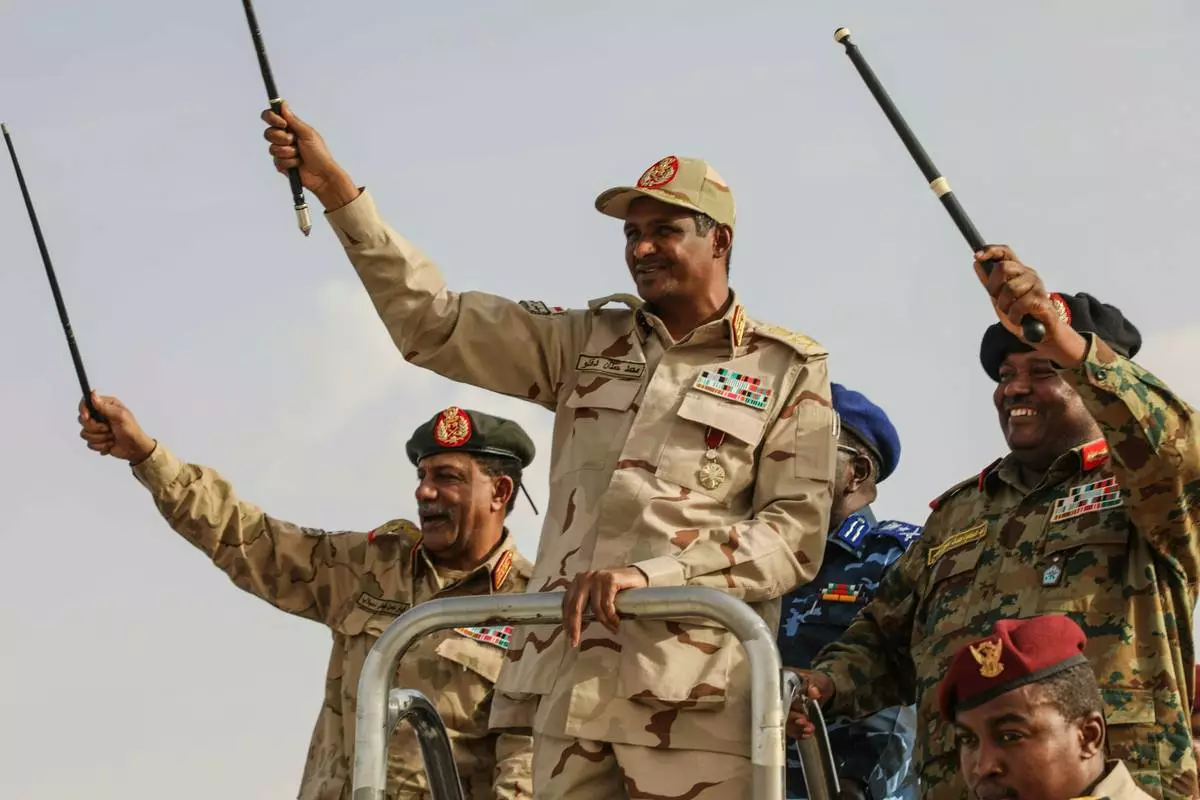
FILE - Gen. Mohammed Hamdan Dagalo, center, greets the crowd during a military-backed tribes' rally in the Nile River State of Sudan, July 13, 2019. (AP Photo/Mahmoud Hjaj, File)