RIAD, Arábia Saudita--(BUSINESS WIRE)--fev 19, 2026--
A Organização de Cooperação Digital (DCO) anunciou o lançamento da campanha global “Pare a Desinformação Online: Ctrl+Alt+Delete”, que visa combater a desinformação online e fortalecer a confiança na economia digital, convocando governos, mídia, setor privado e plataformas digitais a agirem em conjunto.
Este comunicado de imprensa inclui multimédia. Veja o comunicado completo aqui: https://www.businesswire.com/news/home/20260218863107/pt/
A campanha representa o ápice de um ano de engajamento multilateral e multissetorial contínuo, liderado pela DCO, para enfrentar a desinformação como um desafio crescente nas áreas econômica, social e de confiança. Apoiada pela iniciativa de Integridade do Conteúdo Online da DCO, a campanha será implementada em fases, ancorada em compromissos e promessas das partes interessadas e impulsionada por meio de diálogo político, engajamento público e ativação digital.
A campanha foi lançada à margem da 5 ª Assembleia Geral da DCO no Kuwait, marcada por um painel ministerial de alto nível sobre o combate à desinformação online, reunindo ministros do Comitê Ministerial sobre Desinformação Online, presidido pelo Estado do Kuwait. O painel contou com a participação de S. Exa. Sra. Amal El Fallah Seghrouchni, ministra delegada junto ao chefe de governo responsável pela Transição Digital e Reforma Administrativa do Marrocos, S. Exa. Eng. Sami Issa Smeirat, ministro da Economia Digital e Empreendedorismo da Jordânia, e S. Exa. Sra. Shiza Fatima Khawaja, ministra federal de Tecnologia da Informação e Telecomunicações do Paquistão. A discussão destacou um crescente consenso intercultural sobre a necessidade de ação coordenada para combater a desinformação e fortalecer a confiança nos espaços digitais.
A Sra. Deemah AlYahya, secretária-geral da Organização de Cooperação Digital (DCO), afirmou: "A desinformação online se transformou em uma pandemia digital, espalhando-se mais rápido que os fatos, corroendo a confiança pública e minando os alicerces da economia digital. Se não for combatida, enfraquece as instituições, aprofunda a polarização e impõe custos econômicos e sociais reais às sociedades em todo o mundo.
Enfrentar esse desafio exige responsabilidade coletiva e ação coordenada entre governos, mídia, plataformas digitais e setor privado. A confiança é a moeda da economia digital. Proteger a integridade do conteúdo online por meio desta campanha não se trata apenas de combater as falsidades, mas também de proteger a transparência, fortalecer a resiliência e garantir que o futuro digital traga prosperidade para todos."
"Pare a Desinformação Online: Ctrl+Alt+Delete" reflete a missão mais ampla da DCO de promover a cooperação digital que melhora vidas, apoia o crescimento econômico e fortalece a confiança e a resiliência na economia digital.
Apoie a campanha: https://ctrl-alt-del.dco.org/
*Fonte:AETOSWire
O texto no idioma original deste anúncio é a versão oficial autorizada. As traduções são fornecidas apenas como uma facilidade e devem se referir ao texto no idioma original, que é a única versão do texto que tem efeito legal.
Ver a versão original em businesswire.com:https://www.businesswire.com/news/home/20260218863107/pt/
CONTACT: Ahmed Bayouni
media@DCO.org
KEYWORD: MIDDLE EAST SAUDI ARABIA
INDUSTRY KEYWORD: COMMUNICATIONS SECURITY SOCIAL MEDIA TECHNOLOGY TELECOMMUNICATIONS INTERNET MEDIA
SOURCE: Digital Cooperation Organization
Copyright Business Wire 2026.
PUB: 02/19/2026 12:31 PM/DISC: 02/19/2026 12:32 PM
http://www.businesswire.com/news/home/20260218863107/pt

DCO Launches Global “Ctrl+Alt+Delete” Campaign to Combat Online Misinformation and Enhance Trust in Digital Economy - (Photo: AETOSWire)
GENEVA (AP) — A "campaign of destruction" in October by Sudanese paramilitary forces against non-Arab communities in and near a city in the western region of Darfur shows “hallmarks of genocide,” U.N.-backed human rights experts said Thursday, a dramatic finding in the country's devastating war.
The paramilitary Rapid Support Forces — known as RSF and at war with the Sudanese military — carried out mass killings and other atrocities in the city of el-Fasher after an 18-month siege during which they imposed conditions “calculated to bring about the physical destruction" of non-Arab communities, in particular the Zaghawa and the Fur communities, the independent fact-finding mission on Sudan reported.
U.N. officials say several thousand civilians were killed in the RSF takeover of el-Fasher, the Sudanese army’s only remaining stronghold in the Darfur. Only 40% of the city’s 260,000 residents managed to flee the onslaught alive, thousands of whom were wounded, the officials said. The fate of the rest remains unknown.
Sudan plunged into conflict in mid-April 2023, when long-simmering tensions between its military and paramilitary leaders broke out in the capital of Khartoum and spread to other regions, including Darfur. So far, the war has killed more than 40,000 people, according to U.N. figures, but aid groups say that's an undercount and the true number could be many times higher.
The RSF overran el-Fasher last October and rampaged through the city in an offensive marked by widespread atrocities that included mass killings, sexual violence, torture and abductions for ransom, according to the U.N. Human Rights Office.
They killed more than 6,000 people between Oct. 25 and Oct. 27, the office said. Ahead of the attack, the paramilitary forces ran riot in the Abu Shouk displacement camp, just outside el-Fasher, and killed at least 300 people in two days, it said.
The RSF did not respond to an e-mailed request for comment. The group's commander, Gen. Mohammed Hamdan Dagalo, has previously acknowledged abuses by his fighters, but disputed the scale of atrocities.
The report cited a systematic pattern of ethnically targeted killings, sexual violence and destruction and public statements explicitly calling for the elimination of non-Arab communities.
An international convention known colloquially as the “Genocide Convention” — adopted in 1948, three years after the end of World War II and the Holocaust — sets out five criteria to assess whether genocide has taken place. They include killing or seriously harming members of a group, preventing births or forcibly transferring children from the group, and inflicting measures to bring about the “physical destruction” of the group.
The fact-finding team said it found at least three of those five were met in the actions of the RSF: Killing members of a protected ethnic group; causing serious bodily and mental harm; and deliberately inflicting conditions of life calculated to bring about the group’s physical destruction in whole or in part.
Under the convention, a genocide determination could be made even if only one of the five were met. The United Nations says a determination of genocide must be made by an international tribunal.
The head of the fact-finding team, Mohamed Chande Othman, a former chief justice of Tanzania, said the RSF operation were not “random excesses of war” but a planned and organized operation that bore the characteristics of genocide.
El-Fasher's residents were "physically exhausted, malnourished, and in part unable to flee, leaving them defenseless against the extreme violence that followed,” the team's report said. “Thousands of persons, particularly the Zaghawa, were killed, raped or disappeared during three days of absolute horror.”
The report documented cases of survivors quoting RSF fighters as saying things like: “Is there anyone Zaghawa among you? If we find Zaghawa, we will kill them all” and “We want to eliminate anything black from Darfur.”
It also pointed to “selective targeting” of Zaghawa and Fur women and girls, “while women perceived as Arab were often spared."
Mona Rishmawi, a member of the fact-finding team, told a news conference in Geneva on Thursday that the team's conclusion was based on evidence of mass killings, patterns of ethnic targeting and statements by perpetrators expressing intent to eliminate and destroy the targeted communities.
“When you basically prevent the population from food ... drinking water and medical attention and prevent them from humanitarian assistance," she said. "What do you want? You want to destroy them. You want to kill them.”
“We reached the point of genocide now,” Rishmawi told reporters, adding that her team expects the parties in Sudan’s war to get the message that “enough is enough.”
At a meeting of the U.N. Security Council on Sudan later Thursday, U.N. political chief Rosemary DiCarlo said that the “horrific events" in el-Fasher "were preventable.”
While el-Fasher was under siege, she said U.N. human rights chief Volker Türk repeatedly warned of the risk of mass atrocities, “but the warnings were not heeded.”
Türk has now also alerted the global community to the possibility of similar crimes in Sudan's Kordofan region, where the military and the RSF are fighting, DiCarlo said, urging action now to prevent a repeat of atrocities.
British Foreign Secretary Yvette Cooper called the report's findings “truly horrific” and took them to the Security Council, saying she wanted to “ensure that the voices of women of Sudan who have endured so much are heard by the world.”
“Today’s report describes the most unimaginable and chilling horrors,” she said, citing the case of a woman asked by an RSF soldier how far she was in her pregnancy. “When she responded seven months, he fired seven bullets into her abdomen killing her,“ Cooper told the council.
“This is the worst humanitarian crisis of the 21st Century, a war that has left 33 million people in need of humanitarian assistance, 14 million people forced to flee their homes, famine stalking millions of malnourished children,” Cooper said.
“The world is still failing the people of Sudan,” she added."
The fact-finding team was created in 2023 by the Geneva-based Human Rights Council, the U.N.'s leading human rights body, which has 47 member nations.
The team called for accountability for perpetrators and warned that protection of civilians is needed “more than ever” because the conflict is expanding to other regions in Sudan.
Over the course of the conflict, the warring parties were accused of violating international law. But most of the atrocities were blamed on the RSF: The Biden administration, in one of its last decisions, said the paramilitary force committed genocide in Darfur.
U.N. experts and rights groups say the RSF has had the backing of the United Arab Emirates over the course of the war, allegations that the UAE denies.
The RSF grew out of the Janjaweed militias, notorious for atrocities they committed in the early 2000s in a ruthless campaign in Darfur that killed some 300,000 people and drove 2.7 million from their homes. Sudan's former autocratic ruler Omar al-Bashir is still sought by the International Criminal Court for genocide and other crimes committed at that time.
Magdy reported from Cairo. Associated Press writers Edith M. Lederer at the United Nations and Fatma Khaled in Cairo contributed to this report.
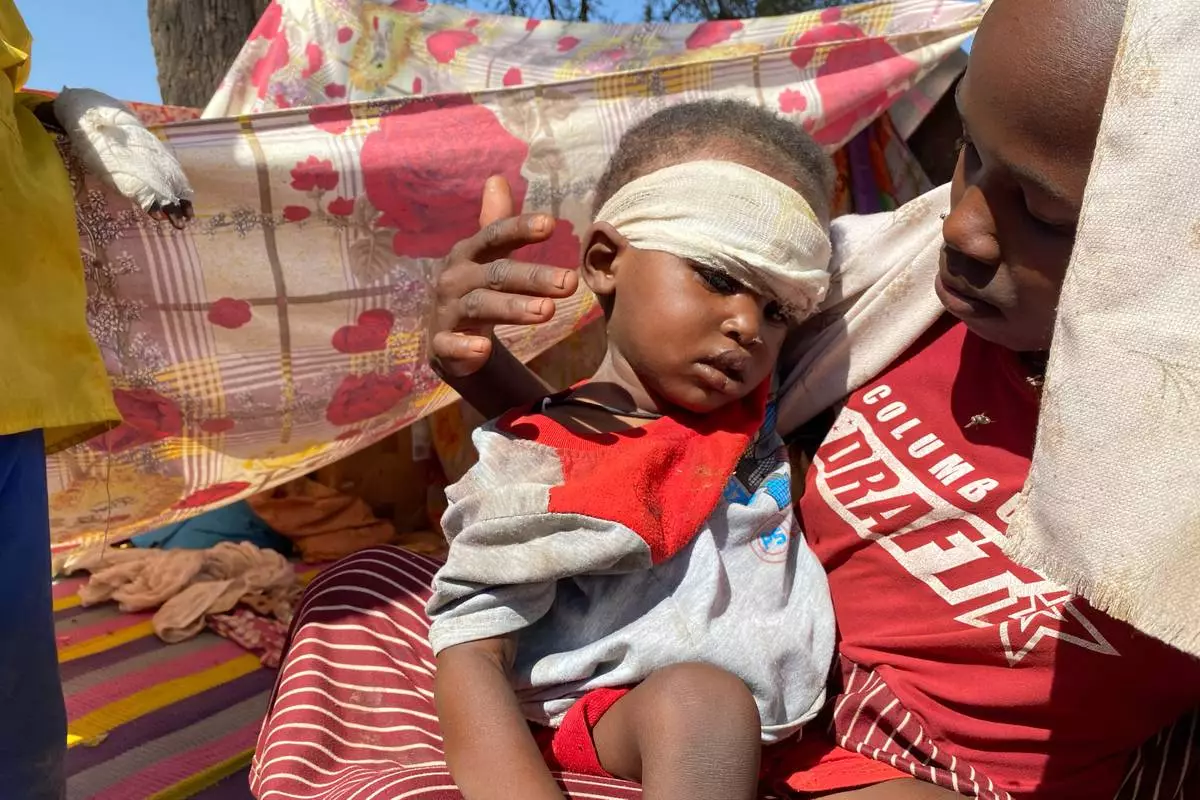
FILE - A Sudanese child, who fled el-Fasher city with family after Sudan's paramilitary forces attacked the western Darfur region, receives treatment at a camp in Tawila, Sudan, Nov. 2, 2025. (AP Photo/Mohammed Abaker, File)
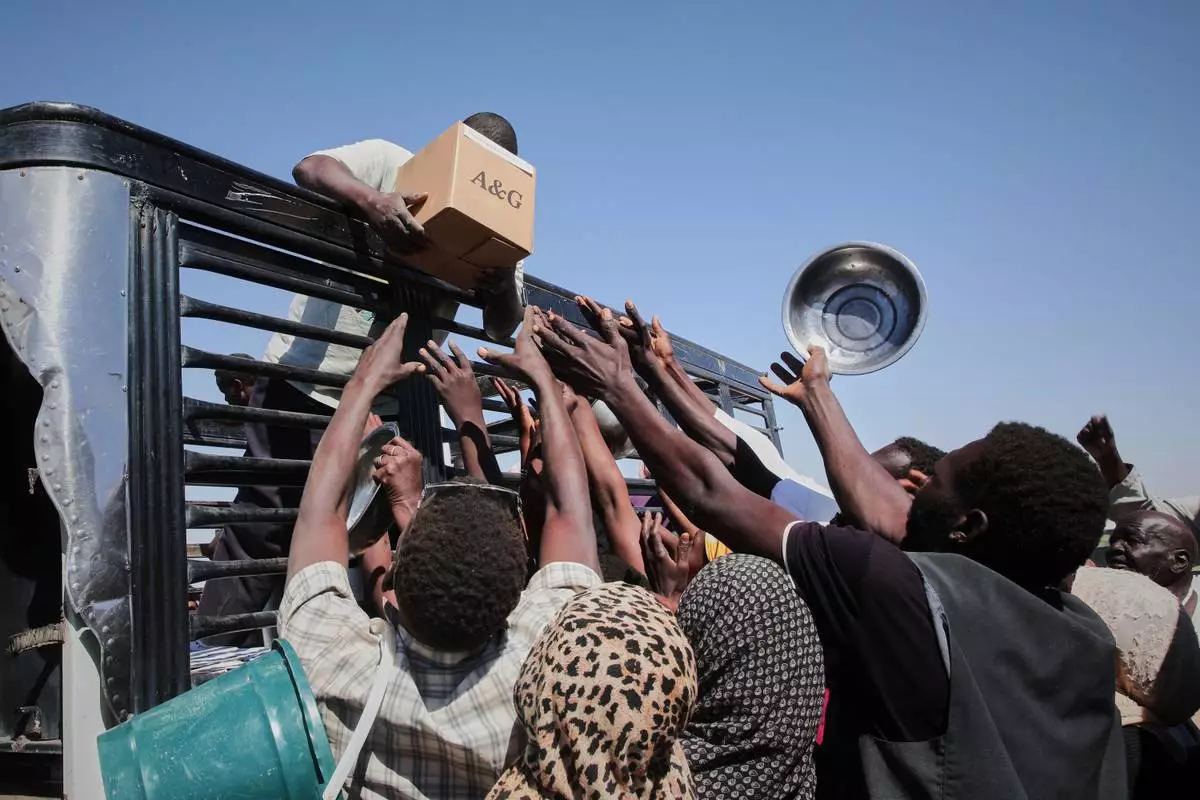
FILE - Sudanese families displaced from El-Fasher reach out as aid workers distribute food supplies at the newly established El-Afadh camp in Al Dabbah, Sudan's Northern State, Nov. 16, 2025. (AP Photo/Marwan Ali, File)
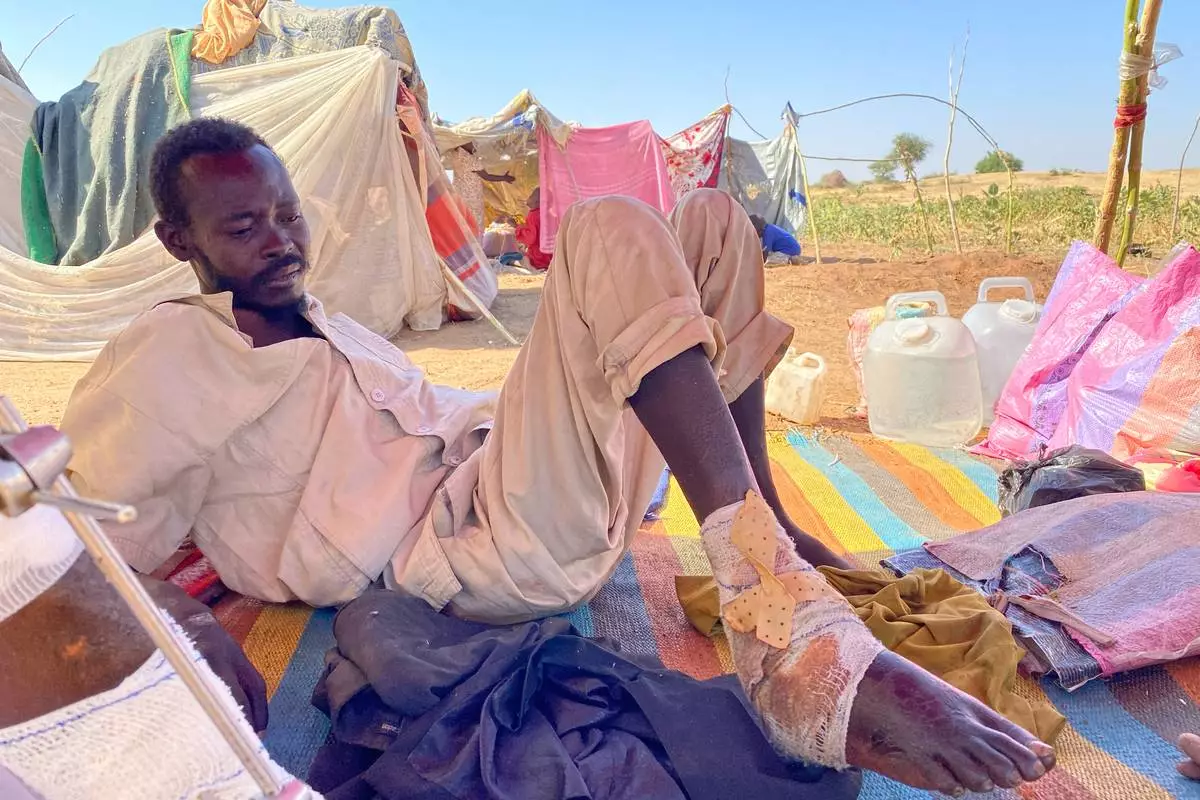
FILE - Al Shafiea Abdallah Holy, an injured Sudanese man who fled el-Fasher city after Sudan's paramilitary forces attacked the western Darfur region, receives medical care at a camp in Tawila, Sudan, Oct. 30, 2025. (AP Photo/Mohammed Abaker, File)
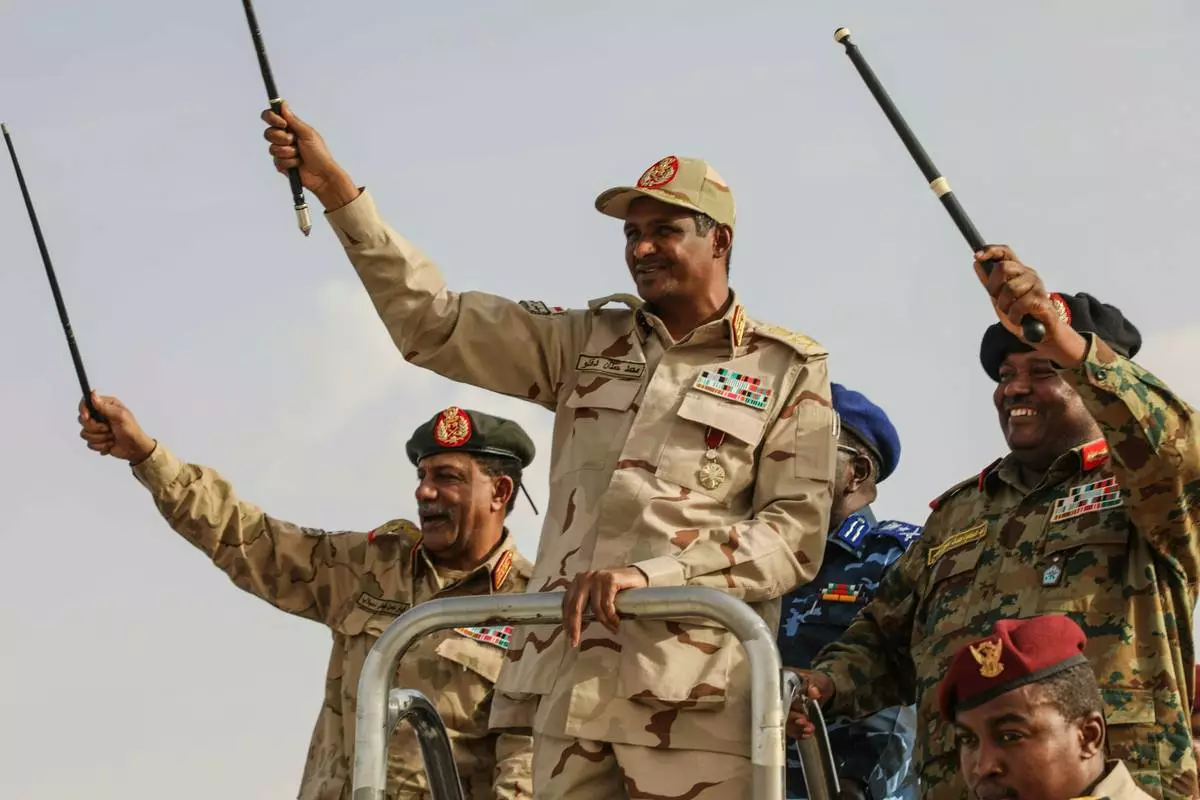
FILE - Gen. Mohammed Hamdan Dagalo, center, greets the crowd during a military-backed tribes' rally in the Nile River State of Sudan, July 13, 2019. (AP Photo/Mahmoud Hjaj, File)