During the ongoing Spring Festival holiday, an aquarium in the southern city of Guangzhou has virtually mesmerized visitors with a breathtaking underwater performance that brings together two iconic symbols of Chinese culture -- the energetic lion dance and the ethereal flying apsaras depicted on ancient warning paintings in the historical site of Dunhuang.
The show began in front of a massive water tank. The rhythmic pounding of gongs and drums proclaimed the arrival of a traditional Yingge dance troupe, a folk art from Guangdong Province that blends opera, dance, and martial arts. With faces painted in vivid opera masks and costumes as bright as their movements, the performers struck short wooden batons in sync with the drums. Their vibrant display quickly drew large crowds.
As the drumming subsides, a haunting melody inspired by the ancient Silk Road filled the space. A dancer holding a traditional string instrument called pipa gracefully descended into the tank, embodying the elegance of the flying apsaras depicted in the Mogao Grottoes, a UNESCO World Heritage Site in Dunhuang of northwest China's Gansu Province, famed for its Buddhist artwork.
More performers in flowing robes followed, gliding effortlessly among schools of fish. Their arms and legs stretched and twisted in an underwater ballet that captured the timeless beauty of Dunhuang culture.
Then, the Lingnan lion made its grand entrance, weaving skillfully through the water. The lion playfully shook its head and tail, leaping and tumbling in a display of impressive agility.
In a spectacular finale, the Dunhuang dancers joined the lion in a synchronized underwater dance. The lion opened its mouth and unfurled a banner bearing a New Year's greeting: "May You Be Blessed Immediately."
"It's absolutely incredible. Performing underwater is hard enough, but the way the dancers and the lion move together is perfect,” said Li Zhaofeng, a tourist from Dalian City of northeast China's Liaoning Province.
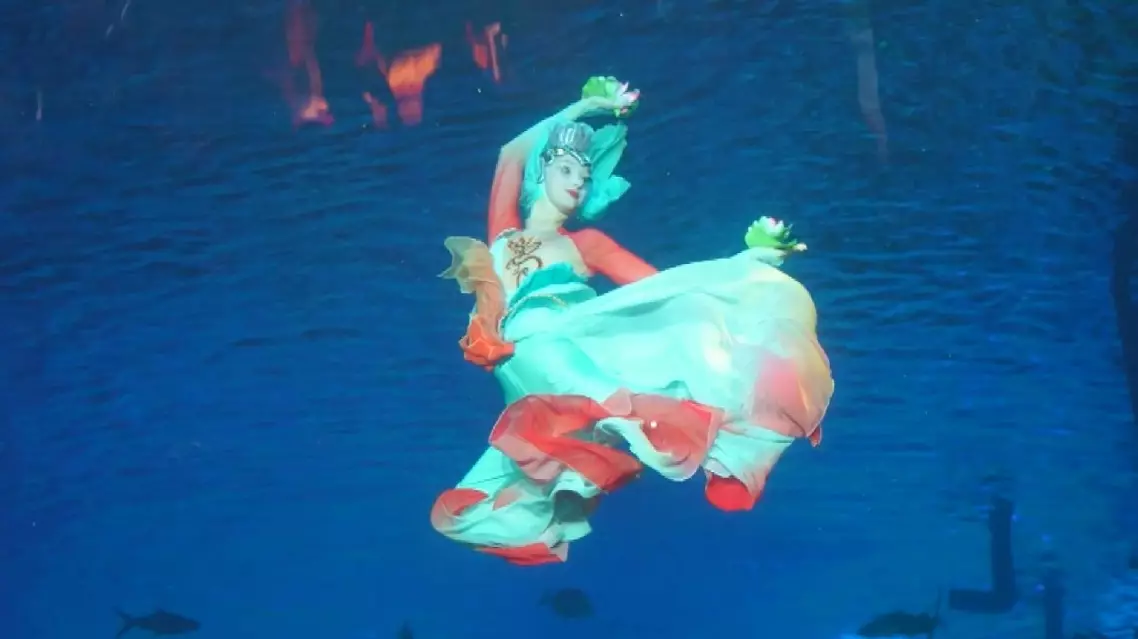
Underwater dance show dazzles with fusion of Chinese traditions in Guangzhou