TESERO, Italy (AP) — Norway swept the Nordic combined events at the Milan Cortina Winter Games with a victory in the team sprint through heavy snowfall Thursday in what could be the final time the sport is featured in the Olympics.
Finland took silver in a dramatic home straight sprint and Austria captured the bronze on a day when a snowstorm made for tough travel in the two-man 15-kilometer cross-country ski relay.
Click to Gallery
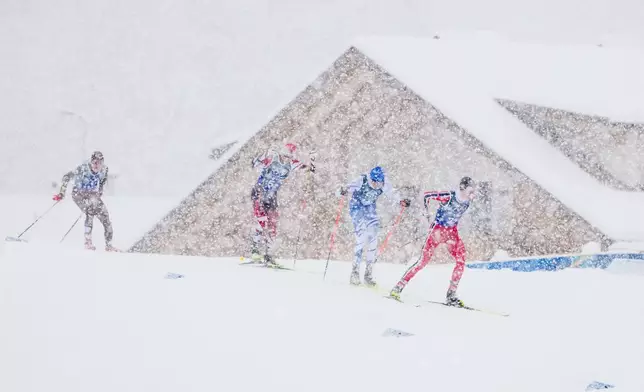
Jens Luraas Oftebro, of Norway, from left, Eero Hirvonen, of Finland, Johannes Lamparter, of Austria, Vinzenz Geiger, of Germany, and Ryota Yamamoto, of Japan, compete in the nordic combined team sprint at the 2026 Winter Olympics, in Tesero, Italy, Thursday, Feb. 19, 2026. (AP Photo/Evgeniy Maloletka)
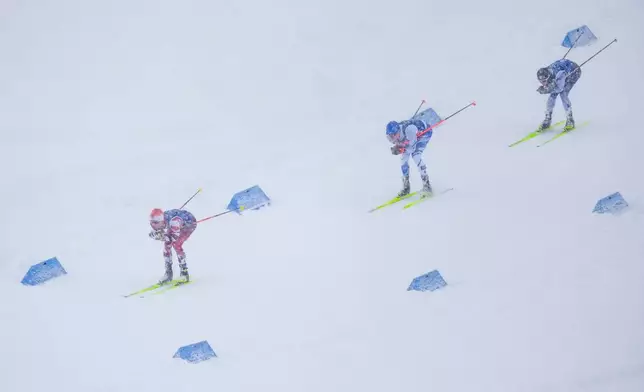
Johannes Lamparter, of Austria, from right, Eero Hirvonen, of Finland, and Ryota Yamamoto, of Japan, compete in the nordic combined team sprint at the 2026 Winter Olympics, in Tesero, Italy, Thursday, Feb. 19, 2026. (AP Photo/Kirsty Wigglesworth)
Jens Luraas Oftebro, of Norway, from right, Eero Hirvonen, of Finland and Johannes Lamparter, of Austria, compete in the nordic combined team sprint at the 2026 Winter Olympics, in Tesero, Italy, Thursday, Feb. 19, 2026. (AP Photo/Kirsty Wigglesworth)
Johannes Lamparter, of Austria, from left, Eero Hirvonen, of Finland, and Ryota Yamamoto, of Japan, compete in the nordic combined team sprint at the 2026 Winter Olympics, in Tesero, Italy, Thursday, Feb. 19, 2026. (AP Photo/Evgeniy Maloletka)
Jens Luraas Oftebro, of Norway, from left, Eero Hirvonen, of Finland, Johannes Lamparter, of Austria, Vinzenz Geiger, of Germany, and Ryota Yamamoto, of Japan, compete in the nordic combined team sprint at the 2026 Winter Olympics, in Tesero, Italy, Thursday, Feb. 19, 2026. (AP Photo/Evgeniy Maloletka)
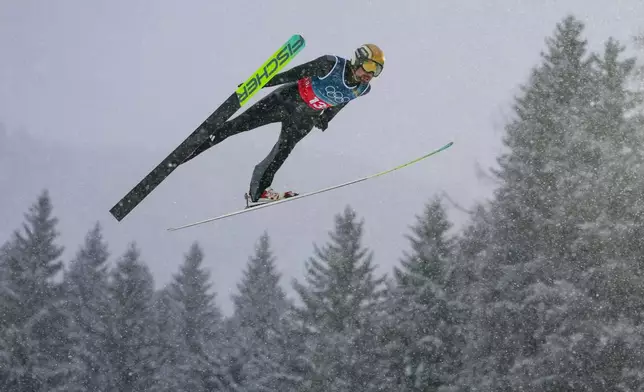
Johannes Rydzek, of Germany, soars through the air during the nordic combined team sprint at the 2026 Winter Olympics, in Predazzo, Italy, Thursday, Feb. 19, 2026. (AP Photo/Evgeniy Maloletka)
Johannes Lamparter, of Austria, from right, Eero Hirvonen, of Finland, and Ryota Yamamoto, of Japan, compete in the nordic combined team sprint at the 2026 Winter Olympics, in Tesero, Italy, Thursday, Feb. 19, 2026. (AP Photo/Kirsty Wigglesworth)
Jens Luraas Oftebro, of Norway, from right, Eero Hirvonen, of Finland and Johannes Lamparter, of Austria, compete in the nordic combined team sprint at the 2026 Winter Olympics, in Tesero, Italy, Thursday, Feb. 19, 2026. (AP Photo/Kirsty Wigglesworth)
Johannes Lamparter, of Austria, from left, Eero Hirvonen, of Finland, and Ryota Yamamoto, of Japan, compete in the nordic combined team sprint at the 2026 Winter Olympics, in Tesero, Italy, Thursday, Feb. 19, 2026. (AP Photo/Evgeniy Maloletka)
“It feels incredibly good. I don’t think it has fully sunk in yet,” said Jens Luraas Oftebro of Norway. “It was a very exciting finish. There was no plan to decide the race in the final sprint. I’m not that cold-blooded.”
The event dates to the original Olympics in 1924 and opens with a ski jump that determines the starting order for the cross-country ski race. The rest of the field starts behind the leader according to the ranking from their jump. The first to cross the line is the winner.
The hybrid contest, which is the only winter sport without women, faces elimination from the International Olympic Committee because it draws a small audience and is dominated by Norway, Austria, Germany and Japan. The IOC is due to make its decision later this year.
The podium at all three events that ended in the Tesero Cross-Country Skiing Stadium has featured the same three countries.
Oftebro, who ran away with gold in the normal and large hill individual events, teamed up with Andreas Skoglund to capture a third medal for the country that invented the sport.
"More than anything, it’s great to crown a really strong championship with this result," Oftebro said.
Ilkka Herola and Eero Hirvonen of Finland, who each took a bronze in the first two events, won their first silver medals.
“Of course you always dream about medals, but I'm not sure we fully expected this,” Hirvonen said after just losing the sprint finish. "I’m not complaining.
“It really was extremely difficult to ski out there. You genuinely had to stay very focused,” he said. “Today it almost felt like a competition about who could avoid making mistakes. If you didn’t mess up on the downhill and didn’t make errors on the course, you were pretty much right in the fight.”
Germany had the best score after the ski jump and got a 13-second jump on Norway in the ski race and Japan started 21 seconds back. But the tough race conditions hurt both teams.
Vinzenz Geiger of Germany and Ryota Yamamoto of Japan collided and lost valuable time before the German again lost his footing moments later.
Johannes Lamparter of Austria, who won silver medals in the individual events, shared the bronze with Stefan Rettenegger.
The U.S. team of Niklas Malacinski and Ben Loomis finished seventh.
AP Olympics: https://apnews.com/hub/milan-cortina-2026-winter-olympics
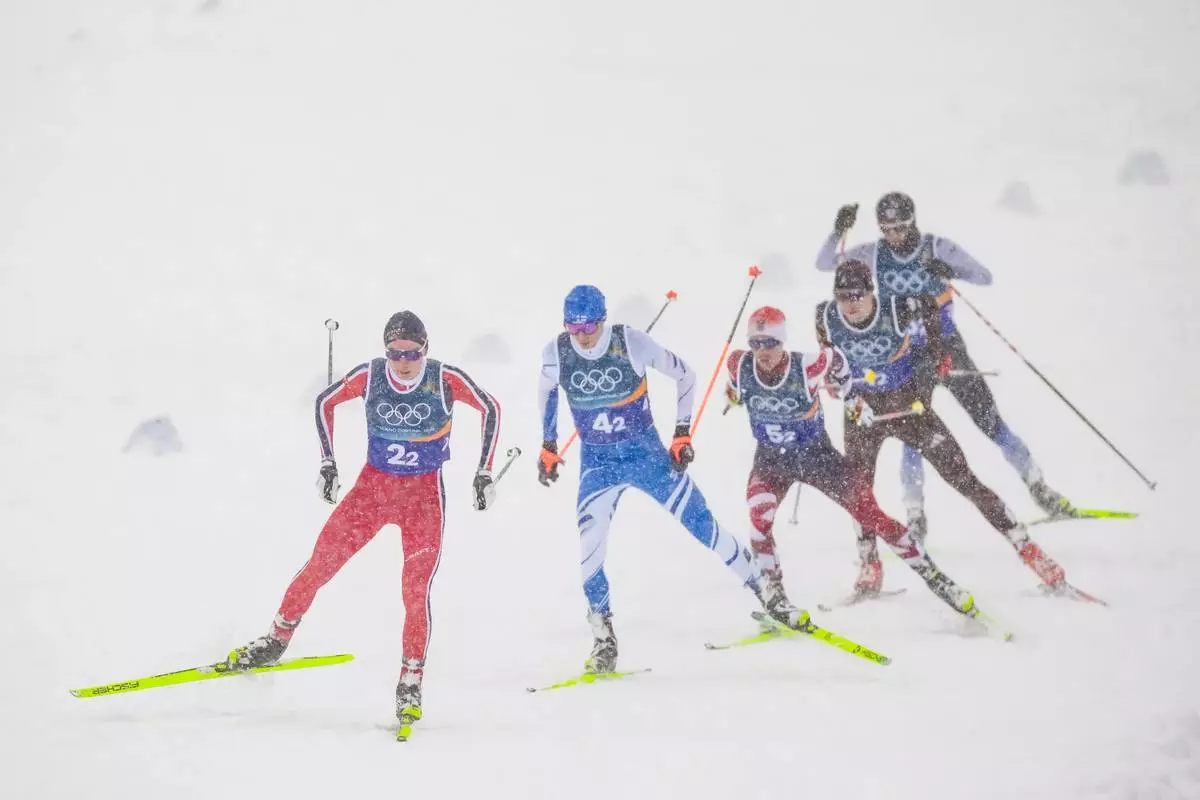
Jens Luraas Oftebro, of Norway, from left, Eero Hirvonen, of Finland, Johannes Lamparter, of Austria, Vinzenz Geiger, of Germany, and Ryota Yamamoto, of Japan, compete in the nordic combined team sprint at the 2026 Winter Olympics, in Tesero, Italy, Thursday, Feb. 19, 2026. (AP Photo/Evgeniy Maloletka)
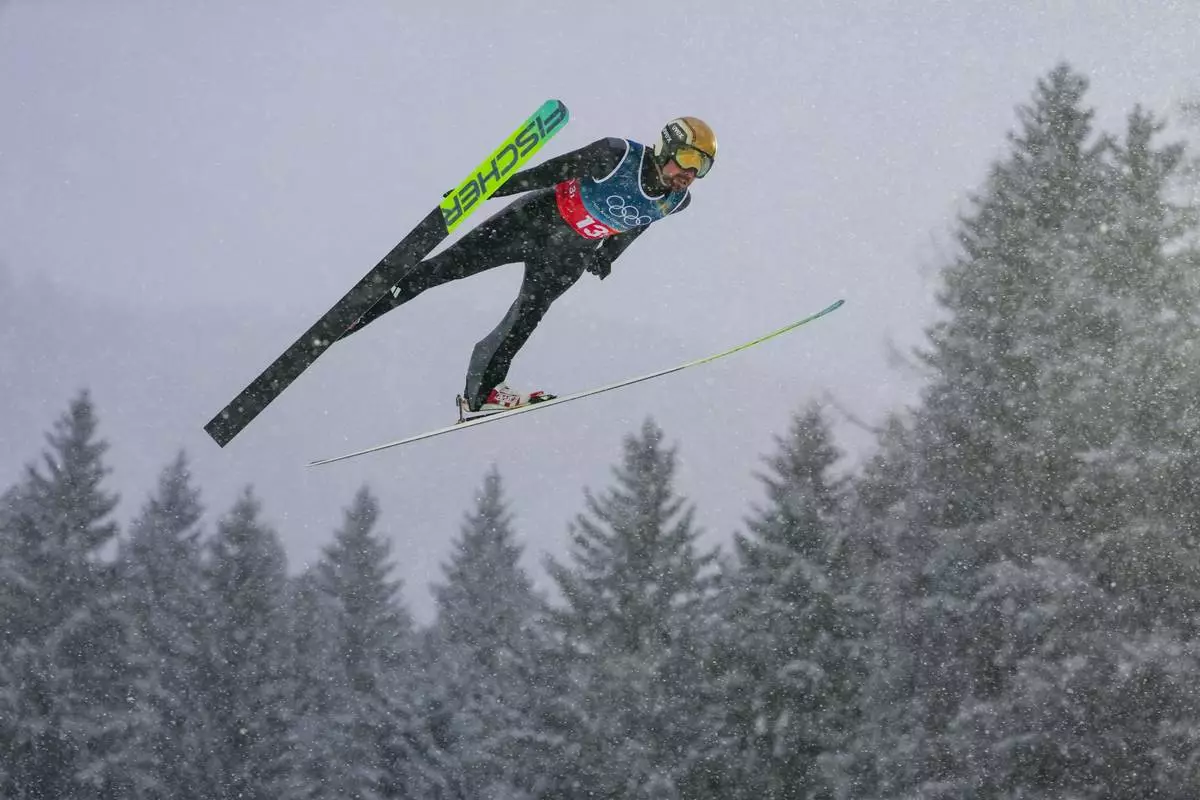
Johannes Rydzek, of Germany, soars through the air during the nordic combined team sprint at the 2026 Winter Olympics, in Predazzo, Italy, Thursday, Feb. 19, 2026. (AP Photo/Evgeniy Maloletka)
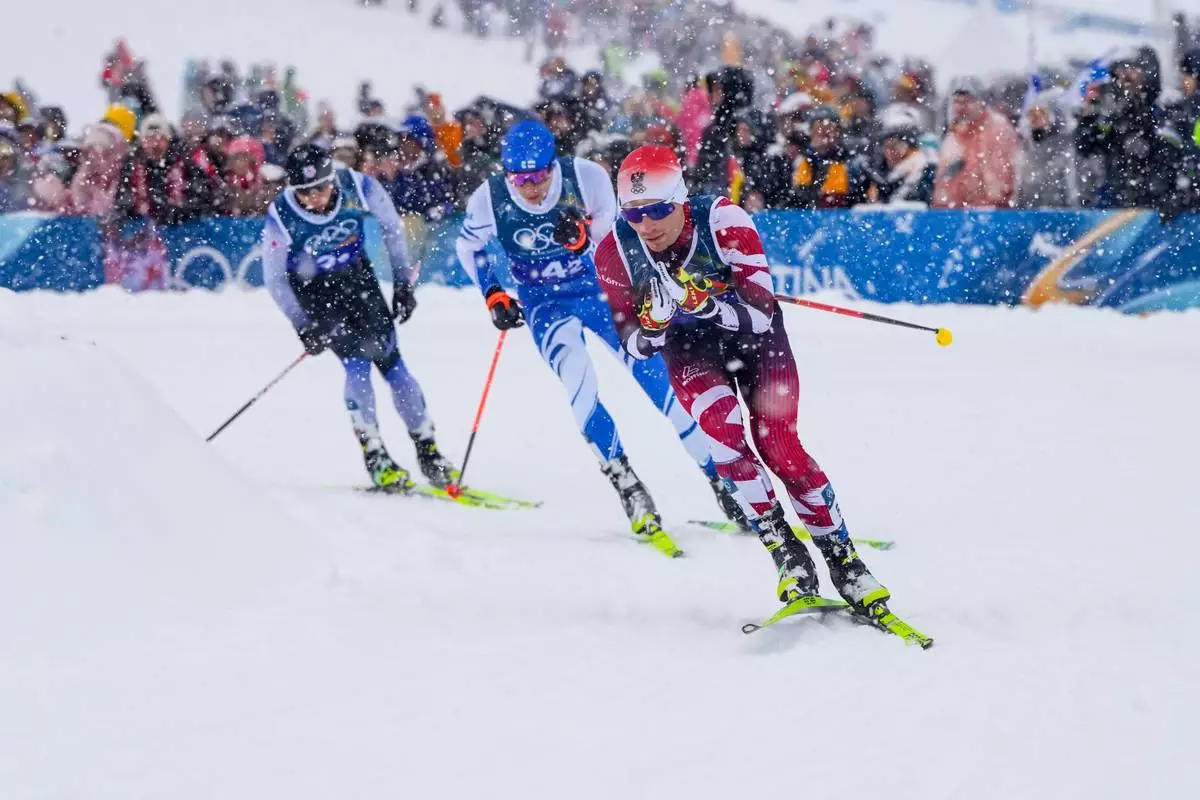
Johannes Lamparter, of Austria, from right, Eero Hirvonen, of Finland, and Ryota Yamamoto, of Japan, compete in the nordic combined team sprint at the 2026 Winter Olympics, in Tesero, Italy, Thursday, Feb. 19, 2026. (AP Photo/Kirsty Wigglesworth)
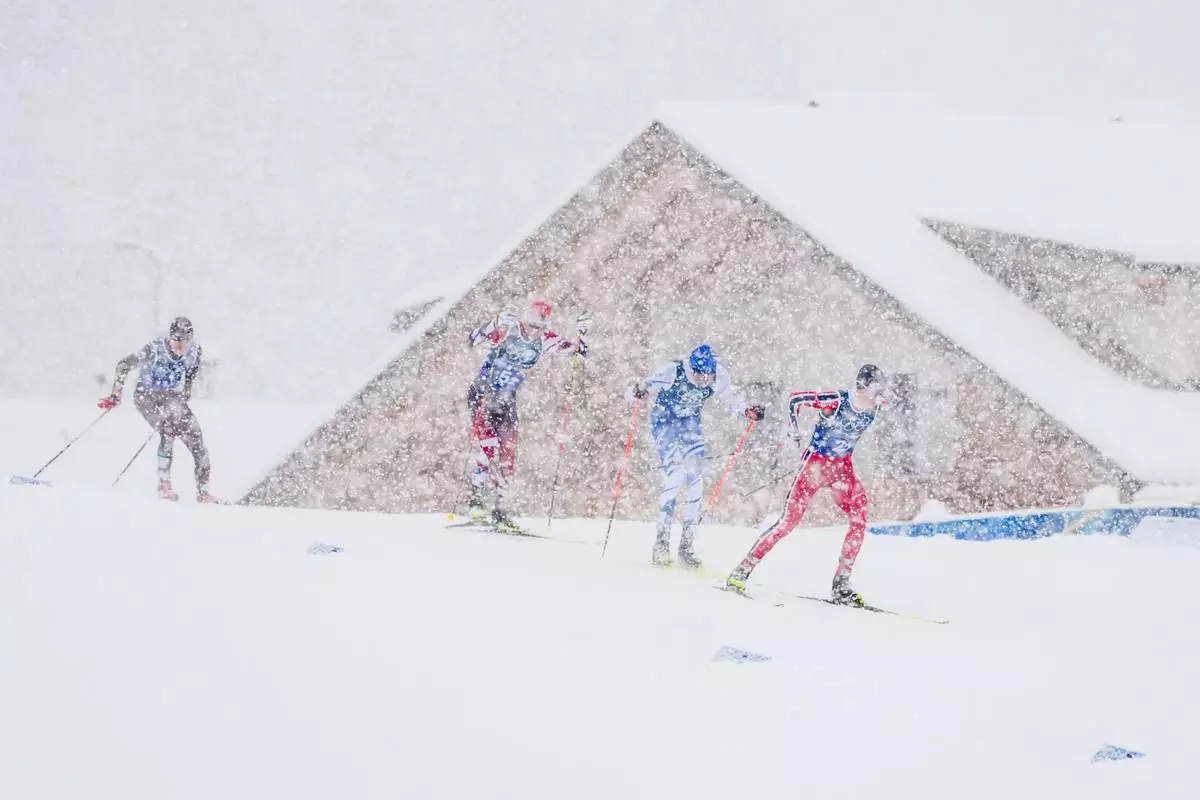
Jens Luraas Oftebro, of Norway, from right, Eero Hirvonen, of Finland and Johannes Lamparter, of Austria, compete in the nordic combined team sprint at the 2026 Winter Olympics, in Tesero, Italy, Thursday, Feb. 19, 2026. (AP Photo/Kirsty Wigglesworth)
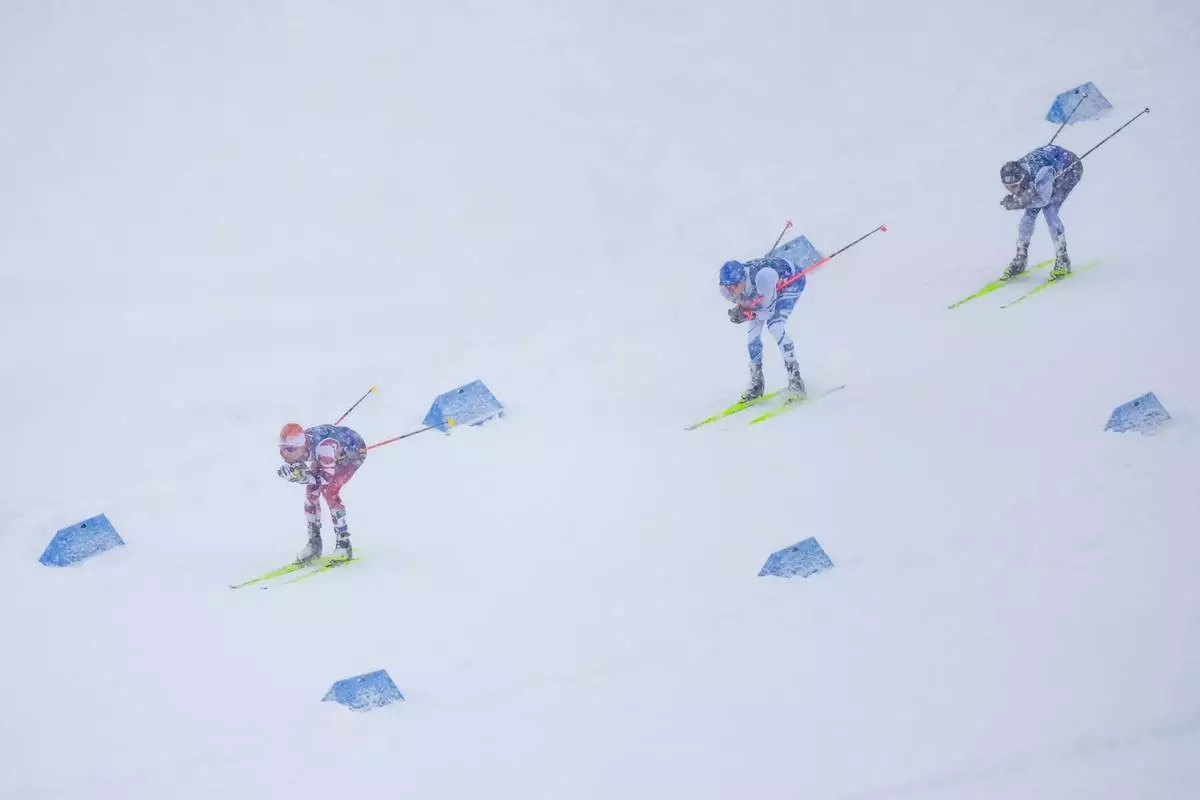
Johannes Lamparter, of Austria, from left, Eero Hirvonen, of Finland, and Ryota Yamamoto, of Japan, compete in the nordic combined team sprint at the 2026 Winter Olympics, in Tesero, Italy, Thursday, Feb. 19, 2026. (AP Photo/Evgeniy Maloletka)
WASHINGTON (AP) — President Donald Trump is gathering Thursday with representatives from more than two dozen countries that have joined his Board of Peace — and several that have opted not to — for an inaugural meeting that will focus on reconstruction and building an international stabilization force for a war-battered Gaza, where a shaky ceasefire deal persists.
Trump announced ahead of the meeting that board members have pledged $5 billion for reconstruction, a fraction of the estimated $70 billion needed to rebuild the Palestinian territory decimated after two years of war. Members are expected to unveil commitments of thousands of personnel to international stabilization and police forces for the territory.
“What we’re doing is very simple: peace," Trump said in remarks to open the meeting. “It’s called the Board of Peace, and it’s all about an easy word to say, but a hard word to produce -- peace.”
The board was initiated as part of Trump's 20-point peace plan to end the conflict in Gaza. But since the October ceasefire, Trump's vision for the board has morphed and he wants it to have an even more ambitious remit — one that will not only complete the Herculean task of bringing lasting peace between Israel and Hamas but will also help resolve conflicts around the globe.
But the Gaza ceasefire deal remains fragile and Trump's expanded vision for it has triggered fears the U.S. president is looking to create a rival to the United Nations. Trump earlier this week said he hoped the board would push the U.N. to “get on the ball.”
“The United Nations has great potential,” he said. “They haven’t lived up to the potential.”
Trump started the meeting by taking part in a family photo with officials from nations that have joined the board.
Most countries sent high-level officials, but a few leaders—including Indonesian President Prabowo Subianto, Argentinian President Javier Milei, and Hungarian President Viktor Orbán—traveled to Washington for the gathering.
More than 40 countries and the European Union confirmed they were sending officials to Thursday’s meeting, according to a senior administration official who was not authorized to comment publicly. Germany, Italy, Norway, Switzerland and the United Kingdom are among more than a dozen countries that have not joined the board but are taking part as observers.
The U.N. Security Council held a high-level meeting Wednesday on the ceasefire deal and Israel’s efforts to expand control in the West Bank. The U.N. session in New York was originally scheduled for Thursday but was moved up after Trump announced the board’s meeting for the same date and it became clear that it would complicate travel plans for diplomats planning to attend both.
Vatican Secretary of State Cardinal Pietro Parolin told reporters earlier this week that “at the international level it should above all be the U.N. that manages these crisis situations.” The Trump administration on Wednesday pushed back on the Vatican's concerns.
“This president has a very bold and ambitious plan and vision to rebuild and reconstruct Gaza, which is well underway because of the Board of Peace,” White House press secretary Karoline Leavitt said. “This is a legitimate organization where there are tens of member countries from around the world.”
Mike Waltz, the U.S. ambassador to the U.N., also pushed back on skeptical allies, saying the board is “not talking, it is doing.”
“We are hearing the chattering class criticizing the structure of the board, that it’s unconventional, that it’s unprecedented,” Waltz said. “Again, the old ways were not working.”
Central to Thursday's discussions will be creating an armed international stabilization force to keep security and ensure the disarming of the militant Hamas group, a key demand of Israel and a cornerstone of the ceasefire deal.
But thus far, only Indonesia has offered a firm commitment to Trump for the proposed force. And Hamas has provided little confidence that it is willing to move forward on disarmament. The administration is “under no illusions on the challenges regarding demilitarization” but has been encouraged by what mediators have reported back, according to a U.S. official who was not authorized to comment publicly and spoke on condition of anonymity.
Subianto, the Indonesian president, pledged to work closely with other leading Islamic countries invited by Trump to “join in the endeavors to try to achieve lasting peace in Palestine.”
“We recognize there are still obstacles to be overcome, but at least my position is at least we have to try, and we have to do our best,” he said at an event at the U.S. Chamber of Commerce on Wednesday, where he met with members of the business community.
On Thursday, updates are expected from the Gaza Executive Board, the operational arm of the board, about its efforts to create a functioning government system and services for the territory, according to the official who spoke on condition of anonymity to preview the broad outlines of the meeting.
Michael Hanna, U.S. program director at the International Crisis Group, a nonprofit group focused on preventing conflicts, suggested the skepticism some U.S. allies are showing is not unwarranted.
"Without any clear authorization for the expansion of its mandate beyond Gaza, it is unsurprising that many U.S. allies and partners have chosen to decline Trump’s offer to join the board," Hanna said. “Instead, many of the states most invested in Gaza’s future have signed up with the hope of focusing U.S. attention and encouraging Trump himself to use the influence and leverage he has with Israel.”
Associated Press writers Didi Tang in Washington, Farnoush Amiri at the United Nations and Nicole Winfield in Rome contributed reporting.

FILE - President Donald Trump's name is seen on the U.S. Institute of Peace building, Dec. 4, 2025, in Washington. (AP Photo/Evan Vucci, File)