The U.S. federal agency that enforces workplace civil rights is suing a regional Coca-Cola bottler for sex discrimination, alleging the company discriminated against male employees by only inviting women to a company-sponsored networking event.
The U.S. Equal Employment Opportunity Commission filed the lawsuit on behalf of a male employee of Coca-Cola Beverages Northeast who complained about a two-day networking trip for about 250 women in September 2024 at the Mohegan Sun casino resort in Connecticut. The lawsuit alleged that the Bedford, New Hampshire-based company violated Title VII of the Civil Rights Act of 1964 by excluding male employees from the event.
The lawsuit, filed Tuesday in New Hampshire district court, challenges the sort of diversity programming the EEOC has aggressively targeted since President Donald Trump overhauled the agency, which was created by Congress under the Civil Rights Act. It comes just two weeks after the EEOC revealed that it is investigating sportswear giant Nike for allegedly discriminating against white employees through its diversity policies.
“Excluding men from an employer-sponsored event is a Title VII violation that the EEOC will act to remedy through litigation when necessary,” acting EEOC general counsel Catherine L. Eschbach said in a statement Wednesday announcing the lawsuit against Coca-Cola Northeast.
The EEOC said in court documents that it filed the lawsuit after failing to reach a conciliation agreement with Coca-Cola Beverage Northeast, an independent Coca-Cola bottler that serves New England and upstate New York.
But in a statement sent to The Associated Press, Coca-Cola Northeast said it “finds it disappointing that the EEOC did not conduct a full investigation and we look forward to having our day in open court when we can tell the full story and expect to be vindicated."
The company declined to comment on the details of the lawsuit.
In a LinkedIn post, Coca-Cola Northeast celebrated what it called its “first in-person Women’s Forum” attended by 250 female associates, describing it as a “networking reception and event." Speakers talked about navigating a male-dominated industry, balancing work and personal life, and other topics, according to the post.
The EEOC's lawsuit said the company paid for lodging, meals and other benefits for attendees and paid them their salaries while excusing them from regular work duties. The agency is seeking monetary compensation for a class of men who were excluded, saying they suffered not only financial losses but “emotional pain, suffering, inconvenience, mental anguish.”
In its news release, the EEOC directed the public to its fact sheet on DEI-related discrimination, a document that takes aim at practices such as training, employee resource groups and fellowship programs. It stops short of declaring any one practice illegal, but warns they could veer into discrimination depending on how they are constructed.
EEOC Chair Andrea Lucas, a Trump appointee, has long been a staunch critic of many corporate DEI practices. In December, Lucas posted a social media call-out urging white men to come forward if they have experienced discrimination at work.
Civil rights activists and former Democratic commissioners of the EEOC have decried her methods, saying she is imperiling longstanding practices that have been upheld by courts and are intended to prevent discrimination and eliminate structural barriers for women and minorities.
Targeted programs, such as networking events, for particular demographic groups have been among the most vulnerable to lawsuits challenging diversity practices, said David Glasgow, co-founder of the Meltzer Center for Diversity, Inclusion, and Belonging at NYU School of Law, which tracks anti-DEI litigation.
“We urge organizations to shift ‘from cohorts to content,’ meaning that instead of limiting participation based on cohort, they could open it up to anyone who is committed to the content of the program,” said Glasgow, co-author of the book “How Equality Wins,” which aims to provide a blueprint on how organizations can navigate the backlash against DEI policies.
Glasgow said most of the lawsuits against “targeted programs” have been settled after the defending party opens the program to all.
“It’s a bit odd that the current iteration of the EEOC thinks that going after regional companies for hosting a two-day women’s retreat is a good use of limited resources at a time when there is still extensive discrimination against women in the workplace,” Glasgow said in an email to AP.
The EEOC did not reply to requests for further comment on the lawsuit.
The Associated Press’ women in the workforce and state government coverage receives financial support from Pivotal Ventures. AP is solely responsible for all content. Find AP’s standards for working with philanthropies, a list of supporters and funded coverage areas at AP.org.
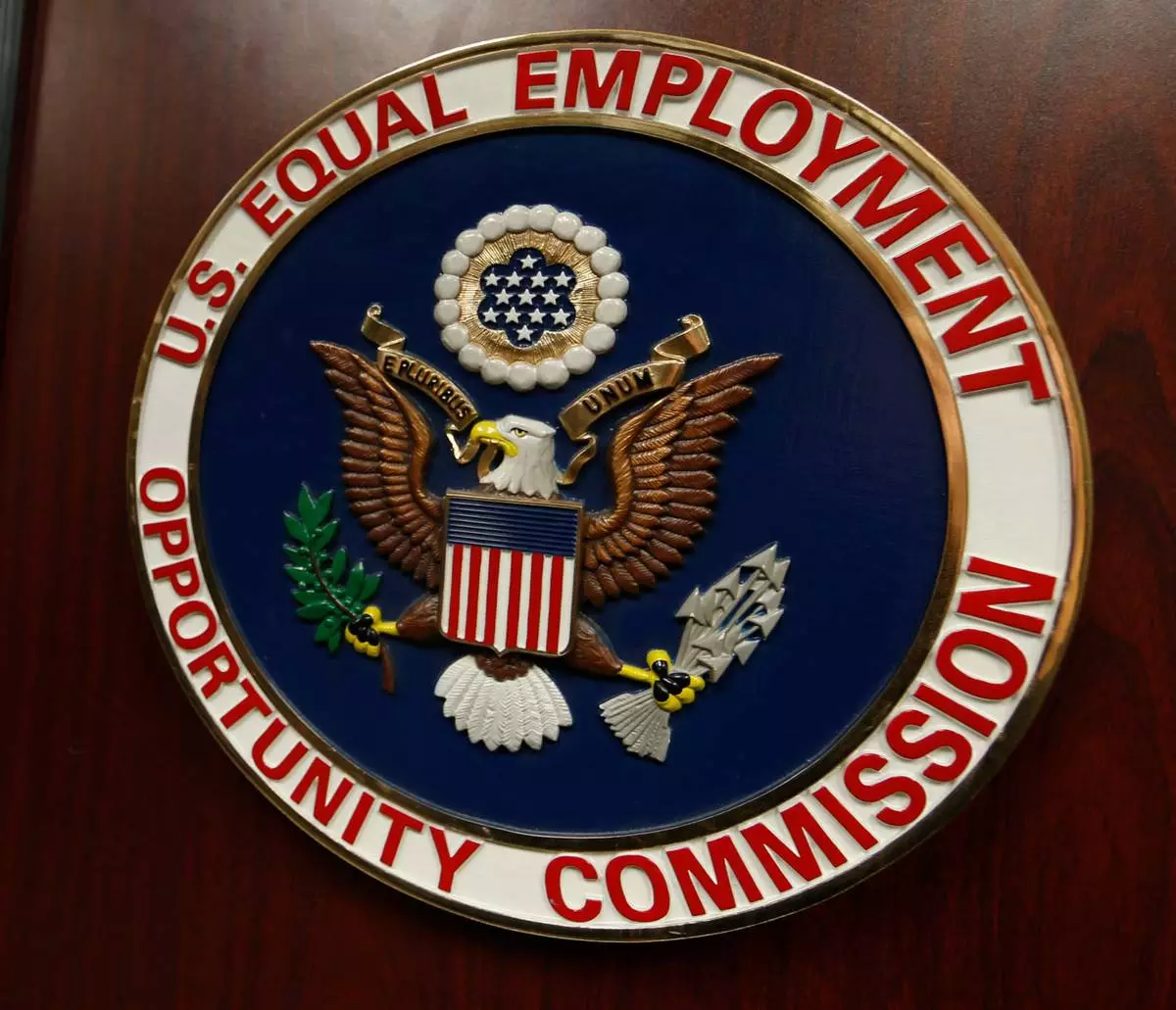
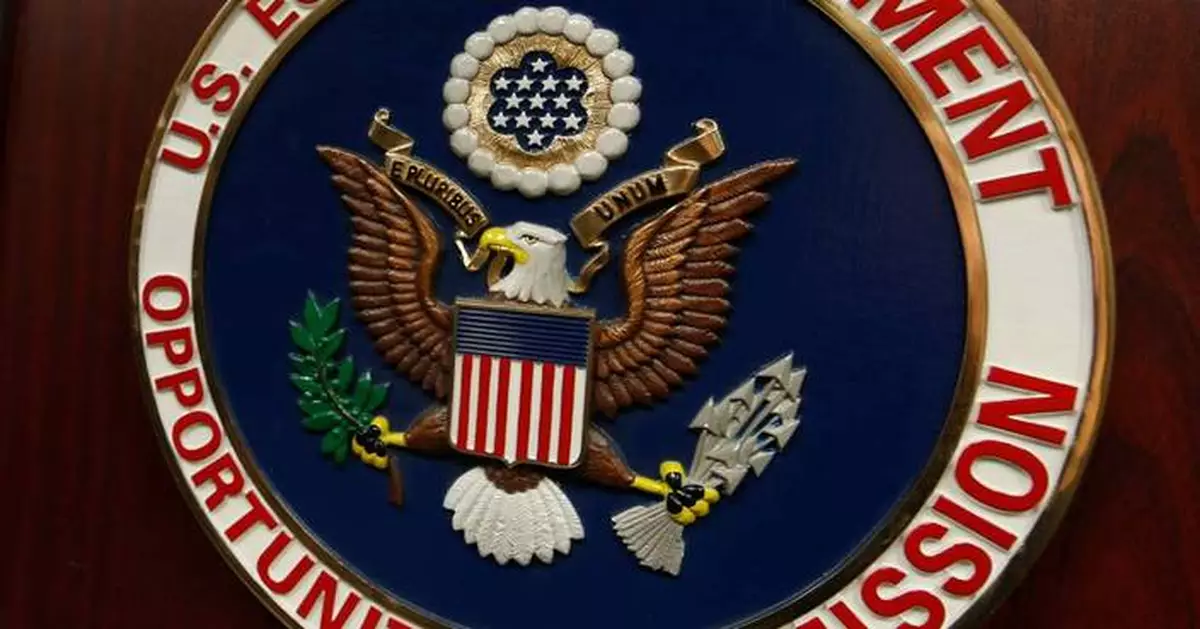
FILE - The emblem of the U.S. Equal Employment Opportunity Commission (EEOC) is displayed on a podium in Vail, Colo., Feb. 16, 2016. (AP Photo/David Zalubowski, File)
CARACAS, Venezuela (AP) — Venezuela's acting president on Thursday signed into law an amnesty bill that could lead to the release of politicians, activists, lawyers and many others, effectively acknowledging that the government has held hundreds of people in prison for political motivations.
The approval marks a reversal for authorities in the South American nation, who for decades have denied holding any political prisoners. It is the latest policy reversal following last month’s stunning U.S. military raid in the country’s capital, Caracas, to capture then-President Nicolás Maduro.
The measure is expected to benefit opposition members, activists, human rights defenders, journalists and many others who were targeted by the ruling party over the past 27 years. But families hoping for the release of their loved ones — some of whom have been gathered outside detention facilities for weeks — say that acting President Delcy Rodríguez has failed to deliver on earlier promises to release prisoners.
In the days after Maduro’s Jan. 3 capture, Rodríguez’s government announced it would release a significant number of prisoners. However, relatives and human rights watchdogs have criticized the slow pace of releases and the restrictive conditions under which many have been placed after leaving prison.
The new law was not a prerequisite for the government to free prisoners, but families held out hope that it could speed up releases. Some gathered outside detention facilities in Caracas grew impatient as hopes of immediate releases were disappointed Thursday night, retreating to their tents as Christian music played from a loudspeaker.
Venezuela-based prisoners’ rights group Foro Penal has tallied 448 releases since Jan. 8. The group estimates that more than 600 people are still in custody for political reasons.
Rodríguez, who proposed the bill late last month, signed the measure into law shortly after it was approved by the country's legislature.
She said during the signing that it showed that the country’s political leaders were “letting go of a little intolerance and opening new avenues for politics in Venezuela."
The bill’s purpose is to grant people “a general and full amnesty for crimes or offenses committed” during specific periods since 1999 that were marked by politically-driven conflicts in Venezuela, including “acts of politically motivated violence” in the context of the 2024 presidential election. The aftermath of that election led to protests and the arrest of more than 2,000 people, including minors.
The debate over the bill was suspended last week after lawmakers were unable to agree on some issues, including whether people who left the country to avoid detention can be granted amnesty, and laid bare the resistance from some ruling-party loyalists to seeing opposition members granted relief. Lawmakers on Thursday overcame the disagreement by allowing those abroad to have a lawyer seek amnesty on their behalf instead of forcing them to return to Venezuela to request the relief in person.
Once someone abroad has filed a request for amnesty, the law shields them from arrest when they return to the country to appear in court for a ruling on their request.
“It's not perfect, but it is undoubtedly a great step forward for the reconciliation of Venezuela,” opposition lawmaker Nora Bracho said in the debate. “It will undoubtedly alleviate the suffering of many Venezuelans.”
People convicted of human rights violations, war crimes, murder, drug trafficking and corruption do not qualify for amnesty, nor do people “who are being prosecuted or may be prosecuted or convicted for promoting, instigating, soliciting, invoking, favoring, facilitating, financing, or participating in armed or forceful actions against” Venezuela “by foreign states, corporations or individuals.” That could leave out members of the opposition who have supported Trump’s policy toward Venezuela.
General amnesty has long been a central demand of Venezuela’s opposition and human rights organizations, but they have viewed the proposal with cautious optimism and raised several concerns about eligibility and implementation.
The law was criticized Thursday by some members of the opposition, including Pedro Urruchurtu, international relations director for opposition leader and Nobel Peace Prize laurate María Corina Machado.
Urruchurtu has lived in exile since May, when he and other Machado staffers left the Argentine diplomatic compound in Caracas, where they had sheltered for more than a year to avoid arrest. He rejected the law's requirement that exiles return to Venezuela and appear in court.
“A true amnesty doesn’t require laws, but rather will, something that is lacking in this discussion,” Urruchurtu said on X. "It is not only an invalid and illegitimate law, but also a trap to buy time and revictimize those persecuted."
Some relatives of prisoners called on Trump to pressure Venezuela's government into freeing their loved ones.
“From the beginning, they have been liars, deceivers and mockers,” Marielis Guzmán said of Venezuelan authorities while standing outside a prison in Caracas on Thursday. “What the Venezuelan state has done is abuse its power.”
Follow AP’s coverage of Latin America and the Caribbean at https://apnews.com/hub/latin-america
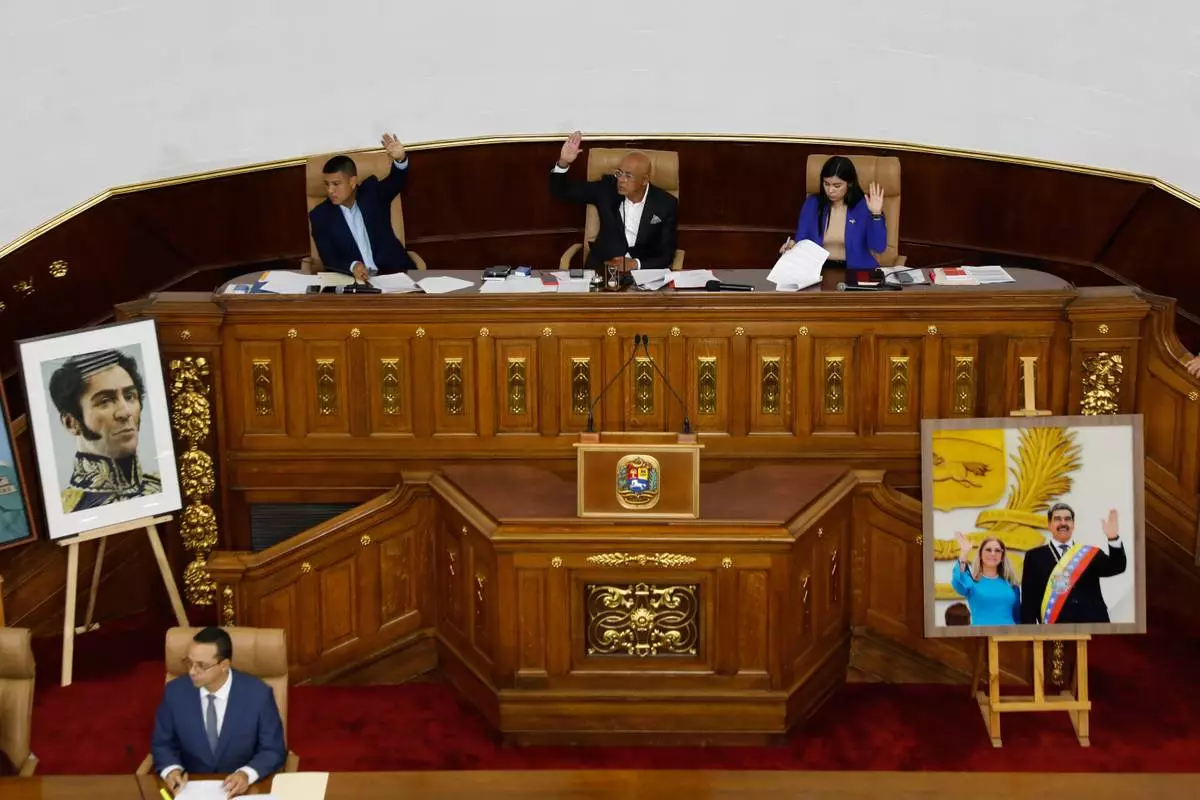
National Assembly President Jorge Rodriguez, center, presides over a session debating an amnesty bill in Caracas, Venezuela, Thursday, Feb. 19, 2026. (AP Photo/Crisitian Hernandez)
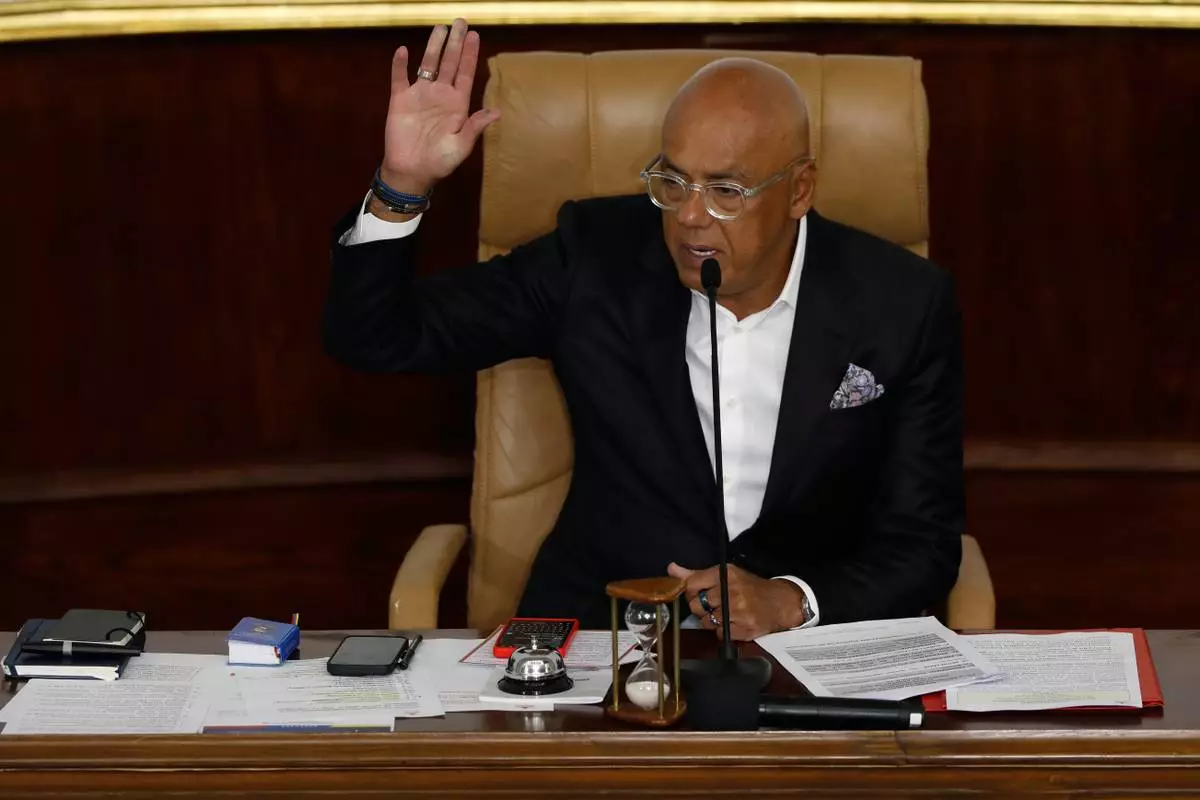
National Assembly President Jorge Rodriguez presides over a session debating an amnesty bill in Caracas, Venezuela, Thursday, Feb. 19, 2026. (AP Photo/Crisitian Hernandez)
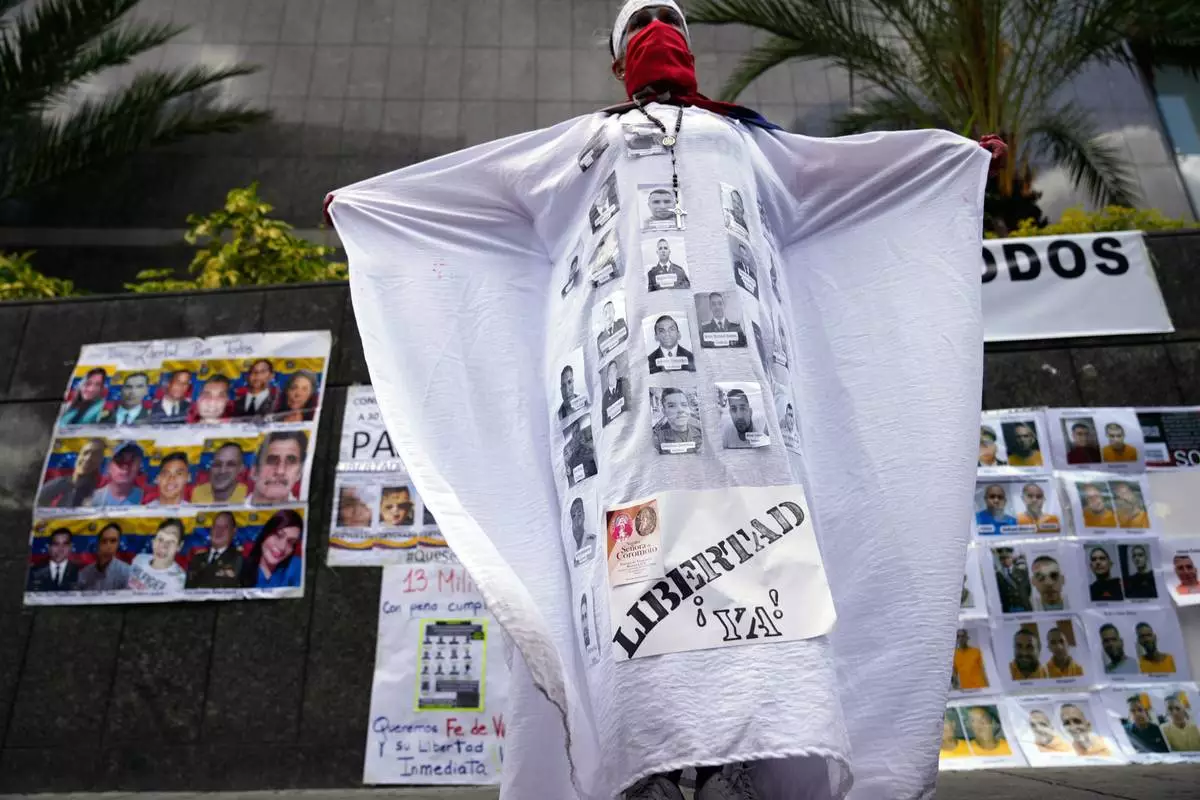
An activist protests outside the United Nations office for the release of what demonstrators consider to be political prisoners in Caracas, Venezuela, Wednesday, Feb. 18, 2026. (AP Photo/Ariana Cubillos)
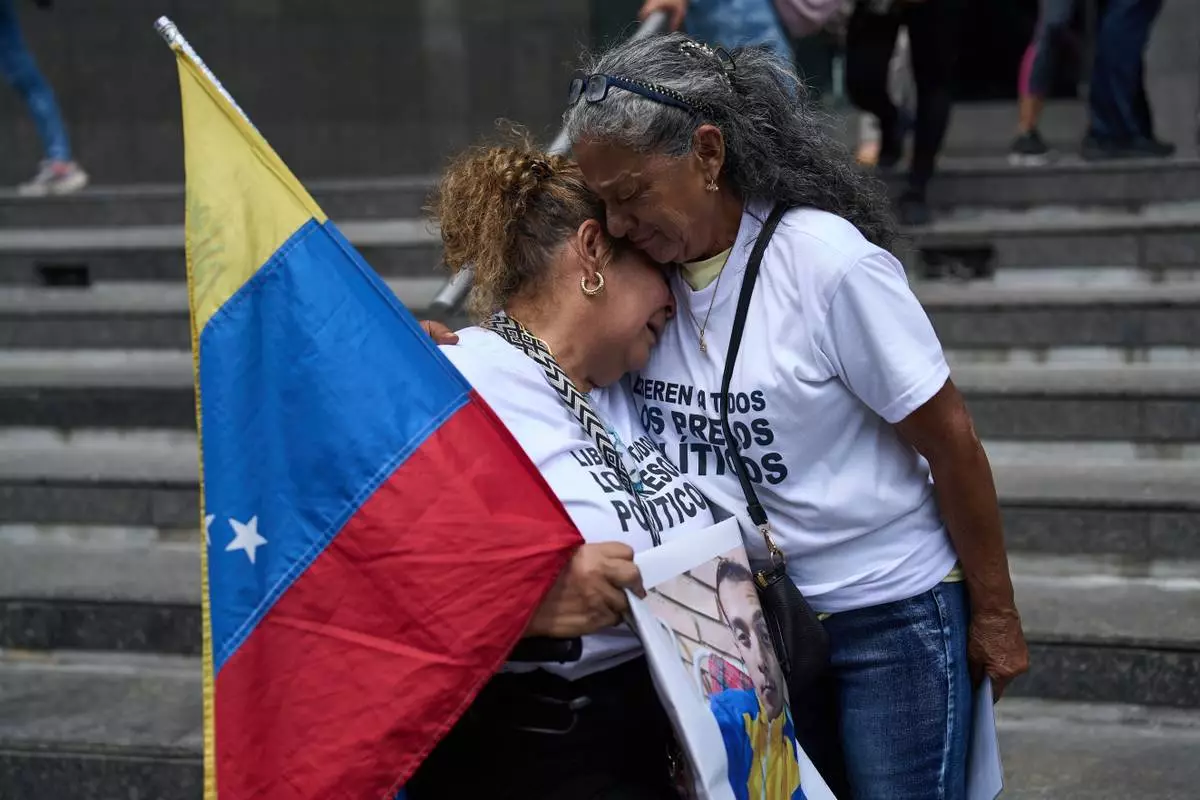
Barbara Bracho, left, mother of Gilberto Bracho, is embraced by Zoraida Gonzalez, mother of Miguel Estrada, both of whom consider their sons to be political prisoners, protest for their releases outside the United Nations office in Caracas, Venezuela, Wednesday Feb. 18, 2026. (AP Photo/Ariana Cubillos)
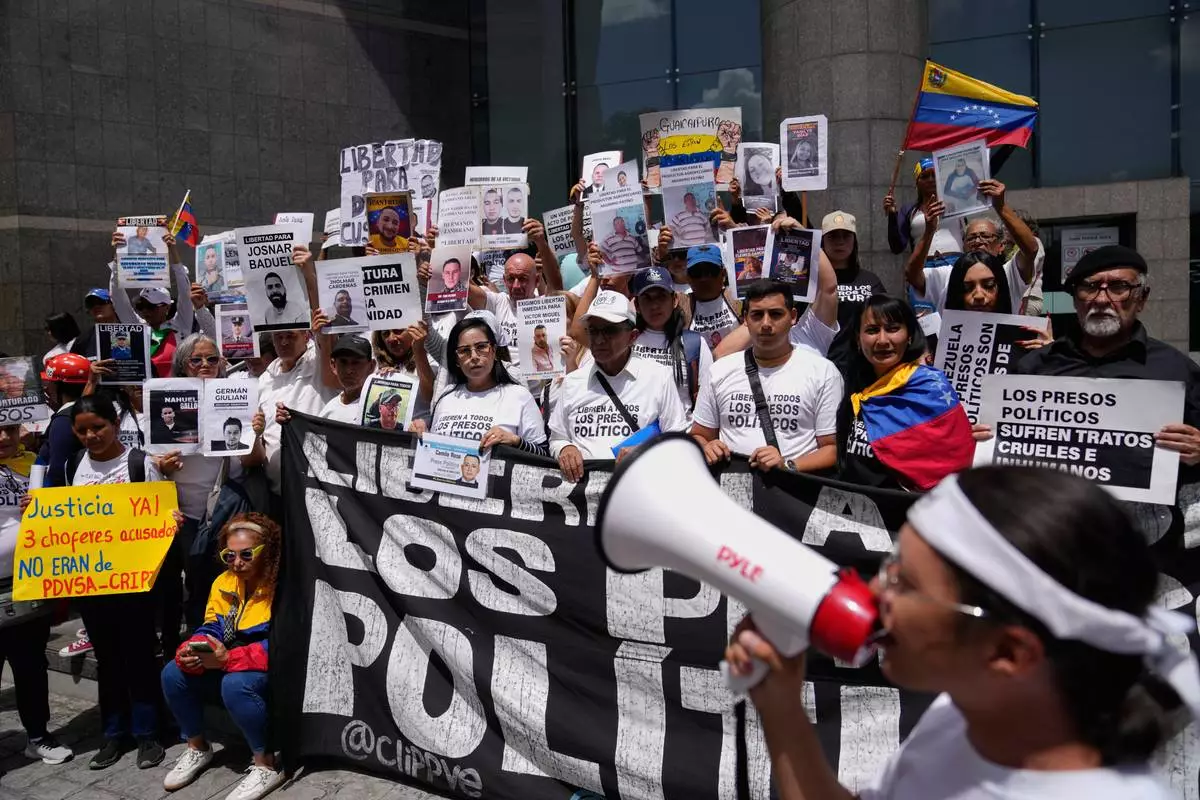
People who consider their detained family members to be political prisoners call for their releases outside the United Nations office in Caracas, Venezuela, Wednesday Feb. 18, 2026. (AP Photo/Ariana Cubillos)
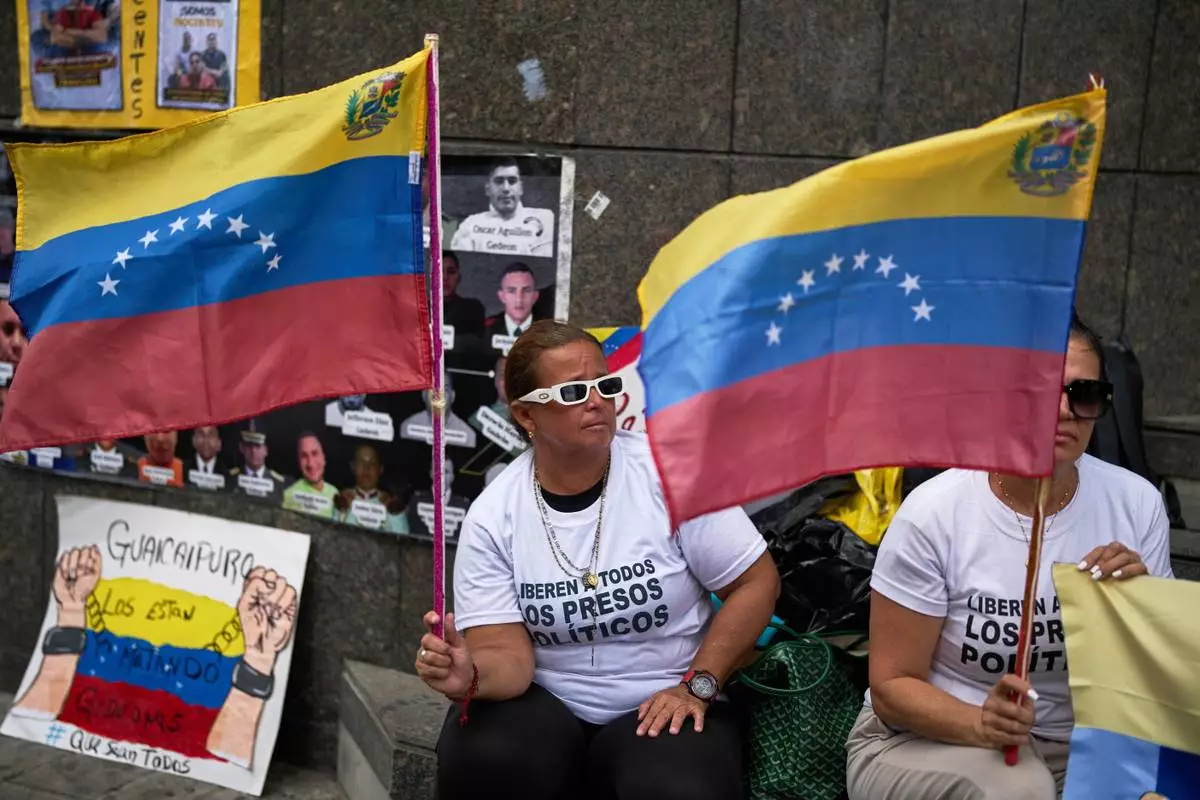
People who consider their detained family members to be political prisoners protest for their releases outside the United Nations office in Caracas, Venezuela, Wednesday Feb. 18, 2026. (AP Photo/Ariana Cubillos)