NEW YORK (AP) — A federal judge has dismissed a lawsuit filed by New York City’s former interim police commissioner that accused the previous mayor, Eric Adams, and his top deputies of operating the NYPD as a “criminal enterprise.”
The racketeering lawsuit was originally filed in July by Thomas Donlon, a longtime FBI official appointed by Adams to stabilize the scandal-scarred police department.
Instead, Donlon said he encountered “systemic corruption and criminal conduct” enabled by Adams and his allies, who routinely inflated overtime, blocked internal investigations and punished whistleblowers.
In a ruling Wednesday, Judge Denise Cote said the alleged misconduct did not meet the definition of racketeering activity because the lawsuit did not describe the defendants acting with “a common purpose."
A spokesperson for the city’s Law Department said they were “pleased the court agreed there was no legal basis for this case to continue.” An inquiry to Adams' spokesperson was not returned.
John Scola, an attorney for Donlon, said his client had already appealed the decision.
“Mr. Donlon confronted corruption within the NYPD’s highest ranks and was forced out for refusing to engage in illegal conduct,” Scola said. “We are confident the Second Circuit will allow his claims to proceed.”
Donlon was appointed by Adams following the resignation of the previous police commissioner, Edward Caban, whose phone was seized by federal officials as part of a sprawling probe into the administration.
He served as the interim commissioner for about two months, and was later replaced by Jessica Tisch, who continues to lead the department.
Donlon’s lawsuit was one of several filed by veteran police officials that described a culture of rampant corruption and cronyism within the department under Adams.
In recent weeks, federal prosecutors have also brought multiple bribery cases against former police officials who served under Adams.

FILE - This image provided by Office of the New York Mayor shows Thomas Donlon, center, as New York City's interim police commissioner, Sept. 13, 2024. (Michael Appleton/Mayoral Photography Office via AP, File)
BUDAPEST, Hungary (AP) — Hungary's Péter Magyar took his oath of office on Saturday to become the country's new prime minister, ending Viktor Orbán's 16 years of autocratic rule.
Magyar’s center-right Tisza party defeated Orbán’s nationalist-populist Fidesz in a stunning blow last month, gaining more votes and seats in Parliament than any other party in Hungary’s post-Communist history.
The win, which gave Tisza a two-thirds parliamentary majority, will allow it to roll back many of the policies that gave Orbán a reputation among his critics as a far-right authoritarian.
In a speech to lawmakers in Hungary's Parliament after being sworn in, Magyar said he would not use his office to “rule” Hungary, “but to serve my homeland.”
“I’m not standing here because I’m different from anyone else in the country,” Magyar said. “I stand here because millions of Hungarians decided that they want change. And this trust that we have received is both a weight of honor and a moral obligation, but also a wonderful feeling.”
Magyar has vowed to restore democratic institutions and governmental checks and balances that were heavily eroded during Orbán's rule, and to clamp down on alleged corruption.
His government is expected to transform political dynamics within the European Union, where the former prime minister had upended the bloc by frequently vetoing key decisions, most recently concerning support for neighboring Ukraine.
On Saturday, Magyar, a 45-year-old lawyer who founded Tisza in 2024 after years as an insider in Orbán’s party, entered the sprawling neo-Gothic parliament building alongside 140 of his party representatives.
Tisza now controls 141 seats in Hungary's 199-seat parliament. Orbán’s Fidesz-KDNP coalition controls 52 seats, down from 135, while the far-right Mi Hazánk (Our Homeland) party holds six seats.
The 199 representatives took their oaths of office at around 11 a.m. local time. Orbán was not among them for the first time since Hungary’s first post-Communist Parliament was formed in 1990.
Magyar earlier called on Hungarians to attend an all-day “regime-change” celebration on Kossuth Square outside Parliament to mark his inauguration and the end of the Orbán era. Thousands had already gathered in the square as the new representatives were sworn in, many waving Hungarian and EU flags and wearing Tisza T-shirts.
As the crowd watched the proceedings inside Parliament on large screens, cheers erupted whenever Magyar appeared. The new prime minister was set to address the crowd outside after the completion of Parliament's inaugural session.
Hungary's new national assembly has 54 women lawmakers, most from the Tisza party — more than a quarter of the total and the most in Hungary’s history.
One attendee, Andrea Szepesi, an economist from Budapest, said it was “about time” that more female lawmakers held seats in Parliament. Under Orbán's rule, there were fewer women in government than in nearly all of the EU's other 26 nations.
“Finally, women are able to participate in this new, beautiful democratic system and the flourishing of the country,” she told The Associated Press.
Magyar has promised to repair his country’s ties with the EU, which Orbán had pushed to a breaking point, and to restore Hungary’s place among Western democracies, whose standing had been called into question as Orbán drifted ever closer to Russia.
The EU flag was raised on the Parliament building’s facade Saturday afternoon for the first time since Orbán’s government removed it in 2014.
Unlocking about 17 billion euros ($20 billion) of EU funds for Hungary frozen during Orbán’s time in office over rule-of-law and corruption concerns is among the incoming prime minister’s top priorities. The money is sorely needed to help jump-start Hungary’s struggling economy, which has stagnated for the past four years.
Another attendee of the celebration, 27-year-old web designer Áron Farsang, said he expects the new Tisza government to restore Hungary's democratic institutions and to “lead us back toward the European Union.”
“I would also really like it if we could get rid of the Russian influence as soon as possible,” he said. “I’m thinking about energy dependency and their general political style.”
Many of the nearly 3.4 million Hungarians that voted for Tisza expect Magyar to hold Fidesz officials and their business allies accountable for the perceived misconduct of the outgoing administration.
Magyar plans to form a National Asset Recovery and Protection Office, an authority tasked with investigating and seeking to recover public funds misused during Orbán’s tenure. He’s also vowed to suspend the news services of Hungary’s public broadcaster — widely seen as a mouthpiece of Orbán’s party — until objectivity can be restored.
In his speech to lawmakers Saturday, Magyar referenced his intentions to hold former officials accountable for past abuses, saying voters had “given us a mandate to open a new chapter in Hungary’s history.
“We must understand, however, that there can be no new beginning without reconciliation. There can be no reconciliation without justice. And there can be no justice without confronting the past,” he said.
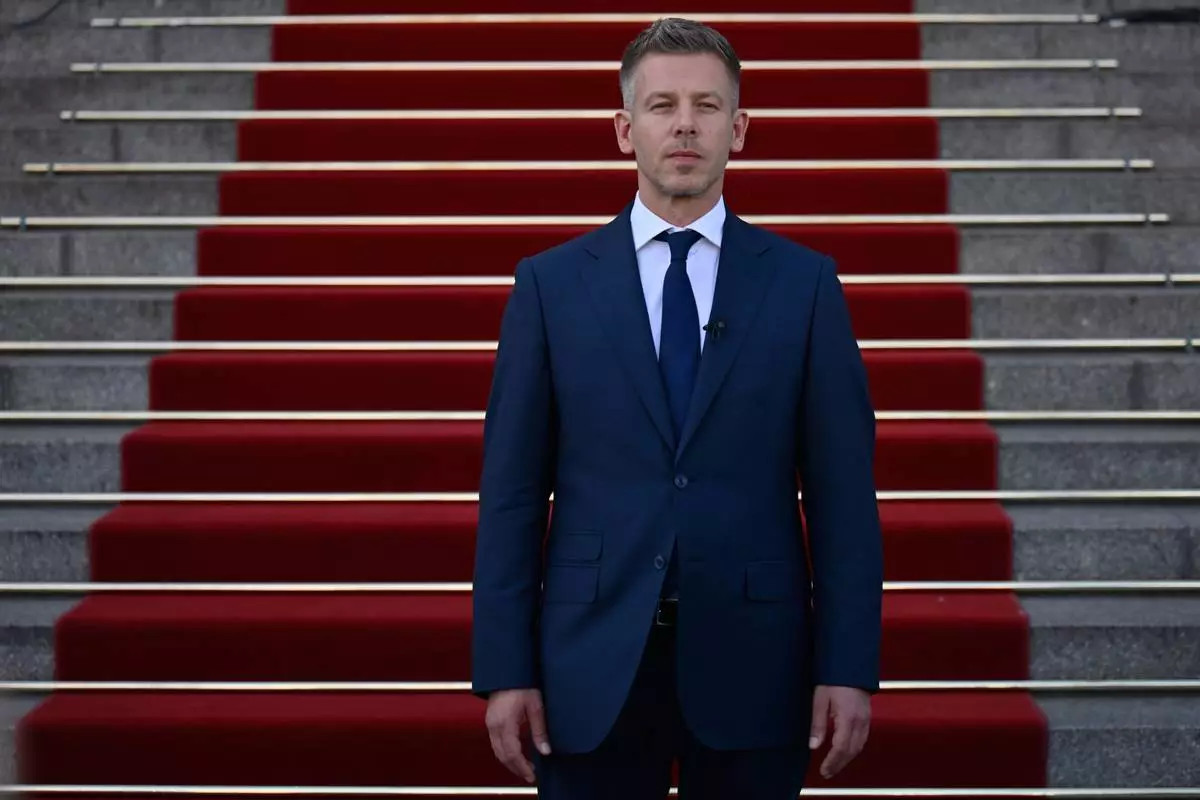
Hungary's new Prime Minister Peter Magyar leaves the Hungarian Parliament after ceremony in Budapest, Hungary, Saturday, May 9, 2026. (AP Photo/Denes Erdos)
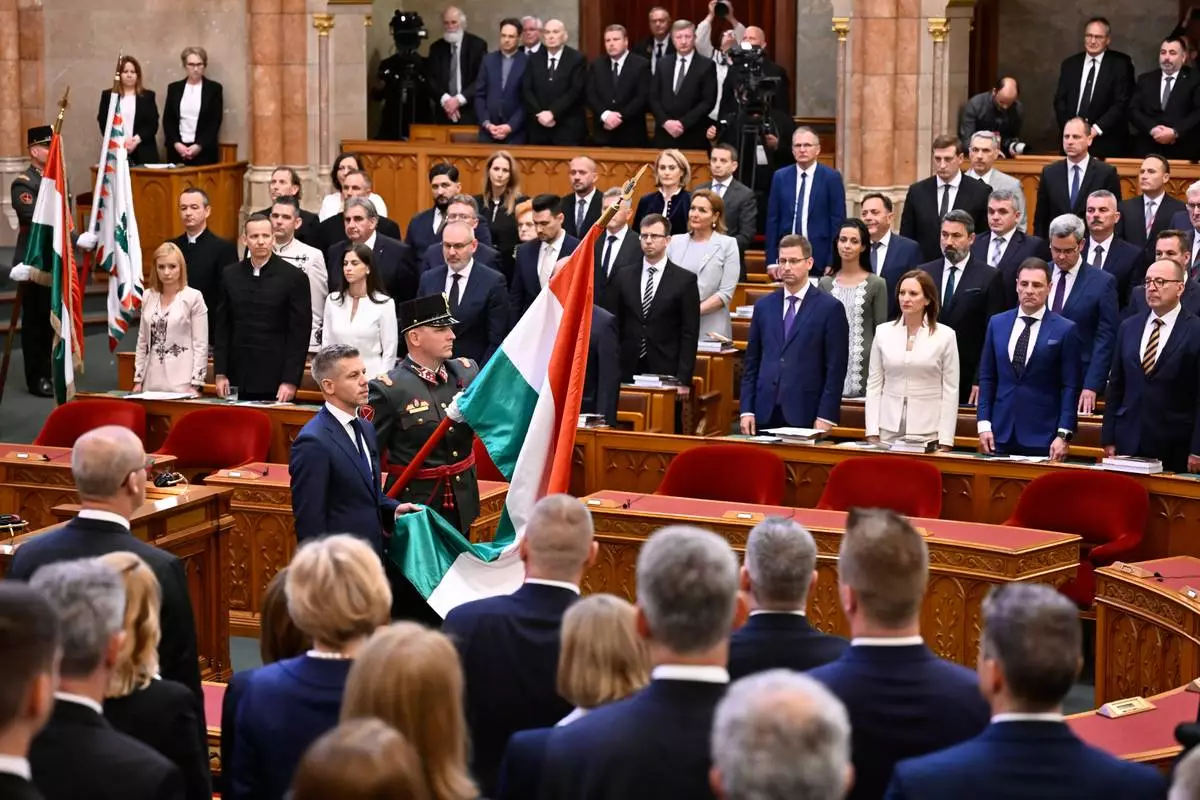
Peter Magyar takes the oath as Hungary's prime minister during a ceremony in Budapest, Hungary, Saturday, May 9, 2026. (AP Photo/Denes Erdos)
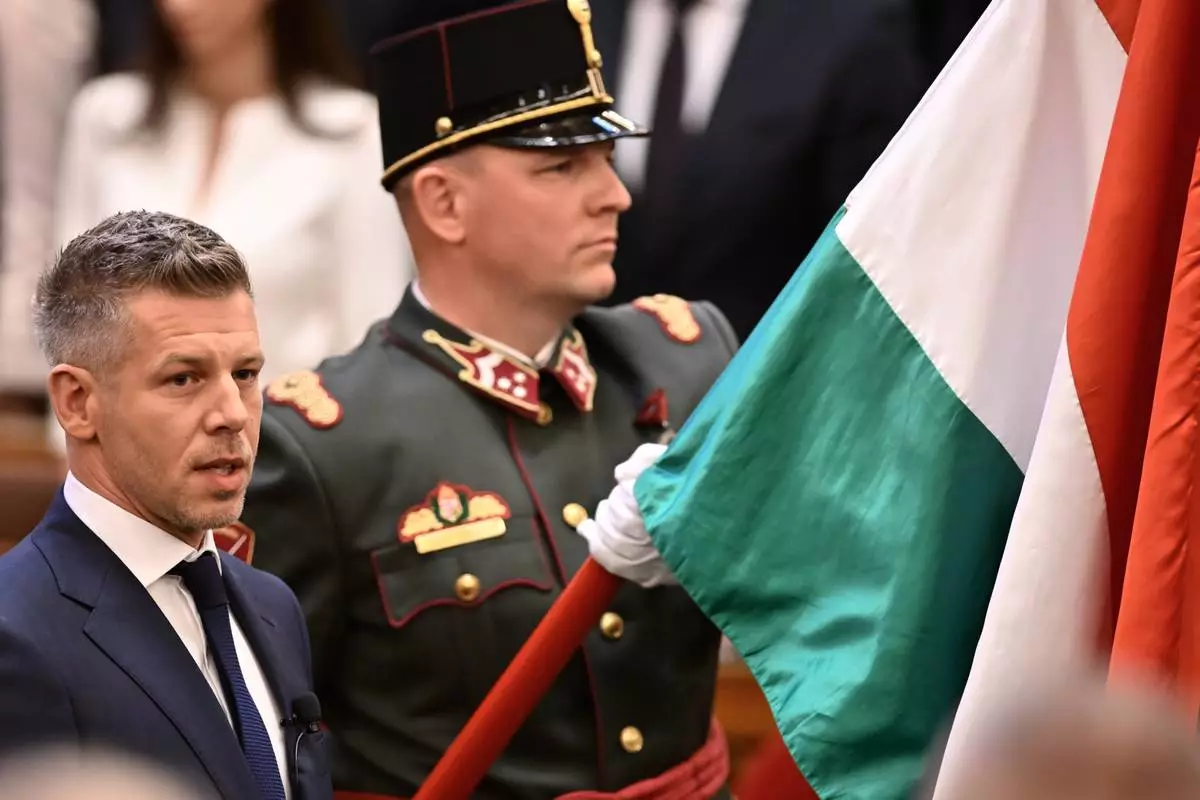
Peter Magyar takes the oath as Hungary's prime minister during a ceremony in Budapest, Hungary, Saturday, May 9, 2026. (AP Photo/Denes Erdos)
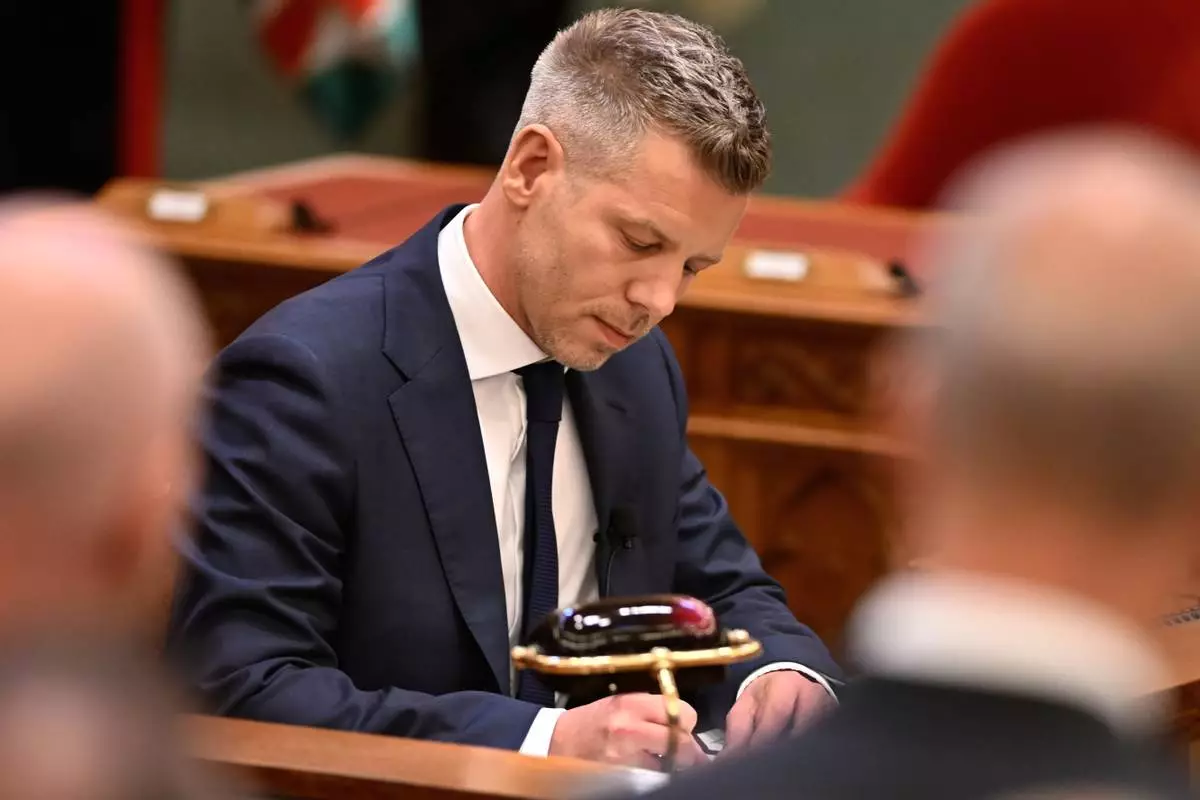
Peter Magyar takes the oath as Hungary's prime minister during a ceremony in Budapest, Hungary, Saturday, May 9, 2026. (AP Photo/Denes Erdos)
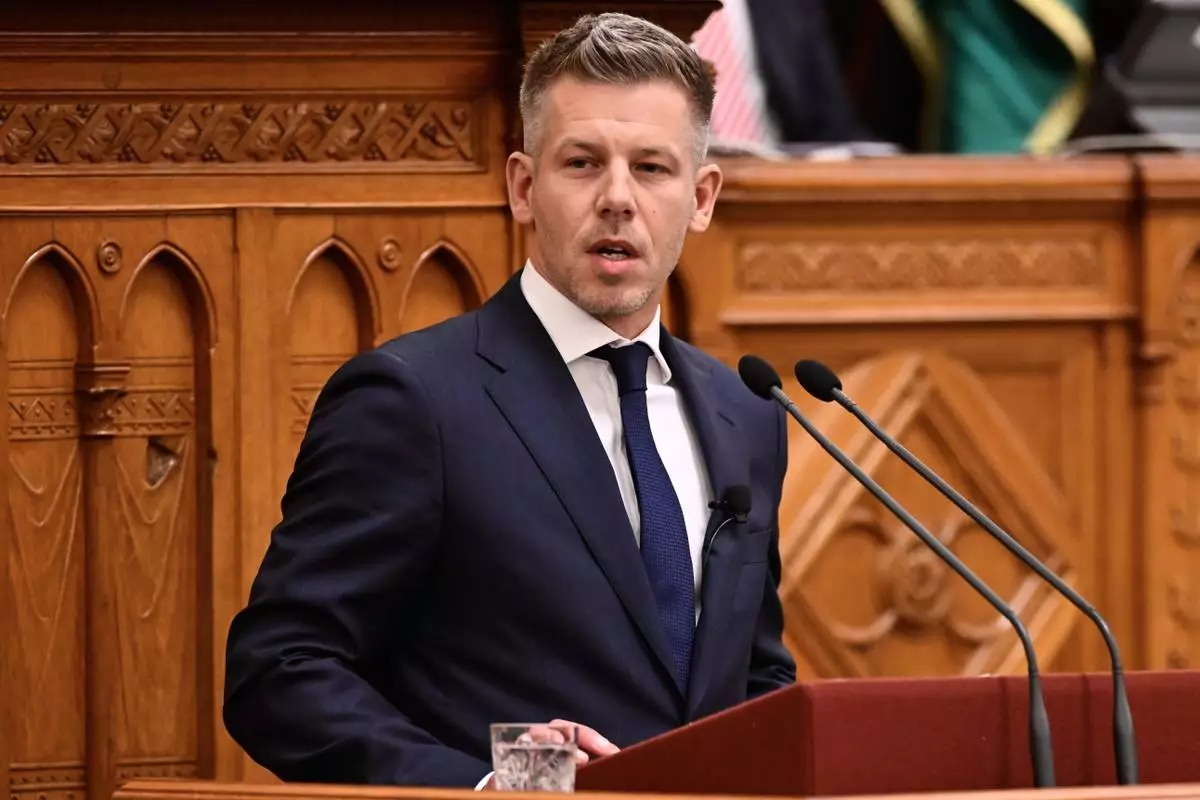
Peter Magyar takes the oath as Hungary's prime minister during a ceremony in Budapest, Hungary, Saturday, May 9, 2026. (AP Photo/Denes Erdos)
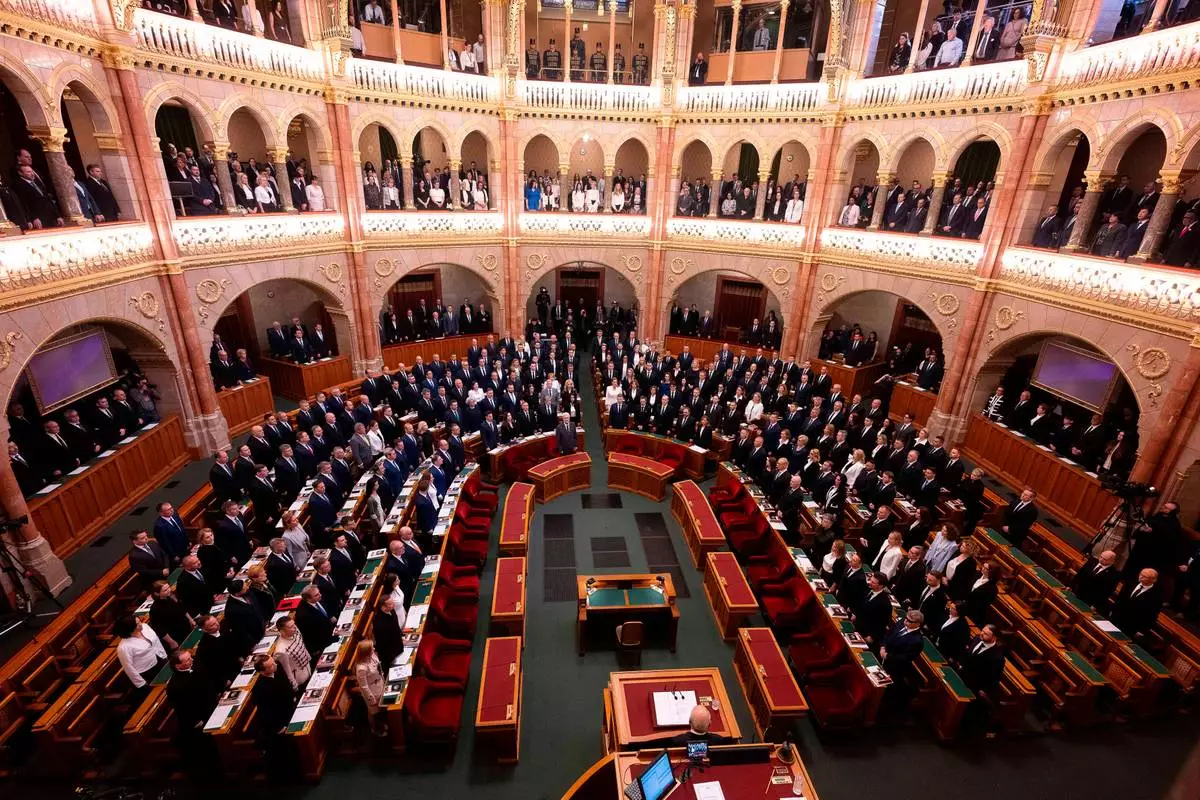
General view of the Hungarian Parliament's main hall during the inauguration ceremony of Prime Minister Peter Magyar in Budapest, Hungary, Saturday, May 9, 2026. (AP Photo/Denes Erdos)
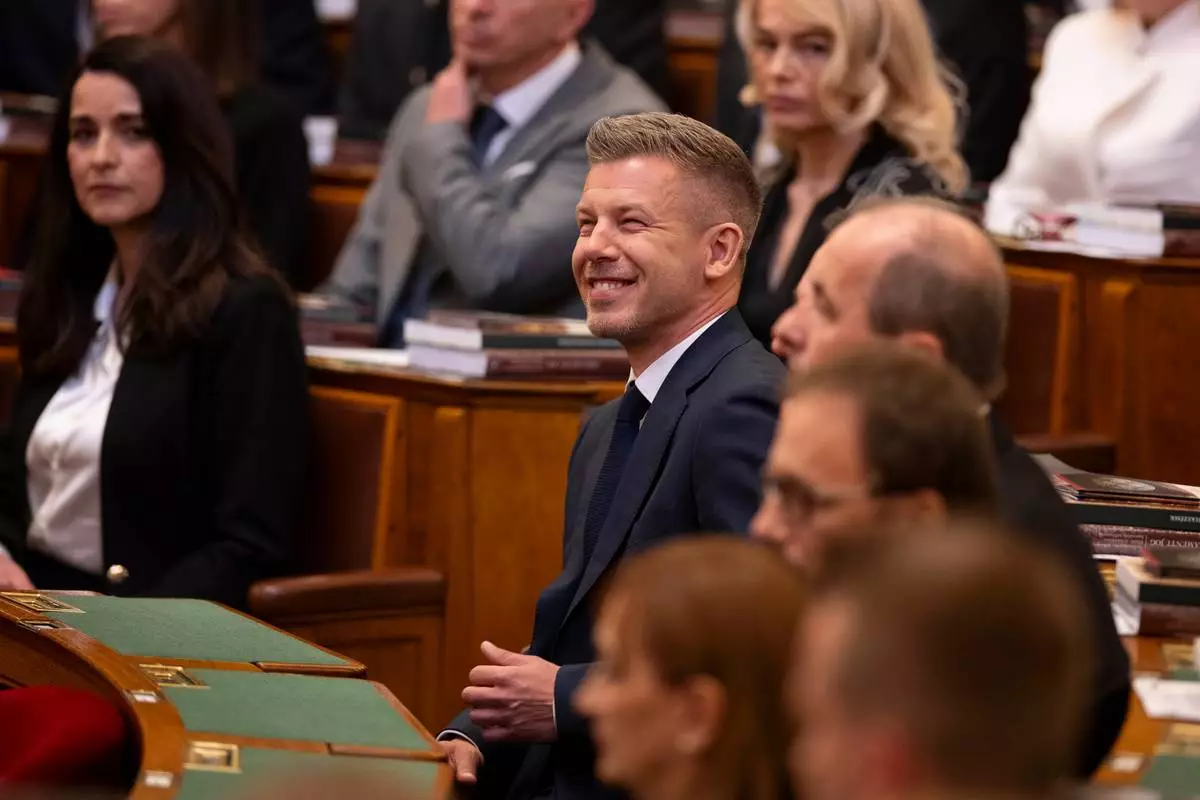
Hungarian Prime Minister-elect Peter Magyar smiles before the inauguration ceremony at the Parliament in Budapest, Hungary, Saturday, May 9, 2026. (AP Photo/Denes Erdos)
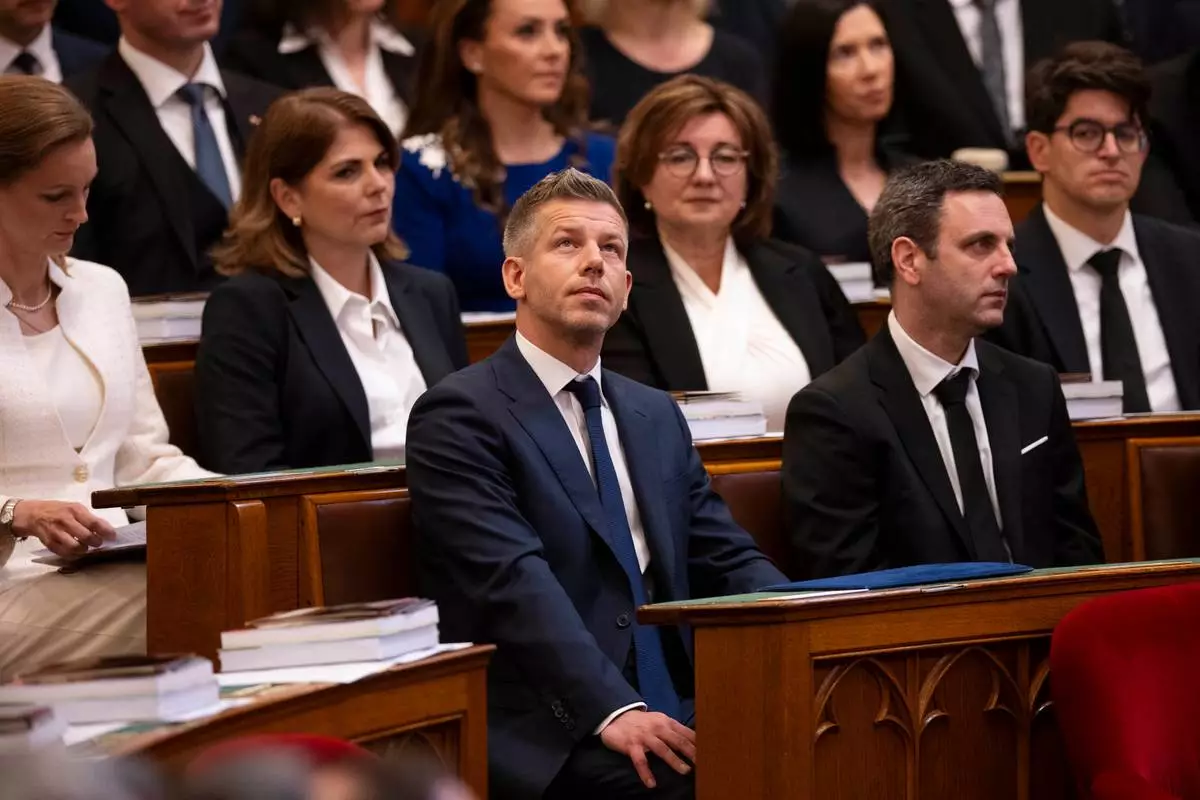
Hungarian Prime Minister-elect Peter Magyar gestures before the inauguration ceremony at the Parliament in Budapest, Hungary, Saturday, May 9, 2026. (AP Photo/Denes Erdos)
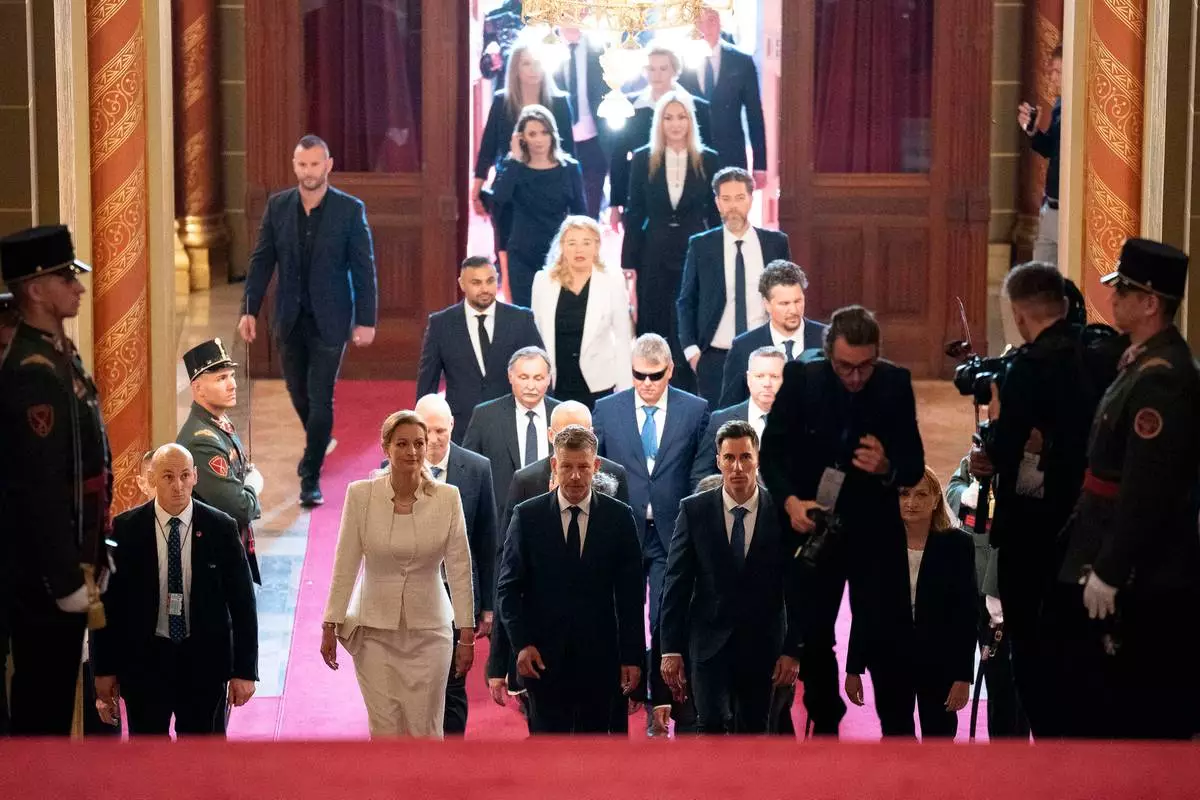
Hungarian Prime Minister-elect Peter Magyar, center, arrives with fellow lawmakers at the Parliament building in Budapest, Hungary, Saturday, May 9, 2026. (AP Photo/Denes Erdos)
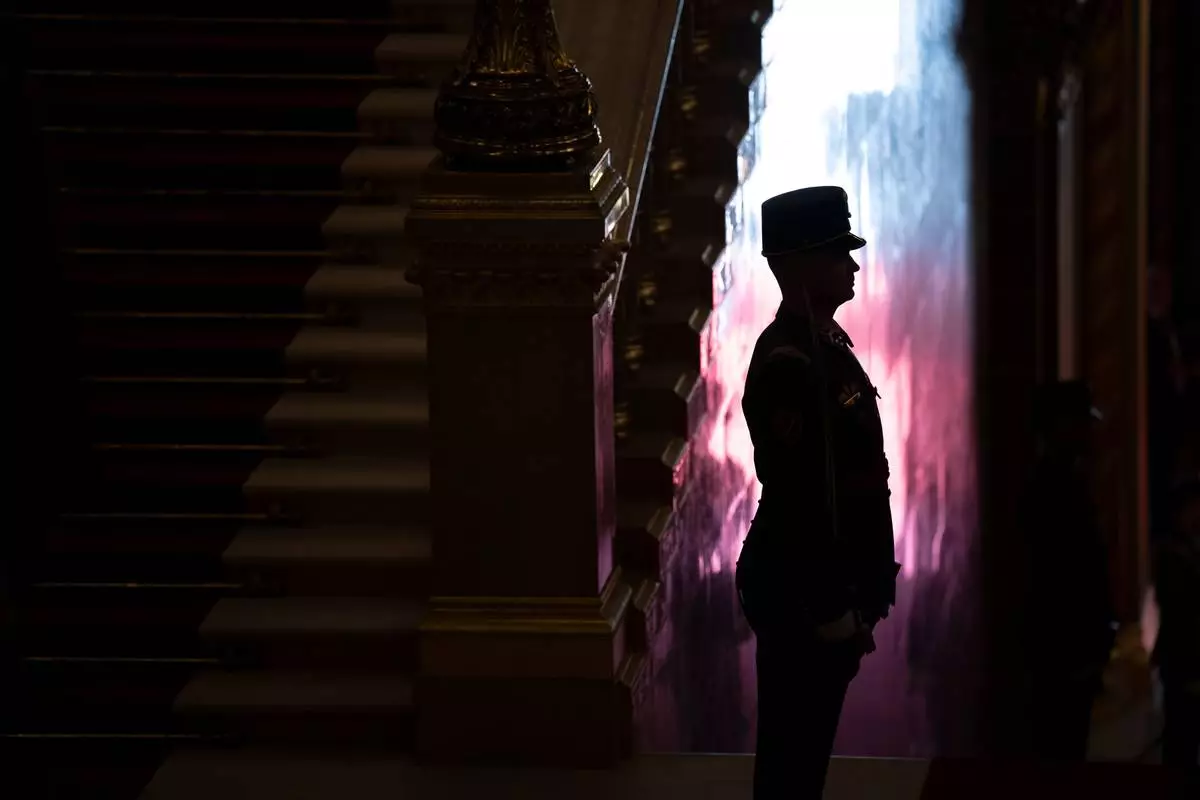
A member of the Hungarian parliament guard wait in the morning before the inauguration ceremony of Prime Minister Peter Magyar in Budapest, Hungary, Saturday, May 9, 2026. (AP Photo/Denes Erdos)
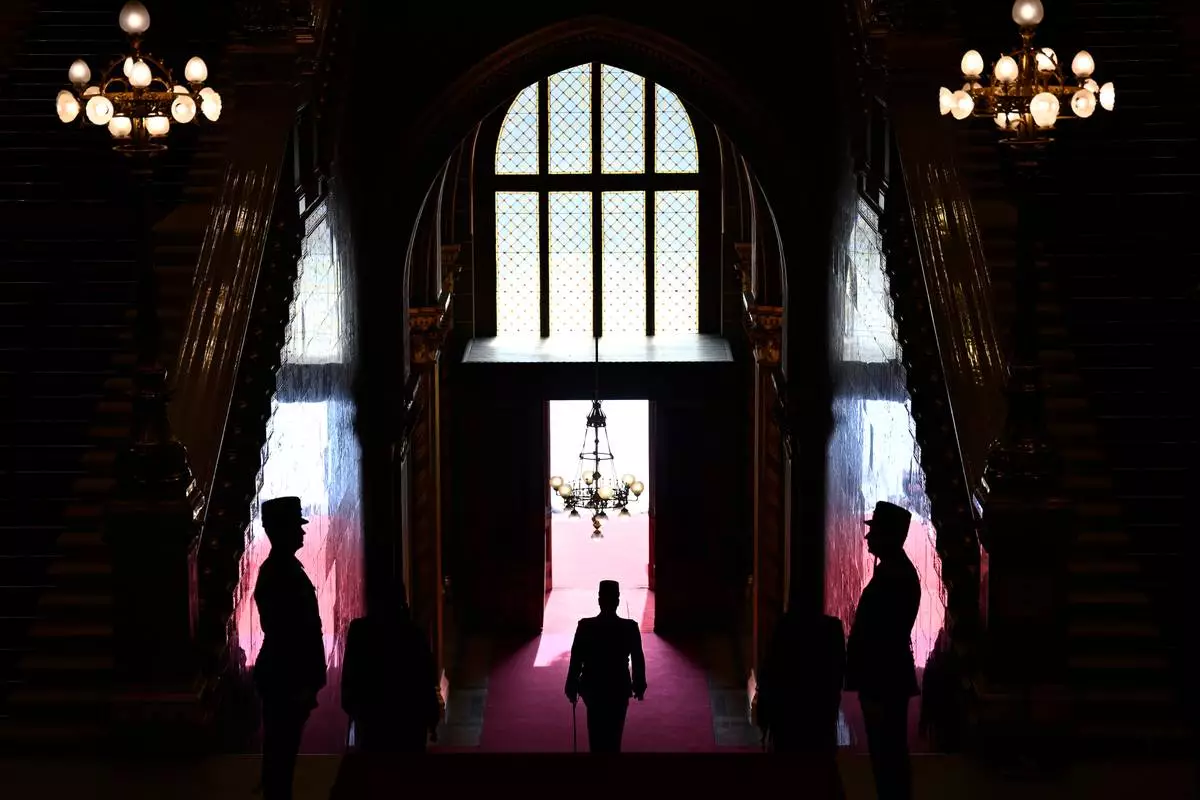
Members of the Hungarian parliament guard wait in the morning before the inauguration ceremony of Prime Minister Peter Magyar in Budapest, Hungary, Saturday, May 9, 2026. (AP Photo/Denes Erdos)

Hungarian Prime Minister-elect Peter Magyar, center, arrives with fellow lawmakers at the Parliament building in Budapest, Hungary, Saturday, May 9, 2026. (AP Photo/Denes Erdos)
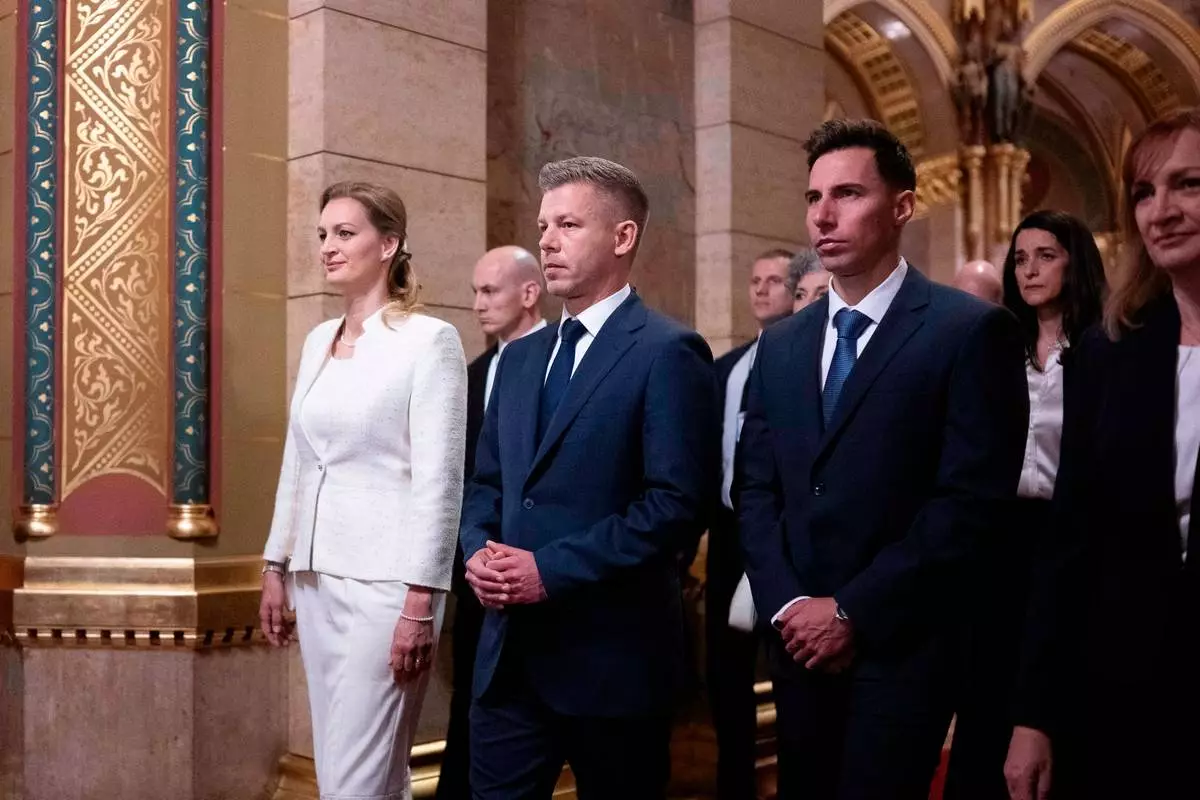
Hungarian Prime Minister-elect Peter Magyar, center, arrives with fellow lawmakers at the Parliament building in Budapest, Hungary, Saturday, May 9, 2026. (AP Photo/Denes Erdos)