Skip to Content Facebook Feature Image

Democrats say citizenship question could derail census test and deter immigrants from participating

News

Democrats say citizenship question could derail census test and deter immigrants from participating
News

News

Democrats say citizenship question could derail census test and deter immigrants from participating

2026-02-20 07:51 Last Updated At:08:01

U.S. Census Bureau plans to use a questionnaire with a citizenship question as part of its practice test for the 2030 census could jeopardize the once-a-decade head count and scare away immigrants from participating, congressional Democrats warned Thursday.

Democrats on the House Committee on Oversight and Government Reform urged the Census Bureau to drop plans to use the American Community Survey form, which includes the citizenship question, and instead use a traditional census questionnaire that omits it. The on-the-ground tests in Huntsville, Alabama, and Spartanburg, S.C., start next month.

“The Trump Administration is risking millions of taxpayer dollars to pursue policies which could fatally compromise the 2030 count before it even begins,” they wrote in a letter to acting Census Bureau Director George Cook and Commerce Secretary Howard Lutnick, whose department oversees the statistical agency.

The Census Bureau and Commerce Department didn't immediately respond to emails seeking comment.

The field test gives the statistical agency the chance to learn how to better tally populations that were undercounted during the last census. The head count determines how many congressional seats and Electoral College votes each state gets, as well as how $2.8 trillion in federal funding is distributed annually. Among the new methods being tested is the use of U.S. Postal Service workers to conduct tasks previously done by census workers.

In recent weeks, the Census Bureau made public plans for the 2026 test that would use the American Community Survey form, which asks a wide range of questions about participants, and eliminated four other planned locations — Colorado Springs, Colorado, western North Carolina, western Texas and tribal lands in Arizona.

The Democrats raised concerns that the citizenship question on the American Community Survey form being used would lead to an undercount by deterring immigrants, including legal residents, from participating.

“Many immigrants or citizens in mixed-status families, including green card holders and other legal permanent residents, face fear, chaos, and uncertainty over who the Trump Administration will target next for denaturalization and deportation,” they said in their letter.

In his first term, President Donald Trump unsuccessfully tried to add a citizenship question to the 2020 census form. The Republican president also signed orders that would have excluded people who are in the U.S. illegally from the figures used to divvy up congressional seats among the states and mandated the collection of citizenship data.

The attempt to add the citizenship question was blocked by the U.S. Supreme Court, and both orders were rescinded when Democrat Joe Biden took office in January 2021, before the 2020 census figures were released.

The Constitution’s 14th Amendment says “the whole number of persons in each state” should be counted for the numbers used for apportionment, the process of divvying up congressional seats, and Electoral College votes among the states. The Census Bureau has interpreted that to mean anybody living in the U.S., regardless of legal status.

Meanwhile, in a federal lawsuit in Louisiana, the Department of Commerce said Thursday that its soon-to-be-released criteria on who should be counted in the 2030 census could lead to the dismissal of a year-old lawsuit brought by four Republican state attorneys general. That court challenge was seeking to exclude people who are in the United States illegally from being counted in the numbers for redrawing congressional districts.

The federal government attorneys asked that a hold on the case remain in place while the bureau determines “the matter at the heart of this case — whether and how to count citizens of foreign countries in the United States for the 2030 Census.”

Follow Mike Schneider on the social platform Bluesky: @mikeysid.bsky.social.
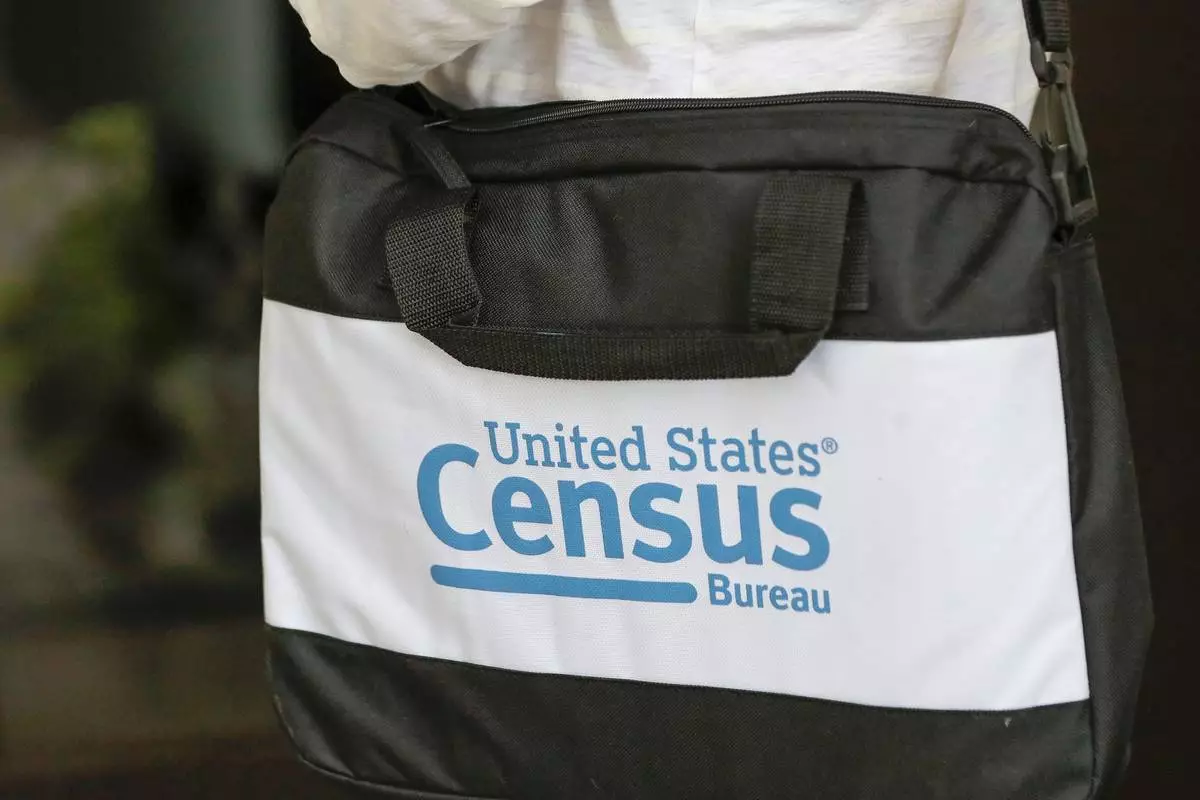
FILE - A briefcase of a census taker is seen as she knocks on the door of a residence, Aug. 11, 2020, in Winter Park, Fla. (AP Photo/John Raoux, File)

FILE - A briefcase of a census taker is seen as she knocks on the door of a residence, Aug. 11, 2020, in Winter Park, Fla. (AP Photo/John Raoux, File)

PHOENIX (AP) — A federal judge has ordered a takeover of health care operations in Arizona’s prisons and will appoint an official to run the system after years of complaints about poor medical and mental health care.

The decision on Thursday by U.S. District Judge Roslyn Silver came after her 2022 verdict that concluded Arizona had violated prisoners’ rights by providing inadequate care that led to suffering and preventable deaths.

Silver wrote that the state hasn’t gotten a semblance of compliance with court-ordered changes and the Constitution after nearly 14 years of litigation, saying “this approach has not only failed completely, but, if continued, would be nothing short of judicial indulgence of deeply entrenched unconstitutional conduct."

The judge said prisoners still remain exposed to "an intolerable grave and immediate threat of continuing harm and suffering because the systemic deficiencies pervade the administration of health care.”

The Associated Press left a message for the corrections department after the order was issued. The state and attorneys representing prisoners have 60 days to submit a list of candidates to run health and mental health care operations in prisons.

“This decision means that an independent authority will be able to implement the systemic changes necessary to ensure that medical and mental health care meets constitutional standards," said David Fathi, one of the lawyers representing the prisoners. "This is a life-saving intervention, and it brings hope that the preventable suffering and deaths that have haunted Arizona’s prison system for over a decade can finally end.”

Lawyers for prisoners say Arizona has made few improvements since the verdict and asked the judge for the more drastic remedy of creating such a “receivership,” arguing system remains broken and prisoners who need care are still in danger.

For over a decade, state government has been dogged by criticism that its health care system for the 25,000 inmates in Arizona’s state-run prisons was run shoddily and callously.

The state had vowed to overhaul medical and mental health services for prisoners in a 2014 settlement, but was soon accused of failing to keep many of those promises. That led to $2.5 million in contempt of court fines against the state and, eventually, the revocation of the agreement by Silver, who explained that corrections officials had shown little interest in making the changes.

The judge then ruled against the state at a 2022 trial, issuing an injunction requiring corrections authorities to fix the constitutional violations.

While attorneys for prisoners say the state lacks the leadership to comply within a reasonable amount of time, the corrections department said it has transformed the prison health care system over the last two years, such as expanding access to treatments, increasing staff and opening medical housing units.

Corrections officials say the opposing side refuses to acknowledge their progress and “focus on the reputation and circumstances of the past rather than recognizing or even supporting the good work of the present.” Lawyers for the department say the agency’s leadership has been acting in good faith with the court’s orders.

In September 2019 lawyers representing the prisoners made a similar request for a takeover, but shied away from it, saying she would revive that possibility if the state acts in bad faith or fails to comply with the court-ordered changes. Past receiverships have been ordered for prisons in other states. In California in 2005, a federal judge seized control of the prison medical system after finding that an average of one inmate a week was dying of medical neglect or malpractice.

The Arizona lawsuit does not cover the nearly 10,000 people incarcerated in private prisons for state convictions.

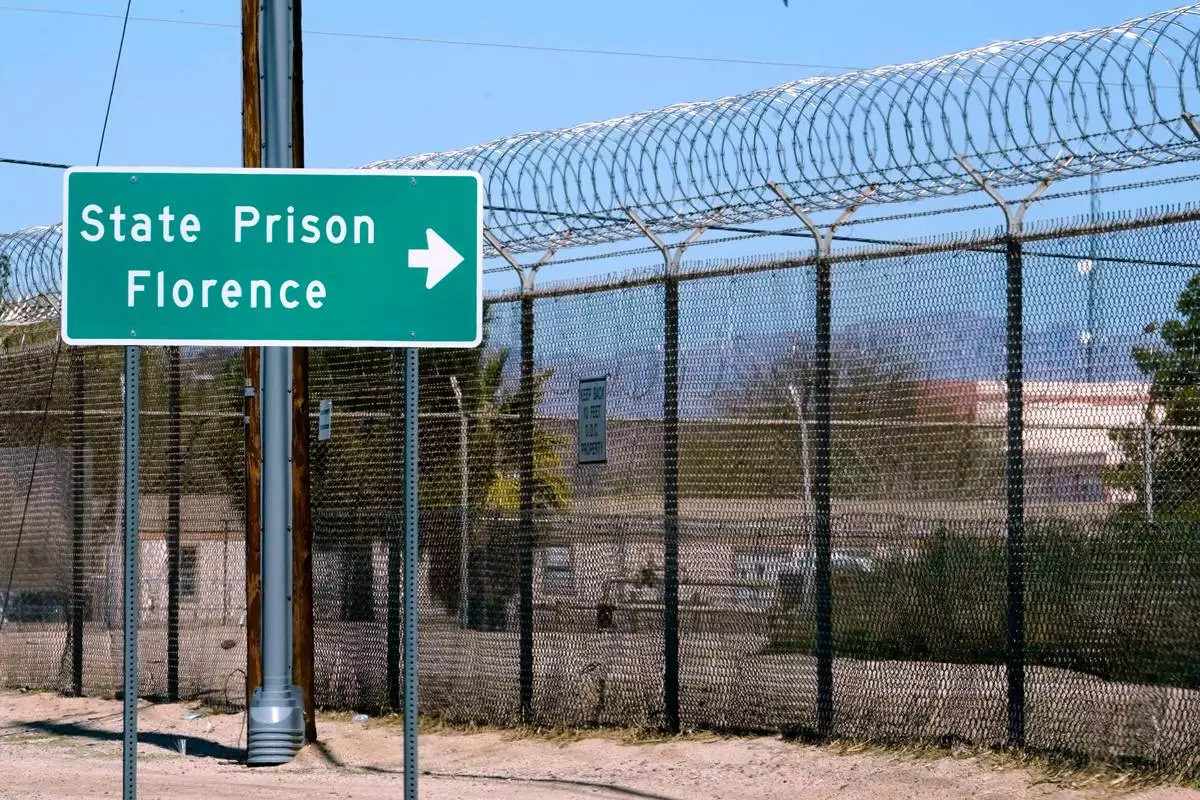
FILE - A sign points in the direction of the Arizona State Prison in Florence, Ariz., March 19, 2025. (AP Photo/Darryl Webb, File)

FILE - A sign points in the direction of the Arizona State Prison in Florence, Ariz., March 19, 2025. (AP Photo/Darryl Webb, File)

Recommended Articles