Venezuela is working to stabilize consumers prices and ensure domestic supply in response to U.S. sanctions by further improving domestic productivity.
Long-standing sanctions on Venezuela's oil industry have hindered the country's ability to generate adequate foreign currency, leading to heightened inflation and significant shortages of essential imported goods.
In shifting its focus towards increasing domestic production rather than depending on exports, Venezuela has managed to stabilize prices for some goods, said Juan Carlos Valdes, an economist.
"Although the blockade has severely damaged the Venezuelan economy, it has also forced us to manufacture our own goods. Because we cannot buy from abroad, we have to focus on local production, and this shift has stabilized prices in various sectors," he said.
Valdes said that investment in domestic manufacturing is contributing to reducing inflation.
"There is no doubt that local production is helping to slow inflation. We hope that ultimately it will not only curb inflation but also achieve complete price stabilization in Venezuela," he said.
Angel Arteaga, the manager of an 80-year-old state-run edible oil factory, said that the production in the factory has continued uninterrupted despite U.S. attacks earlier this year.
"Our production remains steady and has not been impacted by the U.S. military actions. We refuse to raise product prices or costs just because of unforeseen factors or variables," he said.
Data from the Venezuelan Ministry of Food indicates that by the end of 2025, the country had achieved 97 percent food self-sufficiency through domestic production.
In an earlier speech, Venezuela's acting President Delcy Rodriguez said that overall consumption in the county in January increased by 32 percent compared to the same period last year.
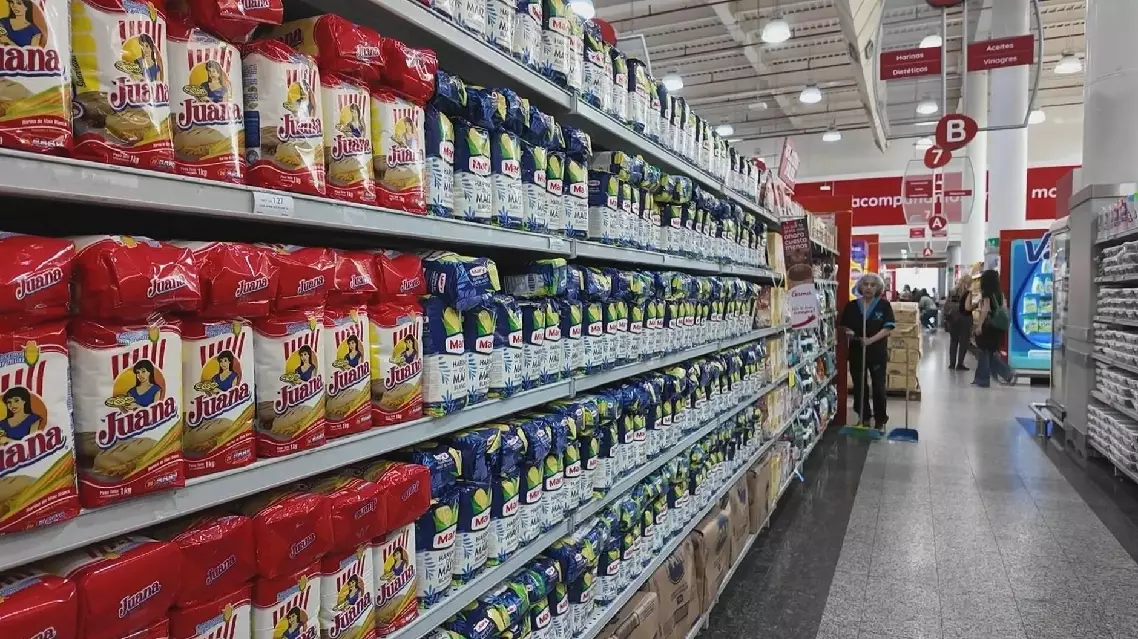
Consumer prices stable in Venezuela as focus turns to enhancing domestic productivity