BOISE, Idaho (AP) — Authorities in Idaho were searching Thursday for a suspect who they said stole an ambulance outside a hospital, poured an accelerant over it and drove it into a nearby building that houses U.S. Department of Homeland Security offices.
Meridian Police Chief Tracy Basterrechea didn't identify the substance poured on the inside and outside of the ambulance. “It appears the suspect was unable to ignite the accelerant before being scared off by responding agencies,” he said in a statement.
The incident occurred at about 11:10 p.m. Wednesday in the Boise suburb of Meridian, police said.
The suspect took the ambulance from St. Luke's hospital and drove it north through a parking lot, Basterrechea said. The suspect then retrieved gas cans from nearby vegetation, he said.
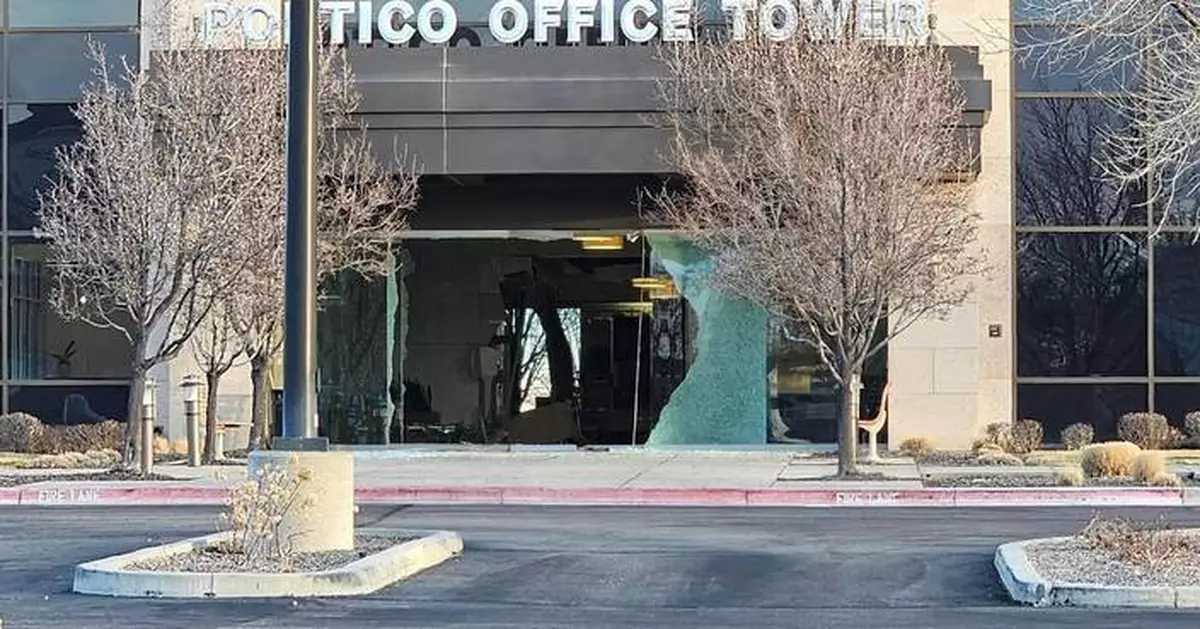
Images broadcast on television show shattered glass doors at the entrance to an office building.
The building is owned by St. Luke's Health System, and is one of several in a large business complex known as The Portico, next door to the hospital. Other tenants at Portico North include health insurance company SelectHealth Inc., St. Luke’s Home Health and Hospice and Quest Diagnostics.
The hospital has faced criticism for leasing space to the Department of Homeland Security while President Donald Trump's administration carries out his immigration enforcement crackdown.
“There has been a lot of rhetoric” on the issue of the lease, Basterrechea said, adding that “comments on social media such as ‘property damage isn’t violence’ is absolutely false.”
He called the incident “a serious criminal act.”
“This was absolutely an act of violence, and if the suspect had not been interrupted, there is no doubt this building would have been burned, putting the lives of first responders and others at risk,” Basterrechea said.
He said his department was leading the investigation and was working with the Federal Bureau of Investigation, DHS and other agencies.
McAvoy reported from Honolulu.
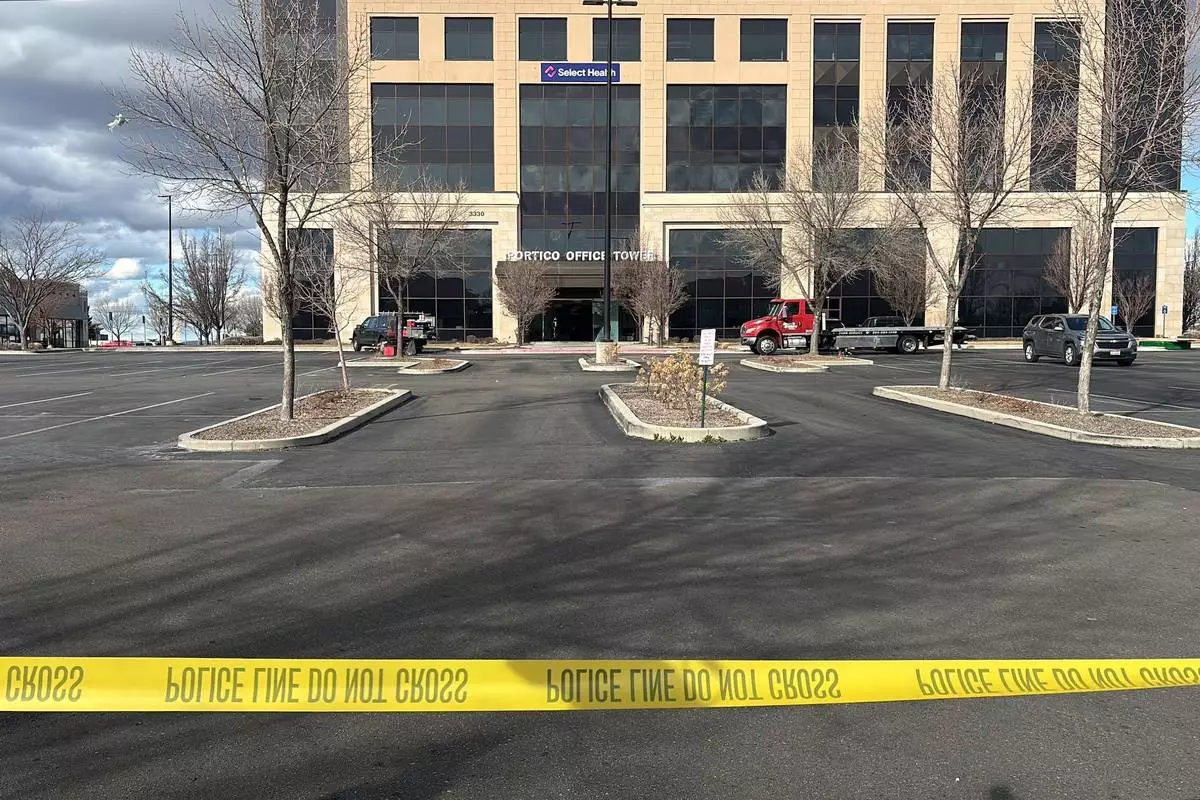
This photo provided by Idaho News 6 shows police tape on the scene where a stolen ambulance was driven into the Portico North building Thursday, Feb. 19, 2026, in Meridian, Idaho. (Idaho News 6 via AP)
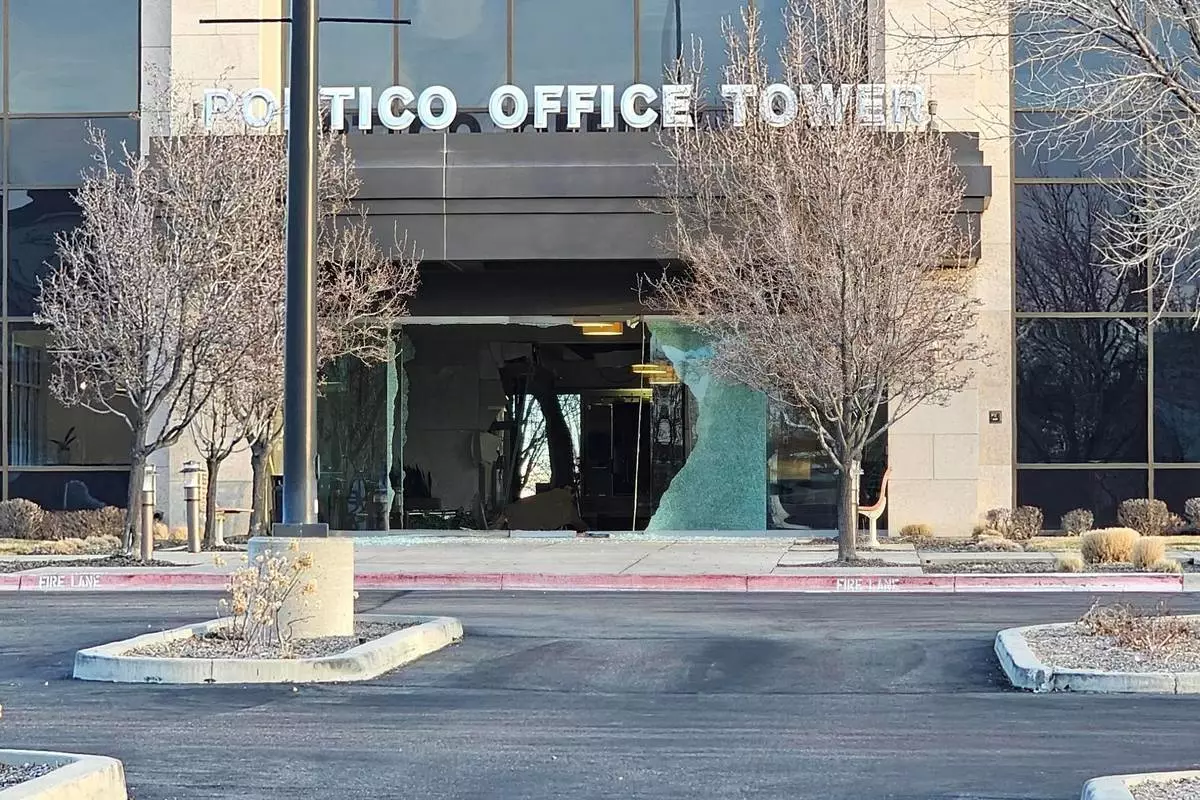
This photo provided by Idaho News 6 shows the aftermath of a stolen ambulance being driven into the Portico North building Thursday, Feb. 19, 2026, in Meridian, Idaho. (Idaho News 6 via AP)
Ben Simmons tore his right Achilles tendon in practice on Sunday, ending his comeback attempt this season with the Sacramento Kings before the season even started.
The Kings said Simmons hurt himself during a live drill and will need to undergo surgery three days before the season opener on Wednesday night on the road against the Los Angeles Clippers.
“I've faced challenges before that tested me mentally, physically, and emotionally, and I've found a way through every single one of them," Simmons wrote on social media. “This injury is another chapter in my journey, not the end of my story.”
Simmons had signed a one-year deal with Sacramento this summer as he tried to revive his career.
The 30-year-old from Australia is a former No. 1 draft pick, three-time All-Star and Rookie of the Year, but he has struggled to perform and stay healthy in recent years. He sat out last season while dealing with back and leg injuries after ending the 2024-25 season in a reserve role for the Los Angeles Clippers.
Simmons was the first overall pick by Philadelphia in 2016 after playing one season in college at LSU. He sat out his first season with an injured foot but quickly developed into a star player for the 76ers once he returned. He was the Rookie of the Year in 2017-18, was an All-Star the following three seasons, as well as a third-team All-NBA player in 2019-20 and a first-team All-Defense selection in 2019-20 and 2020-21.
But his career hasn’t been the same after sitting out the 2021-22 season when he was dealing with mental health concerns, other physical injuries and was seeking a trade out of Philadelphia.
He was sent to Brooklyn at the 2022 trade deadline but missed the rest of that season with a bad back. He then played 2 1/2 seasons with the Brooklyn before getting cut in February 2025. He finished that season with the Los Angeles Clippers before sitting out last season.
But he never came close to his level of play early in his career in Philadelphia, averaging 5.9 points, 5.8 rebounds and 5.8 assists during his time with the Nets and Clippers.
Sacramento is coming off a 22-60 season and is trying to rebuild around rookie Darius Acuff Jr., who was picked seventh in the draft after a stellar freshman season at Arkansas.
See AP’s full NBA coverage here
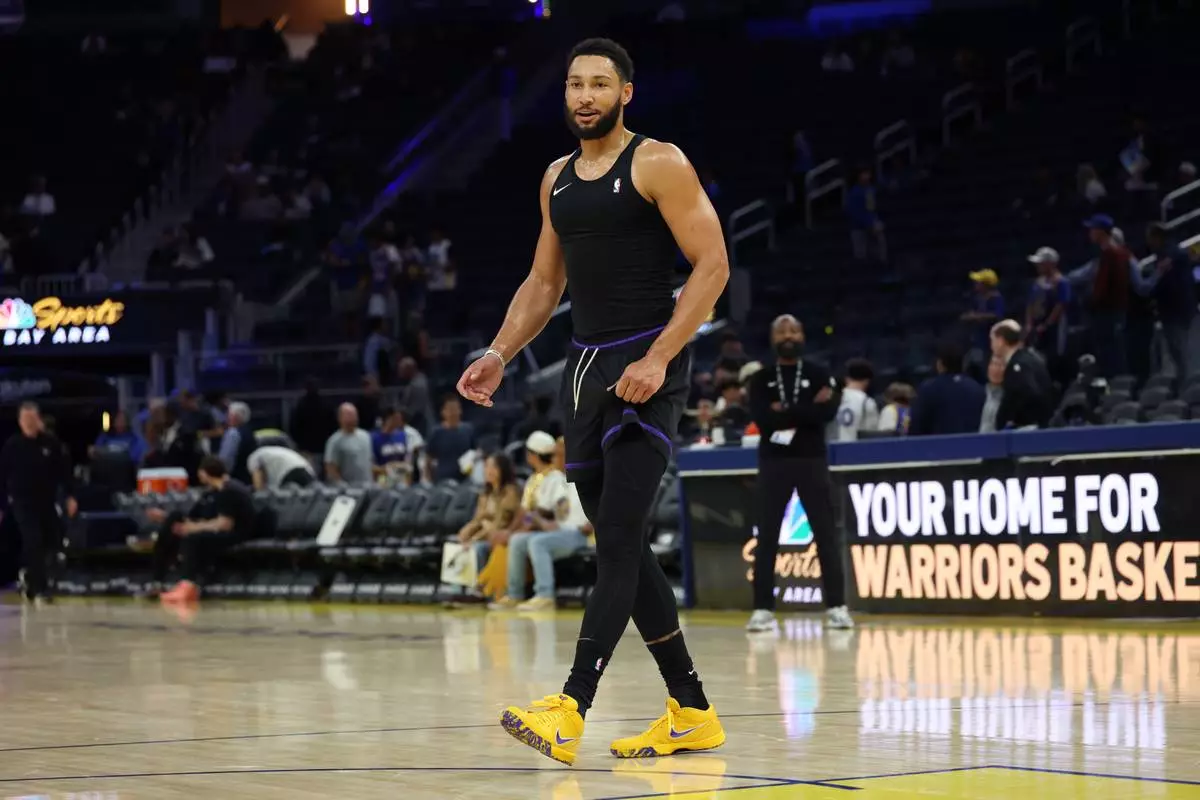
Sacramento Kings guard Ben Simmons looks on before a preseason NBA basketball game against the Golden State Warriors in San Francisco, Saturday, Oct. 10, 2026. (AP Photo/Jed Jacobsohn)
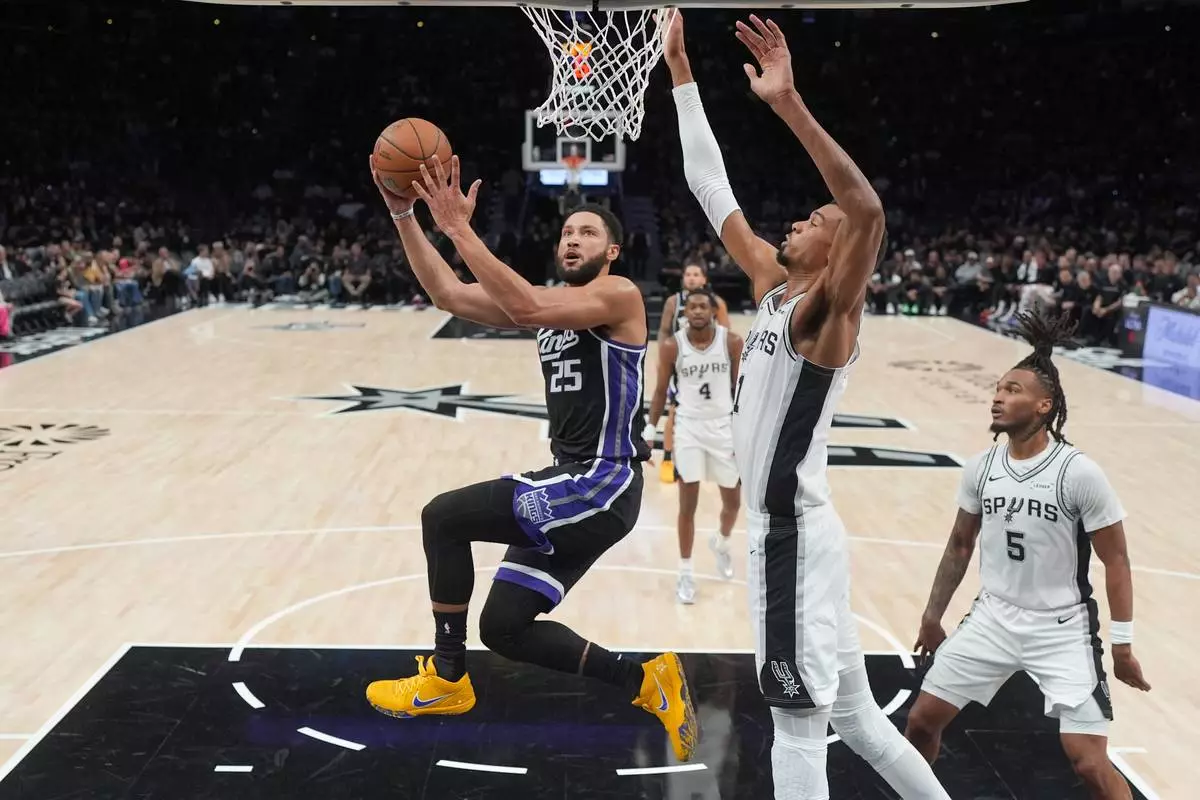
Sacramento Kings guard Ben Simmons (25) drives to the basket against San Antonio Spurs forward Victor Wembanyama (1) during the first half of a preseason NBA basketball game in San Antonio, Friday, Oct. 16, 2026. (AP Photo/Eric Gay)
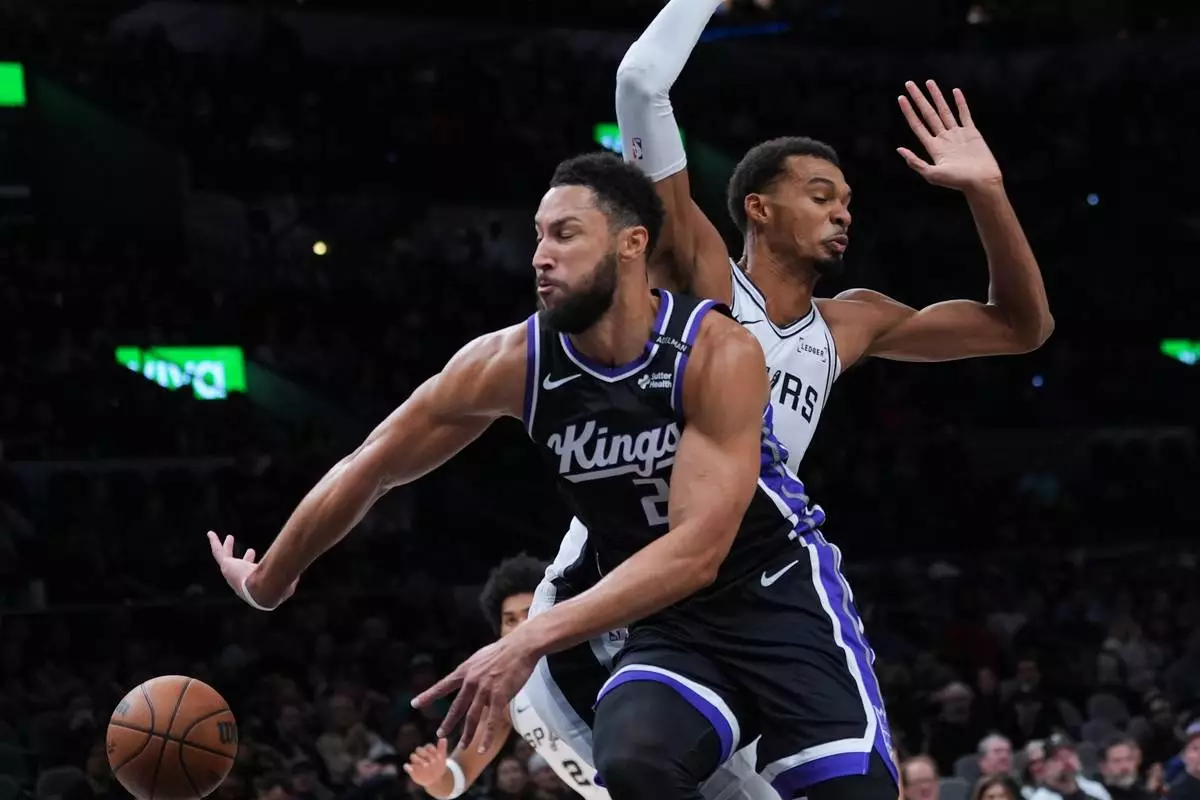
Sacramento Kings guard Ben Simmons (25) drives around San Antonio Spurs forward Victor Wembanyama (1) during the first half of a preseason NBA basketball game in San Antonio, Friday, Oct. 16, 2026. (AP Photo/Eric Gay)