The recovery of skiers killed in the deadliest U.S. avalanche in almost 45 years is dragging out because of what experts say is a prime rule for rescuers: Don't make yourself a victim.
A storm that continued lashing California’s remote Sierra Nevada wilderness Thursday meant more avalanches were possible in the backcountry area where authorities said eight people died and one was still missing two days after their group was caught in the deadly slide. Six people survived.
Click to Gallery
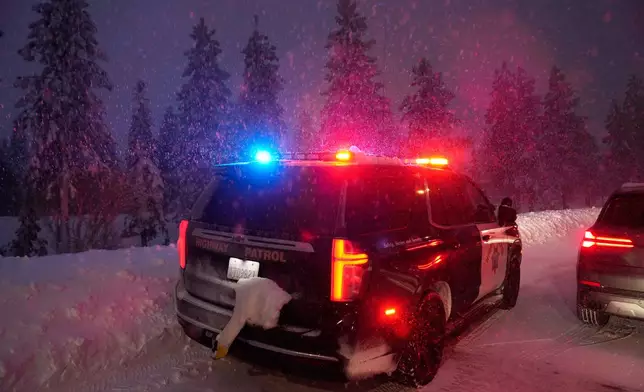
A California Highway Patrol vehicle is parked along a road during a snow storm Wednesday, Feb. 18, 2026, in Placer County, Calif. (AP Photo/Godofredo A. Vásquez)
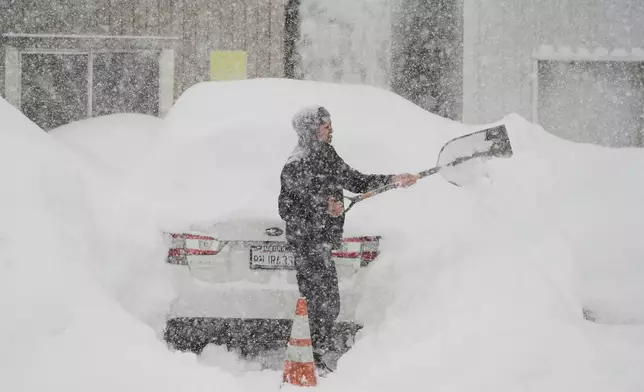
Adrián Narayan digs his car out of the snow Thursday, Feb. 19, 2026, in Soda Springs, Calif. (AP Photo/Godofredo A. Vásquez)
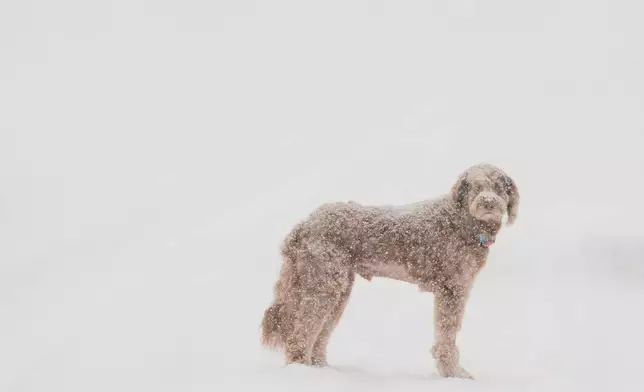
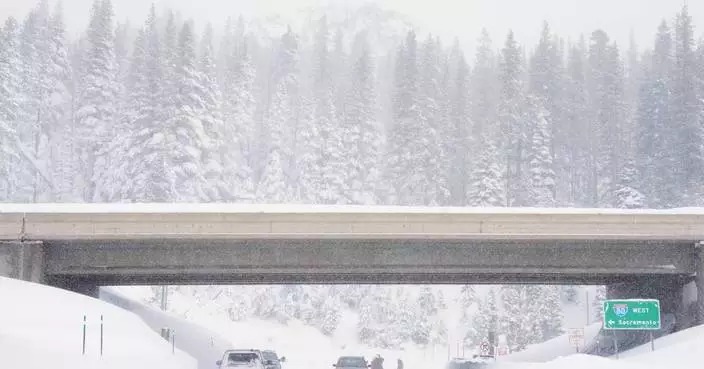
Snow comes down on a dog as traffic is backed up and motorists exit their vehicles along interstate 80 during a storm Thursday, Feb. 19, 2026, near Soda Springs, Calif. (AP Photo/Godofredo A. Vásquez)
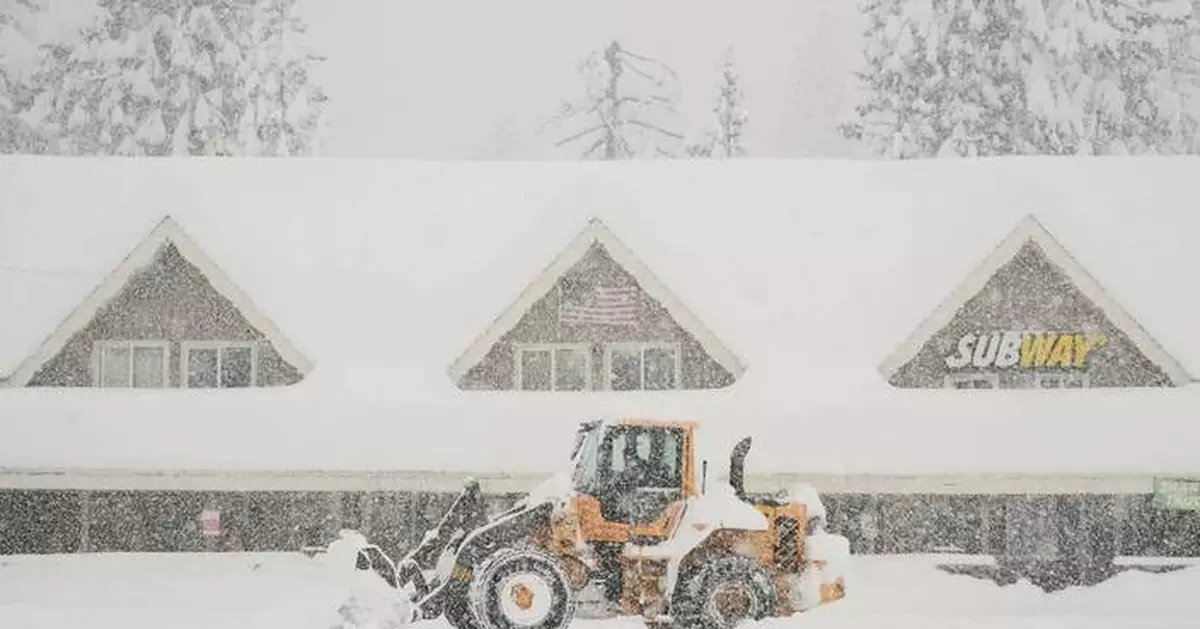
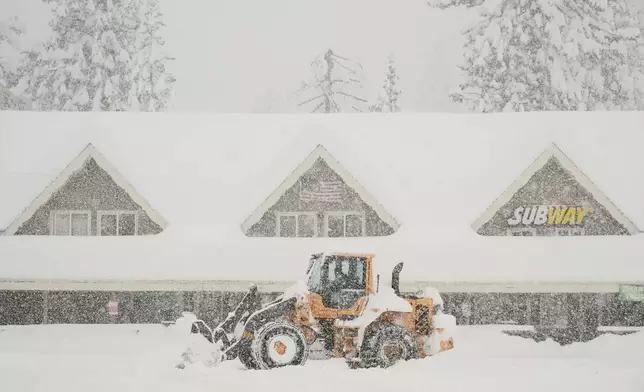
Snow is plowed in front of businesses during a snow storm Thursday, Feb. 19, 2026, in Soda Springs, Calif. (AP Photo/Godofredo A. Vásquez)
Rescuers faced the same potential perils that killed the backcountry skiers and professional guides, as they pursued a sport with inherent risks that were compounded by several feet of new snow. Recovery efforts were set to resume Friday.
Backcountry winter travelers from skiers and snowboarders to snowmobilers and mountaineers lean on avalanche forecasts to help them gauge the danger. Yet conditions quickly shift because of turbulent mountain weather.
To supplement forecasts or if none is available, experienced skiers and guides will dig a pit in the snow to test how stable it is. They can also search out less-hazardous terrain, such as slopes that are not as steep or that are sheltered from known avalanche routes.
As the snow from the storm system hitting the Sierras this week piled up, the group of 15 skiers caught in Tuesday's avalanche were on the last day of a multiday trip and heading for the trailhead.
“It was, quite likely, very necessary for them to leave the backcountry so their hazard wasn’t increased further,” said Anthony Pavlantos of Utah-based Prival USA, who makes avalanche safety equipment and runs mountain safety programs.
“What’s really hard to say is like ‘why were they moving?’ You can’t ever start placing blame on events like this because we can all be there.”
It’s not uncommon for people to venture into the backcountry to ski or snowboard during times of heightened danger: A dangerous storm also means lots of fresh snow that many skiers crave.
And because fatal accidents are rare, the risk takers most often survive, said Dale Atkins, who has been involved in mountain rescues and avalanche forecasting and research in Colorado for five decades.
“It’s not about not going; it’s about where and when you go,” Atkins said.
But Atkins added that coming out of the backcountry unscathed can create a false sense of security in a pursuit where luck – or not enough of it – also plays a role.
“It’s really easy to be fooled by the snow and avalanches," he said. “We keep going out even in the worst of storms because that’s what we did last time, and then our luck runs out.”
Typically the best hope for someone to survive burial in an avalanche is to dig themselves out or be rescued by a companion. That is because slides often occur in remote areas.
It took rescuers six hours to reach the victims of Tuesday’s avalanche after the first report came in. By comparison, the chances of survival for someone buried for an hour is only about one in 10, Atkins said.
The surviving skiers in California found three of the victims while they awaited rescue. Authorities haven’t given a detailed account about how they located the other victims.
A debris field from a major avalanche like the fatal one in California will stretch over a huge area, making it difficult to figure out where someone ends up if they are caught and dragged beneath the surface.
The first thing to look for is clues such as a glove or ski pole that could reveal a victim's location, said Anthony Stevens, chief adviser for the search and rescue team in Teton County, Wyoming, home to Grand Teton National Park.
Skiers in guided groups typically carry transceivers, known as avalanche beacons, that send out signals showing where they are. The devices can also receive other signals, displaying the direction and approximate distance to a victim.
If that doesn't work, rescuers can line up and use long, slender poles to probe into the snow in hopes of finding someone, said Ethan Greene, director of the Colorado Avalanche Information Center.
Time is of the essence throughout a rescue, and once someone is found they have to be dug out. The average depth of burial is roughly a meter, or just over 3 feet, Atkins said. And because snow and ice in an avalanche get heavily compacted, digging out someone from that depth requires moving at least a ton of material, he said.
Rarely will people survive being buried for long. Atkins said he knew of two people who survived being buried 22 and 24 hours respectively following an avalanche in the 1990s in Washington state. A third member of their party did not survive.
“It's very unusual for a rescue team to find a buried person alive. But it happens, and that gives us hope,” he said.
Associated Press writer Corey Williams in Detroit contributed to this report.
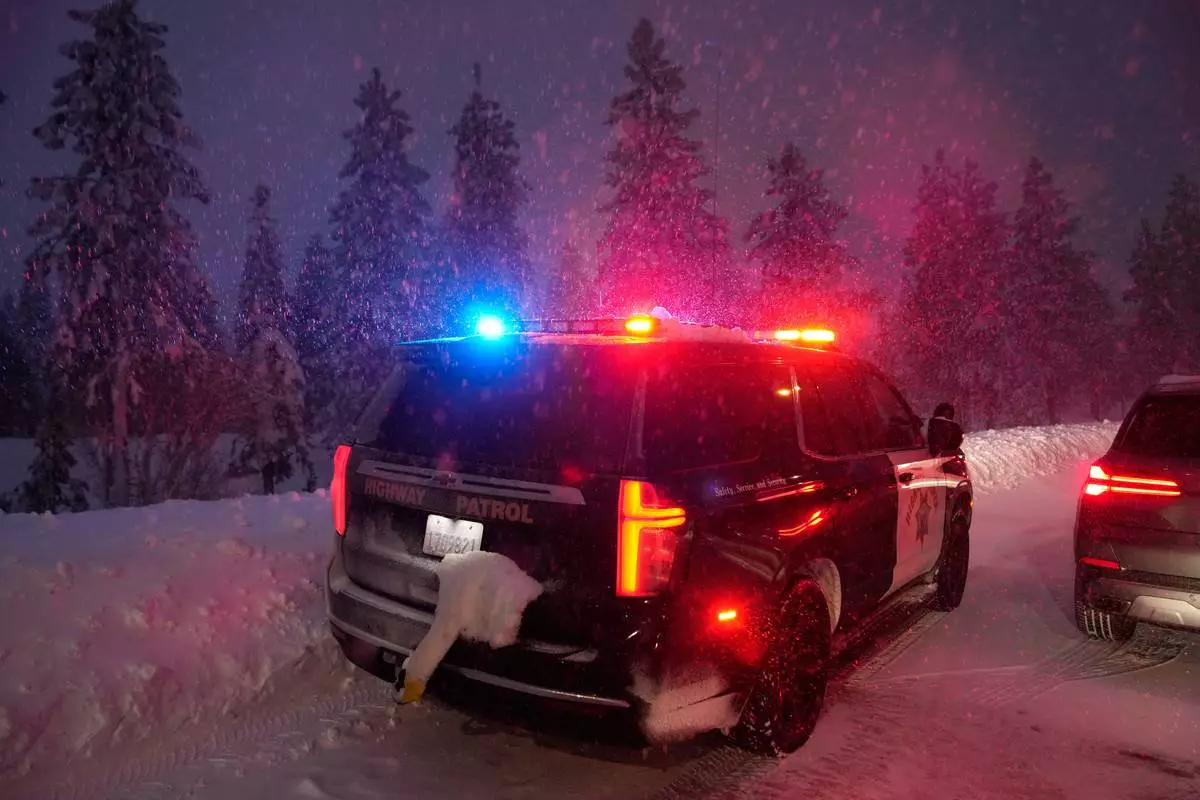
A California Highway Patrol vehicle is parked along a road during a snow storm Wednesday, Feb. 18, 2026, in Placer County, Calif. (AP Photo/Godofredo A. Vásquez)
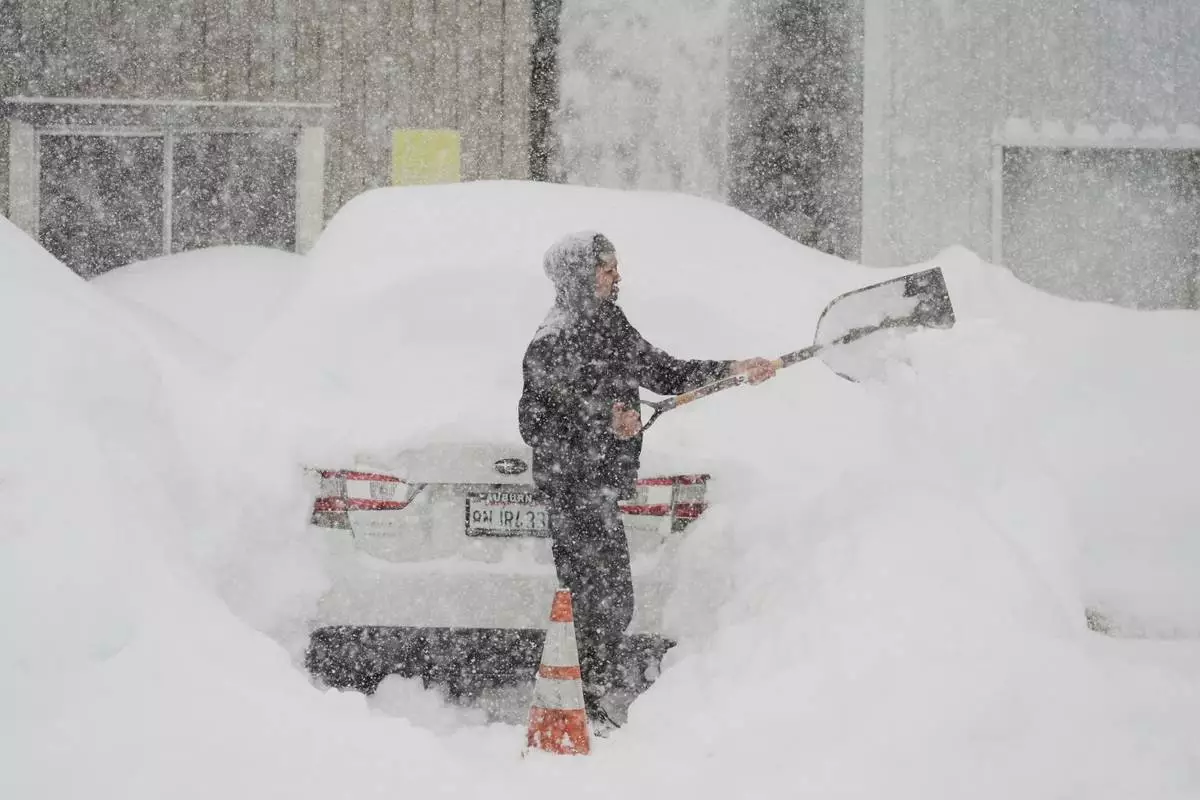
Adrián Narayan digs his car out of the snow Thursday, Feb. 19, 2026, in Soda Springs, Calif. (AP Photo/Godofredo A. Vásquez)

Snow comes down on a dog as traffic is backed up and motorists exit their vehicles along interstate 80 during a storm Thursday, Feb. 19, 2026, near Soda Springs, Calif. (AP Photo/Godofredo A. Vásquez)
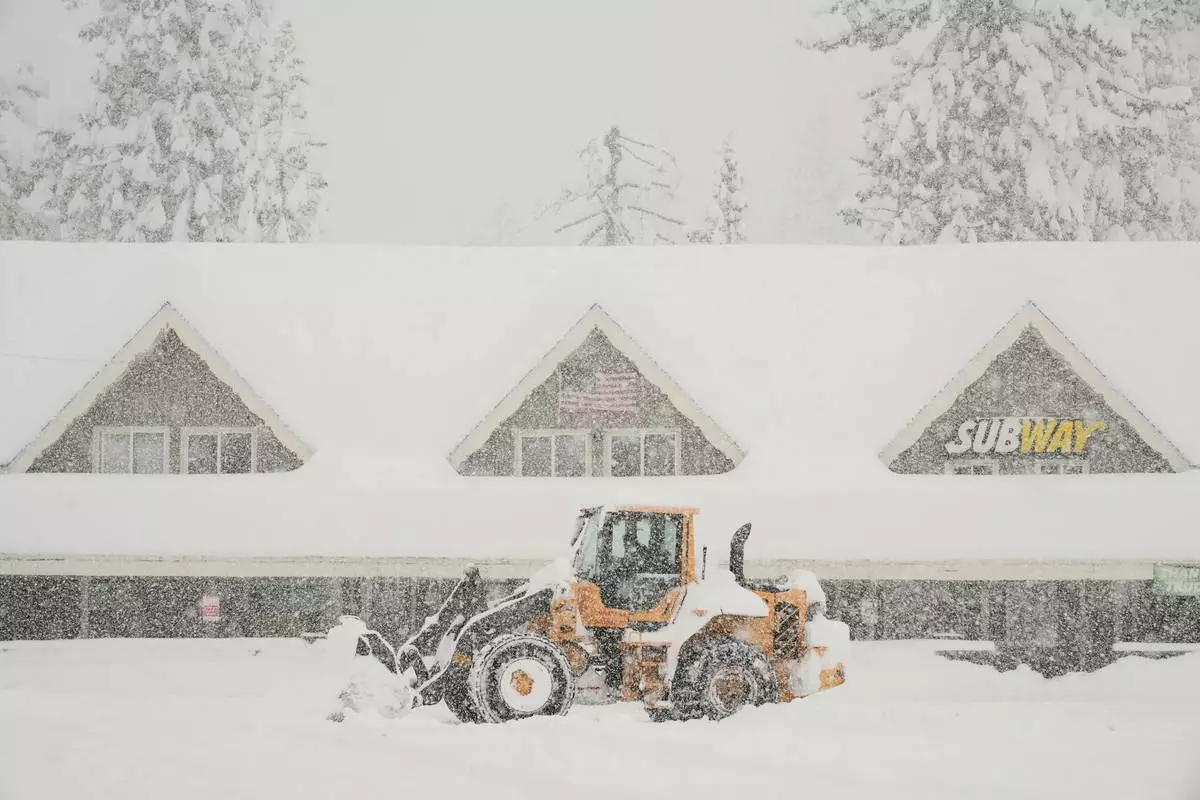
Snow is plowed in front of businesses during a snow storm Thursday, Feb. 19, 2026, in Soda Springs, Calif. (AP Photo/Godofredo A. Vásquez)
CARACAS, Venezuela (AP) — Venezuela's acting president on Thursday signed into law an amnesty bill that could lead to the release of politicians, activists, lawyers and many others, effectively acknowledging that the government has held hundreds of people in prison for political motivations.
The approval marks a reversal for authorities in the South American nation, who for decades have denied holding any political prisoners. It is the latest policy reversal following last month’s stunning U.S. military raid in the country’s capital, Caracas, to capture then-President Nicolás Maduro.
The measure is expected to benefit opposition members, activists, human rights defenders, journalists and many others who were targeted by the ruling party over the past 27 years. But families hoping for the release of their loved ones — some of whom have been gathered outside detention facilities for weeks — say that acting President Delcy Rodríguez has failed to deliver on earlier promises to release prisoners.
In the days after Maduro’s Jan. 3 capture, Rodríguez’s government announced it would release a significant number of prisoners. However, relatives and human rights watchdogs have criticized the slow pace of releases and the restrictive conditions under which many have been placed after leaving prison.
The new law was not a prerequisite for the government to free prisoners, but families held out hope that it could speed up releases. Some gathered outside detention facilities in Caracas grew impatient as hopes of immediate releases were disappointed Thursday night, retreating to their tents as Christian music played from a loudspeaker.
Venezuela-based prisoners’ rights group Foro Penal has tallied 448 releases since Jan. 8. The group estimates that more than 600 people are still in custody for political reasons.
Rodríguez, who proposed the bill late last month, signed the measure into law shortly after it was approved by the country's legislature.
She said during the signing that it showed that the country’s political leaders were “letting go of a little intolerance and opening new avenues for politics in Venezuela."
The bill’s purpose is to grant people “a general and full amnesty for crimes or offenses committed” during specific periods since 1999 that were marked by politically-driven conflicts in Venezuela, including “acts of politically motivated violence” in the context of the 2024 presidential election. The aftermath of that election led to protests and the arrest of more than 2,000 people, including minors.
The debate over the bill was suspended last week after lawmakers were unable to agree on some issues, including whether people who left the country to avoid detention can be granted amnesty, and laid bare the resistance from some ruling-party loyalists to seeing opposition members granted relief. Lawmakers on Thursday overcame the disagreement by allowing those abroad to have a lawyer seek amnesty on their behalf instead of forcing them to return to Venezuela to request the relief in person.
Once someone abroad has filed a request for amnesty, the law shields them from arrest when they return to the country to appear in court for a ruling on their request.
“It's not perfect, but it is undoubtedly a great step forward for the reconciliation of Venezuela,” opposition lawmaker Nora Bracho said in the debate. “It will undoubtedly alleviate the suffering of many Venezuelans.”
People convicted of human rights violations, war crimes, murder, drug trafficking and corruption do not qualify for amnesty, nor do people “who are being prosecuted or may be prosecuted or convicted for promoting, instigating, soliciting, invoking, favoring, facilitating, financing, or participating in armed or forceful actions against” Venezuela “by foreign states, corporations or individuals.” That could leave out members of the opposition who have supported Trump’s policy toward Venezuela.
General amnesty has long been a central demand of Venezuela’s opposition and human rights organizations, but they have viewed the proposal with cautious optimism and raised several concerns about eligibility and implementation.
The law was criticized Thursday by some members of the opposition, including Pedro Urruchurtu, international relations director for opposition leader and Nobel Peace Prize laurate María Corina Machado.
Urruchurtu has lived in exile since May, when he and other Machado staffers left the Argentine diplomatic compound in Caracas, where they had sheltered for more than a year to avoid arrest. He rejected the law's requirement that exiles return to Venezuela and appear in court.
“A true amnesty doesn’t require laws, but rather will, something that is lacking in this discussion,” Urruchurtu said on X. "It is not only an invalid and illegitimate law, but also a trap to buy time and revictimize those persecuted."
Some relatives of prisoners called on Trump to pressure Venezuela's government into freeing their loved ones.
“From the beginning, they have been liars, deceivers and mockers,” Marielis Guzmán said of Venezuelan authorities while standing outside a prison in Caracas on Thursday. “What the Venezuelan state has done is abuse its power.”
Follow AP’s coverage of Latin America and the Caribbean at https://apnews.com/hub/latin-america
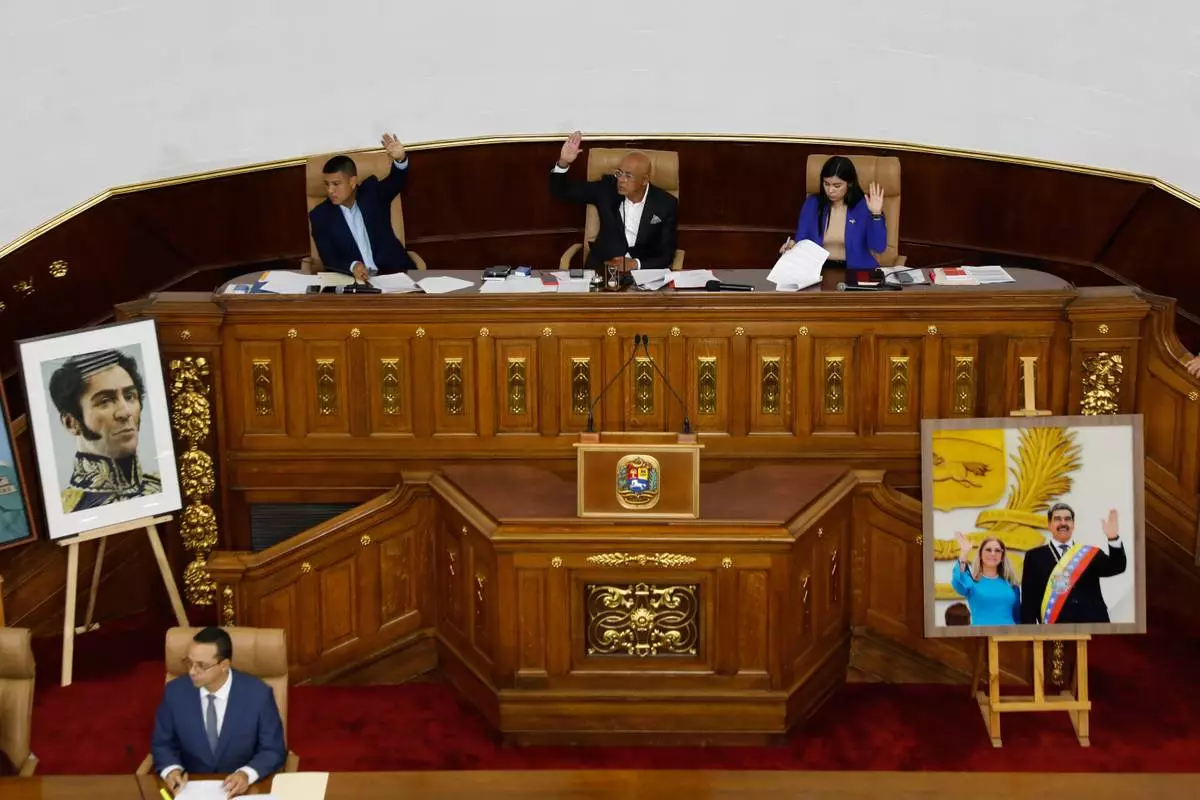
National Assembly President Jorge Rodriguez, center, presides over a session debating an amnesty bill in Caracas, Venezuela, Thursday, Feb. 19, 2026. (AP Photo/Crisitian Hernandez)
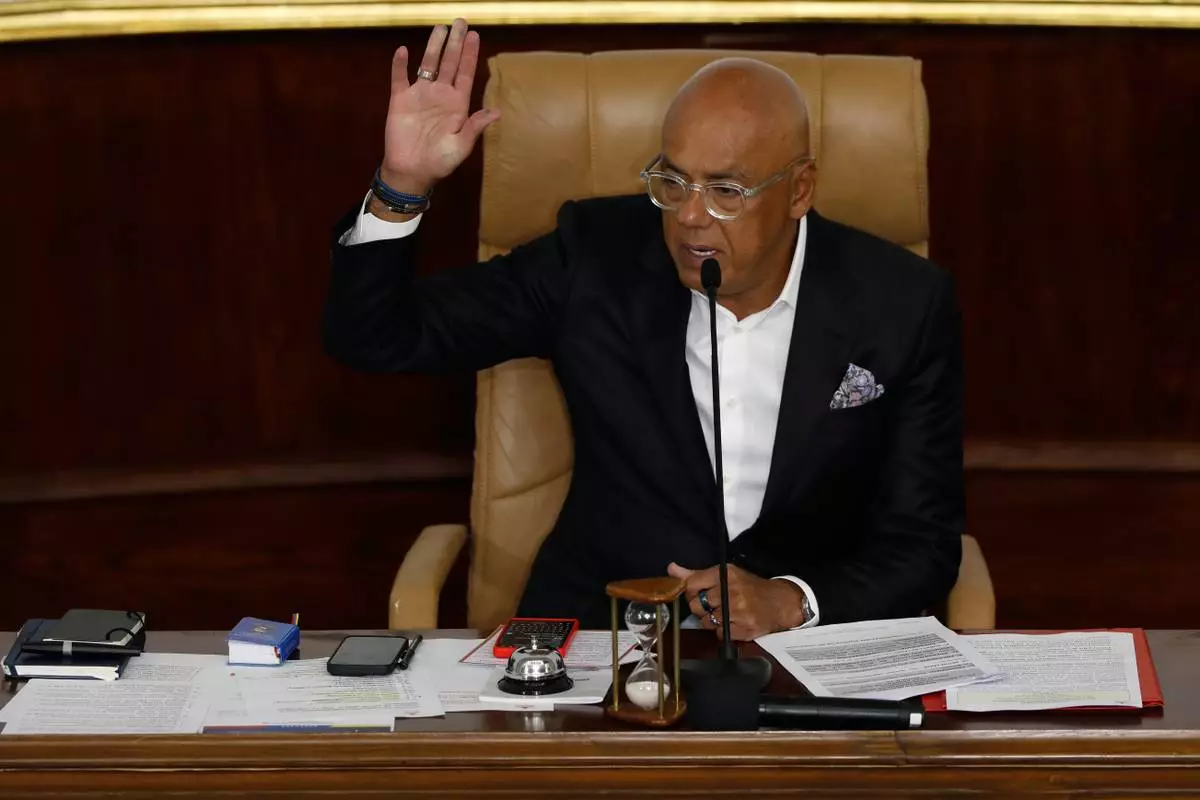
National Assembly President Jorge Rodriguez presides over a session debating an amnesty bill in Caracas, Venezuela, Thursday, Feb. 19, 2026. (AP Photo/Crisitian Hernandez)
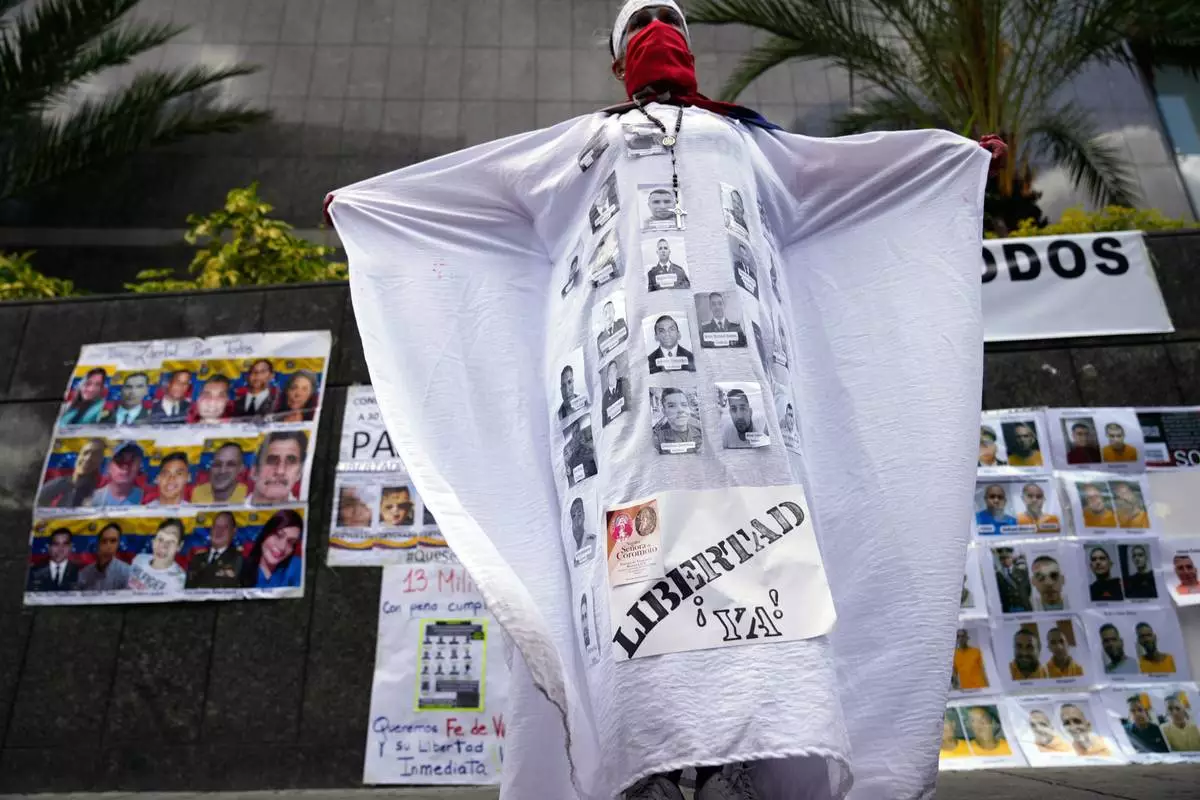
An activist protests outside the United Nations office for the release of what demonstrators consider to be political prisoners in Caracas, Venezuela, Wednesday, Feb. 18, 2026. (AP Photo/Ariana Cubillos)
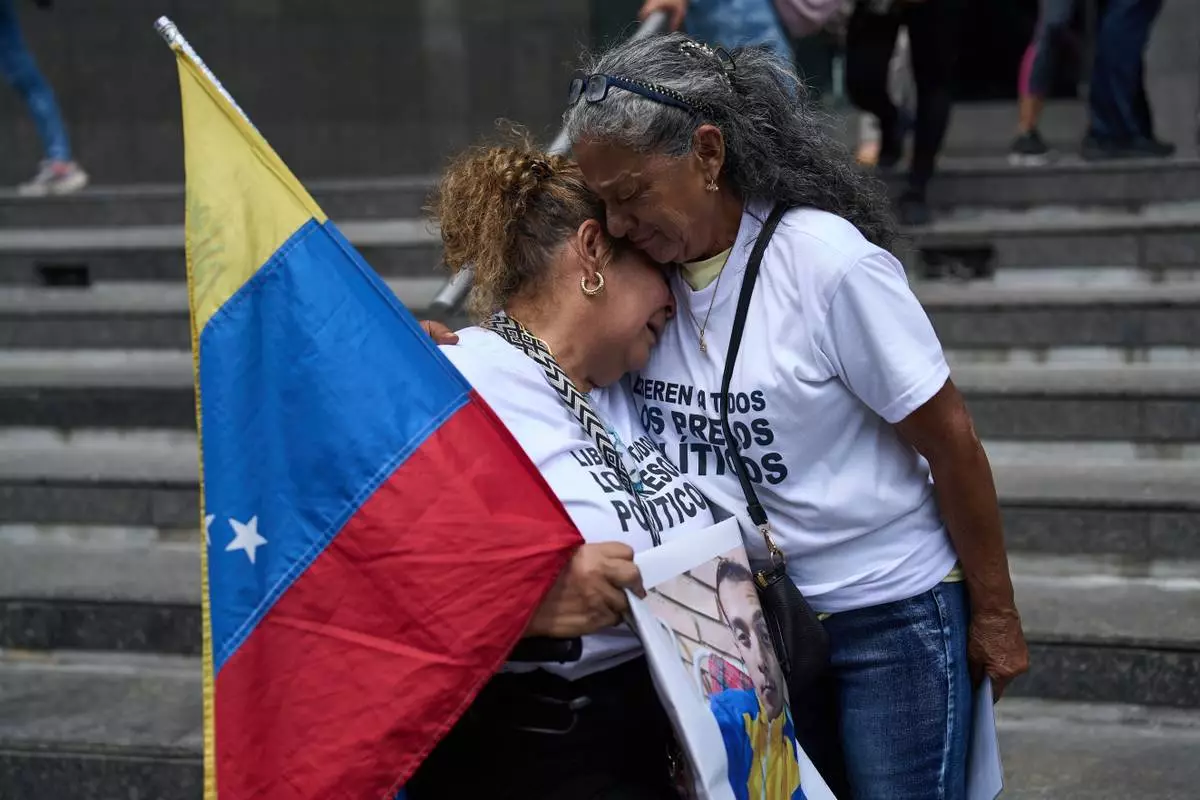
Barbara Bracho, left, mother of Gilberto Bracho, is embraced by Zoraida Gonzalez, mother of Miguel Estrada, both of whom consider their sons to be political prisoners, protest for their releases outside the United Nations office in Caracas, Venezuela, Wednesday Feb. 18, 2026. (AP Photo/Ariana Cubillos)
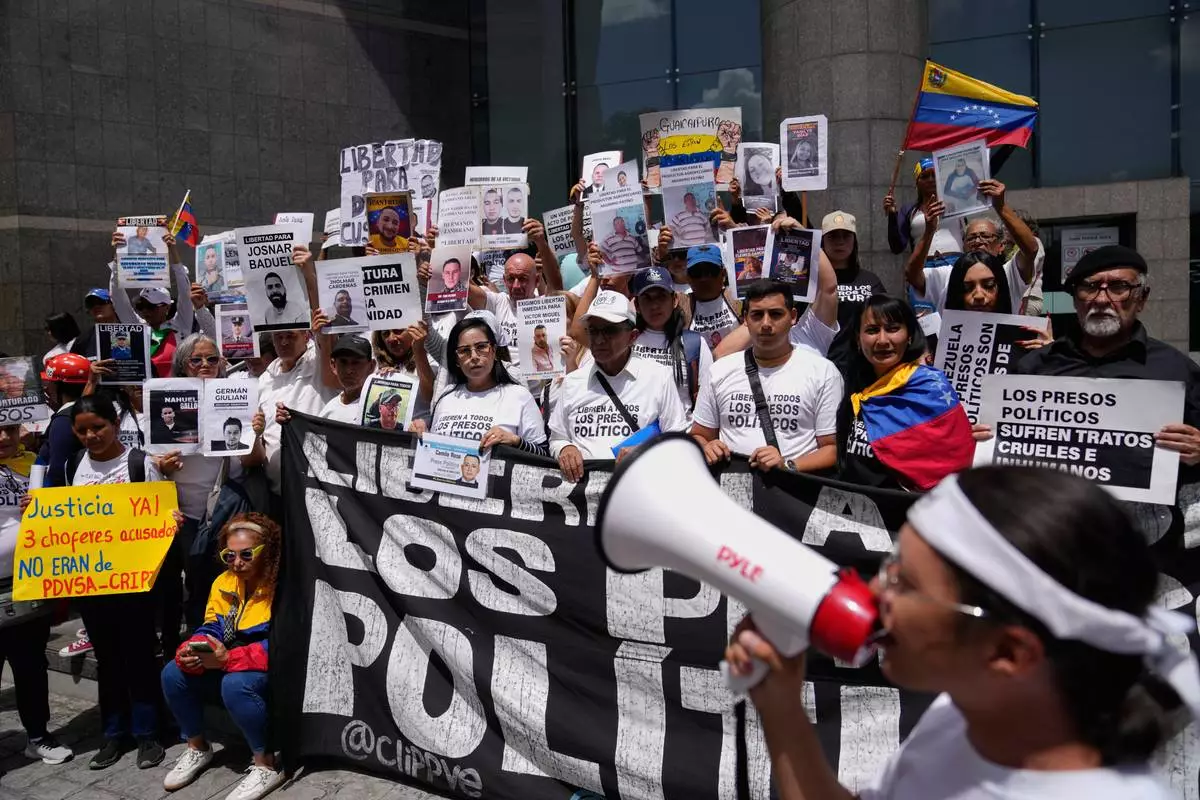
People who consider their detained family members to be political prisoners call for their releases outside the United Nations office in Caracas, Venezuela, Wednesday Feb. 18, 2026. (AP Photo/Ariana Cubillos)
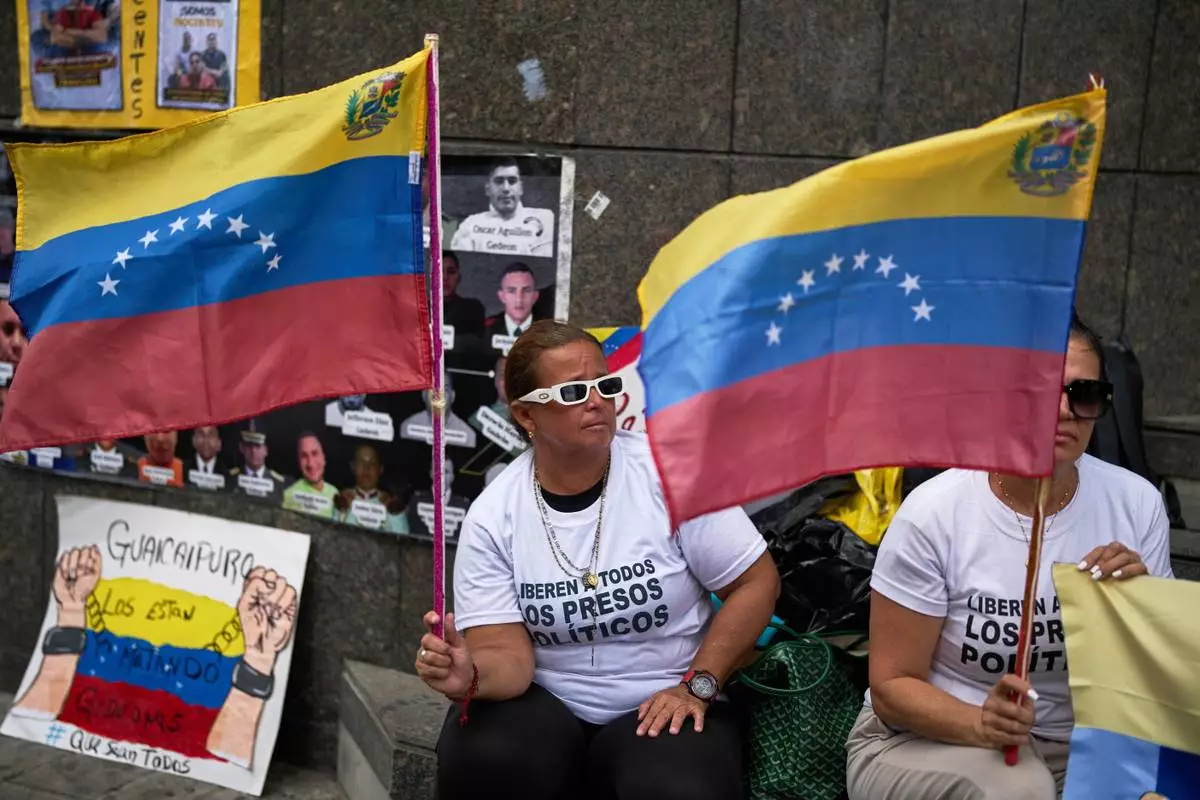
People who consider their detained family members to be political prisoners protest for their releases outside the United Nations office in Caracas, Venezuela, Wednesday Feb. 18, 2026. (AP Photo/Ariana Cubillos)