Skip to Content Facebook Feature Image

Olympics visitors are invited beyond the Duomo to Milan's other stunning churches

News

Olympics visitors are invited beyond the Duomo to Milan's other stunning churches
News

News

Olympics visitors are invited beyond the Duomo to Milan's other stunning churches

2026-02-20 23:33 Last Updated At:23:40

MILAN (AP) — Away from the crowds swarming Milan’s Duomo during the Winter Olympics, young volunteers have been steering visitors toward the city’s lesser-known churches, inviting them to discover their sacred heritage.

Known as “The Path of Beauty” (“La Via della Bellezza” in Italian), the initiative began in 2020 as a project of the archdiocese’s youth ministry office. It typically offers visits on weekends, but the schedule extends to weekdays during the Games and runs through March 15.

“The idea is to welcome visitors inside these churches and invite them to rediscover an artistic beauty that we inherit from the past, but that still speaks today,” Sara Cainarca, who coordinates the team hosting the visits, told The Associated Press on Wednesday.

Between 15 and 20 people are involved in the archdiocese's project, each specializing in one or two churches in Milan. The short visits are offered to a dozen Catholic sanctuaries across the city.

Volunteers wait for visitors inside their assigned church. Emphasizing they are not certified tour guides, they offer a free introduction to the history and sacred art of each building.

During the Olympic weeks, volunteers say they have welcomed visitors from the United States, France, Germany and Spain, some drawn to the city for the Games and others simply curious to explore beyond its best-known landmarks.

Giovanna Giuditta Mazza is an art history student who joined the initiative two years ago. She offers visits in English, French and Italian and is mostly based in the Basilica of San Lorenzo Maggiore, which dates back to the late 4th and early 5th centuries, making it one of the city's oldest churches.

“When people enter the church, they often do not know what to expect,” said Mazza, 22. “But when they leave, I see a sparkle in their eyes and that is precious to me.”

For her and other volunteers, these encounters become an opportunity to speak about their faith.

“Beauty is not just about art,” said Víctor Ortíz, a 22-year-old student of cultural heritage. “It is also about the Word of God.”

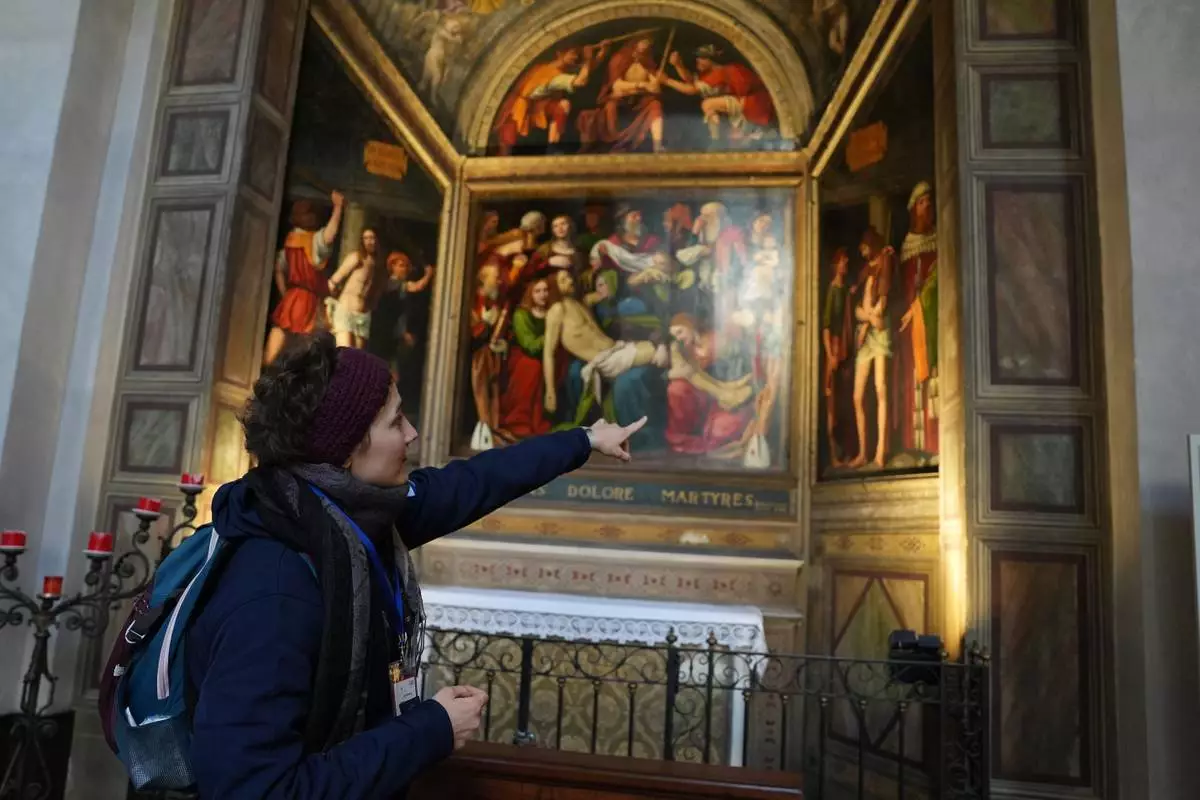
The church of Santa Maria presso San Satiro is best known for the illusion created by Renaissance architect Donato Bramante, who designed a trompe-l’oeil apse to compensate for limited space.

Ortiz, who often gives guides there, explains to visitors how the site had also been linked to a 13th-century miracle, in which an image of the Virgin Mary was said to have bled after being stabbed.

“The growing devotion surrounding that event eventually led to the construction of the church in the 16th century,” he said.

“La Via della Bellezza” began as training sessions in which university students from the Lombardy region explored the relationship between art and spirituality. Volunteers then spread to cities like Brescia or Bergamo, where churches and basilicas are known for their rich Romanesque and Baroque art.

“The idea is to accompany visitors so they move from being tourists to becoming pilgrims who discover a deeper desire within themselves,” said Cainarca, 26.

Volunteers meet at least once a month with experts who provide additional training in art history and other topics. Additionally, the group travels to nearby places to deepen their understanding of both artistic heritage and the spiritual traditions behind it. They will soon head to Ravenna, home to a series of Christian monuments famed for their mosaics that has been recognized as a World Heritage by the U.N. cultural agency UNESCO.

Milan, though, is Cainarca’s favorite city to work in. She says its churches are part of the city’s identity and that its patron, Saint Ambrose, shaped a vision of community and collaboration.

“Today, Milan is known for fashion, shopping, finance and skyscrapers,” she said. “These churches offer a moment of pause, contemplation and discovery.”

AP Winter Olympics coverage: https://apnews.com/hub/milan-cortina-2026-winter-olympics

Associated Press religion coverage receives support through the AP’s collaboration with The Conversation US, with funding from Lilly Endowment Inc. The AP is solely responsible for this content.
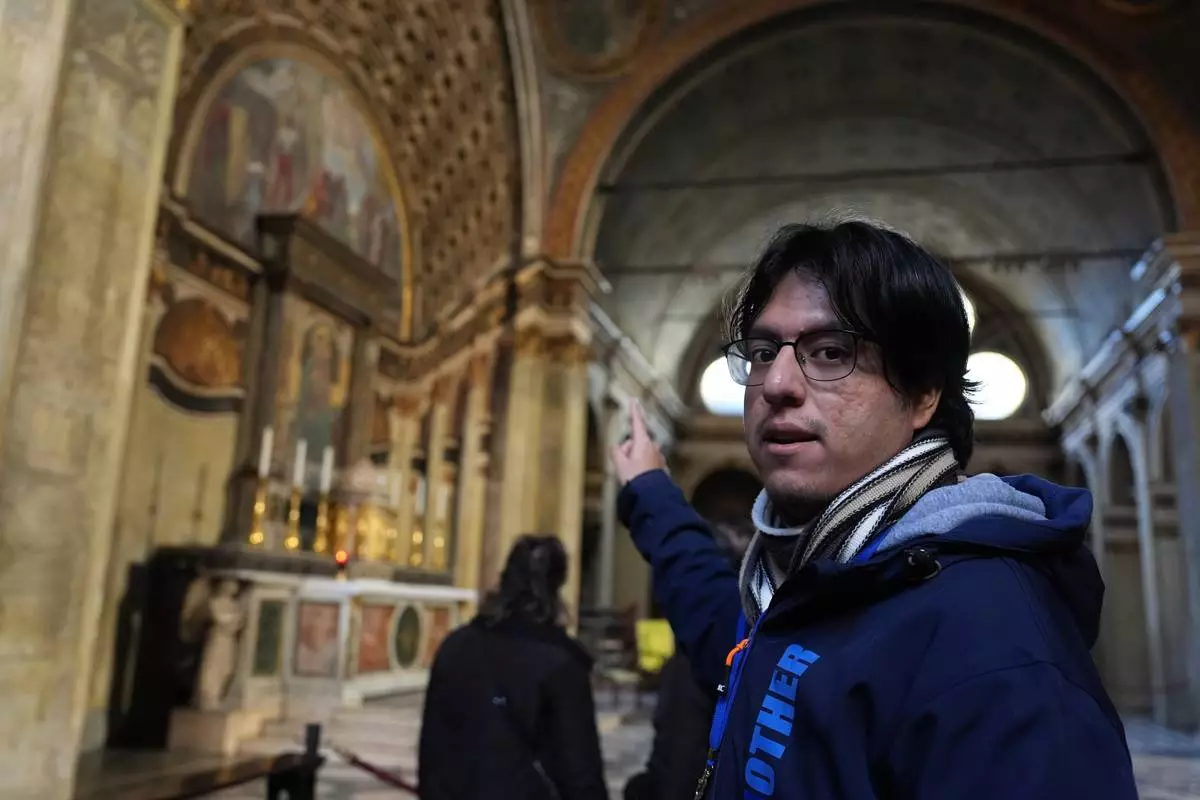
Víctor Ortiz, a volunteer with the “La Via della Bellezza,” or “The Path of Beauty,” initiative, gestures toward artwork inside the church of Santa Maria presso San Satiro in Milan, Italy, Wednesday, Feb. 18, 2026. (AP Photo/María Teresa Hernández)
Víctor Ortiz, a volunteer with the “La Via della Bellezza,” or “The Path of Beauty,” initiative, gestures toward artwork inside the church of Santa Maria presso San Satiro in Milan, Italy, Wednesday, Feb. 18, 2026. (AP Photo/María Teresa Hernández)

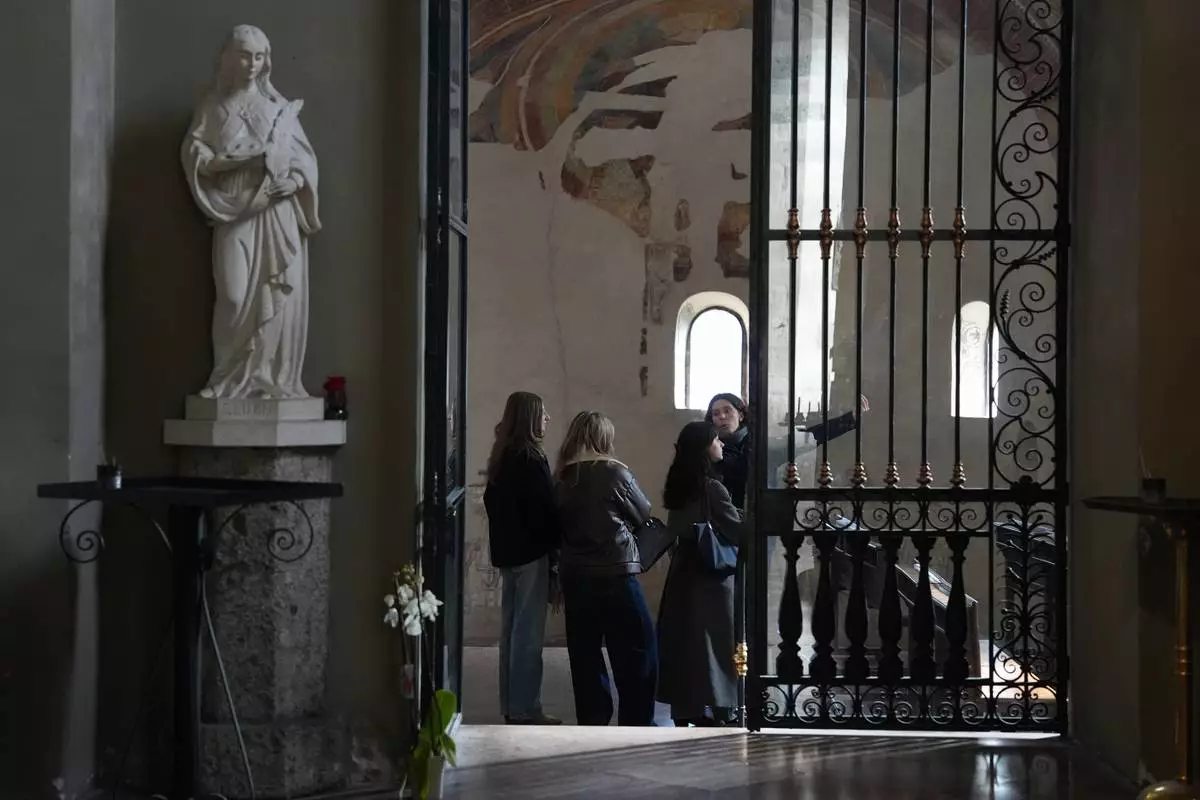
Giovanna Giuditta Mazza, right, leads a small group of visitors inside the Basilica of San Lorenzo Maggiore as part of the “La Via della Bellezza,” or “The Path of Beauty,” initiative in Milan, Italy, Wednesday, Feb. 18, 2026. Volunteers with the archdiocese’s youth ministry office offer free visits highlighting the artistic and spiritual heritage of the churches. (AP Photo/María Teresa Hernández)
Giovanna Giuditta Mazza, right, leads a small group of visitors inside the Basilica of San Lorenzo Maggiore as part of the “La Via della Bellezza,” or “The Path of Beauty,” initiative in Milan, Italy, Wednesday, Feb. 18, 2026. Volunteers with the archdiocese’s youth ministry office offer free visits highlighting the artistic and spiritual heritage of the churches. (AP Photo/María Teresa Hernández)

Sara Cainarca, a volunteer with the “La Via della Bellezza,” or “The Path of Beauty,” initiative, gestures toward a fresco inside the Basilica of San Lorenzo Maggiore in Milan, Italy, Wednesday, Feb. 18, 2026. (AP Photo/María Teresa Hernández)
Sara Cainarca, a volunteer with the “La Via della Bellezza,” or “The Path of Beauty,” initiative, gestures toward a fresco inside the Basilica of San Lorenzo Maggiore in Milan, Italy, Wednesday, Feb. 18, 2026. (AP Photo/María Teresa Hernández)

WASHINGTON (AP) — The Supreme Court struck down President Donald Trump's far-reaching global tariffs on Friday, handing him a significant loss on an issue crucial to his economic agenda.

The 6-3 decision centers on tariffs imposed under an emergency powers law, including the sweeping “reciprocal” tariffs he levied on nearly every other country.

It's the first major piece of Trump's broad agenda to come squarely before the nation's highest court, which he helped shape with the appointments of three conservative jurists in his first term.

The majority found that the Constitution “very clearly” gives Congress the power to impose taxes, which include tariffs. “The Framers did not vest any part of the taxing power in the Executive Branch,” Chief Justice John Roberts wrote.

Justices Samuel Alito, Clarence Thomas and Brett Kavanaugh dissented.

“The tariffs at issue here may or may not be wise policy. But as a matter of text, history, and precedent, they are clearly lawful,” Kavanaugh wrote.

The majority did not address whether companies could get refunded for the billions they have collectively paid in tariffs. Many companies, including the big-box warehouse chain Costco, have already lined up to demand refunds in lower courts. Kavanaugh noted the process could be complicated.

“The Court says nothing today about whether, and if so how, the Government should go about returning the billions of dollars that it has collected from importers. But that process is likely to be a ‘mess,’ as was acknowledged at oral argument,” he wrote.

The Treasury had collected more than $133 billion from the import taxes the president has imposed under the emergency powers law as of December, federal data shows.

The tariffs decision doesn’t stop Trump from imposing duties under other laws. While those have more limitations on the speed and severity of Trump’s actions, top administration officials have said they expect to keep the tariff framework in place under other authorities.

The Supreme Court ruling comes despite a series of short-term wins on the court’s emergency docket that have allowed Trump to push ahead with extraordinary flexes of executive power on issues ranging from high-profile firings to major federal funding cuts.

The Republican president has been vocal about the case, calling it one of the most important in U.S. history and saying a ruling against him would be an economic body blow to the country. But legal opposition crossed the political spectrum, including libertarian and pro-business groups that are typically aligned with the GOP. Polling has found tariffs aren't broadly popular with the public, amid wider voter concern about affordability.

The Constitution gives Congress the power to levy tariffs. But the Trump administration argued that a 1977 law allowing the president to regulate importation during emergencies also allows him to set tariffs. Other presidents have used the law dozens of times, often to impose sanctions, but Trump was the first president to invoke it for import taxes.

Trump set what he called "reciprocal" tariffs on most countries in April 2025 to address trade deficits that he declared a national emergency. Those came after he imposed duties on Canada, China and Mexico, ostensibly to address a drug trafficking emergency.

A series of lawsuits followed, including a case from a dozen largely Democratic-leaning states and others from small businesses selling everything from plumbing supplies to educational toys to women’s cycling apparel.

The challengers argued the emergency powers law doesn’t even mention tariffs and Trump's use of it fails several legal tests, including one that doomed then-President Joe Biden's $500 billion student loan forgiveness program.

The economic impact of Trump's tariffs has been estimated at some $3 trillion over the next decade, according to the Congressional Budget Office.

Associated Press writer Mark Sherman contributed to this report.

Follow the AP's coverage of the U.S. Supreme Court at https://apnews.com/hub/us-supreme-court.

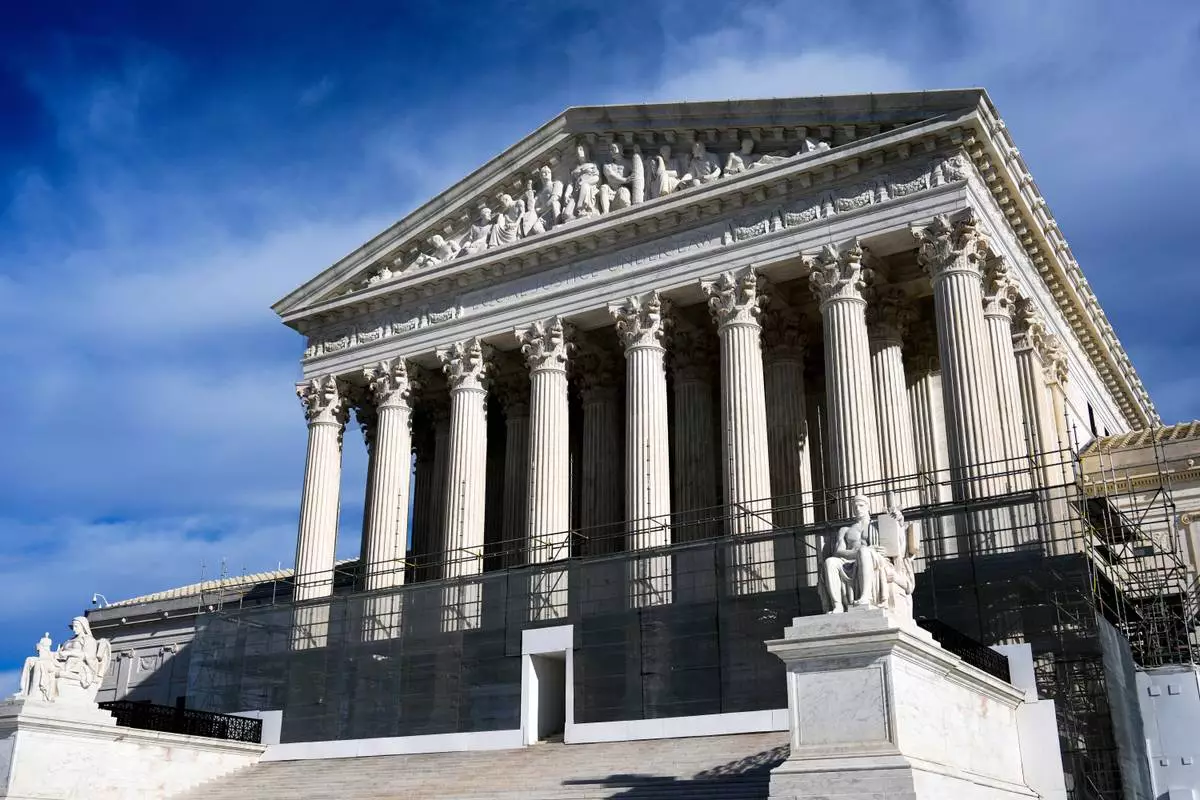
FILE - The Supreme Court is seen, Jan. 13, 2026, in Washington. (AP Photo/Julia Demaree Nikhinson, File)

FILE - The Supreme Court is seen, Jan. 13, 2026, in Washington. (AP Photo/Julia Demaree Nikhinson, File)

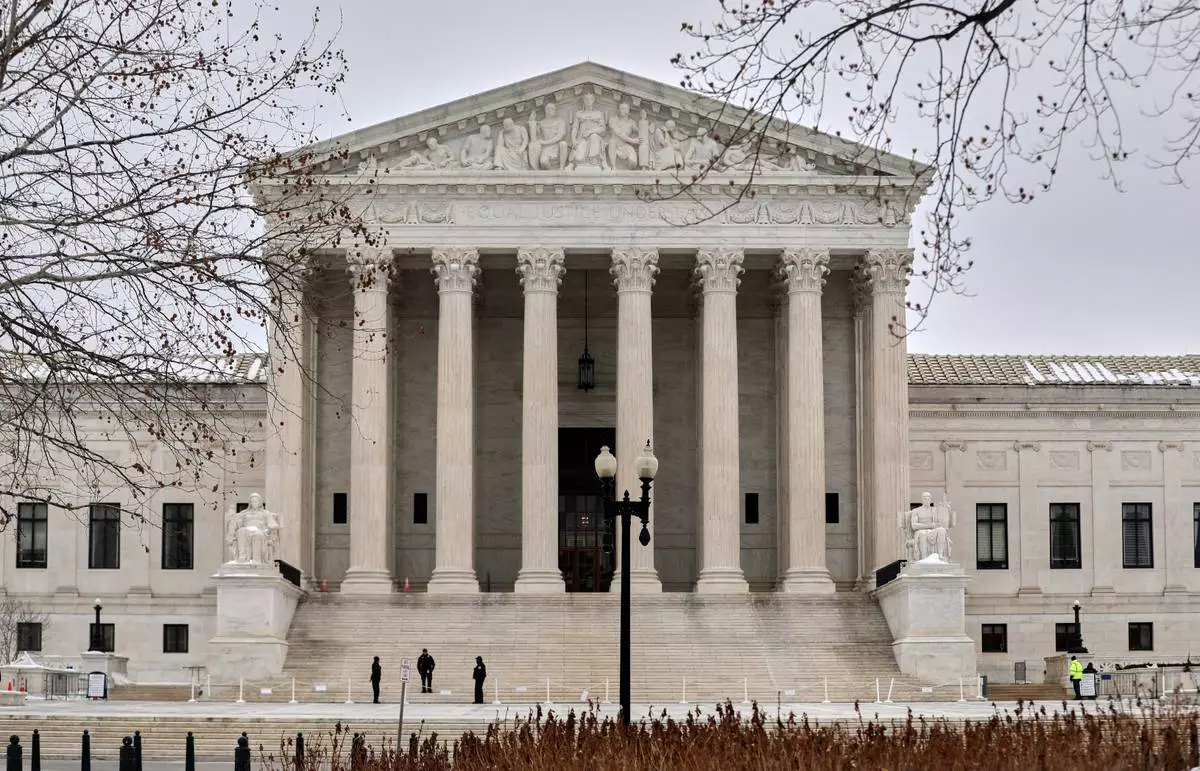
FILE - The Supreme Court is photographed, Feb. 6, 2026, in Washington. (AP Photo/Rahmat Gul, File)

FILE - The Supreme Court is photographed, Feb. 6, 2026, in Washington. (AP Photo/Rahmat Gul, File)

Recommended Articles