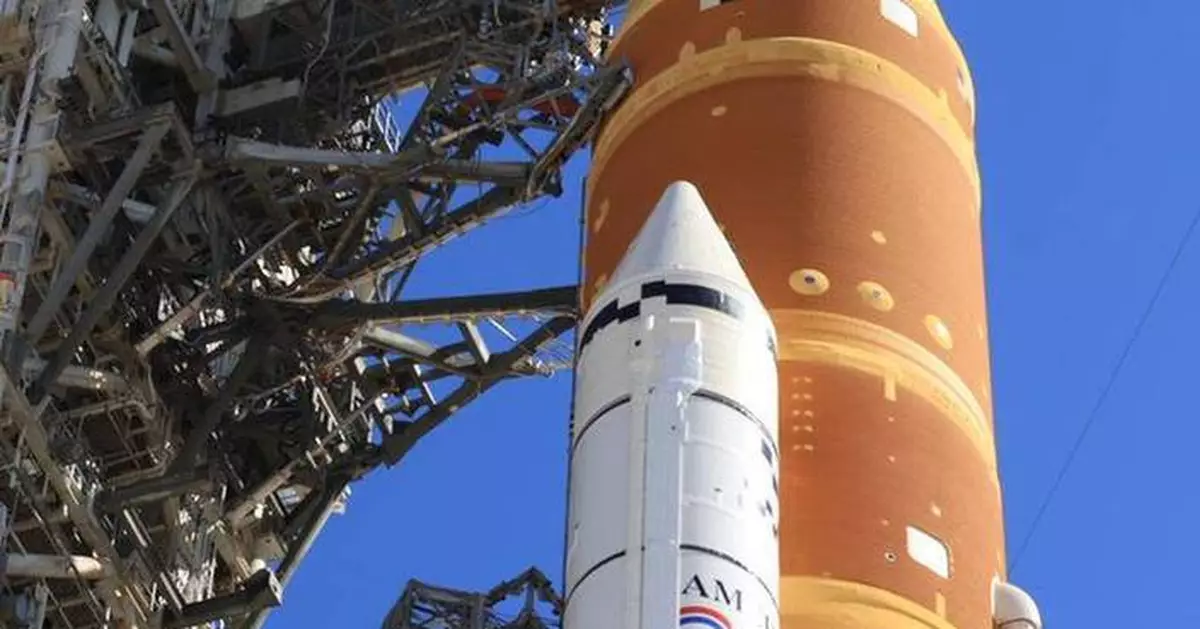
CAPE CANAVERAL, Fla. (AP) — NASA aims to send astronauts to the moon in March after acing the latest rocket fueling test.
Administrator Jared Isaacman said Friday that launch teams made “major progress” between the first countdown rehearsal, which was disrupted by hydrogen leaks earlier this month, and the second test, which was completed without significant seepage Thursday night.
The test was “a big step toward America’s return to the lunar environment," Isaacman said on the social media platform X.
NASA could launch four astronauts on the Artemis II lunar fly-around as soon as March 6 from Florida's Kennedy Space Center. To keep their options open, the three Americans and one Canadian plan to go into the mandatory two-week health quarantine Friday night.
The space agency has only five days in March to launch the crew aboard the Space Launch System rocket, before standing down until April. February's opportunities evaporated after dangerous amounts of liquid hydrogen leaked during the first fueling demonstration.
Technicians replaced two seals, leading to Thursday's successful rerun. The countdown clocks went all the way down to the desired 29-second mark.
The fixes worked, but there's still pending work including conducting a flight readiness review, said NASA's Lori Glaze.
Commander Reid Wiseman and two of his crew monitored Thursday's operation alongside launch controllers. The astronauts will be the first to fly to the moon since Apollo 17 closed out NASA's first chapter in moon exploration in 1972.
The Associated Press Health and Science Department receives support from the Howard Hughes Medical Institute’s Department of Science Education and the Robert Wood Johnson Foundation. The AP is solely responsible for all content.
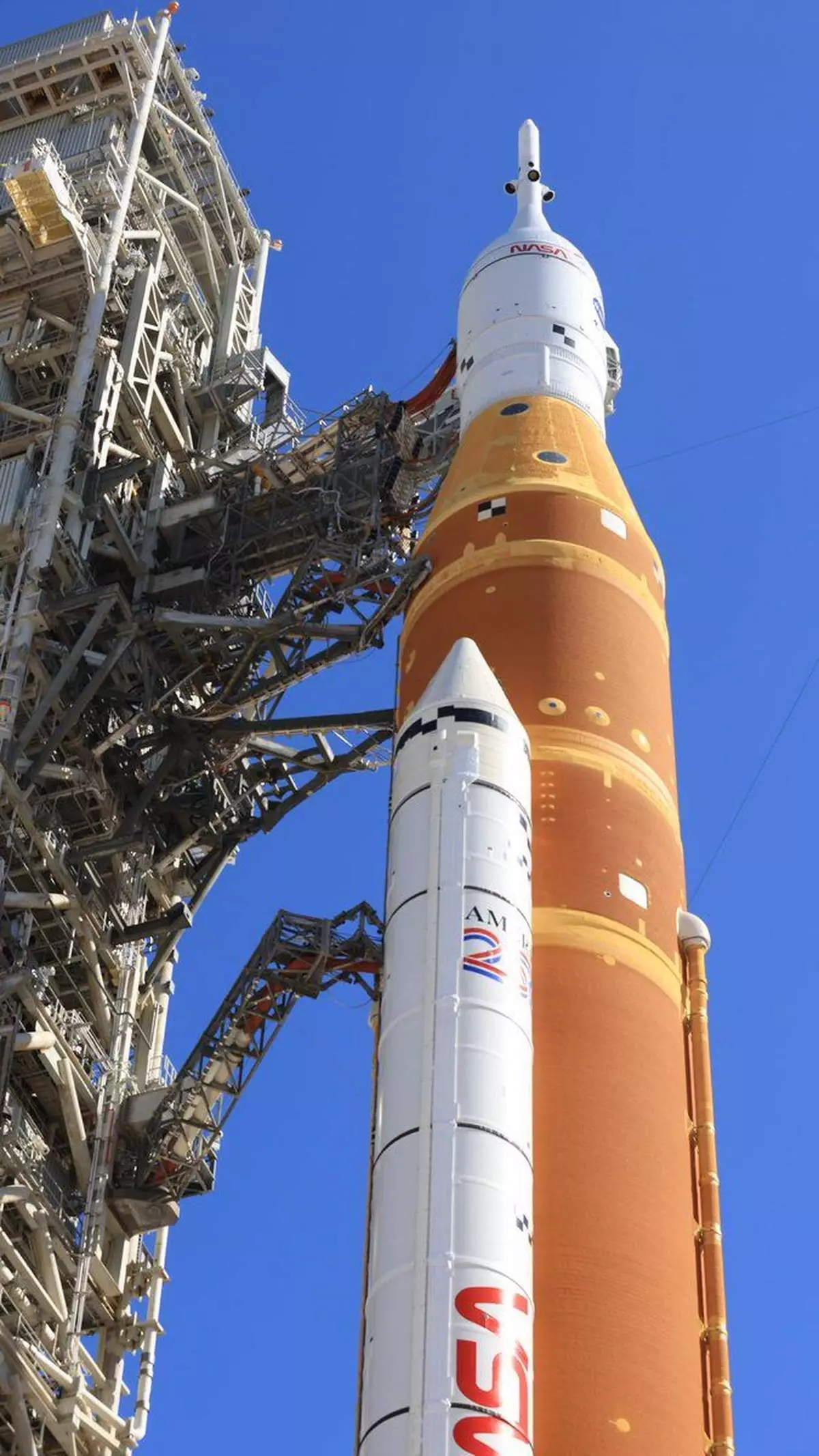
This image provided by NASA shows NASA's moon rocket sits on the pad at Kennedy Space Center in Florida on Thursday, Feb. 19, 2026. (NASA via AP)
BARCELONA, Spain (AP) — Barcelona's towering Sagrada Familia basilica reached its maximum height on Friday, though the magnum opus of Catalan architect Antoni Gaudí remains years away from completion.
A crane placed the upper arm of a cross atop the Tower of Jesus Christ, the church's soaring central piece, which now stands 172.5 meters (566 feet) above the city.
With Friday's addition, the Sagrada Familia inched closer to being done. The unfinished monument became the world’s tallest church last year after another part of its central tower was lifted into place.
The first stone of the Sagrada Familia was placed in 1882, but Gaudí never expected it to be completed in his lifetime. Only one of its multiple towers was finished when he died at the age of 73 in 1926, after being hit by a tram.
In recent decades, work has sped up as the basilica became a major international tourist attraction, with people enthralled by Gaudí’s radical aesthetic that combines Catholic symbolism and organic forms.
Inside, the Tower of Jesus Christ is still being worked on. Those who wish to actually see the cross will have to wait until the tower's inauguration this summer, when the scaffolding surrounding it will be removed, according to the church.
Topping the central tower, which soars above the transept, has been a priority ahead of celebrations this June that will mark the centenary of Gaudí’s death.
As Gaudí had planned, the cross has four arms so its shape can be recognized from any direction, said Sagrada Familia's rector, the Rev. Josep Turull. If Barcelona’s city government will allow it, the original plan also includes a light beam shining from each of the cross’s arms, symbolizing the church’s role as a spiritual lighthouse, he added.
Millions of tourists visit the Sagrada Familia every year, and entrance fees largely fund the ongoing construction.
This year, the Sagrada Familia will hold several events to celebrate the Catalan Modernist's legacy, which includes other stunning buildings in Barcelona and elsewhere in Spain.
The Sagrada Familia became the world's tallest church last October, when it rose above the spire of Germany’s Ulmer Münster, a Gothic Lutheran church built over more than 500 years, starting in 1377. That church tops out at 161.53 meters (530 feet).
At Sagrada Familia, a prayer verse is included at the base of the cross installed Friday afternoon, said church rector Turull.
It reads: “You alone are the Holy One, you alone are the Lord, you alone are the Most High.”
Associated Press journalists Joseph Wilson in Barcelona, Spain, and Giovanna Dell'Orto in Minneapolis contributed reporting.
This story corrects the date that construction began on Germany’s Ulmer Münster church, to 1377, and the time took to build it, to over 500 years. A previous version incorrectly said construction began in 1543 and that the work took 347 years.
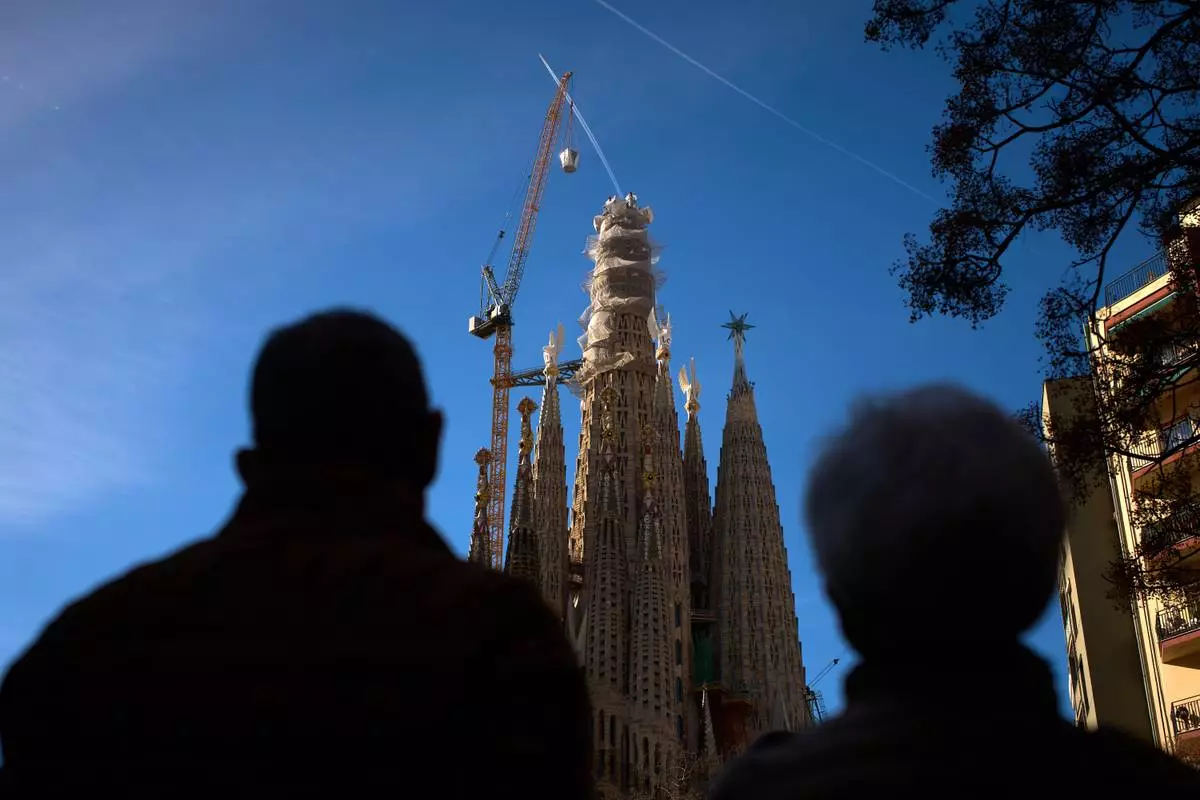
People watch as a crane lifts the upper arm of the cross onto the Tower of Jesus Christ at the Sagrada Familia in Barcelona, Spain, Friday, Feb. 20, 2026, reaching the basilica's maximum height of 172.5 meters (566 feet). (AP Photo/Emilio Morenatti)

People watch as a crane lifts the upper arm of the cross onto the Tower of Jesus Christ at the Sagrada Familia in Barcelona, Spain, Friday, Feb. 20, 2026, reaching the basilica's maximum height of 172.5 meters (566 feet). (AP Photo/Emilio Morenatti)
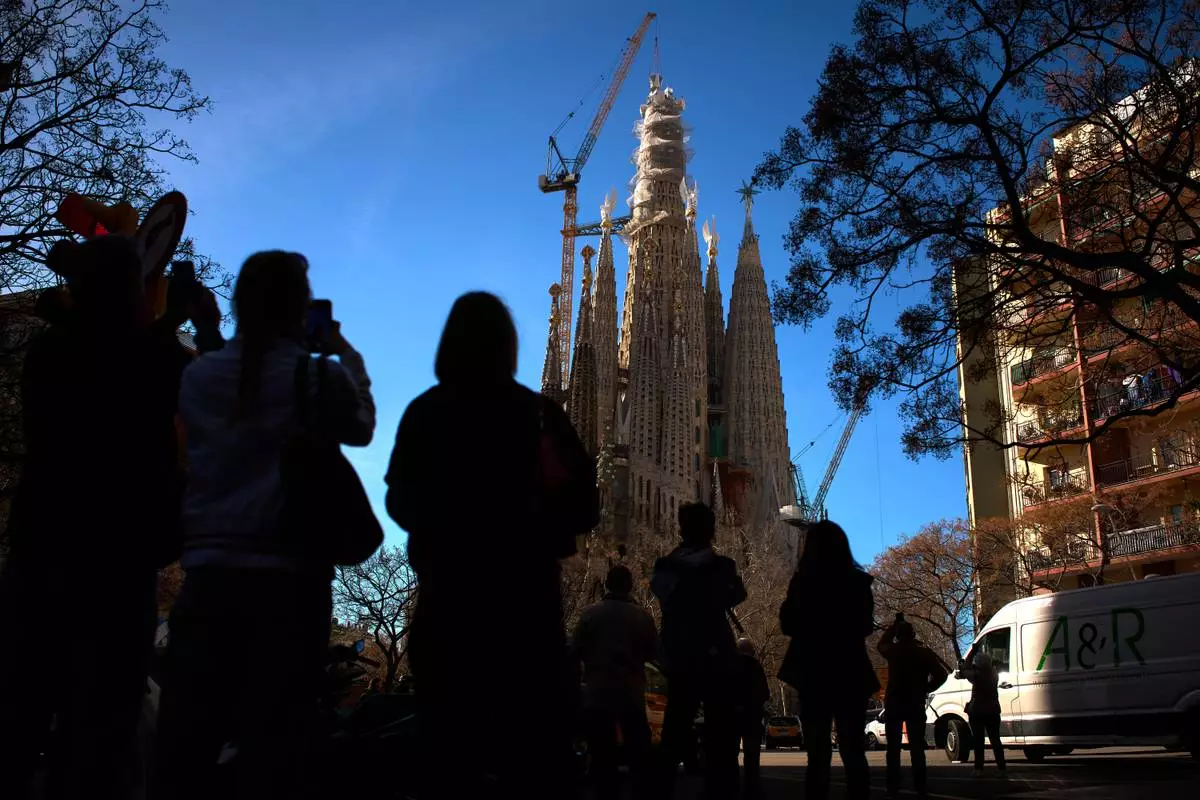
People watch as a crane lifts the upper arm of the cross onto the Tower of Jesus Christ at the Sagrada Familia in Barcelona, Spain, Friday, Feb. 20, 2026, reaching the basilica's maximum height of 172.5 meters (566 feet). (AP Photo/Emilio Morenatti)
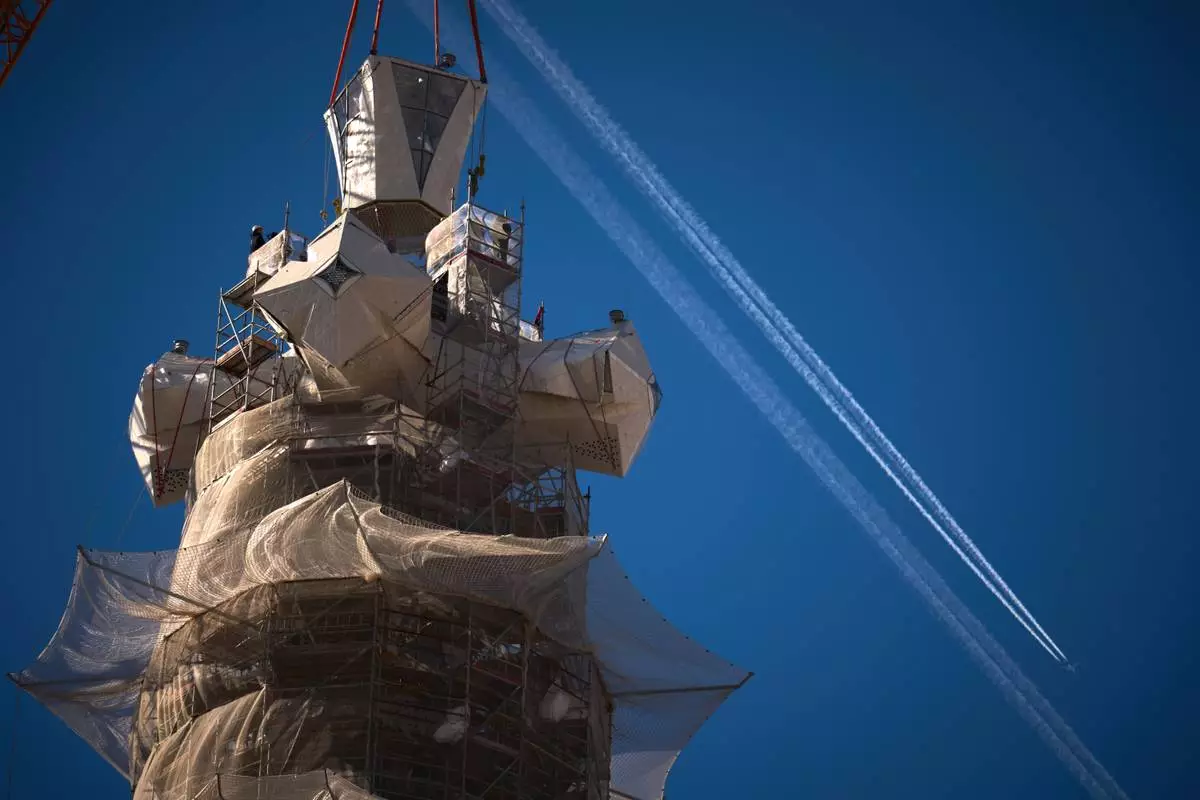
A crane lifts the upper arm of the cross onto the Tower of Jesus Christ at the Sagrada Familia in Barcelona, Spain, Friday, Feb. 20, 2026, reaching the basilica's maximum height of 172.5 meters (566 feet). (AP Photo/Emilio Morenatti)