MILAN (AP) — South Korean speedskater Kim Gilli thought it funny earlier in the Milan Cortina Olympics when someone referred to her as Lambor-Gilli, an homage to the famous Italian sports car known for its speed.
There was nothing humorous about the way she took care of everyone in the 1,500 meters on Friday night.
Click to Gallery
Team Netherlands celebrates after a short track speed skating men's 5000 meters relay final at the 2026 Winter Olympics, in Milan, Italy, Friday, Feb. 20, 2026. (AP Photo/Natacha Pisarenko)
Jens van 't Wout of the Netherlands celebrates during a short track speed skating men's 5000 meters relay final at the 2026 Winter Olympics, in Milan, Italy, Friday, Feb. 20, 2026. (AP Photo/Stephanie Scarbrough)
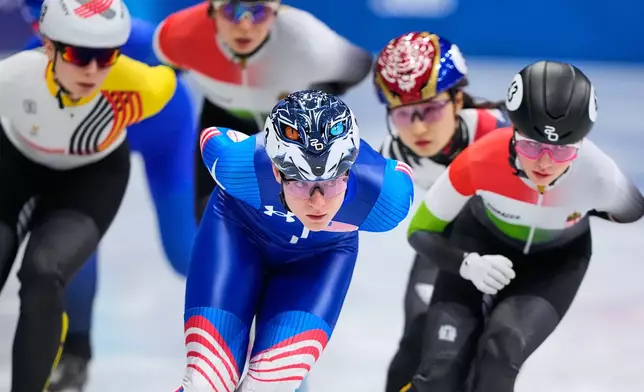
Corinne Stoddard of the United States leads during a short track speed skating women's 1500 meters semifinal at the 2026 Winter Olympics, in Milan, Italy, Friday, Feb. 20, 2026. (AP Photo/Natacha Pisarenko)
Minjeong Choi of South Korea prepares to compete during a short track speed skating women's 1500 meters final at the 2026 Winter Olympics, in Milan, Italy, Friday, Feb. 20, 2026. (AP Photo/Natacha Pisarenko)
Gilli Kim of the Republic of South Korea celebrates during a short track speed skating women's 1500 meters final at the 2026 Winter Olympics, in Milan, Italy, Friday, Feb. 20, 2026. (AP Photo/Stephanie Scarbrough)
Gilli denied South Korea teammate Minjeong Choi her third consecutive Olympic gold in the event, relegating her to the silver medal, while Corinne Stoddard earned a drought-ending bronze medal for the U.S. in short-track racing at the Winter Games.
“I showed everything I could do, remaining calm,” Gilli said through a translator. "I believed in myself and went for it.”
So did Stoddard, who earned the first individual medal in a short-track event for an American woman in 16 years.
Stoddard set the early pace in the final race of the Olympic program, but Choi swept to the front with two laps to go as the crowd rose to its feet. Gilli quickly went with her and the 21-year-old made the decisive pass on her teammate before crossing the finishing line.
Stoddard raised her arms in triumph as she crossed the line a split-second later for third place.
Arianna Fontana of Italy came up short in her bid to tie Norwegian cross-country skier Marit Bjørgen as the most decorated Winter Olympian with her 15th medal. After winning gold in the 2,000-meter relay and silver in the 500 meters and 3,000-meter relay earlier in her home Olympics, the 35-year-old Fontana finished fifth in the 1,500-meter finale.
“I did everything I could in this last Olympic race, but unfortunately my back pain gave me some limitations,” said Fontana, who was involved in a quarterfinal crash. "I am very happy about these Olympic Games and managing to arrive to five out of five finals and to get medals at home at 35 years old is the best I could have hoped for.”
Two of the biggest medals favorites failed to even make the finals.
Courtney Sarault of Canada, who had already won two silver medals and two bronze medals during the Milan Cortina Games, went down on her own midway through her semifinal race, spoiling her shot at finally standing on the top step of a podium.
Moments later, and at nearly the exact same spot, Xander Velzeboer of the Netherlands went down. She was chasing a third gold in the Milano Ice Skating Arena after winning the 500 meters and 1,000 meters earlier in the Winter Games.
“Don’t really know (what happened),” Sarault said. “I had a hit with someone at the start and think I lost my edge. Then the ice condition wasn’t great, so I was fighting with no edge and then not landing properly. So, when the ice chipped out, my center of gravity wasn’t really very good to fight it, so it just chipped away.”
There was a scary moment earlier in the night when Kamila Sellier crashed in the quarterfinals.
The Polish speedskater was clipped across the left eye by a competitor's blade while sliding into the wall, where she lay motionless as medics rushed to her side. She was eventually immobilized on a stretcher, but gave up a thumbs-up as she was wheeled away, leaving a trail of blood in the final corner of the track that workers had to clean during the break.
Polish officials said Sellier’s eye was OK. She received stitches at the arena before going to the hospital for more tests.
The Netherlands won its first men's 5,000-meter relay at the Olympics earlier Friday night, pulling away from the Korean and Italian teams over the final two laps of the 45-lap race to add to an impressive short-track haul at the Milan Cortina Games.
Jens van 't Wout, who skated the anchor leg and celebrated as he crossed the finish line, earned his third gold medal and fourth in all, while his nation earned its fifth gold and seventh medal overall in the short-track speedskating program.
He was joined by his brother Melle van 't Wout, Teun Boer and Friso Emons in stopping the clock in 6 minutes, 51.847 seconds, giving the Netherlands a comfortable gap over their closest pursuers inside the Milano Ice Skating Arena.
““I’m just so incredibly proud of the team we have here, the team we came to the Olympics with. We’ve never been this close as a team, and I think it really shows in our overall performance,” Jens van 't Wout said. "And for me, I mean, I’ve never been happier.”
Jeongmin Lee, Juneseo Lee, Jongun Rim and Dongmin Shin managed to get past the Italian team in the final corner of the race to take the silver medal for the second consecutive Winter Games. Rim also earned individual bronze in the 1,000 meters.
Italy rounded out the podium for the host nation. Pietro Sighel, Thomas Nadalini, Luca Spechenhauser and Andrea Cassinelli were able to relegate the defending champion Canadians to fourth place in a race often described as choreographed chaos.
“We are so down to party,” Nadalini said.
AP Winter Olympics: https://apnews.com/hub/milan-cortina-2026-winter-olympics

Team Netherlands celebrates after a short track speed skating men's 5000 meters relay final at the 2026 Winter Olympics, in Milan, Italy, Friday, Feb. 20, 2026. (AP Photo/Natacha Pisarenko)

Jens van 't Wout of the Netherlands celebrates during a short track speed skating men's 5000 meters relay final at the 2026 Winter Olympics, in Milan, Italy, Friday, Feb. 20, 2026. (AP Photo/Stephanie Scarbrough)
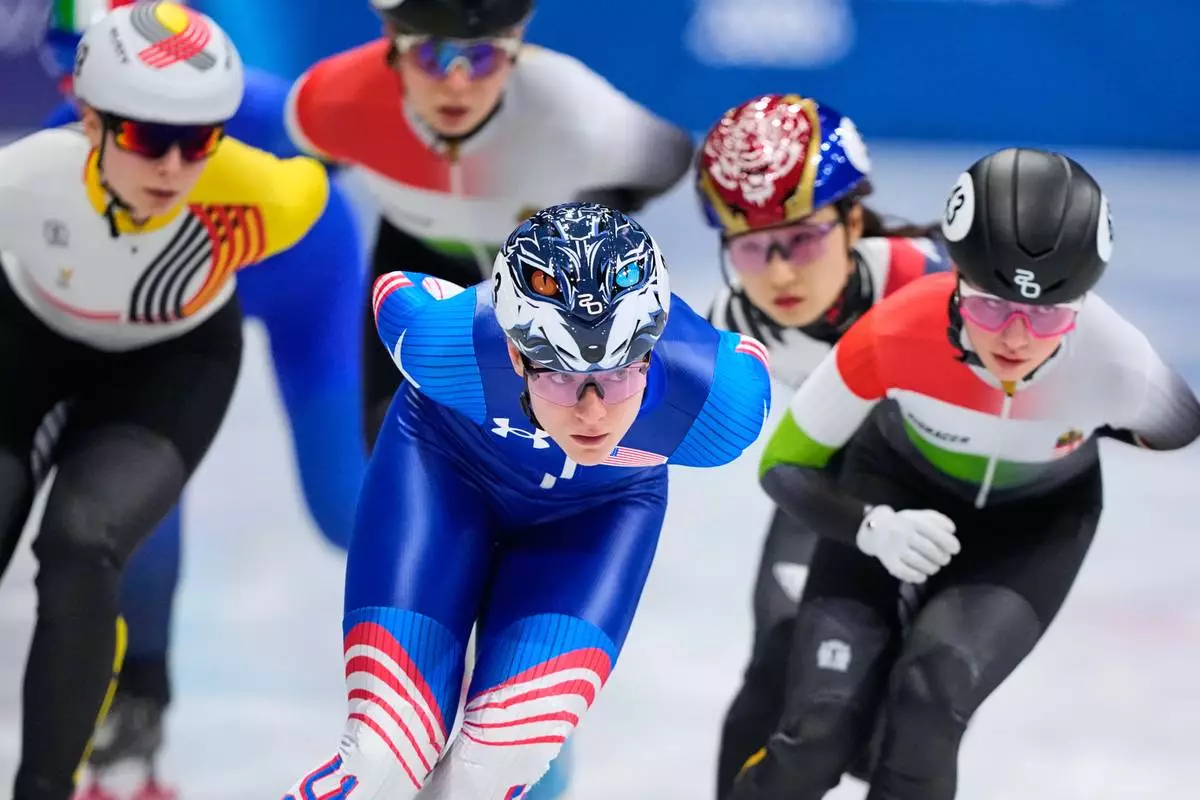
Corinne Stoddard of the United States leads during a short track speed skating women's 1500 meters semifinal at the 2026 Winter Olympics, in Milan, Italy, Friday, Feb. 20, 2026. (AP Photo/Natacha Pisarenko)
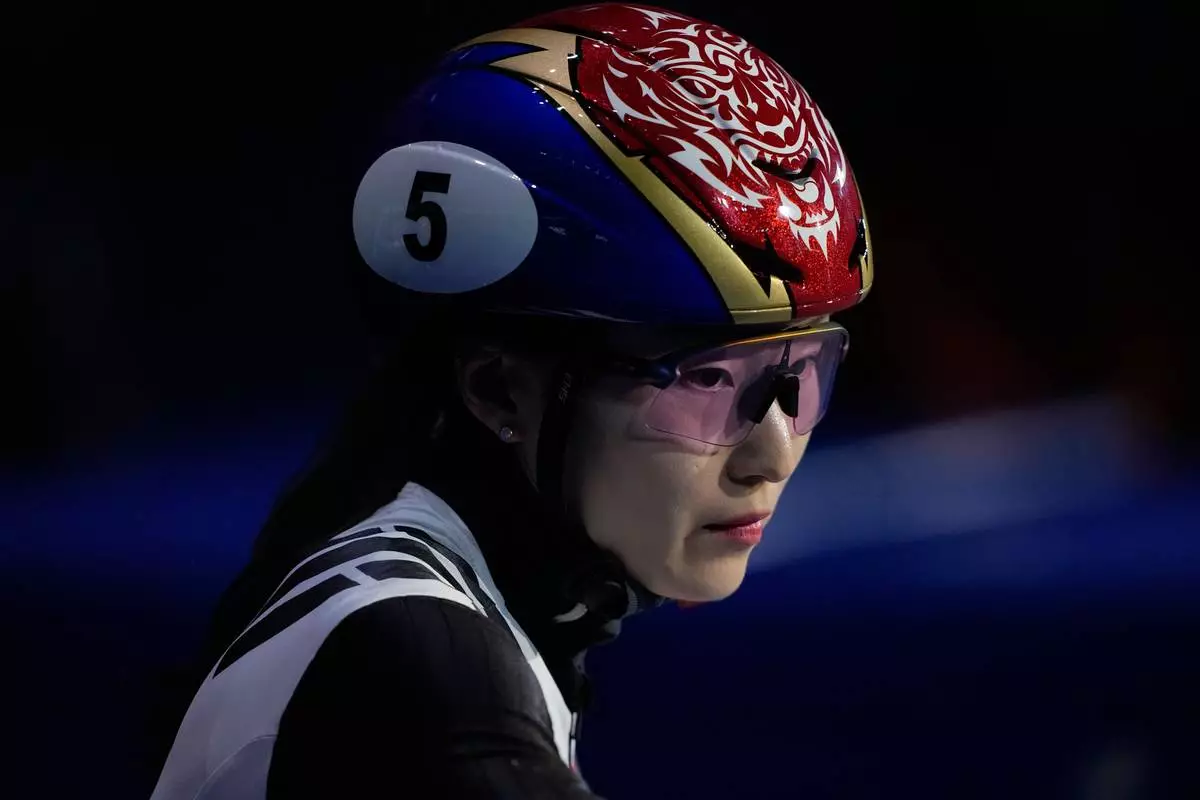
Minjeong Choi of South Korea prepares to compete during a short track speed skating women's 1500 meters final at the 2026 Winter Olympics, in Milan, Italy, Friday, Feb. 20, 2026. (AP Photo/Natacha Pisarenko)

Gilli Kim of the Republic of South Korea celebrates during a short track speed skating women's 1500 meters final at the 2026 Winter Olympics, in Milan, Italy, Friday, Feb. 20, 2026. (AP Photo/Stephanie Scarbrough)
WASHINGTON (AP) — The Supreme Court struck down President Donald Trump's far-reaching global tariffs on Friday, handing him a stinging loss that sparked a furious attack on the court he helped shape.
Trump said he was “absolutely ashamed” of some justices who ruled 6-3 against him, calling them “disloyal to our Constitution" and “lapdogs." At one point he even raised the specter of foreign influence without citing any evidence.
The decision could have ripple effects on economies around the globe after Trump's moves to remake post-World War II trading alliances by wielding tariffs as a weapon.
But an unbowed Trump pledged to impose a new global 10% tariff under a law that's restricted to 150 days and has never been used to apply tariffs before.
“Their decision is incorrect,” he said. “But it doesn’t matter because we have very powerful alternatives.”
The court's ruling found tariffs that Trump imposed under an emergency powers law were unconstitutional, including the sweeping “reciprocal” tariffs he levied on nearly every other country.
Trump appointed three of the justices on the nation’s highest court during his first term, and has scored a series of short-term wins that have allowed him to move ahead with key policies.
Tariffs, though, were the first major piece of Trump's broad agenda to come squarely before the Supreme Court for a final ruling, after lower courts had also sided against the president.
The majority found that it is unconstitutional for the president to unilaterally set and change tariffs because taxation power clearly belongs to Congress. “The Framers did not vest any part of the taxing power in the Executive Branch,” Chief Justice John Roberts wrote.
Justices Brett Kavanaugh, Samuel Alito and Clarence Thomas dissented.
“The tariffs at issue here may or may not be wise policy. But as a matter of text, history, and precedent, they are clearly lawful,” Kavanaugh wrote. Trump praised his 63-page dissent as “genius.”
The court majority did not address whether businesses could get refunded for the billions they have collectively paid in tariffs. Many companies, including the big-box warehouse chain Costco, have already lined up in lower courts to demand refunds. Kavanaugh noted the process could be complicated.
“The Court says nothing today about whether, and if so how, the Government should go about returning the billions of dollars that it has collected from importers. But that process is likely to be a ‘mess,’ as was acknowledged at oral argument,” he wrote.
The Treasury had collected more than $133 billion from the import taxes the president has imposed under the emergency powers law as of December, federal data shows. The impact over the next decade has been estimated at some $3 trillion.
The tariffs decision doesn’t stop Trump from imposing duties under other laws. Those have more limitations on the speed and severity of Trump’s actions, but the president said they would still allow him to “charge much more” than he had before.
Vice President JD Vance called the high court decision “lawlessness” in a post on X.
Still, the ruling is a “complete and total victory" for the challengers, said Neal Katyal, who argued the case on behalf of a group of small businesses.
“It’s a reaffirmation of our deepest constitutional values and the idea that Congress, not any one man, controls the power to tax the American people,” he said.
It wasn’t immediately clear how the decision restricting Trump’s power to unilaterally set and change tariffs might affect trade deals with other countries.
“We remain in close contact with the U.S. Administration as we seek clarity on the steps they intend to take in response to this ruling,” European Commission spokesman Olof Gill said, adding that the body would keep pushing for lower tariffs.
The Supreme Court ruling comes after victories on the court’s emergency docket have allowed Trump to push ahead with extraordinary flexes of executive power on issues ranging from immigration enforcement to major federal funding cuts.
The Republican president had long been vocal about the tariffs case, calling it one of the most important in U.S. history and saying a ruling against him would be an economic body blow to the country. But legal opposition crossed the political spectrum, including libertarian and pro-business groups that are typically aligned with the GOP. Polling has found tariffs aren't broadly popular with the public, amid wider voter concern about affordability.
While the Constitution gives Congress the power to levy tariffs, the Trump administration argued that a 1977 law allowing the president to regulate importation during emergencies also allows him to set import duties. Other presidents have used the law dozens of times, often to impose sanctions, but Trump was the first president to invoke it for tariffs.
“And the fact that no President has ever found such power in IEEPA is strong evidence that it does not exist,” Roberts wrote, using an acronym for the International Emergency Economic Powers Act.
Trump set what he called "reciprocal" tariffs on most countries in April 2025 to address trade deficits that he declared a national emergency. Those came after he imposed duties on Canada, China and Mexico, ostensibly to address a drug trafficking emergency.
A series of lawsuits followed, including a case from a dozen largely Democratic-leaning states and others from small businesses selling everything from plumbing supplies to women’s cycling apparel.
The challengers argued the emergency powers law doesn’t even mention tariffs and Trump's use of it fails several legal tests, including one that doomed then-President Joe Biden's $500 billion student loan forgiveness program.
The three conservative justices in the majority pointed to that principle, which is called the major questions doctrine. It holds that Congress must clearly authorize actions of major economic and political significance.
“There is no exception to the major questions doctrine for emergency statutes,” Roberts wrote. The three liberal justices formed the rest of the majority, but didn't join that part of the opinion.
The Trump administration had argued that tariffs are different because they’re a major part of Trump’s approach to foreign affairs, an area where the courts should not be second-guessing the president.
But Roberts, joined by Justices Neil Gorsuch and Amy Coney Barrett, brushed that aside, writing that the implications for international relations don't change the legal principle.
Small businesses celebrated the ruling, with the National Retail Federation saying it provides “much needed certainty.”
Illinois toy company Learning Resources was among the businesses challenging the tariffs in court. CEO Rick Woldenberg said he expected Trump's new tariffs but hoped there might be more constraint in the future, both legal and political. “Somebody’s got to pay this bill. Those people that pay the bill are voters,” he said.
Ann Robinson, who owns Scottish Gourmet in Greensboro, North Carolina, said she was “doing a happy dance” when she heard the news.
The 10% baseline tariff on U.K. goods put pressure on Robinson’s business, costing about $30,000 in the fall season. She’s unsure about the Trump administration’s next steps, but said she’s overjoyed for now. “Time to schedule my ‘Say Goodbye to Tariffs' Sale!”
Associated Press writers Mae Anderson and Steve Peoples in New York, Mark Sherman in Washington and David McHugh in Frankfurt contributed to this report.
Follow the AP's coverage of the U.S. Supreme Court at https://apnews.com/hub/us-supreme-court.
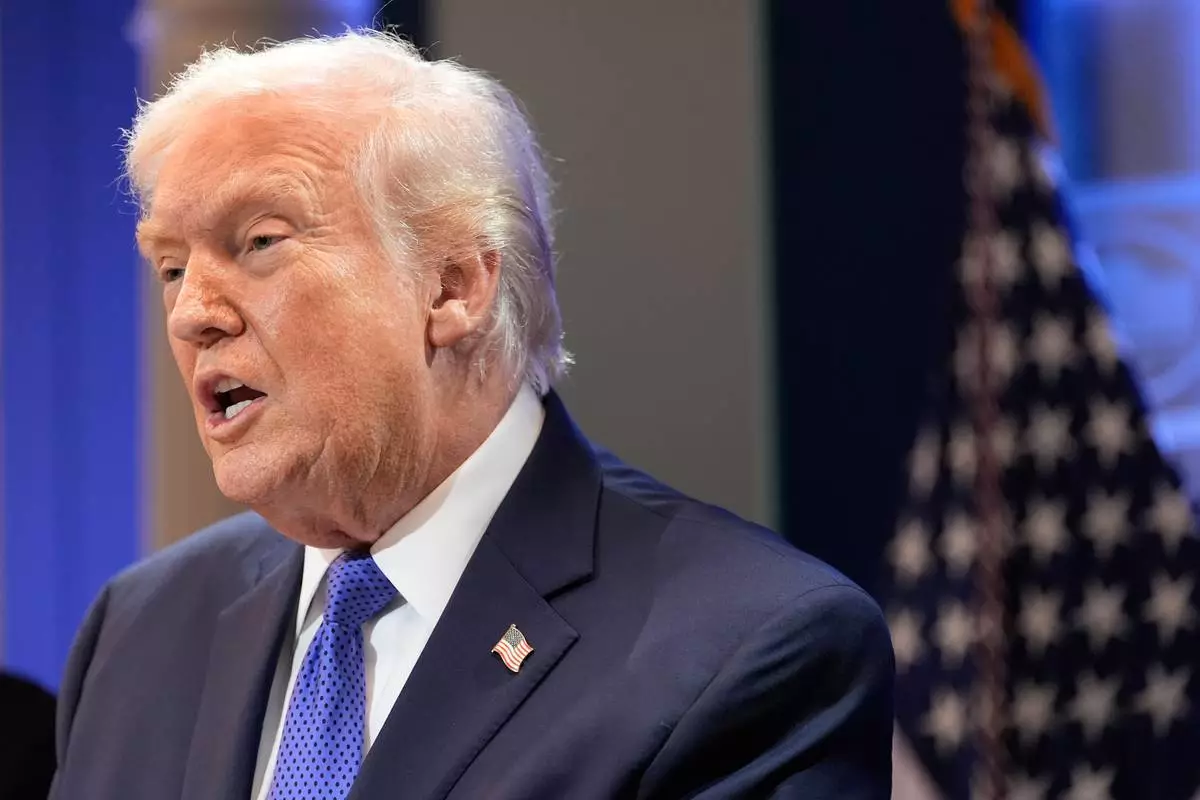
President Donald Trump speaks with reporters in the James Brady Press Briefing Room at the White House, Friday, Feb. 20, 2026, in Washington. (AP Photo/Alex Brandon)
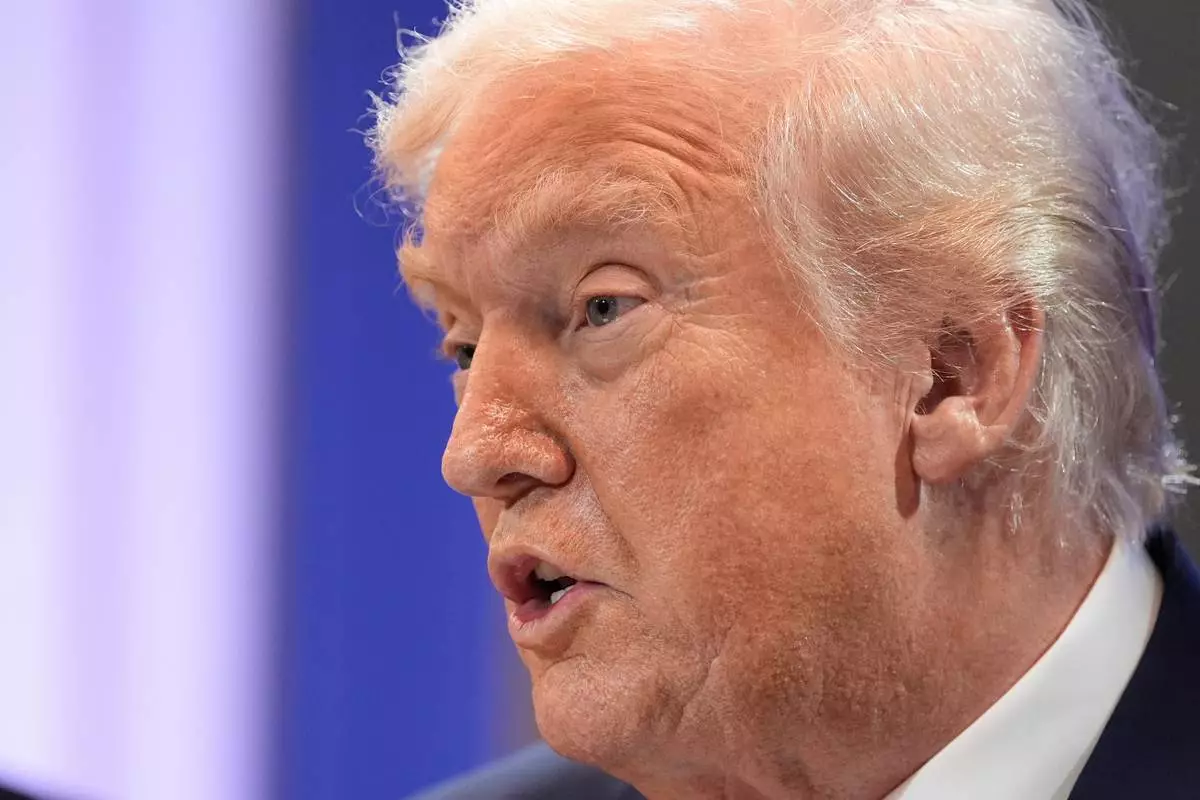
President Donald Trump speaks with reporters in the James Brady Press Briefing Room at the White House, Friday, Feb. 20, 2026, in Washington. (AP Photo/Alex Brandon)
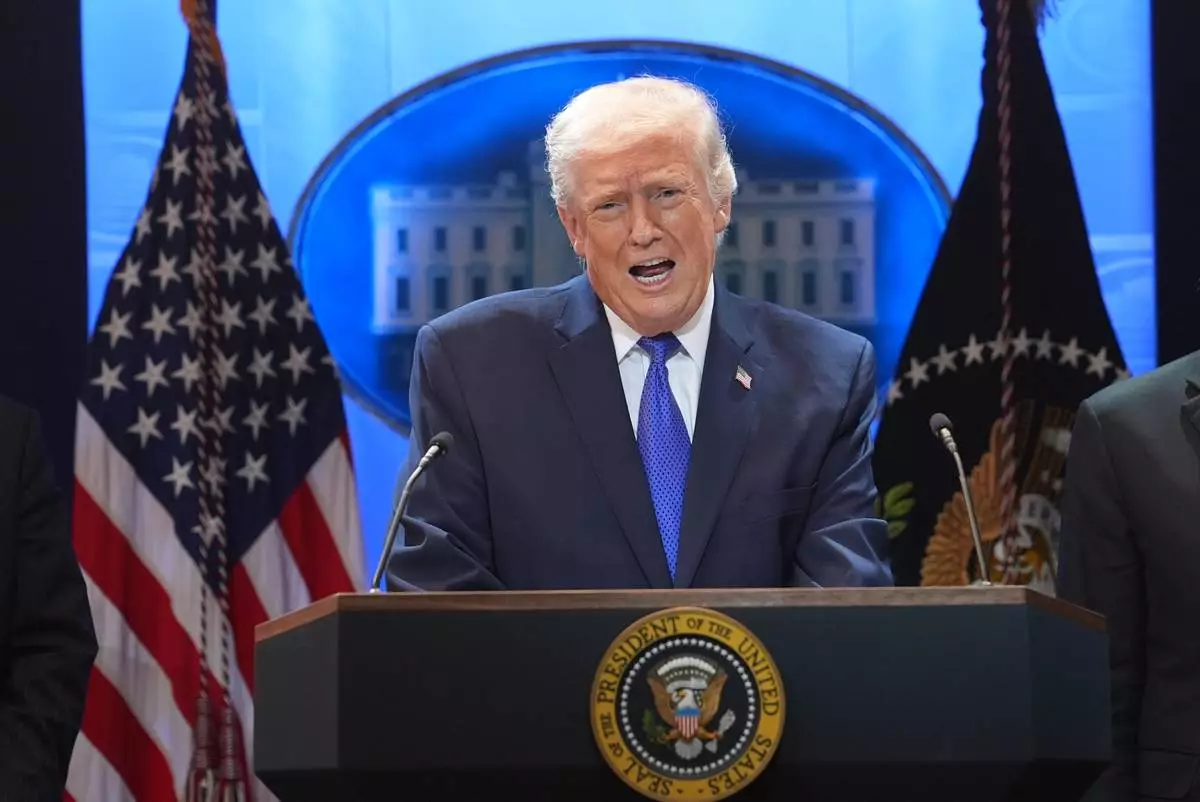
President Donald Trump speaks during a press briefing at the White House, Friday, Feb. 20, 2026, in Washington. (AP Photo/Evan Vucci)
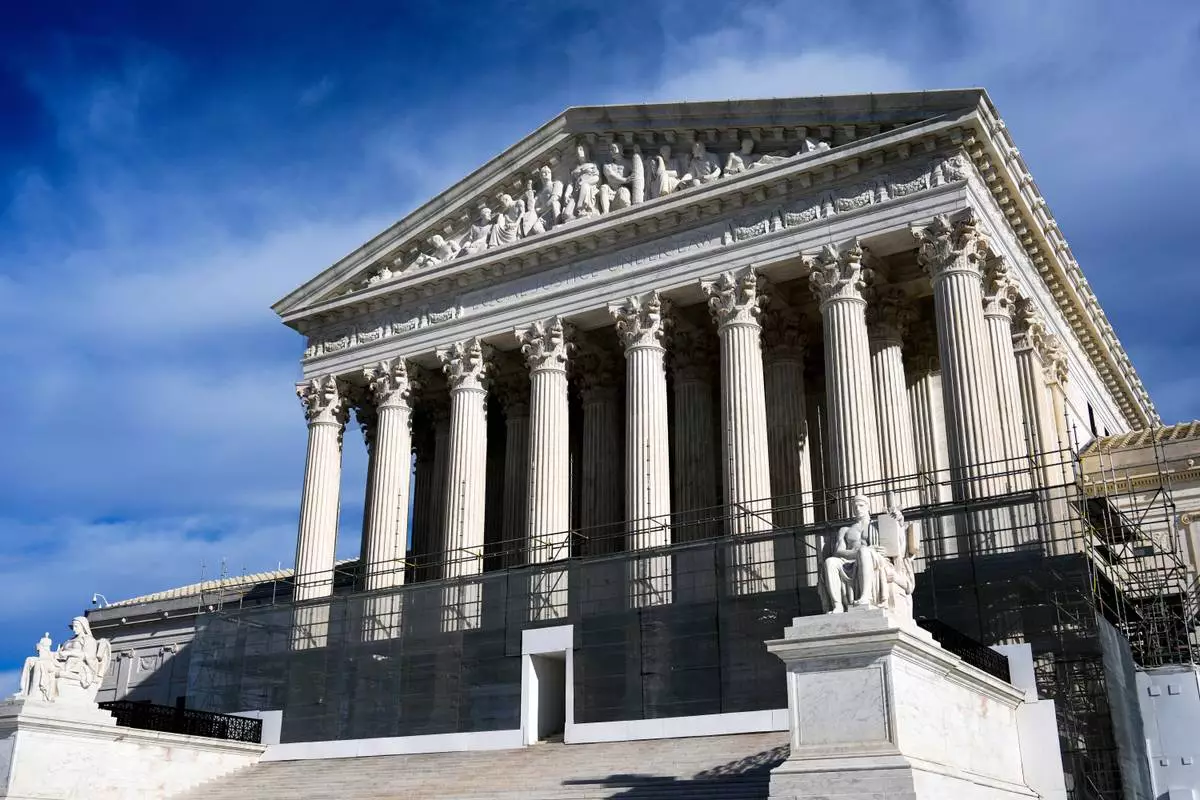
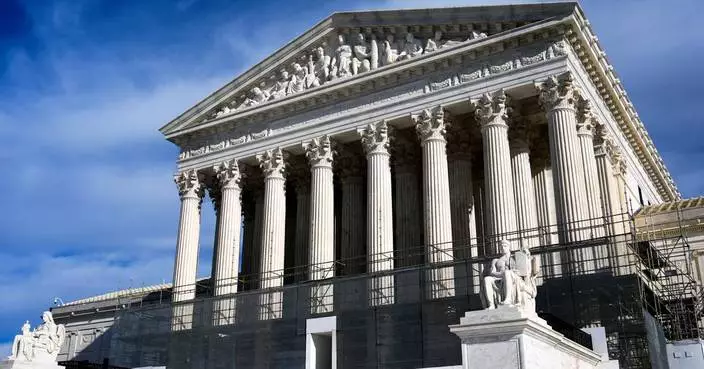
FILE - The Supreme Court is seen, Jan. 13, 2026, in Washington. (AP Photo/Julia Demaree Nikhinson, File)
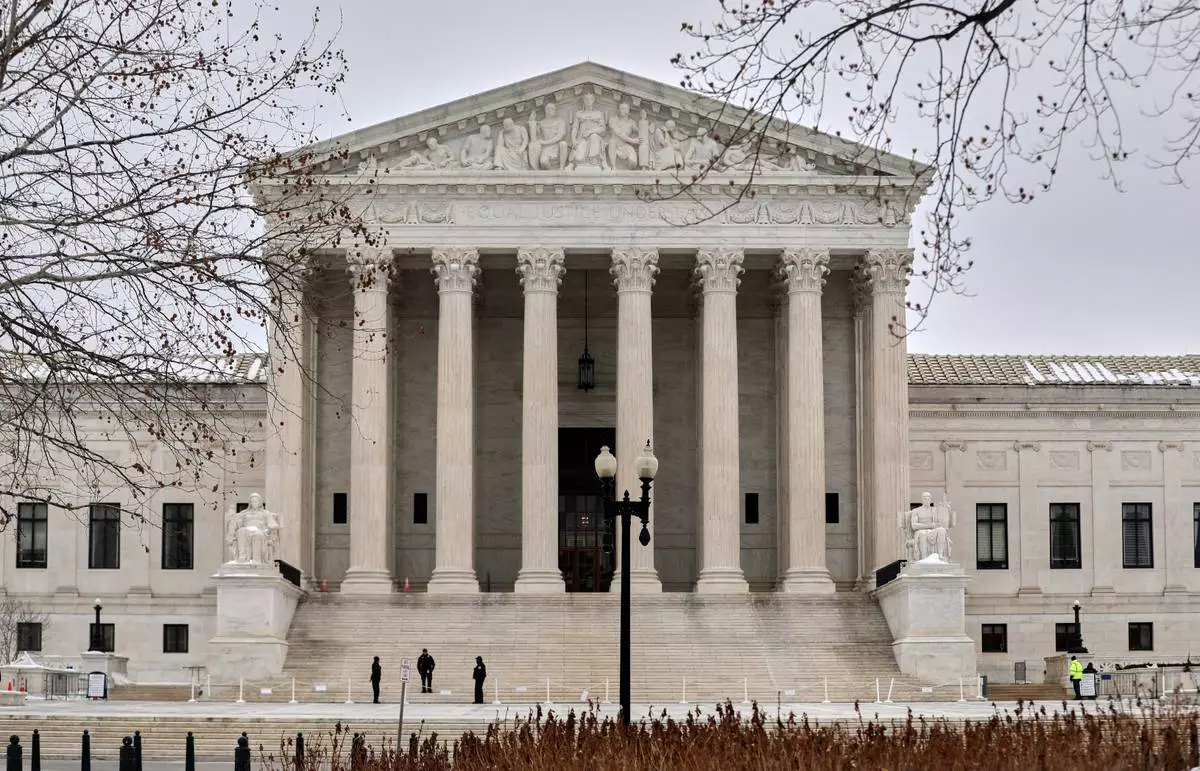
FILE - The Supreme Court is photographed, Feb. 6, 2026, in Washington. (AP Photo/Rahmat Gul, File)