WASHINGTON (AP) — The late Rev. Jesse Jackson will not lie in honor in the United States Capitol Rotunda after a request for the commemoration was denied by the House Speaker Mike Johnson's office due to past precedent.
Johnson’s office said it received a request from the family to have Jackson’s remains lie in honor at the Capitol, but the request was denied, because of the precedent that the space is typically reserved for former presidents, the military and select officials.
Click to Gallery
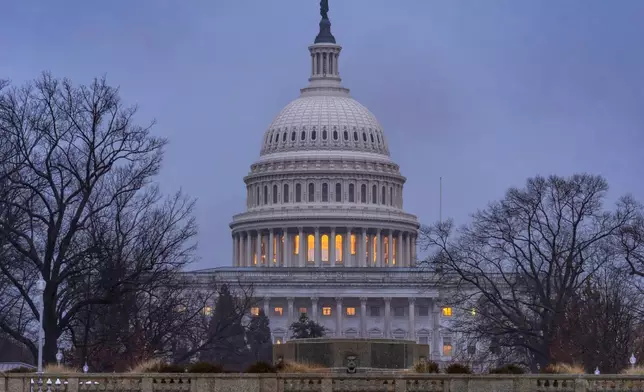
The Capitol is seen during heavy rain as the Department of Homeland Security funding bill remains in limbo, in Washington, Friday, Feb. 20, 2026. (AP Photo/J. Scott Applewhite)
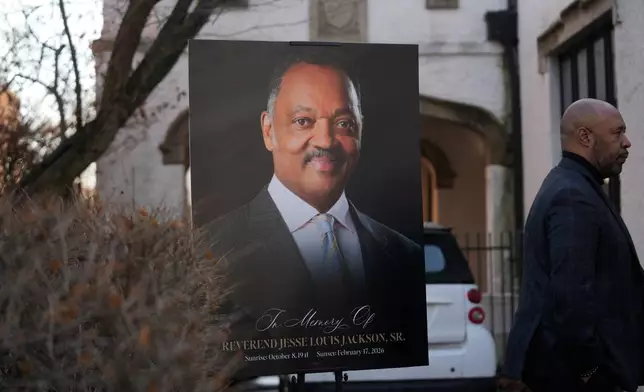
A picture of the Rev. Jesse Jackson is displayed during a news conference outside the family home, a day after his passing, Wednesday, Feb. 18, 2026, in Chicago. (AP Photo/Erin Hooley)
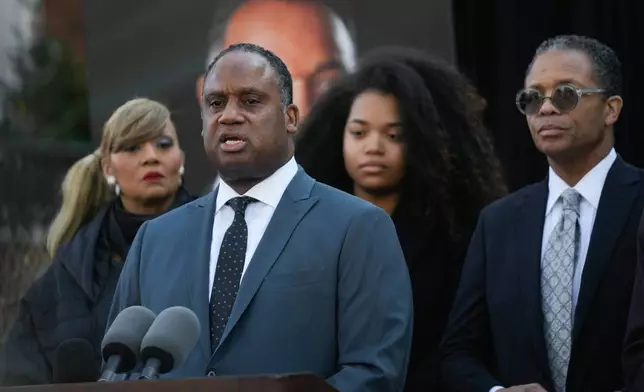
Congressman Jonathan Jackson speaks during a news conference regarding the death of his father, the Rev. Jesse Jackson, outside the family home Wednesday, Feb. 18, 2026, in Chicago. (AP Photo/Erin Hooley)
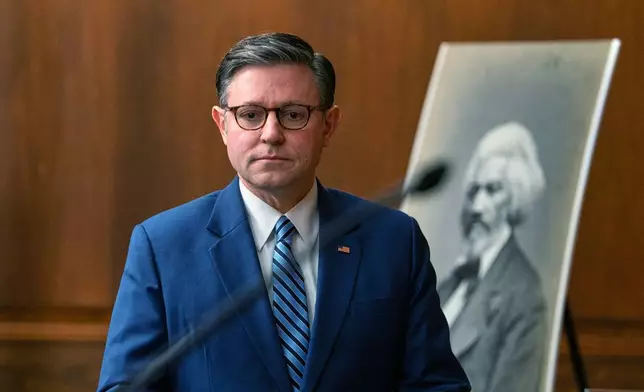
Speaker Mike Johnson, R-La., arrives to the Frederick Douglass Press Gallery dedication at the Capitol, Thursday, Feb. 12, 2026, in Washington. (AP Photo/Allison Robbert)
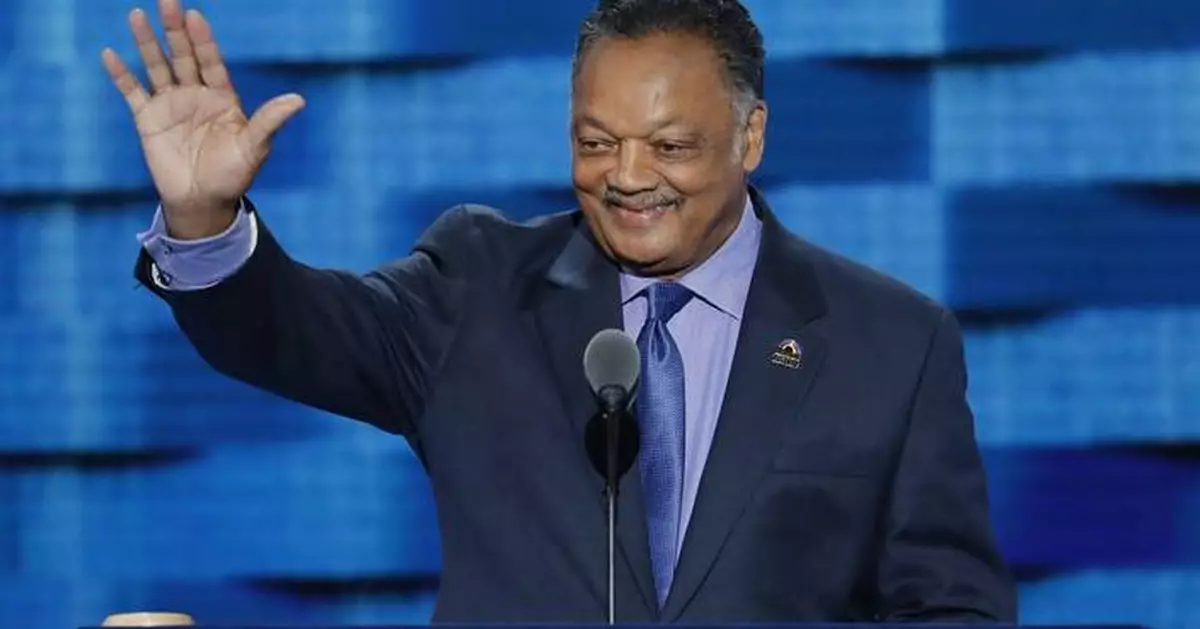
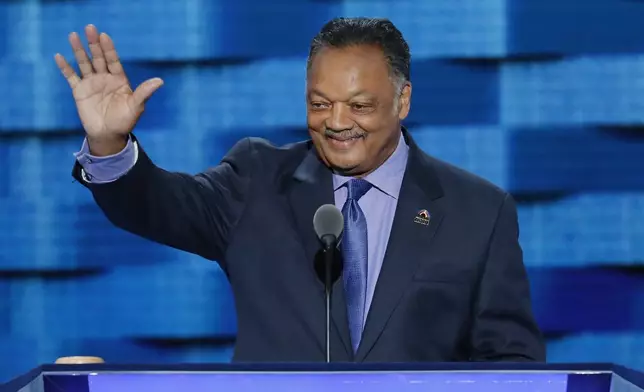
FILE - Rev. Jesse Jackson waves as he steps to the podium during the third day of the Democratic National Convention in Philadelphia, July 27, 2016. (AP Photo/J. Scott Applewhite)
The civil rights leader died this week at the age of 84. The family and some House Democrats had filed a request for Jackson to be honored at the U.S. Capitol.
Amid the country’s political divisions, there have been flare ups over who is memorialized at the Capitol with a service to lie in state, or honor, in the Rotunda. During such events, the public is generally allowed to visit the Capitol and pay their respects.
Recent requests had similarly been made, and denied, to honor Charlie Kirk, the slain conservative activist, and former Vice President Dick Cheney.
There is no specific rule about who qualifies for the honor, a decision that is controlled by concurrence from both the House and Senate.
The Jackson family has announced scheduled dates for memorial services beginning next week that will honor the late reverend's life in Chicago, Washington, D.C. and South Carolina. In a statement, the Jackson family said it had heard from leaders in both South Carolina, Jackson’s native state, and Washington offering for Jackson to be celebrated in both locations. Talks are ongoing with lawmakers about where those proceedings will take place. His final memorial services will be held in Chicago on March 6 and 7.
Typically, the Capitol and its Rotunda have been reserved for the “most eminent citizens,” according to the Architect of the Capitol’s website. It said government and military officials lay in state, while private citizens in honor.
In 2020, Congressman John Lewis, another veteran of the Civil Rights movement, was the first Black lawmaker to lie in state in the Capitol Rotunda after a ceremony honoring his legacy was held outside on the Capitol steps due to pandemic restrictions at the time.
Later that year, then-House Speaker Nancy Pelosi allowed services for Supreme Court Justice Ruth Bader Ginsburg at the Capitol’s Statuary Hall after agreement could not be reached for services in the Capitol’s Rotunda.
It is rare for private citizens to be honored at the Capitol, but there is precedent – most notably Civil Rights icon Rosa Parks, in 2005, and the Reverend Billy Graham, in 2018.
A passionate civil rights leader and globally-minded humanitarian, Jackson's fiery speeches and dual 1984 and 1988 presidential campaigns transformed American politics for generations. Jackson's organization, the Rainbow PUSH Coalition, became a hub for progressive organizers across the country.
His unapologetic calls for a progressive economic agenda and more inclusive policies for all racial groups, religions, genders and orientations laid the groundwork for the progressive movement within the Democratic Party.
Jackson also garnered a global reputation as a champion for human rights. He conducted the release of American hostages on multiple continents and argued for greater connections between civil rights movements around the world, most notably as a fierce critic of the policies of Apartheid South Africa.
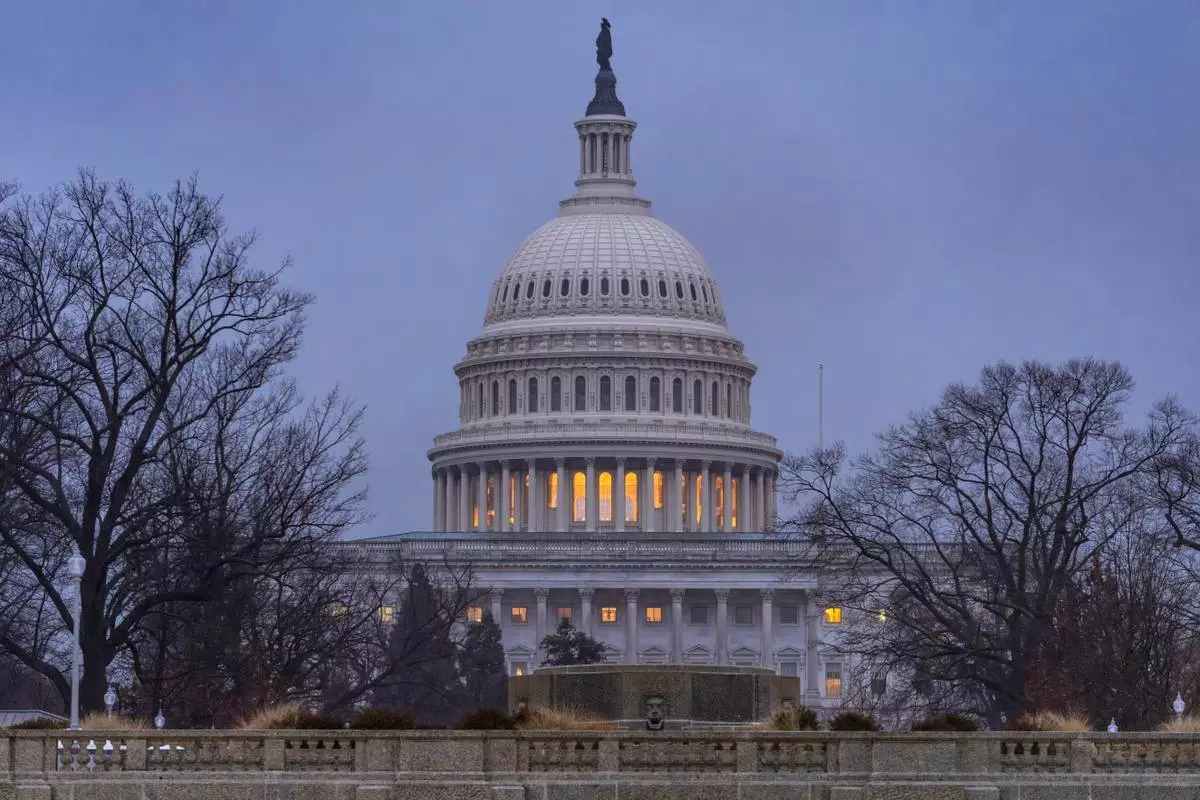
The Capitol is seen during heavy rain as the Department of Homeland Security funding bill remains in limbo, in Washington, Friday, Feb. 20, 2026. (AP Photo/J. Scott Applewhite)
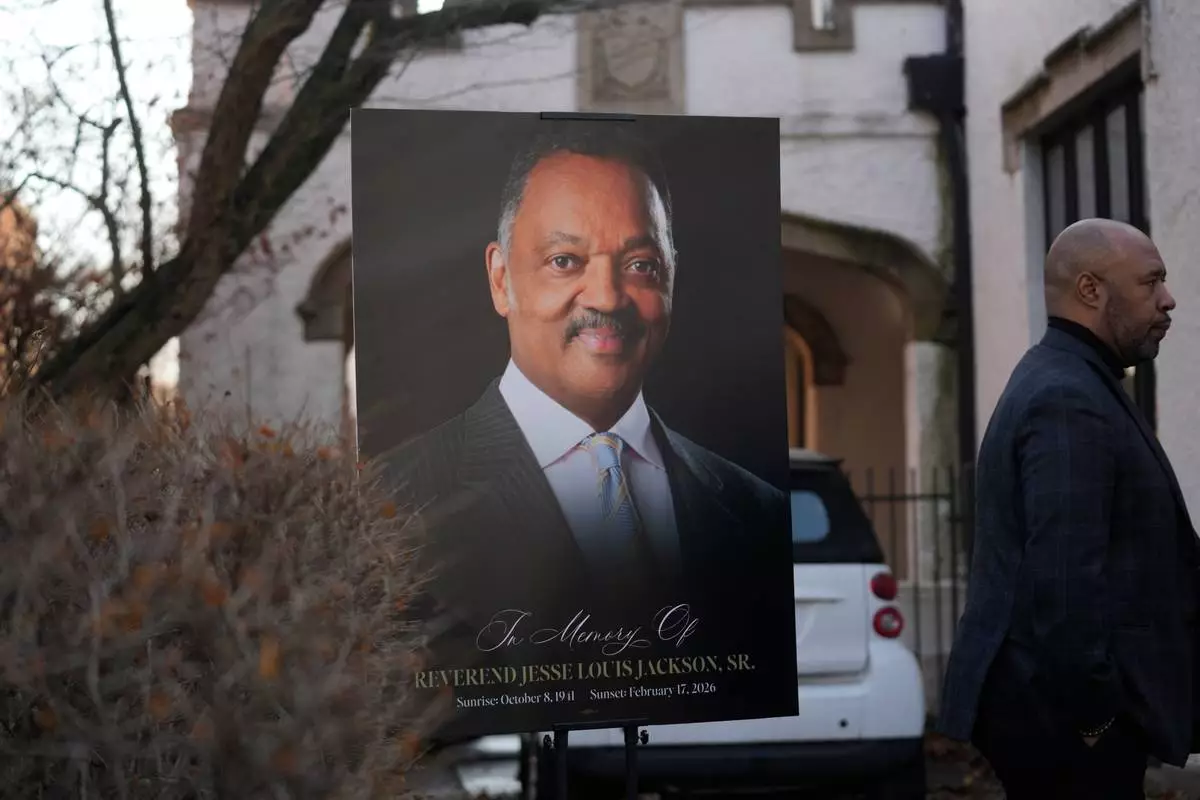
A picture of the Rev. Jesse Jackson is displayed during a news conference outside the family home, a day after his passing, Wednesday, Feb. 18, 2026, in Chicago. (AP Photo/Erin Hooley)
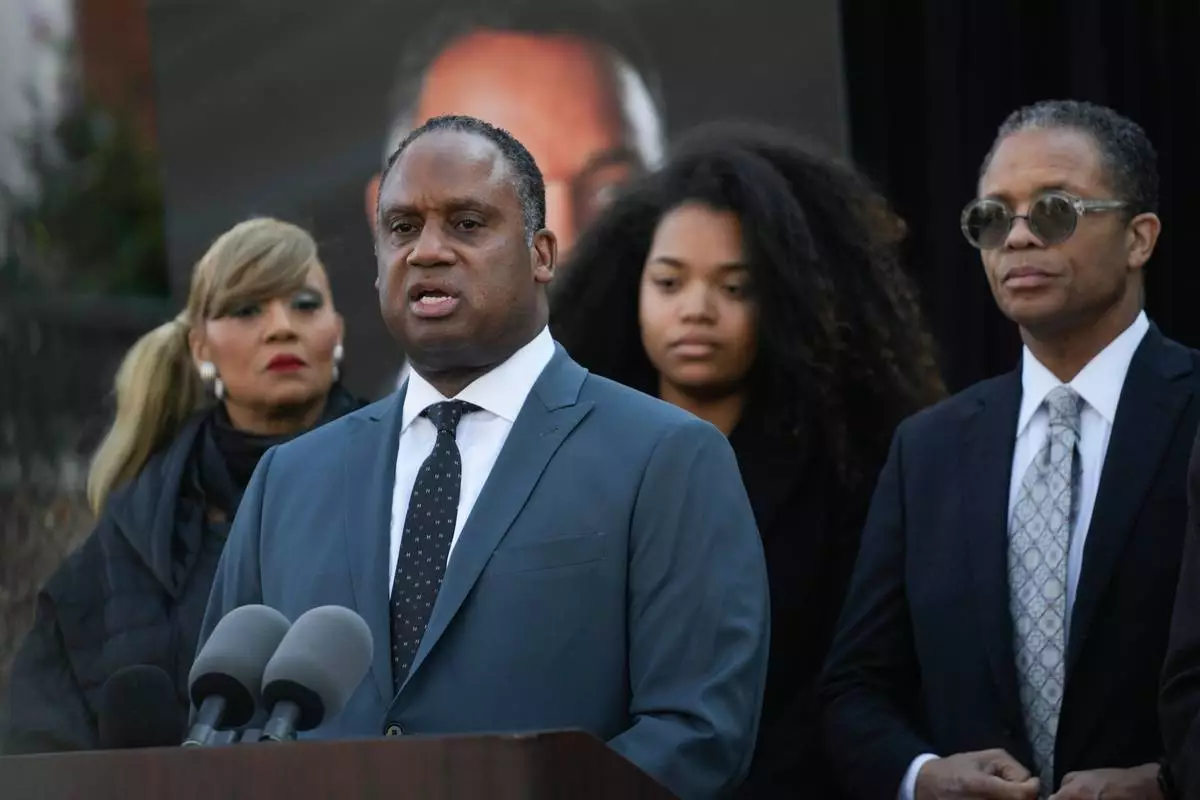
Congressman Jonathan Jackson speaks during a news conference regarding the death of his father, the Rev. Jesse Jackson, outside the family home Wednesday, Feb. 18, 2026, in Chicago. (AP Photo/Erin Hooley)
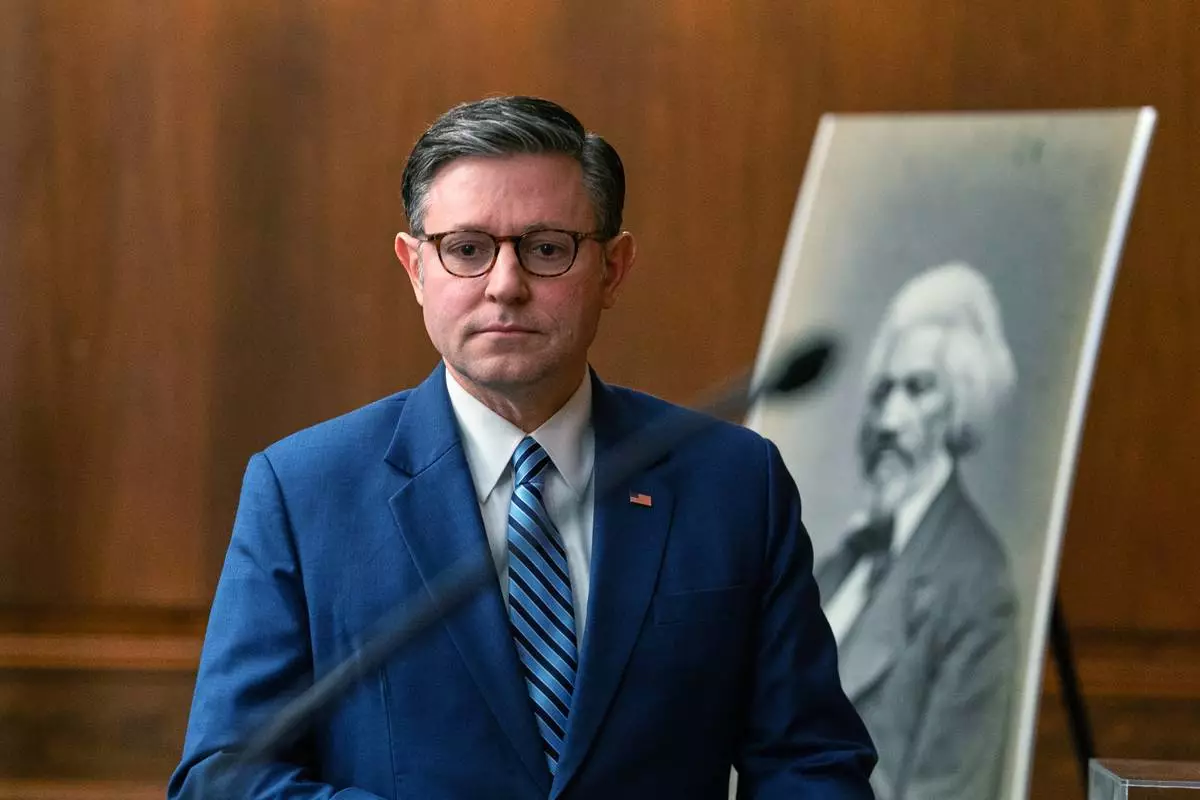
Speaker Mike Johnson, R-La., arrives to the Frederick Douglass Press Gallery dedication at the Capitol, Thursday, Feb. 12, 2026, in Washington. (AP Photo/Allison Robbert)
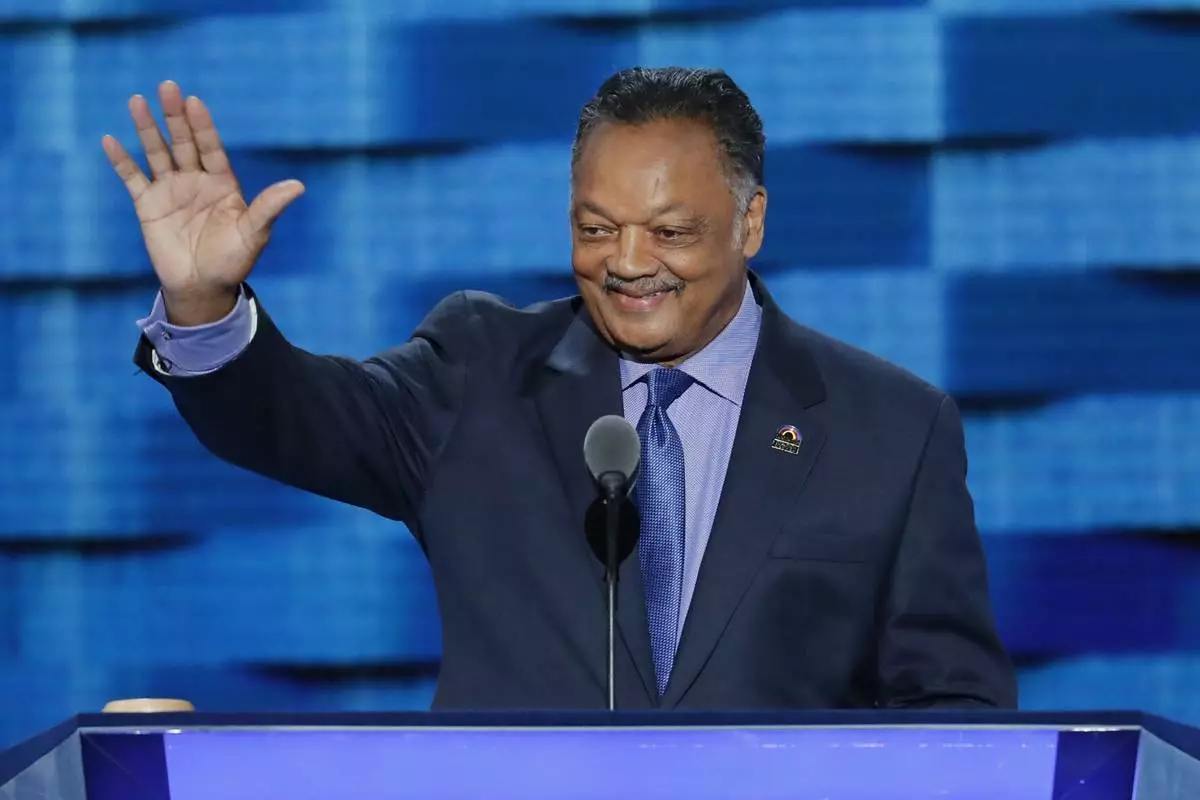
FILE - Rev. Jesse Jackson waves as he steps to the podium during the third day of the Democratic National Convention in Philadelphia, July 27, 2016. (AP Photo/J. Scott Applewhite)
WASHINGTON (AP) — The Supreme Court struck down President Donald Trump's far-reaching global tariffs on Friday, handing him a stinging loss on an issue crucial to his economic agenda.
Furious about the defeat, Trump said he will impose a global 10% tariff as an alternative while pressing his trade policies by other means. The new tariffs would come under a law that restricts them to 150 days.
He made that announcement after lashing out at the Supreme Court for striking down much of his sweeping tariff infrastructure as an illegal use of emergency power. Trump said he was “absolutely ashamed” of justices who voted to strike down his tariffs and called the ruling “deeply disappointing.”
“Their decision is incorrect,” he said. “But it doesn’t matter because we have very powerful alternatives.”
The court's 6-3 decision centers on tariffs imposed under an emergency powers law, including the sweeping “reciprocal” tariffs he levied on nearly every other country.
His loss before the conservative-majority high court came despite a series of short-term Trump wins that have allowed him to move ahead with key aspects of his broad agency.
It's the first major piece of Trump's broad agenda to come squarely before the nation's highest court, which he helped shape with the appointments of three conservative jurists in his first term.
The majority found that it's unconstitutional for the president to unilaterally set and change tariffs because taxation power clearly belongs to Congress. “The Framers did not vest any part of the taxing power in the Executive Branch,” Chief Justice John Roberts wrote.
Justices Samuel Alito, Clarence Thomas and Brett Kavanaugh dissented.
“The tariffs at issue here may or may not be wise policy. But as a matter of text, history, and precedent, they are clearly lawful,” Kavanaugh wrote.
Trump called the majority decision “a disgrace” when he was notified during his morning meeting with several governors, according to someone with direct knowledge of the president’s reaction who spoke on the condition of anonymity to discuss the private conversation.
Trump was meeting privately with nearly two dozen governors from both parties when the decision was released.
The court majority did not address whether companies could get refunded for the billions they have collectively paid in tariffs. Many companies, including the big-box warehouse chain Costco, have already lined up in lower courts to demand refunds. Kavanaugh noted the process could be complicated.
“The Court says nothing today about whether, and if so how, the Government should go about returning the billions of dollars that it has collected from importers. But that process is likely to be a ‘mess,’ as was acknowledged at oral argument,” he wrote.
The Treasury had collected more than $133 billion from the import taxes the president has imposed under the emergency powers law as of December, federal data shows. The impact over the next decade was estimated at some $3 trillion.
The tariffs decision doesn’t stop Trump from imposing duties under other laws. While those have more limitations on the speed and severity of Trump’s actions, top administration officials have said they expect to keep the tariff framework in place under other authorities.
Still, the decision is a “complete and total victory" for the challengers, said Neal Katyal, who argued the case on behalf of a group of small businesses.
“It’s a reaffirmation of our deepest constitutional values and the idea that Congress, not any one man, controls the power to tax the American people,” he said.
It wasn’t immediately clear how the decision restricting Trump’s power to unilaterally set and change tariffs might affect trade deals with other countries.
“We remain in close contact with the U.S. Administration as we seek clarity on the steps they intend to take in response to this ruling,” European Commission spokesman Olof Gill said, adding that the body would keep pushing for lower tariffs.
The Supreme Court ruling comes despite a series of short-term wins on the court’s emergency docket that have allowed Trump to push ahead with extraordinary flexes of executive power on issues ranging from high-profile firings to major federal funding cuts.
The Republican president has been vocal about the case, calling it one of the most important in U.S. history and saying a ruling against him would be an economic body blow to the country. But legal opposition crossed the political spectrum, including libertarian and pro-business groups that are typically aligned with the GOP. Polling has found tariffs aren't broadly popular with the public, amid wider voter concern about affordability.
While the Constitution gives Congress the power to levy tariffs, the Trump administration argued that a 1977 law allowing the president to regulate importation during emergencies also allows him to set import duties. Other presidents have used the law dozens of times, often to impose sanctions, but Trump was the first president to invoke it for import taxes.
“And the fact that no President has ever found such power in IEEPA is strong evidence that it does not exist,” Roberts wrote, using an acronym for the International Emergency Economic Powers Act.
Trump set what he called "reciprocal" tariffs on most countries in April 2025 to address trade deficits that he declared a national emergency. Those came after he imposed duties on Canada, China and Mexico, ostensibly to address a drug trafficking emergency.
A series of lawsuits followed, including a case from a dozen largely Democratic-leaning states and others from small businesses selling everything from plumbing supplies to educational toys to women’s cycling apparel.
The challengers argued the emergency powers law doesn’t even mention tariffs and Trump's use of it fails several legal tests, including one that doomed then-President Joe Biden's $500 billion student loan forgiveness program.
The three conservative justices in the majority pointed to that principle, which is called the major questions doctrine. It holds that Congress must clearly authorize actions of major economic and political significance.
“There is no exception to the major questions doctrine for emergency statutes,” Roberts wrote. The three liberal justices formed the rest of the majority, but didn't join that part of the opinion.
The Trump administration had argued that tariffs are different because they’re a major part of Trump’s approach to foreign affairs, an area where the courts should not be second-guessing the president.
But Roberts, joined by Justices Neil Gorsuch and Amy Coney Barrett, brushed that aside, writing that the foreign affairs implications don't change the legal principle.
Small businesses celebrated the ruling, with the National Retail Federation saying it provides “much needed certainty.”
Ann Robinson, who owns Scottish Gourmet in Greensboro, North Carolina, said she was “doing a happy dance” when she heard the news.
The 10% baseline tariff on U.K. goods put pressure on Robinson’s business, costing about $30,000 in the fall season. She’s unsure about the Trump administration’s next steps, but said she’s overjoyed for now. “Time to schedule my ‘Say Goodbye to Tariffs' Sale!”
Associated Press writers Mae Anderson and Steve Peoples in New York, Mark Sherman in Washington and David McHugh in Frankfurt contributed to this report.
Follow the AP's coverage of the U.S. Supreme Court at https://apnews.com/hub/us-supreme-court.
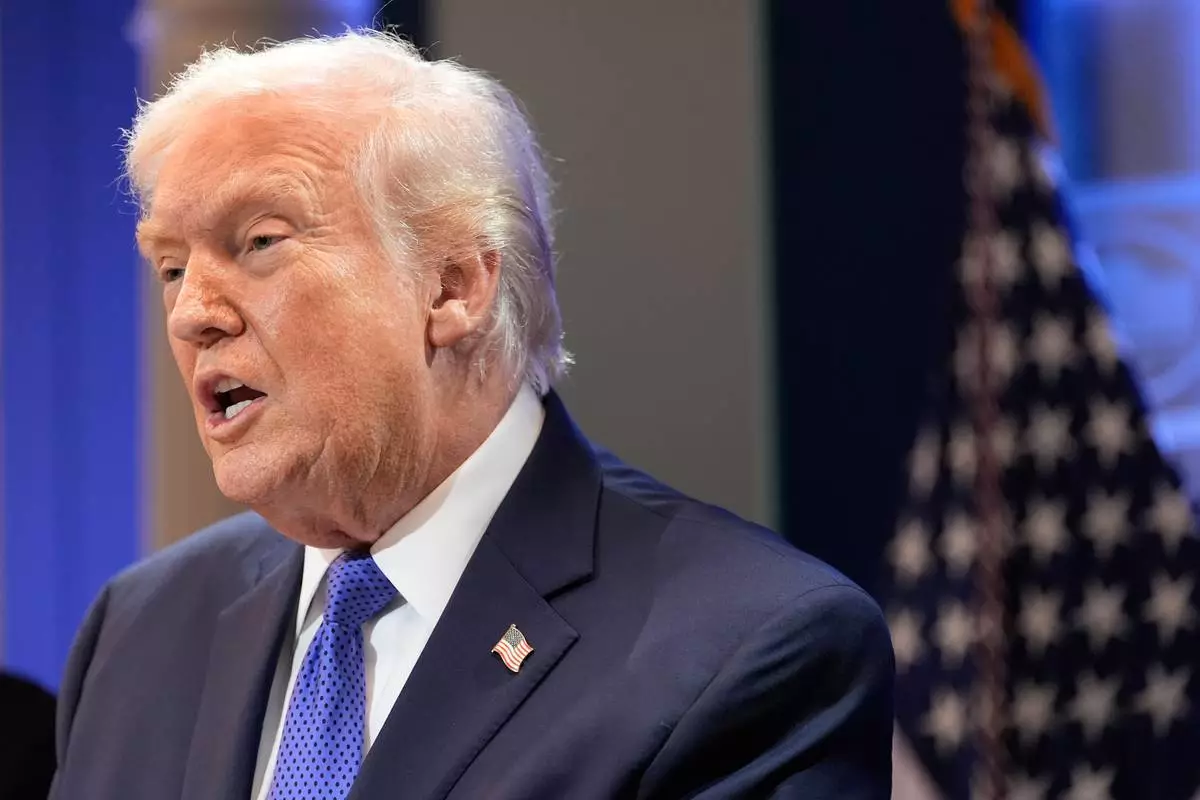
President Donald Trump speaks with reporters in the James Brady Press Briefing Room at the White House, Friday, Feb. 20, 2026, in Washington. (AP Photo/Alex Brandon)
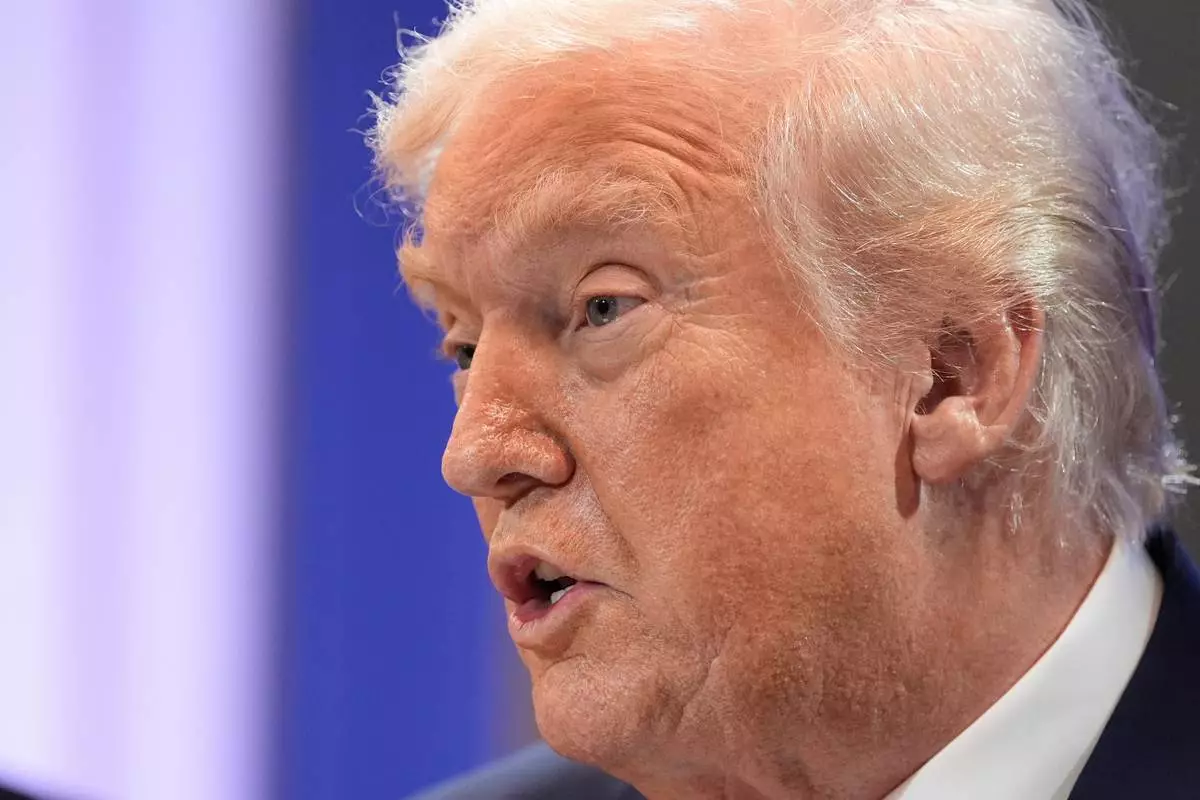
President Donald Trump speaks with reporters in the James Brady Press Briefing Room at the White House, Friday, Feb. 20, 2026, in Washington. (AP Photo/Alex Brandon)
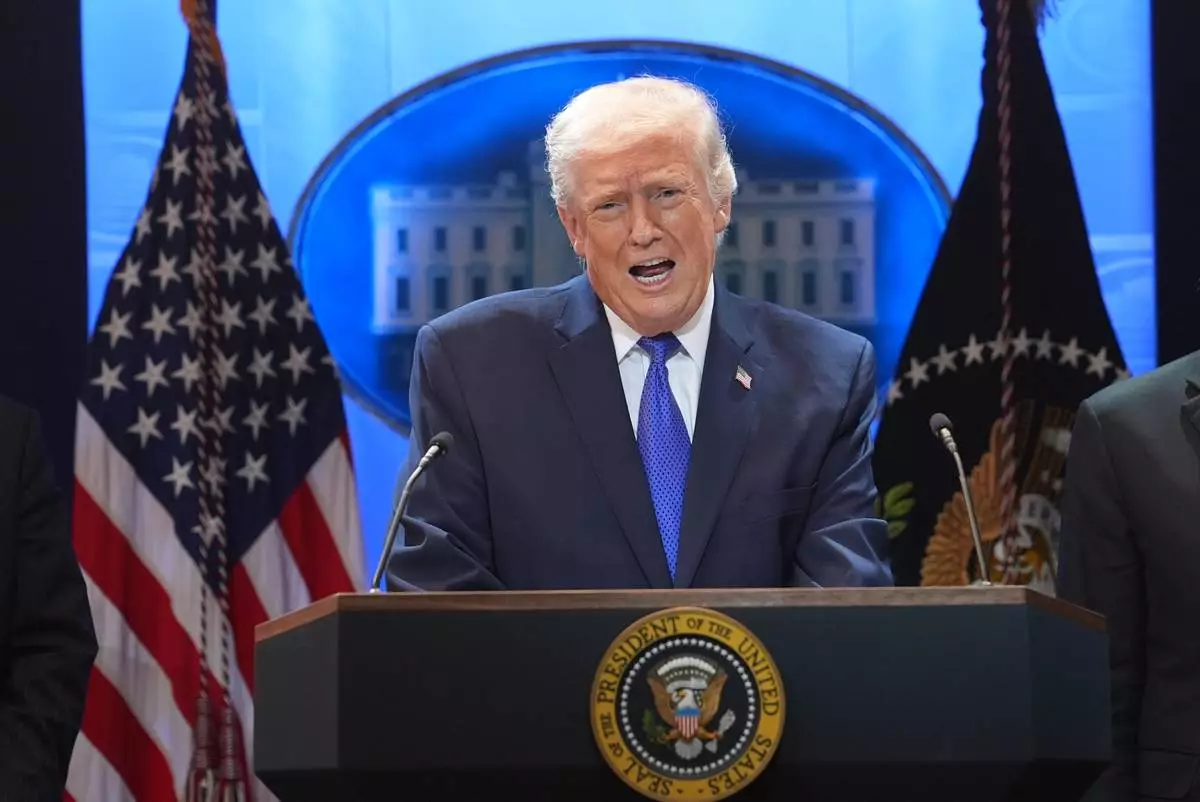
President Donald Trump speaks during a press briefing at the White House, Friday, Feb. 20, 2026, in Washington. (AP Photo/Evan Vucci)
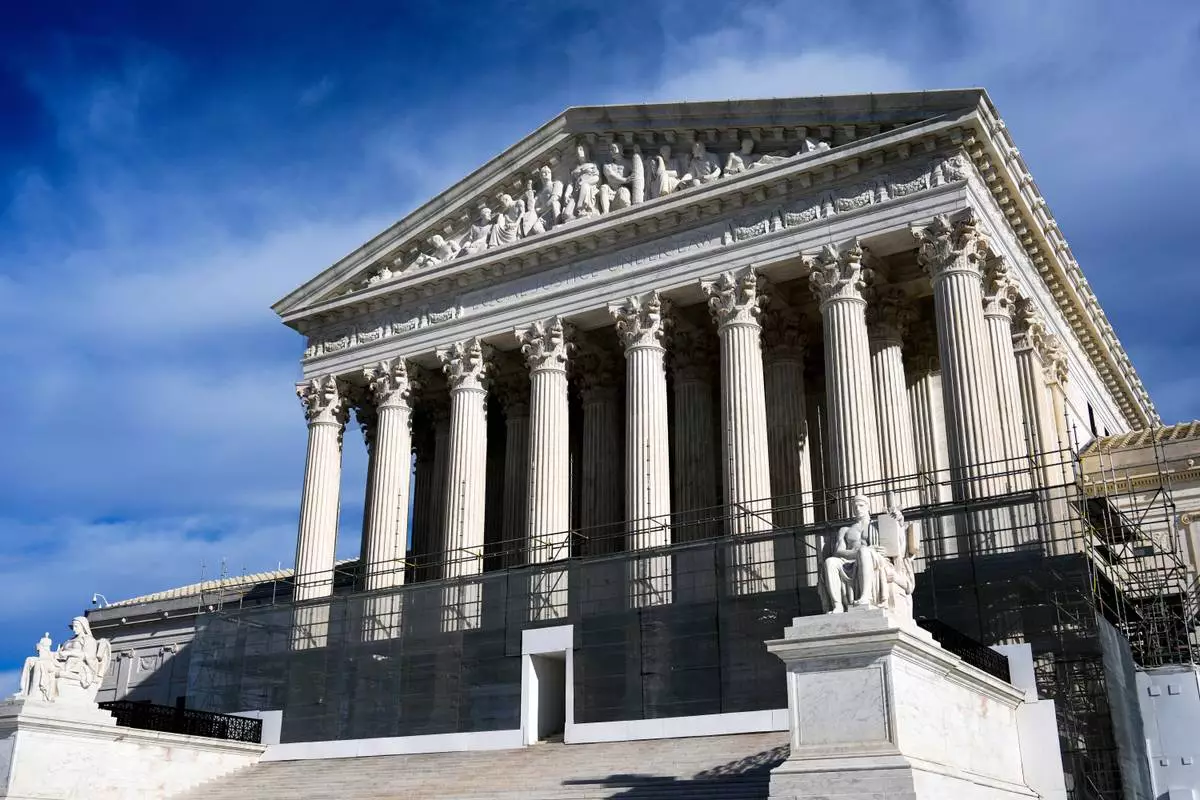
FILE - The Supreme Court is seen, Jan. 13, 2026, in Washington. (AP Photo/Julia Demaree Nikhinson, File)
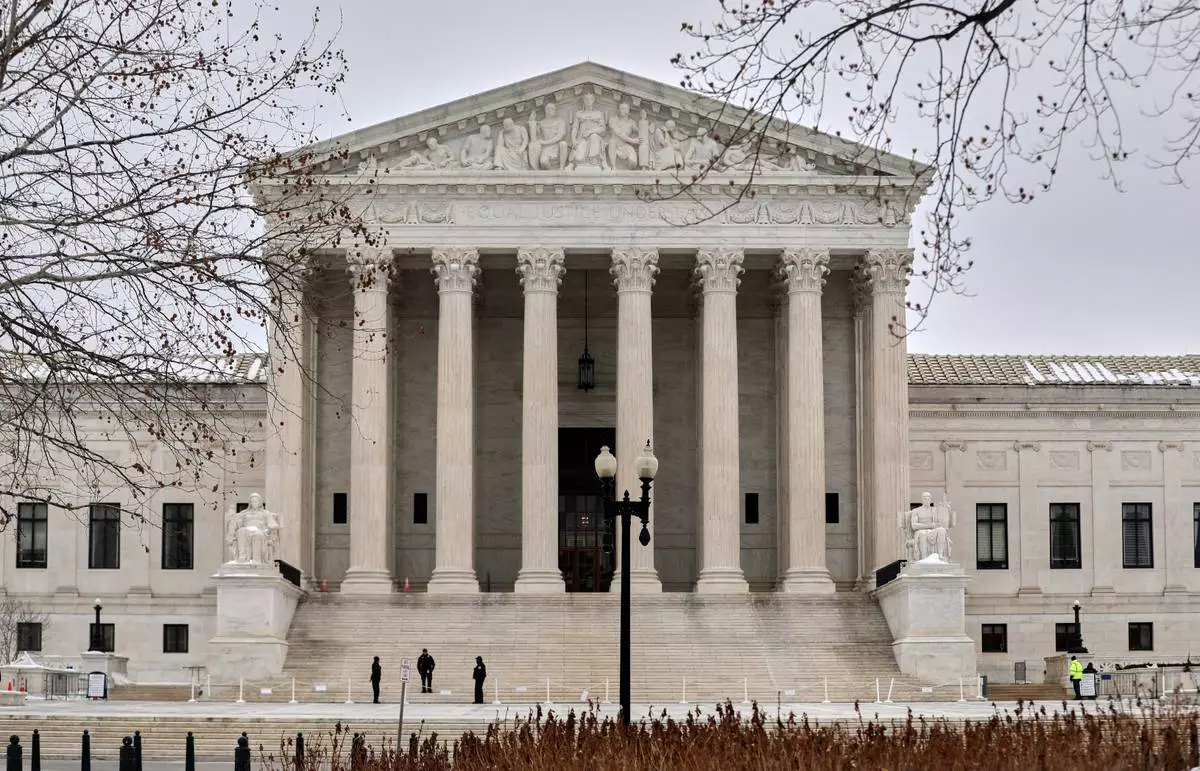
FILE - The Supreme Court is photographed, Feb. 6, 2026, in Washington. (AP Photo/Rahmat Gul, File)