Skip to Content Facebook Feature Image

Venezuela’s new amnesty law gets a chilly response from the opposition and detainees’ families

News

Venezuela’s new amnesty law gets a chilly response from the opposition and detainees’ families
News

News

Venezuela’s new amnesty law gets a chilly response from the opposition and detainees’ families

2026-02-21 05:14 Last Updated At:05:21

CARACAS, Venezuela (AP) — Members of Venezuela ’s opposition, prisoners' rights groups and relatives of people long detained for political reasons gave a lukewarm reception Friday to an amnesty measure expected to free hundreds of people, including political activists and human rights defenders.

Some viewed the law as a small but significant victory for the thousands targeted during the ruling party’s 27-year tenure. Others considered it a mockery of the pain of families and people behind bars — particularly members of the military, who were excluded from the measure.

More Images
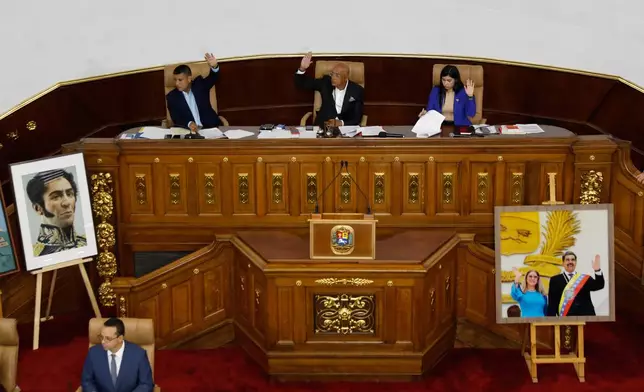
National Assembly President Jorge Rodriguez, center, presides over a session debating an amnesty bill in Caracas, Venezuela, Thursday, Feb. 19, 2026. (AP Photo/Crisitian Hernandez)
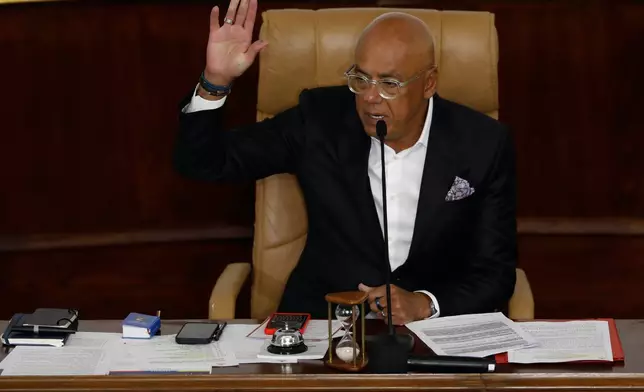
National Assembly President Jorge Rodriguez, center, presides over a session debating an amnesty bill in Caracas, Venezuela, Thursday, Feb. 19, 2026. (AP Photo/Crisitian Hernandez)
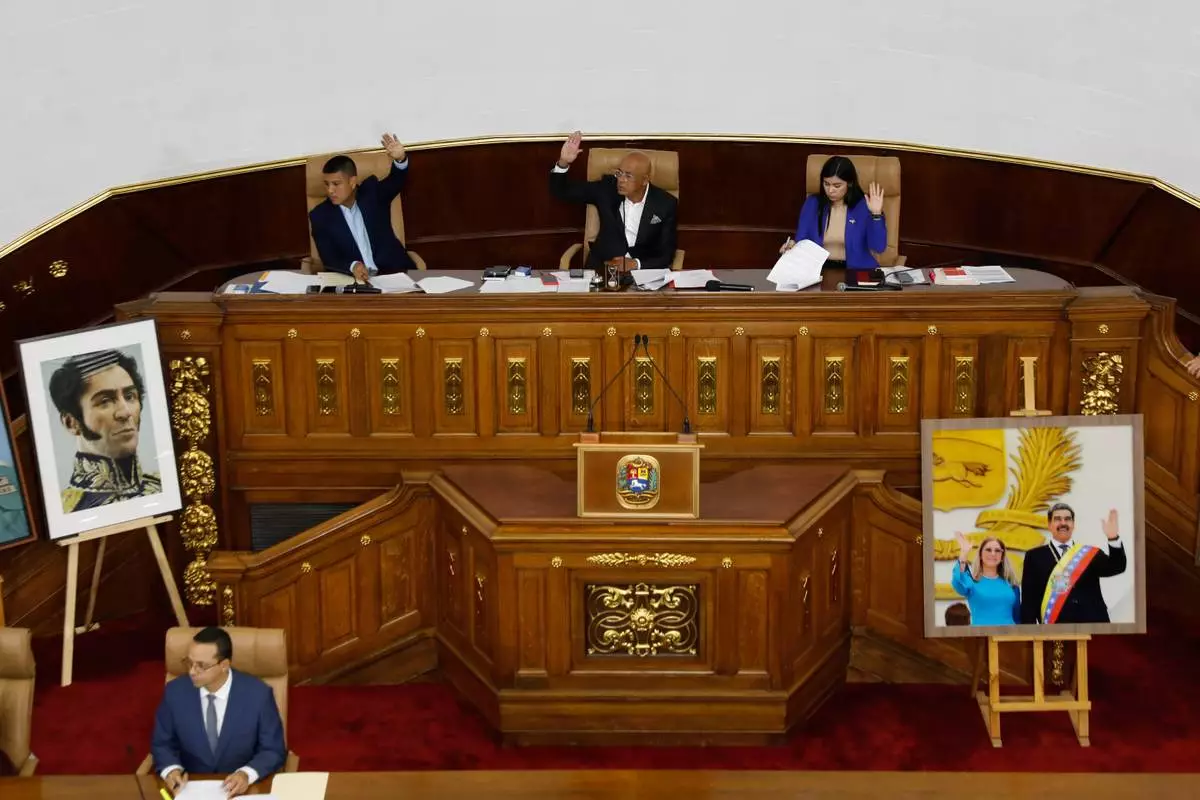
National Assembly President Jorge Rodriguez presides over a session debating an amnesty bill in Caracas, Venezuela, Thursday, Feb. 19, 2026. (AP Photo/Crisitian Hernandez)

National Assembly President Jorge Rodriguez presides over a session debating an amnesty bill in Caracas, Venezuela, Thursday, Feb. 19, 2026. (AP Photo/Crisitian Hernandez)

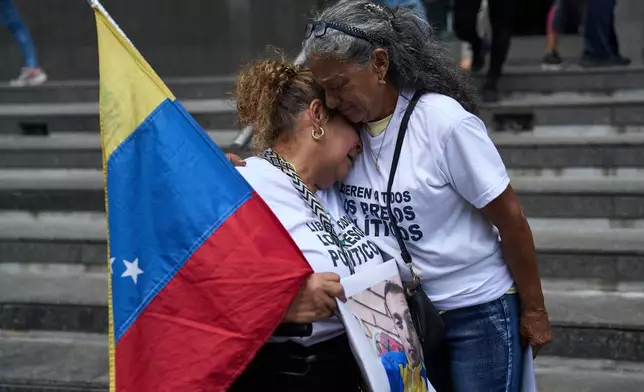
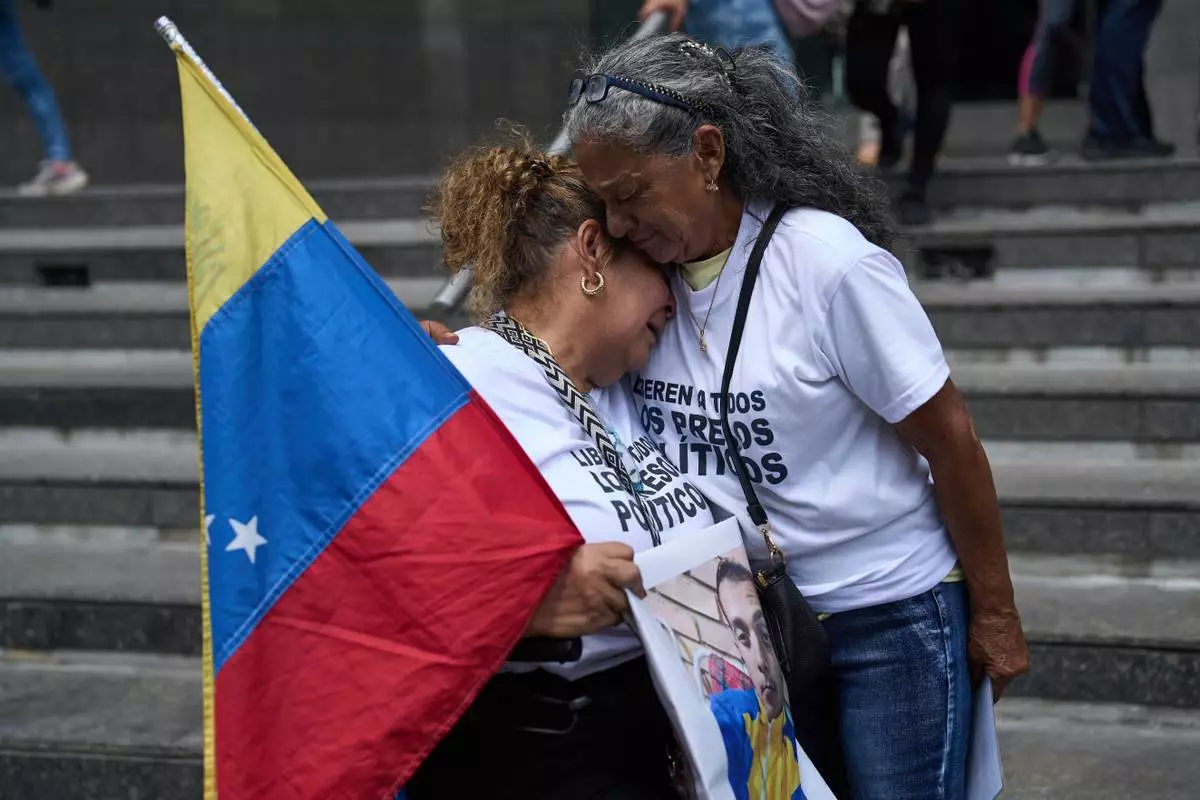
Barbara Bracho, left, mother of Gilberto Bracho, is embraced by Zoraida Gonzalez, mother of Miguel Estrada, both of whom consider their sons to be political prisoners, protest for their releases outside the United Nations office in Caracas, Venezuela, Wednesday Feb. 18, 2026. (AP Photo/Ariana Cubillos)
Barbara Bracho, left, mother of Gilberto Bracho, is embraced by Zoraida Gonzalez, mother of Miguel Estrada, both of whom consider their sons to be political prisoners, protest for their releases outside the United Nations office in Caracas, Venezuela, Wednesday Feb. 18, 2026. (AP Photo/Ariana Cubillos)
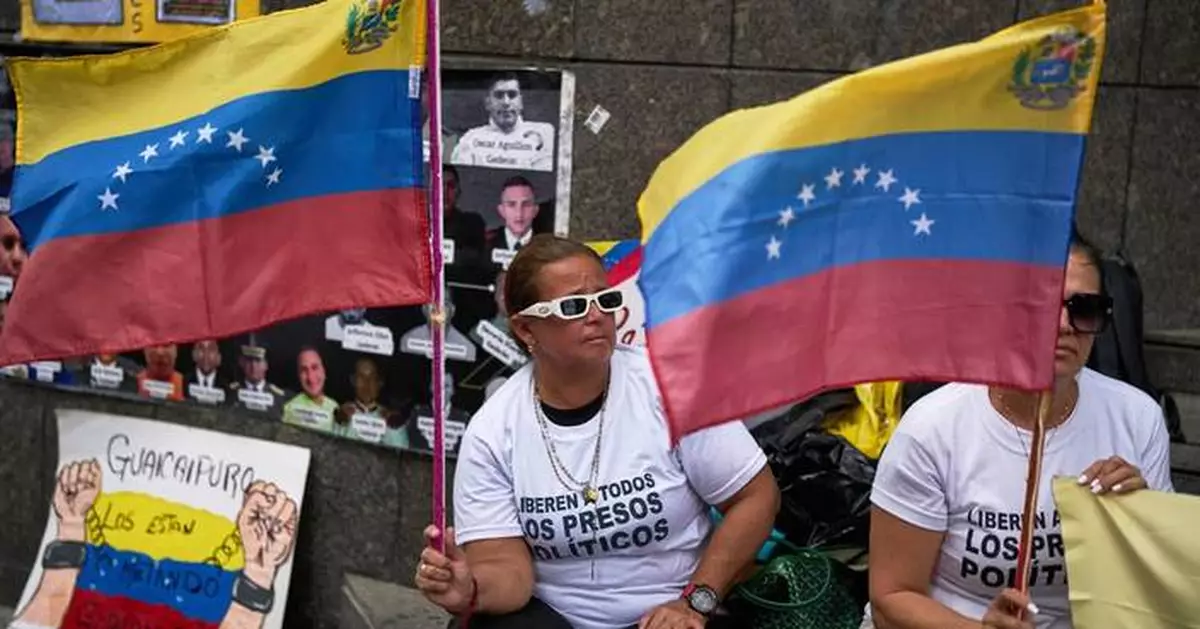
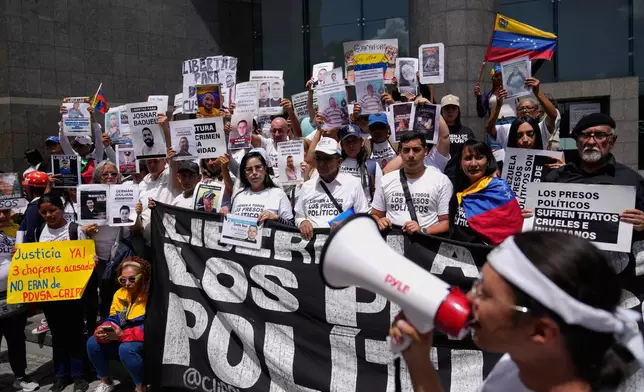
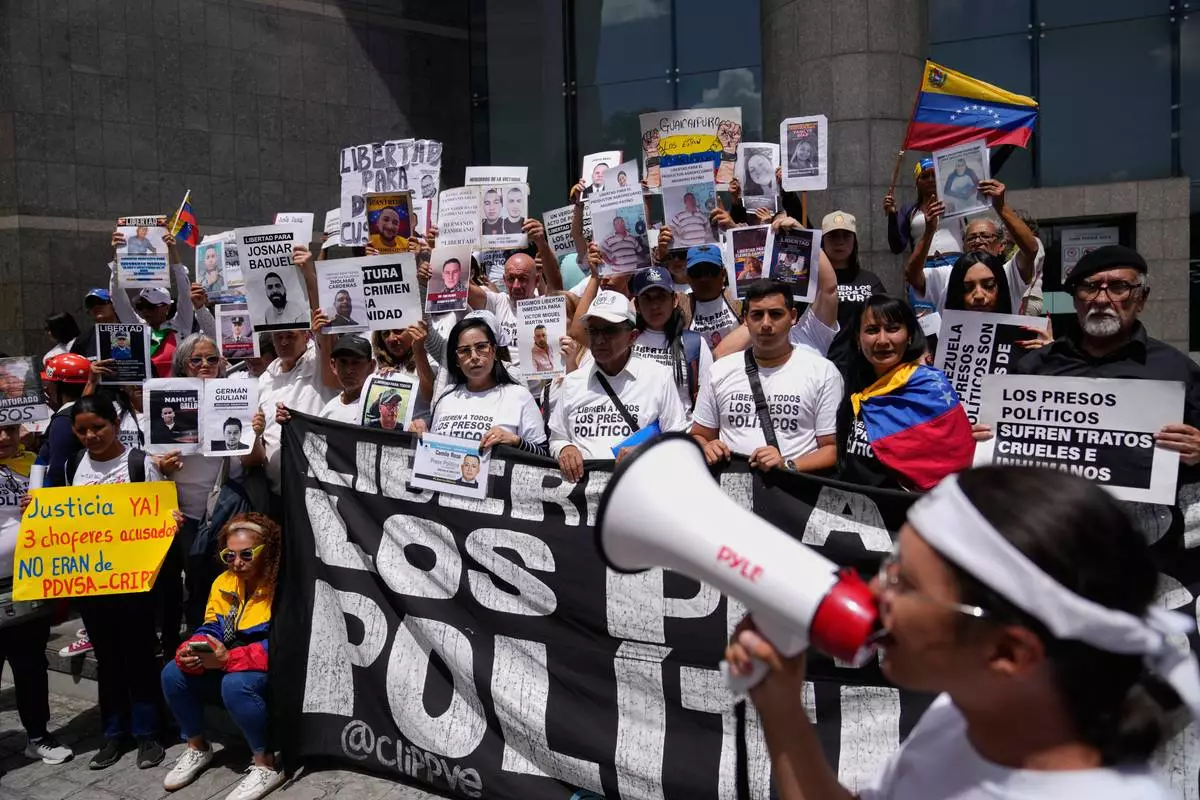
People who consider their detained family members to be political prisoners call for their releases outside the United Nations office in Caracas, Venezuela, Wednesday Feb. 18, 2026. (AP Photo/Ariana Cubillos)

People who consider their detained family members to be political prisoners call for their releases outside the United Nations office in Caracas, Venezuela, Wednesday Feb. 18, 2026. (AP Photo/Ariana Cubillos)

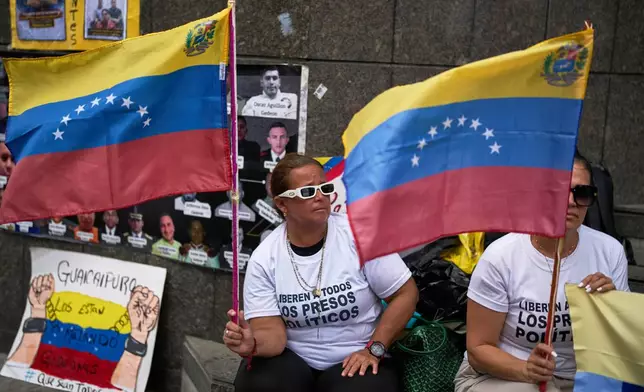
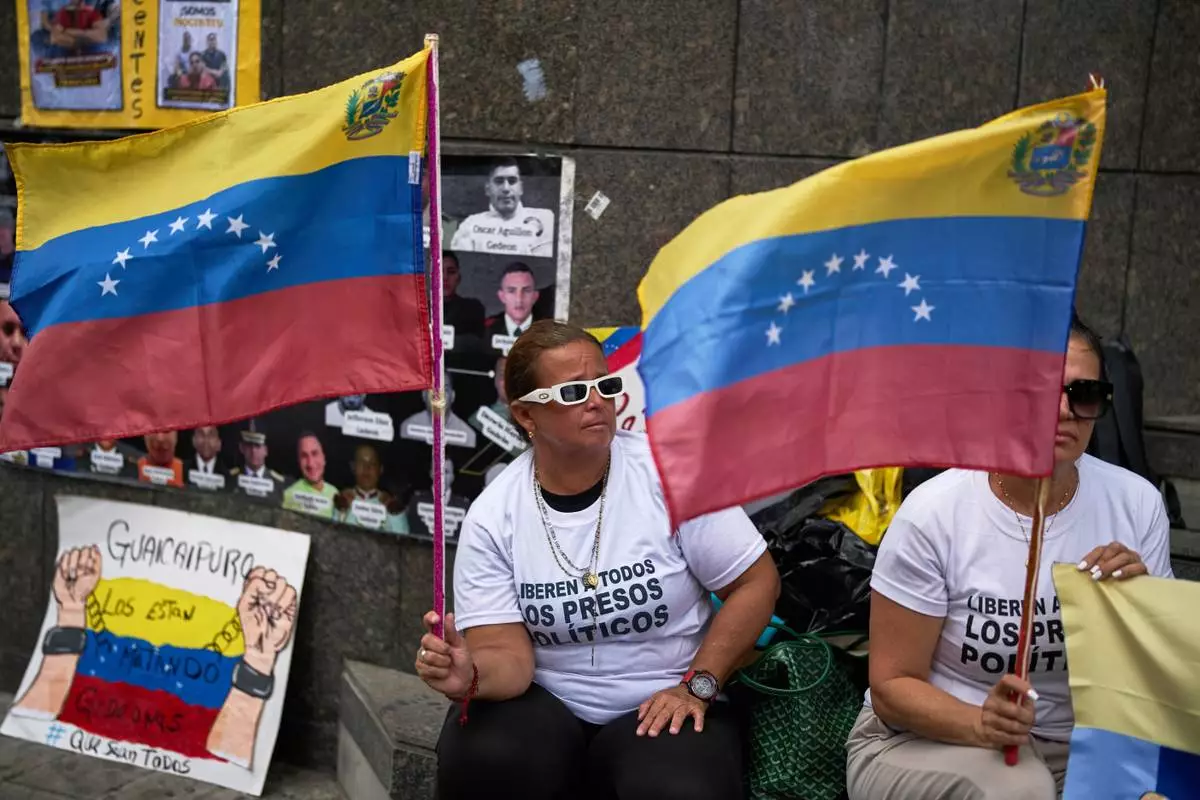
People who consider their detained family members to be political prisoners protest for their releases outside the United Nations office in Caracas, Venezuela, Wednesday Feb. 18, 2026. (AP Photo/Ariana Cubillos)

People who consider their detained family members to be political prisoners protest for their releases outside the United Nations office in Caracas, Venezuela, Wednesday Feb. 18, 2026. (AP Photo/Ariana Cubillos)

Venezuela's acting President Delcy Rodríguez on Thursday signed the amnesty measure into law, signaling a major shift in policy following last month’s stunning U.S. military raid in the capital, Caracas, to capture then-President Nicolás Maduro.

Venezuelan authorities for decades denied holding any political prisoners. But Rodríguez said during the signing ceremony that the law showed leaders were “letting go of a little intolerance and opening new avenues for politics in Venezuela.”

Venezuela-based prisoners’ rights group Foro Penal estimates that more than 600 people are in custody for political reasons.

Under the new law, trial courts must approve each amnesty request within 15 days. However, the requirement for judicial oversight has fueled skepticism about how applications will be handled.

“The law benefits a significant group of people, but the essence of the problem Venezuela is experiencing regarding political persecution remains,” Alfredo Romero, president of Foro Penal, told reporters Friday. “The same judges and prosecutors who have unjustly or arbitrarily accused people are the same judges whom the law itself designates to interpret the law in order to grant benefits.”

Romero underscored that the new law is not a prerequisite for the government to free prisoners, like it has done since Jan. 8, when Rodríguez’s government announced it would release “a significant number." Foro Penal has counted 448 releases since then.

The law grants eligible people “a general and full amnesty for crimes or offenses committed” during specific periods since 1999 that were marked by politically driven conflicts in Venezuela, including “acts of politically motivated violence” in the context of the 2024 presidential election and 2025 legislative and regional elections.

Foro Penal's vice president, Gonzalo Himiob, on Friday said 2,742 people detained in the context of those elections are eligible for amnesty under the new law. Of those, he said, 321 remain in custody, while 2,186 were released but must comply with court conditions such as regular check-ins.

The amnesty excludes those convicted of human rights violations, war crimes, murder, drug trafficking or corruption. It also denies relief to people “who are being prosecuted or may be prosecuted or convicted of promoting, instigating, soliciting, invoking, favoring, facilitating, financing, or participating in armed or forceful actions against” Venezuela “by foreign states, corporations or individuals.”

That could leave out members of the opposition who have supported U.S. President Donald Trump's policy toward Venezuela, including Nobel Peace Prize laureate María Corina Machado.

Relatives of those detained have called on the Trump administration, specifically its top diplomat in Venezuela, Laura Dogu, to pressure Venezuela’s government for their release. Others, like Claudia Morillo, the wife of a prisoner, have appealed directly to the humanity of Venezuelan officials.

Morillo’s husband, Jhon Hader Betancurt, is serving a 30-year sentence for treason and rebellion after being photographed shaking hands with an opposition leader in 2019. Although Foro Penal classifies him as a “political prisoner,” Morillo noted that he remains ineligible for amnesty because authorities labeled his case one of military rebellion even though he is a civilian.

“Put your hand on your heart,” she urged officials. “If we are truly talking about reconciliation, act truthfully and justly.”

The law also allows people living in exile to seek amnesty through a lawyer, removing the requirement to return to Venezuela to file in person. Once someone abroad has filed a request for amnesty, the law shields them from arrest when they return to the country for their scheduled court rulings.

Magalli Meda, Machado’s 2024 campaign manager, took to social media to reject the law. Meda has been in exile since May, when she and other Machado staffers left the Argentine diplomatic compound in Caracas, where they had sheltered for more than a year to avoid arrest.

“Who can be free in Venezuela under these terms of ‘amnesty’?” she wrote on X. “They are trying to whitewash their image. They want us to forget their crimes and act with impunity forever. They want a country of slaves and accomplices, and they intend to expel anyone who isn’t one of them.”

Follow AP’s coverage of Latin America and the Caribbean at https://apnews.com/hub/latin-america
National Assembly President Jorge Rodriguez, center, presides over a session debating an amnesty bill in Caracas, Venezuela, Thursday, Feb. 19, 2026. (AP Photo/Crisitian Hernandez)
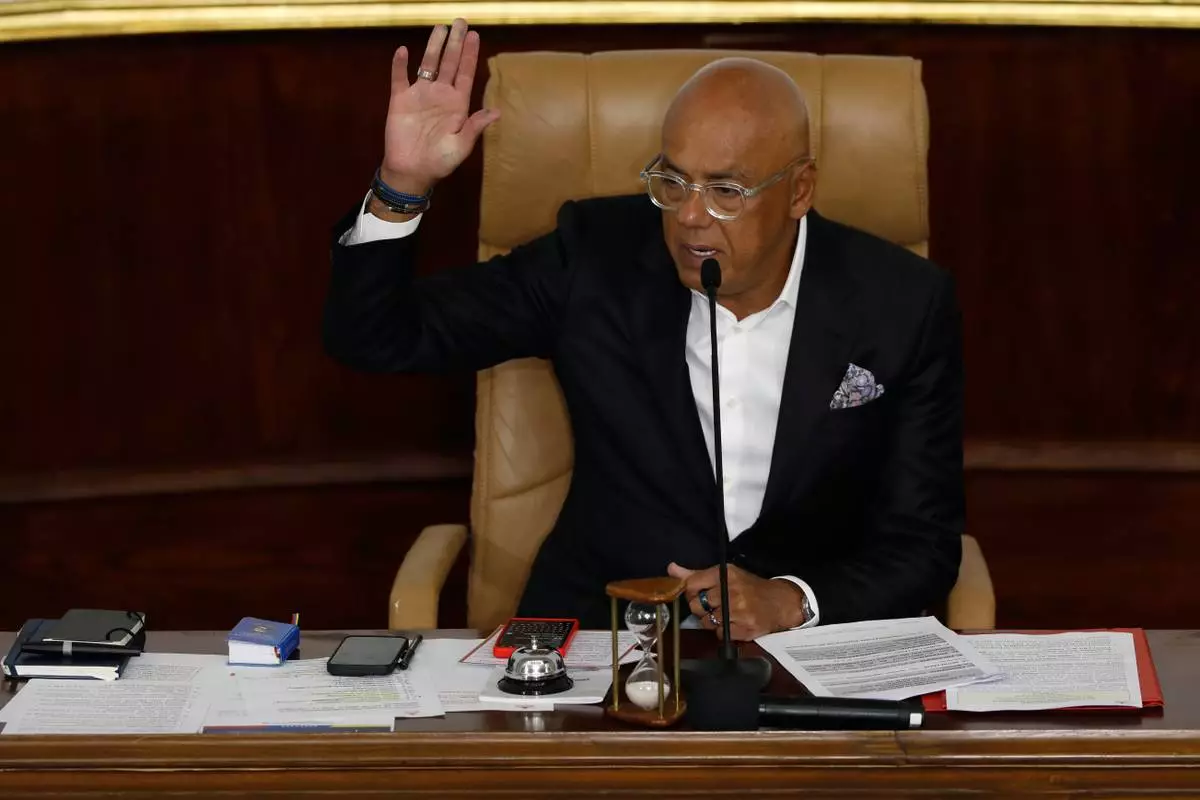
National Assembly President Jorge Rodriguez, center, presides over a session debating an amnesty bill in Caracas, Venezuela, Thursday, Feb. 19, 2026. (AP Photo/Crisitian Hernandez)
National Assembly President Jorge Rodriguez presides over a session debating an amnesty bill in Caracas, Venezuela, Thursday, Feb. 19, 2026. (AP Photo/Crisitian Hernandez)

National Assembly President Jorge Rodriguez presides over a session debating an amnesty bill in Caracas, Venezuela, Thursday, Feb. 19, 2026. (AP Photo/Crisitian Hernandez)

Barbara Bracho, left, mother of Gilberto Bracho, is embraced by Zoraida Gonzalez, mother of Miguel Estrada, both of whom consider their sons to be political prisoners, protest for their releases outside the United Nations office in Caracas, Venezuela, Wednesday Feb. 18, 2026. (AP Photo/Ariana Cubillos)
Barbara Bracho, left, mother of Gilberto Bracho, is embraced by Zoraida Gonzalez, mother of Miguel Estrada, both of whom consider their sons to be political prisoners, protest for their releases outside the United Nations office in Caracas, Venezuela, Wednesday Feb. 18, 2026. (AP Photo/Ariana Cubillos)
People who consider their detained family members to be political prisoners call for their releases outside the United Nations office in Caracas, Venezuela, Wednesday Feb. 18, 2026. (AP Photo/Ariana Cubillos)
People who consider their detained family members to be political prisoners call for their releases outside the United Nations office in Caracas, Venezuela, Wednesday Feb. 18, 2026. (AP Photo/Ariana Cubillos)
People who consider their detained family members to be political prisoners protest for their releases outside the United Nations office in Caracas, Venezuela, Wednesday Feb. 18, 2026. (AP Photo/Ariana Cubillos)
People who consider their detained family members to be political prisoners protest for their releases outside the United Nations office in Caracas, Venezuela, Wednesday Feb. 18, 2026. (AP Photo/Ariana Cubillos)
WASHINGTON (AP) — There’s little that Donald Trump has cherished more in his second term than tariffs, a symbol of his imperious approach to the presidency. He has raised and lowered them at will, rewriting the rules of global commerce and daring anyone to stop him.

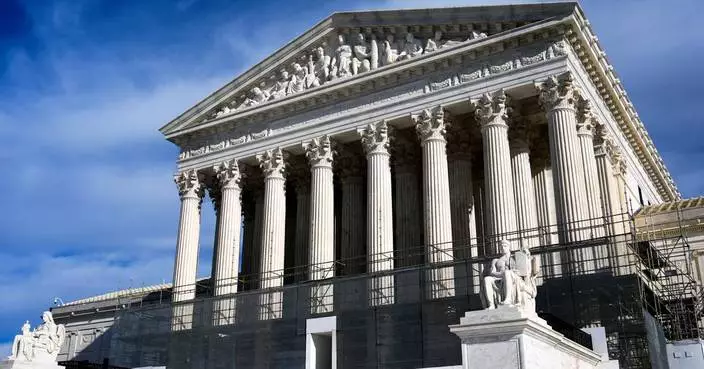
Now that may be over, the victim of a stunning rebuke from the Supreme Court on Friday. After more than a year of expanding his power, Trump had run into a rare limit.

It was a loss that Trump couldn't quite accept, and the president claimed he would use other laws to impose alternative tariffs. He even said that the end of this particular legal battle would bring “great certainty” to the economy.

But if anything, Friday opened a new chapter in Trump’s ongoing tariffs drama and raised urgent questions about his ability to make good on his promises of an economic revival. The ruling will most likely prolong chaos over international trade through the midterm elections, with much unknown about Trump's next steps and whether roughly $175 billion in import taxes that the Supreme Court struck down will be refunded.

The president chose, as he often does, to scorn the patriotism of those who disagree with him.

He said the ruling was “deeply disappointing” and “ridiculous,” adding that he was “absolutely ashamed” of the six Supreme Court justices who ruled against him "for not having the courage to do what’s right for our country.”

Trump described the justices as “fools and lapdogs” who are “very unpatriotic and disloyal to our Constitution.”

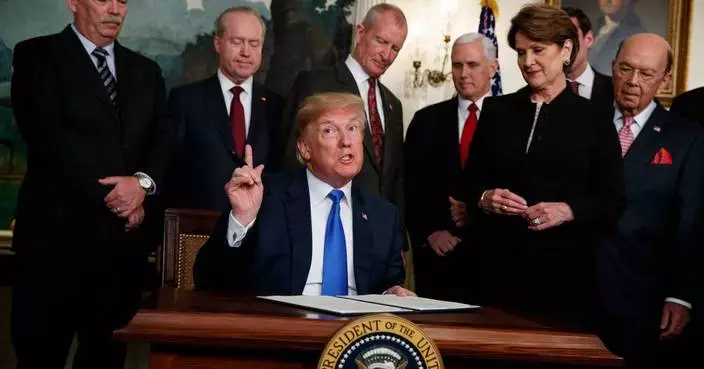
The president said he plans to sign an executive order enabling him to bypass Congress and impose a 10% tax on imports from around the world. The government would begin national security investigations in order to charge new tariffs on specific products as well. The 10% tariffs are legally capped at 150 days, but Trump brushed off a question about the limit by saying "we have a right to do pretty much what we want to do.”

All of that means Trump's tariff timelines are likely to collide with the midterm elections for control of the House and Senate.

Trump learned of the Supreme Court's decision during a private meeting with governors in the morning when he was handed a note, according to two people with knowledge of the president's reaction who spoke on the condition of anonymity. They said he called it “a disgrace.”

Another person, who was briefed on the conversation, disclosed that Trump said he has “to do something about these courts.”

The meeting with the governors ended shortly thereafter.

Looming over Trump's legal debacle has been voters' frustration with the tariffs, which have been linked to higher prices and a slowdown in hiring.

The president has consistently misrepresented his tariffs, claiming despite evidence to the contrary that foreign governments would pay them and that the revenues would be sufficient to pay down the national debt and give taxpayers a dividend check.

After Trump announced worldwide tariffs last April, an AP-NORC poll found that 76% of Americans said the policies would increase the cost of consumer goods — a worrisome sign for a president elected on the promise of addressing years of inflation.

Another poll, conducted in January, said about 6 in 10 Americans said Trump had gone too far in imposing new tariffs on other countries.

Trump’s aggressive use of tariffs had left many Republican lawmakers uneasy, publicly and privately, forcing them to defend what were essentially tax increases on the American public and businesses.

At various points during Trump’s second term, at least seven senators from the president's party have voiced their concerns. Earlier this month, six House Republicans joined with Democrats to vote for a resolution against Trump’s tariffs on Canada.

Indeed, free trade had long been a central plank of the Republican Party before Trump's rise to power.

Kentucky Sen. Mitch McConnell described Trump's assertion that he can bypass Congress to implement tariffs as “illegal” in a statement praising the Supreme Court's decision.

“Congress’ role in trade policy, as I have warned repeatedly, is not an inconvenience to avoid,” the former top Senate Republican said. “If the executive would like to enact trade policies that impact American producers and consumers, its path forward is crystal clear: convince their representatives under Article 1” of the Constitution.

Former Vice President Mike Pence, who served during Trump's first term, cheered the ruling.

“American families and American businesses pay American tariffs — not foreign countries,” Pence wrote on social media. “With this decision, American families and businesses can breathe a sigh of relief.”

Democrats were quick to seize on the Supreme Court ruling to say Trump broke the law and middle-class families suffered as a result.

Rep. Suzan DelBene, D-Wash., said Trump “is not a king” and his “tariffs were always illegal.”

“Republicans in Congress could have easily ended this economic crisis by standing up for their communities," said DelBene, chair of the Democratic Congressional Campaign Committee. “Instead, they chose to bend the knee to Trump while families, small businesses and farmers suffered from higher prices.”

Trump has claimed that his tariffs were the difference between national prosperity and deep poverty, a pitch he made Thursday to voters in the swing state of Georgia.

The president used the word “tariff” 28 times in his speech at a Georgia steel company, Coosa Steel, which credited the import taxes as making its products more competitive with goods from China.

“Without tariffs, this country would be in such trouble right now,” Trump insisted.

Trump also complained that he had to justify his use of tariffs to the Supreme Court.

“I have to wait for this decision. I’ve been waiting forever, forever, and the language is clear that I have the right to do it as president,” he said. “I have the right to put tariffs on for national security purposes, countries that have been ripping us off for years.”

By a 6-3 vote, the high court said no.

Associated Press writer Steven Sloan contributed to this report.

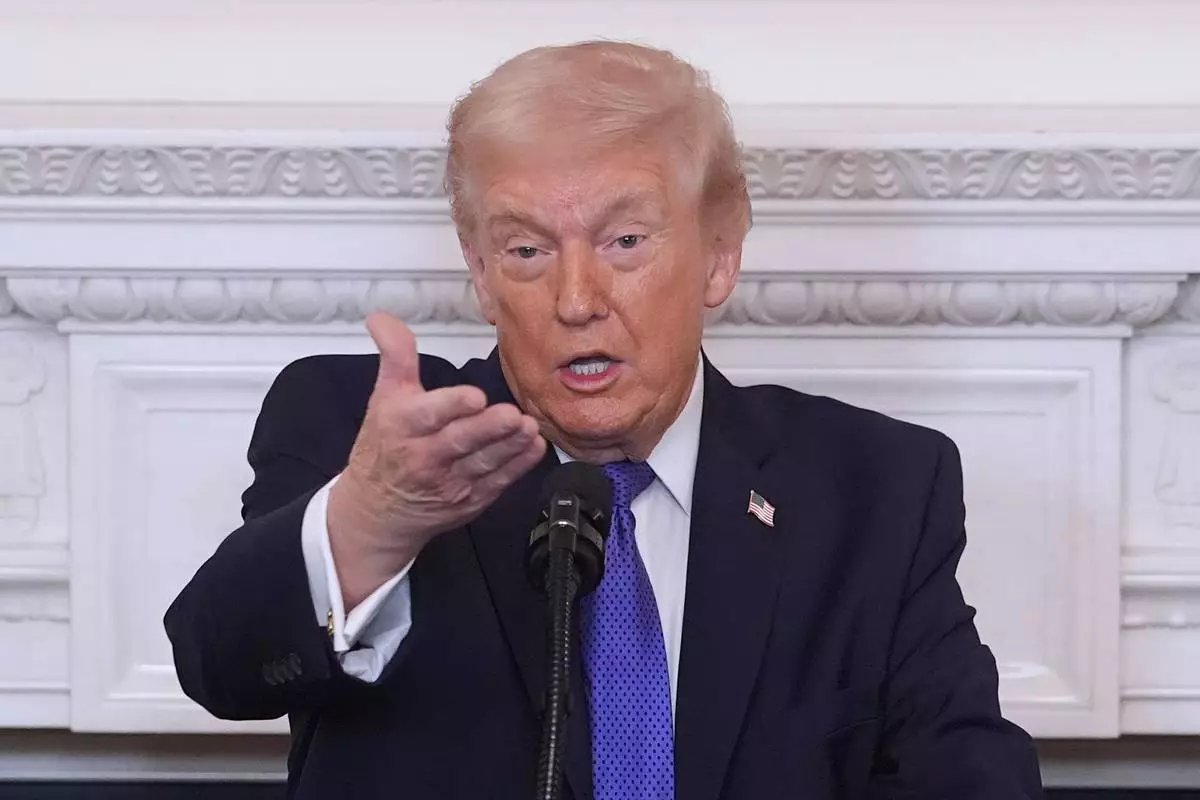
President Donald Trump speaks during a breakfast with the National Governors Association in the State Dining Room of the White House, Friday, Feb. 20, 2026, in Washington. (AP Photo/Evan Vucci)

President Donald Trump speaks during a breakfast with the National Governors Association in the State Dining Room of the White House, Friday, Feb. 20, 2026, in Washington. (AP Photo/Evan Vucci)

Recommended Articles