WASHINGTON (AP) — President Donald Trump warned on Friday that limited strikes against Iran are possible even as the country’s top diplomat said Tehran expects to have a proposed deal ready in the next few days following nuclear talks with the United States.
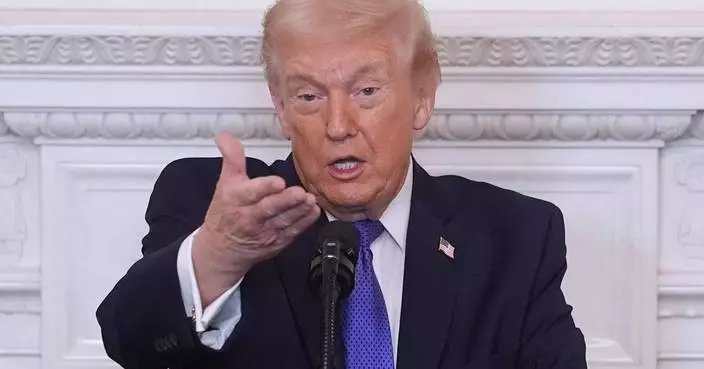
In response to a reporter's question on whether the U.S. could take limited military action as the countries negotiate, Trump said, “I guess I can say I am considering that.” A few hours later, he told reporters that Iran “better negotiate a fair deal.”
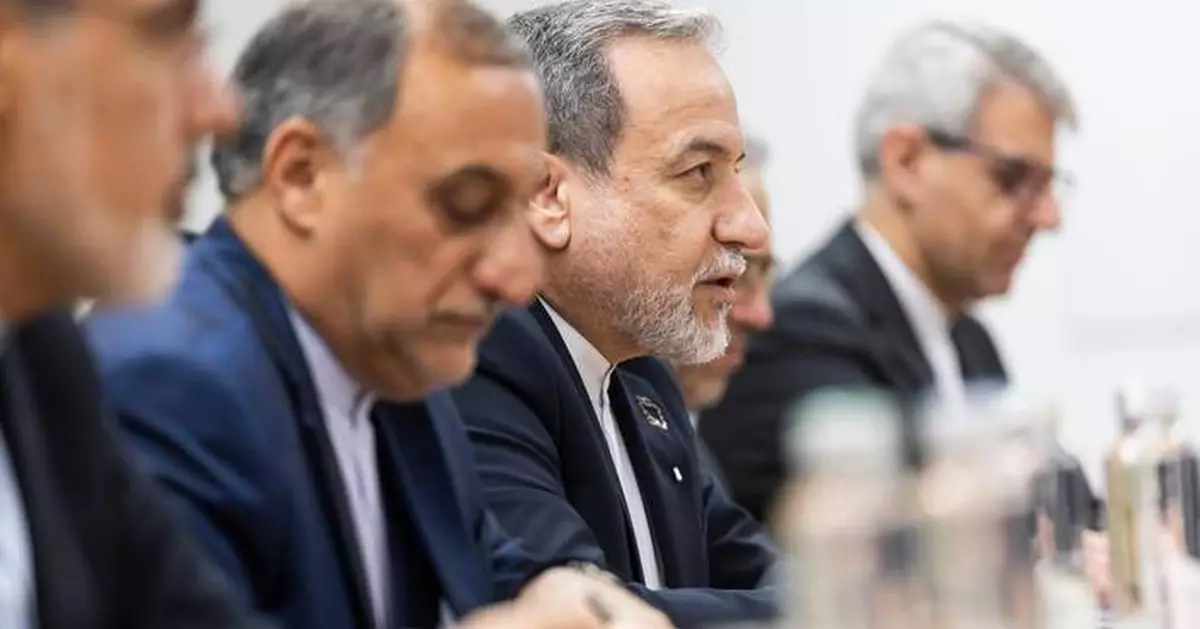
Iranian Foreign Minister Abbas Araghchi said in a TV interview earlier that his country was planning to finalize a draft deal in “the next two to three days” to send it to Washington.
“I don’t think it takes long, perhaps, in a matter of a week or so, we can start real, serious negotiations on the text and come to a conclusion,” Araghchi said on MSNOW's “Morning Joe” show.
The tensions between the longtime adversaries have ramped up as the Trump administration pushes for concessions from Iran and has built up the largest U.S. military presence in the Middle East in decades, with more warships and aircraft on the way. Both countries have signaled that they are prepared for war if talks on Tehran’s nuclear program fizzle out.
“We are prepared for diplomacy, and we are prepared for negotiation as much as we are prepared for war,” Araghchi said Friday.
Ali Vaez, an Iran expert at the International Crisis Group, said Iran “would treat any kinetic action as an existential threat.”
Vaez said he doesn’t think Iran’s leaders are bluffing when they say they would retaliate, while they likely believe they could maintain their hold on power despite any U.S. airstrikes.
Trump said a day earlier that he believes 10 to 15 days is “enough time” for Iran to reach a deal following recent rounds of indirect negotiations, including this week in Geneva, that made little visible progress. But the talks have been deadlocked for years after Trump’s decision in 2018 to unilaterally withdraw the U.S. from Iran’s 2015 nuclear deal with world powers. Since then, Iran has refused to discuss wider U.S. and Israeli demands that it scale back its missile program and sever ties to armed groups.
Araghchi also said Friday that his American counterparts have not asked for zero enrichment of uranium as part of the latest round of talks, which is not what U.S. officials have said publicly.
"What we are now talking about is how to make sure that Iran’s nuclear program, including enrichment, is peaceful and will remain peaceful forever," he said.
He added that in return, Iran will implement some confidence-building measures in exchange for relief on economic sanctions.
In response to Araghchi’s claim, a White House official said Trump has been clear that Iran cannot have nuclear weapons or the capacity to build them and that it cannot enrich uranium. The official wasn’t authorized to comment publicly and spoke on condition of anonymity.
Tehran has long insisted that any negotiations should only focus on its nuclear program and that it hasn’t been enriching uranium since U.S. and Israeli strikes last June on Iranian nuclear sites. Trump said at the time that the strikes had “obliterated” Iran’s nuclear sites, but the exact damage is unknown as Tehran has barred international inspectors.
Iran has also insisted that its nuclear program is peaceful. The U.S. and others suspect it is aimed at eventually developing weapons.
Trump's comments have faced pushback from some lawmakers who say the president should get Congress' approval before any strike.
Democratic Sen. Tim Kaine of Virginia said Friday that he has filed a war powers resolution that would require that step. Though it has no chance of becoming law — in part because Trump himself would have to sign it — some bipartisan consensus has arisen recently among senators who forced votes on previous resolutions on military action in Venezuela.
None of those resolutions passed, but they were successful in showing how lawmakers are troubled by some of Trump’s aggressive foreign policy maneuvers.
“If some of my colleagues support war, then they should have the guts to vote for the war, and to be held accountable by their constituents, rather than hiding under their desks,” Kaine said in a statement.
Amiri reported from New York. Associated Press writers Michelle L. Price, Ben Finley and Stephen Groves in Washington and Jon Gambrell in Dubai, United Arab Emirates, contributed to this report.
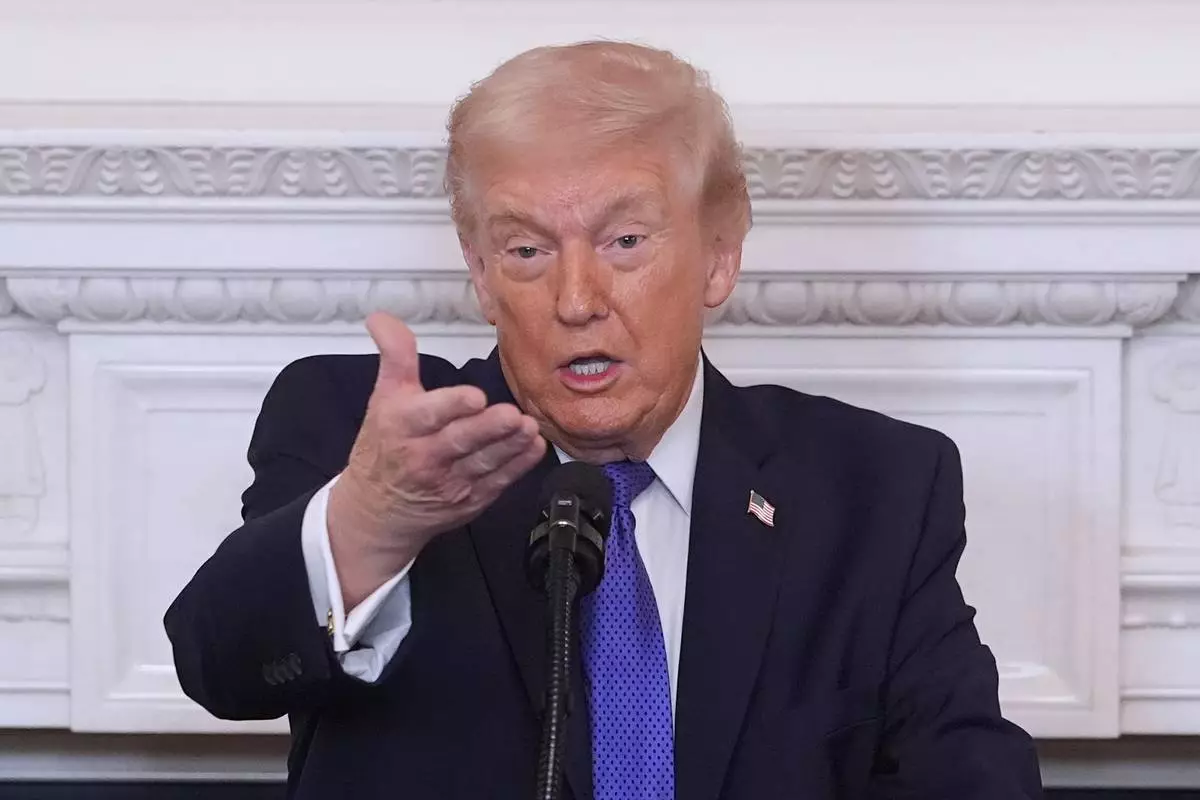
President Donald Trump speaks during a breakfast with the National Governors Association in the State Dining Room of the White House, Friday, Feb. 20, 2026, in Washington. (AP Photo/Evan Vucci)
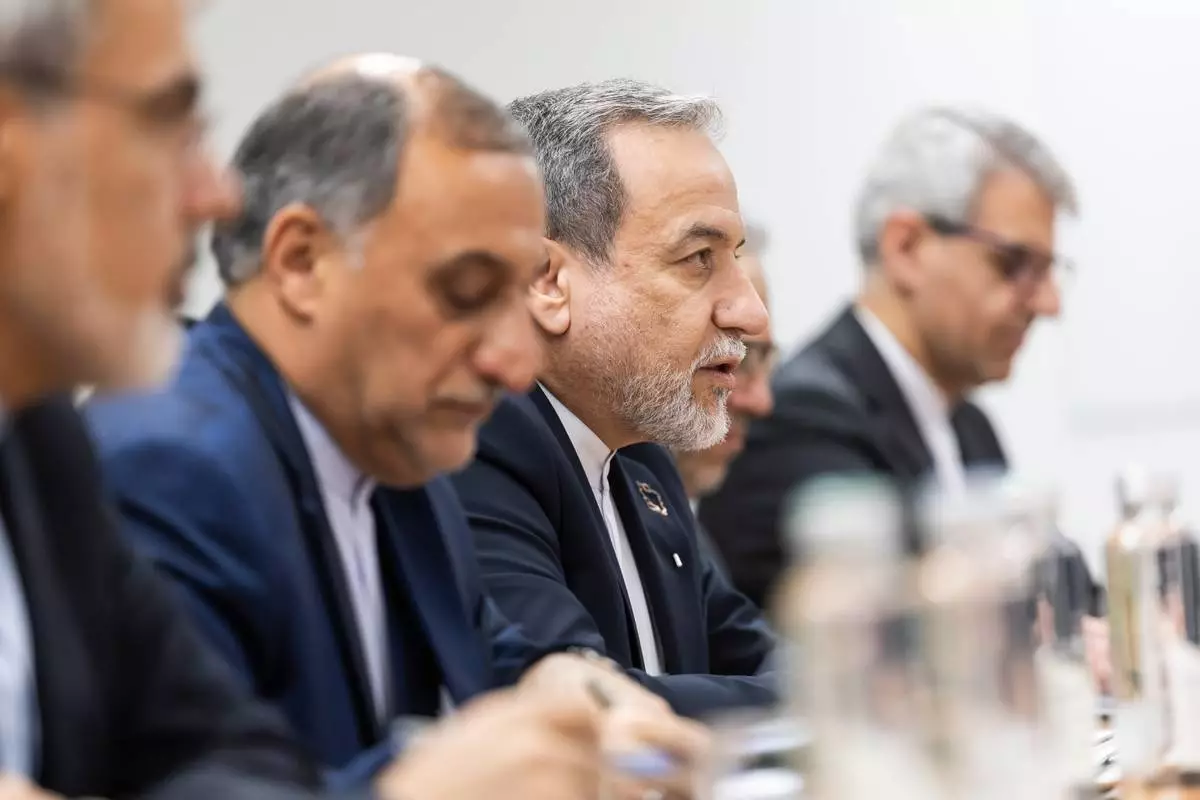
Iranian Foreign Minister Abbas Araghchi, speaks during a bilateral meeting between Switzerland and Iran, in Geneva, Switzerland, Tuesday, Feb. 17, 2026 (Cyril Zingaro/Keystone via AP)
The Supreme Court struck down President Donald Trump’s far-reaching global tariffs on Friday, handing him a significant loss on an issue crucial to his economic agenda.
The 6-3 decision centers on the tariffs Trump unilaterally imposed under an emergency powers law, including the sweeping “reciprocal” tariffs levied on nearly every other country.
It’s the first major piece of Trump’s broad agenda to come squarely before the nation’s highest court, which he helped shape with the appointments of three conservative jurists in his first term.
The majority found that the Constitution “very clearly” gives Congress the power to impose taxes, which include tariffs. “The Framers did not vest any part of the taxing power in the Executive Branch,” Chief Justice John Roberts wrote.
“The tariffs at issue here may or may not be wise policy. But as a matter of text, history, and precedent, they are clearly lawful,” Kavanaugh wrote in the dissent.
The Latest:
The president wrapped on a positive note, saying that with the ruling, “great certainty has been brought back to the economy of the United States and actually the economy of the world.”
He repeated one of his favorite lines, saying that the U.S. is “the hottest country in the world,” and added: “We’re going to keep it that way.”
Trump said the justices who voted in the majority against his tariffs are still “barely” invited to Tuesday’s State of the Union address.
But he added that “honestly I couldn’t care less if they come, OK?”
The president gives the State of the Union before a joint session of Congress.
But the chief executive doesn’t issue invitations to the speech, aside from his own special guests.
The House speaker actually invites the president to give the address in the first place, and while there is always reserved seating for members of the court, Chief Justice John Roberts has previously said it’s up to individual justices if they want to attend.
The president is clearly fuming at two of the justices he nominated in his first term who sided against his tariff policy.
“I think it’s an embarrassment to their families, if you want to know the truth. The two of them,” Trump said of Gorsuch and Barrett.
He said, “their decision was terrible.”
Still, he declined to say whether he regretted nominating them.
“I read very well. Great comprehension,” Trump said.
The president said that, when it came to the tariffs case, “I read everything there is to read. And I said, ‘Can’t lose this case.’”
But the Supreme Court did in fact rule against Trump’s sweeping tariff policy — an outcome Trump suggested was only possible because “judges want to be political, they want to be politically correct.”
Italian winemakers greeted the decision with skepticism, warning that the ruling “may ultimately deepen uncertainty rather than deliver immediate relief to transatlantic trade.”
The U.S. is Italy’s largest wine market, with sales having tripled in value over the past 20 years. In 2024, shipments to the U.S. reached a value of €1.93 billion, accounting for 24% of Italy’s total global wine exports, according to Unione italiana vini, or UIV, which represents more than 800 winemakers.
New tariffs on the EU, which the Trump administration initially threatened would be 200%, had sent fear throughout the industry, which remained even after the U.S. reduced, delayed and negotiated down.
“Paradoxically, the wine industry cannot welcome the Court’s decision as a clear victory,” said Lamberto Frescobaldi, president of the UIV trade association.
“There is a more than likely risk that tariffs will be reimposed through alternative legal channels, compounded by the uncertainty this ruling may generate in commercial relations between Europe and the United States.”
For months, the president has warned that if these tariffs were struck down, it would be a “disaster” for the country and it “would literally destroy the United States of America.”
But as he faced questions about the ruling, Trump repeatedly projected a sunny future for the U.S. and dismissed the idea that the country would face ruin.
He said the ruling gave “certainty” and said “I think you’re going to see the country get much stronger because of it.”
Trump also said the alternative paths he will pursue to try to impose tariffs, while a much more drawn out process, will “get us more money. And I think it’s going to be great.”
Despite the rebuke from the Supreme Court, the president is scoffing at the need to get Congress involved in enacting tariff policy.
“I don’t have to,” Trump said when asked why wouldn’t he just work with lawmakers on tariffs. “I have the right to do tariffs, and I’ve always had the right to do tariffs.”
The majority ruled that Congress has the power to write tax policy, which includes tariffs.
“Tariffs can be an important and effective tool to address unfair trade practices and help level the playing field with foreign competitors,” the Senate Republican leader wrote on social media.
The South Dakota Republican added: “Senate Republicans will continue working with the administration and our colleagues in the House to advance our shared goal to strengthen rural America, including South Dakota’s farm and ranch communities, and the broader U.S. economy.”
On the heels of his Supreme Court defeat, the president says he’ll sign an executive order that would impose a 10% global tariff under federal law known as Section 122.
The catch is that those tariffs would be limited to just 150 days, unless they are extended legislatively.
The president also said he is exploring other tariffs through other avenues, such as Section 232, which would require an investigation through the Commerce Department.
Trump says “other alternatives will now be used to replace” his sweeping tariffs that the Supreme Court rejected.
“We have alternatives. Great alternatives,” Trump said.
He said the ruling opened the door to allow him to go in “probably a direction that I should have gone in the first time.”
Trump also suggested the ruling may not “substantially constrain” tariffs going forward and mentioned using the Trade Expansion Act and other past laws, including the Tariff Act of 1930 going forward.
He said those alternatives would simple mean a “little bit longer” process.
Trump also scoffed at his ability to order full economic embargoes against countries, but not raise tariffs.
“How ridiculous is that?” he asked.
By name Trump thanked Justices Clarence Thomas, Samuel Alito and Brett Kavanaugh “for their strength and wisdom and love of our country” in dissenting from the majority to uphold his tariff policies.
And of the more liberal justices who opposed him, Trump said “you can’t knock their loyalty,” even though he disagrees with their views.
But of more conservatives justices who voted to knock down his tariffs — Chief Justice John Roberts and Justices Amy Coney Barrett and Neil Gorsuch — Trump said, “they’re just being fools and lapdogs for the RINOs and radical left Democrats.”
Without naming them, Trump referred to the jurists by their action as “very unpatriotic and disloyal to our Constitution.”
The president cited other sections of federal law that give him clearer power to impose tariffs, though those methods involve a more complex and bureaucratic process to impose the taxes on imports instead of the way Trump was quickly firing them off.
“Their decision is incorrect. But it doesn’t matter because we have very powerful alternatives,” Trump said.
He called it, “a little bit longer process,” and said his first attempt to impose tariffs was to try to “make things simple. But they didn’t let us do that.
Friday’s decision upends a core set of tariffs that Trump imposed using the 1977 International Emergency Economic Powers Act, or IEEPA. That includes the “Liberation Day” tariffs the president slapped on nearly every country in the world last spring — as well as other IEEPA-based levies he imposed on Canada, Mexico and China. Trump also cited IEEPA to impose additional tariffs on Brazil over the trial of former President Jair Bolsonaro, and on India over its purchases of Russian oil.
Despite Friday’s ruling, other sweeping levies remain in place. Trump used another law — Section 232 of the 1962 Trade Expansion Act — to slap sectoral tariffs on steel and aluminum, cars, copper, lumber and products like kitchen cabinets worldwide. And the president has plenty of other options to keep taxing imports aggressively.
“As a matter of policy, the empty merits of sweeping trade wars with America’s friends were evident long before today’s decision,” Sen. Mitch McConnell, R-Ky., said in a statement. “But as a matter of Constitutional authority, there is now no room for doubt: the use of IEEPA to circumvent Congress in the imposition of tariffs — already without precedent — is also illegal.”
“If the executive would like to enact trade policies that impact American producers and consumers, its path forward is crystal clear: convince their representatives under Article 1,” said the former Republican Senate leader.
Other senators also chimed in approvingly after the court’s decision.
“Today’s Supreme Court ruling reaffirms that only Congress has the constitutional authority to impose tariffs, and the President can only do so under a clear and limited delegation of authority from Congress,” Republican Sen. Susan Collins of Maine wrote on social media.
Republican Sen. John Curtis of Utah declared “that the Founders’ system of checks and balances remains strong nearly 250 years later.” But Curtis noted that the tariff saga may not be over.
“Several questions remain unanswered, including what happens to the revenue already collected and how the administration may use alternative authorities to impose tariffs,” said Curtis.
The National Foreign Trade Council applauded the court ruling and urged the Trump administration to refund tariff revenue and change its approach.
“It’s a relief to see the Supreme Court unequivocally decide that IEEPA did not provide the authority for the administration to impose more than $133 billion in tariffs on American businesses and consumers,” said Jake Colvin, president of the council. “We hope the administration will seize this opportunity to recalibrate its approach rather than rushing to replicate some or all of the tariffs through other means.”
The council urged the administration to “identify a low-burden and automated administrative process to return tariff revenue to U.S. importers quickly and efficiently.”
Trump told a news conference he’s “absolutely ashamed” of justices who voted to strike down his tariffs, calling the decision “deeply disappointing.”
It’s the first major piece of Trump’s broad agenda to come squarely before the nation’s highest court, which he helped shape with the appointments of three conservative jurists in his first term.
Trump called the majority decision “a disgrace” when he was notified during his morning meeting with several governors, according to someone with direct knowledge of the president’s reaction who spoke on the condition of anonymity to discuss the private conversation.
Trump was meeting privately with nearly two dozen governors from both parties when the decision was released. The White House did not immediately respond to a request for comment.
House Speaker Mike Johnson backed Trump’s use of tariffs in a post on social media after the Supreme Court ruling, saying they had “brought in billions of dollars and created immense leverage for America’s trade strategy.”
In the Supreme Court ruling, the majority found that it’s unconstitutional for the president to unilaterally set and change tariffs because taxation power clearly belongs to Congress.
“Congress and the Administration will determine the best path forward in the coming weeks,” Johnson wrote on X.
A GOP Congressman who voted for to impeach Trump says the Supreme Court decision rightly takes back power from the executive branch on tariffs.
Washington Republican Rep. Dan Newhouse said in a statement that the ruling “restores balance between the legislative and executive branches,” adding that he’s committed to working with Trump on targeted tariffs “to secure trade deals that put American farmers, businesses, and consumers first.”
Washington state is home to the headquarters of Costco, one of the companies most critical of the tariffs.
Newhouse is one of the two GOP representatives to vote to impeach President Trump during his first term and be reelected. Earlier this year, he welcomed the Trump administration’s move to effectively lower wages for immigrant farmworkers.
Newhouse announced that he is not seeking reelection.
The Consumer Brands Association, which represents food and beverage companies like PepsiCo as well as makers of personal care products like Proctor & Gamble, called the ruling “a pivotal moment in trade policy.”
The group said its members source up to 90% of ingredients and inputs from U.S. farms and suppliers. But inputs like tin mill steel — which remains subject to a 50% tariff — are not produced domestically in sufficient quantities, the group said.
“Consumer Brands encourages the Trump administration to continue looking at supply chain limitations and ensuring the availability and affordability of key unavailable natural resources,” Consumer Brands President and CEO Melissa Hockstad said in a statement.
The S&P 500 was 0.1% higher in midday trading. It had been flipping between small gains and losses before the court’s ruling, following discouraging reports showing slowing growth for the U.S. economy and faster inflation.
The Dow Jones Industrial Average was down 125 points, or 0.3%, as of 12:30 p.m. Eastern time, and the Nasdaq composite was 0.3% higher.
Many on Wall Street were likely expecting such a ruling from the Supreme Court, according to Brian Jacobsen, chief economic strategist at Annex Wealth Management. That likely led to the relatively muted reactions across financial markets, and trading remained tentative as investors tried to suss out the long-term effects.
Consumers probably won’t see much reduction in overall prices as a result of the Supreme Court’s decision.
Inflation did not rise by as much as many economists expected when Trump announced his most sweeping tariffs in April. That’s partly because many of the “Liberation Day” duties were later rolled back, delayed, or negotiated downward. Trump also exempted products such as beef, coffee, and auto parts from his tariffs. And many large companies have eaten much of the cost, rather than pass them to consumers.
Still, the Federal Reserve estimates that inflation is about a half-percentage point higher than it would be without the tariffs. Its preferred inflation gauge is still elevated, coming in at 2.9% in December from a year earlier. Over time, the decision could slightly reduce prices for cars, furniture, clothes, and other items, where prices did rise after duties were imposed.
In a memo to its members Friday, the Home Furnishings Association noted that the decision leaves many Trump administration tariffs in effect, including those on steel, upholstered furniture, kitchen cabinets and bathroom vanities. Certain tariffs on products from China also remain in place, the association said.
“As always, our advocacy is focused on promoting trade policies that provide stability, predictability, and fairness—protecting retailers from unnecessary financial burdens while supporting strong, competitive supply chains that benefit businesses and consumers alike,” said the association, which represents 15,000 furniture stores in North America.
The United Steelworkers, the labor union whose members work at U.S. Steel and Cleveland-Cliffs plants, urged Congress to revamp the U.S. trade system by using tariffs “strategically.”
It said tariffs should be used to protect American workers, not to punish allies like Canada. It also called on Congress to restore funding to programs to help American workers who lose their jobs because of unfair foreign trade.
“It’s an excess of short-term thinking and free trade ideology that got us into this mess. Now, we need sustainable solutions,” the union said in a statement.
The U.S. steel industry has enjoyed a period of expansion under tariffs adopted by the Biden and Trump administrations, analysts say.
They predicted the decision will help minimize price increases and disruptions in the intricate supply chains for the computers, smartphones, televisions and other gadgets ingrained in modern life.
“Innovation thrives on predictability, and this common-sense decision brings much-needed clarity for American businesses and consumers,” said Gary Shapiro, CEO of the Consumer Technology Association, which represents more than 2,000 companies. “Now, the government must act quickly to refund retailers and importers without red tape or delay.”
The Computer & Communications Industry Association, which represents a spectrum of technology companies employing more than 1.6 million people, also expressed hope that the decision will ease the trade tensions that have been tormenting tech.
“This Supreme Court decision caps a year of turbulence in trade policy that we are all working to adapt to. With this decision behind us, we look forward to bringing more stability to trade policy,” said Jonathan McHale, the Computer & Communications Industry Association’s vice president for digital trade.
Chris Swonger, president and CEO of the Distilled Spirits Council urged the Trump administration to use the Supreme Court ruling as an opportunity to return to “zero-for-zero tariffs” on spirits products with major trading partners including the United Kingdom and European Union.
“The elimination of tariffs on distilled spirits would provide much needed certainty for American spirits exporters while helping ease financial pressures on bars, restaurants and retailers at a time when affordability remains a major concern for consumers.”
Sarah House, a senior economist at Wells Fargo, said the ruling will provide some additional certainty for companies, many of which have already adjusted to the tariffs, by shifting their supply chains to lower-tariffs countries.
The additional certainty could lead to modestly higher investment and job creation by businesses, after they slammed the brakes on hiring last year in part because of tariff uncertainty. The economy added less than 200,000 jobs in 2025, the government said last week, the fewest since the pandemic.
“Uncertainty hasn’t gone away,” she cautioned. “There are still a lot of questions out there: What about refunds? What other statutes will the administration use to impose the tariffs? Will your products fall under those?”
Katyal, the former Acting Solicitor General of the United States, told The Associated Press: “the decision today is everything we asked the Supreme Court to do.”
“It is a complete and total victory for the challenge to President Trump’s tariffs. It’s a reaffirmation of our deepest constitutional values and the idea that Congress, not any one man, controls the power to tax the American people.
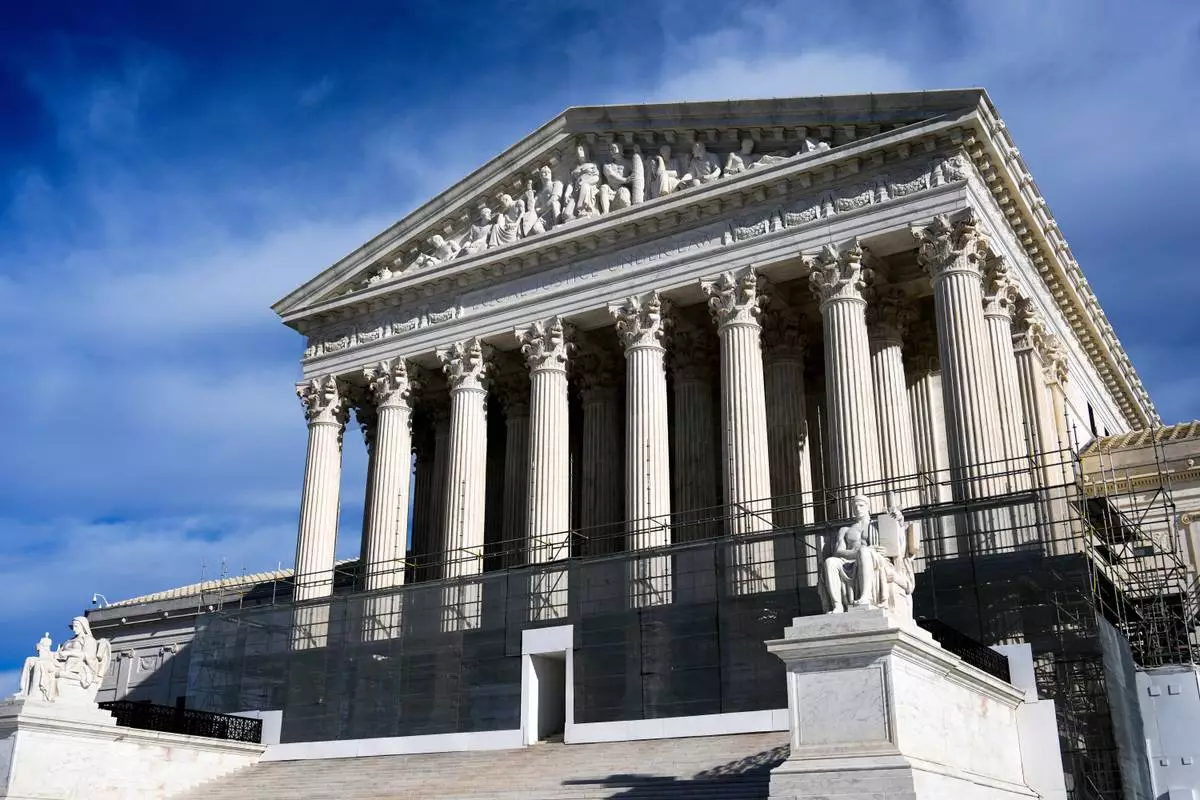
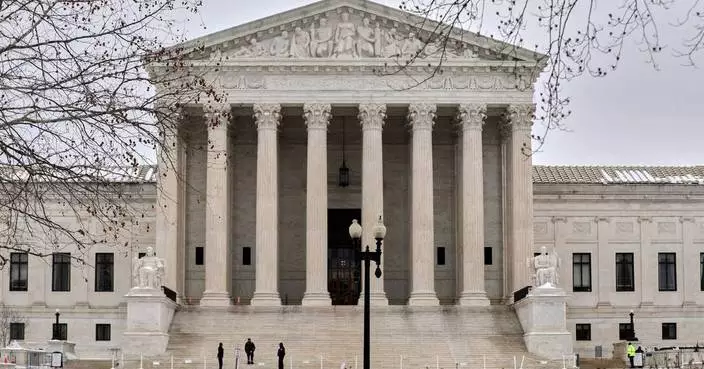
FILE - The Supreme Court is seen, Jan. 13, 2026, in Washington. (AP Photo/Julia Demaree Nikhinson, File)