CHARLOTTE, N.C. (AP) — Bob Jenkins risked his entire race team — a Daytona 500-winning team — when he refused to sign NASCAR's revenue-sharing agreement and Front Row Motorsports joined 23XI in suing over antitrust violations.
Michael Jordan was the face of the suit settled in December, while Jenkins was the quiet team owner in the background presumed to be riding the global icon's coattails.
“People thought Michael Jordan was bankrolling this — no, no, no. I had to pay my half,” Jenkins told The Associated Press.
Jenkins, the sole owner of Front Row, said he split the fees of the case equally with 23XI, which has three owners to divide the costs. Had NASCAR not settled the suit, both teams would have ceased operations.
“And I was OK with that,” Jenkins told The Associated Press. “It would have hurt, I risked losing three charters myself, but I would have been OK. I just felt that strongly that we had a winning case that I could risk it."
The settlement that was reached on the ninth day of the trial made the charters — the equivalent of a franchise in other sports — evergreen and that alone doubled their value overnight to nearly $100 million each.
For Jenkins, an entrepreneur from Tennessee who owns Long John Silver's, 400 Taco Bell franchises and about 30 KFC franchises, the settlement meant a racing organization that had been bleeding money was now secure to be passed down to his four sons. He testified during the trial that Front Row had lost approximately $100 million since it launched in the early 2000s and didn't turn a profit a single season — even in 2021 when Michael McDowell won the Daytona 500.
The settlement now allows Jenkins to look to the future with Front Row, which has one of the youngest lineups in NASCAR and opened the 2026 season with a victory when Chandler Smith won the Truck Series race at Daytona.
The Ford team fields Cup Series cars for Noah Gragson — who at 27 is the oldest driver in the lineup — Zane Smith (26) and Todd Gilliland (25). Jenkins believes he has a budding star in Smith, who signed a contract extension last October when the fate of the team was uncertain amidst the lawsuit. Smith won a stage in last week's Daytona 500 and finished sixth, and heads into this Sunday's race at Atlanta Motor Speedway ranked fourth in the Cup standings.
Gilliland and Gragson are in contract years and Jenkins said he's explicitly told both what he expects from them this season.
The two Front Row trucks are driven by Smith and Layne Riggs, who are both 23.
So the team has young drivers to develop, as well as an alliance with Team Penske. Jenkins said that partnership with Penske went soft during the lawsuit — Roger Penske signed the charter agreement presented to owners in 2024 that Front Row and 23XI refused to accept — but has amped up since the settlement.
Front Row in the offseason hired engineer Grant Hutchens from Penske to crew chief Gragson, a move that allowed the team to move Drew Blickensderfer to competition director.
“Drew wanted more of an organizational, leadership role, and we always had that in the back of our mind, so Grant gave us an opportunity to fast-track that,” explained Front Row general manager Jerry Freeze. “Bringing Grant in makes us a little more aligned with the Penske group and we hope that's hopefully going to pay off in the long run.”
The settlement gave Front Row stability — Freeze said “it seems like a light switch went on with our relationship with Penske” — and relief to team employees who had worried their jobs might cease to exist. It also allows the team to search for new headquarters as Front Row is currently bursting at the seams across two different leased race shops, one owned by the late Greg Biffle and the other owned by Brad Keselowski.
Jenkins wants to consolidate his teams into one building and can now confidently make that investment.
Jenkins and Front Row don't get the same attention as mega teams Penske, Hendrick Motorsports or Joe Gibbs Racing. And he's a busy team owner with commitments to his fast-food empire that he takes a very hands-on role with. It was Jenkins who made the call for Long John Silver's to switch to waffle fries — a recipe he says the chain is still trying to perfect to prevent fries from getting soggy during third-party delivery — and he's often in the test kitchen sampling new recipes and vetoing a spicy shrimp idea because he didn't like the way the fish looked in a red sauce.
It made sense that Jordan, winning team owner of last week's Daytona 500, was willing to take on NASCAR in the revenue sharing dispute because racing is just his retirement hobby. But it took bravery and belief for Jenkins to sue — something the likes of Joe Gibbs, Rick Hendrick and Roger Penske did not do.
Jenkins doesn't need to be celebrated, but he's certainly pleased with the outcome for himself, his race teams and the future of NASCAR. It was a fight he thinks he's “probably stupid enough to have done myself” without 23XI, but knows having Jordan was necessary.
“Personally it's very gratifying because it could have went the other way, and this sounds cliche, but when something needs to be said, you've got to find a way to say it,” Jenkins said. “We did that and it just makes me feel good that we took a stand.”
AP auto racing: https://apnews.com/hub/auto-racing
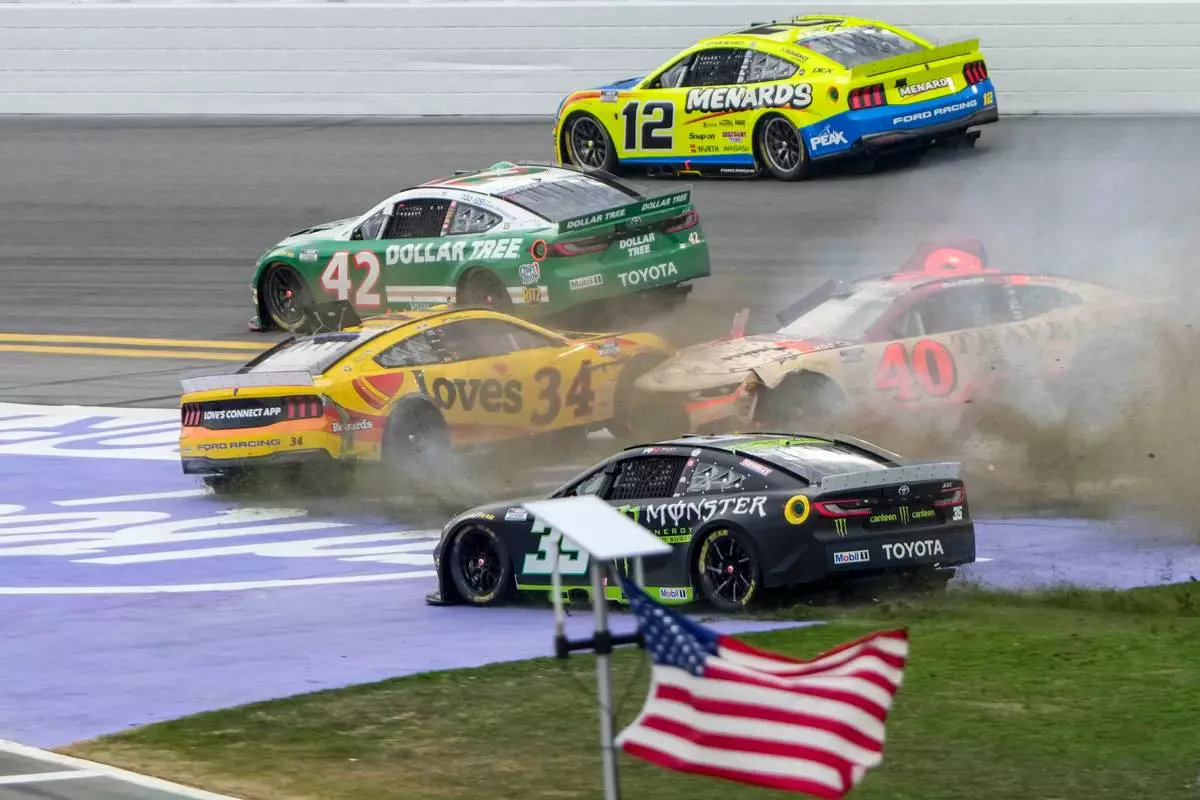
Riley Herbst, (35), Justin Allgaier, (40), Todd Gilliland, (34), John Hunter Nemechek, (42) and Ryan Blaney, (12) collide during the NASCAR Daytona 500 auto race at Daytona International Speedway, Sunday, Feb. 15, 2026, in Daytona Beach, Fla. (AP Photo/John Raoux)
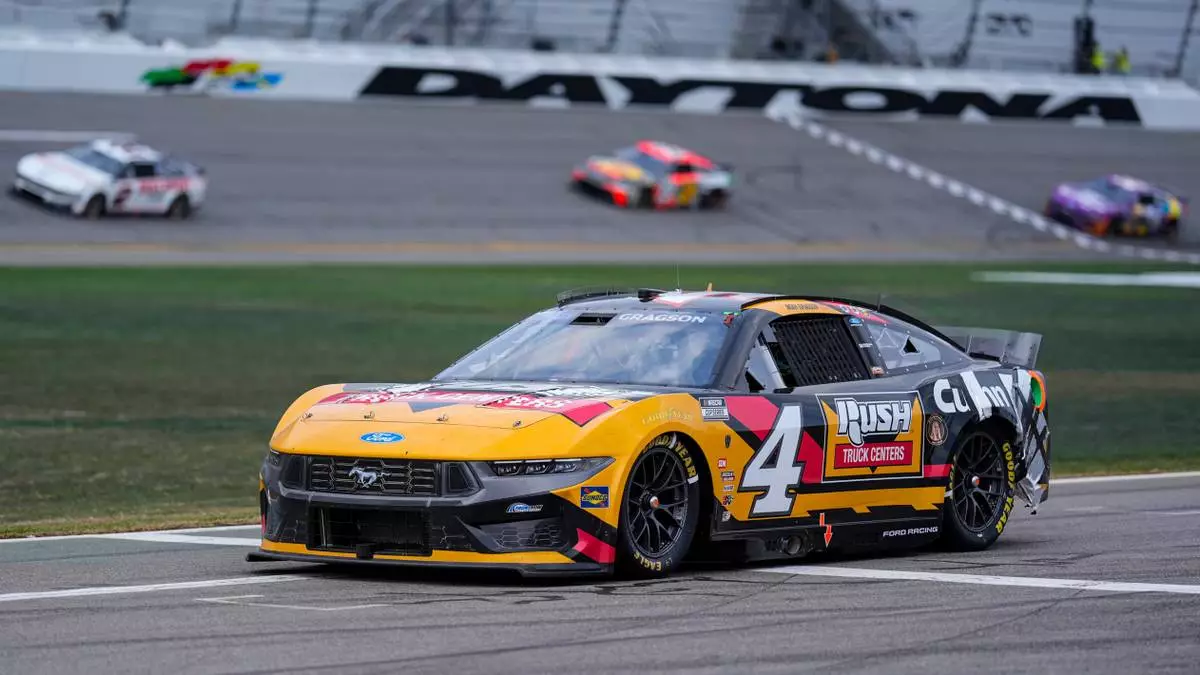
Noah Gragson, (4) moves during the NASCAR Daytona 500 auto race at Daytona International Speedway, Sunday, Feb. 15, 2026, in Daytona Beach, Fla. (AP Photo/Mike Stewart)
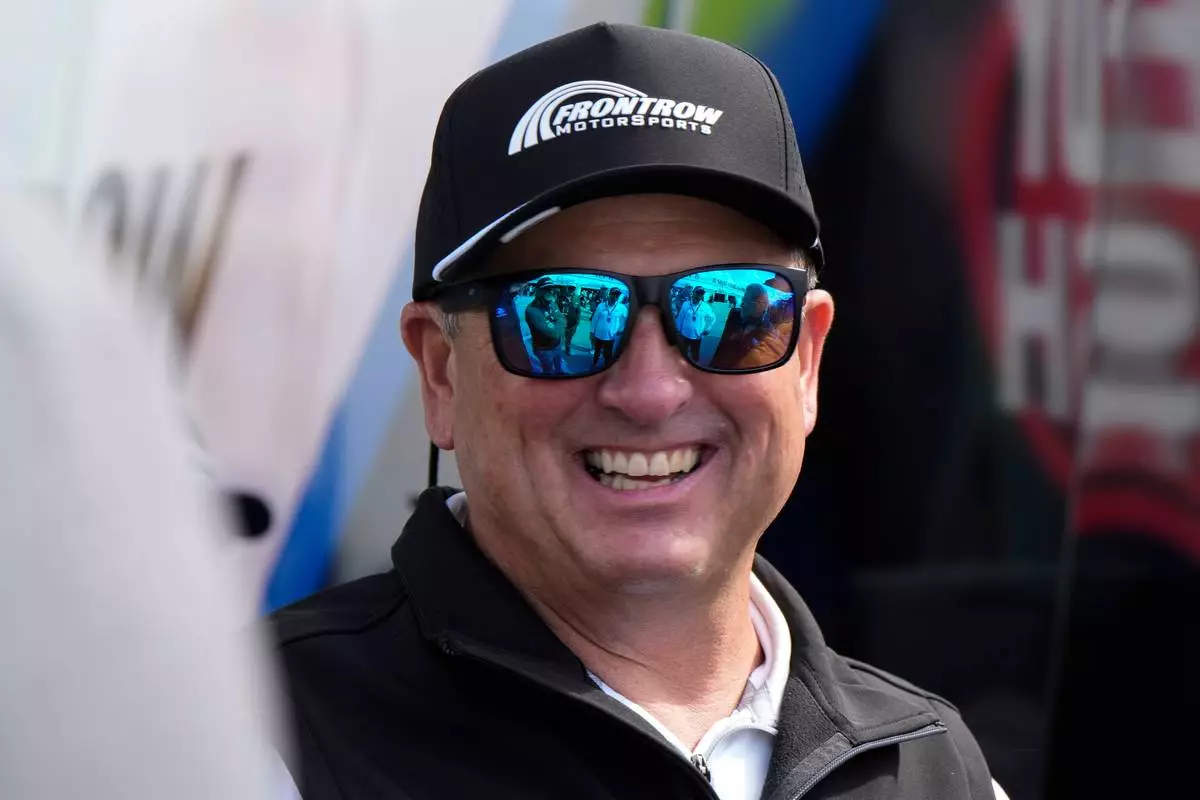
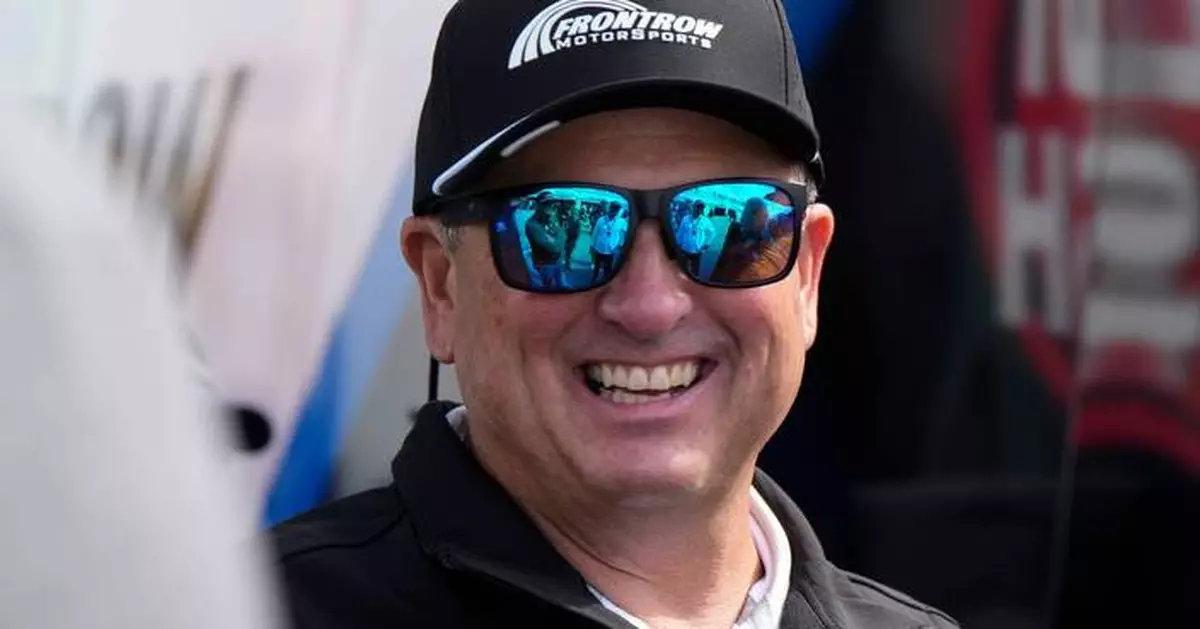
Front Row team owner Bob Jenkins stands near the driver meeting before the NASCAR Daytona 500 auto race at Daytona International Speedway, Sunday, Feb. 15, 2026, in Daytona Beach, Fla. (AP Photo/Nigel Cook)
WASHINGTON (AP) — President Donald Trump paid a price for going it alone on tariffs — with the Supreme Court on Friday delivering a rare rebuke by ruling he lacked the power to declare an economic emergency and launch sweeping new taxes on imports.
Trump had made tariffs the bedrock of his economic pitch to voters going into the midterm elections, even describing tariffs as his “favorite word in the dictionary.” He promised that factories would relocate from overseas and bring jobs with them, and he warned that losing the tariffs could plunge the U.S. into a deep recession.
But Friday’s ruling will most likely prolong political and economic chaos over international trade through the election year.
Trump described the ruling as “deeply disappointing” and “ridiculous,” adding that he was “absolutely ashamed” of the six Supreme Court justices who ruled against him "for not having the courage to do what’s right for our country.”
“They’re just being fools and lap dogs for the RINOs and the radical left Democrats,” Trump said of the high court majority in an afternoon press briefing, referring to “Republicans in Name Only.” “They’re very unpatriotic and disloyal to our Constitution.”
He vowed to bypass Congress and impose new tariffs on his own under existing law.
Trump learned of the decision after being handed a note during a private meeting with several governors in the morning, according to two people with knowledge of the president's reaction who spoke on the condition of anonymity. Another person, who was briefed on the conversation, disclosed that Trump said he has “to do something about these courts.”
The meeting with the governors ended shortly after Trump learned of the decision.
Republican strategist Doug Heye said it was immediately clear that the president “is not going to be happy" about the decision.
“We’re starting to hear about how this is a massive blow, a massive repudiation," he said.
However, Heye said Trump will try to find another way to pursue his trade agenda.
“Are they going to be able to figure out how to use this as an opportunity or not?" he asked. "There are too many questions.”
The White House plans to use alternative laws to preserve his tariffs, but those policies will only prolong the debate and keep alive an issue that is largely unpopular with voters.
About 6 in 10 Americans said Trump had gone too far on imposing new tariffs on other countries, according to an AP-NORC poll from January.
Even more worrisome for a president elected on the promise of fixing Americans’ concerns about affordability, 76% said in a poll conducted last April that Trump’s tariff policies would increase the cost of consumer goods in the U.S.
Trump’s aggressive use of tariffs had left many Republican lawmakers uneasy, publicly and privately, forcing them to defend what were essentially tax increases on the American public and businesses.
At various points during Trump’s second term, at least seven senators from the president's party have voiced their concerns. Earlier this month, six House Republicans joined with Democrats to vote for a resolution against Trump’s tariffs on Canada.
Indeed, free trade had long been a central plank of the Republican Party before Trump's rise to power.
Kentucky Sen. Mitch McConnell described Trump's assertion that he can bypass Congress to implement tariffs as “illegal” in a statement praising the Supreme Court's decision.
“Congress’ role in trade policy, as I have warned repeatedly, is not an inconvenience to avoid,” the former top Senate Republican said. “If the executive would like to enact trade policies that impact American producers and consumers, its path forward is crystal clear: convince their representatives under Article 1” of the Constitution.
Former Vice President Mike Pence, who served during Trump's first term, cheered the ruling as a victory for the public, the separation of powers enshrined in the Constitution and free trade.
“American families and American businesses pay American tariffs — not foreign countries,” Pence wrote on social media. “With this decision, American families and businesses can breathe a sigh of relief.”
Democrats were quick to seize on the opportunity given to them by the Supreme Court, with Rep. Suzan DelBene, D-Wash., saying that Trump “is not a king” and his “tariffs were always illegal.”
“Republicans in Congress could have easily ended this economic crisis by standing up for their communities," said DelBene, chair of the Democratic Congressional Campaign Committee. “Instead, they chose to bend the knee to Trump while families, small businesses, and farmers suffered from higher prices.”
The ruling essentially allows Trump's critics to say that he broke the law and that middle class families suffered as a result.
But Trump has claimed that his tariffs were the difference between national prosperity and deep poverty, a pitch he made on Thursday night to voters in the swing state of Georgia.
The president used the word “tariff” 28 times in his speech Thursday at a Georgia steel company, Coosa Steel, which credited the import taxes as making its products more competitive with goods from China.
“Without tariffs, this country would be in such trouble right now,” Trump charged.
Trump also complained that he had to justify his use of tariffs to the Supreme Court.
“I have to wait for this decision. I’ve been waiting forever, forever, and the language is clear that I have the right to do it as president,” he said. “I have the right to put tariffs on for national security purposes, countries that have been ripping us off for years.”
By a 6-3 vote, the high court said no.
The president has consistently misrepresented his tariffs, claiming despite evidence to the contrary that foreign governments would pay them and that the revenues would be sufficient to pay down the national debt and give taxpayers a dividend check.
New research tied to one of America’s leading banks found on Thursday that tariffs paid by midsize U.S. businesses tripled over the course of the past year.
The additional taxes have meant that companies that employ a combined 48 million people in the U.S. — the kinds of businesses that Trump had promised to revive — have had to find ways to absorb the new expense, by passing it along to customers in the form of higher prices, employing fewer workers or accepting lower profits.
Trump’s tariffs — not all of which were overturned — were expected to generate $3 trillion in revenues over 10 years, according to the Congressional Budget Office. That sum is large, but it would insufficient to cover the costs of the projected deficits.
The Supreme Court has not ruled on how any refund process would work.
Associated Press writer Steven Sloan contributed to this report.
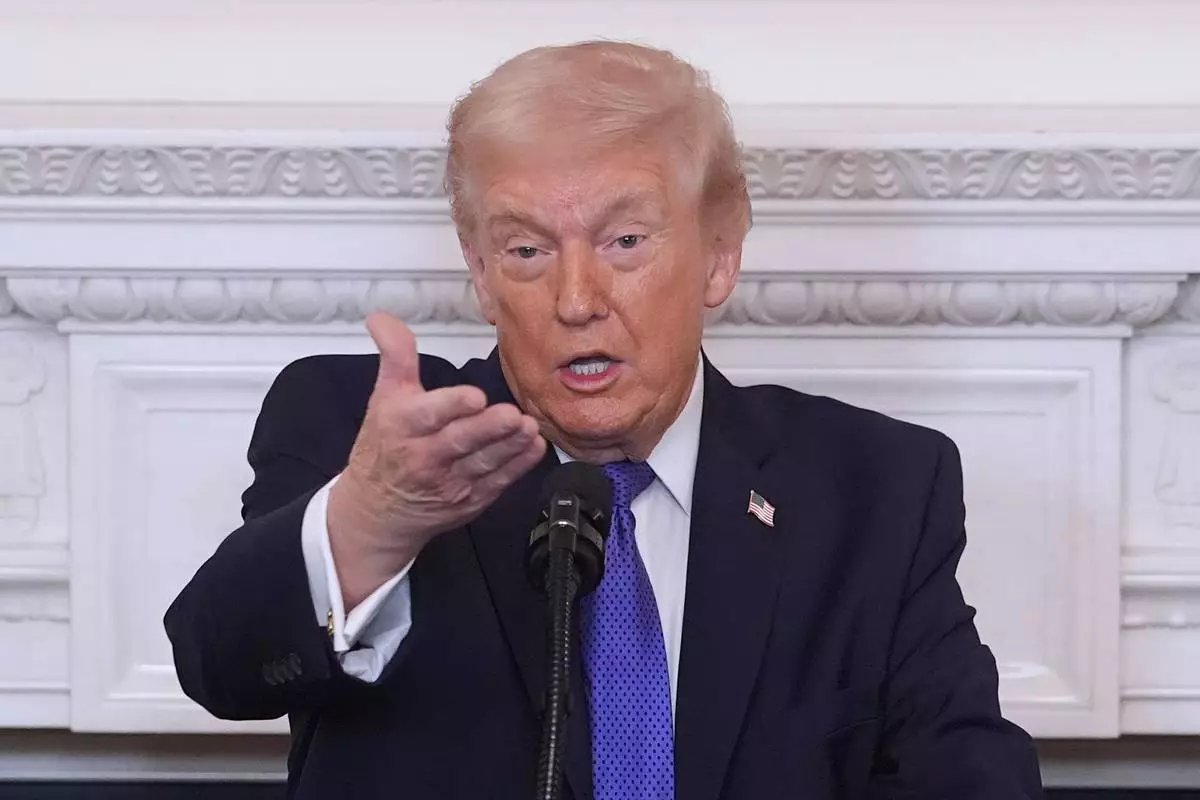
President Donald Trump speaks during a breakfast with the National Governors Association in the State Dining Room of the White House, Friday, Feb. 20, 2026, in Washington. (AP Photo/Evan Vucci)