Skip to Content Facebook Feature Image

Texas man was fatally shot by a federal immigration agent last year during a stop, new records show

News

Texas man was fatally shot by a federal immigration agent last year during a stop, new records show
News

News

Texas man was fatally shot by a federal immigration agent last year during a stop, new records show

2026-02-21 07:49 Last Updated At:08:01

WASHINGTON (AP) — Newly released records show a U.S. citizen was shot and killed in Texas by a federal immigration agent last year during a late-night traffic encounter that was not publicly disclosed by the Department of Homeland Security.

The death of Ruben Ray Martinez, 23, would mark the earliest of at least six deadly shootings by federal officers since the start of a nationwide immigration crackdown in President Donald Trump’s second term. On Friday, DHS said the shooting on South Padre Island last March occurred after the driver intentionally struck an agent.

The shooting involved a Homeland Security Investigations team that was conducting an immigration enforcement operation in conjunction with local police, according to documents obtained by American Oversight, a nonprofit watchdog group based in Washington.

The records are part of a tranche of heavily redacted internal documents from Immigration and Customs Enforcement that the nonprofit obtained as part of a Freedom of Information Act lawsuit.

Though Martinez's death on March 15, 2025, was reported by local media outlets at the time, federal and state authorities did not disclose that the shooting involved the team from HSI. In a statement Friday, DHS said the driver who was killed “intentionally ran over a Homeland Security Investigation special agent,” resulting in another agent firing “defensive shots to protect himself, his fellow agents, and the general public.”

The department did not respond to questions about why it had made no media release or other public notification of the officer-involved shooting over the last 11 months.

Martinez's mother, Rachel Reyes, said her son was just days past his 23rd birthday when he and his best friend drove from San Antonio down to the beach for the weekend to celebrate. South Padre Island, located on the Gulf Coast just north of the U.S.-Mexico border, is a renowned spring break destination that attracts tens of thousands of college-aged partiers each March.

Martinez worked at an Amazon warehouse, liked to play video games and hang out with friends. His mother said he had never had any prior run-ins with law enforcement.

“He was a typical young guy,” Reyes told The Associated Press. “He never really got a chance to go out and experience things. It was his first time getting to go out of town. He was a nice guy, humble guy. And he wasn’t a violent person at all.”

According to an internal two-page ICE incident report included in the newly disclosed documents, shortly after midnight, HSI officers were assisting South Padre Island police by redirecting traffic through a busy intersection after a vehicle accident with several injuries.

A blue, four-door Ford with a driver and passenger approached the officers, who ordered the driver to stop. The report does not say why. Initially, the driver didn't respond to commands but did eventually come to a stop, according to the report.

Agents then surrounded the vehicle, telling those inside to get out, but the driver “accelerated forward” and struck an HSI special agent “who wound up on the hood of the vehicle,” the report said. An HSI supervisory special agent standing by the side of the car then fired his weapon multiple times through the open driver’s side window, and the vehicle stopped.

Paramedics already on the scene of the accident quickly provided medical aid and the driver was taken by ambulance to a regional hospital in Brownsville, where he was pronounced dead, according to the report. The passenger, also a U.S. citizen, was taken into custody.

The HSI officer who the report says was struck by the vehicle was treated for an unspecified knee injury at a nearby hospital and released.

The names of the two HSI agents involved in the shooting and the names of the two men in the car were all redacted from the ICE report, but Reyes confirmed the dead driver was her son. She said he was shot three times.

The report says the Texas Rangers responded to the shooting scene and took the lead as the primary agency investigating the shooting.

Reyes said she first learned her son had been shot by a federal agent, rather than a local police officer, about a week after he was killed. She was contacted by an investigator from the Rangers who she said told her there were videos of the shooting that contradicted the account provided by federal agents. DHS did not immediately respond to an email Friday about the claim that there is video showing a different account.

She said she was told by the investigator that the state report into the shooting was completed in October and that the case would be presented to a grand jury for potential criminal charges.

The Texas Department of Public Safety, which includes the Rangers, said in a statement Friday that the investigation into the shooting is still “active” and declined to offer more information.

Messages left with the office of Cameron County District Attorney Luis V. Saenz, an elected Democrat whose jurisdiction includes South Padre Island, received no response Friday. South Padre Island Police Chief Claudine O’Carroll also did not respond to requests for comment.

Attorneys for the family said Friday they have spent the past year pursuing accountability and transparency.

“It is critical that there is a full and fair investigation into why HSI was present at the scene of a traffic collision and why a federal officer shot and killed a U.S. citizen as he was trying to comply with instructions from the local law enforcement officers directing traffic,” attorneys Charles M. Stam and Alex Stamm said in a statement.

According to the ICE report, the HSI agents involved in the shooting were part of a maritime border enforcement security task force typically focused on combating transnational criminal organizations at seaports. Over the last year, however, officers from across multiple federal agencies have been reassigned to prioritize immigration enforcement.

In January, Renee Good, a 37-year-old mother in Minneapolis, was killed in the driver's seat of her SUV by ICE officer Jonathan Ross. Trump administration officials initially attempted to paint Good as a “domestic terrorist” who tried to ram officers with her vehicle before multiple videos emerged of the incident that cast doubt on the government's narrative.

As in the Good case, experts in police training and tactics questioned why a federal officer apparently positioned himself in front of Martinez's vehicle.

“You don’t stand in front of the car, you don’t put yourself in harm's way,” said Geoffrey Alpert, a police use-of-force expert at the University of South Carolina. He added that there’s never a scenario where it’s justified, “because you don’t know whether this person is going to flee, and if he flees, you could be dead.”

Alpert said investigators will likely review any available body camera video or other footage to examine how swiftly Martinez moved the car forward, if he merely took his foot off the break or pressed down hard on the accelerator.

Martinez's mother said she didn't believe he would ever intentionally assault a law enforcement officer.

“They didn’t give him a chance," Reyes said. “It’s so excessive. They could have done anything else besides that. It’s like they shoot first and ask questions later.”

Bedayn reported from Denver.
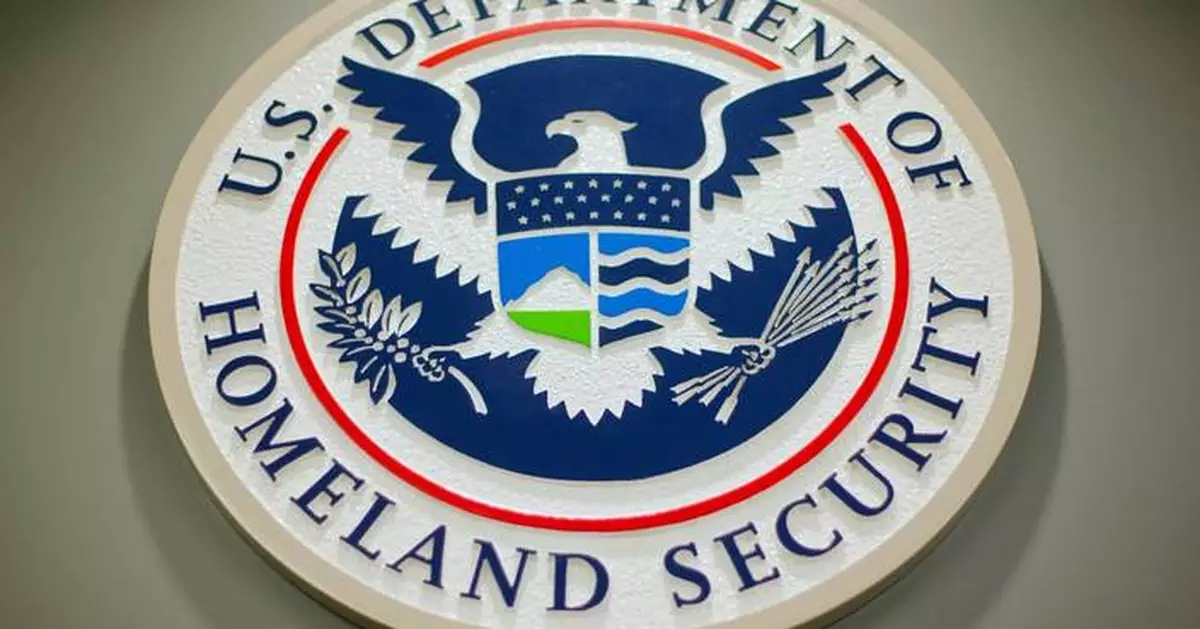
FILE - The Department of Homeland Security logo during a news conference in Washington, Feb. 25, 2015. (AP Photo/Pablo Martinez Monsivais, File)

FILE - The Department of Homeland Security logo during a news conference in Washington, Feb. 25, 2015. (AP Photo/Pablo Martinez Monsivais, File)
WASHINGTON (AP) — There’s little that Donald Trump has cherished more in his second term than tariffs, a symbol of his imperious approach to the presidency. He has raised and lowered them at will, rewriting the rules of global commerce and daring anyone to stop him.

Now that may be over, the victim of a stunning rebuke from the Supreme Court on Friday. After more than a year of expanding his power, Trump had run into a rare limit.

It was a loss that Trump couldn't quite accept, and the president claimed he would use other laws to impose alternative tariffs. He even said that the end of this particular legal battle would bring “great certainty” to the economy.

But if anything, Friday opened a new chapter in Trump’s ongoing tariffs drama and raised urgent questions about his ability to make good on his promises of an economic revival. The ruling will most likely prolong chaos over international trade through the midterm elections, with much unknown about Trump's next steps and whether roughly $175 billion in import taxes that the Supreme Court struck down will be refunded.

The president chose, as he often does, to scorn the patriotism of those who disagree with him.

He said the ruling was “deeply disappointing” and “ridiculous,” adding that he was “absolutely ashamed” of the six Supreme Court justices who ruled against him "for not having the courage to do what’s right for our country.”

Trump described the justices as “fools and lapdogs” who are “very unpatriotic and disloyal to our Constitution.”

The president said on social media Friday night that he had signed an executive order enabling him to bypass Congress and impose a 10% tax on imports from around the world. The government would begin national security investigations in order to charge new tariffs on specific products as well. The 10% tariffs are legally capped at 150 days, but Trump brushed off a question about the limit by saying "we have a right to do pretty much what we want to do.”

All of that means Trump's tariff timelines are likely to collide with the midterm elections for control of the House and Senate.

Trump learned of the Supreme Court's decision during a private meeting with governors in the morning when he was handed a note, according to two people with knowledge of the president's reaction who spoke on the condition of anonymity. They said he called it “a disgrace.”

Another person, who was briefed on the conversation, disclosed that Trump said he has “to do something about these courts.”

The meeting with the governors ended shortly thereafter.

Looming over Trump's legal debacle has been voters' frustration with the tariffs, which have been linked to higher prices and a slowdown in hiring.

The president has consistently misrepresented his tariffs, claiming despite evidence to the contrary that foreign governments would pay them and that the revenues would be sufficient to pay down the national debt and give taxpayers a dividend check.

After Trump announced worldwide tariffs last April, an AP-NORC poll found that 76% of Americans said the policies would increase the cost of consumer goods — a worrisome sign for a president elected on the promise of addressing years of inflation.

Another poll, conducted in January, said about 6 in 10 Americans said Trump had gone too far in imposing new tariffs on other countries.

Trump’s aggressive use of tariffs had left many Republican lawmakers uneasy, publicly and privately, forcing them to defend what were essentially tax increases on the American public and businesses.

At various points during Trump’s second term, at least seven senators from the president's party have voiced their concerns. Earlier this month, six House Republicans joined with Democrats to vote for a resolution against Trump’s tariffs on Canada.

Indeed, free trade had long been a central plank of the Republican Party before Trump's rise to power.

Kentucky Sen. Mitch McConnell described Trump's assertion that he can bypass Congress to implement tariffs as “illegal” in a statement praising the Supreme Court's decision.

“Congress’ role in trade policy, as I have warned repeatedly, is not an inconvenience to avoid,” the former top Senate Republican said. “If the executive would like to enact trade policies that impact American producers and consumers, its path forward is crystal clear: convince their representatives under Article 1” of the Constitution.

Former Vice President Mike Pence, who served during Trump's first term, cheered the ruling.

“American families and American businesses pay American tariffs — not foreign countries,” Pence wrote on social media. “With this decision, American families and businesses can breathe a sigh of relief.”

Democrats were quick to seize on the Supreme Court ruling to say Trump broke the law and middle-class families suffered as a result.

Rep. Suzan DelBene, D-Wash., said Trump “is not a king” and his “tariffs were always illegal.”

“Republicans in Congress could have easily ended this economic crisis by standing up for their communities," said DelBene, chair of the Democratic Congressional Campaign Committee. “Instead, they chose to bend the knee to Trump while families, small businesses and farmers suffered from higher prices.”

Trump has claimed that his tariffs were the difference between national prosperity and deep poverty, a pitch he made Thursday to voters in the swing state of Georgia.

The president used the word “tariff” 28 times in his speech at a Georgia steel company, Coosa Steel, which credited the import taxes as making its products more competitive with goods from China.

“Without tariffs, this country would be in such trouble right now,” Trump insisted.

Trump also complained that he had to justify his use of tariffs to the Supreme Court.

“I have to wait for this decision. I’ve been waiting forever, forever, and the language is clear that I have the right to do it as president,” he said. “I have the right to put tariffs on for national security purposes, countries that have been ripping us off for years.”

By a 6-3 vote, the high court said no.

Associated Press writer Steven Sloan contributed to this report.

President Donald Trump speaks during a press briefing at the White House, Friday, Feb. 20, 2026, in Washington. (AP Photo/Allison Robbert)

President Donald Trump speaks during a press briefing at the White House, Friday, Feb. 20, 2026, in Washington. (AP Photo/Allison Robbert)

President Donald Trump speaks during a press briefing at the White House, Friday, Feb. 20, 2026, in Washington. (AP Photo/Evan Vucci)

President Donald Trump speaks during a press briefing at the White House, Friday, Feb. 20, 2026, in Washington. (AP Photo/Evan Vucci)

President Donald Trump arrives to speak with reporters in the James Brady Press Briefing Room at the White House, Friday, Feb. 20, 2026, in Washington. (AP Photo/Alex Brandon)

President Donald Trump arrives to speak with reporters in the James Brady Press Briefing Room at the White House, Friday, Feb. 20, 2026, in Washington. (AP Photo/Alex Brandon)

President Donald Trump speaks during a breakfast with the National Governors Association in the State Dining Room of the White House, Friday, Feb. 20, 2026, in Washington. (AP Photo/Evan Vucci)

President Donald Trump speaks during a breakfast with the National Governors Association in the State Dining Room of the White House, Friday, Feb. 20, 2026, in Washington. (AP Photo/Evan Vucci)

Recommended Articles