Skip to Content Facebook Feature Image

Las Vegas police investigate terrorism event after vehicle rammed into power substation

News

Las Vegas police investigate terrorism event after vehicle rammed into power substation
News

News

Las Vegas police investigate terrorism event after vehicle rammed into power substation

2026-02-21 09:13 Last Updated At:09:20

LAS VEGAS (AP) — Las Vegas police say they're investigating a car that rammed into a power substation Thursday as a " terrorism-related event."

There's no ongoing threat to the public, Las Vegas Metropolitan Police Department Sheriff Kevin McMahill said during a news conference Friday.

Police received a 911 call at 10 a.m. Thursday reporting a vehicle crash through a secured gate at the substation in Boulder City, located approximately 25 miles (40 kilometers) southeast of Las Vegas, McMahill said.

The driver of the vehicle was 23-year-old Dawson Maloney from Albany, New York, who was reported missing and died from a self-inflicted gunshot wound, McMahill said.

The man had communicated with family before the crash, referencing self-harm, and said he was going to commit an act that would place him on the news. He referred to himself as a terrorist in a message sent to his mother, according to police.

Authorities found explosive materials and multiple books “related to extremist ideologies” in Maloney’s hotel room, McMahill said. The books included ones about right- and left-wing extremism, environmental extremism, white supremacism and anti-government ideology, he said.

“These findings significantly elevate the seriousness of this incident,” McMahill said.

Maloney is listed as a student at Albany Law School in the class of 2027. He was also an honors student for multiple semesters at Siena University, located in New York.

Two shotguns, an assault rifle-style pistol, and flame throwers were found in his rental car, McMahill said. Maloney was wearing what police described as “soft-body armor.”

Authorities recovered a 3D printer and several gun components needed to assemble a firearm from an Albany residence. Maloney had driven a rental car from Albany to Boulder City, according to Christopher Delzano, the FBI's Las Vegas special agent-in-charge.

Boulder City is a historic town and home to the Hoover Dam, which is considered one of the country’s modern civil engineering wonders. The dam provides water to millions of people and generates an average of 4 billion kilowatt-hours of hydroelectric power each year for Nevada, Arizona and California.

The power substation that was rammed is owned by the Los Angeles Department of Water and Power. The facility works closely with Hoover Dam and transfers power to the Los Angeles basin, McMahill said. The Los Angeles Department of Water and Power said in a statement to The Associated Press that it is aware of the incident, and there were no impacts or disruptions to its operations.

Boulder City Police Chief Timothy Shea said there is no evidence of major damage to critical infrastructure and no service disruptions.

A similar incident occurred in 2023 when a man rammed a car through a fence at a solar power facility in the desert northeast of Las Vegas, setting the car on fire. The solar power facility served Las Vegas Strip casinos. He was declared unfit for trial. That attack followed several incidents and arrests involving electrical substations in states including Washington, Oregon and North Carolina and concerns expressed by federal officials about the security of the nation’s electricity transmission network.

“We are heartbroken to hear of the tragic passing of one of our law students, Dawson Maloney, in an off-campus incident,” said Tom Torello, director of communications and marketing at Albany Law School, in a statement.
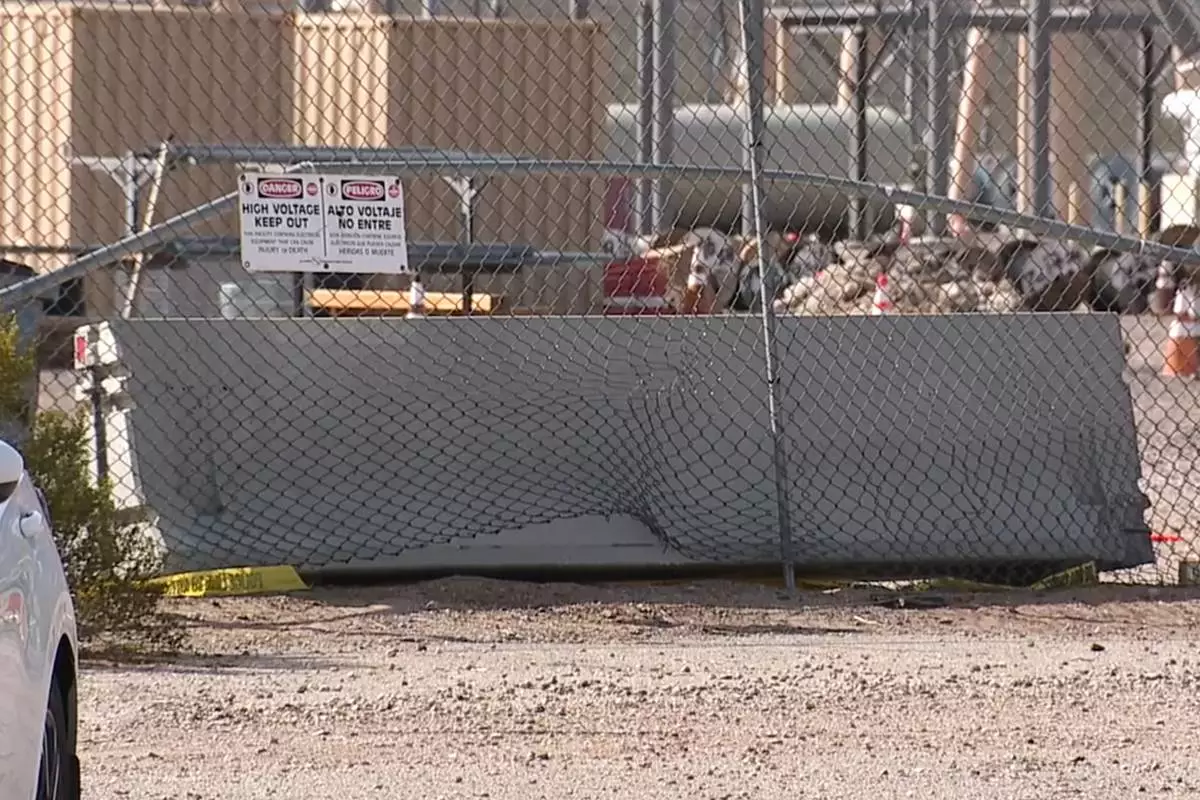
This photo provided by KTNV shows damage to a fence outside a power substation, where authorities say they are investigating a car collision, on Thursday, Feb. 19, 2026, in Boulder City, Nevada. (KTNV via AP)
This photo provided by KTNV shows damage to a fence outside a power substation, where authorities say they are investigating a car collision, on Thursday, Feb. 19, 2026, in Boulder City, Nevada. (KTNV via AP)

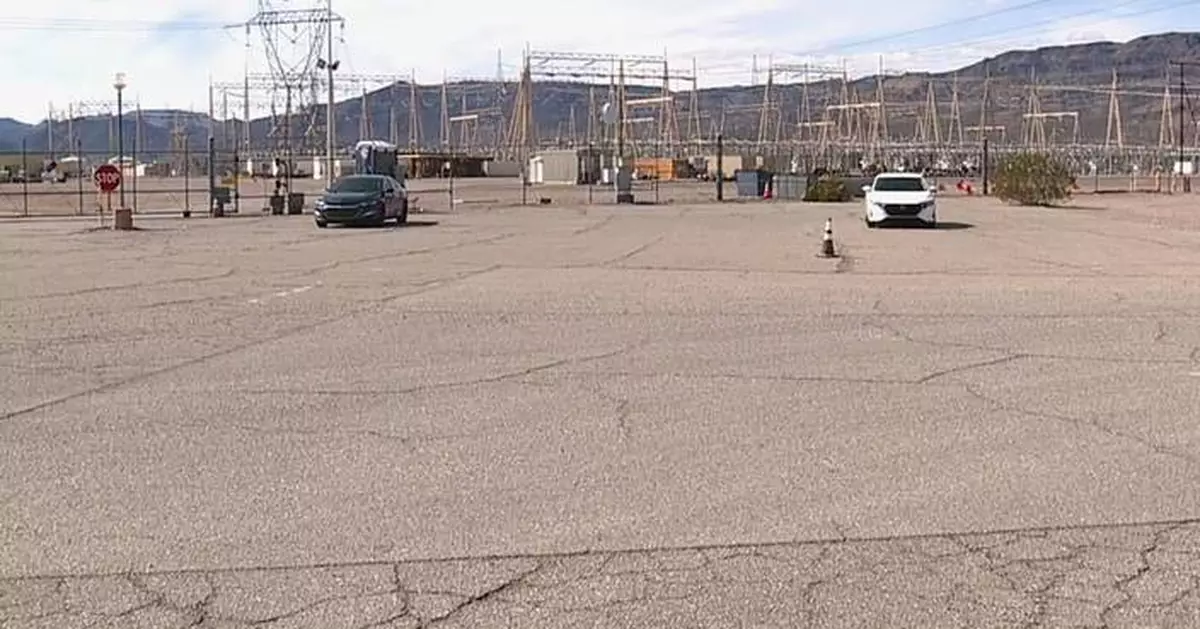
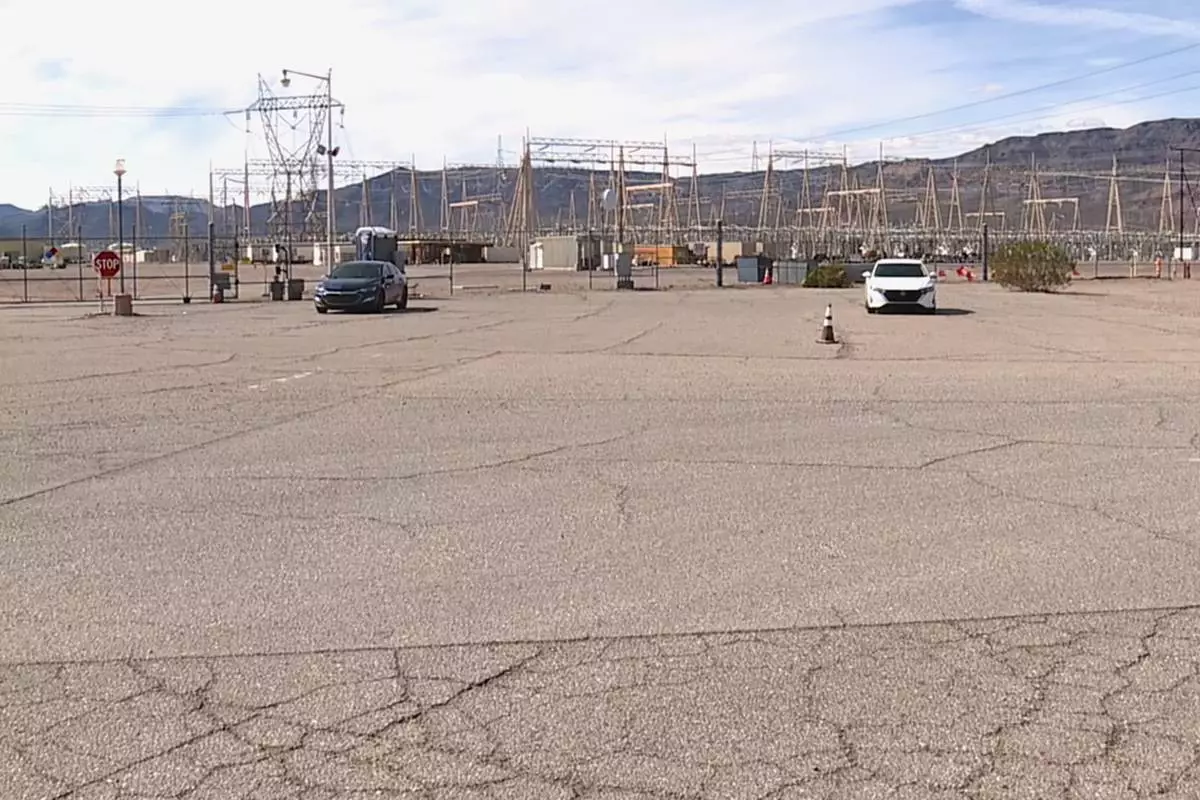
This photo provided by KTNV shows a power substation, where authorities say they are investigating a car collision, on Thursday, Feb. 19, 2026, in Boulder City, Nevada. (KTNV via AP)
This photo provided by KTNV shows a power substation, where authorities say they are investigating a car collision, on Thursday, Feb. 19, 2026, in Boulder City, Nevada. (KTNV via AP)
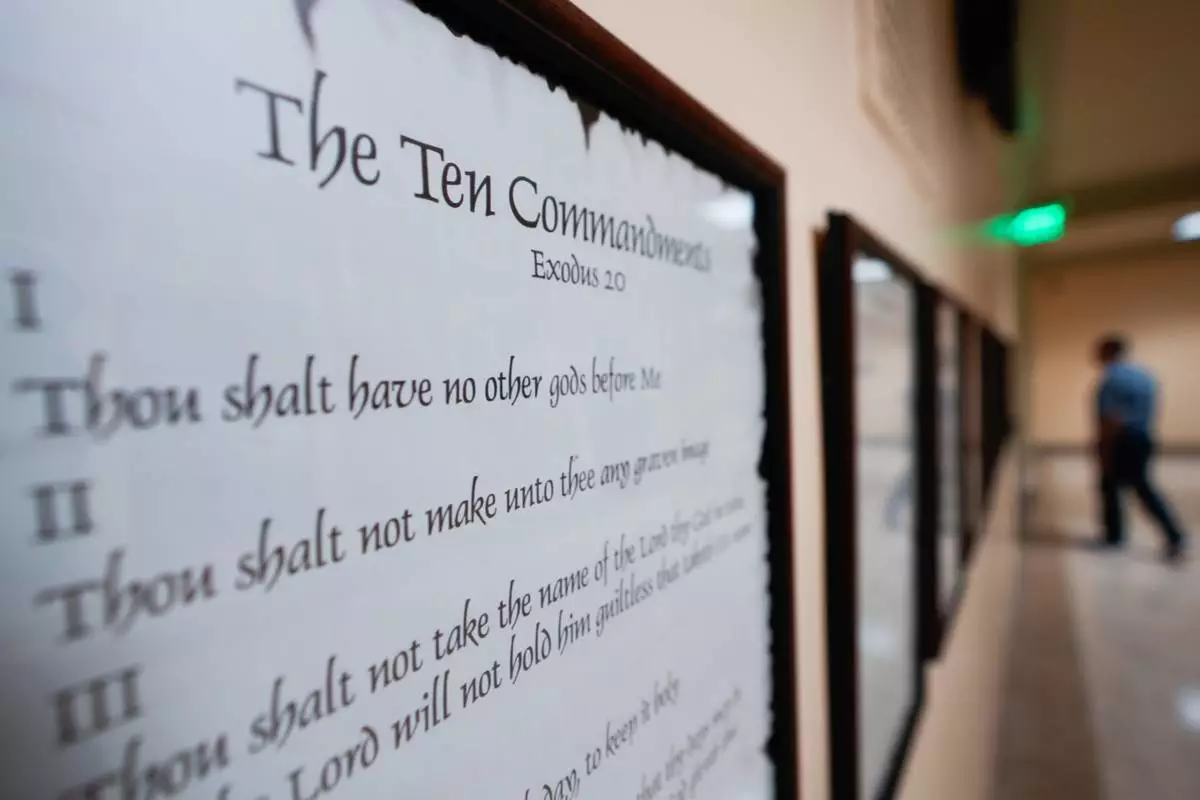
A U.S. appeals court has cleared the way for a Louisiana law requiring poster-sized displays of the Ten Commandments in public classrooms to take effect.

The 5th Circuit Court of Appeals voted 12-6 to lift a block that a lower court first placed on the law in 2024. In the opinion released Friday, the court said it was too early to make a judgment call on the constitutionality of the law.

That’s partly because it’s not yet clear how prominently schools may display the religious text, if teachers will refer to the Ten Commandments during classes, or if other things like the Mayflower Compact or Declaration of Independence will also be displayed, the majority opinion said.

Without those sorts of details, the panel decided it didn’t have enough information to weigh any First Amendment issues that might arise from the law. In other words, there aren’t enough facts available to “permit judicial judgment rather than speculation,” the majority wrote in the opinion.

But the six judges who voted against the decision wrote a series of dissents, some arguing that the case was ripe for judicial review and others saying that the law exposes children to government-endorsed religion in a place they are required to be, presenting a clear constitutional burden.

Circuit Judge James L. Dennis wrote that the law "is precisely the kind of establishment the Framers anticipated and sought to prevent.”

The ruling comes after the full court heard arguments in the cases in January 2026 following a ruling by a three-judge panel of the court that Louisiana’s law was unconstitutional. Arkansas also has a similar law that has been challenged in federal court.

Texas law’ took effect on Sept. 1, marking the largest attempt in the nation to hang the Ten Commandments in public schools. Multiple school districts were barred from posting them after federal judges issued injunctions in two cases against the law, but they have already gone up in many classrooms across the state as districts paid to have the posters printed themselves or accepted donations.

The laws are among the pushes by Republicans, including President Donald Trump, to incorporate religion into public school classrooms. Critics say it violates the separation of church and state while backers argue that the Ten Commandments are historical and part of the foundation of U.S. law.

The laws have been challenged by families representing a variety of religions, including Christianity, Judaism and Hinduism, and clergy, in addition to nonreligious families.

In 1980, the U.S. Supreme Court ruled that a similar Kentucky law violated the Establishment Clause of the U.S. Constitution, which says Congress can “make no law respecting an establishment of religion.” The court found that the law had no secular purpose but served a plainly religious purpose.

And in 2005, the Supreme Court held that such displays in a pair of Kentucky courthouses violated the Constitution. At the same time, the court upheld a Ten Commandments marker on the grounds of the Texas state Capitol in Austin.

This story has been updated to correct the day of the week the ruling was issued to Friday, not Tuesday.

FILE - A copy of the Ten Commandments is posted along with other historical documents in a hallway of the Georgia Capitol, June 20, 2024, in Atlanta. (AP Photo/John Bazemore, File)

FILE - A copy of the Ten Commandments is posted along with other historical documents in a hallway of the Georgia Capitol, June 20, 2024, in Atlanta. (AP Photo/John Bazemore, File)

Recommended Articles