CORTINA D'AMPEZZO, Italy (AP) — No surprise: Germany's Johannes Lochner is the leader midway through the four-man bobsled race at the Milan Cortina Olympics.
And he's well on his way to ending his career with double Olympic gold.
Click to Gallery

Germany's Francesco Friedrich, center right, arrives at the finish during a four man bobsled run at the 2026 Winter Olympics, in Cortina d'Ampezzo, Italy, Saturday, Feb. 21, 2026. (AP Photo/Alessandra Tarantino)
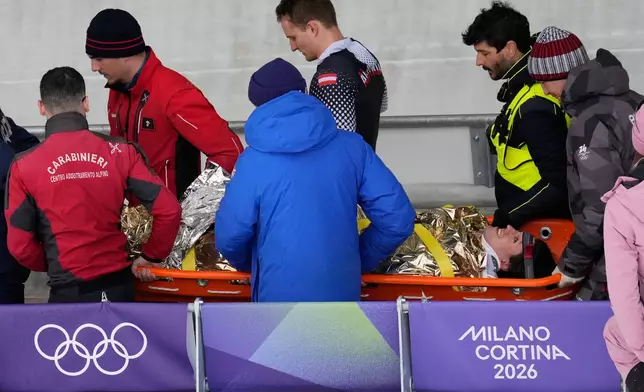
Team members and rescue workers carry an injured athlete after Austria's team Jakob Mandlbauer, Daniel Bertschler, Sebastian Mitterer and Daiyehan Nichols-Bardi crashed during a four man bobsled run at the 2026 Winter Olympics, in Cortina d'Ampezzo, Italy, Saturday, Feb. 21, 2026. (AP Photo/Aijaz Rahi)
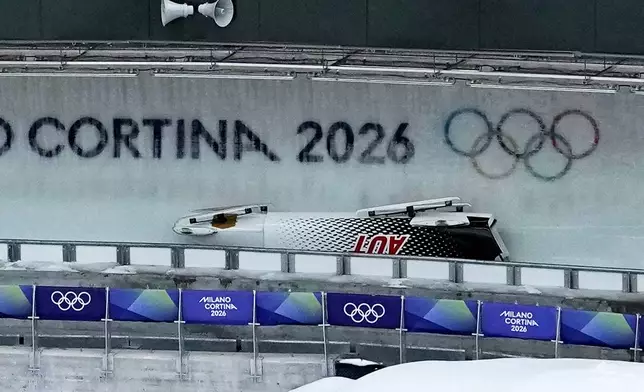
Austria's team Jakob Mandlbauer, Daniel Bertschler, Sebastian Mitterer and Daiyehan Nichols-Bardi crashes during a four man bobsled run at the 2026 Winter Olympics, in Cortina d'Ampezzo, Italy, Saturday, Feb. 21, 2026. (AP Photo/Aijaz Rahi)
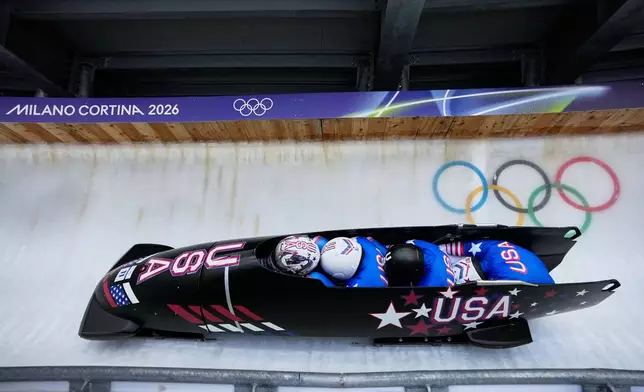
United States' Kristopher Horn, left, Caleb Furnell, Hunter Powell and Carsten Vissering slide down the track during a four man bobsled run at the 2026 Winter Olympics, in Cortina d'Ampezzo, Italy, Saturday, Feb. 21, 2026. (AP Photo/Aijaz Rahi)
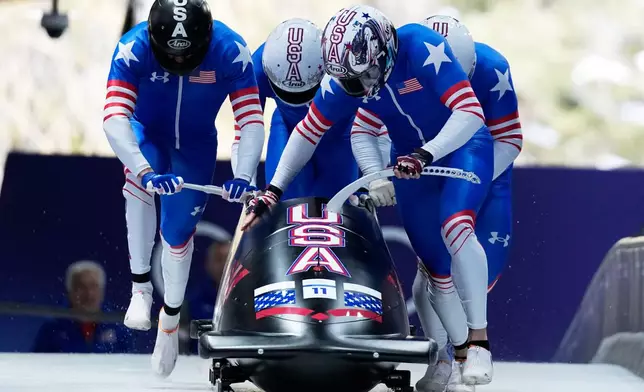
United States' Kristopher Horn, front, Caleb Furnell, Hunter Powell and Carsten Vissering start for a four man bobsled run at the 2026 Winter Olympics, in Cortina d'Ampezzo, Italy, Saturday, Feb. 21, 2026. (AP Photo/Alessandra Tarantino)
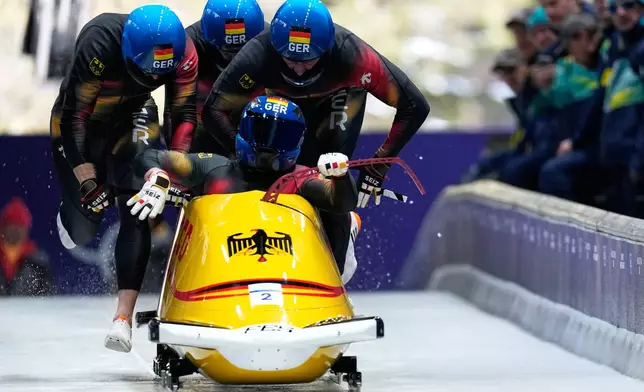
Germany's Francesco Friedrich, front, Matthias Sommer, Alexander Schuller and Felix Straub start for a four man bobsled run at the 2026 Winter Olympics, in Cortina d'Ampezzo, Italy, Saturday, Feb. 21, 2026. (AP Photo/Alessandra Tarantino)
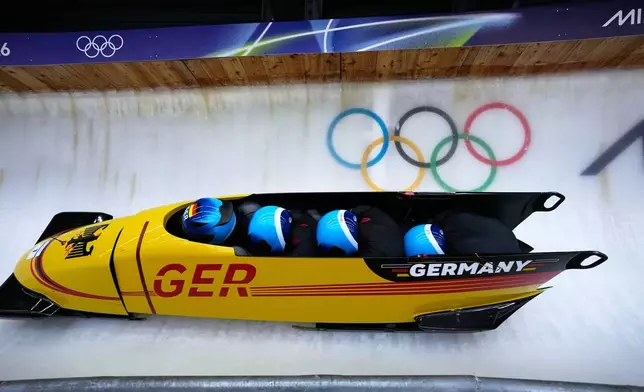
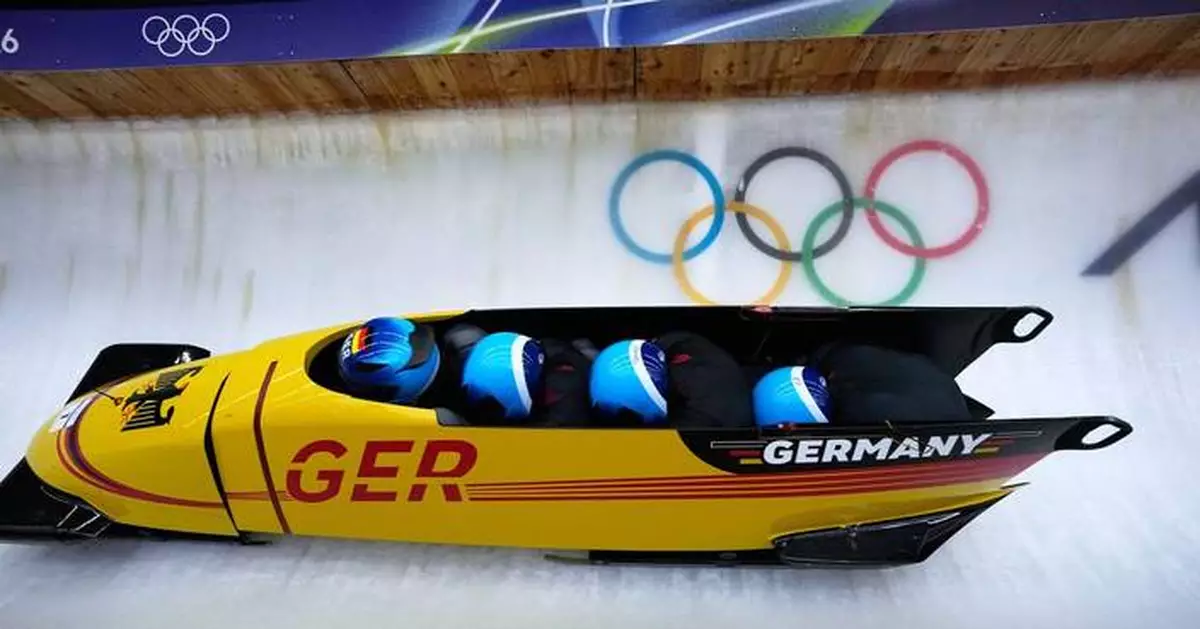
Germany's Johannes Lochner, left, Thorsten Margis, Jorn Wenzel and Georg Fleischauer slide down the track during a four man bobsled run at the 2026 Winter Olympics, in Cortina d'Ampezzo, Italy, Saturday, Feb. 21, 2026. (AP Photo/Aijaz Rahi)
Lochner and his team — Thorsten Margis, Jorn Wenzel and Georg Fleischhauer — finished their first two runs of the four-heat event Saturday in 1 minute, 48.61 seconds. That was 0.43 seconds faster than the time posted by four-time Olympic champion and fellow German Francesco Friedrich in his first two runs.
“It was a really great one, the first (run). The second one we had problems, especially at the start and in the middle part of the track," Lochner said. "In the end, we are really happy with the result right now.”
Germany — which also swept the medals in two-man — holds all three medal spots at the midpoint: Adam Ammour, who had the fastest time in the second heat, is third, 0.59 seconds back.
The medal-deciding runs are Sunday — the final day of the Olympics.
For the U.S., Kris Horn — who couldn't compete in two-man at these Olympics because he didn't finish enough races in the World Cup season — finally got his Games underway and is ninth after two runs. Horn is sliding with Caleb Furnell, Hunter Powell and Carsten Vissering.
“We had such a long break," Horn said. "I was hoping I still know how to drive.”
Turns out, he does. He's exactly 1 second off the lead, but within 0.22 seconds of fifth and 0.41 seconds of the bronze medal spot.
The goal for Sunday?
“To push faster," Horn said. “We want start rank 1 and then pick off some people at the bottom.”
Frank Del Duca, an opening ceremony flagbearer for the U.S. who started 27th in the 27-sled field — meaning he got some seriously chewed-up ice to deal with in his opening run — is 12th for the Americans. Del Duca has Boone Niederhofer, Bryan Sosoo and Josh Williamson in his sled.
"The ice crew here in Italy is doing a phenomenal job. But the sled’s weight is close to 1,400 pounds and they’re experiencing four-plus Gs," Del Duca said. "We’re going 85 mph. And the runners are only as wide as your finger. So, they really dig into the ice, so much so that certain profiles of the corner can change on the entrance. If that’s where you’re supposed to steer and everyone’s steering in the same spot, you’d be surprised just how chopped the ice can get.
"But that being said, that’s the start draw we earned, and we’re going to keep fighting.”
Jamaica, always a fan favorite at the Olympics and the Milan Cortina Games are no exception, is 22nd going into Sunday. Only the top 20 sleds after three heats qualify for the final run on Sunday, meaning pilot Shane Pitter has to make up at least 0.11 seconds of time to get into the last heat.
There were three crashes in the second heat, after a relatively crash-free Olympics in all three sliding sports — skeleton, luge and bobsled.
The second heat of four-man was delayed for about 20 minutes after Austrian pilot Jakob Mandlbauer lost control of his sled and crashed around the midpoint of the track. Mandlbauer was taken off the track on a stretcher and brought by ambulance to a nearby hospital for evaluation.
There was no immediate word on the severity of his injuries. Austrian officials said he had movement in his extremities.
Also crashing: the French sled driven by Romain Heinrich, and the sled from Trinidad and Tobago piloted by Axel Brown. Because their sleds didn't cross the finish line, they won't be racing when the event resumes Sunday.
Lochner still has the sizable lead, but his perfect record in heats at Cortina is now gone. He had been 9-for-9 in competitive runs at the track since it opened last fall, finishing first in each of them — sweeping the two- and four-man events at the World Cup opener in November, then winning all four heats of the Olympic two-man race and the first heat of four-man.
But Ammour had the fastest time in the second heat, keeping somewhat within reach.
Lochner's margin of 0.39 seconds was the biggest after one run of an Olympic four-man competition since the 1952 Oslo Games. But Ammour's blazing second run means Lochner won't be the second pilot to sweep all eight heats in men's bobsled during the same Olympics.
Anderl Ostler — who pulled off that feat 74 years ago at those Oslo Olympics — will remain alone in that club. Wolfgang Hoppe nearly did it in at the 1984 Sarajevo Games, winning seven of eight heats and finishing 0.01 seconds back in the other.
Lochner can still be the seventh pilot to sweep both men's bobsled events in an Olympics, joining Ostler (1952), Italy's Eugenio Monti (1968), then-East Germany's Meinhard Nehmer (1976), Hoppe (1984), Germany's Andre Lange (2006), and Friedrich (2018 and 2022).
“Sled fast, start fast," Lochner said. "Then we’ll have something to celebrate, hopefully.”
AP Winter Olympics: https://apnews.com/hub/milan-cortina-2026-winter-olympics
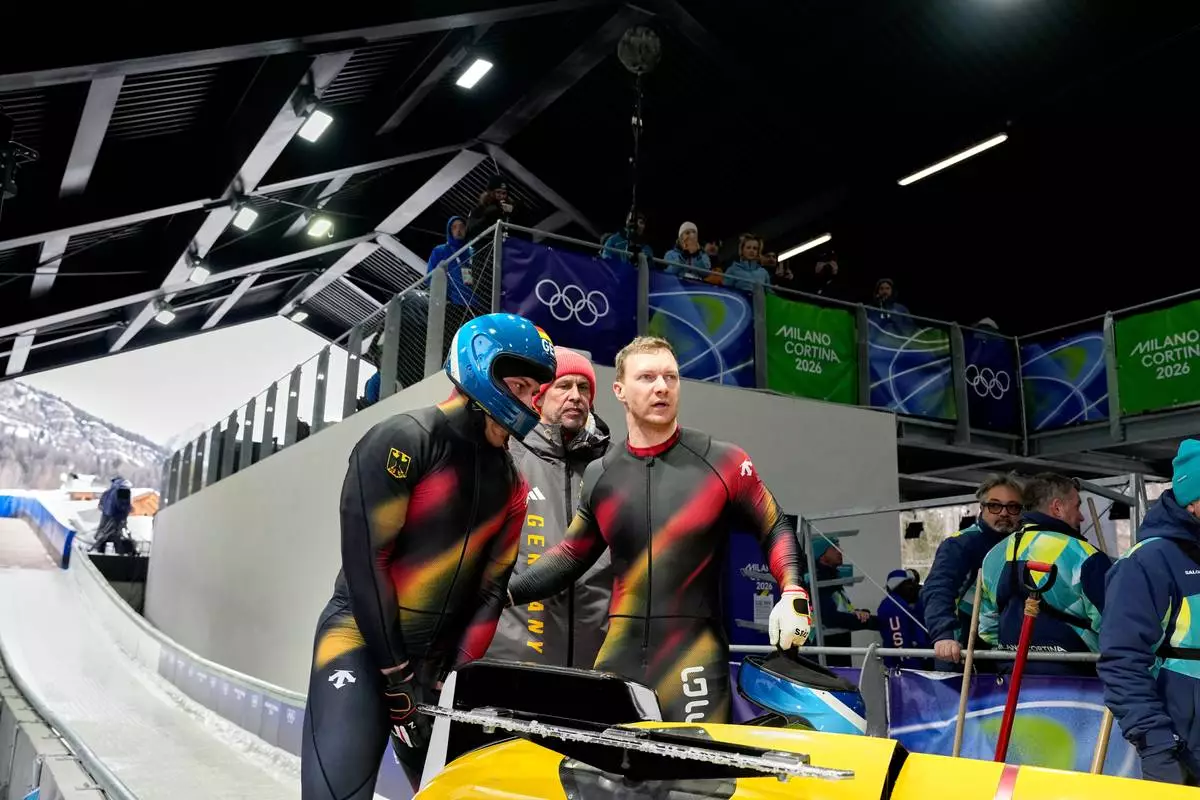
Germany's Francesco Friedrich, center right, arrives at the finish during a four man bobsled run at the 2026 Winter Olympics, in Cortina d'Ampezzo, Italy, Saturday, Feb. 21, 2026. (AP Photo/Alessandra Tarantino)
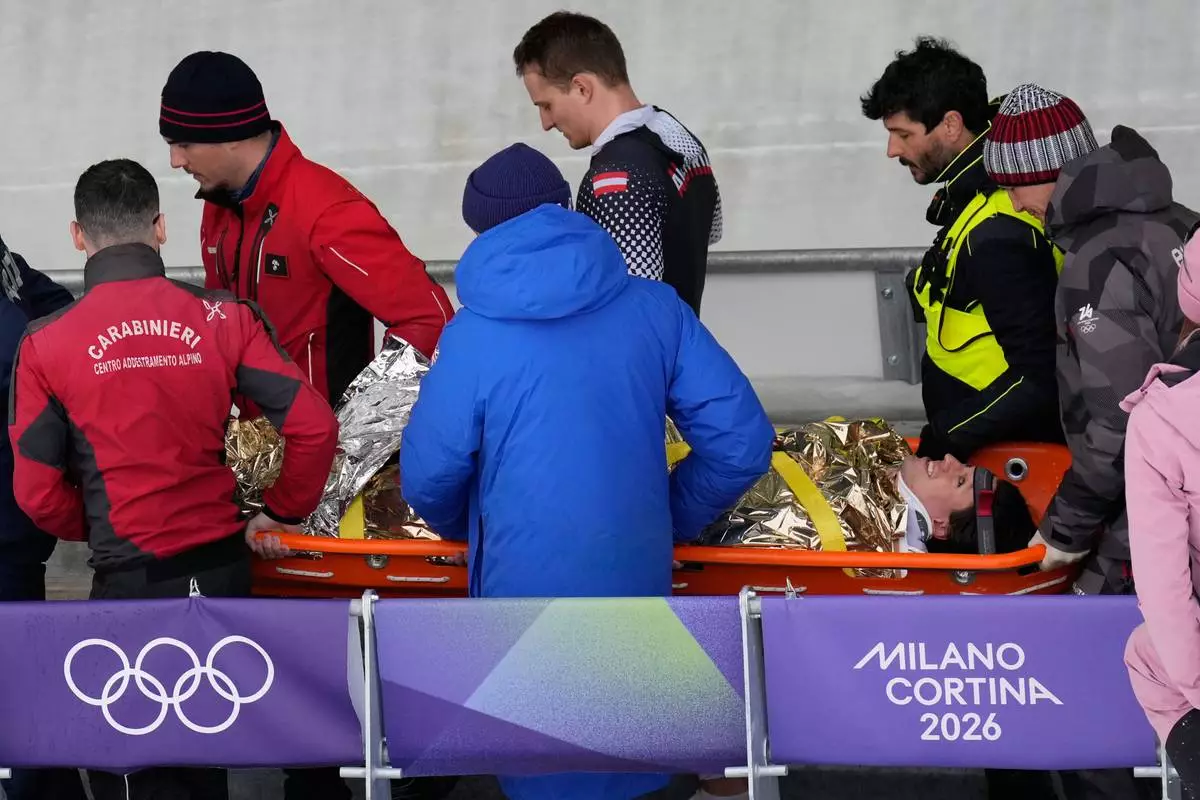
Team members and rescue workers carry an injured athlete after Austria's team Jakob Mandlbauer, Daniel Bertschler, Sebastian Mitterer and Daiyehan Nichols-Bardi crashed during a four man bobsled run at the 2026 Winter Olympics, in Cortina d'Ampezzo, Italy, Saturday, Feb. 21, 2026. (AP Photo/Aijaz Rahi)
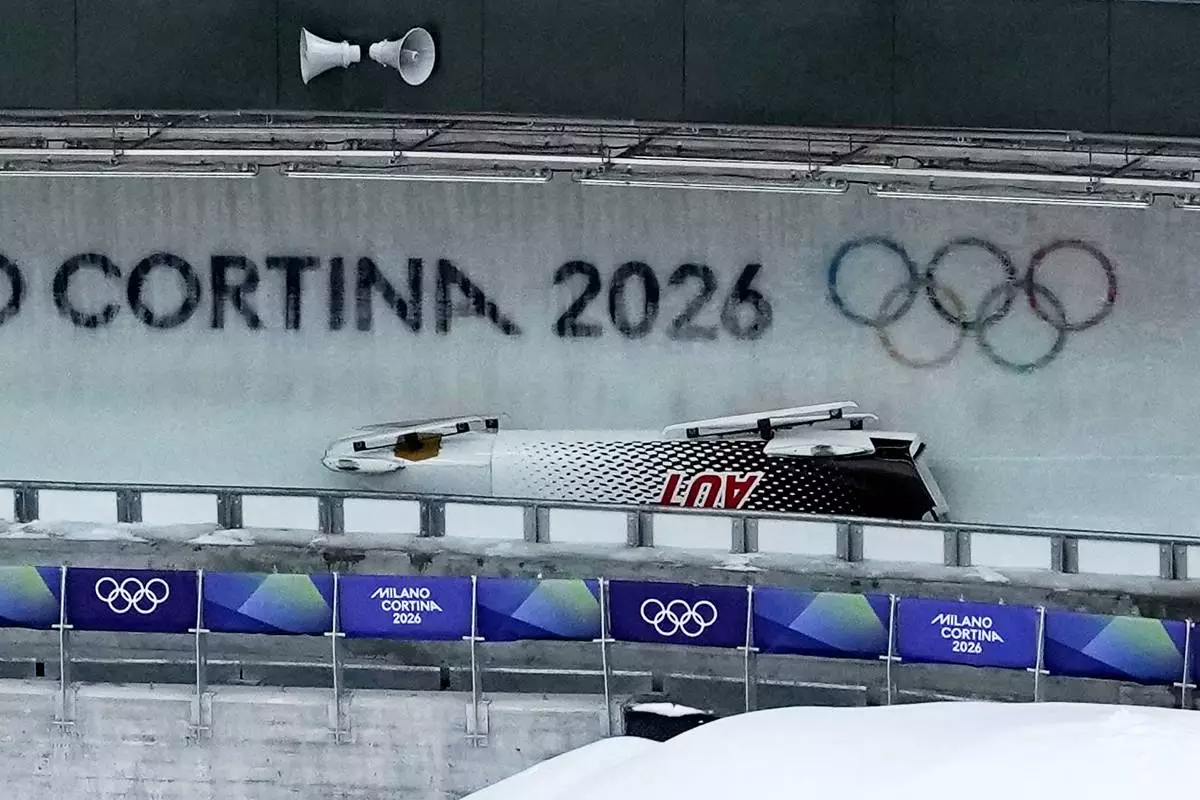
Austria's team Jakob Mandlbauer, Daniel Bertschler, Sebastian Mitterer and Daiyehan Nichols-Bardi crashes during a four man bobsled run at the 2026 Winter Olympics, in Cortina d'Ampezzo, Italy, Saturday, Feb. 21, 2026. (AP Photo/Aijaz Rahi)
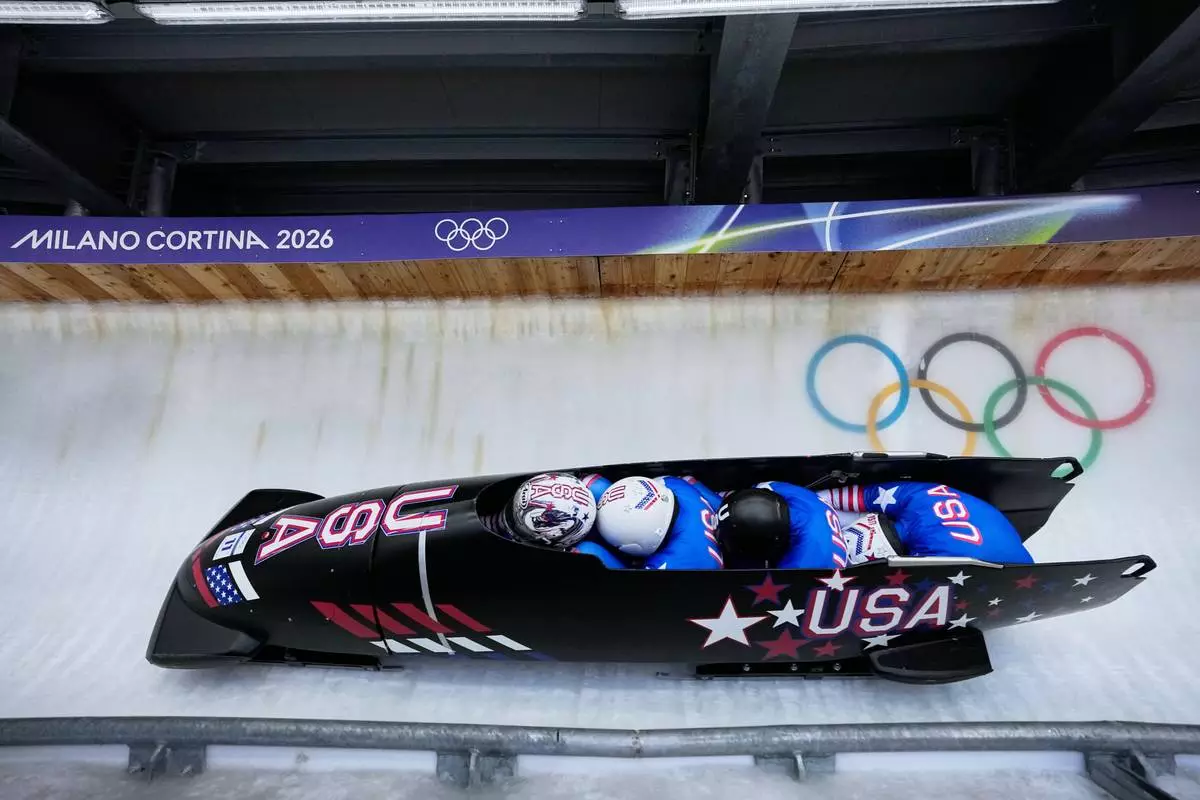
United States' Kristopher Horn, left, Caleb Furnell, Hunter Powell and Carsten Vissering slide down the track during a four man bobsled run at the 2026 Winter Olympics, in Cortina d'Ampezzo, Italy, Saturday, Feb. 21, 2026. (AP Photo/Aijaz Rahi)
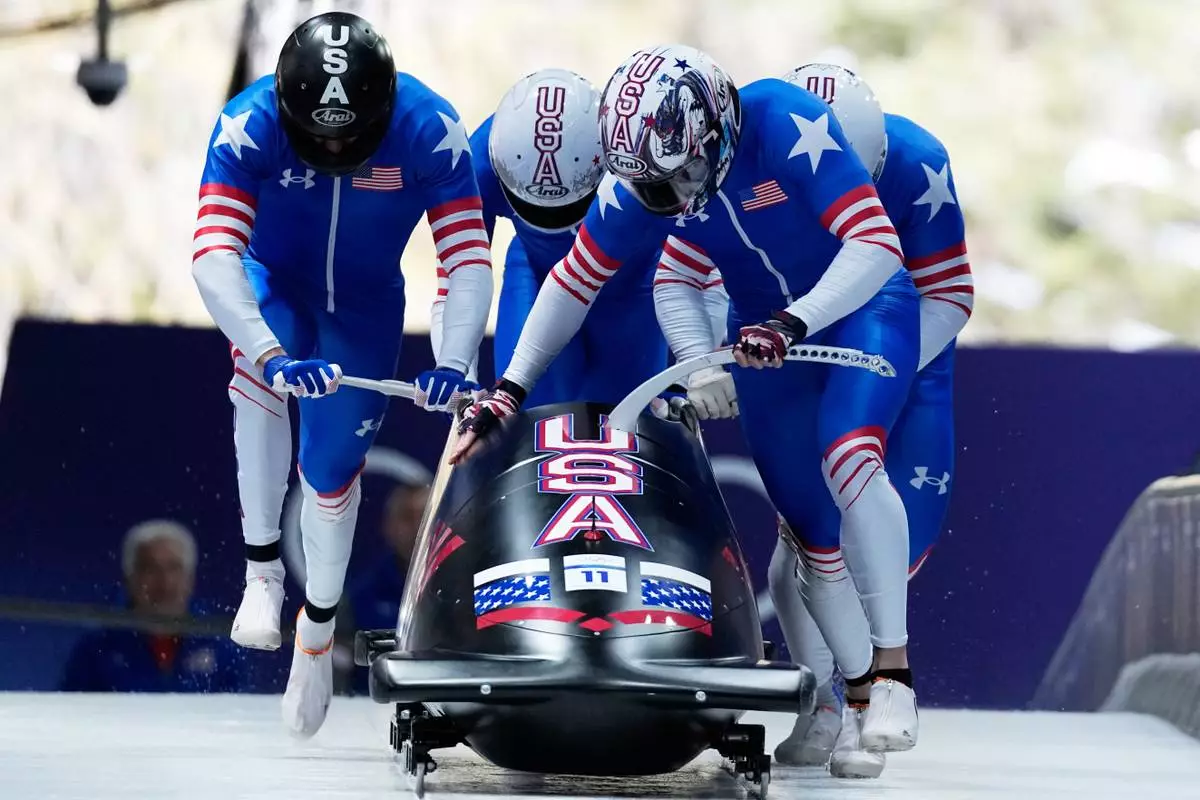
United States' Kristopher Horn, front, Caleb Furnell, Hunter Powell and Carsten Vissering start for a four man bobsled run at the 2026 Winter Olympics, in Cortina d'Ampezzo, Italy, Saturday, Feb. 21, 2026. (AP Photo/Alessandra Tarantino)
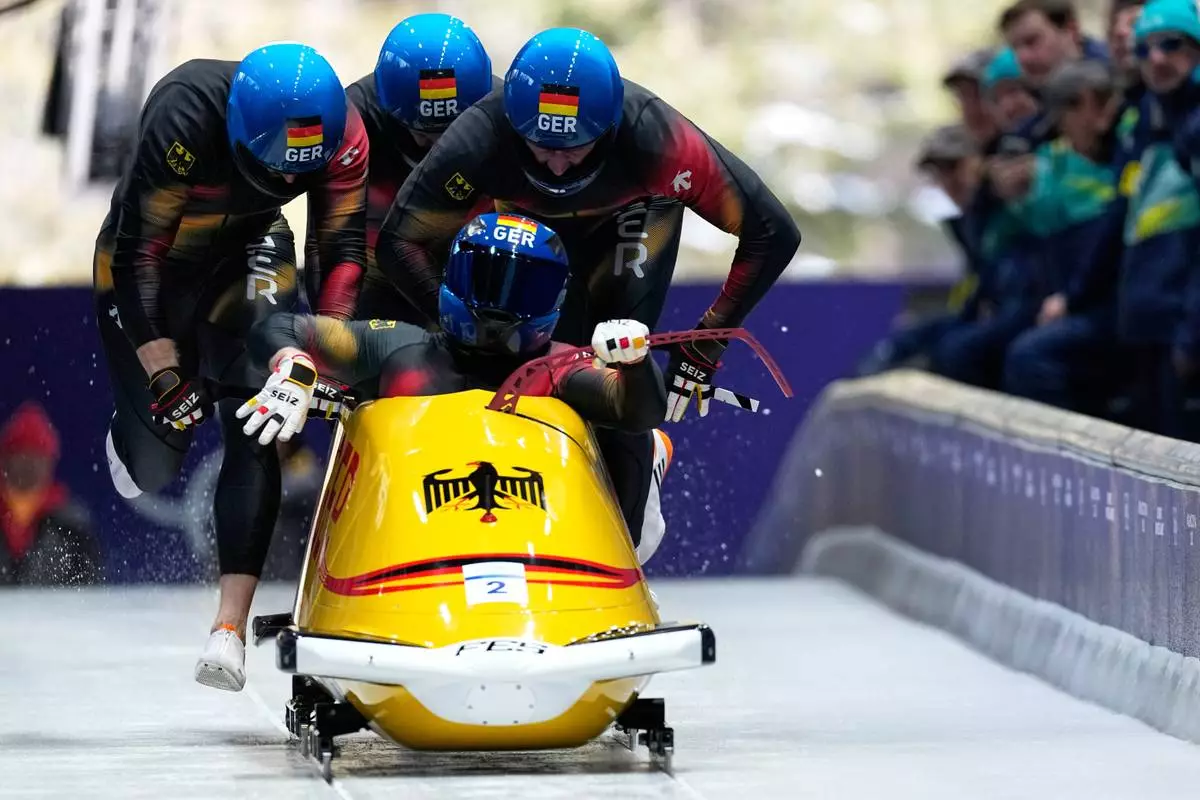
Germany's Francesco Friedrich, front, Matthias Sommer, Alexander Schuller and Felix Straub start for a four man bobsled run at the 2026 Winter Olympics, in Cortina d'Ampezzo, Italy, Saturday, Feb. 21, 2026. (AP Photo/Alessandra Tarantino)
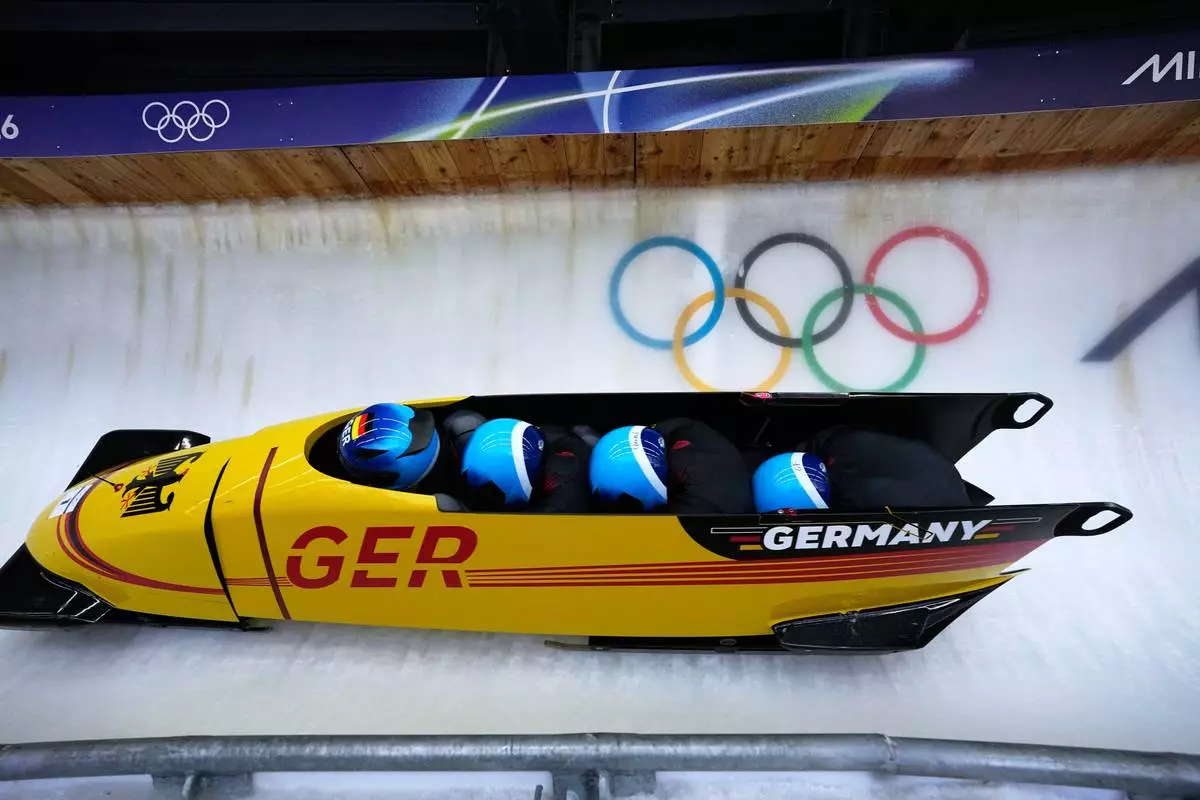
Germany's Johannes Lochner, left, Thorsten Margis, Jorn Wenzel and Georg Fleischauer slide down the track during a four man bobsled run at the 2026 Winter Olympics, in Cortina d'Ampezzo, Italy, Saturday, Feb. 21, 2026. (AP Photo/Aijaz Rahi)