As celebrating the Spring Festival in China emerges as a new global trend, a growing number of international travelers are planning their trips around this traditional celebration to immerse themselves in China's vibrant culture and festive spirit.
Falling on Tuesday this year, the Spring Festival, or the Chinese New Year, is China's most important holiday marked by family reunions, festive foods and New Year wishes. The holiday, which starts two days earlier, lasts nine days in total.
Data from travel platforms showed that as of Tuesday, the number of domestic flight bookings made with non-Chinese passports during the Spring Festival period rose by about 20 percent year on year.
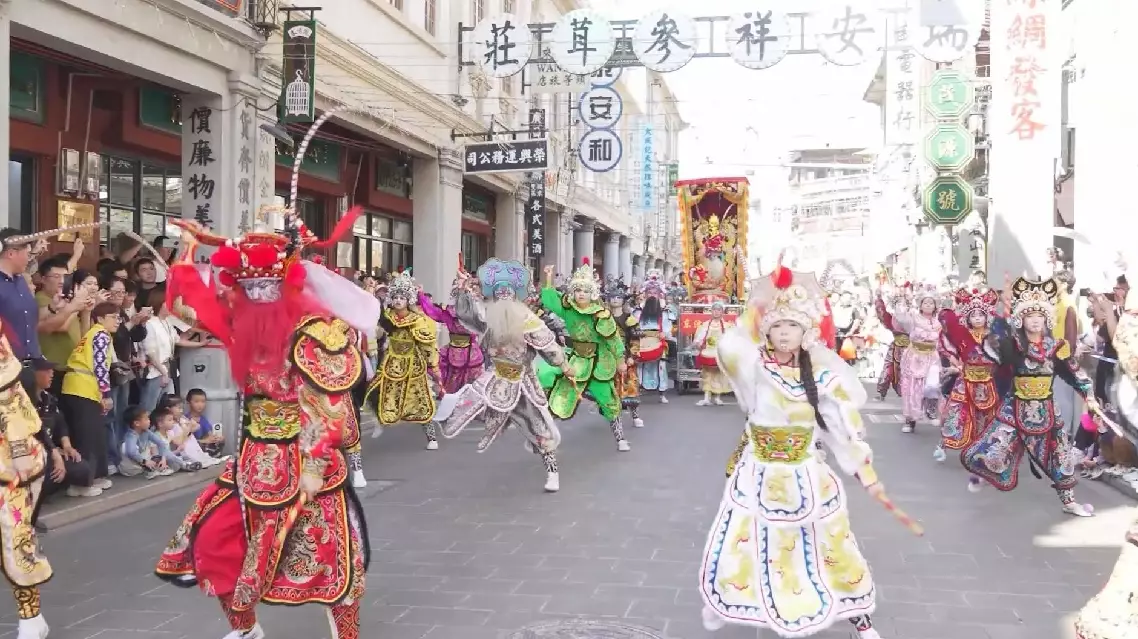
In Shantou, a city in the Chaoshan region in south China's Guangdong Province, international tourists have been drawn to local delicacies and traditional fork performances such as the Yingge Dance.
These tourists are arriving in small boutique tour groups of three to five people, opting for flexible itineraries and enhanced travel experience. One such group included visitors from Brazil. China in 2025 implemented a trial visa-free policy for Brazilian ordinary passport holders, allowing visa-free stays of up to 30 days.
"First I thought it (the 30-day visa-free policy) was a fake news, so I was like, oh it's not real. And then I was searching about it and I was like, Oh my God, it's real. And I thought, I think China is inviting me to go to China," said a Brazilian tourist.
For many first-time international visitors, the Chinese New Year experience is inseparable from food. The tourists from Brazil tried their hand at making traditional beef meatballs, pounding the meat by hand to recreate the local flavor.
Folk performances are another highlight. In Shantou, Yingge dance shows take place at random times, often drawing large crowds within minutes after the drumbeats begin.
Popular in Guangdong Province, the Yingge dance merges opera, dance, and martial arts, and it was listed as the first batch of national intangible cultural heritage in 2006.
These international tourists even wore traditional makeups and costumes, joining the energetic dance performance.
The unique culture in the Chaoshan region has drawn an increasing number of international travelers. Travel platform data showed that during the 2026 Spring Festival holiday, tourist arrivals from Malaysia and the Republic of Korea (ROK) to the Chaoshan region have soared over 100 percent year on year, while orders for intangible cultural heritage experience routes and products have surged 220 percent.
In Chaozhou, another city in the Chaoshan region, to provide better service for travelers, the city's scenic areas have installed new bilingual signs. By scanning QR codes, tourists can access stories behind historic buildings in 11 languages.
Local authorities have launched a city mascot named 'Flow Monkey' and developed a range of cultural and creative products to attract more international visitors.
"The mascot is inspired by wooden monkey carvings at the city's Zhenhai Tower. Locals call them Fulouhou. We've developed a range of creative cultural products based on this image, and its English name is 'Flow Monkey,' echoing the pronunciation of Fulouhou," said Zhong Min, a local government official.
Meanwhile, major cities including Beijing, Shanghai and Shenzhen remain top tourist destinations of inbound travel.
A cultural theme park in South China's tech hub Shenzhen provides lantern displays, ancient-style blocks, and folk performances. At a Spring Festival-themed horse show, one German tourist successfully mounted a horse during an interactive segment, drawing cheers from the crowd.
Cutting-edge sci-tech elements added a modern touch to the holiday experience. At Shenzhen Bay Park, food delivery drones brought traditional delicacies directly to visitors, who gathered around smart pickup lockers to take pictures.
Travel platform data showed that inbound tourism to Guangdong is booming during the 2026 Spring Festival holiday, with overall bookings up 40 percent year on year. Among all cities and counties in the province, Shenzhen leads the growth, driven mainly by large tour groups from long-haul markets.
Int'l tourists flock to China to explore traditional Spring Festival festivities