CAPE CANAVERAL, Fla. (AP) — NASA’s new moon rocket suffered another setback Saturday, almost certain to bump astronauts' first lunar trip in decades into spring.
The space agency revealed the latest problem just one day after targeting March 6 for the Artemis II mission, humanity’s first flight to the moon in more than half a century. Overnight, the flow of helium to the rocket’s upper stage was interrupted, officials said. Solid helium flow is essential for purging the engines and pressurizing the fuel tanks.
This helium issue has nothing to do with the hydrogen fuel leaks that marred a countdown dress rehearsal of the Space Launch System rocket earlier this month and forced a repeat test.
NASA Administrator Jared Isaacman said a bad filter, valve or connection plate could be to blame for the stalled helium flow. Regardless of the cause, he noted, the only way to access the area and fix the problem is in the Vehicle Assembly Building at Kennedy Space Center.
“We will begin preparations for rollback, and this will take the March launch window out of consideration,” Isaacman said via X. NASA's next opportunities would be at the beginning or end of April.
Earlier in the morning, NASA said it was preparing to return the 322-foot (98-meter) rocket to its hangar for repairs, while raising the possibility of the work being done at the pad.
“I understand people are disappointed by this development,” Isaacman said. “That disappointment is felt most by the team at NASA, who have been working tirelessly to prepare for this great endeavor.”
Hydrogen fuel leaks had already delayed the Artemis II lunar fly-around by a month. A second fueling test on Thursday revealed hardly any leaks, giving managers the confidence to aim for a March liftoff. The four astronauts went into their two-week quarantine Friday night, mandatory for avoiding germs.
The interrupted helium flow is confined to the SLS rocket's interim cryogenic propulsion stage. This upper stage is essential for placing the Orion crew capsule into the proper high-altitude orbit around Earth for checkout, following liftoff. After that, it's supposed to separate from Orion and serve as a target for the astronauts inside the capsule, allowing them to practice docking techniques for future moon missions.
During NASA's Apollo program, 24 astronauts flew to the moon from 1968 through 1972. The new Artemis program has completed only one flight so far, a lunar-orbiting mission without a crew in 2022. That first test flight was also plagued by hydrogen fuel leaks before blasting off, as well as a helium issue similar to the one that arose Saturday. The first moon landing with a crew under Artemis is still at least a few years away.
The Associated Press Health and Science Department receives support from the Howard Hughes Medical Institute’s Department of Science Education and the Robert Wood Johnson Foundation. The AP is solely responsible for all content.

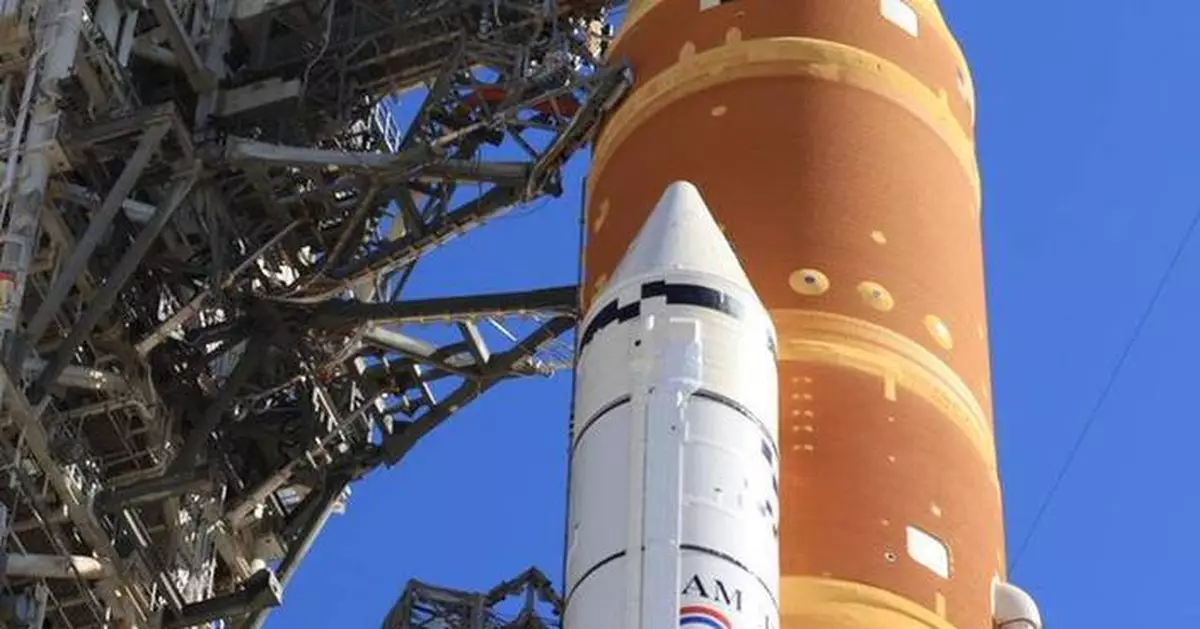
This image provided by NASA shows NASA's moon rocket sits on the pad at Kennedy Space Center in Florida on Thursday, Feb. 19, 2026. (NASA via AP)
TESERO, Italy (AP) — Outside the Olympic cross-country stadium in this Dolomite mountain town, Norwegian flags have been draped over the railings like bunting on a national holiday.
Fans from the Scandinavian country have set up camp nearby and kept a live tally of medals won by their athletes at the Milan Cortina Games. After every victory, a gold sticker is pressed onto the board.
There have been plenty to add: Norway is now unequaled when it comes to winter gold.
A day after Johannes Dale-Skjevdal won the 15-kilometer mass start race to set a new mark, Norway was back at it Saturday, sweeping the podium in the men's 50-kilometer mass start race to extend its Winter Games record with its 18th gold medal. Norway has 40 medals overall, also a Winter Olympics record.
Johannes Hoesflot Klaebo, a 29-year-old cross-country skier, was at the front of the 50-kilometer race and now has won six gold medals in Italy to take his career tally to a Winter Games record of 11 in just three Olympics.
It has also helped Norway lead the medal table for days and it should finish atop the standings when the Games wrap up Sunday.
The dominance has raised a familiar question: What makes Norway, a nation of 5.6 million people, such a superpower on the snow at the world’s biggest winter sports event?
Many believe it is a system that has few equals in winter sports.
Katerina Neumannova, a retired Czech Olympic champion, points to Norway’s structure as the foundation of its success. Cross-country skiing is among the country’s most popular sports, with hundreds of clubs and large numbers of kids starting young.
“When you have so many children, so many trainers and so many clubs all around Norway, it’s much easier to find special talent,” Neumannova told The Associated Press.
Norway, she said, has benefited from the absence of the banned Russian team as well as having a concentration of talented team officials supporting athletes, and even the lack of snow in lower latitudes affecting mainland Europe.
And its depth of public participation, she argued, provides a steady supply of elite competitors.
“Other countries usually have some gaps between generations, but the Norwegian team is very stable,” Neumannova said. “When one athlete ends, younger ones are already coming up.”
Klaebo’s race partner on Wednesday was Einar Hedegart, a 24-year-old Olympic rookie who shared gold in an earlier relay event and won bronze in the 10-kilometer interval start.
A lot Norway’s supremacy stems from tradition as the cradle of Nordic skiing. Most medals came from cross-country and biathlon whiles ski jumper Anna Odine Stroem swept both the normal and large hills, and added a silver in the mixed team event. Jens Luraas Oftebro took both Nordic combined titles.
The medals don’t stop there: Norway won in freestyle skiing, Alpine skiing and completed the speedskating set with a gold, two silvers and a bronze.
Finn Dahl, a superfan who did marketing for the 1994 Lillehammer Olympics at home in Norway, attributed his country's success to a way of life that revolves around snow.
Children, he said, often take trips with their families to the mountains, where skiing is just the normal way of getting around.
“It’s a natural way of sort of moving from one cabin to another,” Dahl said. “It’s a spirit, it is inside you.”
AP Winter Olympics: https://apnews.com/hub/milan-cortina-2026-winter-olympics
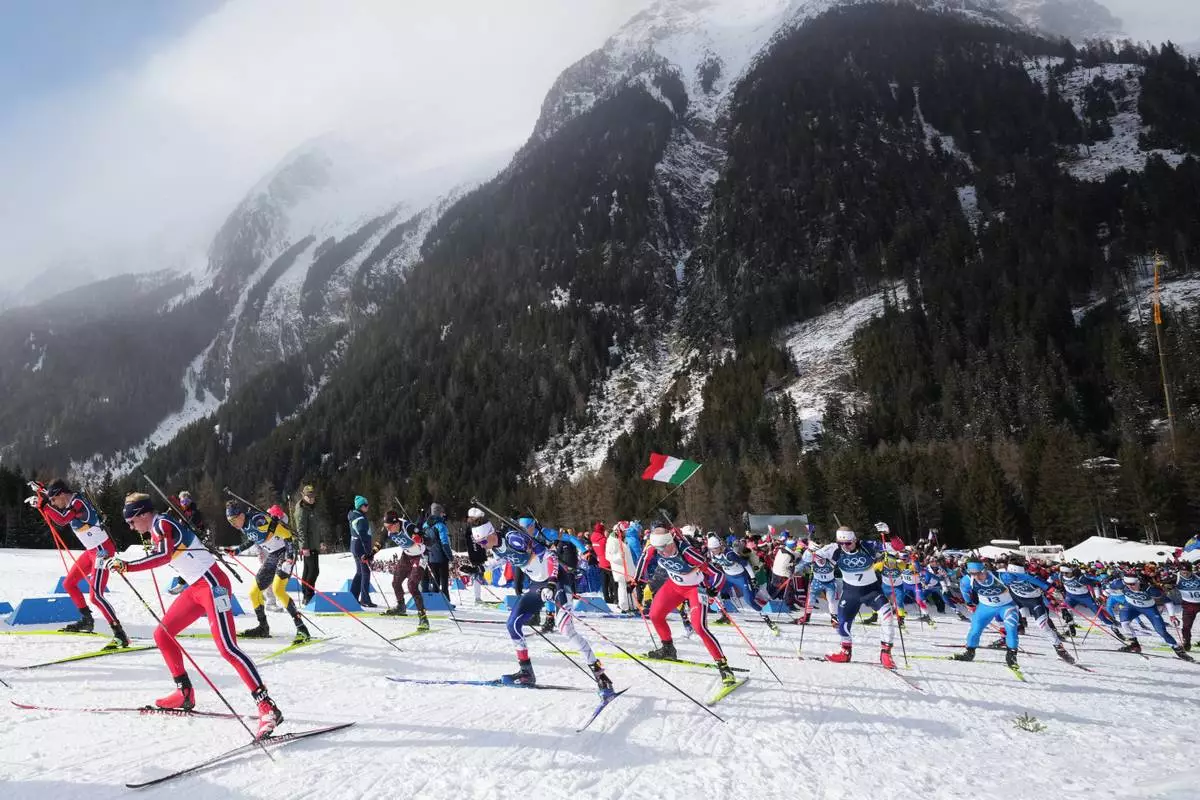
Sturla Holm Laegreid, of Norway, left, and Johan-Olav Botn, of Norway, lead a group during the men's 15-kilometer mass start biathlon race at the 2026 Winter Olympics in Anterselva, Italy, Friday, Feb. 20, 2026. (AP Photo/Andrew Medichini)
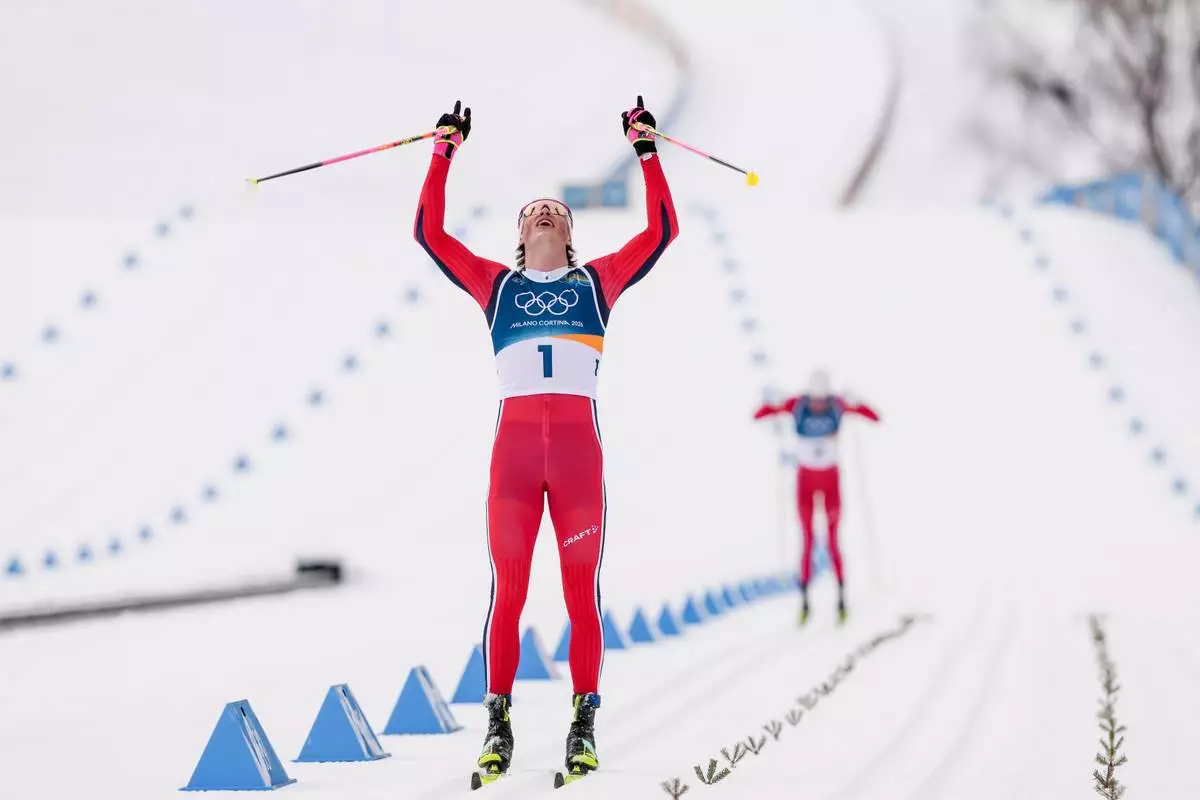
Johannes Hoesflot Klaebo, of Norway, approaches the finish line to win the gold medal in the cross country skiing men's 50km mass start Classic at the 2026 Winter Olympics, in Tesero, Italy, Saturday, Feb. 21, 2026. (AP Photo/Evgeniy Maloletka)
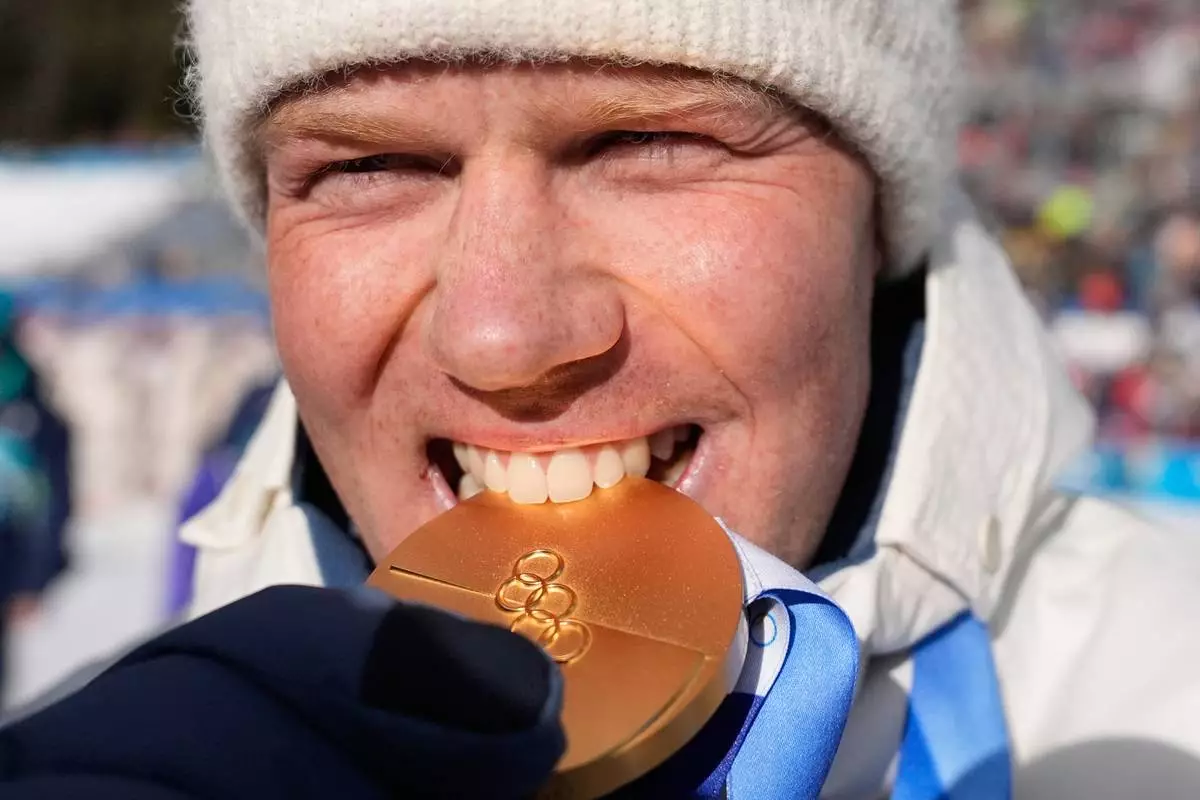
Johannes Dale-Skjevdal, of Norway, poses with the gold medal for the men's 15-kilometer mass start biathlon race at the 2026 Winter Olympics in Anterselva, Italy, Friday, Feb. 20, 2026. (AP Photo/Mosa'ab Elshamy)
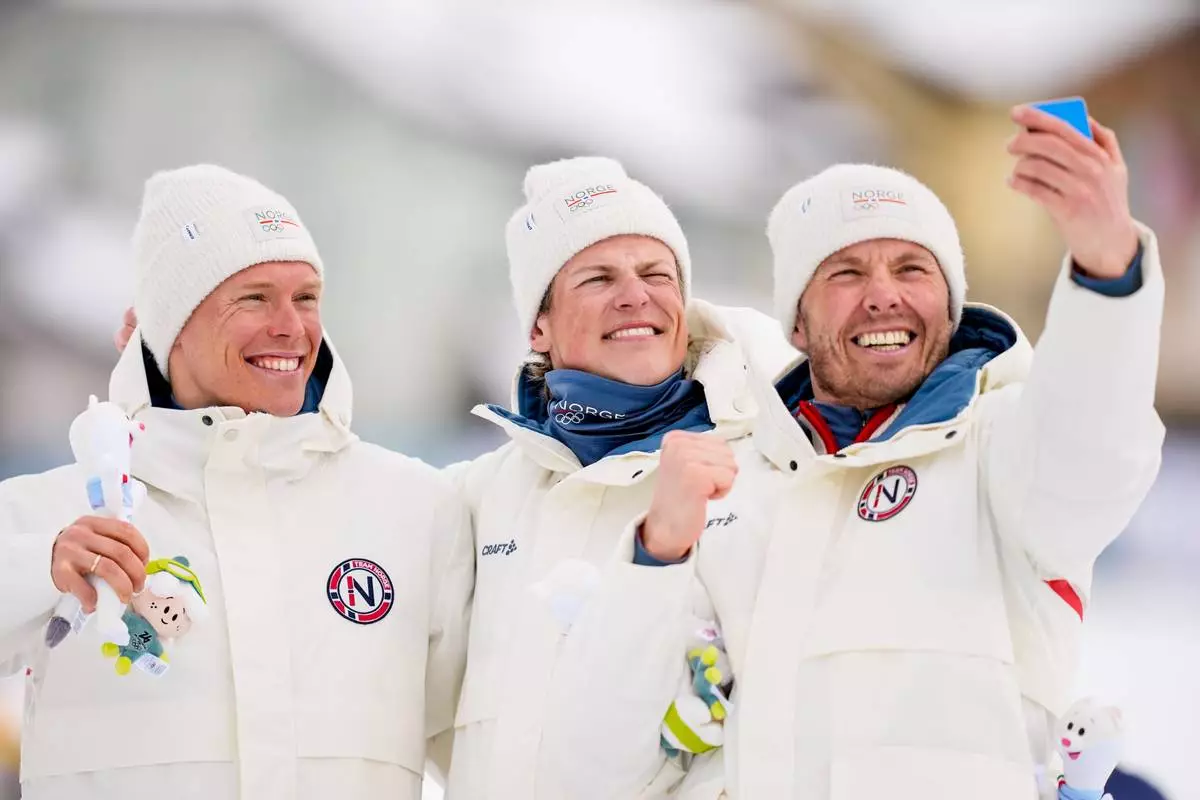
Silver medalist Martin Loewstroem Nyenget, gold medalist Johannes Hoesflot Klaebo and bronze medalist Emil Iversen, all three of Norway, pose on the podium of the cross country skiing men's 50km mass start Classic at the 2026 Winter Olympics, in Tesero, Italy, Saturday, Feb. 21, 2026. (AP Photo/Matthias Schrader)