FLAGSTAFF, Ariz. (AP) — Interested in starting a business, learning about artificial intelligence or exploring a new hobby? There's a class for that.
Millions of U.S. adults enroll in credit and non-credit college courses to earn professional certificates, learn new skills or to pursue academic degrees. Some older students are seeking career advancement, higher pay and job security, while others want to explore their personal interests or try new things.
“They might have kids, they might be working full-time, they might be older non-traditional students," said Eric Deschamps, the director of continuing education at Northern Arizona University in Flagstaff, Arizona. But returning to school "opens doors to education for students that might not have those doors open to them otherwise.”
Older students, many of whom bring years of work and life experience to their studies, often are juggling courses with full-time jobs, caregiving and other family responsibilities. It is a challenging balancing act but can also sharpen priorities and provide a sense of fulfillment.
Here's what experts have to say about returning to school, what to consider beforehand and how to balance coursework with work and personal commitments.
UCLA Extension, the continuing education division of the University of California, Los Angeles, offers more than 90 certificate and specialization programs, from interior design, early childhood education and accounting to photography, paralegal studies and music production. Individual courses cover a wide range of topics, including retirement planning, writing novels, the business of athletes and artists, and the ancient Japanese art of ikebana, or flower arranging.
About 33,500 students — nearly half of them older than 35 — were enrolled during the last academic year. UCLA reported a full-time enrollment of about 32,600 degree-seeking undergraduate students during the same period.
“I prefer calling our (adult) learners not only continuous, but the new majority student. These are learners who tend to already be employed, often supporting a family, looking for up-skilling or sometimes a career change,” Traci Fordham, UCLA's interim associate dean for academic programs and learning innovation, said.
Higher education experts say some adults take classes for professional development as economic concerns, technological advances and other workforce changes create a sense of job insecurity.
“A great example of that is artificial intelligence. These new technologies are coming out pretty quickly and for folks that got a degree, even just 5 or 10 years ago, their knowledge might be a little bit outdated,” Deschamps said.
Adults interested in becoming students again may want to assess their time and budgets, and weigh the potential benefits and consequences, including the financial impact, the potential for burnout and rewards of education that may take a while materialize, academic advisors say.
Deschamps suggests asking where you want to be in 5 or 10 years and how the training and knowledge received through an additional class or certificate can help get you there. For example, if you want to start a microbrewery, learning to brew your own beer or launching a business will help. If a promotion or career change is the goal, training for a new job, refreshing skills or understanding a different industry may help show you are qualified.
Schools like UCLA and Northern Arizona University are working to make continuing education courses accessible by keeping the cost low in comparison to degree-track classes and offering financial assistance. A variety of learning environments usually are offered — in-person and online classes, accelerated and self-paced instruction — to help adults integrate schoolwork with their home and work lives.
Katie Swavely, assistant director for academic advising and student success at UCLA, started at community college before transferring to UCLA to study anthropology. She said it took her 10 years after graduating to go back for her master's degree in counseling with a focus on academic advising. Swavely completed that degree in 2020 and credits access to the program through employer-sponsored tuition assistance from her job at the time.
“I felt like in so many ways I didn’t really know who I was or what I wanted to do other than just pay the bills and survive,” said Swavely, who is married and has two children. “It was hard. And I thought about quitting many times. We had to budget to the extreme and find additional ways to make it work.”
She added: “There are questions of how are we going to make it work and do we have the money. As a parent, sacrifices are there all the time. You make those judgment calls every day. But making sure that you’re investing in yourself. There’s always gonna be reasons why it’s not today, not this month, not this year, but it’s also OK to just jump in and go for it and see how it works out.”
As an avid book lover, Swavely now wants to take a book editing course and hopes to continue her education and enroll in that through the university soon.
Some experts say one of the main barriers to returning to school is psychological. There might be concerns that their writing skills are rusty and that they don't know enough math or technology, bringing up feelings of uncertainty or failure.
“I think this is tied to access. Many of our learners, not all of them, haven’t imagined themselves in any kind of higher education, post-secondary education environment,” Fordham said.
Swavely said it was important for her to build a support network and take advantage of the counseling and advising options that were available to her as a student.
She encourages adults who are furthering their educations to spend time “finding your community.” Having people around who helped build up her confidence at home and during classes got her through graduate school, Swavely said. She also suggests setting boundaries and giving yourself grace when you need need help.
“The biggest piece of advice is for people to realize you’re never too old to learn," she said.
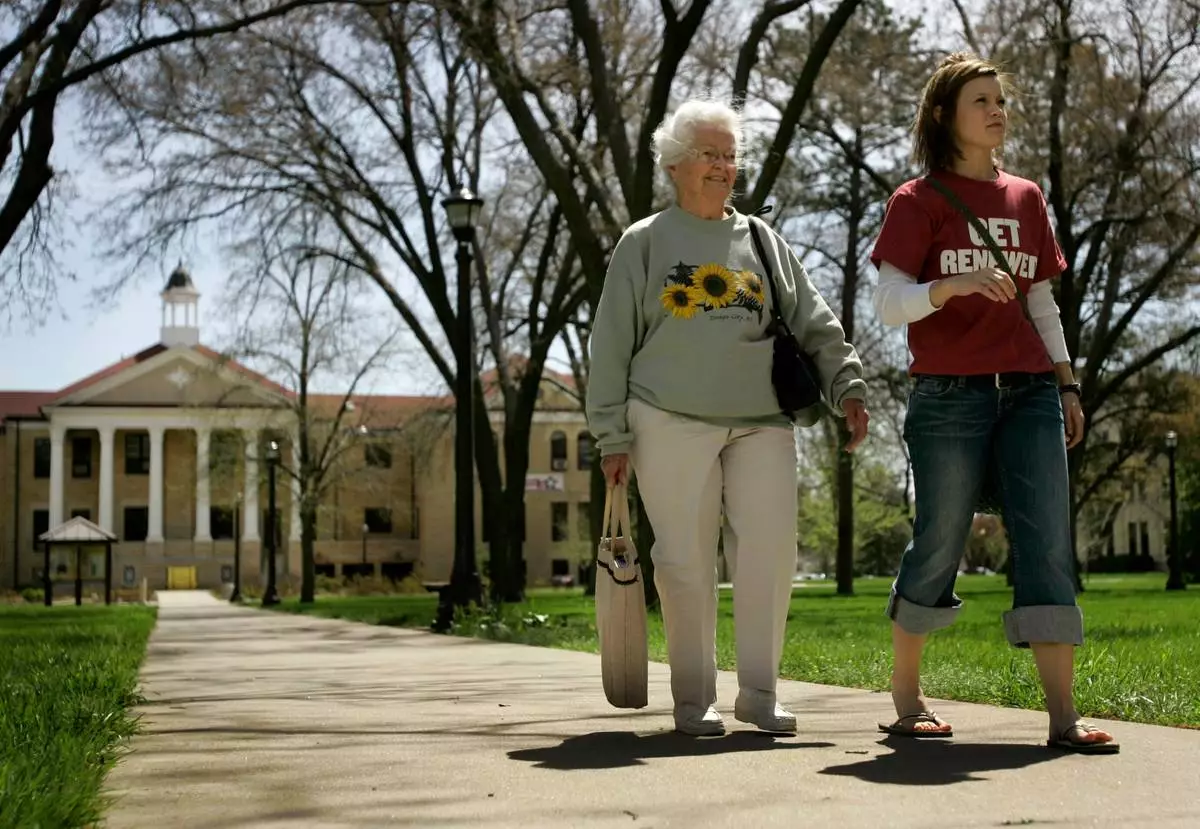
FILE - Nola Ochs and her granddaughter, Alexandra Ochs, right, walk across the Fort Hays State University campus between classes Monday, April 23, 2007 in Hays, Kan. (AP Photo/Charlie Riedel, File)
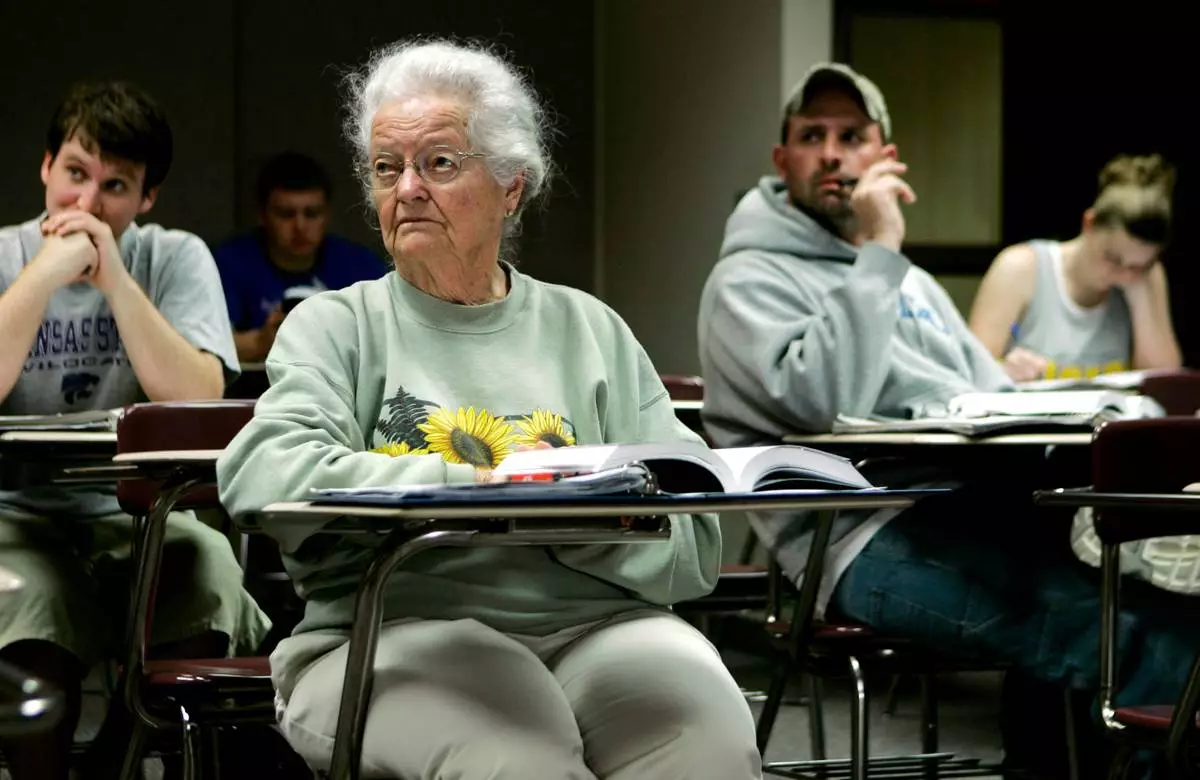
FILE - In this April 23, 2007 file photo, Nola Ochs listens to a lecture during a class at Fort Hays State University in Hays, Kan. (AP Photo/Charlie Riedel, File)
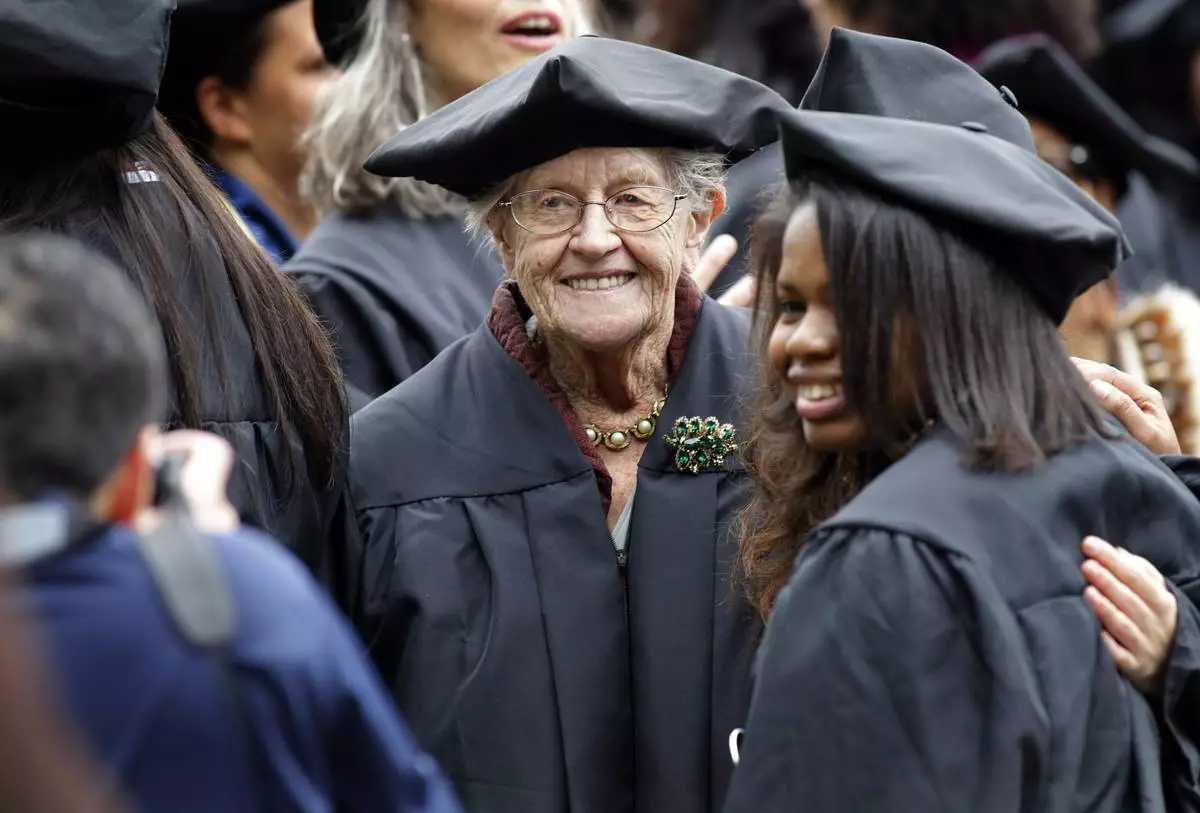
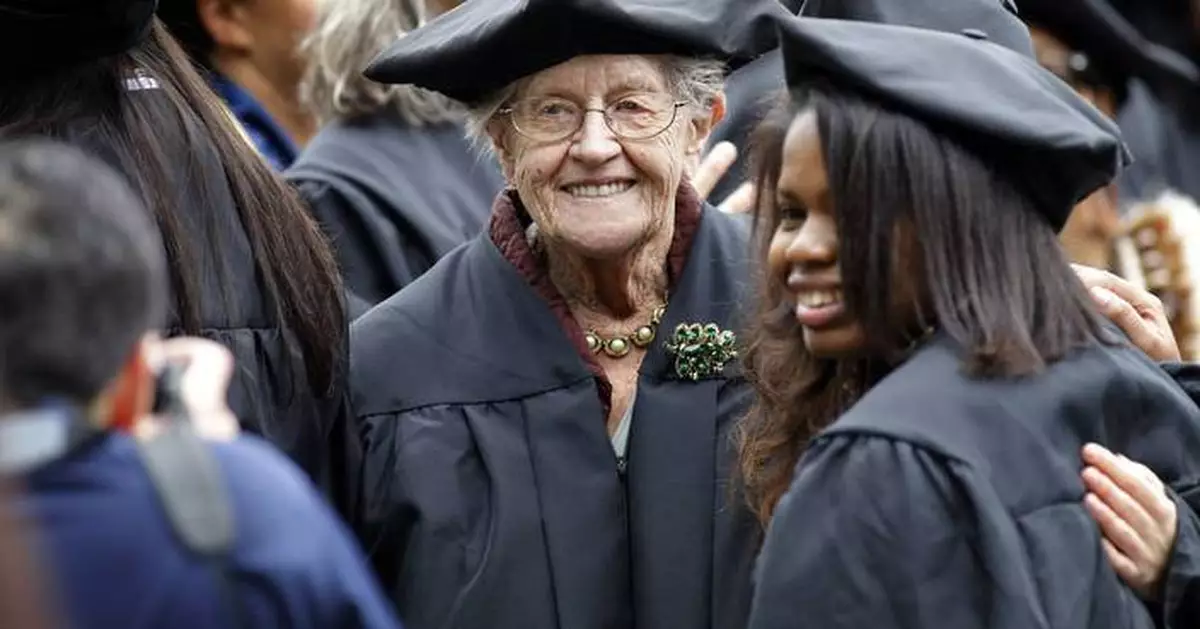
FILE - Hazel Soares, 94, center, gets her picture taken with some of her classmates before the start of commencement exercises at Mills College, in Oakland, Calif., Saturday, May 15, 2010. ( AP Photo/Tony Avelar, File)
DAKAR, Senegal (AP) — Being gay in Morocco is illegal and punishable by up to three years in prison. But it was the violence from her family that forced Farah, a 21-year-old gay woman, to flee the country.
After a long journey to the United States and a third-country deportation by the Trump administration, however, Farah said she is now back in Morocco and in hiding.
“It is hard to live and work with the fear of being tracked once again by my family,” she told The Associated Press, in a rare testimony from a person deported via a third country despite having protection orders from a U.S. immigration judge. “But there is nothing I can do. I have to work.”
She asked to be identified by her first name only for fear of persecution. The AP saw her protection order and lawyers verified parts of her account.
Farah said that before she fled, she was beaten by her family and the family of her partner when they found out about their relationship. She was kicked out of the family home and fled with her partner to another city. She said her family found her and tried to kill her.
Through a friend, she and her partner heard about the opportunity to get visas for Brazil and fly there with the aim of reaching the United States, where they had friends. From Brazil, she trekked through six countries for weeks to reach the U.S. border, where they asked for asylum.
“You get put in situations that are truly horrible," she recalled. "When we arrived (at the U.S. border), it felt like it was worth the trouble and that we got to our goal."
They arrived in early 2025. But instead of finding the freedom to be herself, Farah said she was detained for almost a year, first in Arizona, then in Louisiana.
“It was very cold,” she said of detention. “And we only had very thin blankets.” Medical care was inadequate, she said.
She was denied asylum, but in August she received a protection order from an U.S. immigration judge, who ruled she cannot be deported to Morocco because that would endanger her life. Her partner, denied asylum and a protection order, was deported.
Farah said she was three days from a hearing on her release when she was handcuffed by Immigration and Customs Enforcement and put on a plane to an African country she had never visited, and one where homosexuality is illegal: Cameroon. She was put in a detention facility.
“They asked me if I wanted to stay in Cameroon, and I told them that I can’t stay in Cameroon and risk my life in a place where I would still be endangered,” she said. She was flown to Morocco.
She is one of dozens of people confirmed to be deported from the U.S. by the Trump administration to third countries despite having legal protection from U.S. immigration judges. The real number is unknown.
The administration has used third-country deportations to pressure migrants who are in the U.S. illegally to leave on their own, saying they could end up “in any number of third countries."
The detention facility in Cameroon's capital of Yaounde, where Farah was held, currently has 15 deportees from various African countries who arrived on two flights, and none is Cameroonian, according to lawyer Joseph Awah Fru, who represents them.
Eight of the deportees on the first flight in January, including Farah, had received a judge's protection orders, said Alma David, an immigration lawyer with the U.S.-based Novo Legal Group who has helped deportees and verified Farah’s case. The AP spoke to a woman from Ghana and a woman from Congo, who both said they had protection orders, speaking on condition of anonymity for fear of retaliation.
Another flight on Monday brought eight more people. Three freelance journalists reporting on the deportations to Cameroon for the AP were briefly detained there.
Deporting people to a third country where they could be sent home was effectively a legal “loophole,” said David.
“By deporting them to Cameroon, and giving them no opportunity to contest being sent to a country whose government hoped to quietly send them back to the very countries where they face grave danger, the U.S. not only violated their due process rights but our own immigration laws, our obligations under international treaties and even DHS’ own procedures," David said.
The U.S. Department of Homeland Security earlier confirmed there were deportations to Cameroon in January.
“We are applying the law as written. If a judge finds an illegal alien has no right to be in this country, we are going to remove them. Period,” it said, and asserted that the third-country agreements “ensure due process under the U.S. Constitution.”
Asked about the deportations to Cameroon, the U.S. State Department on Friday told the AP it had “no comment on the details of our diplomatic communications with other governments." It did not reply to further questions.
Cameroon’s Foreign Ministry didn’t respond to a request for comment.
Farah was one of two women from the first group of deportees to return to Morocco.
“They were given two impossible choices,” David said, and asserted that claiming asylum was not clearly presented as one of them. “This was before the lawyer had access to them."
She said International Organization for Migration staff in the facility did not give them any indication that there was a viable option other than going back to their home countries.
Fru said he has not been granted access to the deportees. He said the assistant to the country director for the IOM, a U.N.-affiliated organization, told him he must apply to speak to them. Fru plans to do that Monday.
The IOM told the AP it was “aware of the removal of migrants from the United States of America to some African countries” and added that it “works with people facing difficult decisions about whether to return to their country of origin." It said its role is providing accurate information about options and ensuring that "anyone who chooses to return does so voluntarily.”
The IOM said the facility in Yaounde was managed by the authorities in Cameroon. It did not respond to further questions.
Cameroon is one of at least seven African nations to receive deported third-country nationals in a deal with the U.S. Others include South Sudan, Rwanda, Uganda, Eswatini, Ghana and Equatorial Guinea.
Some have received millions of dollars in return, according to documents released by the State Department. Details of other agreements, including the one with Cameroon, have not been released.
The Trump administration has spent at least $40 million to deport about 300 migrants to countries other than their own, according to a report released last week by the Democratic staff of the Senate Foreign Relations Committee.
According to internal administration documents reviewed by the AP, 47 third-country agreements are in various stages of negotiation.
In Morocco, Farah said it was hard to hear U.S. officials refer to people like her as a threat.
“The USA is built on immigration and by immigrant labor, so we’re clearly not all threats,” she said. “What was done to me was unfair. A normal deportation would have been fair, but to go through so much and lose so much, only to be deported in such a way, is cruel.”
This story has been corrected to state that the two women who spoke to the AP had been on the first flight in January, not on last week’s flight. It also corrects that eight of the initial deportees had protection orders while the ninth was stateless.
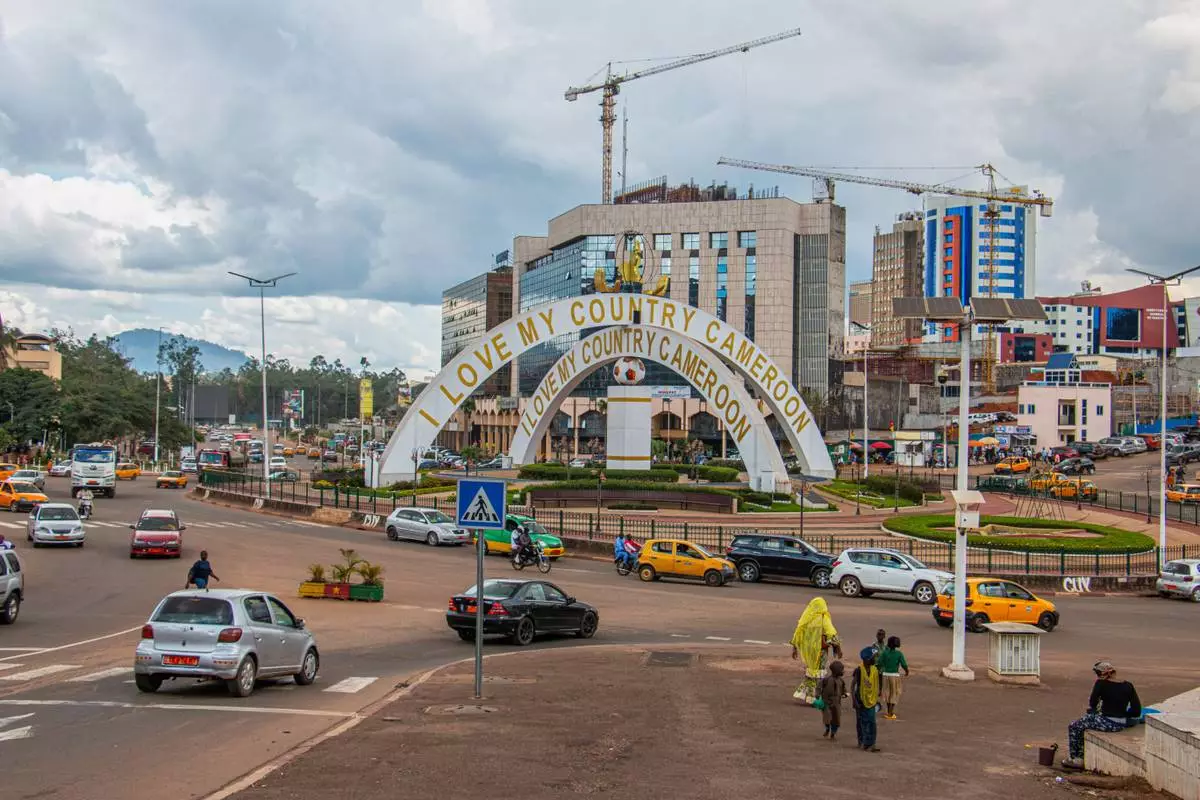
FILE - Cars drive through an intersection near a monument in Yaoundé, Cameroon, Sept. 12, 2025. (AP Photo / Welba Yamo Pascal, file)
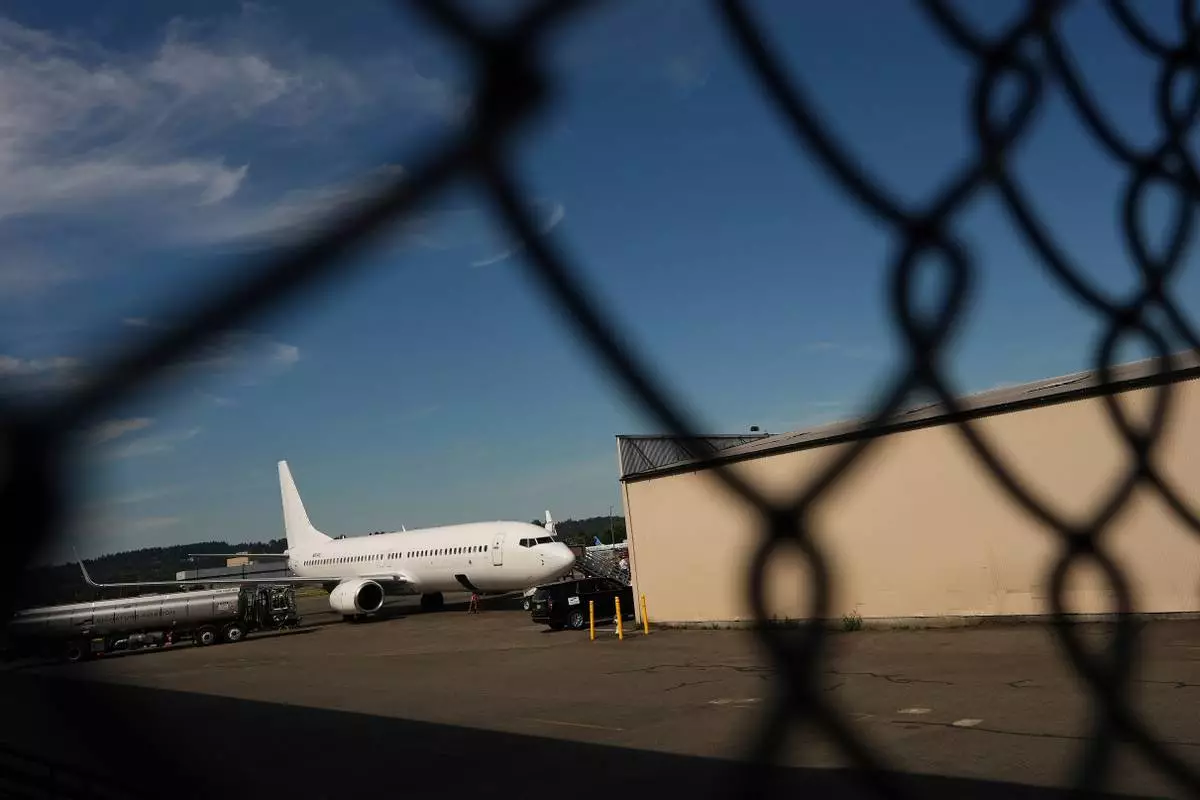
FILE - A U.S. Immigration and Customs Enforcement flight operates out of King County International Airport-Boeing Field, Aug. 23, 2025, in Seattle. (AP Photo/Lindsey Wasson, File)