TESERO, Italy (AP) — Jessie Diggins crossed the line Sunday as she has done so often over 15 years on the world stage — with the tank entirely empty.
Collapsed on the snow with her chest heaving, Diggins ended a 50-kilometer race in fifth place — just a few seconds shy of one more medal.
Click to Gallery
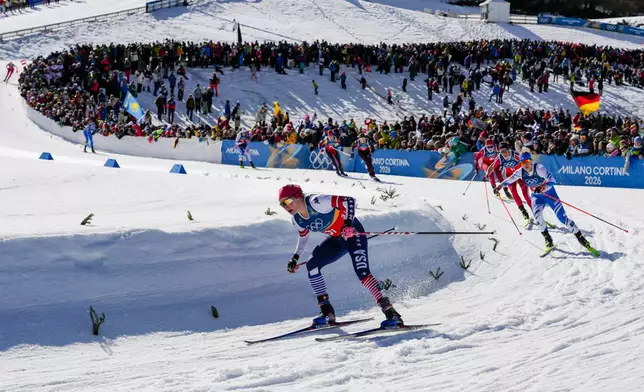
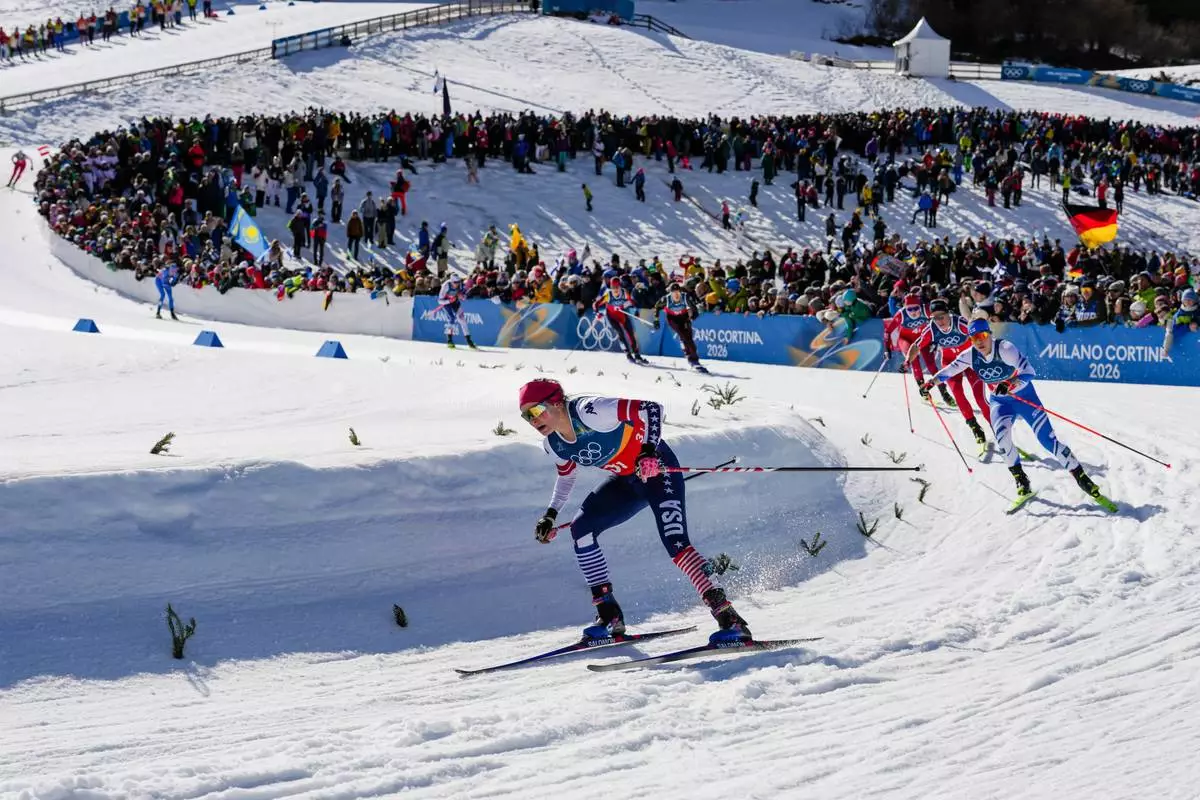
Kerttu Niskanen, of Finland, from right, Teresa Stadlober, of Austria, Jessie Diggins, of the United States, and Nadja Kaelin, of Switzerland, compete in the cross country skiing women's 50km mass start classic at the 2026 Winter Olympics, in Tesero, Italy, Sunday, Feb. 22, 2026. (AP Photo/Kirsty Wigglesworth)
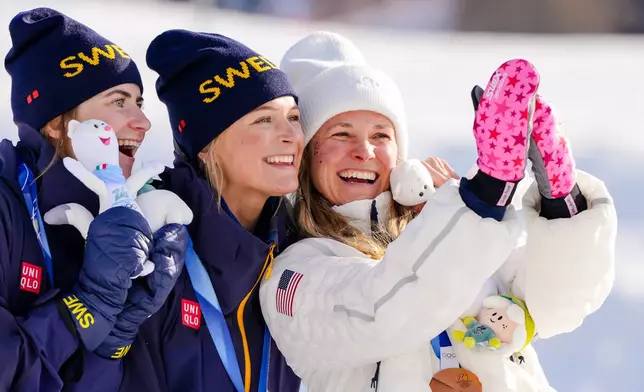
Silver medalist Ebba Andersson, of Sweden, from left, gold medalist Frida Karlsson, of Sweden, and bronze medalist Jessie Diggins, of the United States, pose for a selfie on the podium of the cross country skiing women's 10km interval start free at the 2026 Winter Olympics, in Tesero, Italy, Thursday, Feb. 12, 2026. (AP Photo/Kirsty Wigglesworth)
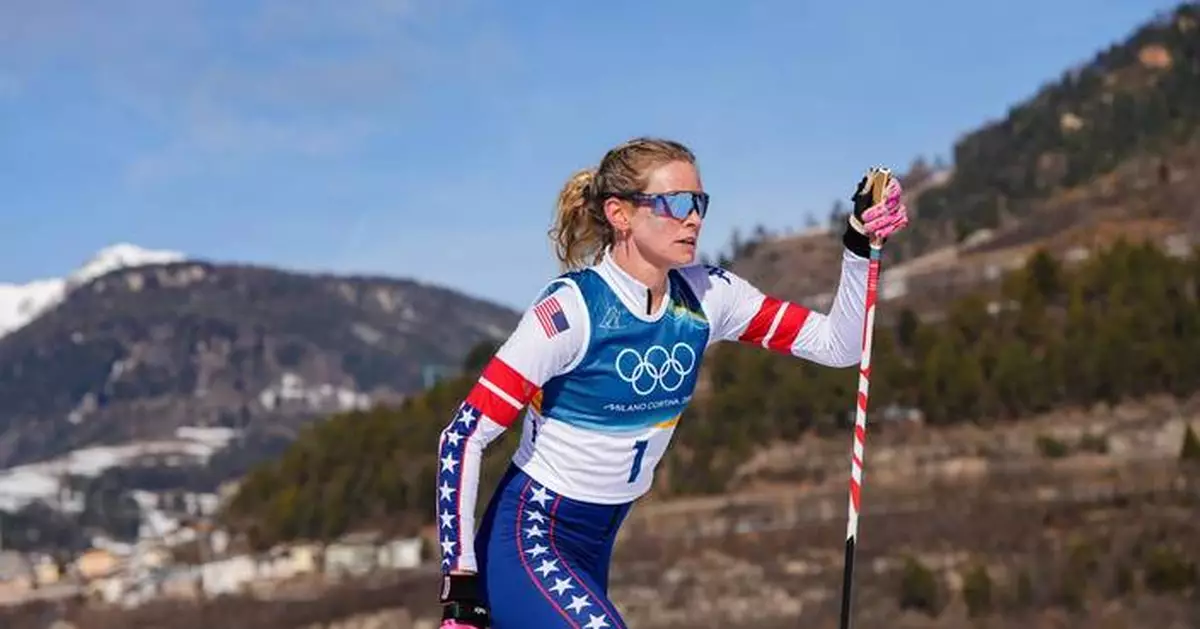
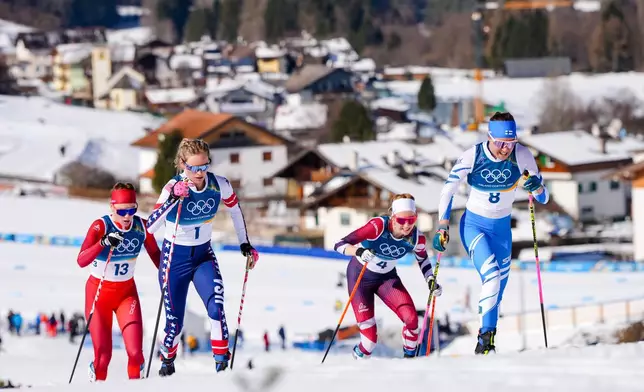
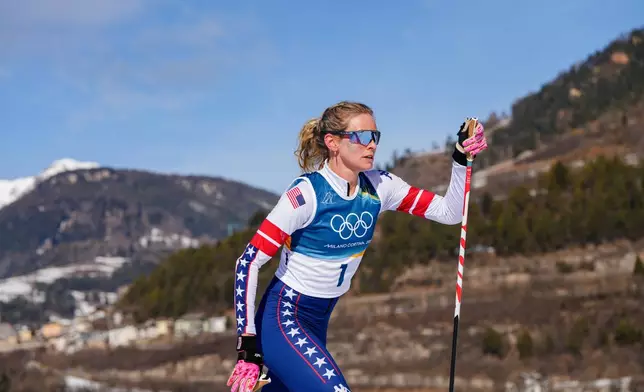
Jessie Diggins, of the United States, competes in the cross-country skiing women's team sprint free at the 2026 Winter Olympics, in Tesero, Italy, Wednesday, Feb. 18, 2026. (AP Photo/Evgeniy Maloletka)
Jessie Diggins, of the United States, competes in the cross-country skiing women's team sprint free at the 2026 Winter Olympics, in Tesero, Italy, Wednesday, Feb. 18, 2026. (AP Photo/Kirsty Wigglesworth)
Kerttu Niskanen, of Finland, from right, Teresa Stadlober, of Austria, Jessie Diggins, of the United States, and Nadja Kaelin, of Switzerland, compete in the cross country skiing women's 50km mass start classic at the 2026 Winter Olympics, in Tesero, Italy, Sunday, Feb. 22, 2026. (AP Photo/Kirsty Wigglesworth)
Silver medalist Ebba Andersson, of Sweden, from left, gold medalist Frida Karlsson, of Sweden, and bronze medalist Jessie Diggins, of the United States, pose for a selfie on the podium of the cross country skiing women's 10km interval start free at the 2026 Winter Olympics, in Tesero, Italy, Thursday, Feb. 12, 2026. (AP Photo/Kirsty Wigglesworth)
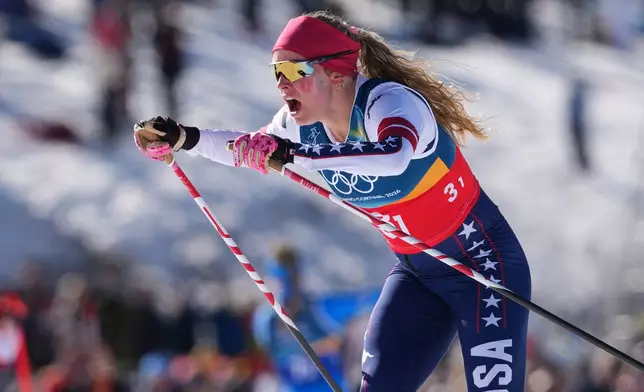
Jessie Diggins, of the United States, competes in the cross country skiing women's 50km mass start classic at the 2026 Winter Olympics, in Tesero, Italy, Sunday, Feb. 22, 2026. (AP Photo/Kirsty Wigglesworth)
“If you had told me even a year ago, I’d be in the fight for a bronze medal in a 50k classic, I would not have believed you,” she said. "I can confidently say I could not possibly have tried harder or gotten more out of my body.”
It marked the final Olympic event for an athlete who transformed American cross‑country skiing and became a symbol of endurance.
With glitter still streaked across her cheeks, the world’s top‑ranked women’s cross country skier said she was thankful for all the people who had helped her reach this stage in a career that started while she was still at high school in Minnesota.
“I am full of gratitude, joy and love and it’s just been so special. It’s taken so much work from so many people to get me here," she said. “I’m really happy with how I’m leaving it because it was an amazing last Olympics.”
The 34-year-old Diggins won the United States’ first-ever Olympic gold medal in cross-country skiing with team sprint partner Kikkan Randall at PyeongChang in 2018, adding a silver and bronze at the Beijing Games four years later.
At Milan Cortina, she again raced to a podium position, finishing third in the 10-kilometer interval start despite suffering painful rib bruising from a crash in her opening race.
Her farewell took place at an Olympics dominated in cross-country skiing by Sweden’s women.
Diggins hung in the lead group with eventual gold medalist Ebba Andersson, of Sweden, but fell behind when she took a spill after changing her skis at the start of the third lap.
She pushed through serious muscle cramps in the second half of the race to be in a chase group that could never close the big gap behind Andersson, or catch second-place finisher, Norway’s Heidi Weng, but were all in a battle for third.
On the final climb, the wax on Diggins' skis couldn't seem to hold the grip necessary for her to pass Switzerland’s Nadja Kaelin, who won bronze.
The American’s legacy extends beyond results.
Diggins said she will continue to campaign for climate change awareness, as registered by dwindling snowfall globally, and to support people coping with eating disorders.
"I’m just so proud of being gritty and being able to give my best and not just in a bib, off the snow as well, doing what I need to do to be a good human and try to make the world a little bit better,” she said.
In Italy, she also leaned into levity — joining choreographed dances with younger U.S. teammates in online posts.
As a senior figure on the team, she has paired intensity with openness, encouraging younger athletes to race fiercely but stay grounded.
Although this was her final Olympic appearance, Diggins still has a mission in her final competitive season. The most decorated cross‑country skier in U.S. history leaves Italy still focused on the World Cup season.
Holding the overall lead, she will return to the circuit in the coming days to pursue another crystal globe, with final races this season taking place March 19-22 in Lake Placid, New York.
Ronn Randall, the father of her gold-medal teammate, Kikkan, had come from Alaska to watch the Olympics and was impressed by the effort Diggins still pours into each event.
“She seems to have the attitude that she wants to take part in all these like one last time and really give it one last shot,” he said. “I don’t know whether she’s going to come away sad because she didn’t win races or didn’t get a medal or whether she’s just going to be happy that she gave absolutely every bit she could in the given situation.”
With the optimism Diggins exudes, she'd probably say the latter.
AP Olympics: https://apnews.com/hub/milan-cortina-2026-winter-olympics
Jessie Diggins, of the United States, competes in the cross-country skiing women's team sprint free at the 2026 Winter Olympics, in Tesero, Italy, Wednesday, Feb. 18, 2026. (AP Photo/Evgeniy Maloletka)
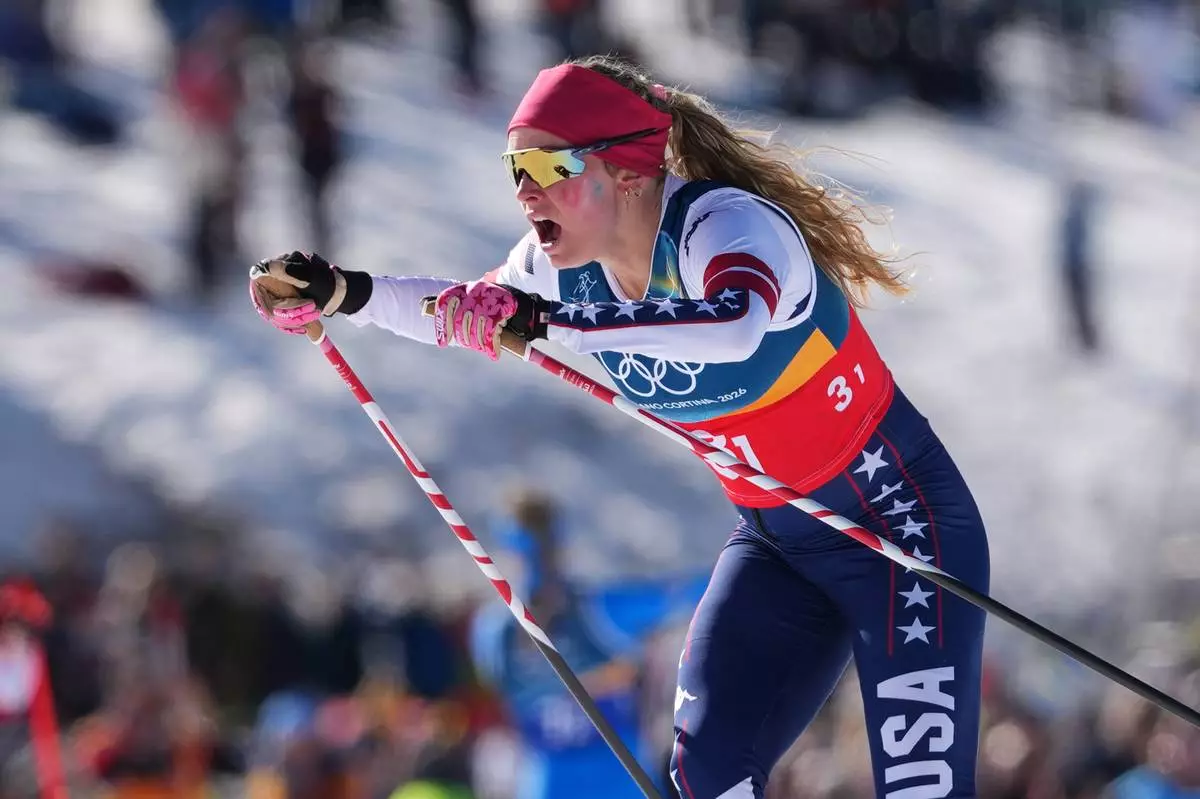
Jessie Diggins, of the United States, competes in the cross-country skiing women's team sprint free at the 2026 Winter Olympics, in Tesero, Italy, Wednesday, Feb. 18, 2026. (AP Photo/Kirsty Wigglesworth)
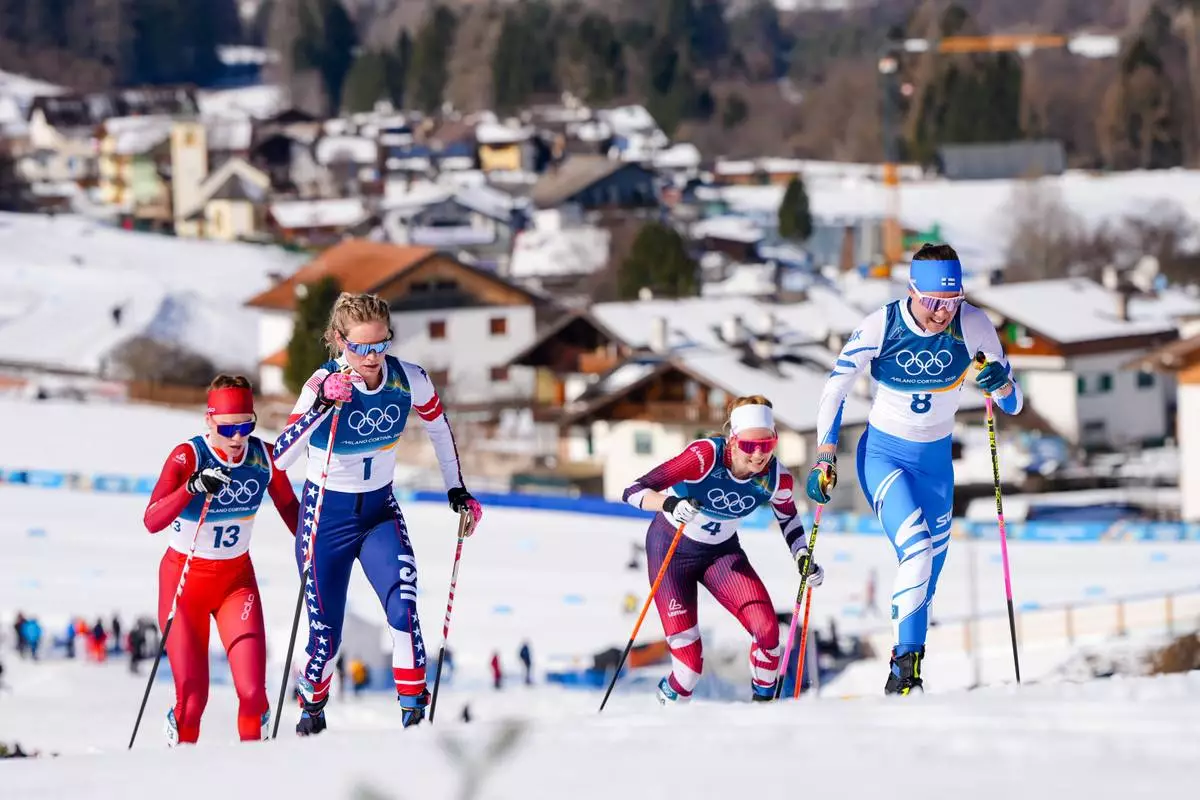
Kerttu Niskanen, of Finland, from right, Teresa Stadlober, of Austria, Jessie Diggins, of the United States, and Nadja Kaelin, of Switzerland, compete in the cross country skiing women's 50km mass start classic at the 2026 Winter Olympics, in Tesero, Italy, Sunday, Feb. 22, 2026. (AP Photo/Kirsty Wigglesworth)
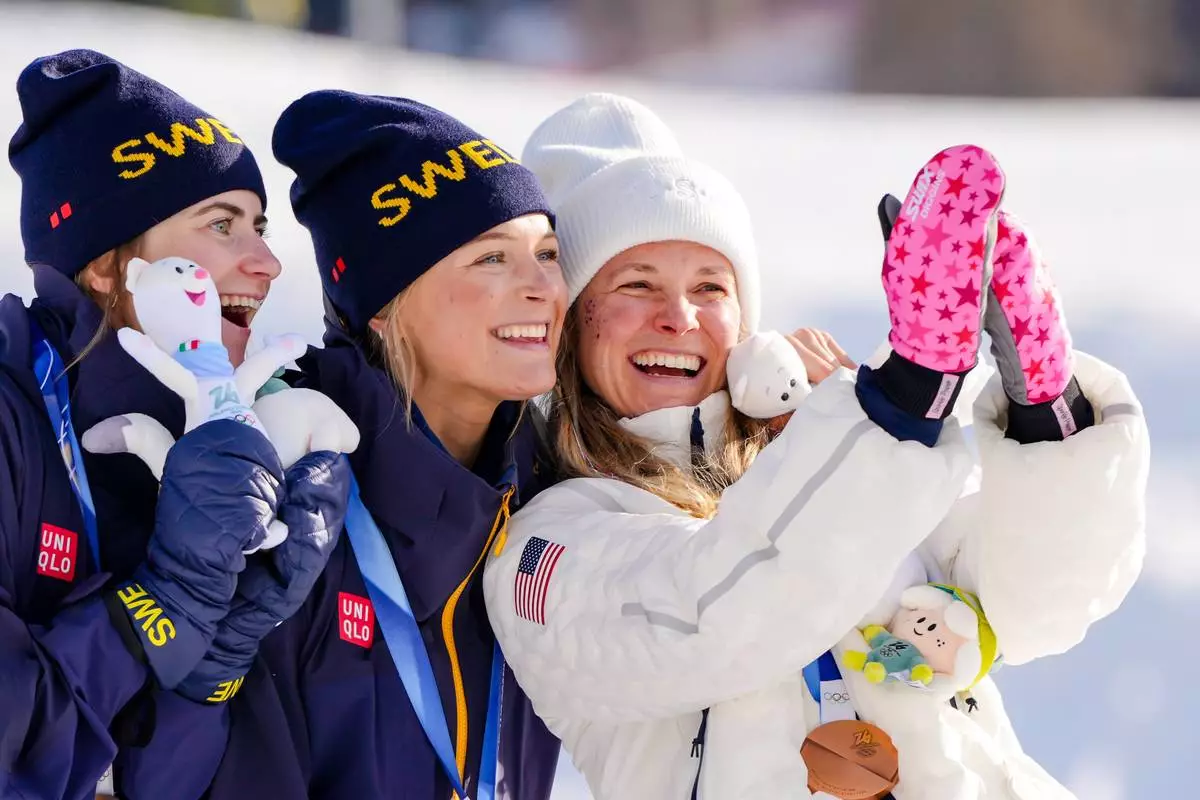
Silver medalist Ebba Andersson, of Sweden, from left, gold medalist Frida Karlsson, of Sweden, and bronze medalist Jessie Diggins, of the United States, pose for a selfie on the podium of the cross country skiing women's 10km interval start free at the 2026 Winter Olympics, in Tesero, Italy, Thursday, Feb. 12, 2026. (AP Photo/Kirsty Wigglesworth)
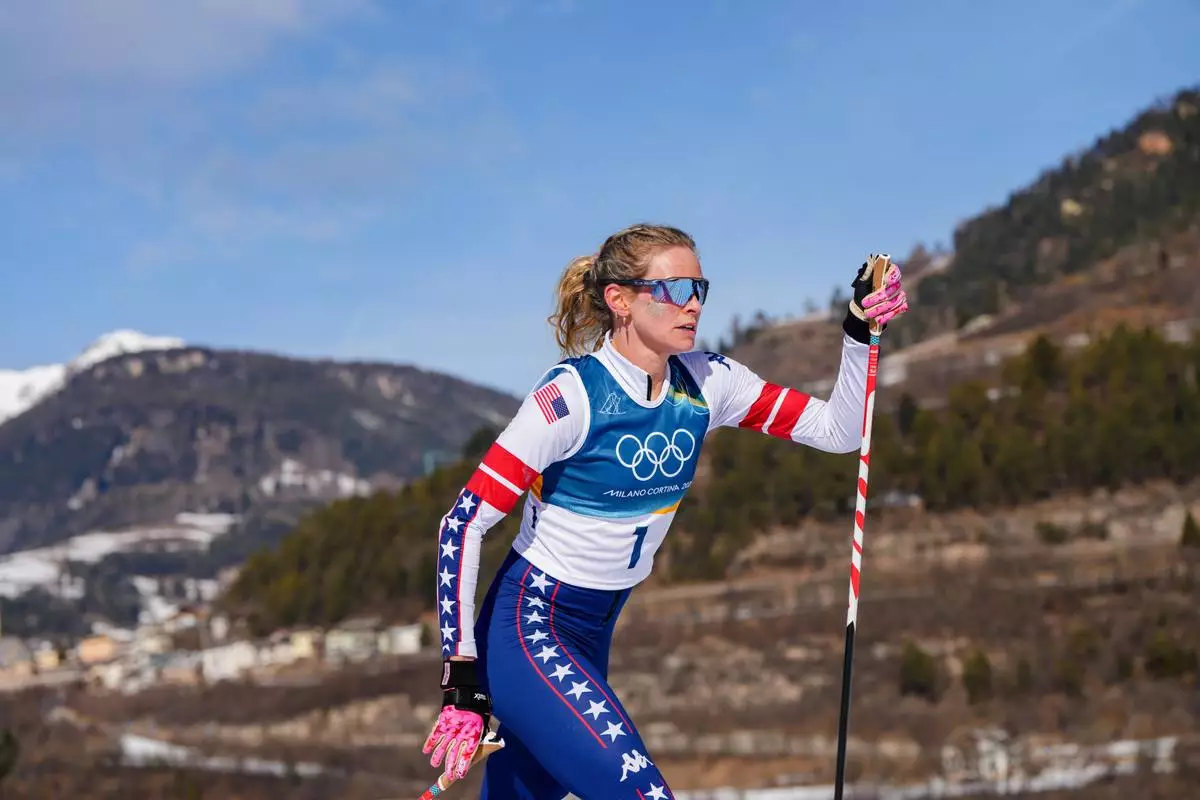
Jessie Diggins, of the United States, competes in the cross country skiing women's 50km mass start classic at the 2026 Winter Olympics, in Tesero, Italy, Sunday, Feb. 22, 2026. (AP Photo/Kirsty Wigglesworth)
LOS LLANITOS, México (AP) — On a dirt field on Mexico’s Pacific coast, five cousins between the ages of 8 and 13 strip down and kick off their shoes. Nearby, adults help them fasten the pre-Hispanic-style “fajado,” securing loincloths and leather belts that wrap around their hips.
The Osuna children grab the rubber ball, all 3.2 kilograms of it — around 7 pounds or seven times heavier than a soccer ball — and begin playing. Only the hips may touch it, forcing players to leap through the air or dive low when it skims the ground.
As Mexico prepares to co-host the 2026 FIFA World Cup, the nation is looking back 3,400 years to one of the oldest team sports: the ancient ballgame known as ulama, a ritual practice nearly erased during the Spanish conquest that survived only in the remote pockets of northwestern Mexico before its late 20th-century rebirth. Today, authorities and its modern players are leveraging the momentum of international soccer to shine a spotlight on the ancient sport once again.
While players acknowledge that tourism fueled the sport’s revival, many worry that projecting an “exotic” image undermines a tradition central to their identity.
“We must rid the game of the notion that it is a living fossil,” said Emilie Carreón, a researcher at the National Autonomous University of Mexico, UNAM, and director of a project aimed at studying and practicing the sport.
That's exactly what the Osuna family is trying to do. After ulama player Aurelio Osuna died, his widow, María Herrera, 53, continued his legacy, teaching the ballgame to their grandchildren in their small village in Sinaloa, 1,000 kilometers (620 miles) northwest of Mexico City.
“This seed will bear fruit someday,” she said.
According to the Popol Vuh, the sacred Mayan book, the world was created from a ballgame, where light and darkness clashed to balance life and death and set the universe in motion.
Long before the Maya, the Olmecs — the earliest known Mesoamerican civilization — practiced the sport; the recreation of this clash of opposing forces was common in various pre-Hispanic cultures. The evidence is in millennial rubber balls unearthed in Mexico and in nearly 2,000 ball courts found from Nicaragua to Arizona.
The game, depicted in codices, stone carvings and sculptures, had many variations and meanings, from fertility or war ceremonies, to political acts and even sacrifices.
While some players were beheaded — possibly the losers — Guatemalan archaeologist and anthropologist Carlos Navarrete explained this occurred only during specific periods and in certain regions. The physically demanding game was primarily a big social event, drawing crowds for fun and betting.
Spanish conquistador Hernán Cortés was impressed by the spectacle presented by the Aztec emperor Moctezuma but the Spanish ultimately banned ulama and ordered the destruction of its courts, likely viewing the tradition as a form of resistance to Christianity. For the Catholic Church “the ball was the living devil,” Carreón said.
The game — played by hitting the ball with the hip, the forearm or a mallet — survived only on the Mexican northern Pacific coast, where the colonial process led by Jesuit priests was less aggressive and ulama was accepted in Catholic festivities, said Manuel Aguilar Moreno, a professor of art history at California State University.
On the opening day of the 1968 Mexico City Olympics, spectators watched as burly men contorted their bodies in unexpected ways to keep the rubber ball moving for as long as possible. The exhibition sparked studies about the ballgame and how to preserve it in the following decades.
Luis Aurelio Osuna, 30, Herrera’s eldest son, began playing hip ulama after school, just as his father did decades ago in Los Llanitos, a ranch next to the port city of Mazatlán. Now his three children also play.
Osuna and his mother teach the children how to hit the ball and guide them through the complicated rules, which include a scoring system with points that are won and lost.
They do it out of passion, but also out of pragmatism in a state where organized crime is pervasive.
“We need to find a way to keep them entertained with good things,” said Osuna.
Hip ulama teams have up to six players and the Osuna family sometimes participates in tournaments or exhibitions.
Decades ago, matches were big events tied to religious feasts, sometimes stretching on for an entire week. But those days are gone, as interest waned and rubber balls became hard to get.
In the 1980s, filmmaker Roberto Rochín documented the work of perhaps the last rubber ball-maker in the mountains of Sinaloa. The artisan made them similar to the Olmecs, who discovered that mixing hot rubber sap with a plant created a strong, elastic and durable material. This civilization made some of the oldest balls of the world.
During the 1990s, staff from a resort in the Mexican Caribbean traveled across the country in search of Sinaloan families who could represent the ballgame as a tourist attraction in the Riviera Maya, where no one played it anymore.
“It’s pure spectacle: they paint their faces and put on feathered costumes,” Herrera said. Yet, she acknowledges the value. “That’s where the revival began.”
The ballgame began to spread and to be known outside Mexico. Osuna, with the family team his father had formed, ended up playing hip ulama in a Roman amphitheater in Italy. It attracted so much attention that they were hired for a deodorant commercial, he said.
As the World Cup approaches, authorities and corporations are launching exhibitions in Mexico City and Guadalajara, and featuring ulama players in ad campaigns highlighting Mexican heritage — a move that has sparked mixed feelings.
“We’re not circus monkeys,” says Ángel Ortega, a 21-year-old ulama player from Mexico City who recently participated in a TV commercial alongside football players.
Ilse Sil, a player and member of the UNAM project led by Carreón, believes that institutional support will help to preserve ulama but officials need to promote the game in communities and schools to recruit more young players, as it remains a marginal sport with approximately 1,000 players mainly in México and Guatemala.
In Los Llanitos, Herrera’s grandchildren love playing. They don't care where — in the dirt field, in a court or even in the house corridor — but always with the precious inheritance: a handmade decades-old rubber ball from the mountains of Sinaloa. They say it cushions the blows better.
Eight-year-old Kiki is the most enthusiastic. He says he is determined to keep practicing until he fulfills the dream of leading a team of his own.
Follow AP’s coverage of Latin America and the Caribbean at https://apnews.com/hub/latin-america
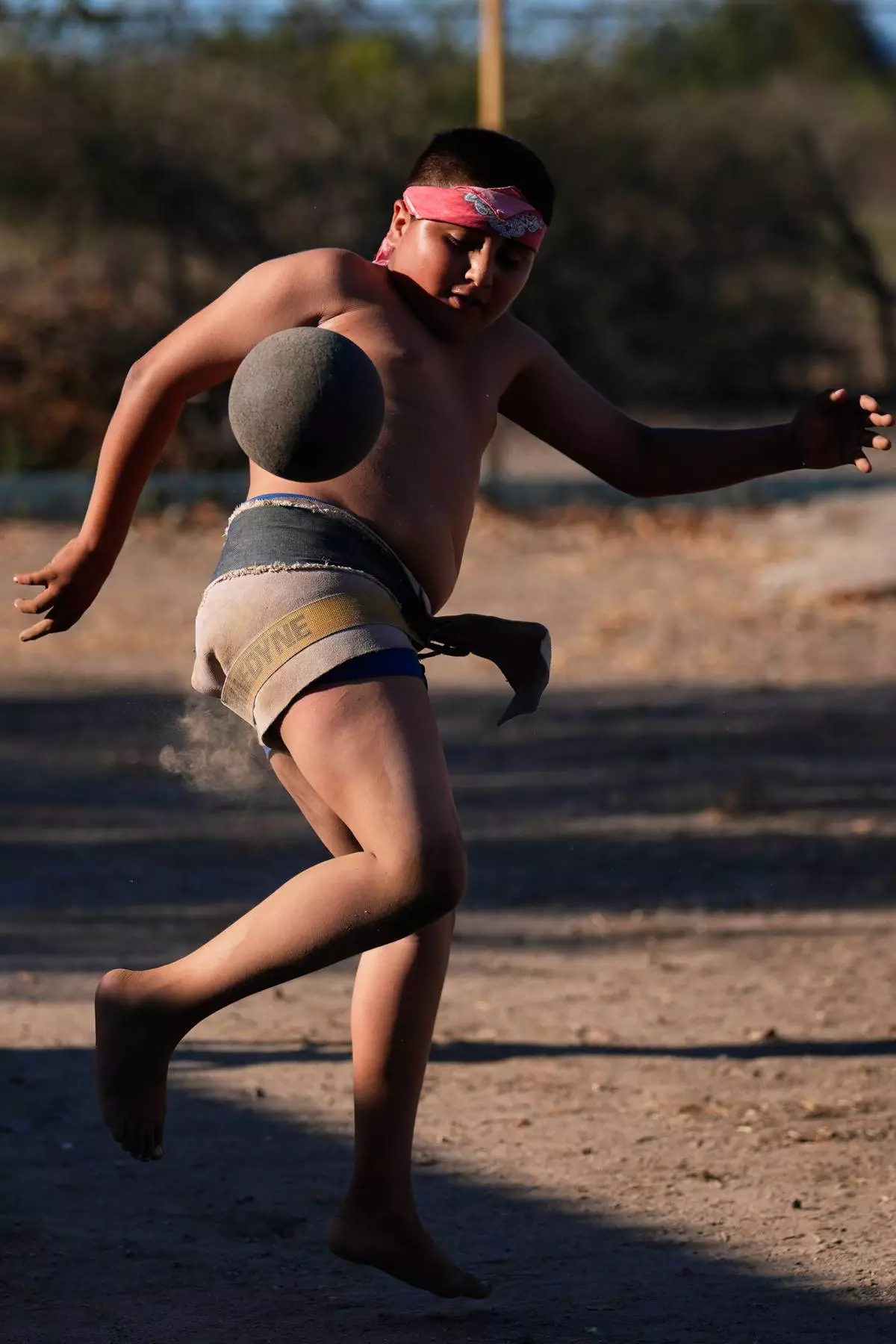
Juan Osuna plays ulama, a traditional Mesoamerican ballgame dating to pre-Hispanic times, in Los Llanitos on the outskirts of Mazatlan, Mexico, Saturday, April 25, 2026. (AP Photo/Marco Ugarte)
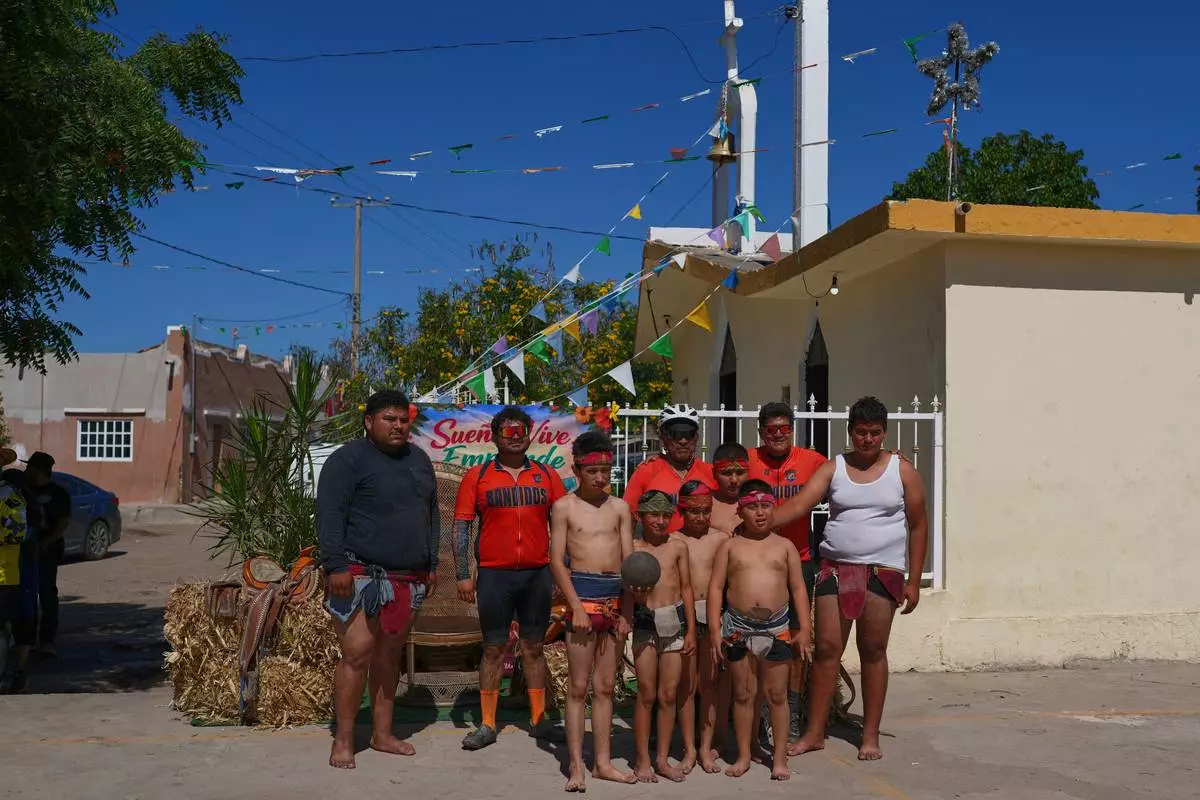
The Osuna family poses for a photo before a match of ulama, a traditional Mesoamerican ballgame dating to pre-Hispanic times, that they organized in Los Llanitos on the outskirts of Mazatlan, Mexico, Saturday, April 25, 2026. (AP Photo/Marco Ugarte)
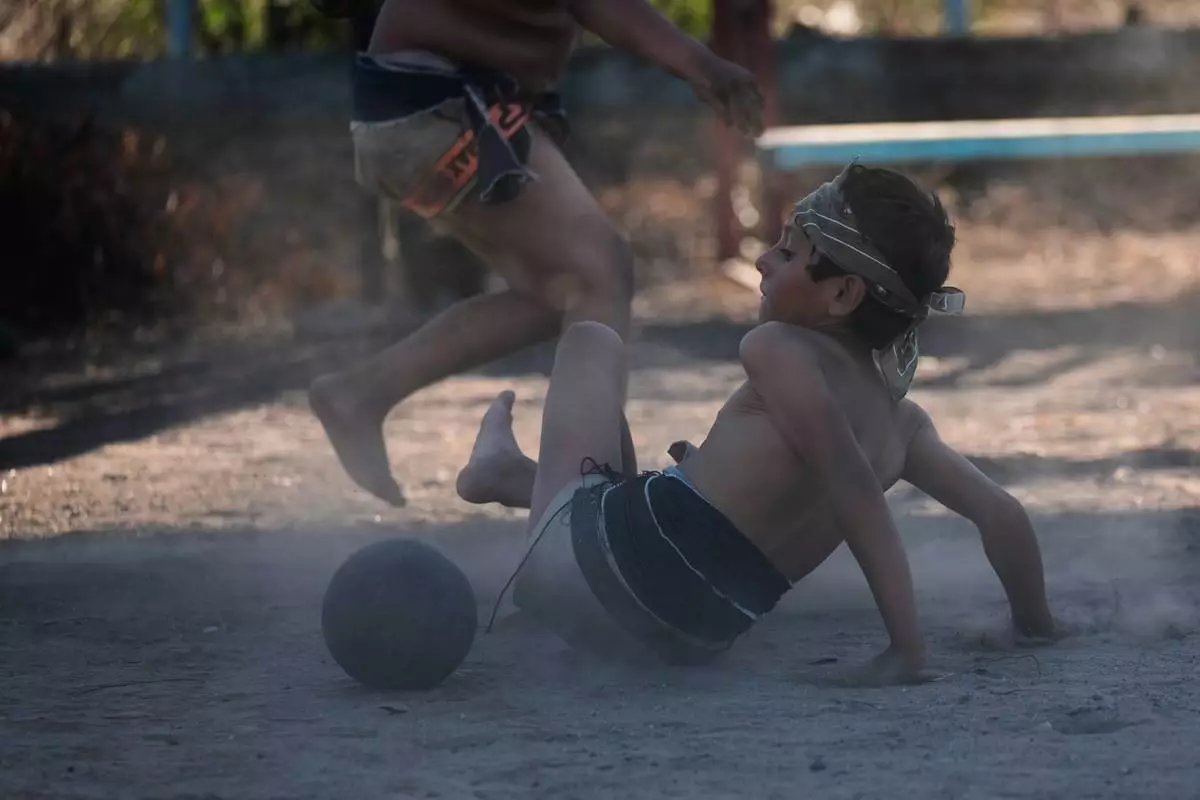
Iker Salgueido plays ulama, a traditional Mesoamerican ballgame dating to pre-Hispanic times, in Los Llanitos on the outskirts of Mazatlan, Mexico, Saturday, April 25, 2026. (AP Photo/Marco Ugarte)
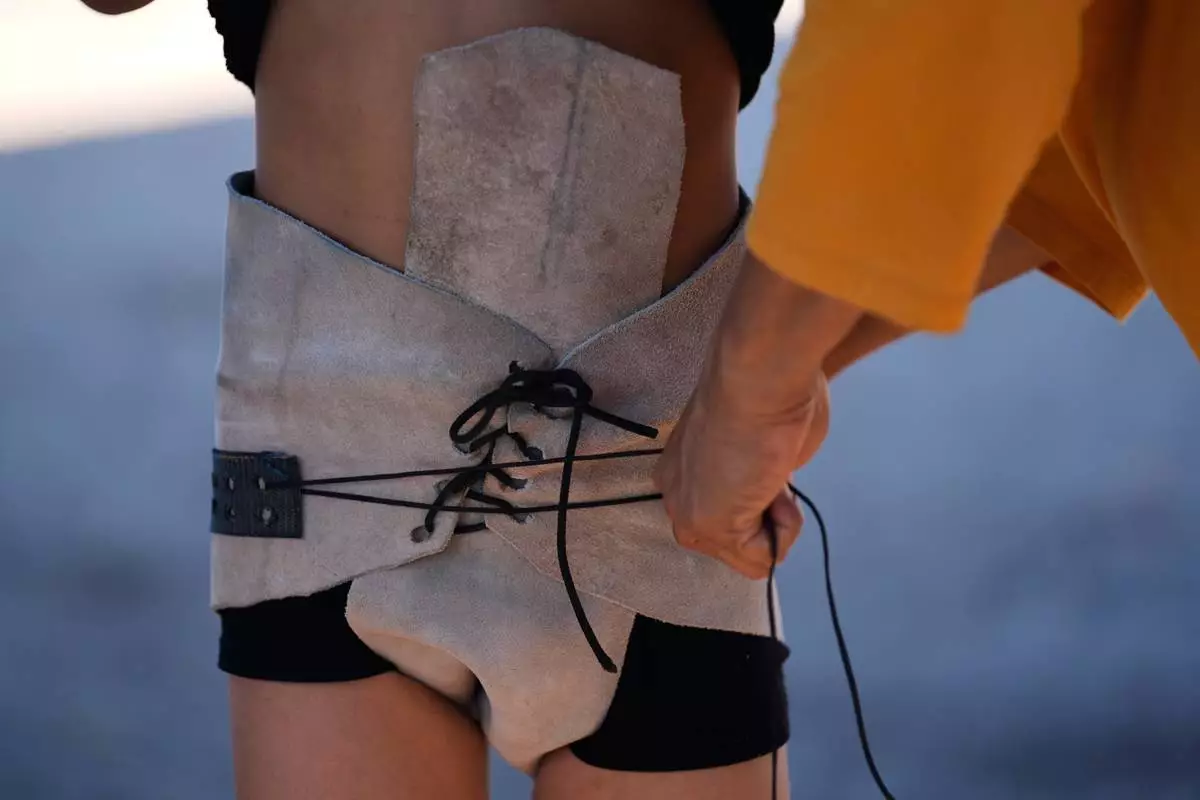
Iker Salgueiro stands still as an adult fastens a pre-Hispanic-style “fajado,” or leather belt, in preparation for ulama, a traditional Mesoamerican ballgame dating to pre-Hispanic times, in Los Llanitos on the outskirts of Mazatlan, Mexico, Saturday, April 25, 2026. (AP Photo/Marco Ugarte)
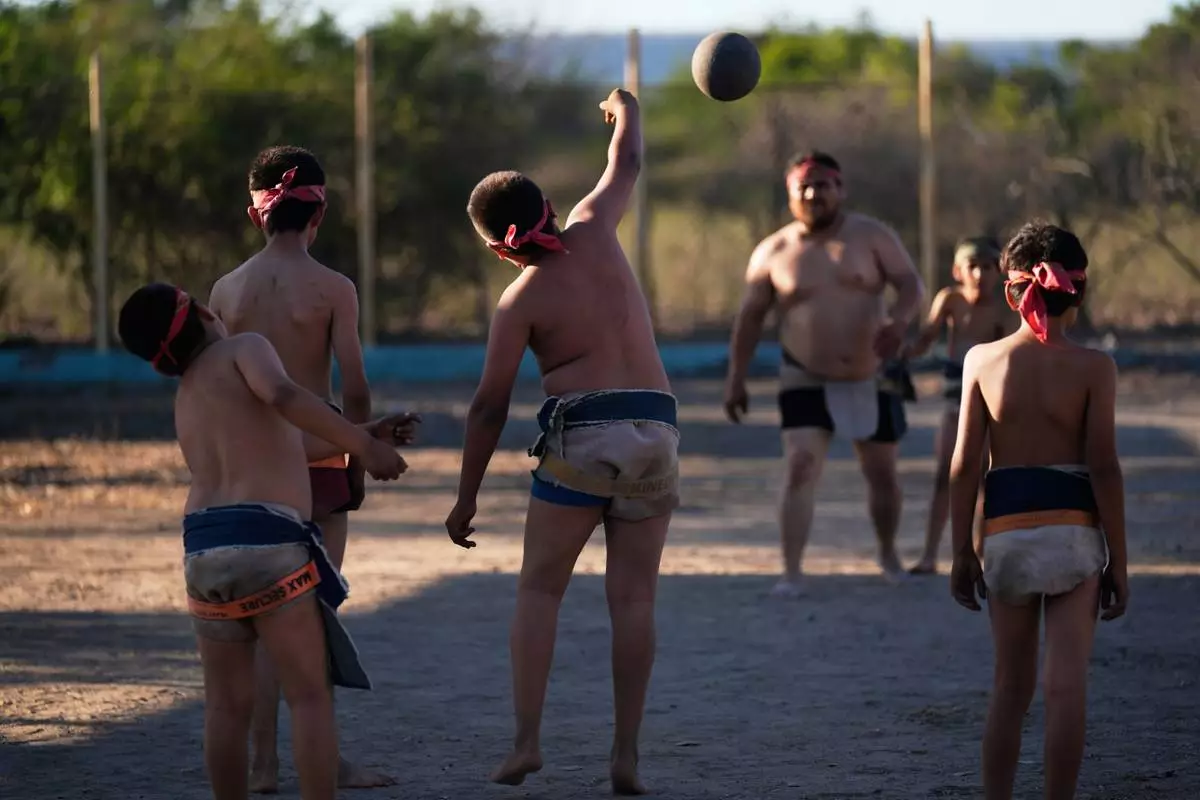
Youth play ulama, a traditional Mesoamerican ballgame dating to pre-Hispanic times, in Los Llanitos on the outskirts of Mazatlan, Mexico, Saturday, April 25, 2026. (AP Photo/Marco Ugarte)