MEKELE, Ethiopia (AP) — Gebreegziabher Berehe has stopped waiting for tourists to arrive as many worry about a return to war.
The tour guide in Ethiopia ’s northern region of Tigray says his bookings have dried up, ATMs in the city of Mekele are empty and he is considering leaving a country where he can no longer afford to live.
Click to Gallery
Johannes Tesfay, a farmer, poses for a photo during an interview with The Associated Press in the Tigray region of northern Ethiopia, on Jan. 27, 2026. (AP Photo/Jody Ray)
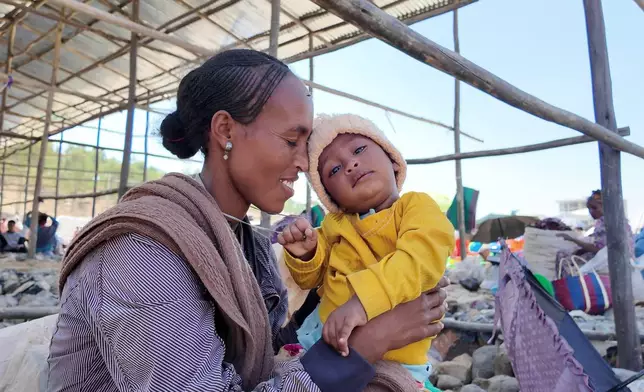
A woman holds her child at a street market in Wukro in the Tigray region of northern Ethiopia, Tuesday, Jan. 27, 2026. (AP Photo/Jody Ray)
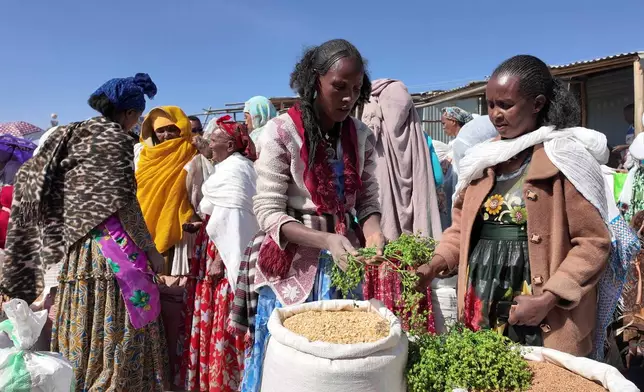
Ethiopian women buy and sell goods at a street market in Mekelle in the Tigray region of northern Ethiopia, Monday, Jan. 26, 2026. (AP Photo/Jody Ray)
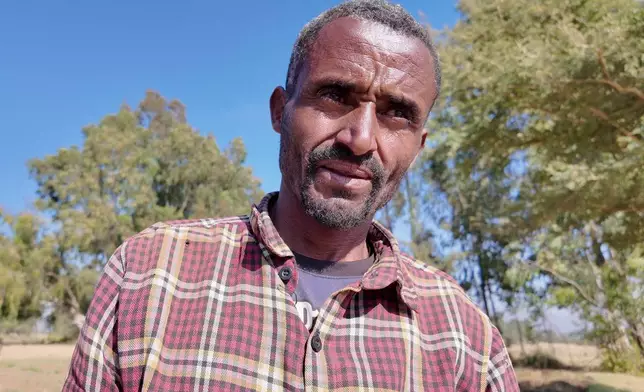
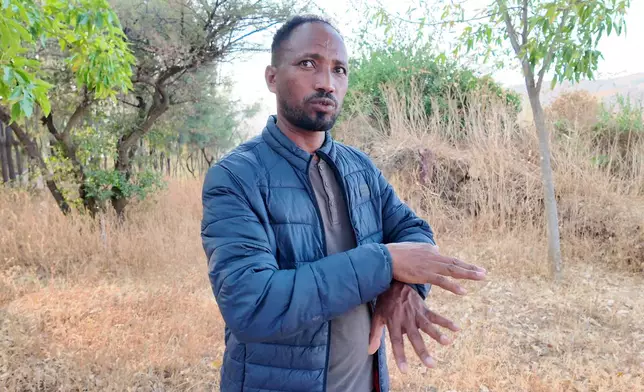
Gebreegziabher Berehe, a tour operator, gestures during an interview with The Associated Press in Mekelle, in the Tigray region of northern Ethiopia, on Jan. 26, 2026. (AP Photo/Jody Ray)
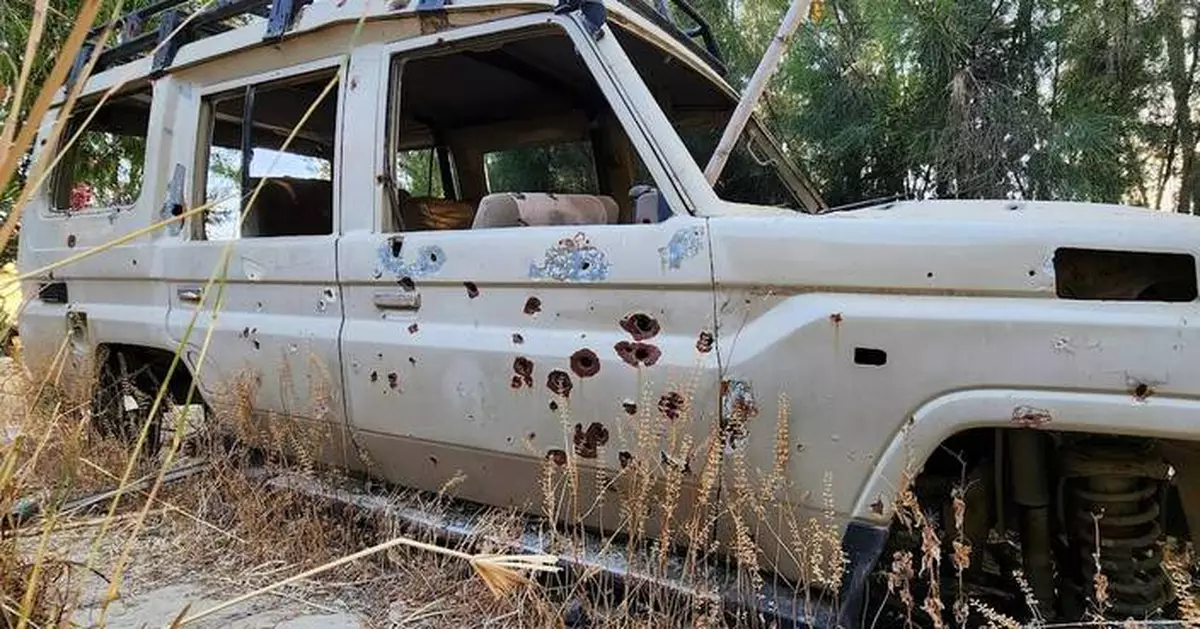
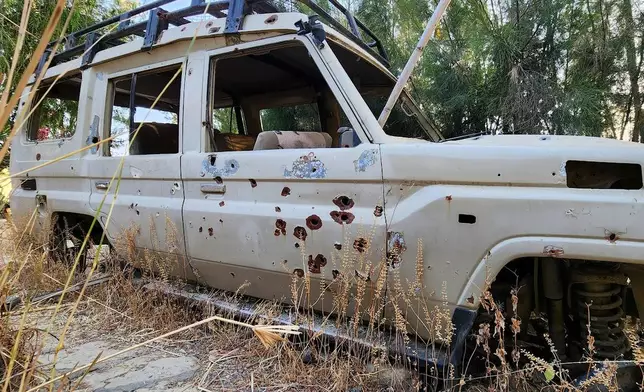
A bullet-riddled vehicle sits abandoned on the grounds of Wukro Lodge, once occupied by Eritrean troops, in the Tigray region of northern Ethiopia, on Jan. 26, 2026. (AP Photo/Jody Ray)
“If war arises again, I think the situation will be even more severe than before,” the 37-year-old Berehe said. “My colleagues and I are now facing serious economic and moral crises, even before hearing the sound of any gun.”
There is a tense calm in Mekele, the regional capital, but tensions have been rising again between local authorities and Ethiopia’s government in Addis Ababa, the federal capital.
Tigray has been bracing for the possibility of renewed conflict after the parties signed a peace deal in November 2022, ending fighting that killed thousands of people as Ethiopian government troops, backed by allied forces from neighboring Eritrea, fought Tigrayan forces.
Now, Tigray’s rulers accuse Ethiopian federal authorities of breaching that agreement with drone strikes. At the same time, Ethiopia’s government accuses Eritrea of pivoting to mobilize and fund armed groups in Tigray, with which it shares a border.
In the feared scenario, Eritrea would team up with the Tigray People’s Liberation Front, the group that governs Tigray, in armed hostilities against Ethiopian forces.
The conflict that ended in 2022 was brutal, with widespread allegations of sexual violence and the withholding of food as a weapon of war.
Many residents of Mekele are looking for opportunities to escape any new fighting while they can, recalling the communications blackout and travel restrictions that Ethiopia's government imposed on the region during the conflict.
Some observers see a possible war trigger in Prime Minister Abiy Ahmed’s forceful stance on efforts to regain Red Sea access for landlocked Ethiopia through Eritrea, which was lost when Eritrea gained independence from Ethiopia in 1993 after decades of guerrilla warfare.
Abiy told lawmakers earlier this month that the Red Sea and Ethiopia “cannot remain separated forever.” Yemane Gebremeskel, the Eritrean government spokesperson, dismissed Abiy's ambition as “delusional malaise” in comments to The Associated Press.
Eritrea, fearing a military strike on its port of Assab, has responded by warming up to its former rivals, Tigray’s leaders, even as it denies any alliance. That has caused concern in Addis Ababa, where the Ethiopian government is calling up its reserve forces.
Abiy has tried to build a global image of Ethiopia as a rising power since he took office in 2018. But he has been set back by several conflicts over the years.
United Nations Secretary-General António Guterres has called on all parties to exercise restraint, echoed by the European Union and the United Kingdom, which has warned its citizens against traveling to the region.
Ethiopian Airlines, the national carrier, on Jan. 29 canceled flights to Tigray after clashes broke out between federal troops and Tigrayan forces in Tselemti district, which is part of an area disputed by Tigray and the neighboring Amhara region. The airline resumed flights on Feb. 3.
The violence was followed by drone strikes that killed one person and injured another. Tigrayan authorities accused Ethiopian forces of carrying out the attack. Ethiopia's military didn't publicly respond to the allegation.
The events have affected travel to Tigray, whose ancient rock-hewn churches and dramatic highland landscapes make tourism a rare but vital source of hard currency and employment.
While Mekele business owners like Berehe worry about lost income, Tigray farmers like Johannes Tesfay worry.
Tesfay lives north of Mekele in Debretsion, where his family grows chili, potatoes and onions at the base of a mountain range that Eritrean troops used to cross into Ethiopia during the last conflict, trampling over farmland and destroying equipment.
Supply chain disruptions tied to the renewed tensions have left him gravely concerned.
“There’s no fuel for my irrigation pumps, there’s no fertilizer and there’s barely any transportation for buyers to bring the produce to market,” he said.
Asked what he would do if fighting returned to the region, Tesfay looked to the mountains and said, “What can we do? All we can do is pray. We need help from the global community to make some kind of reconciliation between all the forces.”
For more on Africa and development: https://apnews.com/hub/africa-pulse
The Associated Press receives financial support for global health and development coverage in Africa from the Gates Foundation. The AP is solely responsible for all content. Find AP’s standards for working with philanthropies, a list of supporters and funded coverage areas at AP.org.
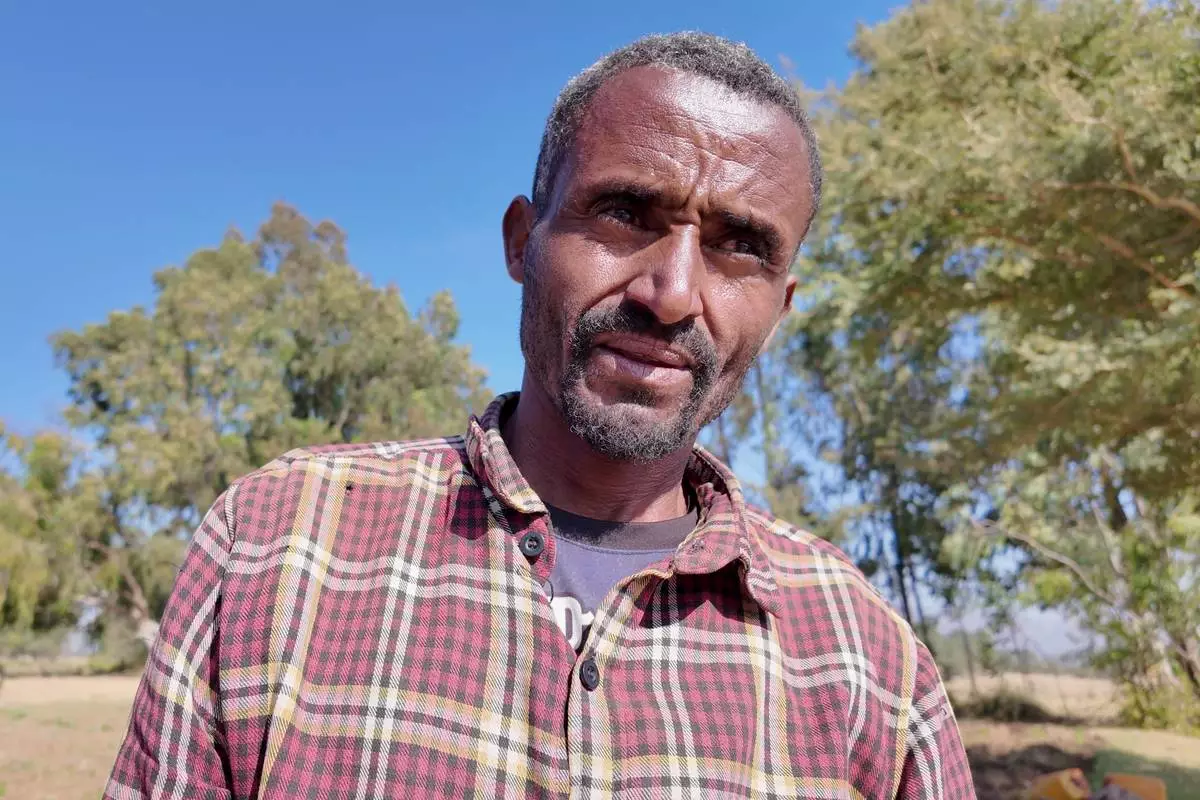
Johannes Tesfay, a farmer, poses for a photo during an interview with The Associated Press in the Tigray region of northern Ethiopia, on Jan. 27, 2026. (AP Photo/Jody Ray)
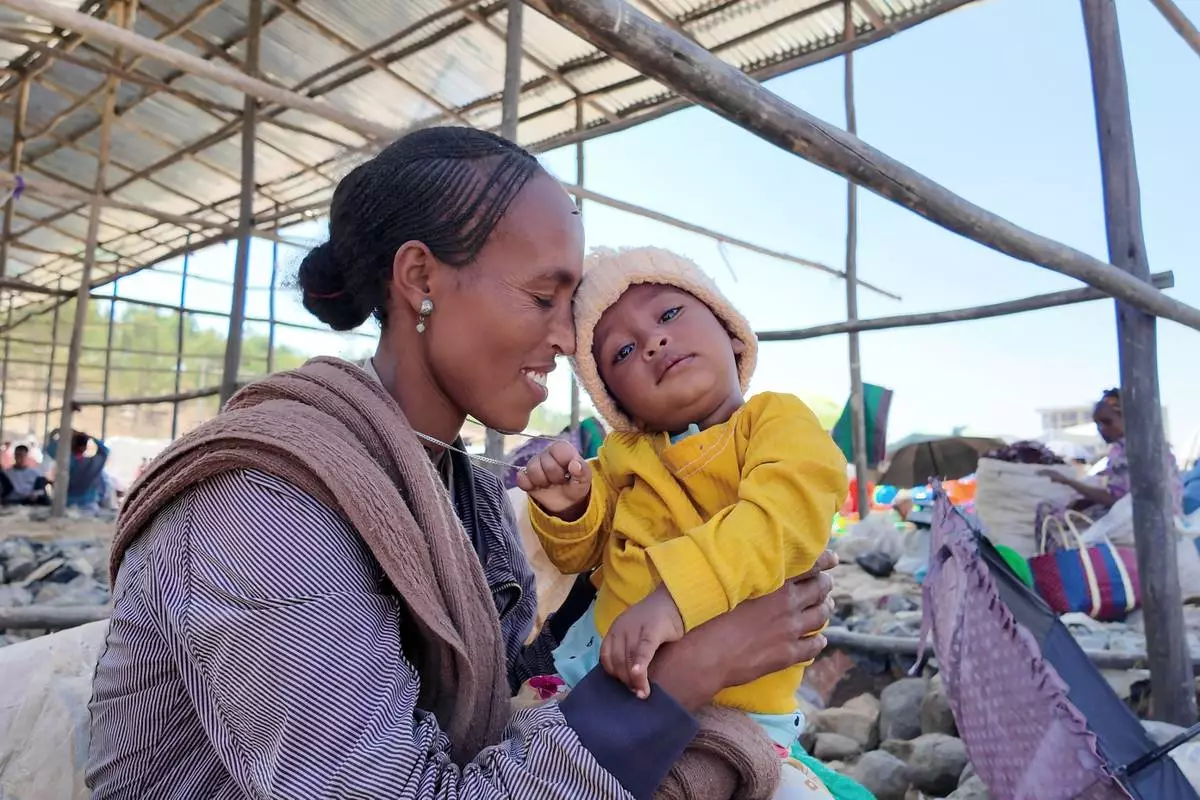
A woman holds her child at a street market in Wukro in the Tigray region of northern Ethiopia, Tuesday, Jan. 27, 2026. (AP Photo/Jody Ray)
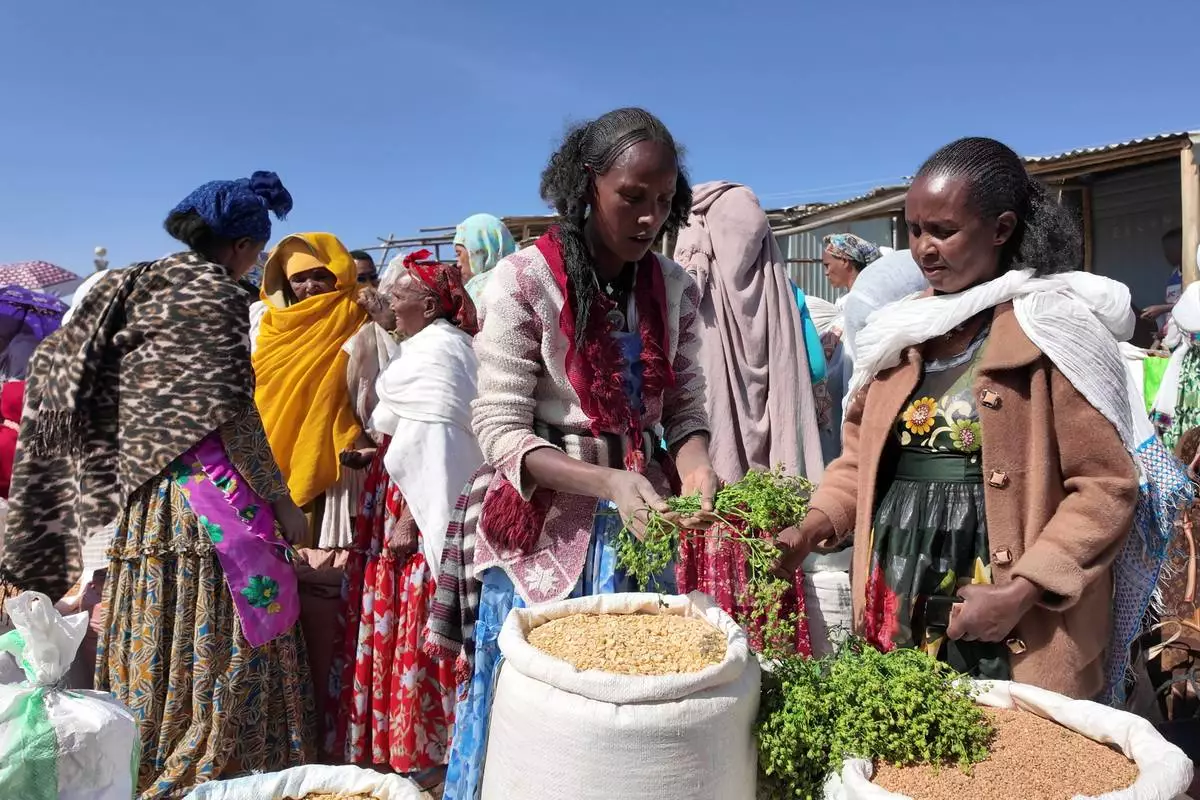
Ethiopian women buy and sell goods at a street market in Mekelle in the Tigray region of northern Ethiopia, Monday, Jan. 26, 2026. (AP Photo/Jody Ray)
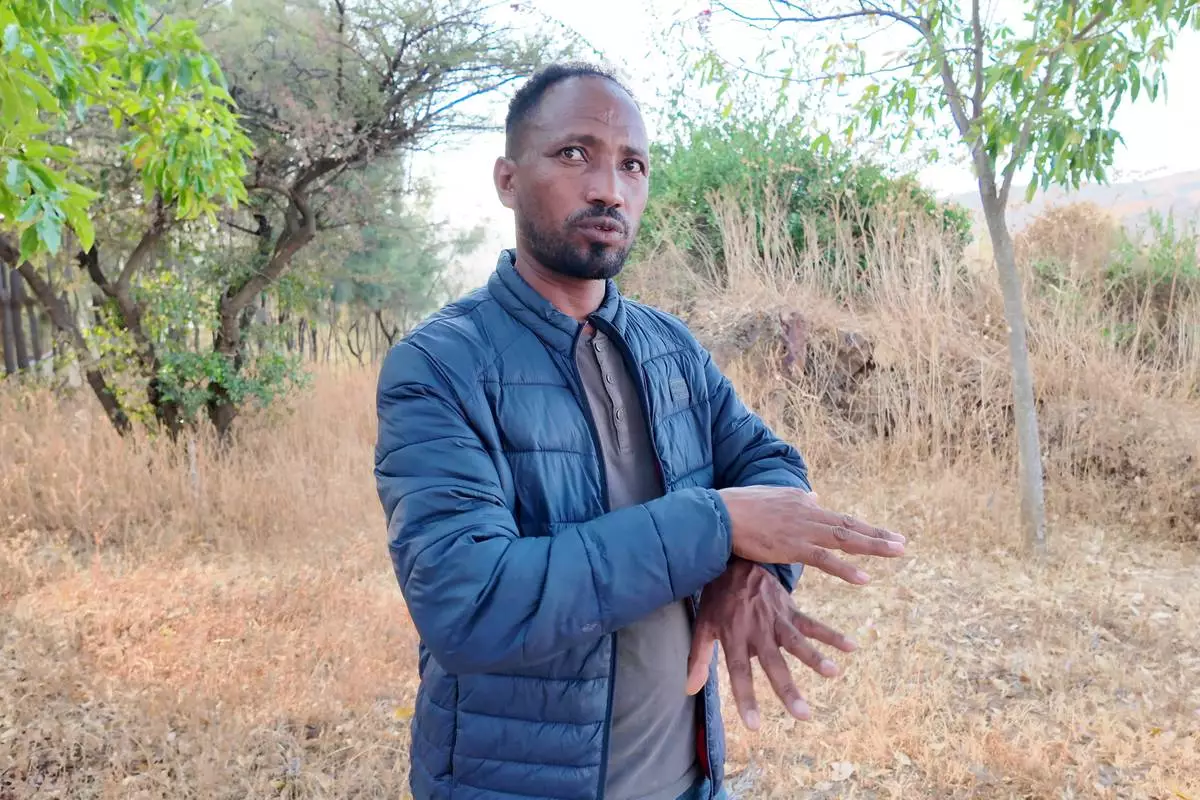
Gebreegziabher Berehe, a tour operator, gestures during an interview with The Associated Press in Mekelle, in the Tigray region of northern Ethiopia, on Jan. 26, 2026. (AP Photo/Jody Ray)
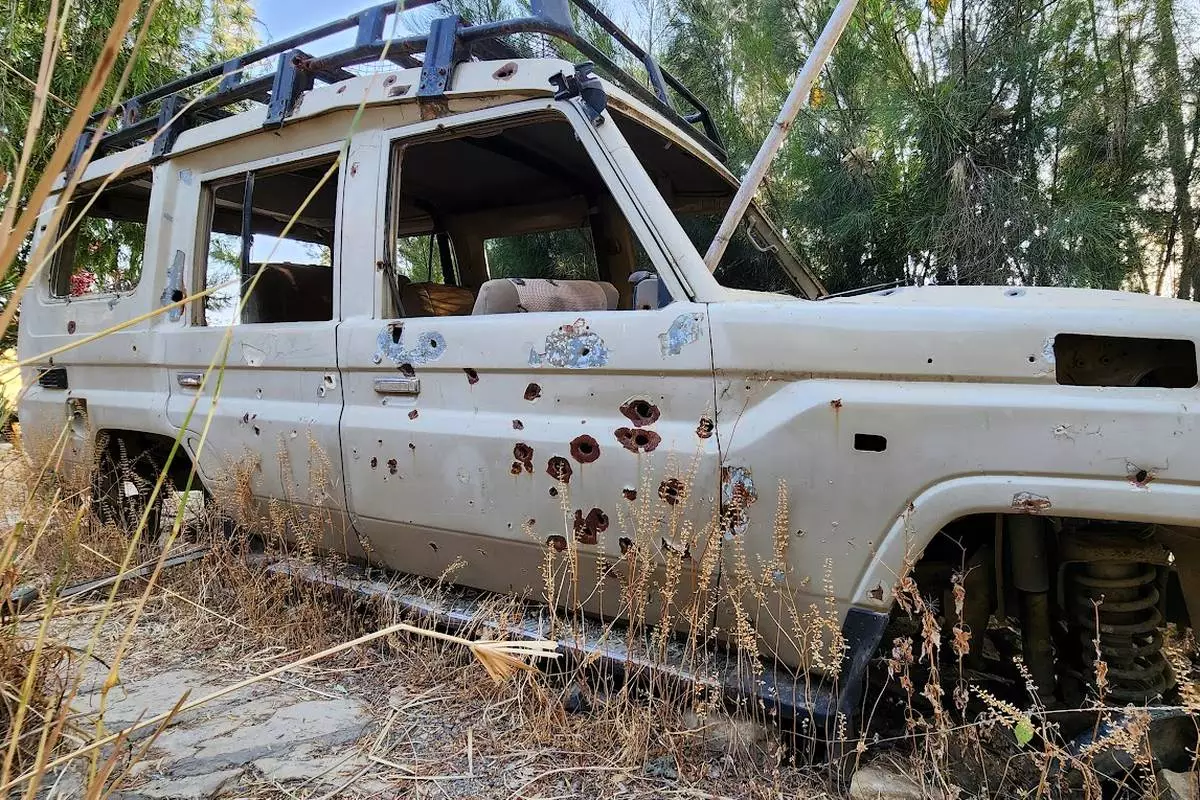
A bullet-riddled vehicle sits abandoned on the grounds of Wukro Lodge, once occupied by Eritrean troops, in the Tigray region of northern Ethiopia, on Jan. 26, 2026. (AP Photo/Jody Ray)
MEXICO CITY (AP) — The Mexican army killed the country’s most powerful cartel leader and one of the United States’ most wanted fugitives on Sunday, notching a major victory while cartel members responded with a wave violence across the country.
The killing of Jalisco New Generation Cartel leader Nemesio Oseguera Cervantes during an attempt to capture him in Jalisco state was the highest-profile blow against cartels since the recapture of former Sinaloa cartel boss Joaquín “El Chapo” Guzmán a decade ago.
Following Oseguera Cervantes' death, gunmen unleashed violence across the country. Cars burned out by cartel members blocked roads in 20 Mexican states and left smoke billowing into the air. People locked themselves in their homes in Guadalajara, Mexico's second-largest city and Jalisco's capital, and school was canceled Monday in several states as security forces were placed on alert all over the country. Even Guatemala reinforced security on its border with Mexico.
The killing could give the government a leg up in its dealings with the U.S. Trump administration, which has been threatening tariffs or unilateral military action if Mexico does not show results in the fight against the cartels.
But the long-term effect on Mexico's security landscape remains unclear.
Here's what to know:
Oseguera Cervantes, better known as “El Mencho,” was 59 years old and originally from the western state of Michoacan. His ties to organized crime went back at least three decades.
In 1994, he was tried for trafficking heroin in the U.S. and sent to prison for three years. Upon returning to Mexico, he quickly rose through Mexico's drug trafficking underworld.
Around 2009, he founded the Jalisco New Generation Cartel, which became Mexico's fastest-growing criminal organization, moving cocaine, methamphetamines, fentanyl and migrants to the United States, and innovating in violence with the use of drones and improvised explosive devices.
The cartel earned a reputation for brazen attacks on Mexican security forces, including downing a military helicopter in Jalisco in 2015 and attempting a spectacular, but unsuccessful, assassination of Mexico City Police Chief Omar García Harfuch, who is now Mexico's federal security secretary.
It recruited aggressively, experimenting with new ways to reach potential members online.
Oseguera Cervantes was killed during an attempt to capture him, as his followers attempted to fight off Mexican troops.
Mexico's Defense Department said in a statement that the army launched an operation in the southern part of Jalisco state to capture Oseguera Cervantes, involving the Mexican Air Force and special forces.
The cartel counterattacked, and in the ensuing confrontation, federal forces killed four members of the criminal group, including its leader, and wounded three others who died later during transfer by air to Mexico City, according to the statement.
Three soldiers were injured and two people were detained in the action. Rocket launchers capable of shooting down aircraft and destroying armored vehicles were seized at the scene.
Oseguera Cervantes' will help Mexico's government show results to the U.S., which is pressuring its neighbor to pursue drug cartels more aggressively. Both countries said intelligence collaboration helped lead to Sunday's operation.
Oseguera Cervantes was facing multiple indictments in the United States and the U.S. State Department had offered a $15 million reward for information leading to his arrest. The Trump administration designated his cartel and others foreign terrorist organizations a year ago.
U.S. Deputy Secretary of State Christopher Landau, who was U.S. ambassador to Mexico during the first Trump administration, applauded the operation via X, writing “The good guys are stronger than the bad guys. Congratulations to the forces of law and order in the great Mexican nation.”
Mike Vigil, former chief of international operations for the DEA, said Mexico had sent a “a strong message to Donald Trump's administration that they are fighting aggressively and effectively” against the most powerful cartels. He added that “the majority of the information came from the Mexican armed forces and all credit goes to Mexico.”
It's not clear who will succeed Oseguera Cervantes, or if any one person can.
The Jalisco cartel has a presence in at least 21 of Mexico's 32 states and is active in almost all of the United States, according to the U.S. Drug Enforcement Administration. But it is also a global organization and the loss of its leader could be felt well beyond Mexico.
“El Mencho controlled everything, he was like a country's dictator,” Vigil said.
His absence could slow the cartel's rapid growth and expansion and leave it initially weakened against the Sinaloa cartel on several fronts where they or their proxies are fighting. The Sinaloa is locked in its own internal power struggle, however, between the sons of “El Chapo” and the faction loyal to Ismael “El Mayo” Zambada, who is in U.S. custody.
Vigil said Mexico should seize the moment to launch “an effective frontal assault based on intelligence.”
“This is a big opportunity for Mexico and the United States if they work together,” he said.
Security analyst David Saucedo said that if relatives of Oseguera Cervantes take control of the cartel, the violence seen Sunday could continue. If others take power, they could be more willing to turn the page and continue operations.
The greatest fear would be that the cartel turns to indiscriminate violence. They could decide to “launch narcoterrorism attacks ... and generate a scenario similar to what Colombia lived in the 1990s,” a full on attack against the government “car bombs, assassinations and attacks on aircraft.”
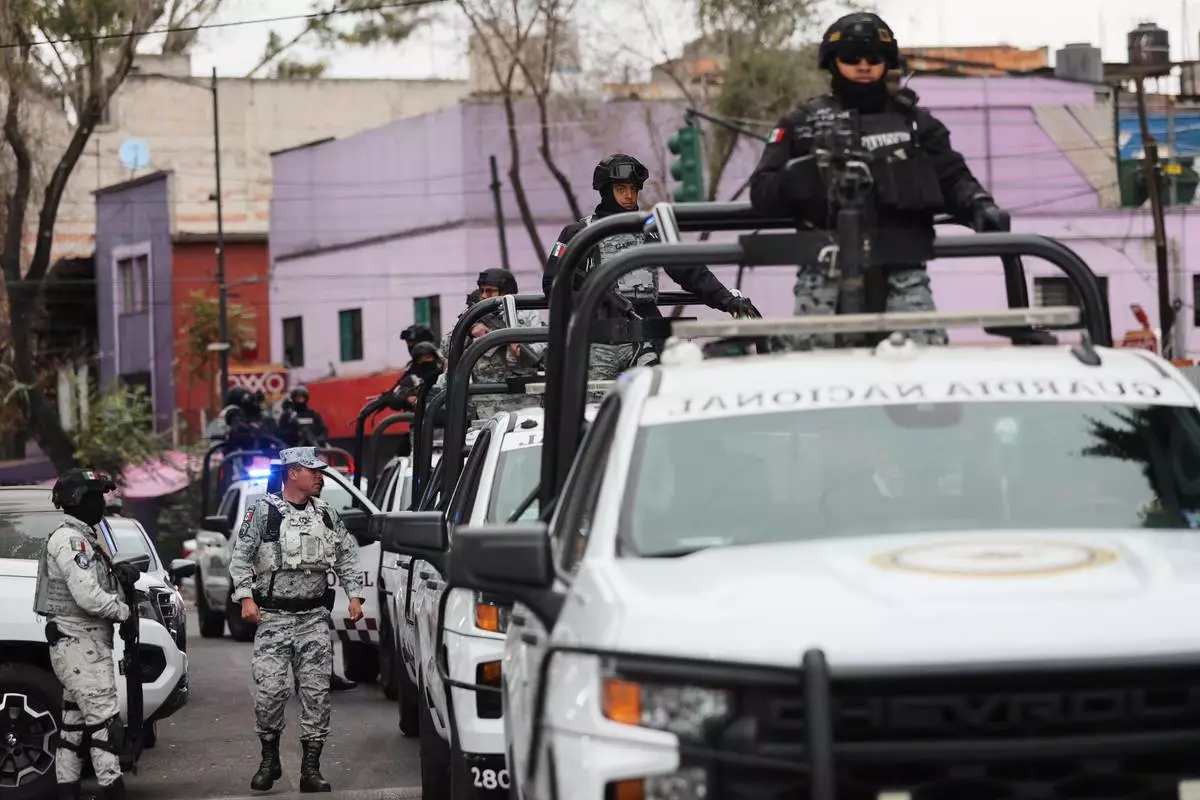
National Guards patrol the area outside of the General Prosecutor's headquarters in Mexico City, Sunday, Feb. 22, 2026, after authorities reported that the Mexican Army killed Jalisco New Generation Cartel leader Nemesio Oseguera, known as "El Mencho." (AP Photo/Ginette Riquelme)
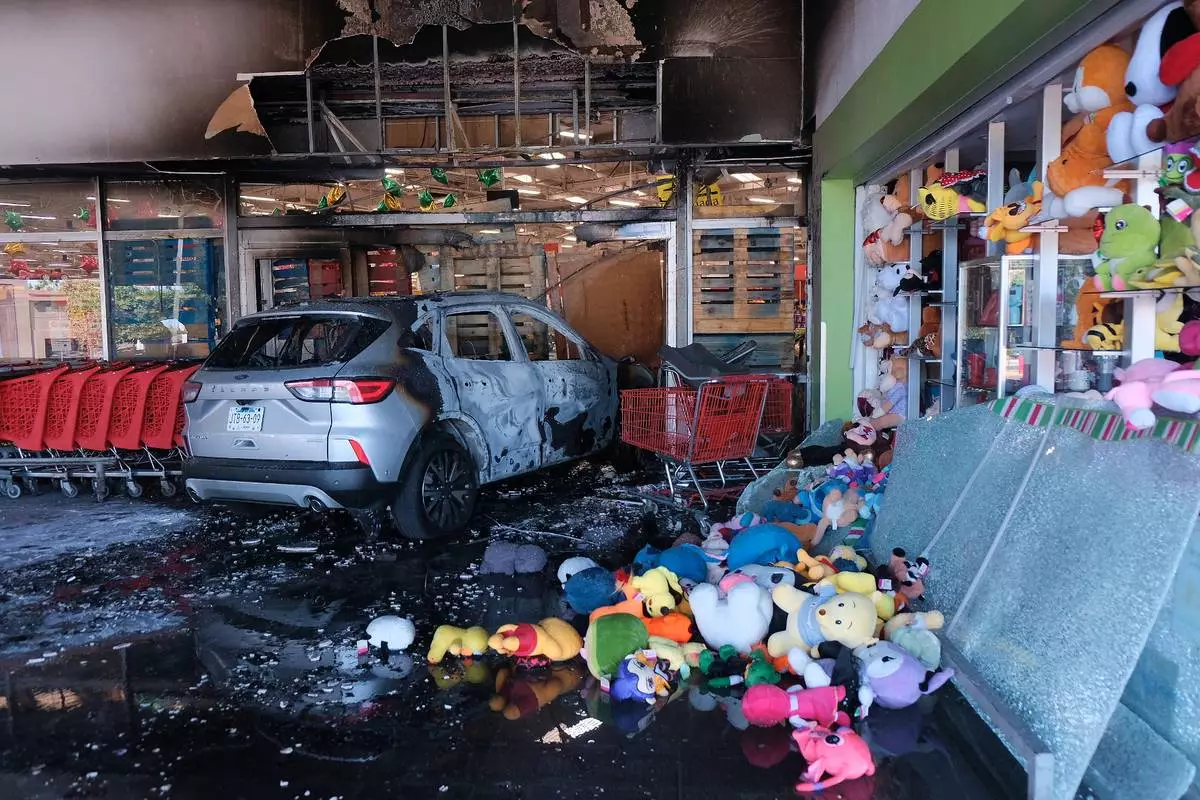
A charred vehicle sits at a damaged supermarket in Guadalajara, Jalisco state, Mexico, Sunday, Feb. 22, 2026, after the death of the leader of the Jalisco New Generation Cartel, Nemesio Rubén Oseguera Cervantes, known as "El Mencho." (AP Photo/Alejandra Leyva)
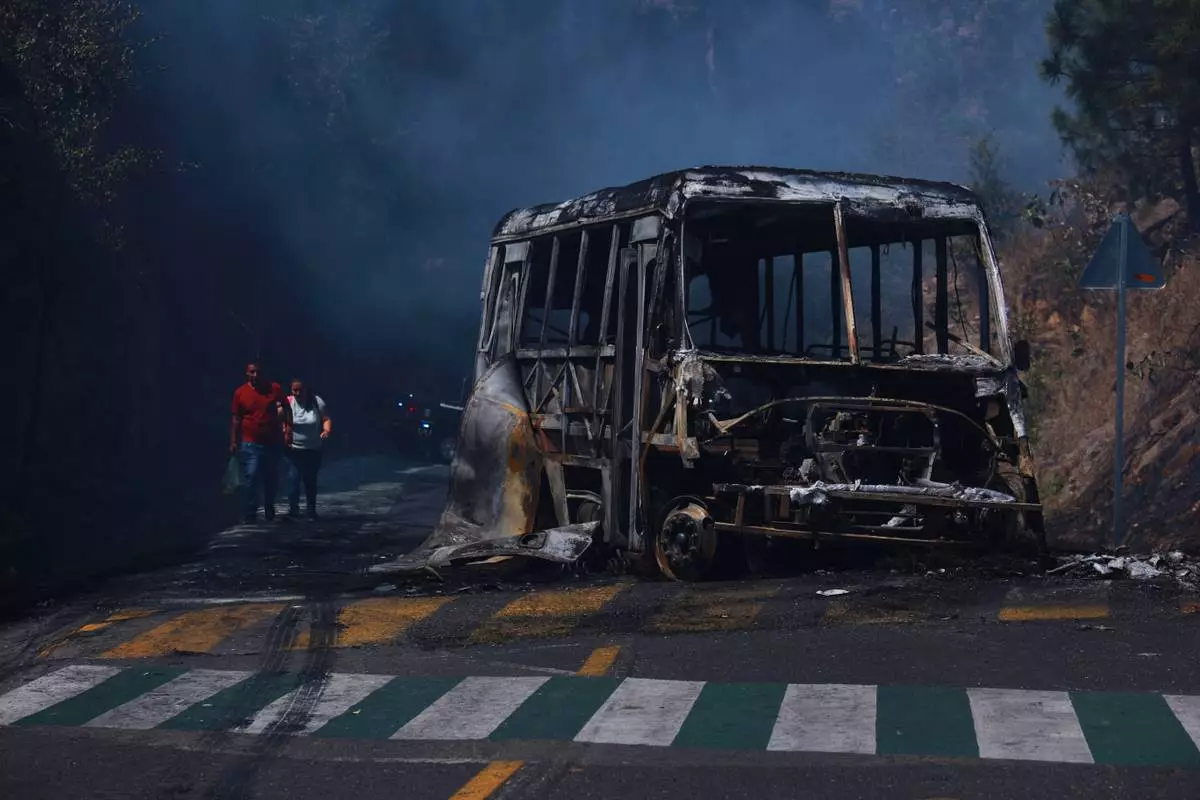
Pedestrians walk past a charred vehicle after it was set on fire, on a road in Cointzio, Michoacán state, Mexico, Sunday, Feb. 22, 2026, after the death of the leader of the Jalisco New Generation Cartel, Nemesio Rubén Oseguera Cervantes, known as "El Mencho." (AP Photo/Armando Solis)
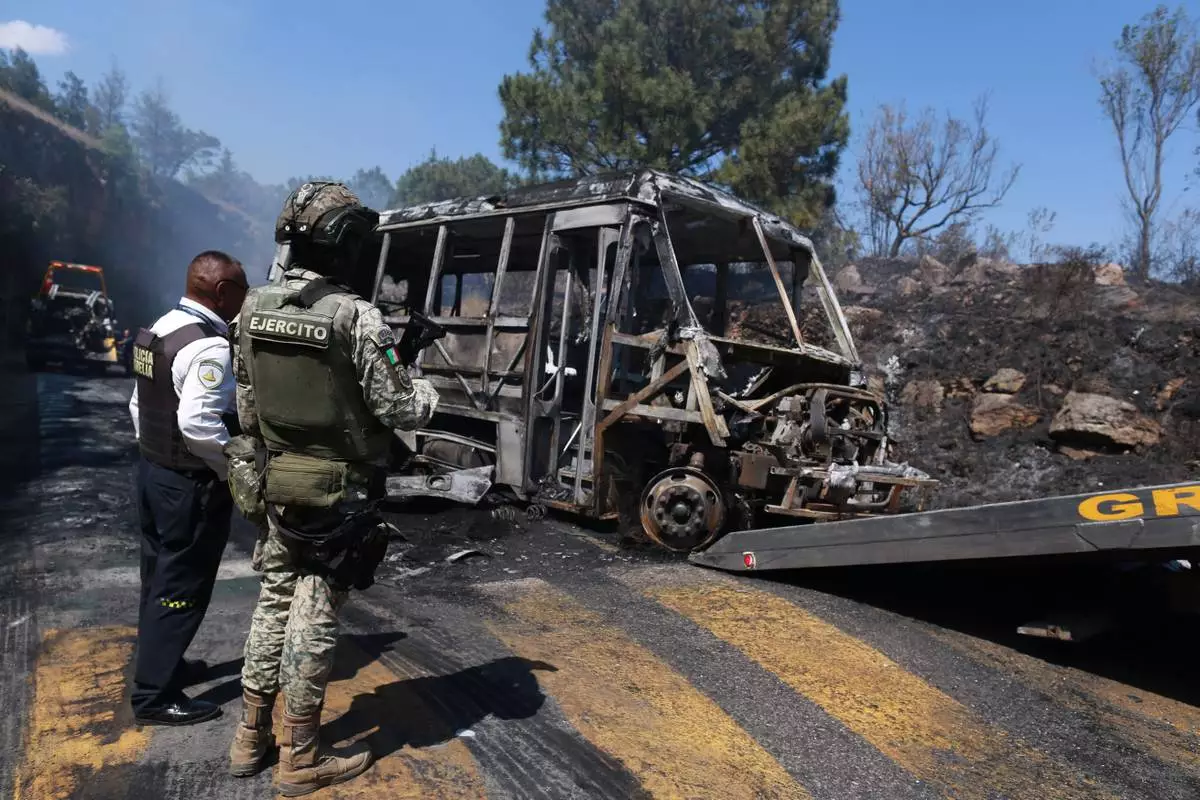
A soldier stands guard by a charred vehicle that was set on fire in Cointzio, Mexico, Sunday, Feb. 22, 2026, amid reports the Mexican Army killed Jalisco New Generation Cartel leader Nemesio Oseguera, known as "El Mencho." (AP Photo/Armando Solis)
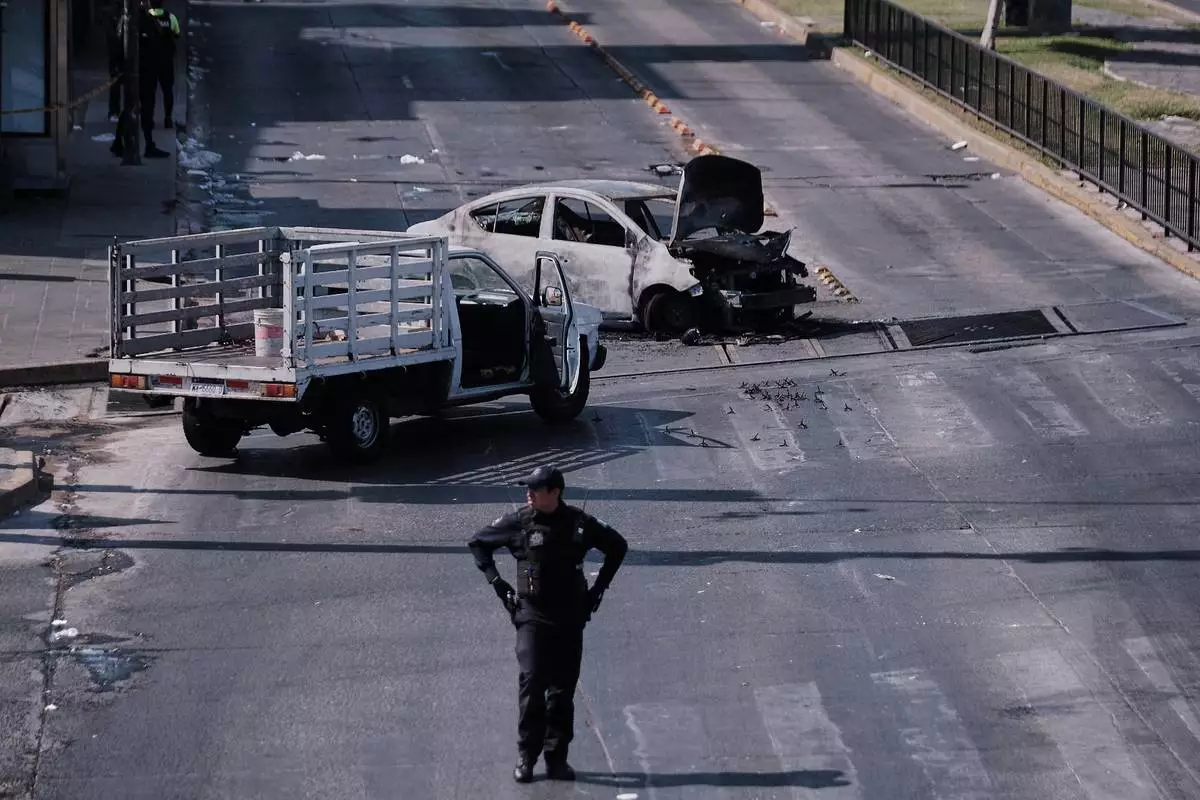
A police officer stands guard by a charred vehicle after it was set on fire, on a road in Guadalajara, Jalisco state, Mexico, Sunday, Feb. 22, 2026, after the death of the leader of the Jalisco New Generation Cartel, Nemesio Rubén Oseguera Cervantes, known as "El Mencho." (AP Photo/Alejandra Leyva)