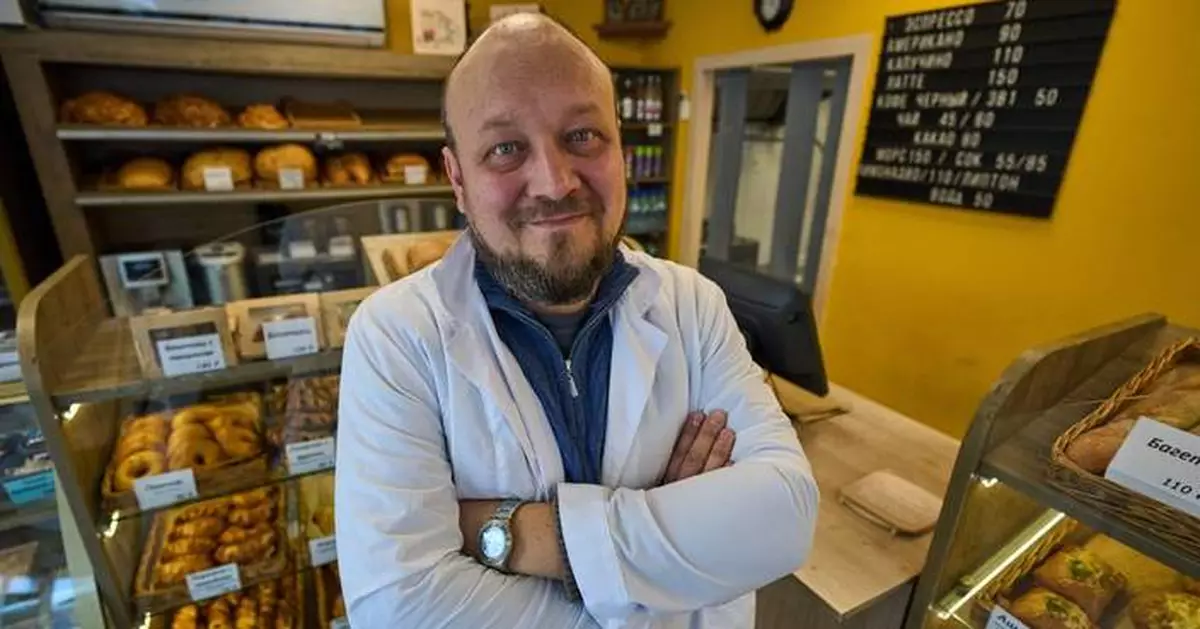
Denis Maksimov’s bakery in suburban Moscow became famous overnight after he appeared on President Vladimir Putin’s annual call-in show in December.
Standing in front of the bakery — called Mashenka, after his oldest daughter -– he pleaded with Putin via video to look into new tax reforms that are significantly increasing the burden on small businesses like his.
Click to Gallery
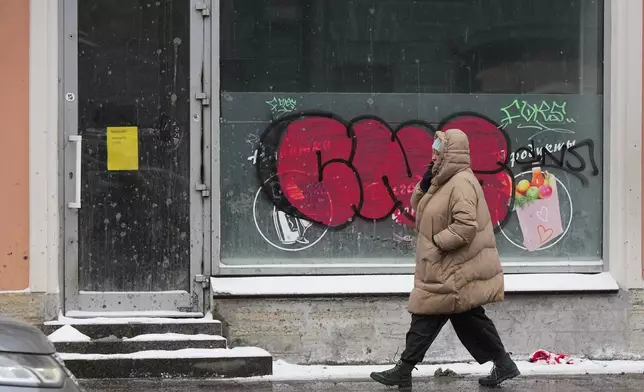
A woman walks past a closed grocery shop in St. Petersburg, Russia, Friday, Feb. 20, 2026. (AP Photo/Dmitri Lovetsky)
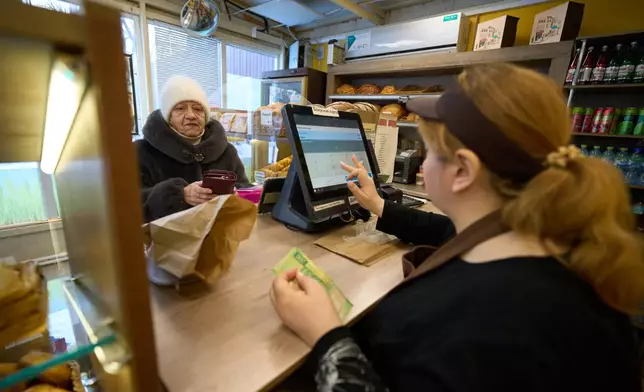
A customer buys bread at the Mashenka bakery outside Moscow, Russia, on Wednesday, Feb. 18, 2026. (AP Photo/Alexander Zemlianichenko)
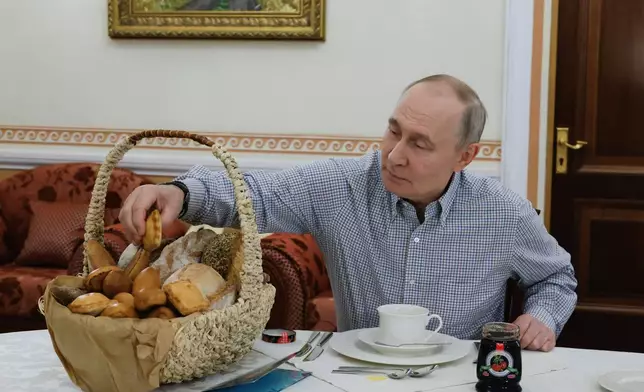
FILE - Russian President Vladimir Putin tries pastries from the Mashenka bakery in Moscow on Dec. 20, 2025, after the owner asked him about tax reforms at his annual call-in show. (Mikhail Metzel, Sputnik, Kremlin Pool Photo via AP, File)
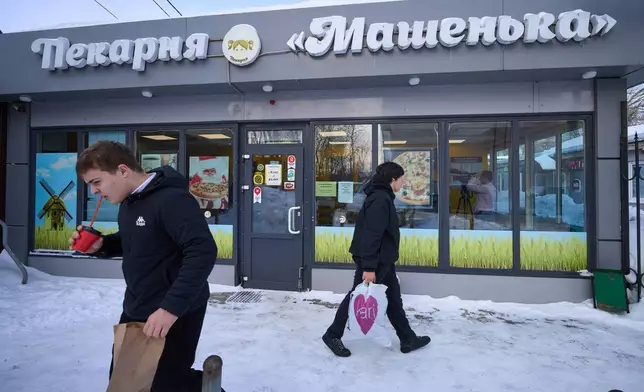
People exit the Mashenka bakery outside Moscow, Russia, Wednesday, Feb. 18, 2026. (AP Photo/Alexander Zemlianichenko)
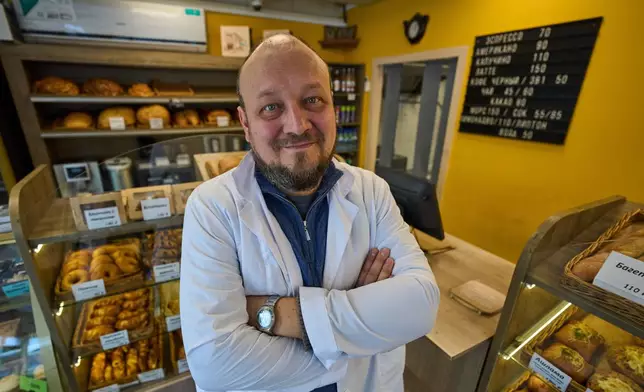
Denis Maksimov poses for a photo in the sales area of his bakery outside Moscow, Russia, on Wednesday, Feb. 18, 2026. (AP Photo/Alexander Zemlianichenko)
“We understand very well that it’s not an easy situation for the country. We understand that raising taxes is necessary,” Maksimov said. “We’re looking ahead without optimism, frankly speaking. Many (businesses) will close down.”
As Putin's full-scale invasion of Ukraine marks four years, the mounting pressure on Russia’s economy is starting to show. Oil revenues are dwindling, the budget deficit is up, and military spending that fueled robust growth has leveled off.
The Kremlin is now tapping consumers and small businesses for funds. The value-added tax has been raised by 2% and revenue thresholds for requiring businesses to pay it have been lowered drastically.
Ordinary Russians appear to be feeling the pain. Business owners interviewed by The Associated Press described a steady decline in demand for their goods and services, a sudden increase in costs as suppliers adjust to the tax reform, and a tax burden that's now tens of times higher. Some said they downsized to keep operating, while others closed.
A recent video on social media showed the economic fallout: Vacant commercial spaces on St. Petersburg's main street, Nevsky Prospekt, where shop after shop went out of business.
“I’ve never felt so scared as this year, so unprotected, so anxious,” said Darya Demchenko, who owns a chain of beauty salons in Russia's second largest city.
Maksimov’s plea to Putin failed to reverse the tax reform, which lowered the threshold for requiring businesses to pay VAT from 60 million rubles, or $783,000, in annual sales revenue, to 20 million rubles ($261,000) this year and to 10 million rubles ($130,500) by 2028.
The revenue threshold was similarly lowered for those using the “patent taxation system,” in which small businesses made fixed annual payments — usually only tens of thousands of rubles — instead of a percentage of their revenues or profits. This year, those whose revenues exceed 20 million rubles would need to pay at least a 6% tax on their revenues, and at least a 5% VAT.
In their televised exchange, Maksimov said he had been using the patent system for eight years, and Putin responded by underscoring the need for tax reform to tackle “uncontrolled” illegal imports but promised to look at what can be done.
Maksimov's appearance attracted attention and new customers to Mashenka, which has three bakeries in the Moscow region. It had sent a basket of baked goods to the Kremlin and boasts on its website that Putin “tried our pies.”
Russian media quoted Maksimov as saying sales rose for a while, but without a change in tax policy, he contemplated closing.
Putin raised Mashenka’s case at a government meeting last month, and Economy Minister Maxim Reshetnikov proposed measures allowing Maksimov’s business to be exempt from paying VAT and lower his other taxes. Shortly after, the owner said he wasn’t considering closing down.
“I think we will grow, maybe slower than before, but no less confidently, I think,” Maksimov told AP this month. He admitted, however, that he's still waiting for authorities to adopt the proposed measures. It's unclear when that will happen.
Maksimov’s case caused an outcry among other small and medium entrepreneurs. In an online campaign “We Are Mashenka,” started by the Association of Beauty Industry Enterprises, business owners across Russia raised similar cases, noting that unlike Maksimov, who was lucky to get Putin's ear, they had no one to bail them out.
Demchenko, who supported the campaign, told AP that of four family-oriented beauty salons in her chain — three of her own and one opened through a franchise -– she had to close one and sell another to stay afloat due to the dramatically increased taxes and other costs, as well as lagging demand.
The tax reforms meant she was no longer eligible for the patent system and was looking at paying much higher taxes, as well as having to hire a full-time accountant to handle the paperwork, she said. Her costs — such as rent, supplies, security and banking services — spiked 30%, she added, noting suppliers raised their prices well over the 2% VAT increase.
Demand for beauty services, meanwhile, has been falling for months.
Russia’s restrictions on social media and messaging platforms deprived her of cheap advertising and easy ways to reach clients, Demchenko said.
The beauty industry weathered the COVID-19 pandemic, she said, with government support like tax breaks and deferments, as well as ways to negotiate with landlords to waive rent for a while.
“This year, we haven’t felt any support at all. We feel like they want to shut us down,” she said.
Lyalya Sadykova, president of the Association of Beauty Industry Enterprises, said about 10% of beauty industry businesses in St. Petersburg closed and another 10% sold their companies in December and January. She anticipates more closures this spring.
“People will do the math. The first deadline for taxes is in April, and people will see that they have nothing to pay with, and that’s when the collapse will begin,” she said. “I think there will be bankruptcies, and mass exodus from the market, because now it seems to me that not everyone has done the math and understood it.”
When the tax reforms were adopted last year, pastry shop owners Ilsiya Gizatullina and Railya Shayhieva and decided to shut down their business in Kazan. Like Demchenko, they cited the massive tax increases, rising costs and falling demand.
It was an incredibly hard decision, “like cutting off a body part. Because we lived there, it was our life, 24/7,” Gizatullina told AP.
They opened in 2020 and survived the pandemic, which Gizatullina noted was only temporary. The new tax system is here to stay.
“We understand very well that it won’t be abolished the day after tomorrow, and there will likely be an even higher tax burden in the future,” Gizatullina said.
As part of the reforms, more businesses will be paying increased taxes in 2027 and 2028, since changes will affect those with even lower revenues.
Small and medium enterprises account for just over 20% of Russia’s economy, but it’s still significant, says Chris Weafer, CEO of Macro-Advisory Ltd. Consultancy. Increasing the application of VAT to those businesses will mean “a meaningful amount” of money for the state budget.
It is “a deliberate strategy by the Finance Ministry to create more stable, predictable sources of income” at a time when oil revenues are down and the budget deficit is up, Weafer said.
Small and medium enterprises have been under pressure since 2014, when Russia faced sanctions over its illegal annexation of the Crimean Peninsula, and the government directed most of its support to big companies. The new tax regulations add to the pressure, Weafer said, and while that's unlikely to wreck the economy, it will impede growth when the war ends.
“The one engine of expansion and growth and innovation that you need in an economy is the sector that has suffered most in the last four years and is continuing to suffer today,” he said.
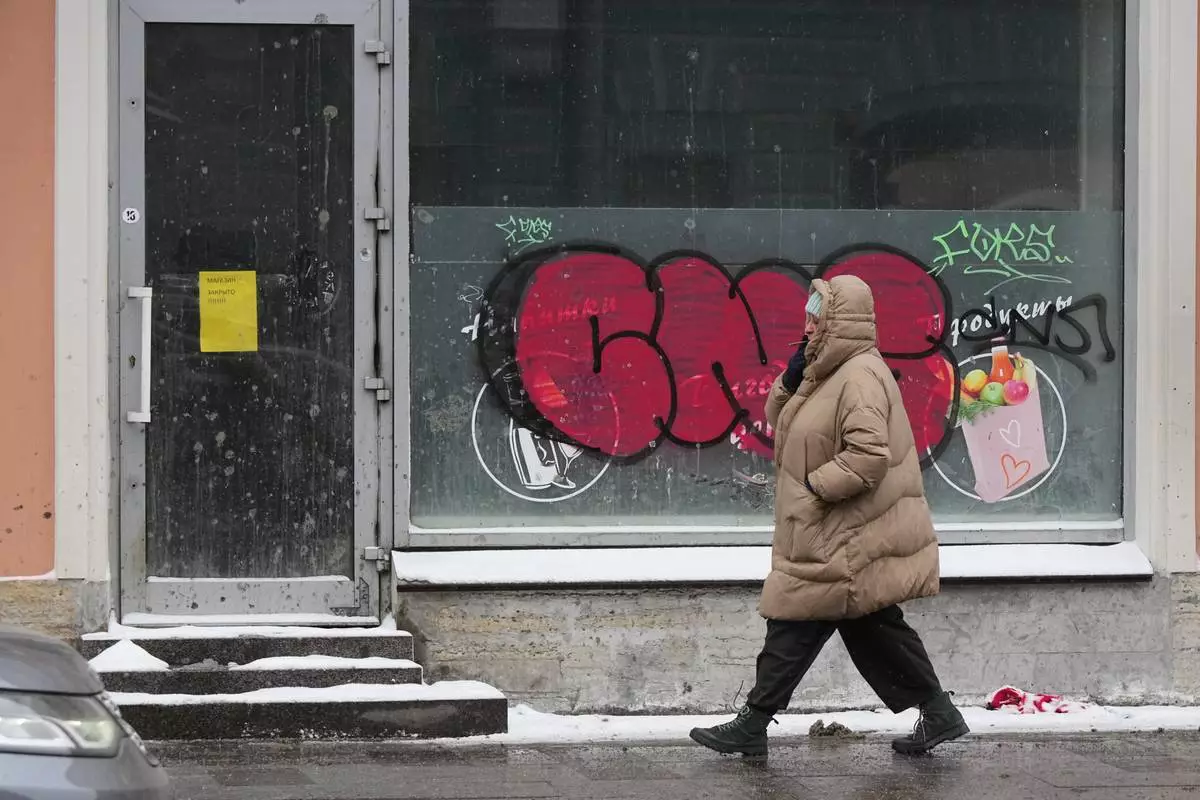
A woman walks past a closed grocery shop in St. Petersburg, Russia, Friday, Feb. 20, 2026. (AP Photo/Dmitri Lovetsky)
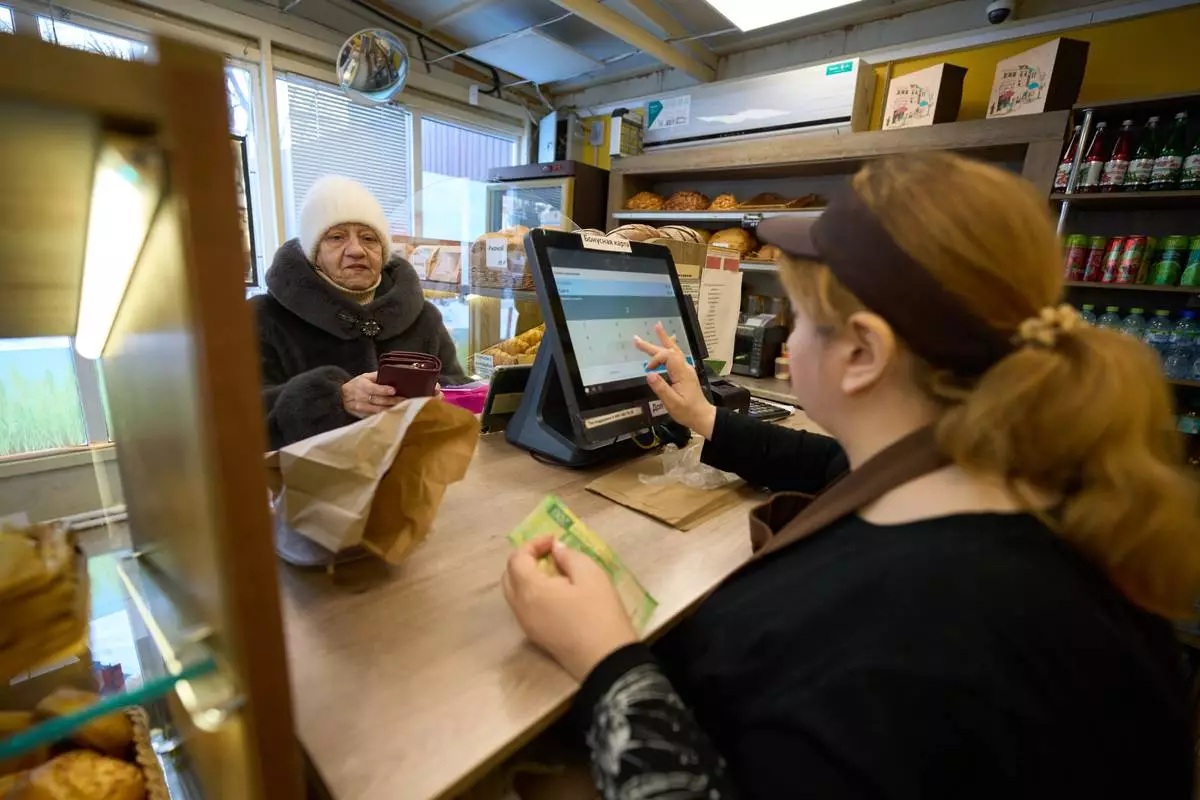
A customer buys bread at the Mashenka bakery outside Moscow, Russia, on Wednesday, Feb. 18, 2026. (AP Photo/Alexander Zemlianichenko)
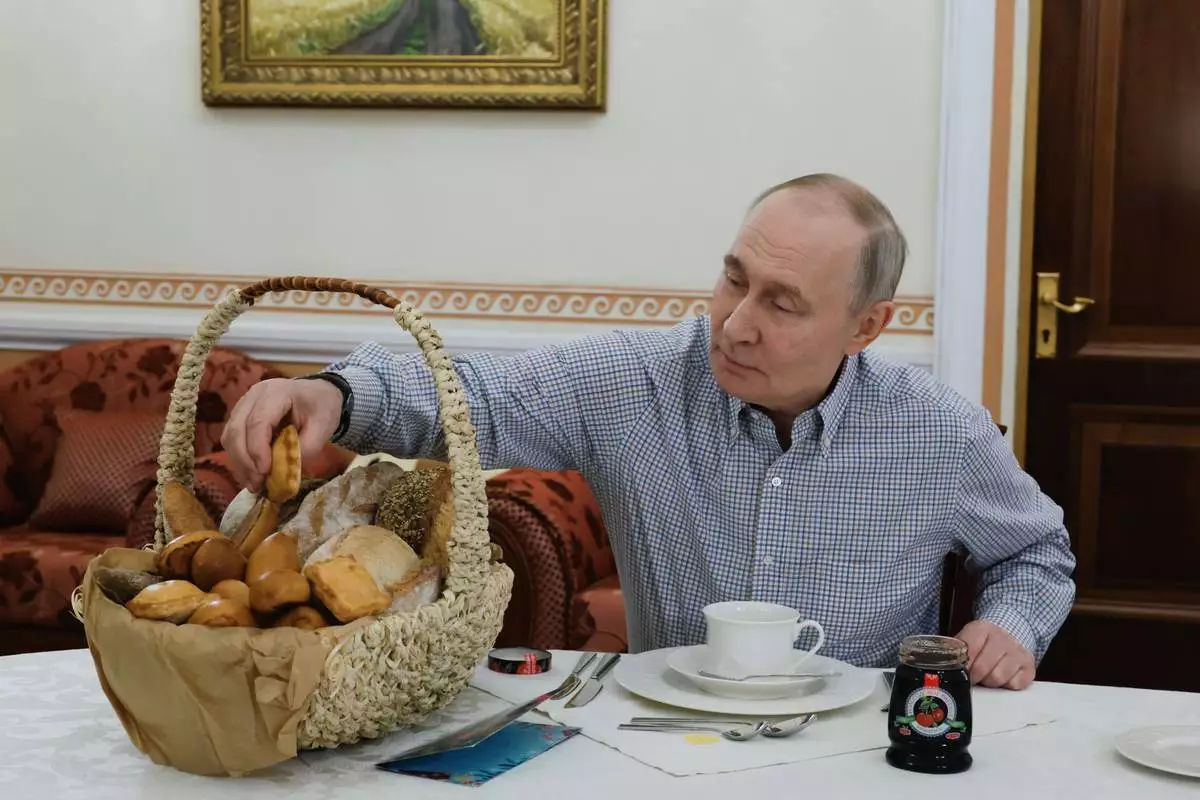
FILE - Russian President Vladimir Putin tries pastries from the Mashenka bakery in Moscow on Dec. 20, 2025, after the owner asked him about tax reforms at his annual call-in show. (Mikhail Metzel, Sputnik, Kremlin Pool Photo via AP, File)
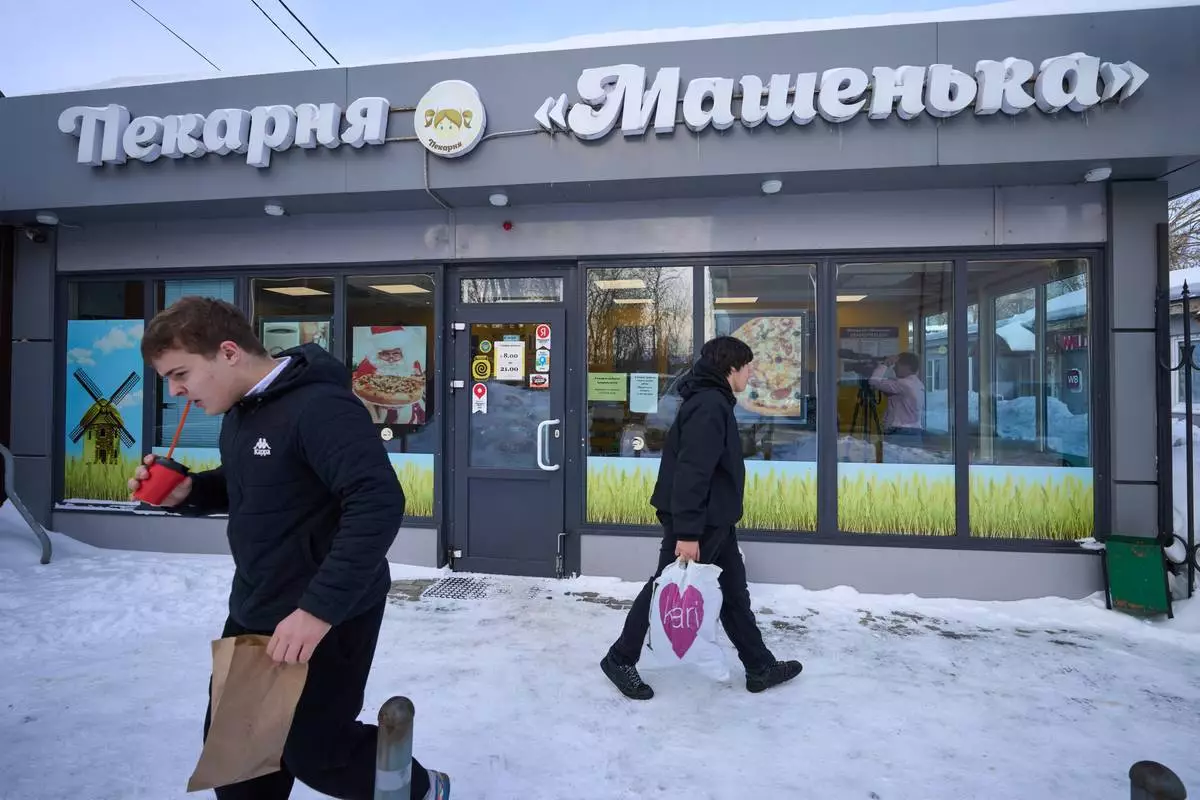
People exit the Mashenka bakery outside Moscow, Russia, Wednesday, Feb. 18, 2026. (AP Photo/Alexander Zemlianichenko)
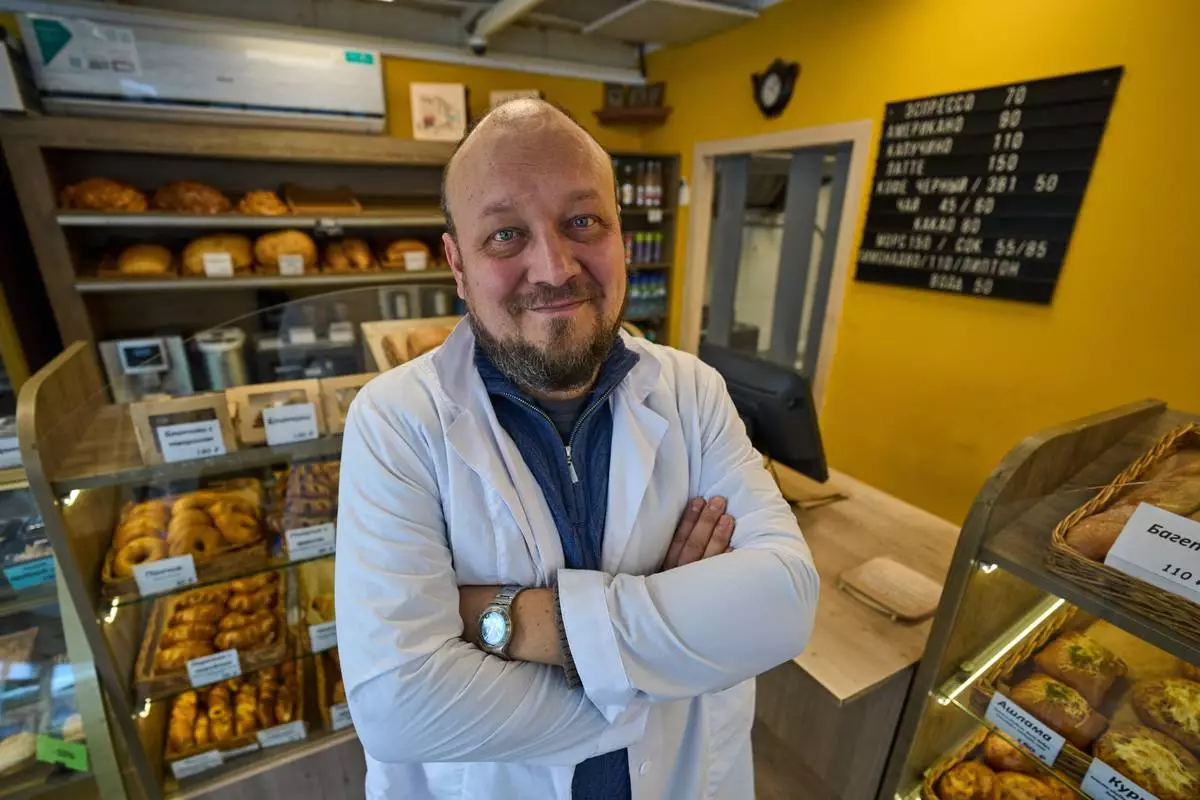
Denis Maksimov poses for a photo in the sales area of his bakery outside Moscow, Russia, on Wednesday, Feb. 18, 2026. (AP Photo/Alexander Zemlianichenko)