LONDON--(BUSINESS WIRE)--Feb 23, 2026--
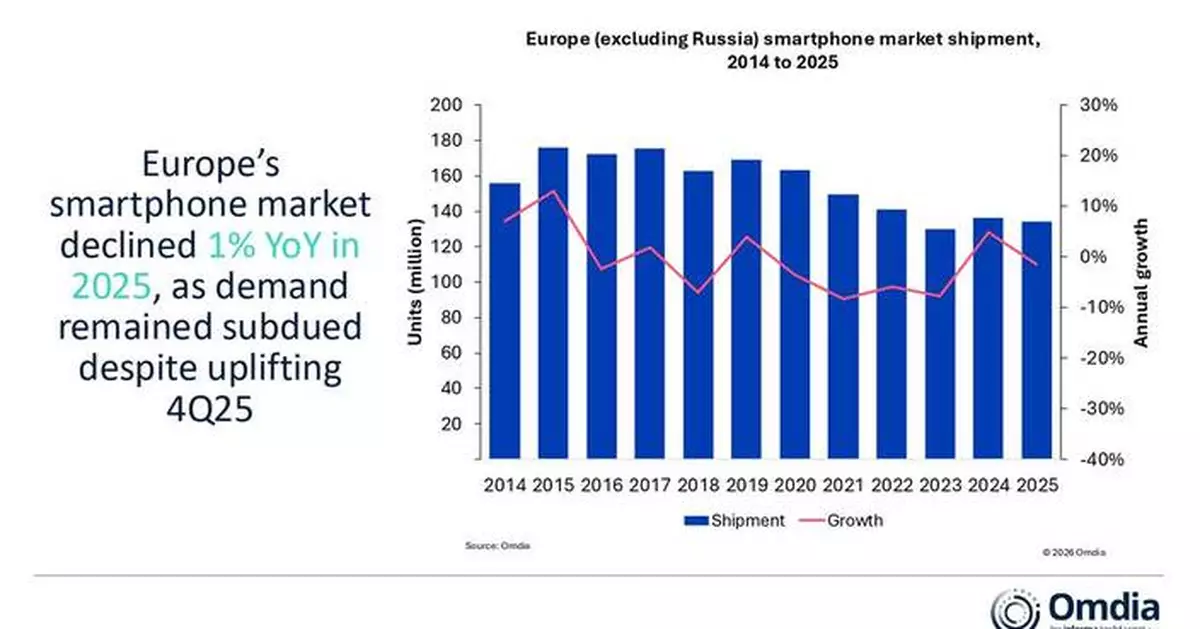
The latest research from Omdia reveals that the European smartphone market declined by 1% in 2025 to 134.2 million units, marking the end of a disruptive year defined by subdued demand and new regulations requiring eco-design and USB-C.
This press release features multimedia. View the full release here: https://www.businesswire.com/news/home/20260223432918/en/
Samsung remained Europe’s largest smartphone vendor, with shipments marginally growing to 46.6 million units. After a slow 1H25 caused by the absence of the Galaxy A0x series, Samsung bounced back in 2H25, particularly by leveraging a discounted version of the Galaxy A16 alongside strong momentum for the Galaxy A56, which was the top-selling model in Europe in 2025.
Apple grew 6% to 36.9 million in 2025, reaching a record-high 27% market share in Europe, as iPhone refresh demand surged, boosted by strong interest from both consumers and businesses. Its performance was particularly driven by iPhone 16, the Pro Max version of both iPhone 16 and iPhone 17, and iPhone 16e. Compared to other markets worldwide, iPhone 16e was among Apple’s top-shipping models, largely driven by it replacing iPhone 14 and earlier models, which were discontinued in late 2024 due to the USB-C regulation.
Xiaomi remained third in the ranking at 16% market share as it declined 1% to 21.8 million units, largely driven by its budget-friendly Redmi series. Towards the end of 2025, Xiaomi’s overseas expansion of the ‘new retail strategy’ reached Europe, highlighted by several Xiaomi Stores opening and the company’s wider ecosystem portfolio expanding.
Motorola remained fourth despite declining 5% to 7.7 million units. Its shipments dipped in 1H25 as demand remained subdued, but recovered with strong momentum in the second half, highlighted by double-digit growth in 4Q. Its resilient performance was driven by continued successful expansion in key markets, including Poland, Italy, Spain, and the UK.
HONOR climbed into Europe’s top five for the first time as it grew 4% to 3.8 million units, particularly by leveraging its affordable X-series. The higher X-series focus highlights an increased focus on growing share, presence and relevance within its key channel partners –helping to build a foundation to support its premium ambitions.
“Europe’s five largest smartphone vendors continued to gain combined share, reflecting the importance of scale for long-term success in the region,” commented Runar Bjorhovde, Senior Analyst at Omdia. “Even though shares continue to shift towards the largest players, fierce competition within the channel continues to reign across all markets, increasing the need to differentiate and understand how to most effectively capture customers. The fierce channel competition has also created a growing willingness amongst sales partners to introduce new vendors with attractive products and differentiated brands into their portfolios. Even though many vendors beyond the top 5 faced big hurdles last year, vivo, London-headquartered Nothing and Amsterdam-headquartered Fairphone grew by high double digits. These vendors are excellent examples that there are opportunities through strong differentiation even in such an established, mature and highly competitive region.”
“In 2026, concerns around memory pricing have created a challenging outlook. In Europe, which made up just 10.8% of all smartphones shipped worldwide in 2025, the biggest question is which vendors are most likely to prioritize the region if hit by price increases or supply shortages,” added Bjorhovde. “We expect the largest vendors to be more resilient due to their scale and price-band coverage. However, for many vendors, it will be critical to find the right balance between different regions and markets. Scaling a smartphone business within Europe can be very gradual and challenging, requiring consistent investment over time, making it very costly to scale back. Europe’s large premium segment makes it attractive to many vendors in the long-run alongside a less price-sensitive mass-market segment.”
“However, even in the face of short-term difficulties, capturing interest and demand from customers must be the top priority for all industry players. Both vendors and channel partners need to find key differentiation points, target core influence stages in the buying journey, and retain customers more effectively than ever before.”
Omdia’s analysts will be at Mobile World Congress 2026: Book a meeting or interview here to discuss these findings and more.
ABOUT OMDIA
Omdia, part of TechTarget, Inc. d/b/a Informa TechTarget (Nasdaq: TTGT), is a technology research and advisory group. Our deep knowledge of tech markets grounded in real conversations with industry leaders and hundreds of thousands of data points, make our market intelligence our clients’ strategic advantage. From R&D to ROI, we identify the greatest opportunities and move the industry forward.
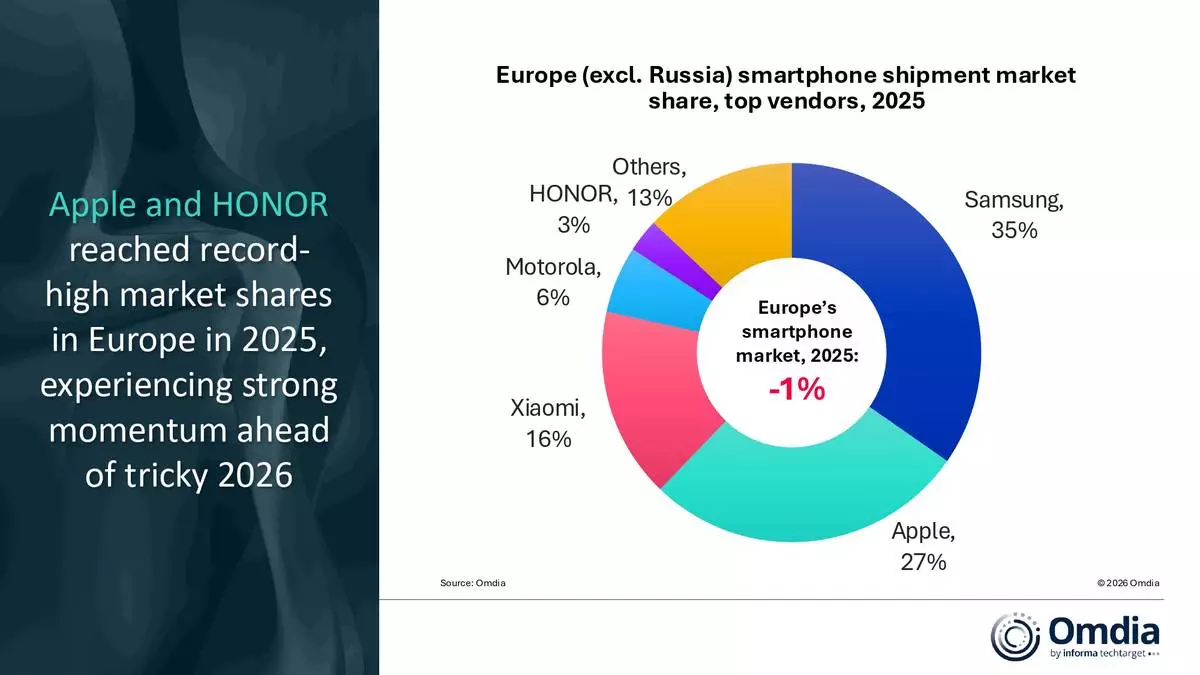
Europe (excl. Russia) smartphone shipment market share, top vendors, 2025
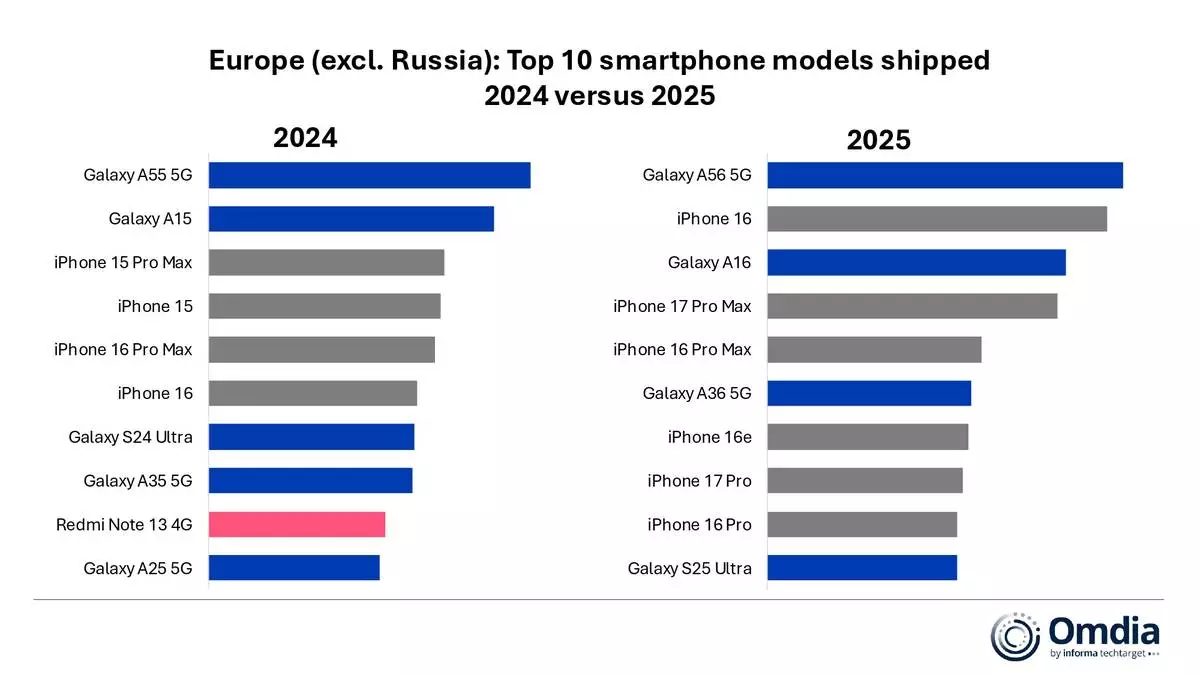
Europe (excl. Russia) Top 10 smartphone models shipped, 2024 versus 2025
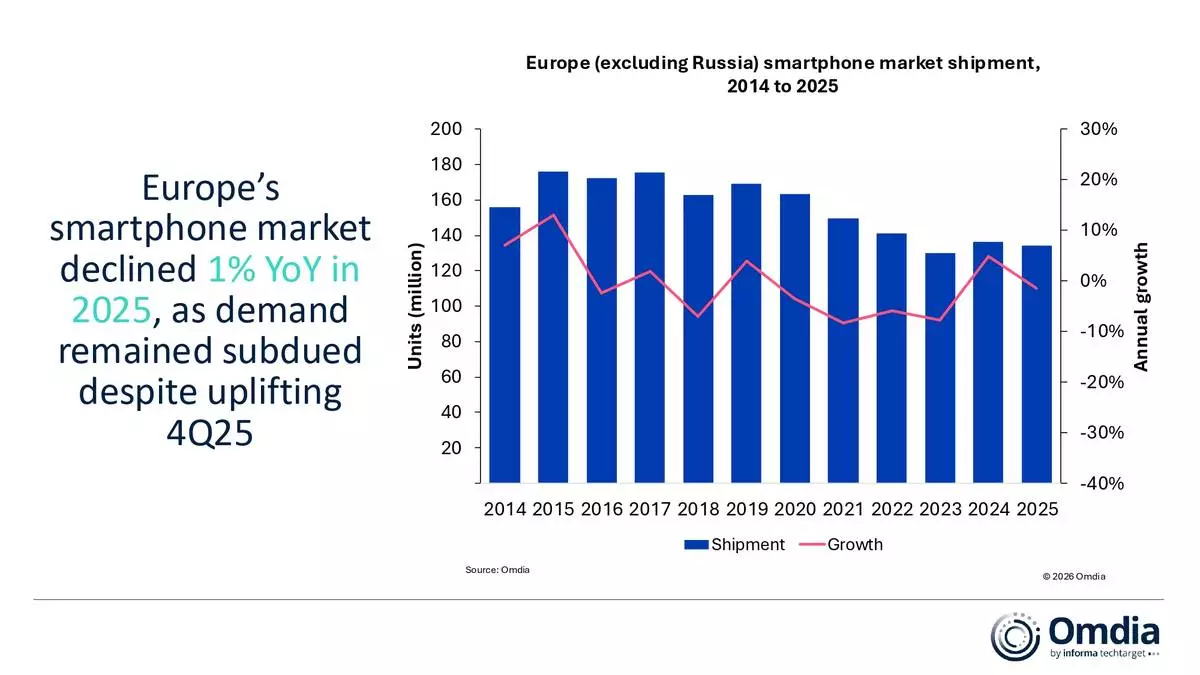
Europe (excluding Russia) smartphone market shipment, 2014 to 2025
Russia’s invasion of Ukraine four years ago launched Europe’s biggest conflict since World War II, causing immense suffering for civilians and harrowing ordeals for soldiers while rewriting the post-Cold War security order.
The fighting enters its fifth year on Tuesday, and it shows no signs of stopping anytime soon.
The U.S. has brokered talks with delegations from Moscow and Kyiv as part of the Trump administration's yearlong push for peace. But reconciling key differences, such as the future of Russian-occupied Ukrainian land and postwar security for Ukraine, has thwarted progress.
Meanwhile, thousands of each countries’ troops have died on the battlefield, and Ukrainian civilians have been battered by Russian aerial strikes that have brought years of power outages and water cuts.
Here’s a look at the conflict, by the numbers, since the full-scale invasion on Feb. 24, 2022.
The upper end of the estimated number of soldiers killed, wounded or missing on both sides, according to a report last month by the Center for Strategic and International Studies, a think tank.
It estimated that Russia suffered 1.2 million casualties, including up to 325,000 troop deaths, between February 2022 and December 2025 — what it said was the largest number of troop deaths for any major power in any conflict since World War II.
Russia has not released figures on battlefield deaths since January 2023, when it said more than 80 soldiers were killed in a Ukrainian strike, bringing the total military deaths Moscow has confirmed to just over 6,000.
CSIS estimated that Ukraine has seen 500,000 to 600,000 military casualties, including up to 140,000 deaths.
Ukrainian President Volodymyr Zelenskyy said earlier this month that 55,000 Ukrainian troops have died in the war. Many are missing, he said.
Neither Moscow nor Kyiv gives timely data on military losses. Independent verification is not possible.
The U.N. Human Rights Monitoring Mission’s count for civilian deaths in Ukraine since Russia’s all-out invasion, though it says that is likely an underestimate. More than 40,600 civilians were injured over the same period, it said in a December report.
The war has killed at least 763 children, according to the U.N.
Last year was the deadliest for civilians in Ukraine since 2022. The conflict killed 2,514 civilians and injured 12,142 in the country in 2025 — a 31% increase in civilian casualties over 2024, it said.
The percentage of Ukrainian land occupied by Russia, according to the Institute for the Study of War.
Over the past year, Russia has gained just 0.79% of Ukraine’s territory in the grinding war of attrition, the Washington-based think tank said in calculations provided earlier this month to The Associated Press, underscoring the little progress Moscow's forces have made despite huge costs in troops and armor.
Before Russia’s all-out invasion, it controlled nearly 7% of Ukraine, including Crimea and parts of the Donetsk and Luhansk regions in the east, as Moscow-backed separatists fought the Ukrainian army, according to Ukrainian officials and Western analysts.
The percentage drop in foreign military aid to Kyiv last year compared with the annual average between 2022 and 2024, according to Germany’s Kiel Institute, which tracks assistance to Kyiv.
U.S. President Donald Trump stopped sending American weapons paid for by the U.S. to Ukraine after he took office just over a year ago. European countries, striving to make up the difference, increased their military aid last year by 67% compared with the 2022-2024 period, the institute said in a report this month.
Foreign humanitarian and financial aid to Ukraine fell by 5% last year in comparison with the average in the previous three years, it said.
The number of Ukrainian civilians who have left their country.
Some 5.3 million of those people have found refuge in Europe, according to a report this month from the U.N. office in Ukraine.
Additionally, around 3.7 million Ukrainians forced out of their homes have moved elsewhere within the country, the U.N. said in December.
Ukraine's prewar population was more than 40 million.
The number of Russian attacks that affected the provision of medical care in Ukraine, according to the World Health Organization. The figure covers the period from the full-scale invasion through Feb. 11.
The attacks include 2,347 strikes on health care facilities, as well as ones that damaged vehicles and the storage of medical supplies.
Follow AP’s coverage of the war in Ukraine at https://apnews.com/hub/russia-ukraine
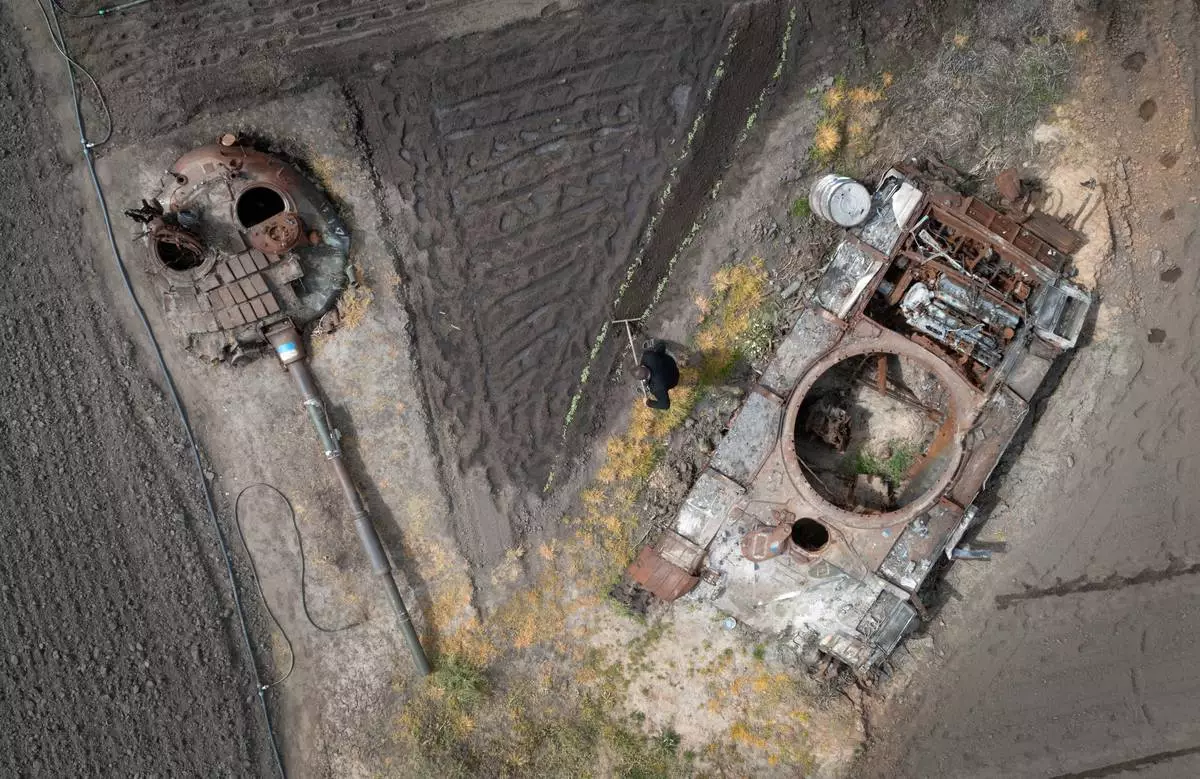
FILE - A man plants sunflowers in his garden between a damaged Russian tank and its turret in the village of Velyka Dymerka, Kyiv region, Ukraine, Wednesday, May 17, 2023. (AP Photo/Efrem Lukatsky, File)
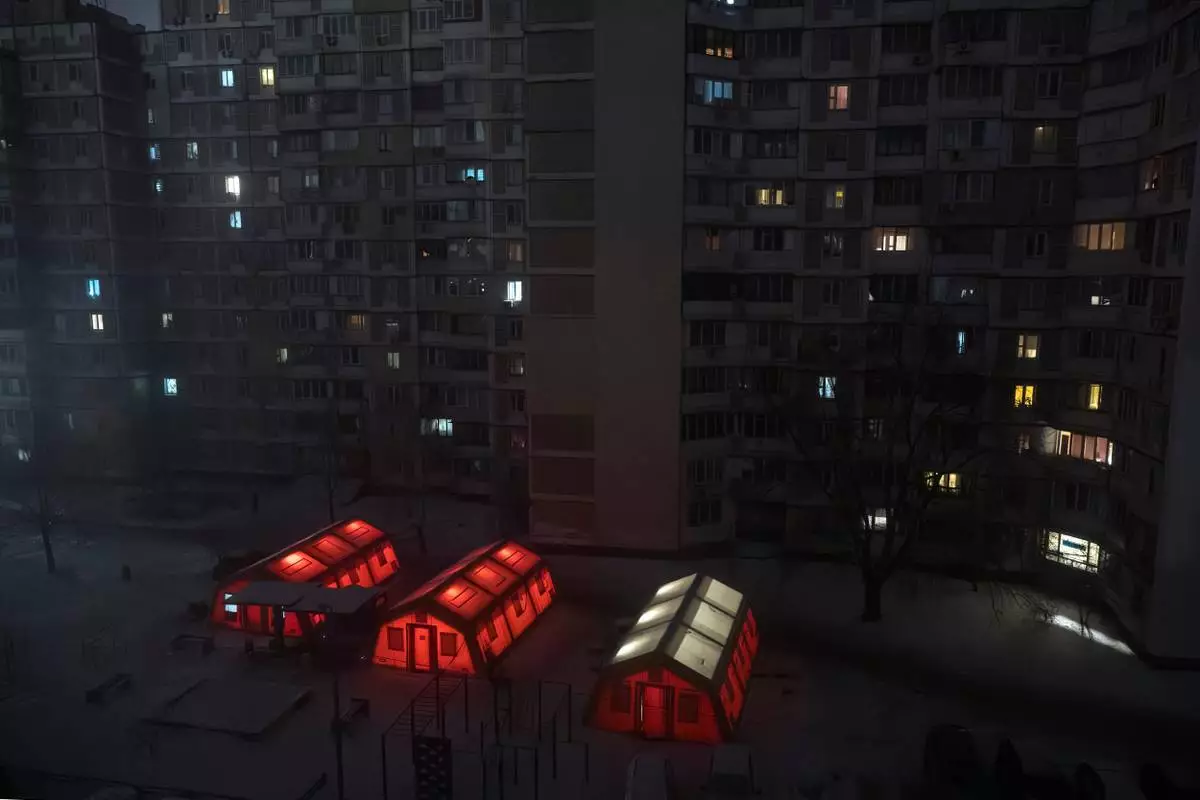
FILE - Emergency tents are set up in a residential neighborhood where people can warm up following Russia's regular air attacks against the country's energy infrastructure that leave residents without power, water and heating in the dead of winter, in Kyiv, Ukraine, Thursday, Jan. 15, 2026. (AP Photo/Vladyslav Musiienko, File)
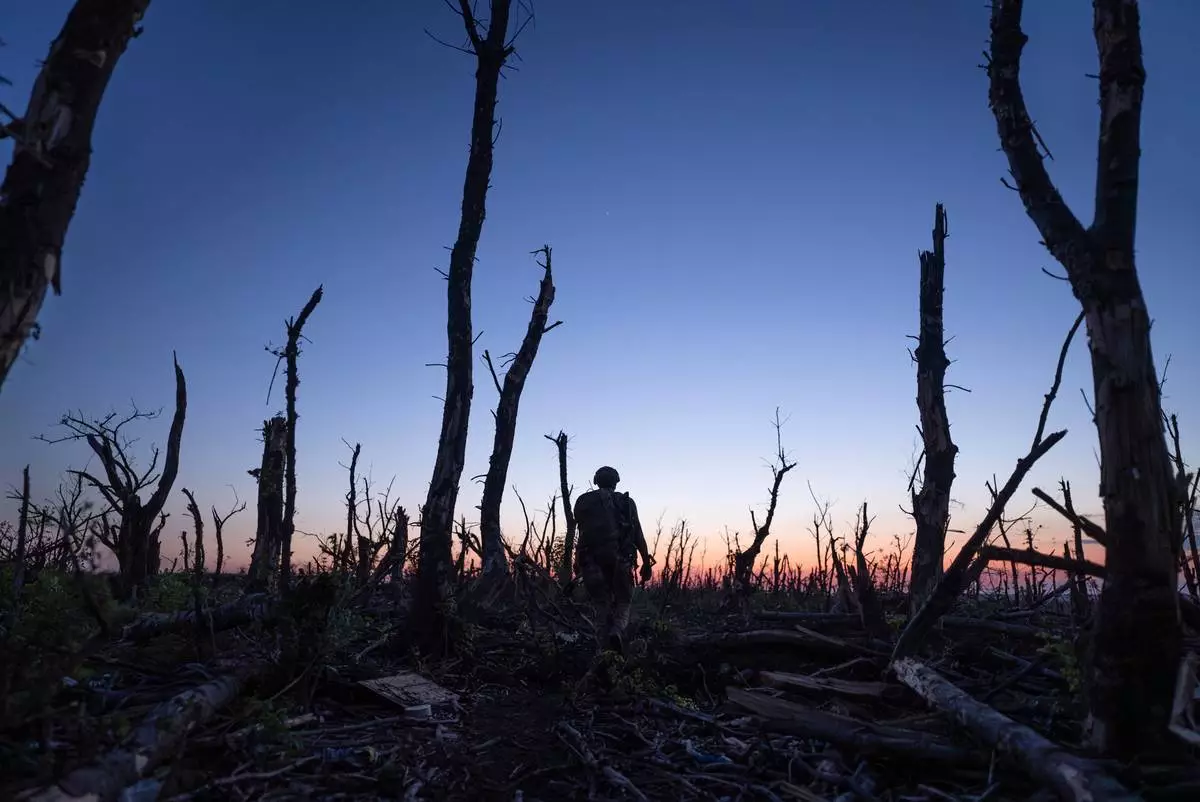
FILE - Ukrainian servicemen walk through a charred forest along the front line, a few kilometers from Andriivka, Donetsk region, Ukraine, Saturday, Sept. 16, 2023. (AP Photo/Mstyslav Chernov, File)
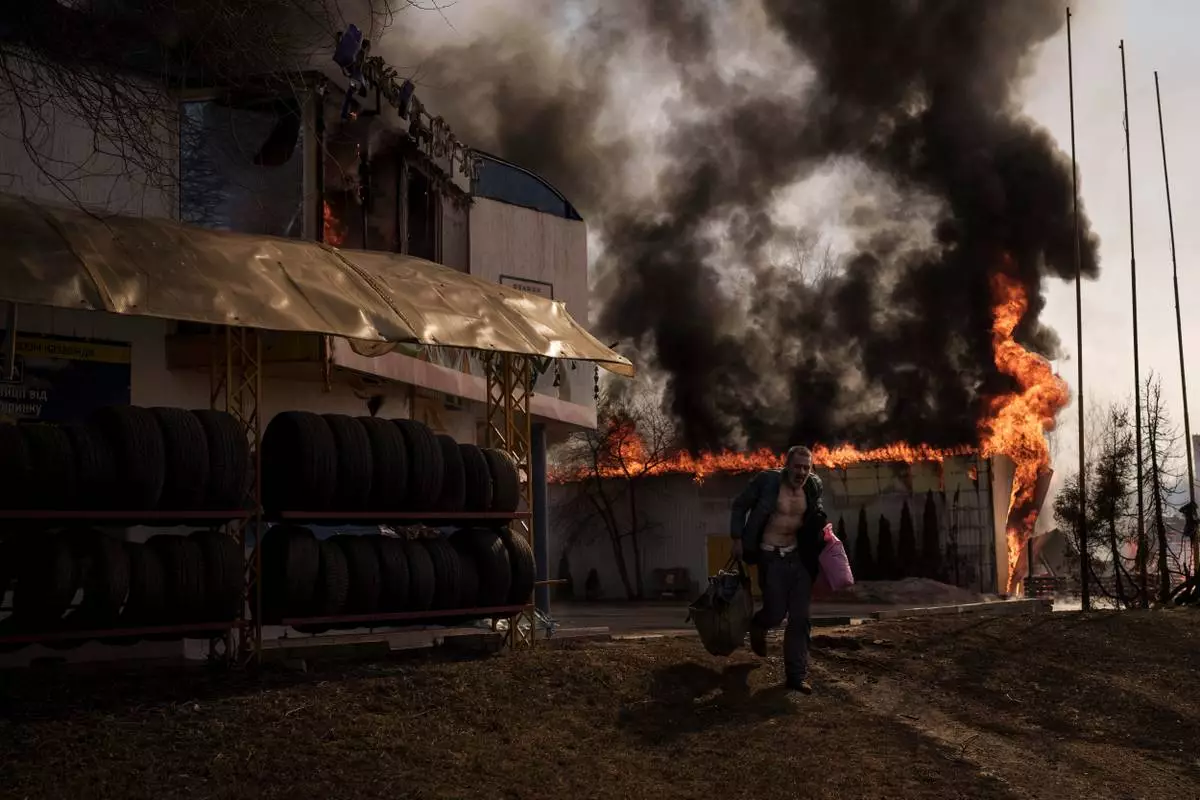
FILE - A man recovers items from a shop that caught fire in a Russian attack in Kharkiv, Ukraine, Friday, March 25, 2022. (AP Photo/Felipe Dana, File)
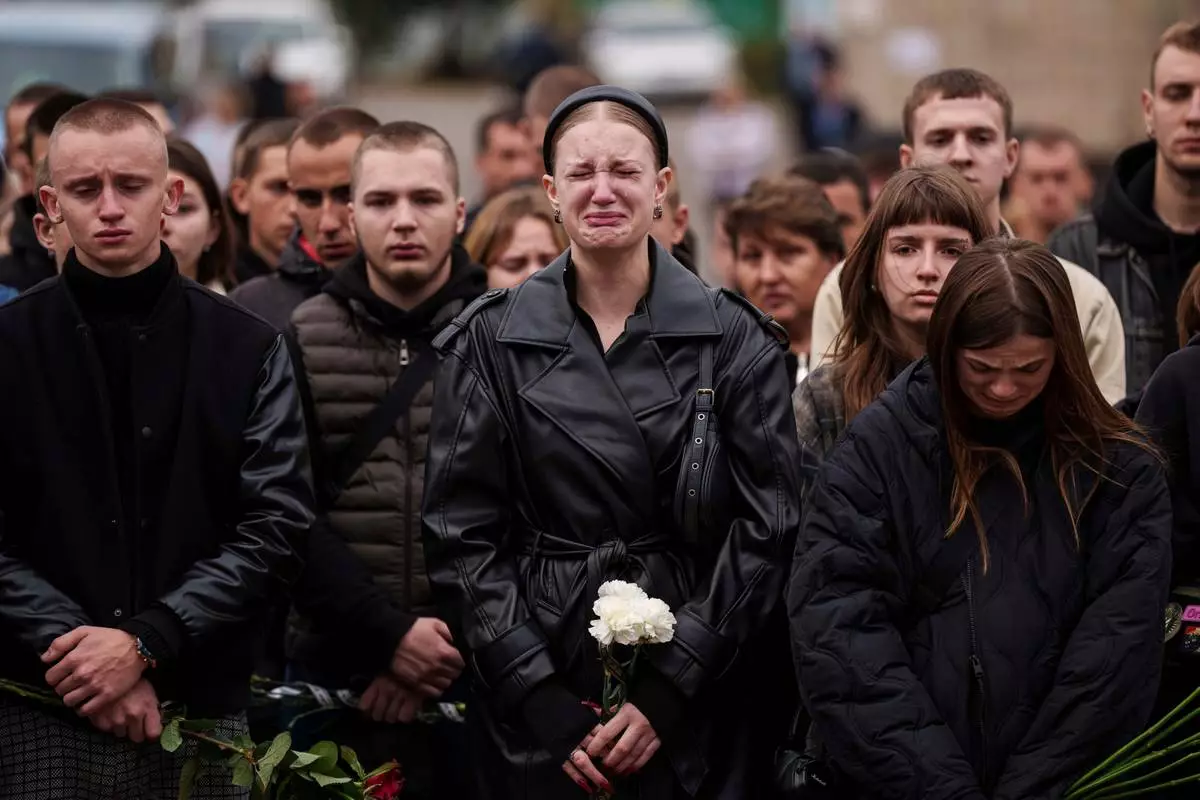
FILE - A woman cries during the funeral ceremony of Ihor Kusochek, a Ukrainian soldier of the Azov brigade in Bobrovytsia, Chernihiv region, Ukraine, Friday, Oct. 4, 2024. (AP Photo/Evgeniy Maloletka, File)