Russia’s invasion of Ukraine four years ago launched Europe’s biggest conflict since World War II, causing immense suffering for civilians and harrowing ordeals for soldiers while rewriting the post-Cold War security order.
The fighting enters its fifth year on Tuesday, and it shows no signs of stopping anytime soon.
Click to Gallery
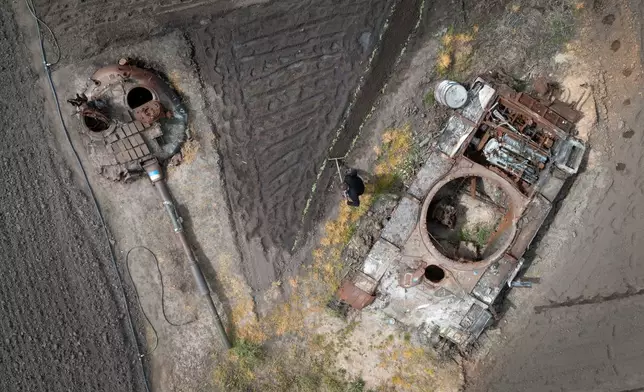
FILE - A man plants sunflowers in his garden between a damaged Russian tank and its turret in the village of Velyka Dymerka, Kyiv region, Ukraine, Wednesday, May 17, 2023. (AP Photo/Efrem Lukatsky, File)
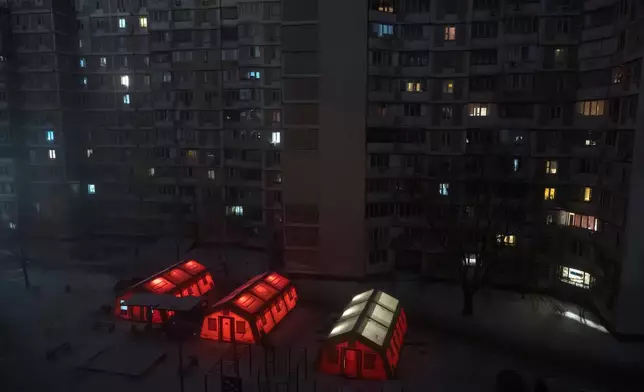
FILE - Emergency tents are set up in a residential neighborhood where people can warm up following Russia's regular air attacks against the country's energy infrastructure that leave residents without power, water and heating in the dead of winter, in Kyiv, Ukraine, Thursday, Jan. 15, 2026. (AP Photo/Vladyslav Musiienko, File)
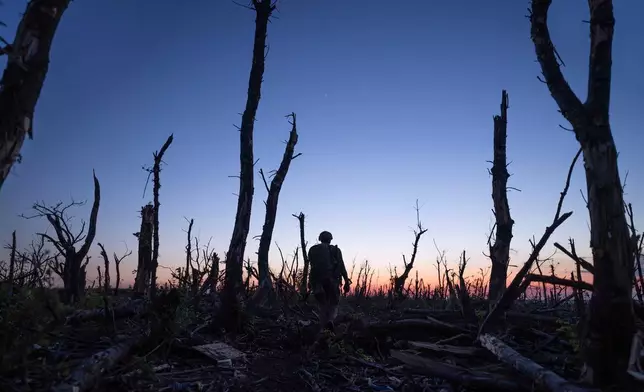
FILE - Ukrainian servicemen walk through a charred forest along the front line, a few kilometers from Andriivka, Donetsk region, Ukraine, Saturday, Sept. 16, 2023. (AP Photo/Mstyslav Chernov, File)
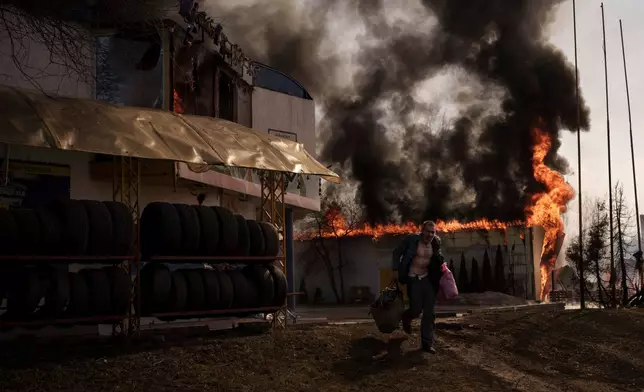
FILE - A man recovers items from a shop that caught fire in a Russian attack in Kharkiv, Ukraine, Friday, March 25, 2022. (AP Photo/Felipe Dana, File)
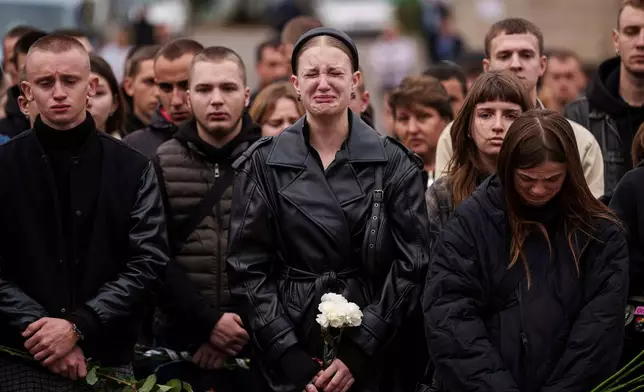
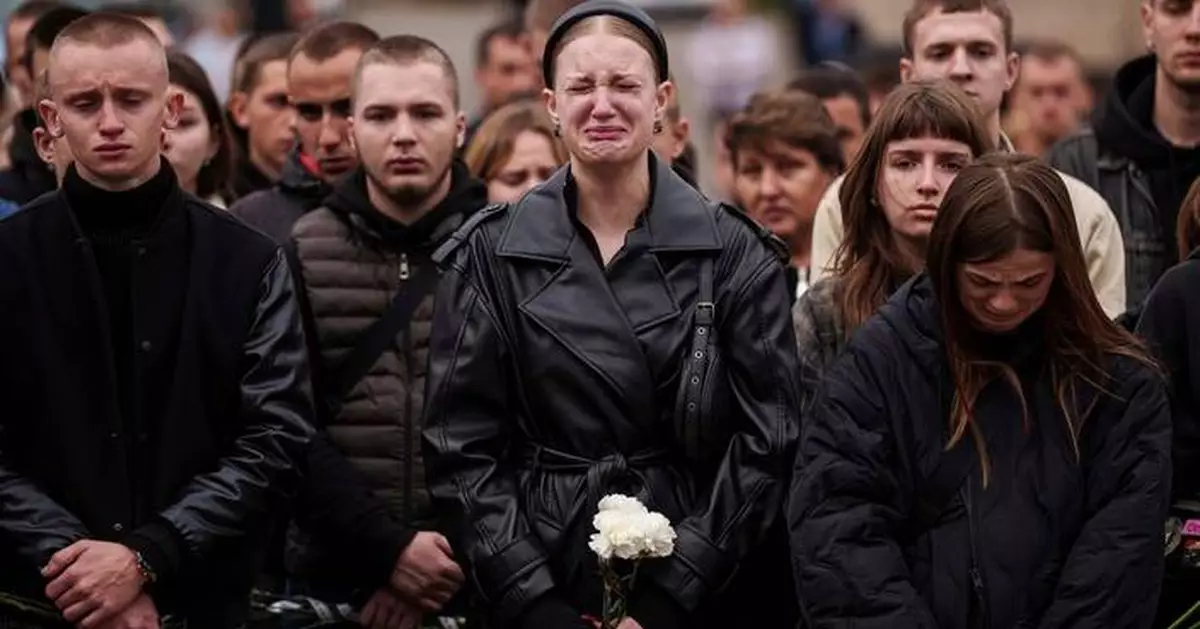
FILE - A woman cries during the funeral ceremony of Ihor Kusochek, a Ukrainian soldier of the Azov brigade in Bobrovytsia, Chernihiv region, Ukraine, Friday, Oct. 4, 2024. (AP Photo/Evgeniy Maloletka, File)
The U.S. has brokered talks with delegations from Moscow and Kyiv as part of the Trump administration's yearlong push for peace. But reconciling key differences, such as the future of Russian-occupied Ukrainian land and postwar security for Ukraine, has thwarted progress.
Meanwhile, thousands of each countries’ troops have died on the battlefield, and Ukrainian civilians have been battered by Russian aerial strikes that have brought years of power outages and water cuts.
Here’s a look at the conflict, by the numbers, since the full-scale invasion on Feb. 24, 2022.
The upper end of the estimated number of soldiers killed, wounded or missing on both sides, according to a report last month by the Center for Strategic and International Studies, a think tank.
It estimated that Russia suffered 1.2 million casualties, including up to 325,000 troop deaths, between February 2022 and December 2025 — what it said was the largest number of troop deaths for any major power in any conflict since World War II.
Russia has not released figures on battlefield deaths since January 2023, when it said more than 80 soldiers were killed in a Ukrainian strike, bringing the total military deaths Moscow has confirmed to just over 6,000.
CSIS estimated that Ukraine has seen 500,000 to 600,000 military casualties, including up to 140,000 deaths.
Ukrainian President Volodymyr Zelenskyy said earlier this month that 55,000 Ukrainian troops have died in the war. Many are missing, he said.
Neither Moscow nor Kyiv gives timely data on military losses. Independent verification is not possible.
The U.N. Human Rights Monitoring Mission’s count for civilian deaths in Ukraine since Russia’s all-out invasion, though it says that is likely an underestimate. More than 40,600 civilians were injured over the same period, it said in a December report.
The war has killed at least 763 children, according to the U.N.
Last year was the deadliest for civilians in Ukraine since 2022. The conflict killed 2,514 civilians and injured 12,142 in the country in 2025 — a 31% increase in civilian casualties over 2024, it said.
The percentage of Ukrainian land occupied by Russia, according to the Institute for the Study of War.
Over the past year, Russia has gained just 0.79% of Ukraine’s territory in the grinding war of attrition, the Washington-based think tank said in calculations provided earlier this month to The Associated Press, underscoring the little progress Moscow's forces have made despite huge costs in troops and armor.
Before Russia’s all-out invasion, it controlled nearly 7% of Ukraine, including Crimea and parts of the Donetsk and Luhansk regions in the east, as Moscow-backed separatists fought the Ukrainian army, according to Ukrainian officials and Western analysts.
The percentage drop in foreign military aid to Kyiv last year compared with the annual average between 2022 and 2024, according to Germany’s Kiel Institute, which tracks assistance to Kyiv.
U.S. President Donald Trump stopped sending American weapons paid for by the U.S. to Ukraine after he took office just over a year ago. European countries, striving to make up the difference, increased their military aid last year by 67% compared with the 2022-2024 period, the institute said in a report this month.
Foreign humanitarian and financial aid to Ukraine fell by 5% last year in comparison with the average in the previous three years, it said.
The number of Ukrainian civilians who have left their country.
Some 5.3 million of those people have found refuge in Europe, according to a report this month from the U.N. office in Ukraine.
Additionally, around 3.7 million Ukrainians forced out of their homes have moved elsewhere within the country, the U.N. said in December.
Ukraine's prewar population was more than 40 million.
The number of Russian attacks that affected the provision of medical care in Ukraine since the full-scale invasion, according to a report from the World Health Organization on Monday.
There was a nearly 20% increase in such attacks last year compared with 2024, the U.N. agency said.
A report earlier in the month from the WHO documented at least 2,347 strikes on health care facilities, in addition to others that damaged vehicles and the storage of medical supplies.
Follow AP’s coverage of the war in Ukraine at https://apnews.com/hub/russia-ukraine
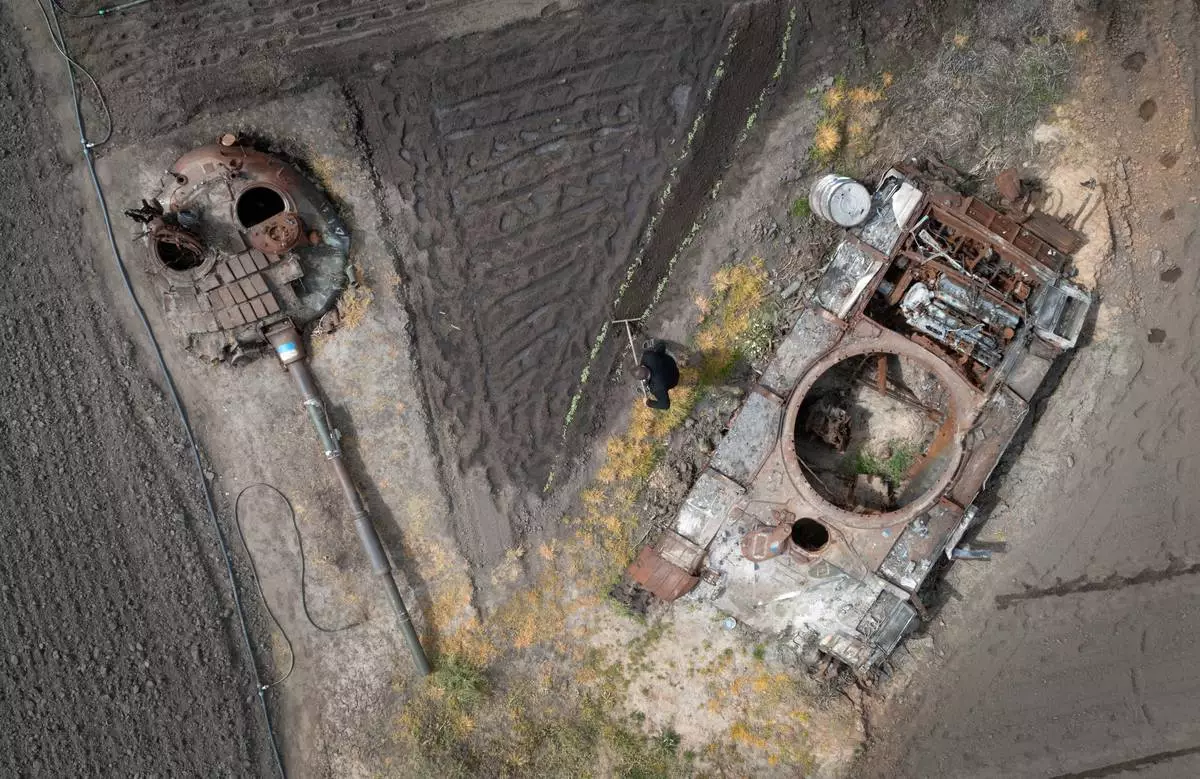
FILE - A man plants sunflowers in his garden between a damaged Russian tank and its turret in the village of Velyka Dymerka, Kyiv region, Ukraine, Wednesday, May 17, 2023. (AP Photo/Efrem Lukatsky, File)
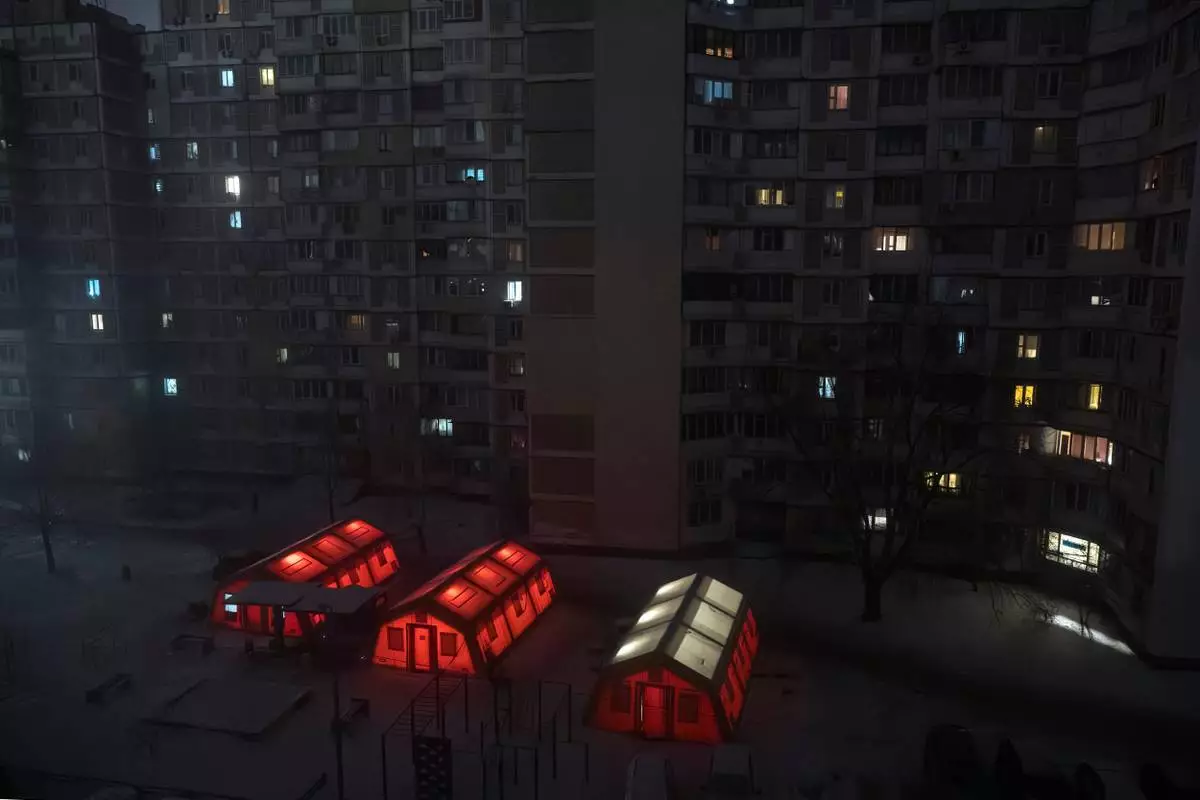
FILE - Emergency tents are set up in a residential neighborhood where people can warm up following Russia's regular air attacks against the country's energy infrastructure that leave residents without power, water and heating in the dead of winter, in Kyiv, Ukraine, Thursday, Jan. 15, 2026. (AP Photo/Vladyslav Musiienko, File)
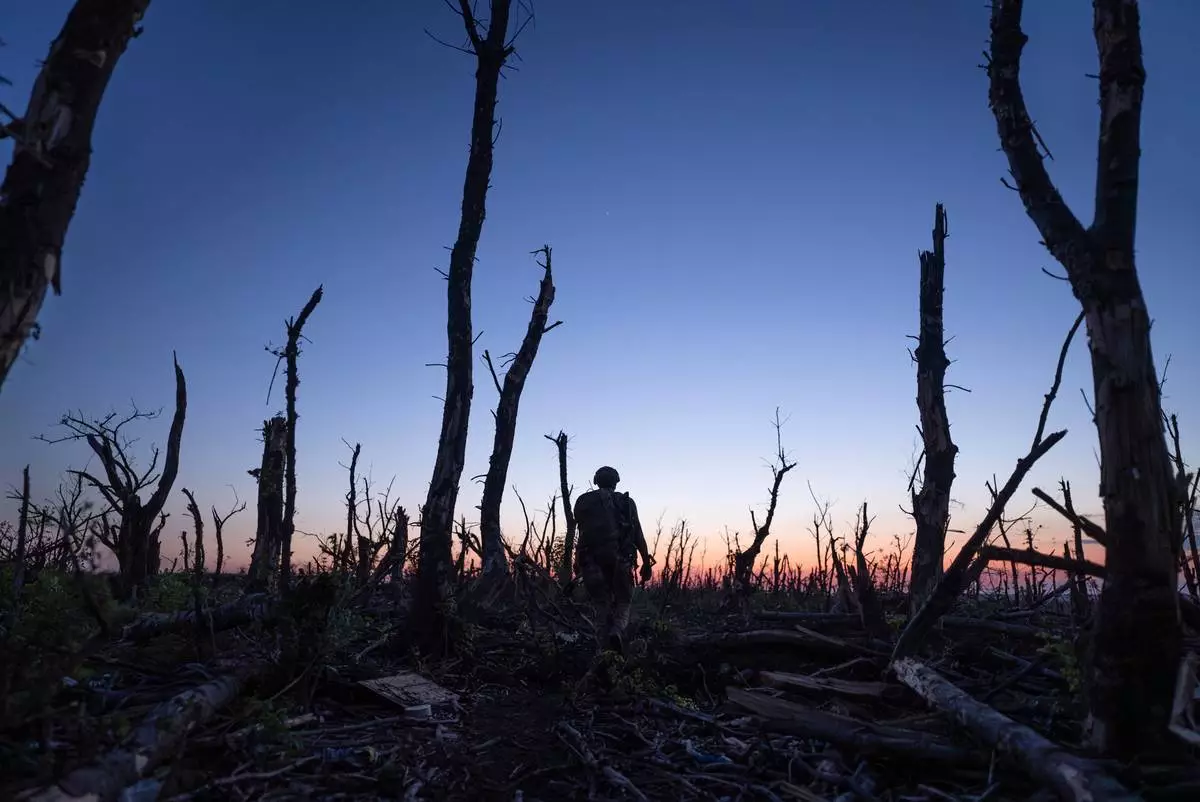
FILE - Ukrainian servicemen walk through a charred forest along the front line, a few kilometers from Andriivka, Donetsk region, Ukraine, Saturday, Sept. 16, 2023. (AP Photo/Mstyslav Chernov, File)
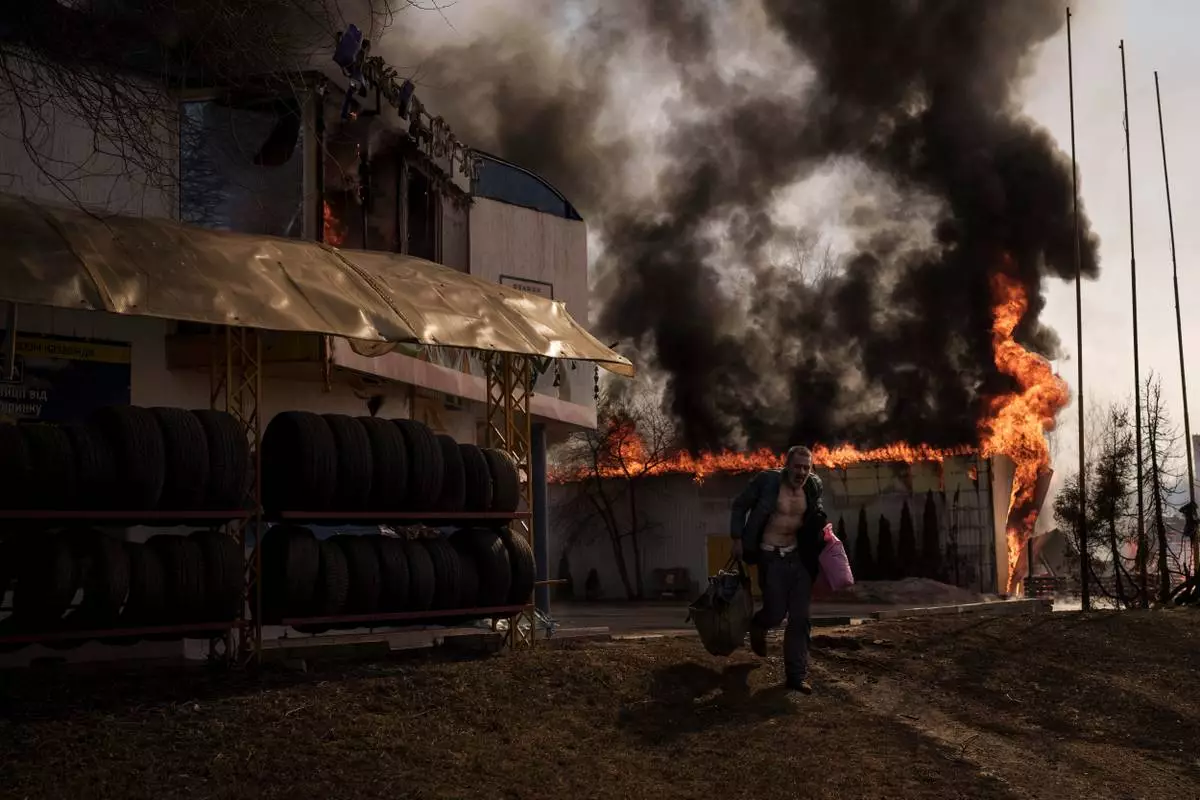
FILE - A man recovers items from a shop that caught fire in a Russian attack in Kharkiv, Ukraine, Friday, March 25, 2022. (AP Photo/Felipe Dana, File)
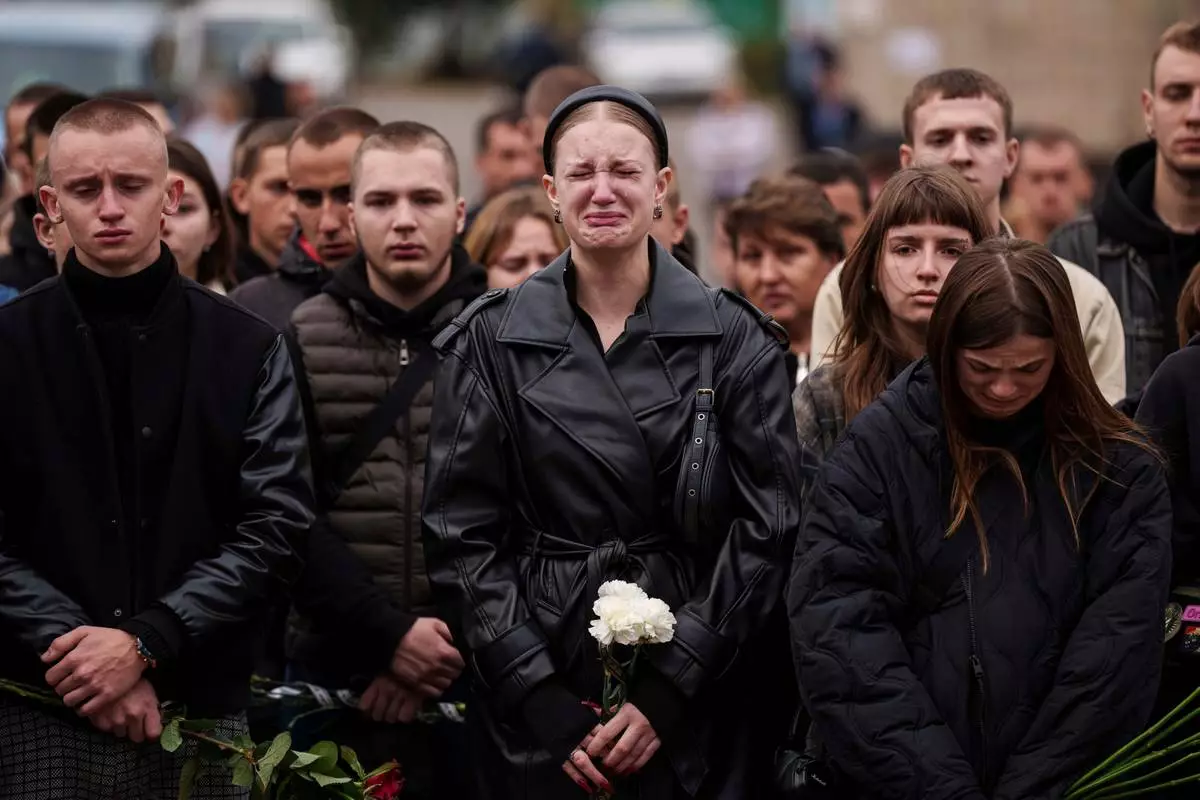
FILE - A woman cries during the funeral ceremony of Ihor Kusochek, a Ukrainian soldier of the Azov brigade in Bobrovytsia, Chernihiv region, Ukraine, Friday, Oct. 4, 2024. (AP Photo/Evgeniy Maloletka, File)
MEXICO CITY (AP) — The Mexican army killed the country’s most powerful cartel leader and one of the United States’ most wanted fugitives, notching a major victory while cartel members responded with a wave of violence across the country.
The killing Sunday of Jalisco New Generation Cartel leader Nemesio Oseguera Cervantes during an attempt to capture him in Jalisco state was the highest-profile blow against cartels since the recapture of former Sinaloa cartel boss Joaquín “El Chapo” Guzmán a decade ago.
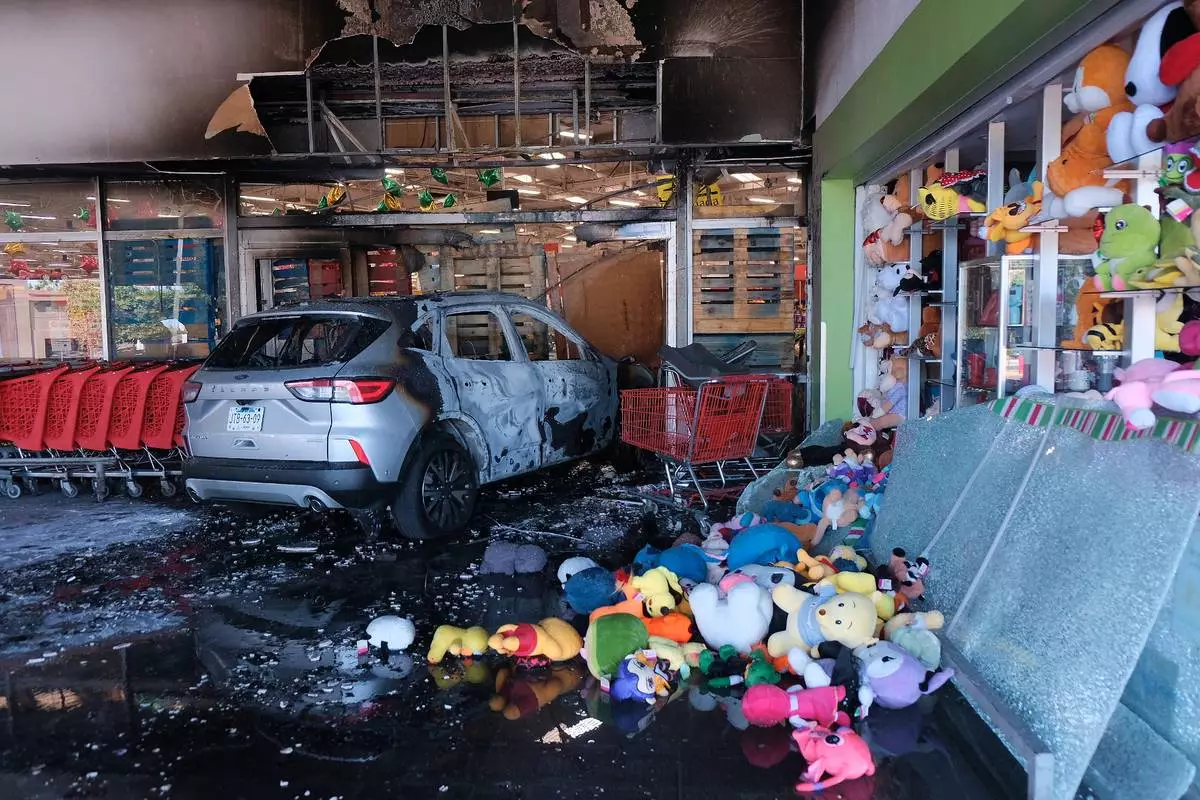
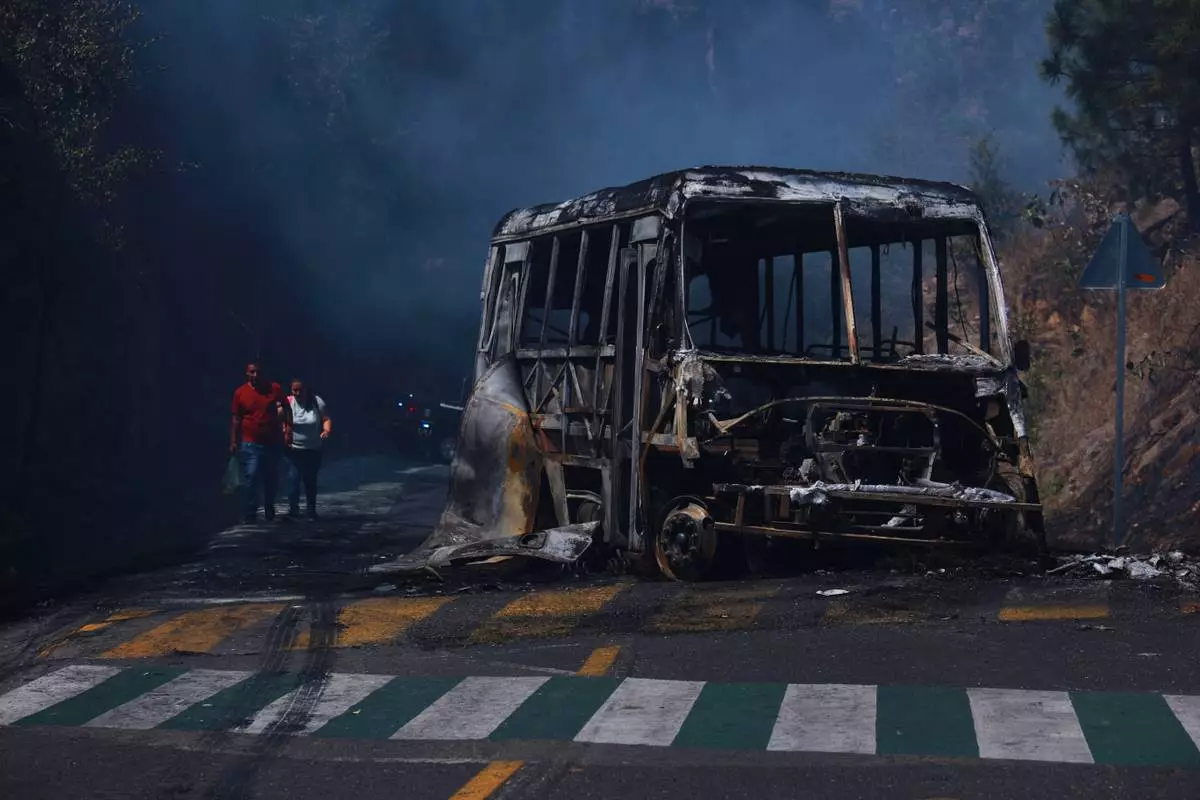
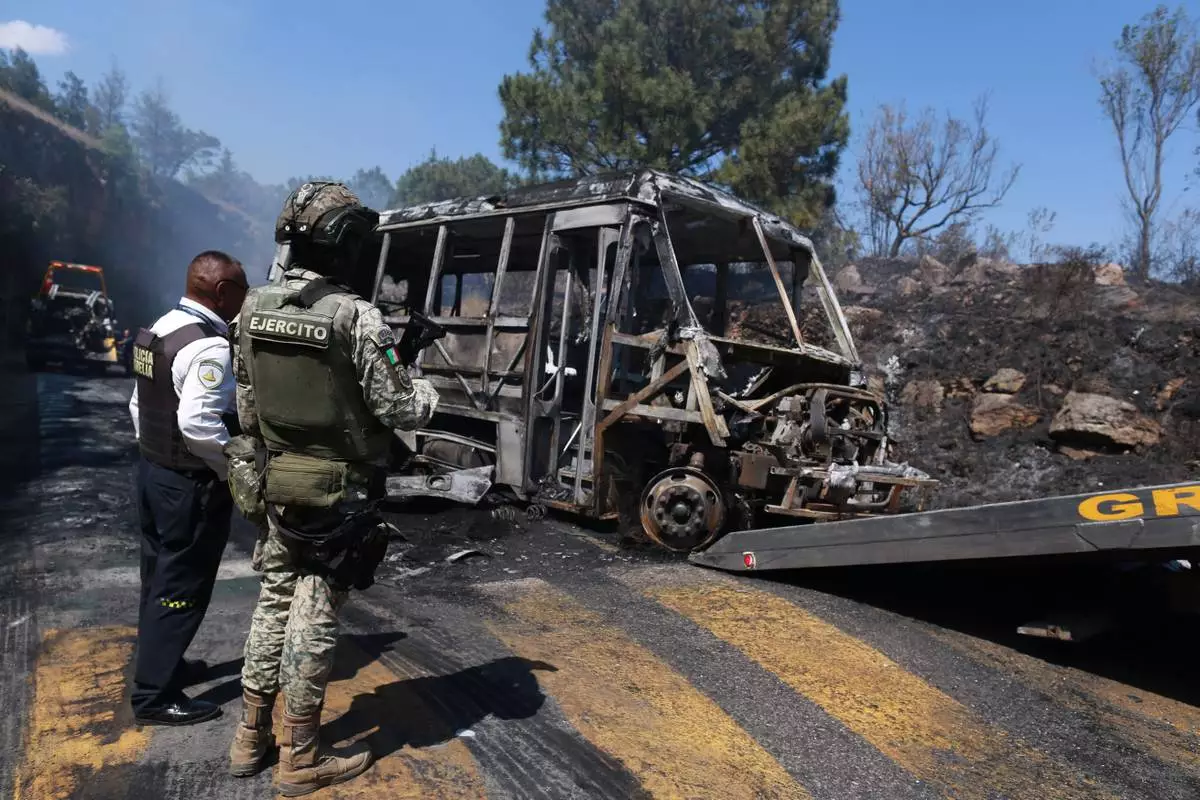
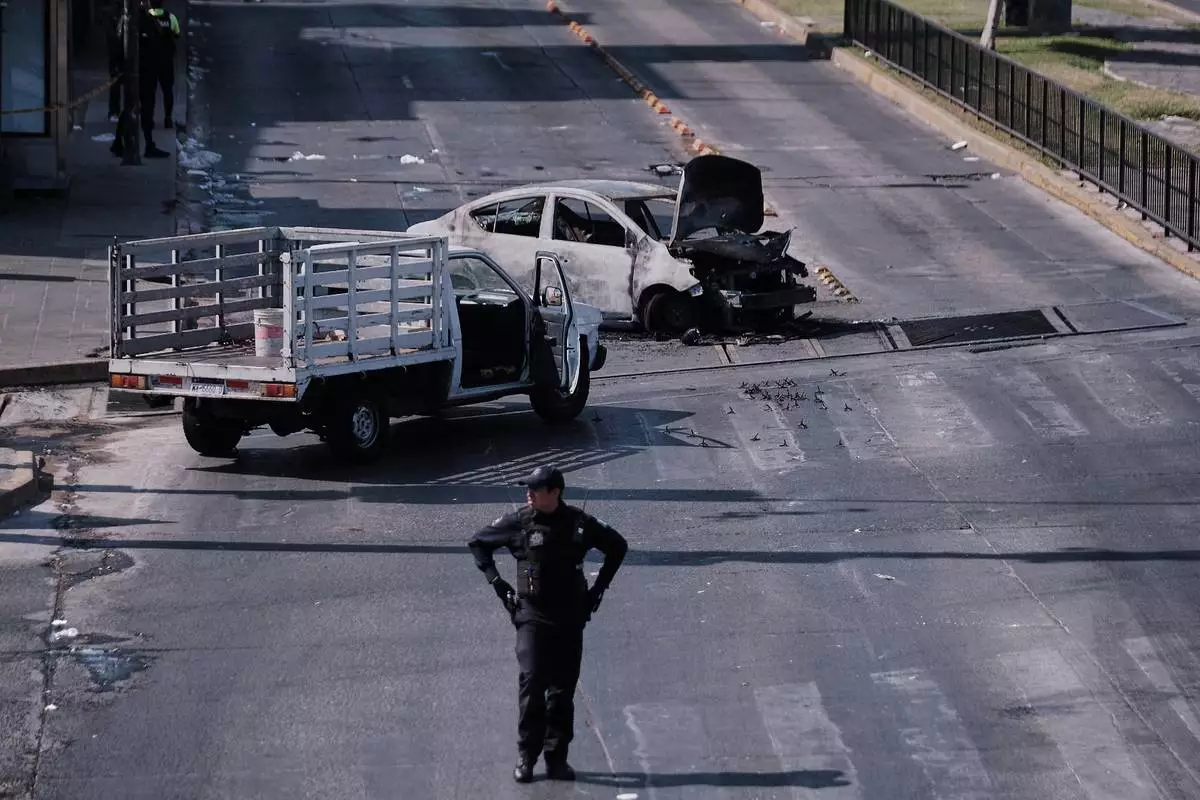
Following Oseguera Cervantes' death, security forces were placed on alert throughout the country as gunmen unleashed violence. Cars burned out by cartel members blocked roads in 20 Mexican states. People locked themselves in their homes in Guadalajara, Mexico's second-largest city and Jalisco's capital, and school was canceled Monday in several states.
The killing could give the government a leg up in its dealings with the U.S. Trump administration, which has been threatening tariffs or unilateral military action if Mexico does not show results in the fight against the cartels. But the long-term effect on Mexico's security landscape remains unclear.
Here's what to know:
Oseguera Cervantes, better known as “El Mencho,” was 59 years old and originally from the western state of Michoacan. His ties to organized crime went back at least three decades.
In 1994, he was tried for trafficking heroin in the U.S. and sent to prison for three years. Upon returning to Mexico, he quickly rose through Mexico's drug trafficking underworld.
Around 2009, he founded the Jalisco New Generation Cartel, which became Mexico's fastest-growing criminal organization, moving cocaine, methamphetamines, fentanyl and migrants to the United States, and using violence with the use of drones and improvised explosive devices.
The cartel earned a reputation for brazen attacks on Mexican security forces, including downing a military helicopter in Jalisco in 2015 and attempting a spectacular, but unsuccessful, assassination of Mexico City Police Chief Omar García Harfuch, who is now Mexico's federal security secretary.
It recruited aggressively, experimenting with new ways to reach potential members online, and generated revenue through fuel theft, extortion and timeshare fraud, among other activities.
Oseguera Cervantes was killed during an attempt to capture him, as his followers attempted to fight off Mexican troops.
Mexico's Defense Department said in a statement that the army launched an operation in the southern part of Jalisco state to capture Oseguera Cervantes, involving the Mexican Air Force and special forces.
The cartel counterattacked, and in the ensuing confrontation, federal forces killed four members of the criminal group, and wounded three others, including its leader, who died later during transfer by air to Mexico City, according to the statement.
Three soldiers were injured and two people were detained in the action. Rocket launchers capable of shooting down aircraft and destroying armored vehicles were seized at the scene.
Oseguera Cervantes' death will help Mexico's government show results to the U.S., which is pressuring its neighbor to pursue drug cartels more aggressively. Both countries said intelligence cooperation helped lead to Sunday's operation.
Oseguera Cervantes was facing multiple indictments in the United States and the U.S. State Department had offered a $15 million reward for information leading to his arrest. The Trump administration designated his cartel and others foreign terrorist organizations a year ago.
U.S. Deputy Secretary of State Christopher Landau, who was U.S. ambassador to Mexico during the first Trump administration, applauded the operation via X, writing: “The good guys are stronger than the bad guys. Congratulations to the forces of law and order in the great Mexican nation.”
Mike Vigil, former chief of international operations for the DEA, said Mexico had sent “a strong message to Donald Trump's administration that they are fighting aggressively and effectively” against the most powerful cartels. He added that “the majority of the information came from the Mexican armed forces and all credit goes to Mexico.”
It's not clear who will succeed Oseguera Cervantes, or if any one person can.
The Jalisco cartel has a presence in at least 21 of Mexico's 32 states and is active in almost all of the United States, according to the U.S. Drug Enforcement Administration. But it is also a global organization and the loss of its leader could be felt well beyond Mexico.
“El Mencho controlled everything, he was like a country's dictator,” Vigil said.
His absence could slow the cartel's rapid growth and expansion and leave it initially weakened against the Sinaloa cartel on several fronts where they or their proxies are fighting. The Sinaloa is locked in its own internal power struggle, however, between the sons of “El Chapo” and the faction loyal to Ismael “El Mayo” Zambada, who is in U.S. custody.
Vigil said Mexico should seize the moment to launch “an effective frontal assault based on intelligence.”
“This is a big opportunity for Mexico and the United States if they work together,” he said.
Security analyst David Saucedo said that if relatives of Oseguera Cervantes take control of the cartel, the violence seen Sunday could continue. If others take power, they could be more willing to turn the page and continue operations.
The greatest fear would be that the cartel turns to indiscriminate violence. They could decide to “launch narcoterrorism attacks ... and generate a scenario similar to what Colombia lived in the 1990s,” a full-on attack against the government “car bombs, assassinations and attacks on aircraft.”
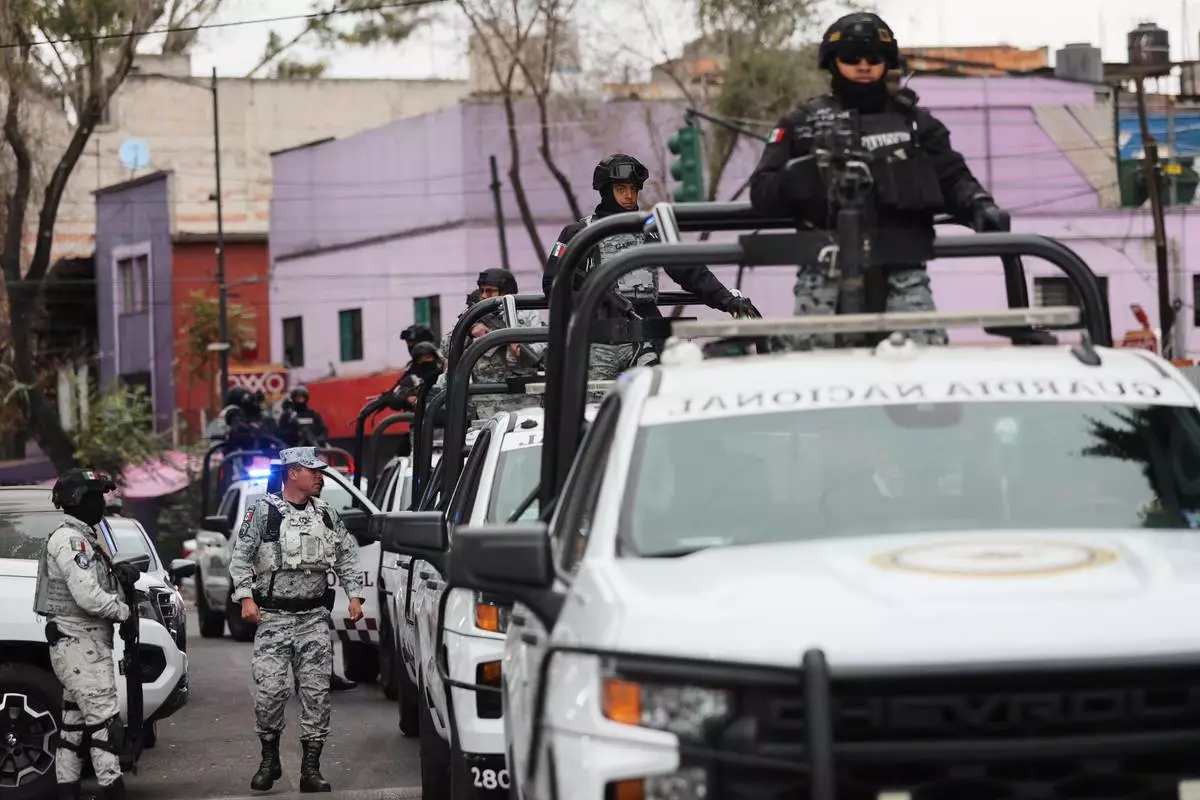
National Guards patrol the area outside of the General Prosecutor's headquarters in Mexico City, Sunday, Feb. 22, 2026, after authorities reported that the Mexican Army killed Jalisco New Generation Cartel leader Nemesio Oseguera, known as "El Mencho." (AP Photo/Ginette Riquelme)
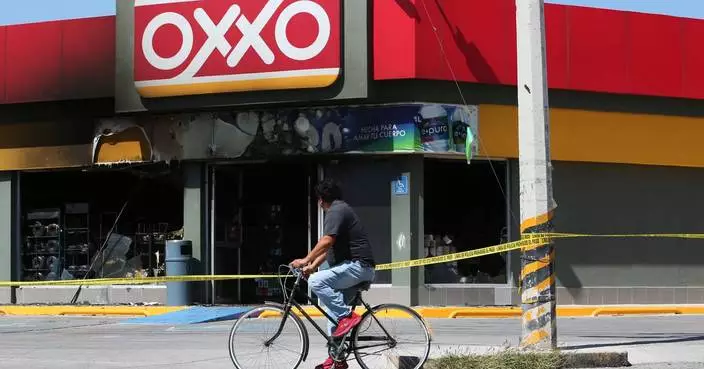
A charred vehicle sits at a damaged supermarket in Guadalajara, Jalisco state, Mexico, Sunday, Feb. 22, 2026, after the death of the leader of the Jalisco New Generation Cartel, Nemesio Rubén Oseguera Cervantes, known as "El Mencho." (AP Photo/Alejandra Leyva)
Pedestrians walk past a charred vehicle after it was set on fire, on a road in Cointzio, Michoacán state, Mexico, Sunday, Feb. 22, 2026, after the death of the leader of the Jalisco New Generation Cartel, Nemesio Rubén Oseguera Cervantes, known as "El Mencho." (AP Photo/Armando Solis)
A soldier stands guard by a charred vehicle that was set on fire in Cointzio, Mexico, Sunday, Feb. 22, 2026, amid reports the Mexican Army killed Jalisco New Generation Cartel leader Nemesio Oseguera, known as "El Mencho." (AP Photo/Armando Solis)
A police officer stands guard by a charred vehicle after it was set on fire, on a road in Guadalajara, Jalisco state, Mexico, Sunday, Feb. 22, 2026, after the death of the leader of the Jalisco New Generation Cartel, Nemesio Rubén Oseguera Cervantes, known as "El Mencho." (AP Photo/Alejandra Leyva)