WASHINGTON (AP) — A trio of Senate Democrats is calling for the government to start refunding roughly $175 billion in tariff revenues that the Supreme Court ruled were collected because of an illegal set of orders by President Donald Trump.
Sens. Ron Wyden of Oregon, Ed Markey of Massachusetts and Jeanne Shaheen of New Hampshire are unveiling a bill on Monday that would require U.S. Customs and Border Protection to issue refunds over the course of 180 days and pay interest on the refunded amount.
The measure would prioritize refunds to small businesses and encourages importers, wholesalers and large companies to pass the refunds on to their customers.
“Trump’s illegal tax scheme has already done lasting damage to American families, small businesses and manufacturers who have been hammered by wave after wave of new Trump tariffs,” said Wyden, stressing that the “crucial first step” to fixing the problem begins with “putting money back in the pockets of small businesses and manufacturers as soon as possible.”
The bill is unlikely to become law, but it reveals how Democrats are starting to apply public pressure on a Trump administration that has shown little interest in trying to return tariff revenues after the Supreme Court announced its 6-3 ruling on Friday.
Because of the ruling, going into November's midterm elections for control of Congress, Democrats have begun telling the public that Trump illegally raised taxes and now refuses to repay the money back to the American people.
Shaheen said that repairing any of the damage caused by the tariffs in the form of higher prices starts with “President Trump refunding the illegally collected tariff taxes that Americans were forced to pay.” Markey stressed that small business tend to have ”little to no resources" and a “refund process can be extremely difficult and time consuming” for companies.
The Trump administration has asserted that its hands are tied, because any refunds should be the responsibility of further litigation in court.
Asked if Trump thought Congress should play a role in providing refunds, White House spokesman Kush Desai said: “President Trump used tariffs to actually deliver where Democrats could only talk, so naturally Democrats are rolling up their sleeves to undermine President Trump and the American people – pathetic but unsurprising.”
The Democrats' message could put Republicans on the defensive as they try to explain why the government isn’t proactively seeking to return the money. GOP lawmakers had planned to try to preserve their House and Senate majorities by running on the income tax cuts that Trump signed into law last year, saying that tax refunds this year would help families.
Treasury Secretary Scott Bessent told CNN on Sunday that it's “bad framing” to raise the question of refunds because the Supreme Court ruling did not address the issue. The administration's position is that any refunds will be decided by lawsuits winding their way through the legal system, rather than by a president who has repeatedly stressed to voters that he has the ability to act with speed and resolve.
“It is not up to the administration — it is up to the lower court,” Bessent said, stressing that rather than offer any guidance he would “wait” for a court opinion on refunds.
Trump has defended his use of the 1977 International Emergency Economic Powers Act to impose broad tariffs on almost every U.S. trading partner, saying that his ability to levy taxes on imports had helped to end military conflicts, bring in new federal revenues and apply pressure for negotiating trade frameworks.
The University of Pennsylvania’s Penn Wharton Budget Model released estimates that the refunds would total $175 billion. That’s the equivalent of an average of $1,300 per U.S. household. But determining how to structure reimbursements would be tricky, as the costs of the tariffs flowed through the economy in the form of customers paying the taxes directly as well as importers passing along the cost either indirectly or absorbing them.
The president has previously claimed that refunds would drive up U.S. government debt and hurt the economy. On Friday, he told reporters at a briefing that the refund process could be finished after he leaves the White House.
“I guess it has to get litigated for the next two years,” Trump said, later amending his timeline by saying: “We’ll end up being in court for the next five years.”
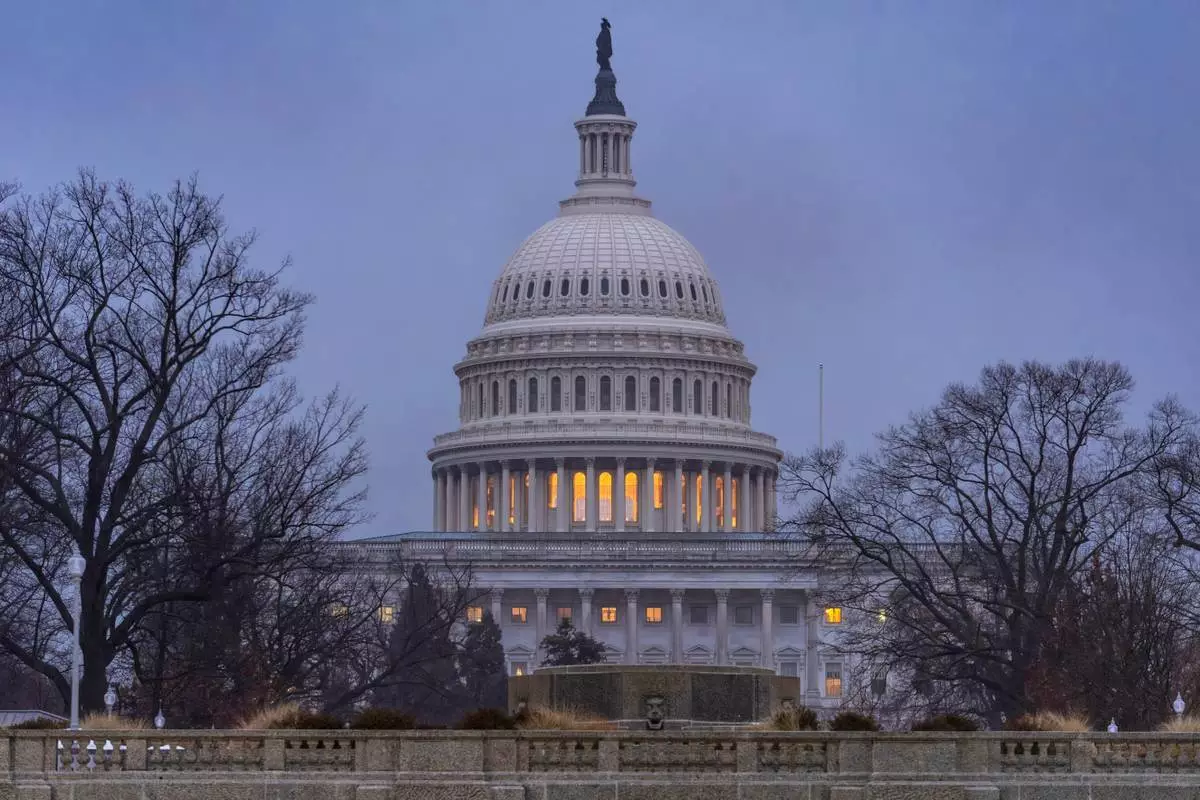
The Capitol is seen during heavy rain as the Department of Homeland Security funding bill remains in limbo, in Washington, Friday, Feb. 20, 2026. (AP Photo/J. Scott Applewhite)
PARK CITY, Utah (AP) — Prosecutors portrayed a Utah mother and children’s book author as a money-hungry killer Monday on the first day of a murder trial in her husband’s death, while her defense team urged jurors not to make judgments before hearing her side.
Kouri Richins, 35, faces a slew of felony charges for allegedly killing her husband, Eric Richins, with fentanyl in March 2022 at their home just outside the ski town of Park City. She has vehemently denied the allegations.
Prosecutors say she slipped five times the lethal dose of the synthetic opioid into a cocktail that he drank. She is also accused of trying to poison him a month earlier on Valentine's Day with a fentanyl-laced sandwich that made him break out in hives and black out, according to court documents.
After her husband's death, Kouri Richins self-published a children’s book about grief to help her sons and other kids cope with the loss of a parent.
As arguments in the case got underway Monday, Richins sat next to her attorneys, taking notes and passing some to them. It wasn't known whether she would take the stand in her defense.
Summit County prosecutor Brad Bloodworth told jurors that Richins was $4.5 million in debt and falsely believed that if her husband died she would inherit his estate worth more than $4 million. Prosecutors have argued she was planning a future with another man she was seeing on the side.
“The evidence will prove that Kouri Richins murdered Eric for his money and to get a fresh start at life,” Bloodworth said. “More than anything, she wanted his money to perpetuate her facade of privilege, affluence and success."
Defense attorney Kathryn Nester started her opening statement by playing the recording of Richins’ 911 call from the night of her husband’s death. Richins was sobbing hysterically on the call and seemed barely able to answer the dispatcher’s questions.
“Those were the sounds of a wife becoming a widow,” Nester said.
Eric Richins had Lyme disease and was addicted to painkillers, Nester argued. She suggested he may have overdosed.
However, Eric Richins’ sister Katie Richins-Benson testified that their mother was a drug and alcohol counselor who had instilled in the siblings from an early age the dangers of drug use.
The trial is slated to run through March 26. A few dozen people hoping to watch camped outside the courthouse in lawn chairs starting at 4 a.m., four and a half hours before the trial began.
Richins faces nearly three dozen counts, including aggravated murder, attempted murder, forgery, mortgage fraud and insurance fraud. The murder charge alone carries a sentence of 25 years to life in prison.
In the months before her arrest in May 2023, Richins self-published the illustrated children’s book “Are You with Me?” about a father with angel wings watching over his young son after passing away. The book could play a key role for prosecutors in framing Eric Richins’ death as a calculated killing with an elaborate cover-up attempt. Bloodworth told jurors Monday about how Richins promoted it on local TV and radio stations.
Years before her husband's death, Richins opened numerous life insurance policies on Eric Richins without his knowledge, with benefits totaling nearly $2 million, prosecutors alleged. Court documents also indicate she had a negative bank account balance and was being sued by a creditor.
Bloodworth showed the jury a series of text messages between Kouri Richins and Robert Josh Grossman, the man with whom she was having an affair. She had texted Grossman about her dream of leaving her husband, gaining millions in the divorce and one day marrying Grossman.
Bloodworth also showed screenshots of Richins’ internet search history, which included “luxury prisons for the rich America” and “Can cops force you to do a lie detector test?”
Eric Richins' sister testified that she rushed to her brother's house after hearing from another family member that he wasn't breathing. Richins-Benson ran inside and locked eyes with Richins, who just shook her head, she recalled.
“That’s when I knew my brother was gone,” the sister said through tears.
“I observed that she was not how she normally was,” Richins-Benson said of the defendant. “She was very well put together. She had a matching pajama-esque outfit on. Her hair was all done up. She wasn’t crying like I was.”
Defense attorneys pushed back on that characterization.
Among the key witnesses expected to be called later in the trial is the family’s housekeeper Carmen Lauber, who claims to have sold fentanyl to Kouri Richins on multiple occasions.
Lauber is not charged in connection with the case, and detectives have said she was granted immunity.
Defense attorneys argued Monday that Lauber did not actually give Richins fentanyl and was motivated to lie for legal protection. No fentanyl was ever found in Richins’ house, and the housekeeper’s dealer has said he was in jail and detoxing from drug use when he told detectives in 2023 that he sold fentanyl to Lauber. He later said in a sworn affidavit that he sold her only the opioid OxyContin.
Nester showed jurors photos of an empty pill bottle sitting on Eric Richins' bedside table the night of his death and bags of marijuana gummies he was known to use regularly. She said he had asked his wife to procure opioids for him.
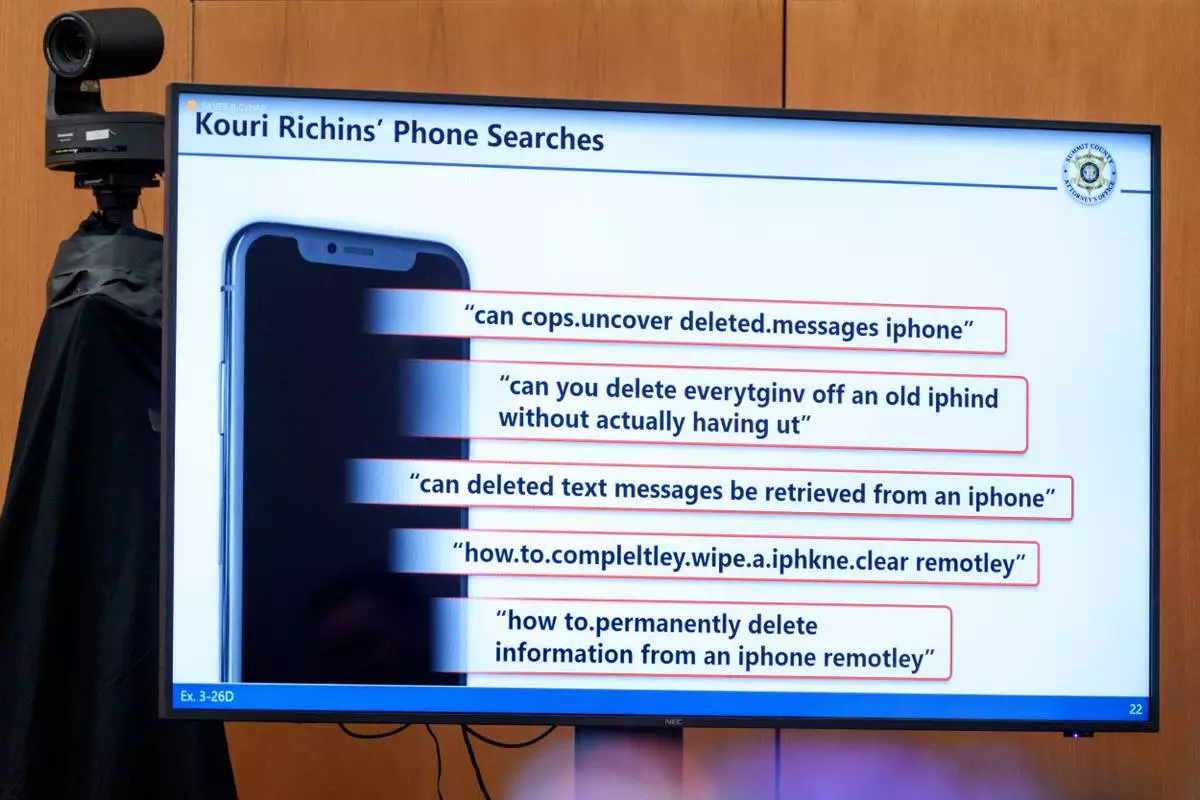
Internet searches recovered from the phone of Kouri Richins, a Utah mother accused of fatally poisoning her husband, are displayed on a screen during her murder trial at the Summit County Courthouse in Park City, Utah, Monday, Feb. 23, 2026. (AP Photo/Spenser Heaps, Pool)
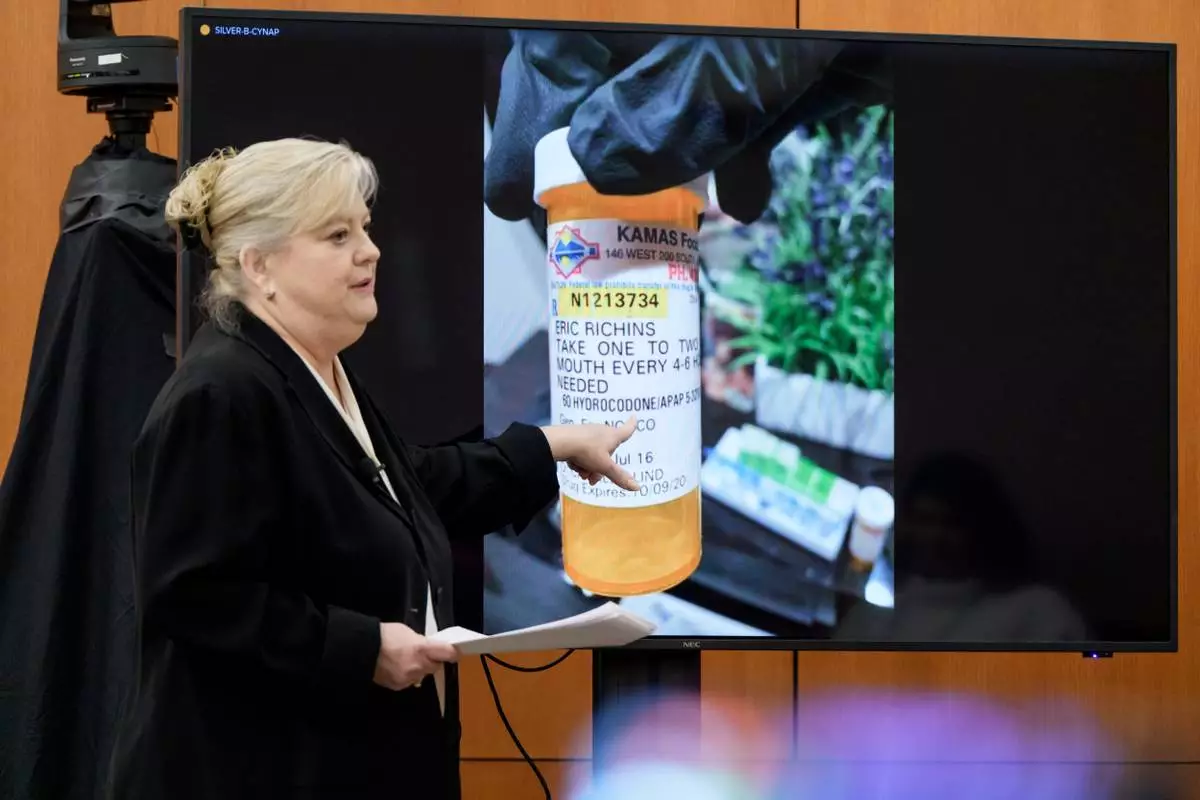
Kathy Nester, the defense attorney for Kouri Richins, a Utah mother accused of fatally poisoning her husband, shows the jury an image of a pill bottle while delivering her opening statement in Richins' murder trial at the Summit County Courthouse in Park City, Utah, Monday, Feb. 23, 2026. (AP Photo/Spenser Heaps, Pool)
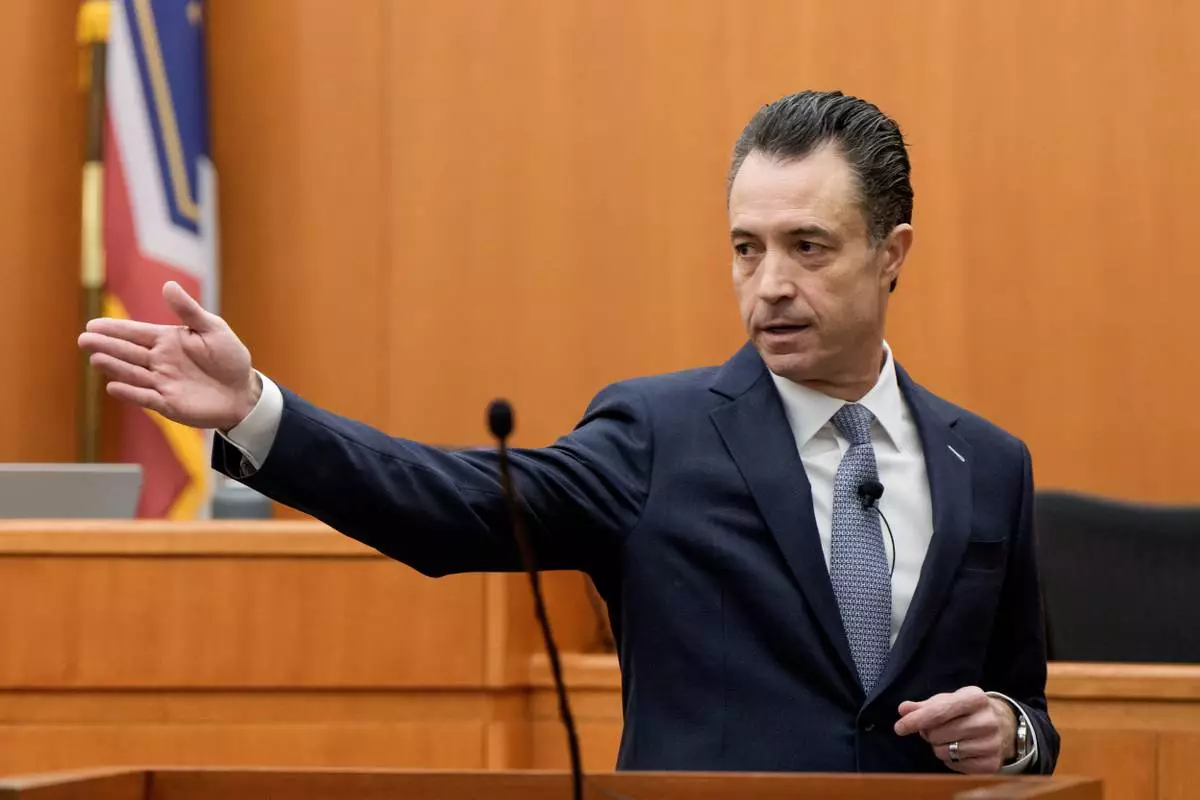
Brad Bloodworth, chief prosecutor for Summit County, motions toward Kouri Richins, a Utah mother accused of fatally poisoning her husband, while delivering his opening statement in Richins' trial at the Summit County Courthouse in Park City, Utah, Monday, Feb. 23, 2026. (AP Photo/Spenser Heaps, Pool)
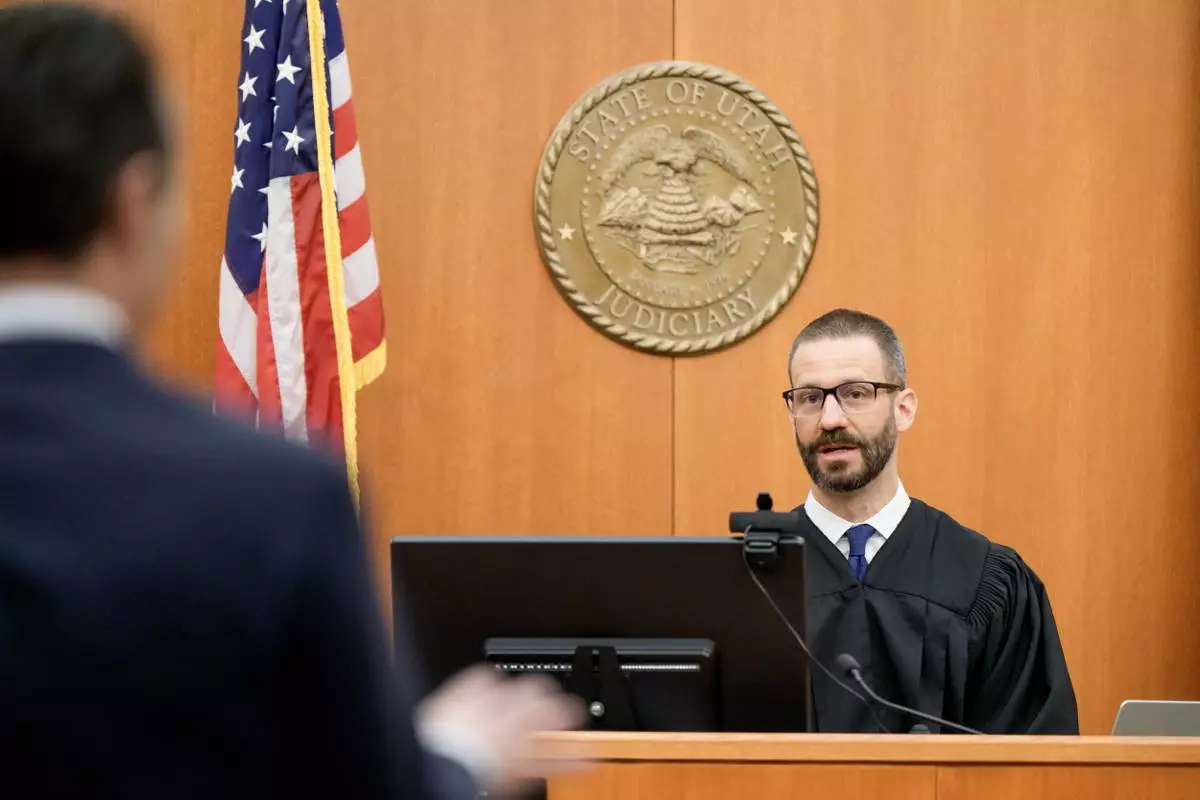
Judge Richard Mrazik, right, talks to Brad Bloodworth, chief prosecutor for Summit County, during the trial of Kouri Richins, a Utah mother accused of fatally poisoning her husband, at the Summit County Courthouse in Park City, Utah, Monday, Feb. 23, 2026. (AP Photo/Spenser Heaps, Pool)

Kouri Richins, a Utah mother accused of fatally poisoning her husband, looks on during her murder trial at the Summit County Courthouse in Park City, Utah, Monday, Feb. 23, 2026. (AP Photo/Spenser Heaps, Pool)
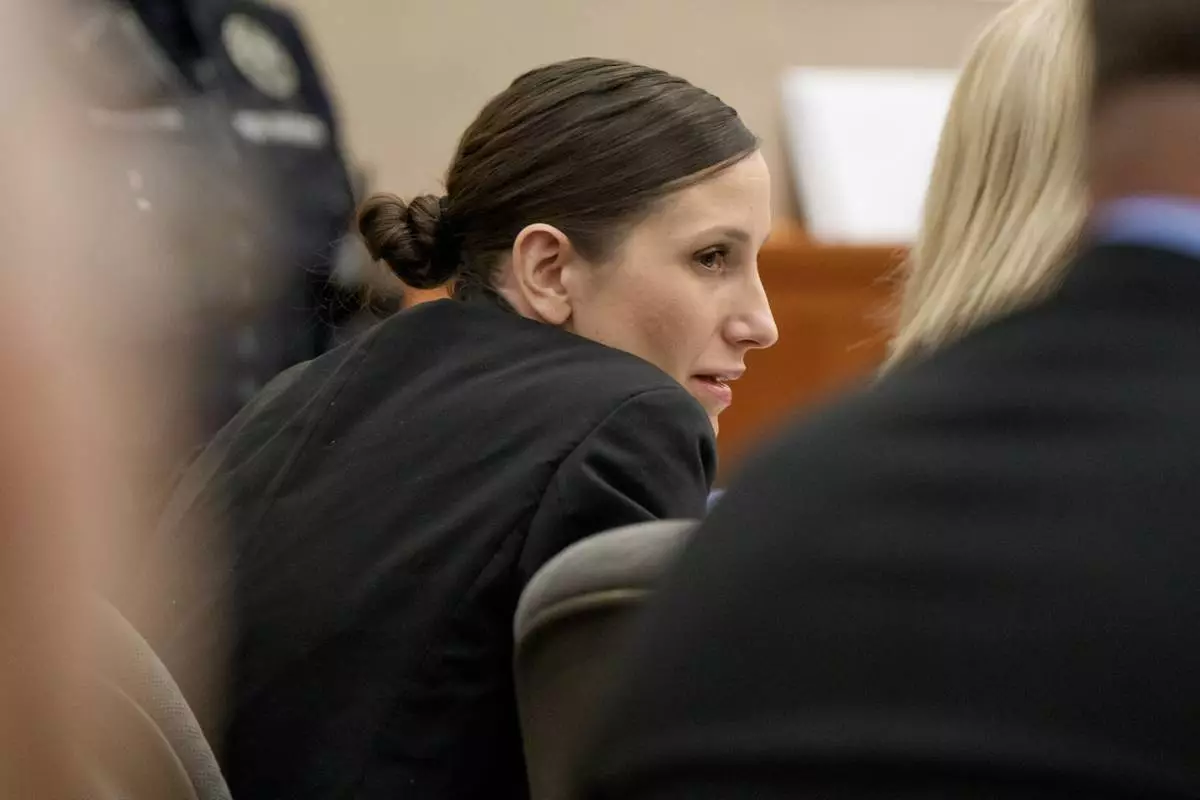
Kouri Richins, a Utah mother accused of fatally poisoning her husband, talks to her attorneys during her murder trial at the Summit County Courthouse in Park City, Utah, Monday, Feb. 23, 2026. (AP Photo/Spenser Heaps, Pool)
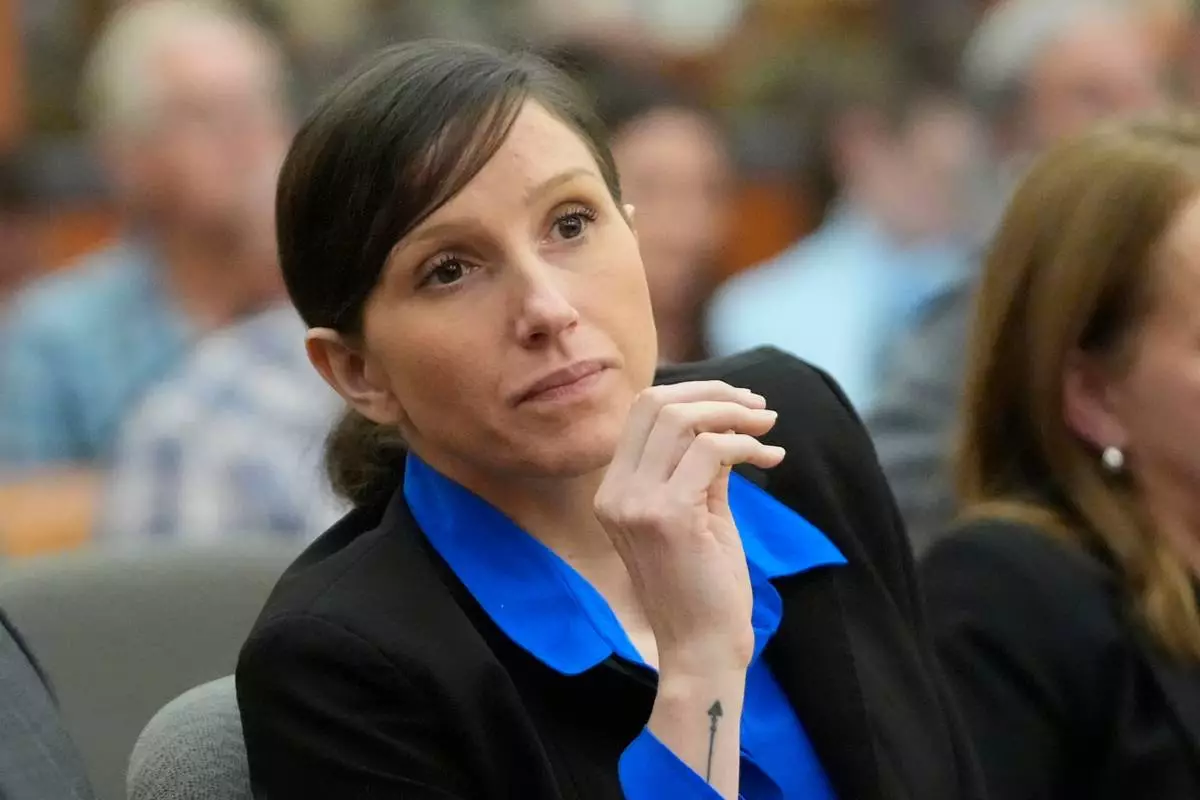
FILE - Kouri Richins, a Utah mother of three who wrote a children's book about coping with grief after her husband's death and was later accused of fatally poisoning him, looks on during a court hearing on Aug. 27, 2024, in Park City, Utah. (AP Photo/Rick Bowmer, Pool, File)
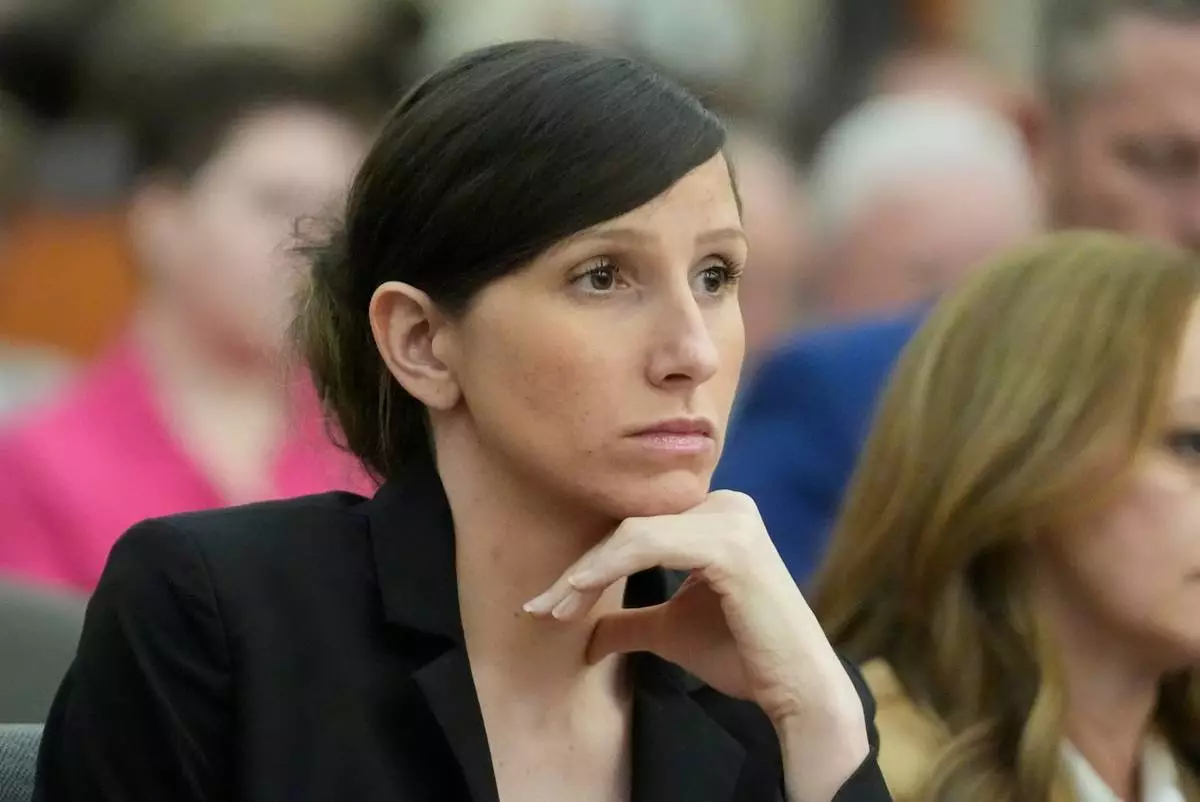
FILE - Kouri Richins, a Utah mother of three who wrote a children's book about coping with grief after her husband's death and was later accused of fatally poisoning him, looks on during a hearing on Aug. 26, 2024, in Park City, Utah. (AP Photo/Rick Bowmer, Pool, File)