NEW YORK (AP) — For years as an environmental lawyer, Robert F. Kennedy Jr. crusaded against a controversial herbicide ingredient known as glyphosate, even winning a landmark case against chemical giant Monsanto by arguing that its Roundup weedkiller contributed to his client's cancer.
But now that he's the nation's top health official, Kennedy is falling in line with President Donald Trump after he issued an executive order that's aimed at boosting glyphosate’s production. The order would also grant limited legal immunity to manufacturers if they’re following federal directives.
Kennedy on Sunday evening posted a lengthy statement on social media that calls pesticides “toxic by design” but frames Trump’s move as necessary for agricultural stability and national security.
“President Trump did not build our current system — he inherited it,” Kennedy wrote. “I support President Trump’s Executive Order to bring agricultural chemical production back to the United States and end our near-total reliance on adversarial nations.”
It was a gesture of loyalty to the president who has enabled Kennedy's overhaul of vaccine policy at the federal government's highest levels, but it also opens a dangerous fault line in their political coalition ahead of the midterm elections in November.
As Kennedy’s Make America Healthy Again supporters grow impatient with a Republican-led administration that’s largely resisted their calls to regulate pesticides, they’re speaking up about what they view as a betrayal of their support.
“It’s been a year. Not a single thing has been done by the EPA to reduce our children’s and families exposure to pesticides,” Moms Across America founder Zen Honeycutt, a prominent MAHA activist, replied to Kennedy’s post. “We love you Bobby but this administration needs to keep their word.”
Critics of the executive order said it is part of a pattern that favors pesticide manufacturers, who defend their products as rigorously reviewed by regulators to ensure they don't threaten human health if used properly.
For example, a proposal from House Republicans would make it harder to sue pesticide companies for failing to warn about product dangers. The Justice Department in December also backed Monsanto owner Bayer in a Supreme Court case that could limit its future liability for Roundup.
“That is America Last, Anti-MAHA, and unforgivable,” prominent activist Kelly Ryerson wrote on social media.
Trump's executive order is intended to protect domestic production of elemental phosphorus, which is used in military devices as well as to make glyphosate-based herbicides. It also seeks to protect the production of glyphosate-based herbicides themselves, which the administration says are critical to agricultural supply chains.
Kennedy has repeatedly said that he believes glyphosate causes cancer, including as recently as January.
While several studies have supported Kennedy's contention, the Environmental Protection Agency has said the chemical is not likely to be carcinogenic to humans when used as directed. Bayer said in an emailed statement that it “stands behind the safety of our glyphosate-based products which have been tested extensively, approved by regulators and used around the globe for more than 50 years.”
In his social media post, Kennedy said he is working with the U.S. Department of Agriculture and the EPA to expedite a future in which the food supply is not reliant on harmful chemicals. Along those lines, the Trump administration in December launched a $700 million regenerative pilot program aimed at helping farmers adopt practices that boost soil health, water quality and productivity.
Yet some longtime environmental advocates say they haven’t yet seen compelling evidence of any particularly transformative change.
“If there is a big plan, a big MAHA-style plan to move in the direction of detoxifying agriculture from these chemicals, where is it?” said Ken Cook, head of the nonprofit Environmental Working Group, which has fought for raising environmental standards since the 1990s. “What I’m seeing here is a very aggressive effort to try and hang onto MAHA principles even as, at every turn, you betray them.”
Cook said many veteran public health advocates never believed Kennedy would be the force for change that MAHA activists hoped. He said the language of Kennedy's post matched arguments from pesticide makers.
“He’s jumped onto their message square and is dancing on it,” he said of Kennedy.
The EPA has teased a forthcoming MAHA agenda that it says will address issues such as forever chemicals, plastic pollution, food quality, Superfund cleanups and lead pipes. On Friday, for example, federal officials said they would enforce a tough, 10-year deadline for lead pipe removal to make drinking water safer. EPA press secretary Brigit Hirsch said in a statement the agenda is “in the final stages” and will also reaffirm the agency’s commitment to science and transparency on pesticides.
Kennedy’s MAHA coalition, a diverse group that includes anti-vaccine activists, environmental defenders and healthy food advocates, is seen as a politically important group for Republicans to win to keep their narrow majorities in Congress.
But the movement doesn’t always agree with Republican policies, putting Kennedy in a “tough spot,” according to Matt Motta, a professor at Boston University School of Public Health.
“He does need to try to please his base of supporters who care a lot about this issue and presumably think that it can cause cancer – while also pleasing the president if he wants to be able to keep this job,” Motta said.
The Kennedy-aligned political advocacy organization MAHA Action on Monday issued a memo aiming to address some of the movement's anger by fact-checking inaccurate claims about the executive order and urging the administration to take several actions, including an independent EPA review of glyphosate's effects on health.
“We know many of you are angry. That anger is understandable, and we share the urgency behind it,” the memo read. “We also know that this movement is most powerful when it is precise, factual, and strategic. Corporate media and political opponents would love nothing more than to see the MAHA coalition fracture. We will not give them that.”
Indeed, as Democrats watch the rupture between MAHA supporters and the Trump administration, some see an opportunity.
Sen. Cory Booker of New Jersey, who is up for reelection this fall, called the executive order “a slap in the face to the thousands of Americans who have gotten cancer from glyphosate.” He argued on social media the administration's message is that “chemical company profits are more important than your health.”
Democratic strategist Anjan Mukherjee said he expects more left-leaning midterm candidates to emphasize to MAHA supporters “how this administration has failed them.”
“What this administration has shown to them over and over again is that they’re only interested in enriching themselves and putting more money into the pockets of the wealthy,” Mukherjee said.
Still, those efforts may not pan out in recruiting MAHA supporters who have seen Kennedy champion many of their other goals, including overhauling childhood vaccine recommendations and reforming the FDA's approach to artificial food dyes.
Handing Democrats a majority in Congress could invite oversight and budgetary limitations that would slow that momentum, said David Mansdoerfer, a Department of Health and Human Services official during Trump’s first term who now advises several MAHA groups.
“MAHA has a choice this election season," he said. “Support the Trump administration and continue to have a voice in Washington or stay at home and watch their federal agenda come to a halt.”
Associated Press writer Michael Phillis contributed to this report.
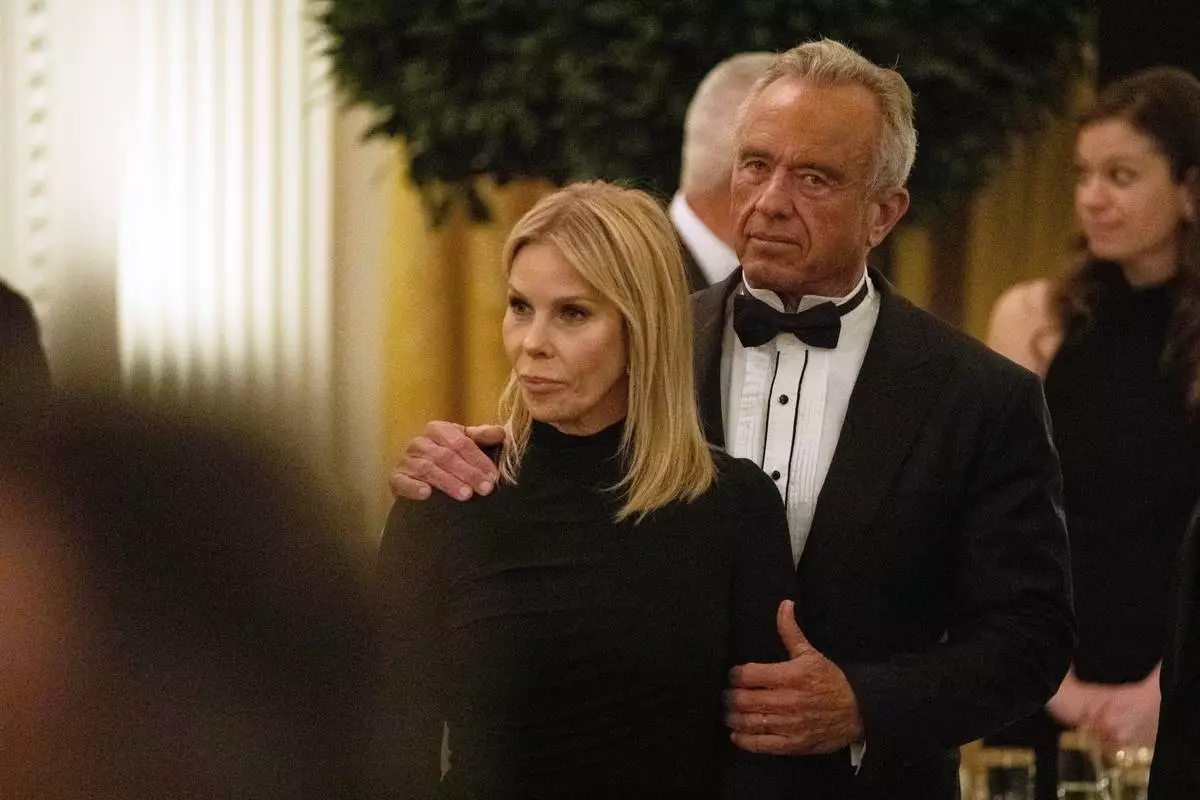
Health and Human Services Secretary Robert F. Kennedy Jr. holds his wife, Cheryl Hines, during the National Governors Association dinner at the White House, Saturday, Feb. 21, 2026, in Washington. (AP Photo/Allison Robbert)