WASHINGTON (AP) — President Donald Trump will use Tuesday’s State of the Union to champion his immigration crackdowns, his slashing of the federal government, his push to preserve widespread tariffs that the Supreme Court just struck down and his ability to direct quick-hit military actions around the world, including in Iran and Venezuela.
The Republican hopes he can convince increasingly wary Americans that his policies have improved their lives while ensuring that the U.S. economy is stronger than many believe — and that they should vote for more of the same in November.
The balancing act of celebrating his whirlwind first year back in the White House while making a convincing case for his party in midterm races where he personally won't be on the ballot is a tall order for any president. But it could prove especially delicate for Trump, given how happy he is to veer off script and ignore carefully crafted messaging.
A main theme will be that the country is booming with a rise in domestic manufacturing and new jobs, despite many Americans not feeling that way. “It’s going to be a long speech because we have so much to talk about," said Trump, who promised a heavy dose of talk about the economy.
The president is also expected to decry the Supreme Court ruling against his signature tariff policies and talk about his attempts to maneuver around that decision without depending on Congress or spooking financial markets. He's also likely to urge lawmakers to increase military funding and tighten voter identification requirements, while defending immigration operations that have drawn bipartisan criticism following the shooting deaths of two American citizens.
Jeff Shesol, a former speechwriter for Democratic President Bill Clinton, said Trump has typically used State of the Union addresses to offer more conventional tones than his usual bombast — but he's still apt to exaggerate repeatedly.
“His job, for the sake of his party, is to show the silver lining,” Shesol said. “But if he’s going to insist that the silver lining is gold, no one’s buying it. And it will be a very difficult position on the campaign trail for Republicans to defend.”
Michael Waldman, Clinton's former chief speechwriter, said second-term presidents "have a tough job because what they all want to say is, ‘Hey, look what a great job I’ve been doing — why don’t you love me?’”
No matter what his prepared remarks say, Trump relishes deviating into personal grievances, meaning Tuesday will probably feature topics like denying that he lost the 2020 presidential election.
His lack of messaging discipline has been on display after concerns about high costs of living helped propel Democratic wins around the country on Election Day last November. The White House subsequently promised that the president would travel the country nearly every week to reassure Americans he was taking affordability seriously. But Trump has spent more time blaming Democrats and scoffing at the notion that kitchen-table issues demand attention.
Trump instead boasts of having tamed inflation and says he has the economy humming given that the Dow Jones Industrial Average recently exceeded 50,000 points for the first time.
Such gains don't feel tangible to those without stock portfolios, however. There also are persistent fears that tariffs stoked higher prices, which could eventually hurt the economy and job creation. Economic growth slowed the last three months of last year.
Waldman, now president of the Brennan Center for Justice, which advocates for democracy, civil liberties and fair elections, said previous presidents faced similar instances of “economic disquiet.”
That created a question of “how much do you sell vs. feeling the pain of the electorate,” he said.
Shesol noted that Trump has “always believed — going back to his real estate days — that he can sell anyone on anything.”
“He’s still doing that. But the problem is, you can’t tell somebody who has lost their job and can’t get a new one that things are going great,” Shesol said. “He can’t sell people on a reality that for them, and frankly for most Americans, does not exist.”
It is potentially politically perilous ahead of November elections that could deliver congressional wins to Democrats, just as 2018’s “blue wave” created a strong check to his administration during his first term.
Several Democrats in Congress, meanwhile, plan to skip Tuesday's speech in protest, instead attending a rally known as the “People's State of the Union” on Washington’s National Mall.
Trump's address comes as two U.S. aircraft carriers have been dispatched to the Middle East amid tensions with Iran.
The president will recount how U.S. airstrikes last summer pounded Tehran's nuclear capabilities, and laud the raid that ousted Venezuelan President Nicolas Nicolás Maduro, as well as his administration's brokering of a ceasefire in Israel’s war with Hamas in Gaza.
But he also strained U.S. military alliances with NATO, thanks to his push to seize Greenland from Denmark and his failure to take a harder line with Russian President Vladimir Putin in seeking an end to its war in Ukraine.
Making any foreign policy feel relevant to Americans back home is never easy.
Jennifer Anju Grossman, a former speechwriter for Republican President George H.W. Bush and current CEO of the Atlas Society, which promotes the ideas of author and philosopher Ayn Rand, said Trump can make clear that Maduro's socialist policies wrecked Venezuela's economy to the point where one of the world's richest oil countries struggled to meet its own energy needs.
Now, oil from that country will help lower American gas prices.
Still, when it comes to overseas developments, she said, “I think it’s going to be a bit of a challenge to make clear why this is relevant to the domestic situation.”
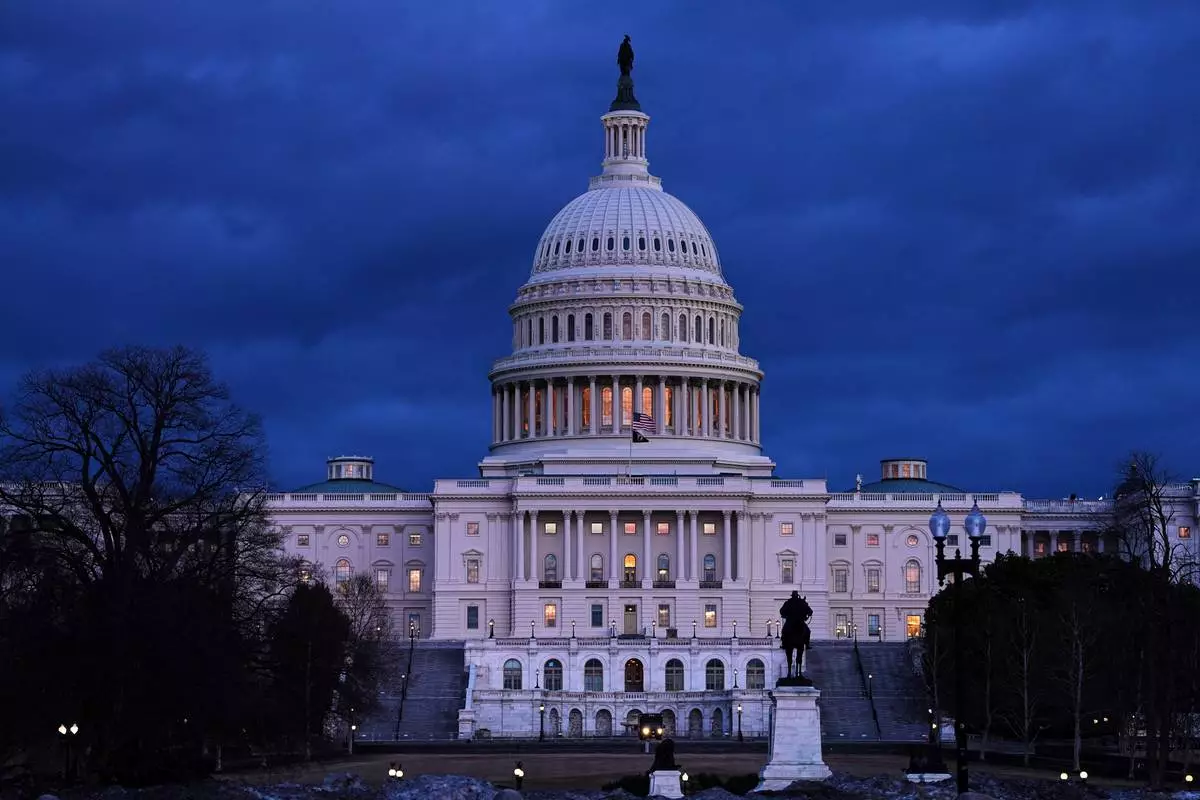
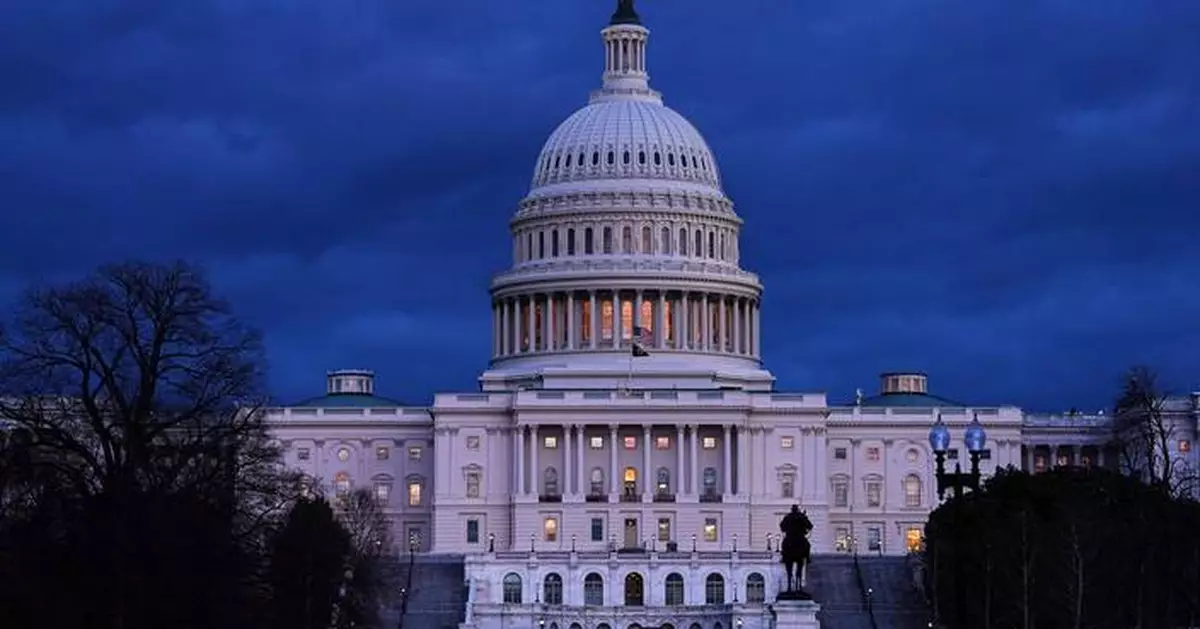
The U .S. Capitol is seen after sunset in Washington, Monday, Feb. 23, 2026, ahead of President Donald Trump's State of the Union address. (AP Photo/Matt Rourke)