Skip to Content Facebook Feature Image

Cambridge drives a new era of digital maturity for the age of AI

Business

Cambridge drives a new era of digital maturity for the age of AI
Business

Business

Cambridge drives a new era of digital maturity for the age of AI

2026-02-24 15:00 Last Updated At:15:15

Bold curriculum update empowers children to think critically, act responsibly and shape, not just consume, technology

CAMBRIDGE, England, Feb. 24, 2026 /PRNewswire/ -- As digital literacy moves to the forefront of education reforms worldwide, the International Education group at Cambridge University Press & Assessment (Cambridge) today announces a major transformation of its Cambridge Primary and Lower Secondary Digital Literacy curricula, redefining what it means for young people to thrive in an AI-powered world.

Designed for learners aged 5–14, the updated Cambridge Primary Digital Literacy and Lower Secondary Digital Literacy go beyond teaching children how to use technology. They foster digital maturity, equipping students with the judgement, critical thinking and confidence to decide why, when and how technology should be used.

The refreshed curricula provide schools with a clear, future-facing framework that empowers learners to retain agency in a rapidly evolving digital landscape. New content ranges from online wellbeing to prioritising human intelligence in the age of AI while exploring the challenges and the value that AI can bring to their lives and education. Focus shifts from mastering individual tools to building adaptable, transferable skills to enable learners not only to navigate misinformation and online harms, but to actively shape the technologies influencing their education and their futures.

What's new?

The updated curriculum explores how AI can support multimodal communication across different audiences and platforms, and how structured dialogue with AI systems can deepen research, inquiry and critical thinking. At the same time, it strengthens media literacy and reinforces students' ownership and understanding of their work.

New and updated topics in the curricula include:

  • Online safety and cyberbullying – protection of physical and emotional wellbeing
  • Community building and collaboration – using digital and AI tools
  • Source-reliability and echo chambers – evaluation of AI-sourced information
  • Personal responsibility while embracing digital and AI tools
  • Human and artificial intelligence – how to differentiate and when to use
  • Parasocial and digital relationships – understanding their personal impact
  • Creation of learning outputs while remaining the primary author – such as reports and presentations
  • Future-ready learners – evaluating the technology of the future

Learning in today's digital world

Curriculum author Beverly Clarke MBE said: "It is essential that educators across all subject areas support young learners to think deeply and critically about AI and their relationship to it. This revised Cambridge curriculum supports schools to engage with AI in a positive, proactive and informed way, embedding age-appropriate content that empowers learners to develop confidence, curiosity and critical thinking as they navigate an increasingly AI-enabled world."

Nadja Djordjevic, Digital Literacy Teacher at Savremena osnovna škola, Belgrade, Serbia, was given a first look at the refreshed Lower Secondary curriculum. She said: "I especially appreciate the inclusion of risks such as increased plagiarism due to AI development, and the emphasis on personal ethics for both creators and AI engineers. I see this value as crucial within the creative world – it helps position AI as a supportive tool and at the same time preserve human authenticity and expression."

Teaching and assessing

Schools can teach Digital Literacy as a separate subject or embed the content within other subjects, depending on approach and timetabling. For example, schools could compare the value of thinking and working mathematically against cognitive offloading to AI.

There is no formal assessment of the curricula. Learners receive formative feedback through discussion and observation. It is vital that learners demonstrate ownership and understanding of the work that they produce, particularly where AI has been used.

The curricula are free of charge to registered schools that offer Cambridge Primary and Lower Secondary and are ready for teaching immediately. For more information, visit the Cambridge Primary Digital Literacy and Lower Secondary Digital Literacy pages on the Cambridge website. 

** The press release content is from PR Newswire. Bastille Post is not involved in its creation. **

Cambridge drives a new era of digital maturity for the age of AI

Cambridge drives a new era of digital maturity for the age of AI

Highly anticipated 2022 vintage follows the celebrated inaugural release

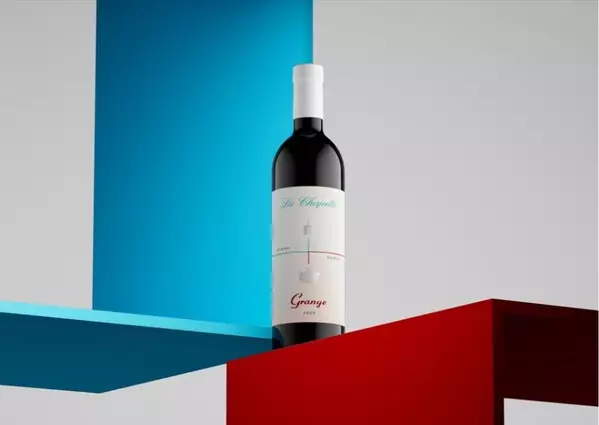
SINGAPORE, Feb. 24, 2026 /PRNewswire/ -- Introducing Grange La Chapelle 2022, a powerful blend of the world's most revered Syrah and Shiraz and the second release from the partnership between La Chapelle and Penfolds Grange. Embodying Australian boldness and French finesse, Grange La Chapelle 2022 is a wine that speaks two languages fluently yet tells one compelling story.

Following the inaugural global release in 2025 at Monnaie de Paris, this vintage marks the evolution of this bold partnership between two legends. A long-standing friendship between Caroline Frey, Chief Winemaker and vigneron, La Chapelle (through to 2024 vintage) and Peter Gago, Chief Winemaker Penfolds Grange first inspired this unexpected union, and shared expertise ultimately showcased what this varietal could achieve aromatically and structurally - coalescing different geographies, soils and winemaking cultures.

The second release is not La Chapelle, and it is not Grange – it is a celebration of what Shiraz can do when two legends, two hemispheres and two winemaking traditions come together. Grange La Chapelle 2022 continues the journey, combining the attributes of French Syrah and Australian Shiraz, expressions that share a common ancestry yet have evolved into distinctive styles from their respective terroirs. 50% La Chapelle France, from the steep, sun drenched slopes of the Hill of Hermitage and 50% Grange made from a collection of select South Australian vineyards: Barossa Valley, McLaren Vale and Coonawarra - including many old 19th-Century vines. 

While the first release in 2025 debuted Grange La Chapelle, the second release stands as a testament to the harmony, quality and expertise of each House. Peter Gago said, "If 2021 introduced Grange La Chapelle then 2022 welcomes La Chapelle Grange – interchangeably, assuredly, sensitively, convincingly."

Caroline Frey said, "Grange La Chapelle is a conversation between two hemispheres. With this second vintage, building on the foundation laid in 2021, the identity of the wine is firmly established, carried by the singularity and magic of the 2022 vintage."

Peter Gago said, "The right things happened at the right times across the two disparate growing seasons. This 50:50 blend has woven a majestic Syrah/Shiraz exemplar. One for the ages."

This blend continues to offer a true taste of the shared history of Syrah and Shiraz and future possibilities. While this is the second release from the partnership, Grange La Chapelle is intended for future release, mother nature permitting.

A small collective of customers from around the world were again personally invited by both teams to hand sell Grange La Chapelle 2022 to their private customers. The wine is rare, and the make size small.

750ml RRP S$3,200. Visit grangexlachapelle.com for further information.

Press assets can be downloaded here.

NOTES TO EDITOR:                                                                 

About Grange La Chapelle:

Bold and unique. Uniting winemaking cultures, spanning hemispheres and time. Fate. A longstanding friendship between two winemakers created an idea. The idea became a trial. The trial became a wine. And then there were three – 2021 (released), 2022 (bottled), 2023 (bottled) and 2024 (bottled). Who would have thought? Syrah from the legendary Hill of Hermitage, La Chapelle, coupled with Shiraz from esteemed South Australian vineyards, Grange. The blend's raison d'être: One variety - reunited, reinterpreted, reassembled.  La Chapelle named after the chapel on the top of the mound of granite on the left bank of Rhône, is a revered wine in Tain l'Hermitage, France.  This Syrah from the revered Hermitage appellation is both powerful & mythical, made to last. Today La Chapelle 1978, 1990, 1991 & 2015 vintages are much sought after globally, and the 1961 remains a 20th-Century wine legend.

Grange is named after the cottage at Magill Estate Winery, South Australia (originally established by early settlers Dr Penfold and his wife Mary in 1844). Created in 1951, Grange has enjoyed an unbroken lineage of vintages. It is one of the most consistently produced and celebrated wines in the world. Prized vintages to relish today include 1952, 1962, 2008, 2010 & 2018.

** The press release content is from PR Newswire. Bastille Post is not involved in its creation. **

PARTNERSHIP BETWEEN TWO LEGENDS CONTINUES WITH GRANGE LA CHAPELLE 2022

PARTNERSHIP BETWEEN TWO LEGENDS CONTINUES WITH GRANGE LA CHAPELLE 2022

Recommended Articles