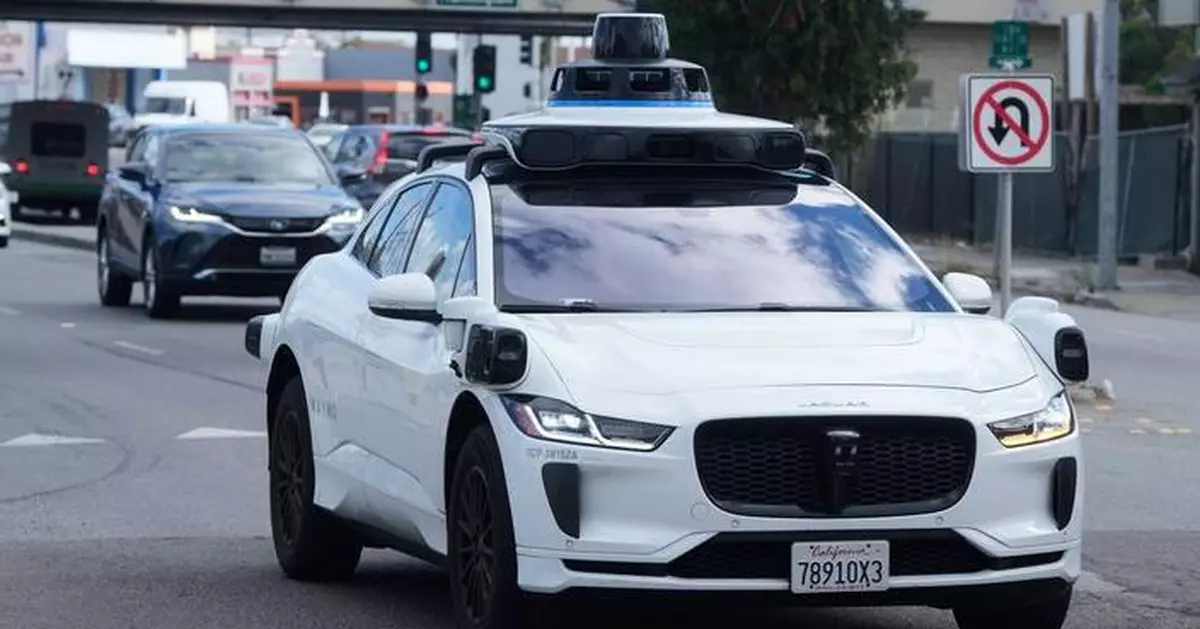
Waymo will begin dispatching its robotaxis in four more cities in Texas and Florida, expanding the territory covered by its fleet of self-driving cars to 10 major U.S. metropolitan markets.
The move into Dallas, Houston, San Antonio and Orlando, Florida, announced Tuesday, widens Waymo's early lead in autonomous driving while rival services from Tesla and the Amazon-owned Zoox are still testing their vehicles in only a few U.S. cities.
In contrast, Waymo's robotaxis already provide more than 400,000 weekly trips in the six metropolitan areas where they have been transporting passengers: Phoenix, the San Francisco Bay Area, Los Angeles, Miami, Atlanta, and Austin, Texas.
Waymo operates its ride-hailing service through its own app in all the U.S. cities except Atlanta and Austin, where its robotaxis can only be summoned through Uber's ride-hailing service.
The expansion into four more markets marks a significant step toward Waymo's goal to surpass 1 million weekly paid trips by the end of 2026. Without identifying where its robotaxis will be available next, Waymo is targeting a list of eight other cities that include Las Vegas, Washington, Detroit and Boston while signaling its first overseas availability is likely to be London.
To help pay for more robotaxis, Waymo recently raised $16 billion as part of the financial infusion that puts the value of the company at $126 billion. The valuation fueled speculation that Waymo may eventually be spun off from its corporate parent Alphabet, where it began as a secret project within Google in 2009.
Although Waymo is opening up in four more cities, its robotaxis initially will only be made available to a limited number of people with its ride-hailing app in Dallas, Houston, San Antonio and Orlando before the service will be available to all comers in those markets.
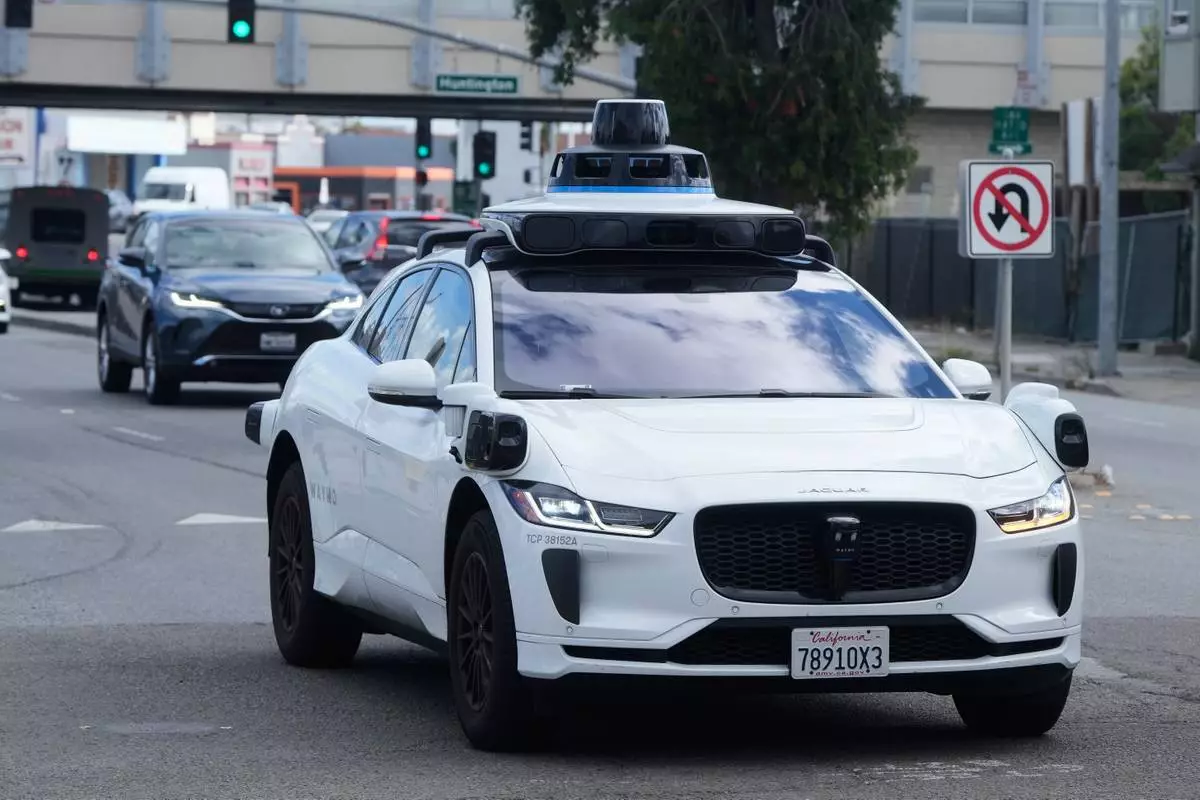
FILE - A Waymo vehicle drives past a No U-Turn sign in San Bruno, Calif., Tuesday, Sept. 30, 2025. (AP Photo/Jeff Chiu, File)
NEW YORK (AP) — The U.S. stock market is holding steadier on Tuesday after getting a reminder that the artificial-intelligence technology boom may also have an upside.
The S&P 500 rose 0.1%, a day after sliding 1%. The Dow Jones Industrial Average was up 219 points, or 0.4%, as of 10:05 a.m. Eastern time, and the Nasdaq composite was 0.2% higher.
Advanced Micro Devices helped lead the market and climbed 7% after announcing a multiyear deal where it will supply chips to help power Meta Platforms’ AI ambitions. Under the deal, Meta also got the right to buy up to 160 million shares of AMD stock for 1 cent each, depending in part on how many chips Meta ultimately buys.
It’s a reminder of the excitement that built in recent years about the billions of dollars pouring into AI, which could remake the world and create a more productive economy.
Recently, though, investors have begun to focus more on the potential downsides of AI and how certain companies and industries could see their profits undercut by an AI revolution. Industries as far flung as software, trucking logistics and legal services have seen investors suddenly and aggressively punish them for potentially being under threat.
IBM rose 4.1% Tuesday to recover a chunk of its 13.1% drop from the prior day, which was its worst since 2000.
The pain has also filtered out to the private-equity industry, with fears building that loans it made to software companies dependent on recurring revenue may have less of a chance of getting repaid. Blue Owl Capital fell 1.5% to bring its loss for the young year so far to 31.2%.
Outside of AI worries, big U.S. companies continue to report mostly better profits for the end of 2025 than analysts expected.
Keysight Technologies rallied 20% for the biggest gain in the S&P 500 after topping analysts’ expectations for profit and revenue in the latest quarter. It also said revenue in the current quarter could rise by roughly 30% from a year earlier.
Home Depot rose 2.7% after likewise delivering stronger profit and revenue than analysts expected. That was even with what CEO Ted Decker called “ongoing consumer uncertainty.”
They helped offset a 3.4% drop for Coinbase Global. The crypto trading platform fell as bitcoin dropped back below $64,000, close to half its record price reached in October.
Meta Platforms also weighed on the market after slipping 1.2%. Because the parent company of Facebook and Instagram is one of the largest on Wall Street by market value, its stock has more of an effect on the S&P 500 than all but a handful.
In stock markets abroad, indexes rose modestly in Europe.
In Asia, the swings were larger. South Korea’s Kospi jumped 2.1%, while Hong Kong’s Hang Seng dropped 1.8%. Stocks in Shanghai rose 0.9% after reopening following a holiday of more than a week.
In the bond market, Treasury yields ticked higher after a report said that confidence among U.S. consumers improved by more than economists expected. The yield on the 10-year Treasury rose to 4.04% from 4.03% late Monday.
AP Business Writers Matt Ott and Elaine Kurtenbach contributed.
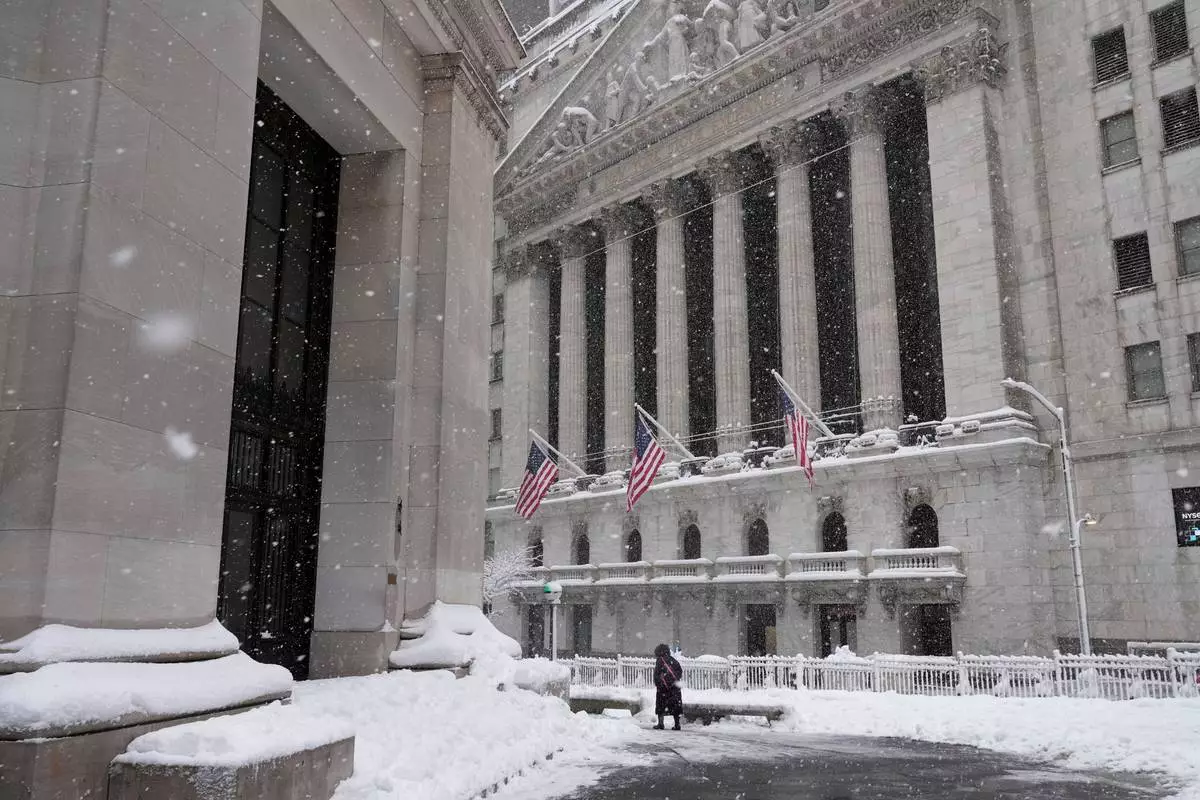
A pedestrian walks outside the New York Stock Exchange during a snow storm, Monday, Feb. 23, 2026, in New York. (AP Photo/Seth Wenig)
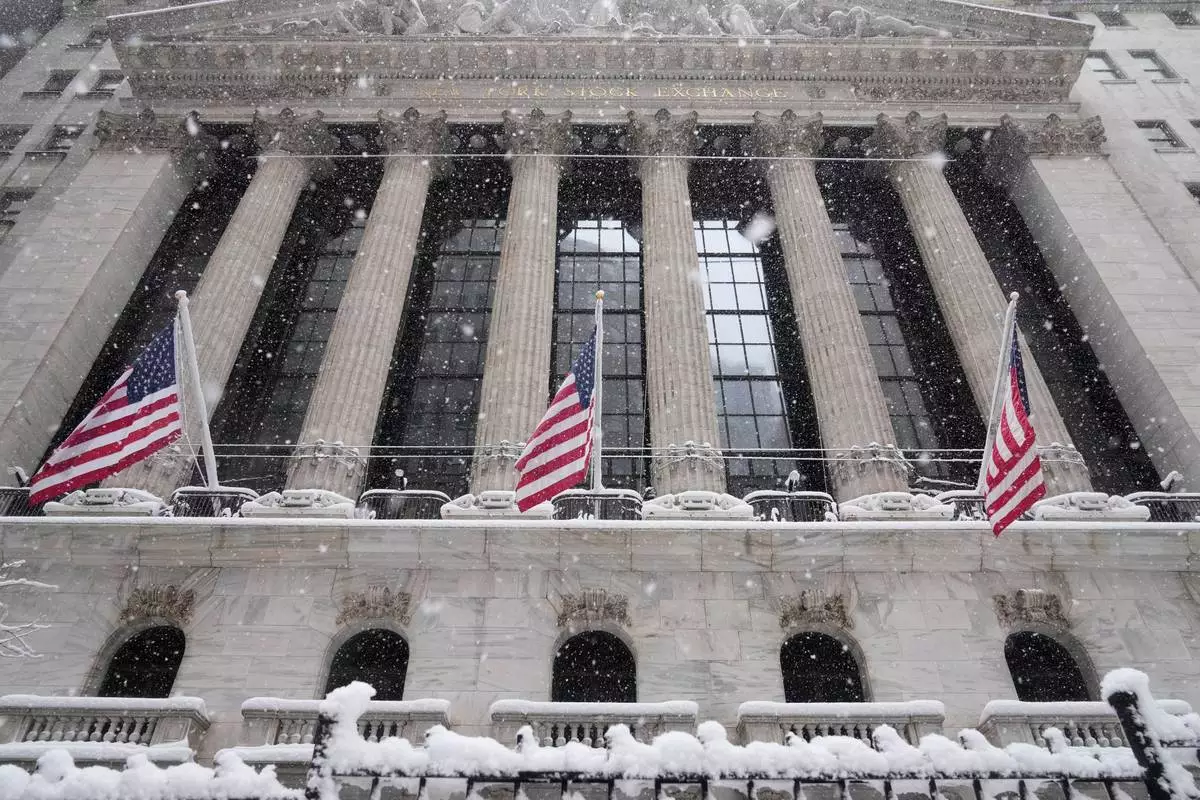
Snow falls outside the New York Stock Exchange, Monday, Feb. 23, 2026, in New York. (AP Photo/Seth Wenig)
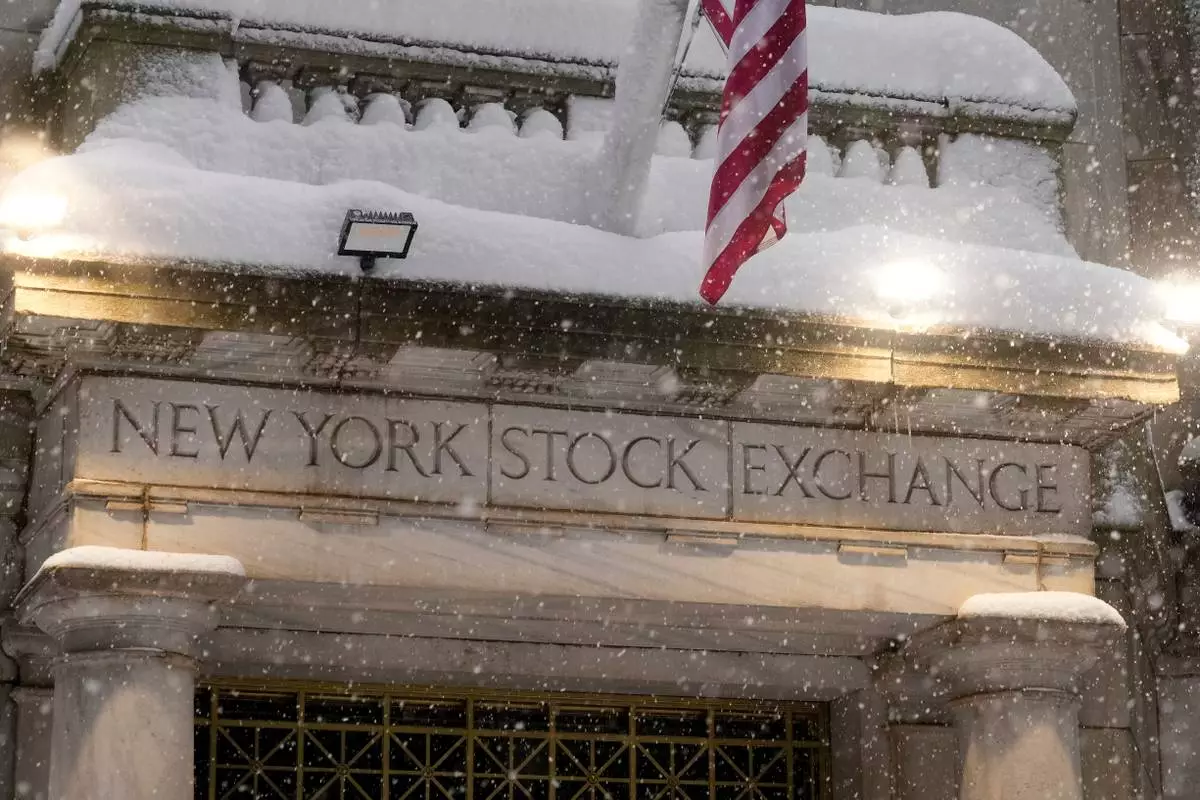
Snow falls outside the New York Stock Exchange, Monday, Feb. 23, 2026, in New York. (AP Photo/Seth Wenig)
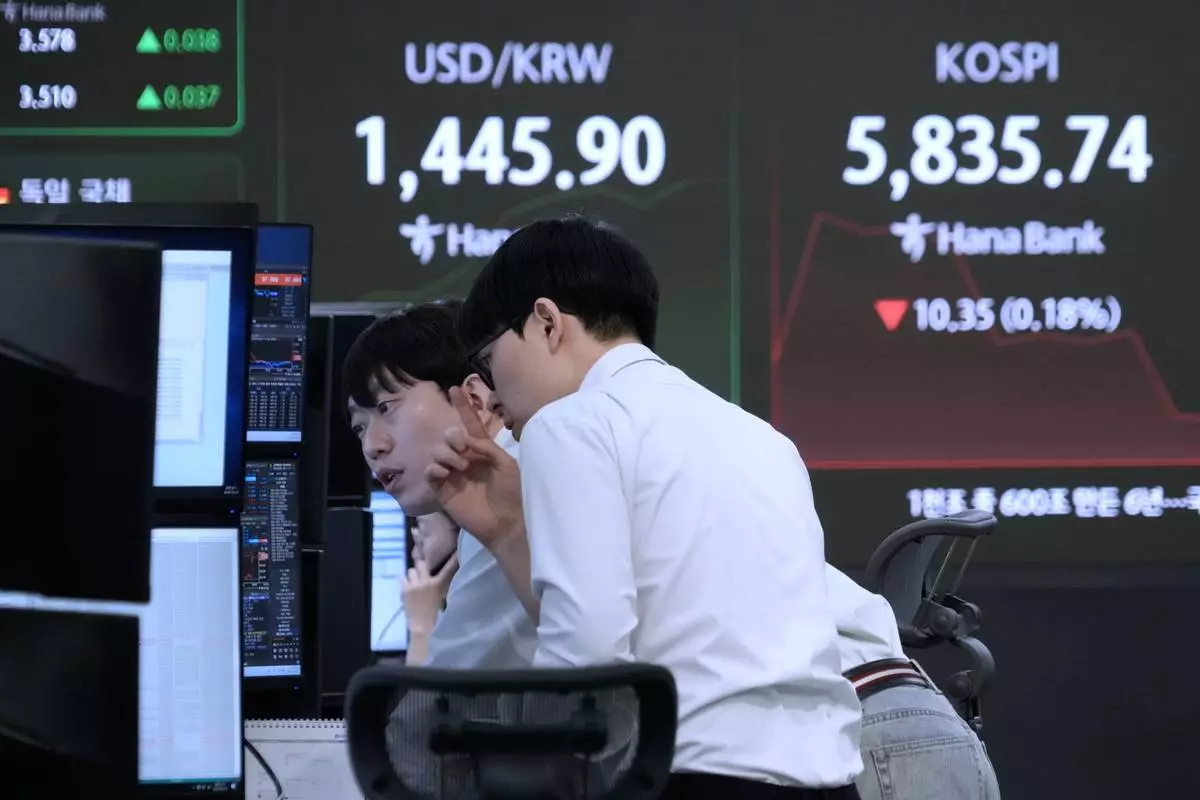
Currency traders watch monitors near a screen showing the Korea Composite Stock Price Index (KOSPI), right, and the foreign exchange rate between U.S. dollar and South Korean won at the foreign exchange dealing room of the Hana Bank headquarters in Seoul, South Korea, Tuesday, Feb. 24, 2026. (AP Photo/Ahn Young-joon)
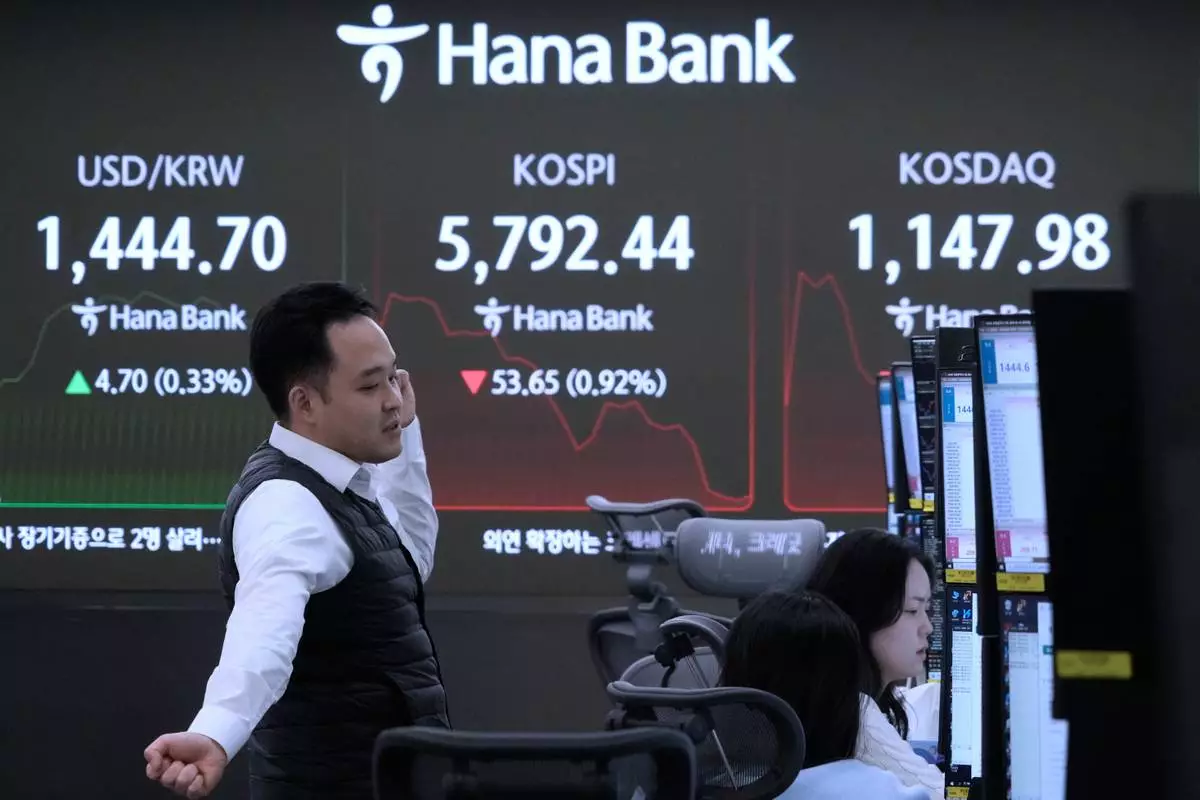
A currency trader stretches near a screen showing the Korea Composite Stock Price Index (KOSPI), center, and the foreign exchange rate between U.S. dollar and South Korean won, left, at the foreign exchange dealing room of the Hana Bank headquarters in Seoul, South Korea, Tuesday, Feb. 24, 2026. (AP Photo/Ahn Young-joon)