Economic relations between China and Europe are gaining new momentum, spurred by the recent visits of several Western leaders to China and the upcoming visit of German Chancellor Friedrich Merz, according to German experts.
In a recent episode of the talk program "Encounter -- China and Germany," Eberhard Sandschneider, a political expert at Berlin Global Advisors, and Michael Schumann, chairman of the Board of the German Federal Association for Economic Development and Foreign Trade, hailed the growing collaboration between the two countries.
The two experts engaged in a discussion focused on fostering new perspectives for win-win collaboration, addressing issues of sustainable economic growth in both countries, China's new opening-up policy, and the prospects for industrial cooperation between Germany and China.
Schumann noted that while geopolitical risks are a much-discussed topic, the actual behaviors of German companies often contradict prevailing political slogans.
"And we have seen, also in the context of the shifts in American policy, how economic relations and dependencies are utilized to push through political goals with extreme demands. However, there is also a growing awareness of the need to limit unnecessary dependence on geopolitical risks. This has led to a rise in domestic production for the country, for the market, and for neighboring markets. We have seen a large part of investment growth in German small and medium-sized enterprises and German industry. German companies have not withdrawn from China; on the contrary, they have increased their investments and expanded their operations. Last year, they invested more than they had in the past four or five years," he said.
Regarding this phenomenon, Sandschneider said that the debate surrounding China in German politics is largely detached from economic realities, suggesting that the concept of "de-risking" is merely wishful thinking.
"There's a significant gap between the political discussion about China in Germany and the economic discussion. What you're referring to reflects the behavior of entrepreneurs, which is quite different from what's happening in the political arena. Since we have already talked about de-risking and dependencies, I think this discussion is rather one-sided because it fails to recognize that dependencies are the foundation of any economic interaction. But simply calling for de-risking -- as if we could eliminate such dependencies and thus all risks -- is wishful thinking. Unfortunately, our political system suffers considerably from this wishful thinking," he said.
In light of this situation, Schumann proposed a more constructive approach. He advocated for Germany to learn from China's development experiences and adopt a more open and "intelligent" stance toward Chinese investments to foster a win-win outcome.
"We can utilize a variety of tools that China has mastered. We should promote Chinese investment in Europe, in Germany. Establishing production facilities and creating jobs will inevitably facilitate a certain transfer of knowledge. That's how China learned, that's how China grew, and it might also benefit us not to always resort to protectionist measures, but to approach things more intelligently," said Schumann.
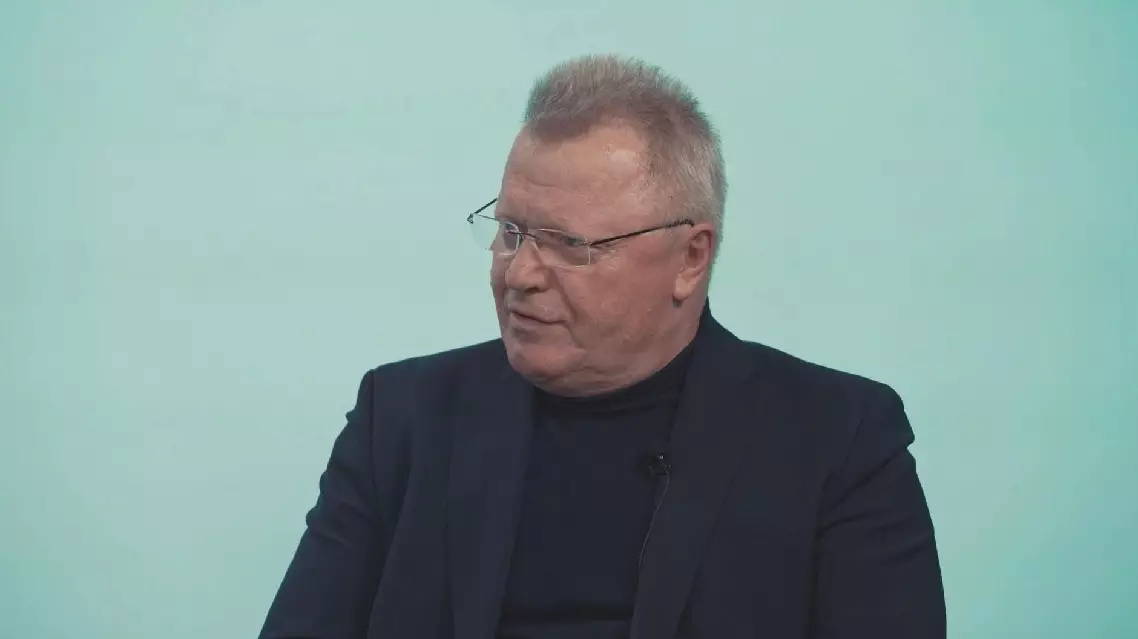
Economic relations between China, Europe gaining new momentum: German experts