ROME (AP) — The Vatican on Wednesday announced a busy and lengthy foreign travel schedule for Pope Leo XIV in the first half of 2026, confirming the pontiff will visit Monaco, Spain and four African nations — Algeria, Cameroon, Angola and Equatorial Guinea.
The announcement sets the stage for one of the busiest papal travel schedules in years, since Leo will also be undertaking a grand tour of Italy starting in May that will take him up and down the peninsula in a half-dozen one-day visits.
After Leo’s election last May as the first U.S.-born pope, papal travel had largely been on hold. Leo had a packed calendar ministering to the 33 million pilgrims who came to the Vatican during the 2025 Holy Year.
But with the Jubilee now over, the 70-year-old Leo is freer to travel to meet his new flock. He is making similar get-to-know-you visits this Lent by visiting a Roman parish each Sunday.
The former Robert Prevost, who lived for two decades as a missionary in Peru, has said he loves to travel. He was on the road for much of his 12-year stint as Augustinian superior, visiting the order’s communities around the world.
He took his first and so far only foreign trip as pope late last year, visiting Turkey and Lebanon. The trips fulfilled promises made by Pope Francis that he was unable to complete because of his failing health.
Now looking ahead to his own agenda, Leo will make a one-day visit to Monaco on March 28.
His next trip is a 10-day voyage starting soon after Easter: He will visit Algeria, Cameroon, Angola and Equatorial Guinea from April 13 to April 23. In recent times, only Francis undertook such an arduous and long foreign trip, when he visited Indonesia, Papua New Guinea, East Timor and Singapore in 2024. The Algeria stop is particularly significant to Leo given its strong connection to the life and death of St. Augustine of Hippo, the 5th-century inspiration of Leo's religious order.
Francis had largely avoided big, traditionally Catholic European countries during his 12-year pontificate, preferring to visit instead smaller Catholic communities on the peripheries. Leo will spend nearly a week in Spain, from June 6 to June 12.
He is widely expected to be in Barcelona on June 10 to commemorate the 100th anniversary of the death of Antoni Gaudí, the architect of the famed Sagrada Familia basilica. The massive church just last week reached its maximum height with the placement of the church’s soaring central tower piece.
While the Vatican didn't announce further foreign travel, Leo is also expected to visit his beloved Peru, and possibly Argentina and Uruguay, in the second half of 2026. The Vatican has confirmed he will not travel to the United States this year, skipping out on the country's 250th independence anniversary.
On the anniversary itself, July 4, Leo will be visiting the southern Italian island of Lampedusa, the main arrival point of migrants who are smuggled to Europe from north Africa.
Associated Press religion coverage receives support through the AP’s collaboration with The Conversation US, with funding from Lilly Endowment Inc. The AP is solely responsible for this content.
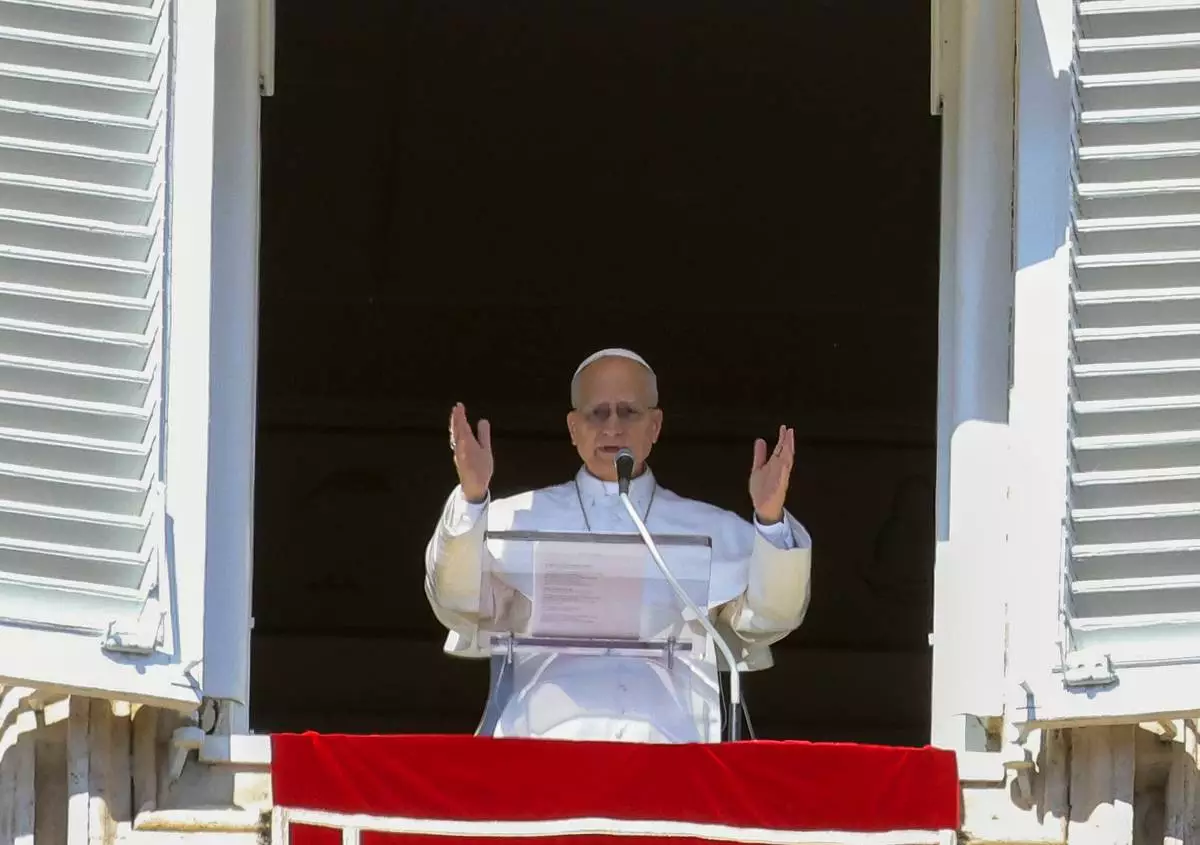
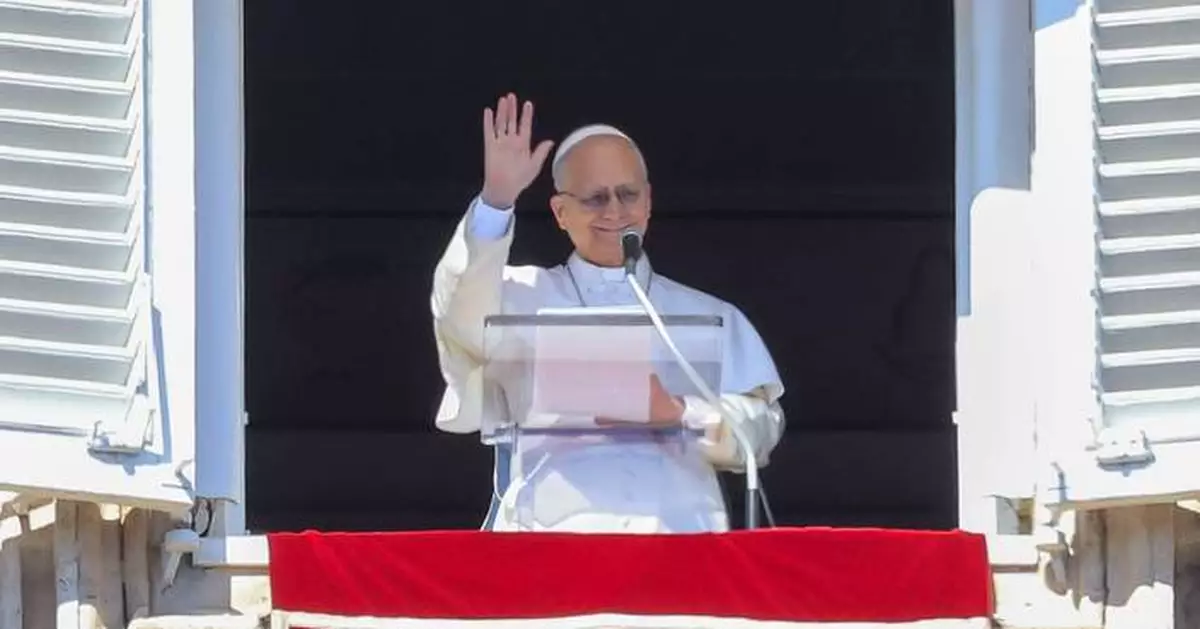
Pope Leo XIV appears at the window of his studio overlooking St. Peter's Square at the Vatican where Catholic faithful and pilgrims gathered for the traditional Sunday blessing at the end of the noon Angelus prayer, Sunday, Feb. 22, 2026. (AP Photo/Riccardo De Luca)
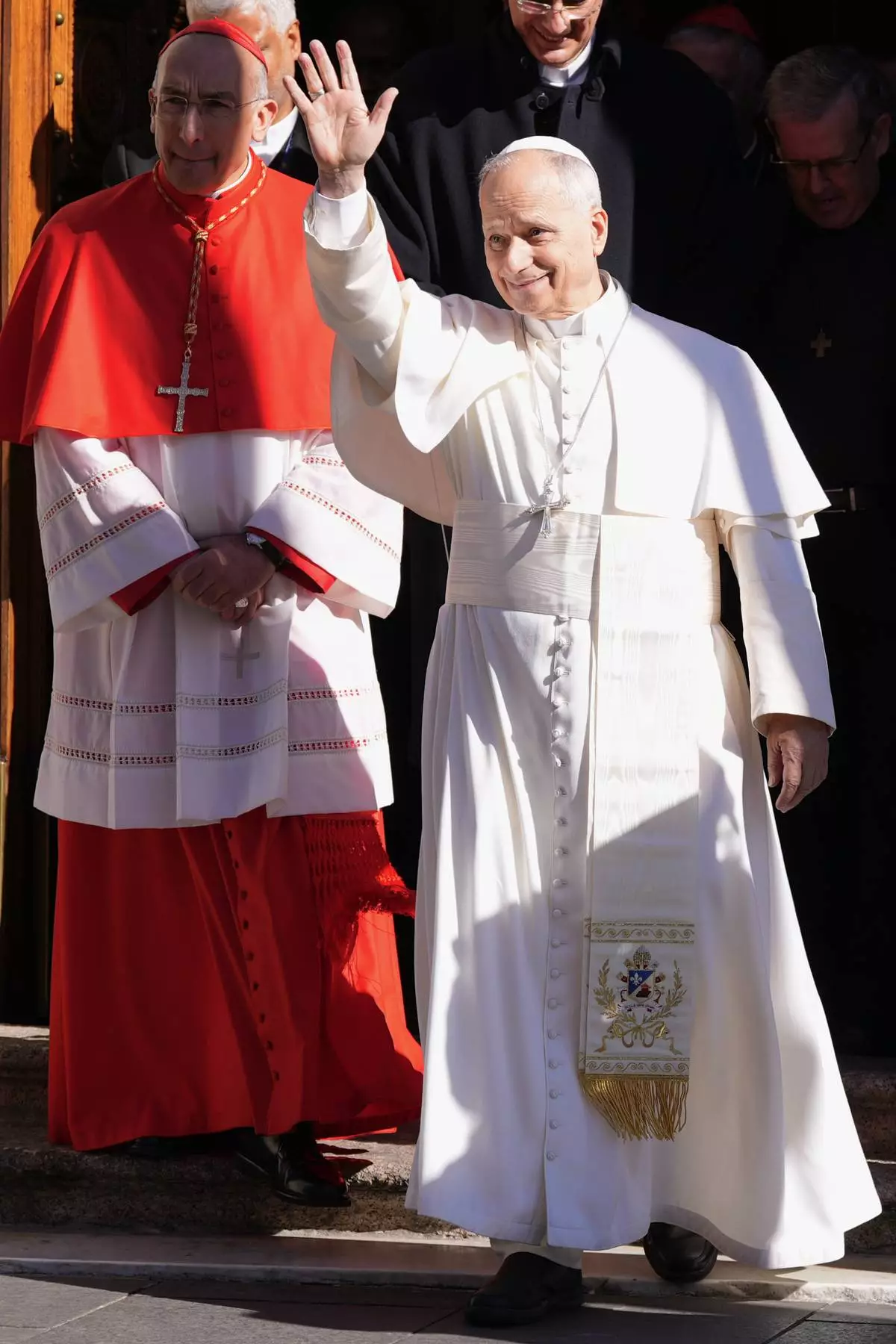
Pope Leo XIV is seen off by Cardinal Baldo Reina, left, the pope's vicar for the Diocese of Rome, after visiting the Sacro Cuore parish church in Rome, Sunday, Feb. 22, 2026. (AP Photo/Domenico Stinellis)
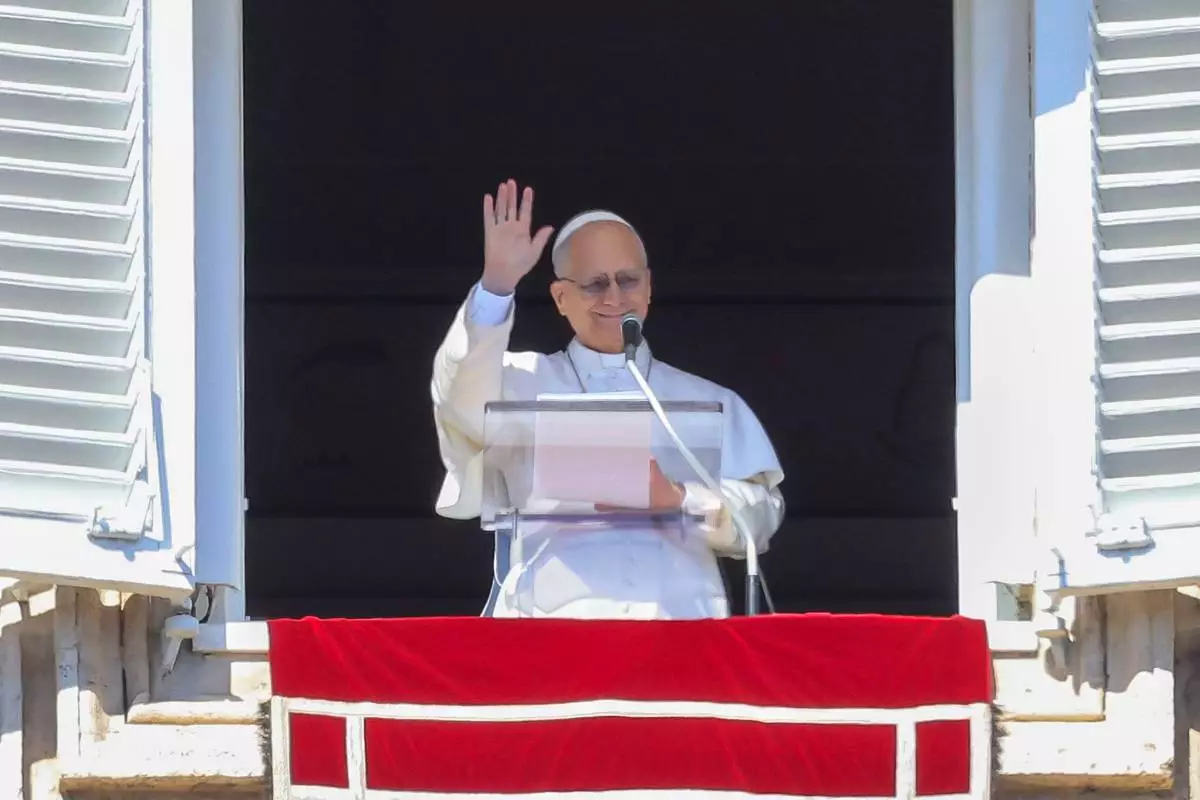
Pope Leo XIV appears at the window of his studio overlooking St. Peter's Square at the Vatican where Catholic faithful and pilgrims gathered for the traditional Sunday blessing at the end of the noon Angelus prayer, Sunday, Feb. 22, 2026. (AP Photo/Riccardo De Luca)
SEOUL, South Korea (AP) — The U.S. and South Korean militaries said on Wednesday they will conduct their annual springtime exercises next month to bolster their countries’ combined defense capabilities against a backdrop of a deepening diplomatic freeze with nuclear-armed North Korea.
The Freedom Shield drills is set for March 9-19, according to the announcement.
North Korea has long described the allies ’ joint exercises as invasion rehearsals and used them as a pretext to dial up its own military demonstrations and weapons testing activity. The allies say the drills are defensive in nature.
The announcement came as North Korea is holding a major political conference where authoritarian leader Kim Jong Un is expected to outline his key domestic, foreign policy and military goals for the next five years. North Korean state media have not so far reported any direct comments by Kim on relations with Washington and Seoul at the ruling Workers’ Party congress, which began last week.
Based on recent public comments, experts say Kim could use the congress to further entrench his hard-line stance toward South Korea, reiterate calls for Washington to drop its demand for denuclearization as a precondition for renewed talks, and announce steps to simultaneously strengthen and integrate his nuclear and conventional forces.
Freedom Shield is one of two “command post” exercises that the allies conduct each year; the other is Ulchi Freedom Shield, held in August. The drills are largely computer-simulated and designed to test the allies’ joint operational capabilities while incorporating evolving war scenarios and security challenges.
As usual, the March drill will be accompanied by a field training program called Warrior Shield to enhance “training realism and combat readiness,” Col. Ryan Donald, public affairs director of U.S. Forces Korea, told a news conference.
South Korea’s Joint Chiefs of Staff said about 18,000 South Korean troops will participate in Freedom Shield while the U.S. military did not disclose how many American troops will be involved.
There has been speculation that the allies are seeking to tone down the drills to create conditions for dialogue with North Korea.
Liberal South Korean President Lee Jae Myung has expressed a desire for inter-Korean engagement, and some of his top officials have voiced hope that President Donald Trump’s expected visit to China in late March or April could open the door to renewed talks between Washington and Pyongyang.
Col. Jang Do-young, public affairs director of South Korea’s Joint Chiefs of Staff, said the March exercises will not involve scenarios of a possible response to a North Korean nuclear attack but will include training aimed at “deterring nuclear threats.” He said the allies were still discussing the specifics of the field training program.
The rapid expansion in recent years of Kim’s nuclear weapons program — now featuring systems capable of threatening U.S. allies in Asia, as well as long-range missiles that could potentially reach the American homeland — has heightened South Korea’s security concerns while its diplomacy with Pyongyang remains stalled.
South Korea is also grappling with intensifying U.S.-China competition in the region, which has prompted Washington to press its ally to assume a greater share of the defense burden against North Korea as it focuses more on China.
North Korea has repeatedly rejected Washington and Seoul’s calls to resume diplomacy aimed at winding down its nuclear program, which derailed in 2019 following the collapse of Kim’s second summit with Trump during the American president’s first term.
Kim has now made Russia the priority of his foreign policy, sending thousands of troops and large amounts of military equipment to support Moscow’s war in Ukraine, possibly in exchange for aid and military technology.
In a separate development, South Korea’s Defense Ministry said a pilot safely evacuated from a South Korean F-16 fighter jet that crashed on Wednesday evening into a mountain in the southeastern city of Yeongju during training.
The ministry said there were no immediate reports of casualties or civilian property damages and that the air force was investigating the crash.
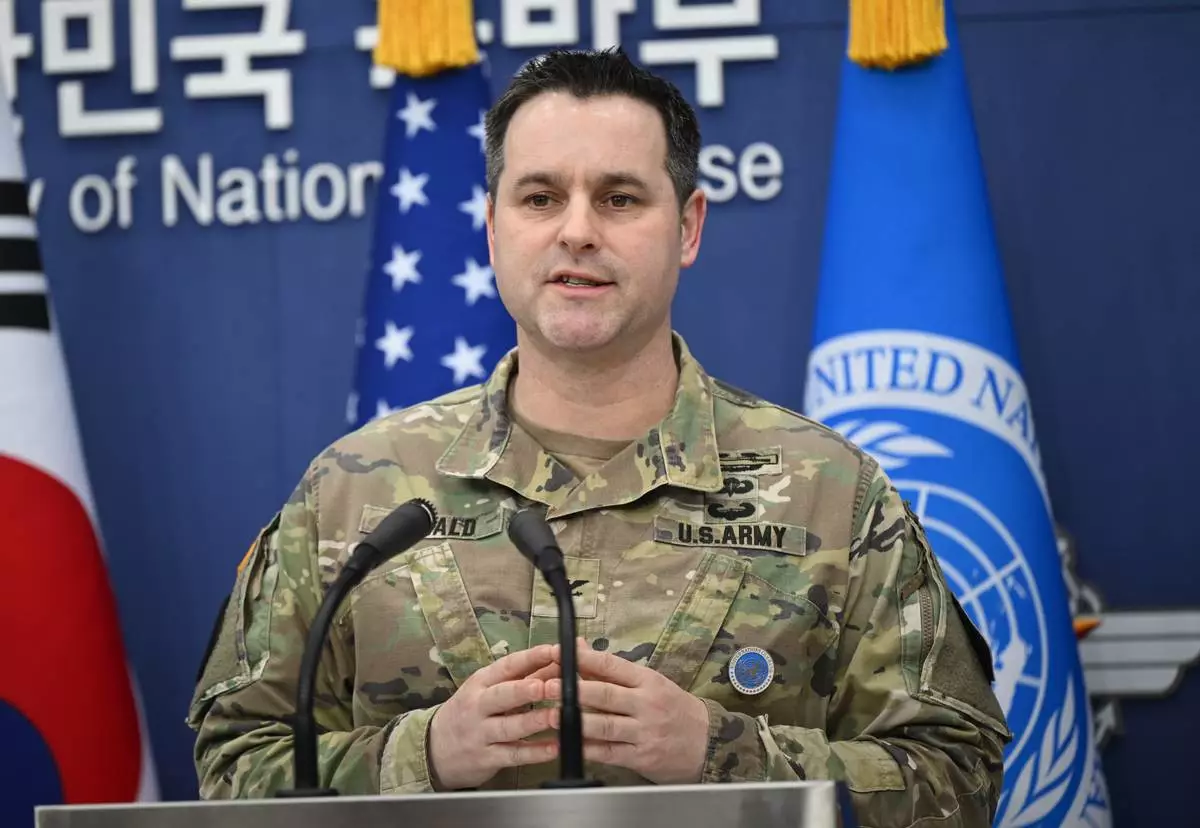
U.S. Army Col. Ryan Donald, public affairs director of the United Nations Command, Combined Forces Command, and United States Forces Korea, speaks during a media briefing on the 2026 ROK-US Freedom Shield Military Exercise at the Defense Ministry in Seoul, South Korea, Wednesday, Feb. 25, 2026. (Jung Yeon-je/Pool Photo via AP)
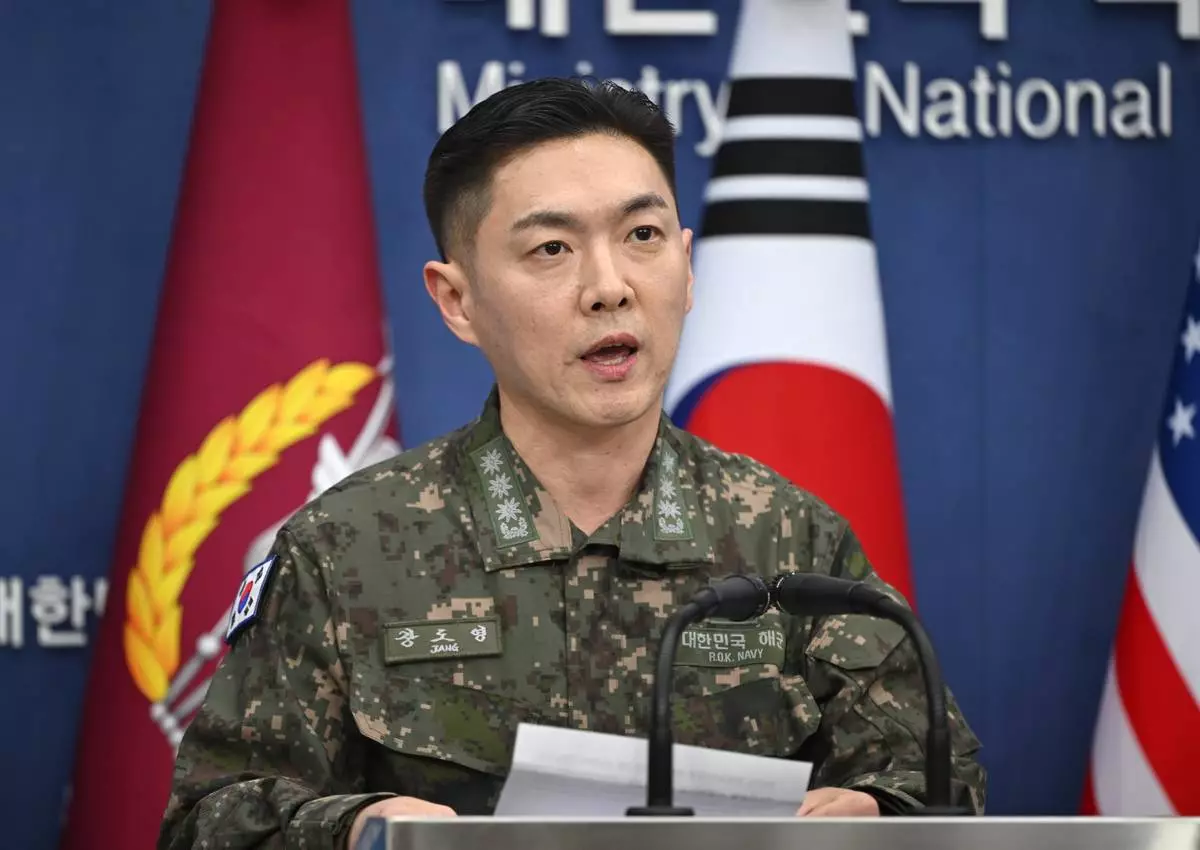
Col. Jang Do-young, public affairs director of South Korea's Joint Chiefs of Staff, speaks during a media briefing on the 2026 ROK-US Freedom Shield Military Exercise at the Defense Ministry in Seoul, South Korea, Wednesday, Feb. 25, 2026. (Jung Yeon-je/Pool Photo via AP)
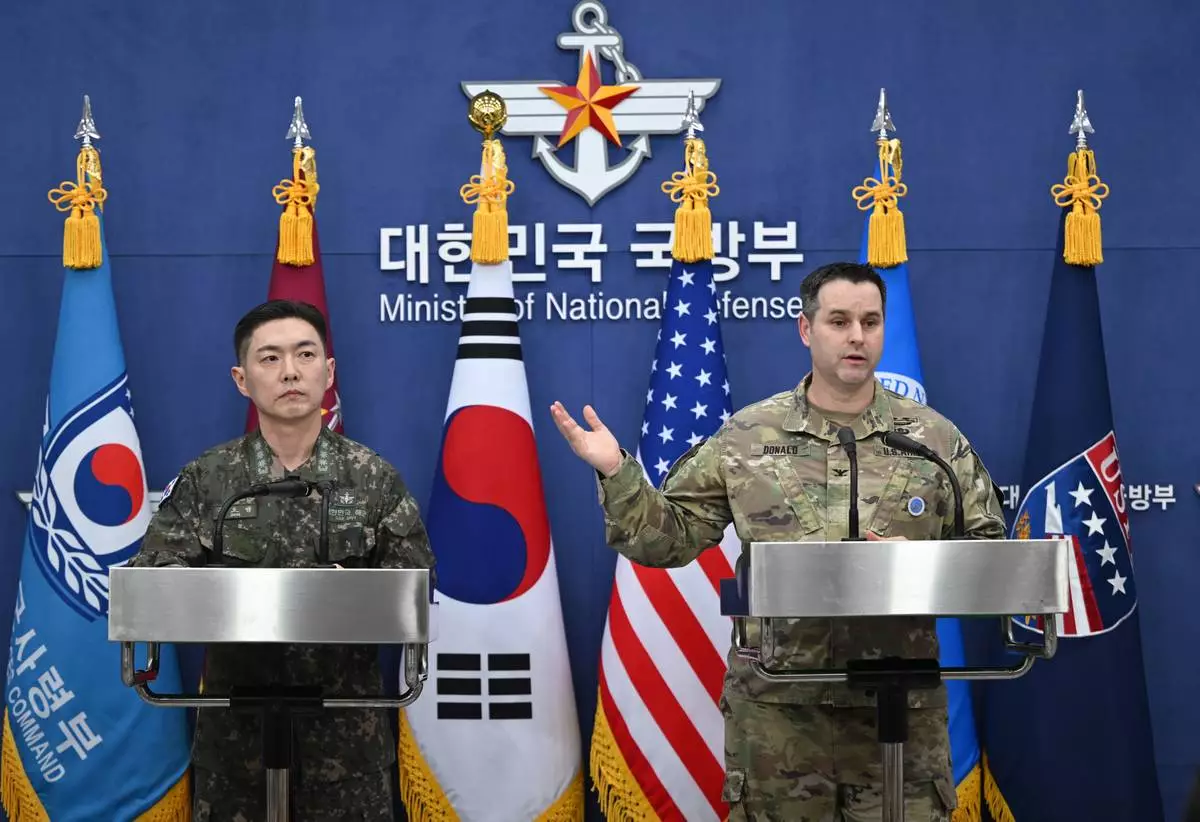
Col. Jang Do-young, left, public affairs director of South Korea's Joint Chiefs of Staff, and U.S. Army Col. Ryan Donald, public affairs director of the United Nations Command, Combined Forces Command, and United States Forces Korea, pose for a photo during a media briefing on the 2026 ROK-US Freedom Shield Military Exercise at the Defense Ministry in Seoul, South Korea, Wednesday, Feb. 25, 2026. (Jung Yeon-je/Pool Photo via AP)
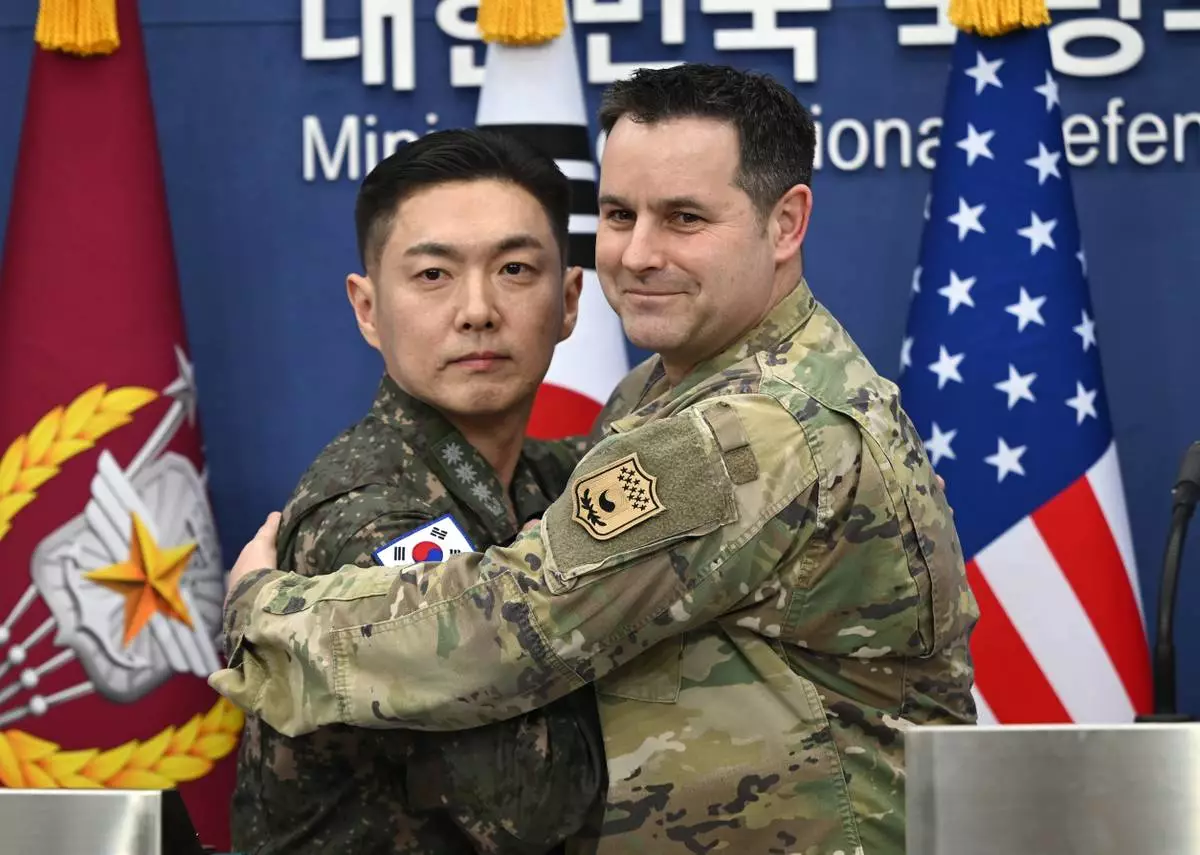
Col. Jang Do-young, left, public affairs director of South Korea's Joint Chiefs of Staff, and U.S. Army Col. Ryan Donald, public affairs director of the United Nations Command, Combined Forces Command, and United States Forces Korea, pose for a photo during a media briefing on the 2026 ROK-US Freedom Shield Military Exercise at the Defense Ministry in Seoul, South Korea, Wednesday, Feb. 25, 2026. (Jung Yeon-je/Pool Photo via AP)
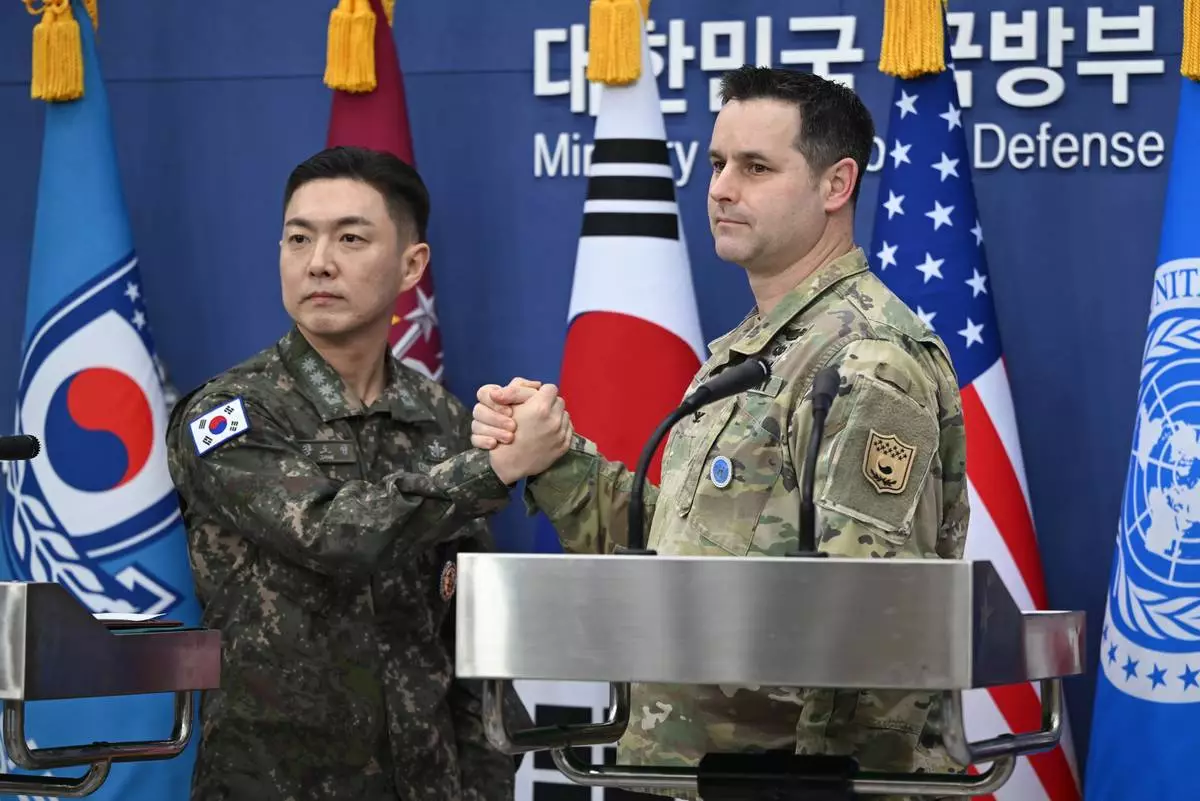
Col. Jang Do-young, left, public affairs director of South Korea's Joint Chiefs of Staff, and U.S. Army Col. Ryan Donald, public affairs director of the United Nations Command, Combined Forces Command, and United States Forces Korea, pose for a photo during a media briefing on the 2026 ROK-US Freedom Shield Military Exercise at the Defense Ministry in Seoul, South Korea, Wednesday, Feb. 25, 2026. (Jung Yeon-je/Pool Photo via AP)