JAKARTA, Indonesia (AP) — Indonesia freed and deported an American man Tuesday after he spent 11 years in prison for the premeditated murder of his then-girlfriend’s mother on the tourist island of Bali.
Tommy Schaefer was sentenced to 18 years in prison for the 2014 murder of Sheila von Wiese-Mack, the mother of Heather Mack, during a luxury vacation in a case also known as the Bali “suitcase murder.”
Schafer was deported back to the United States from Bali International Airport on Tuesday evening after serving his sentence and receiving a number of remissions for good behavior, said Felucia Sengky Ratna, head of the Bali Regional Office of the Directorate General of Immigration, in a statement.
The badly battered body of the 62-year-old von Wiese-Mack, a wealthy Chicago socialite, was found inside the trunk of a taxi parked at the upscale St. Regis Bali Resort in August 2014.
Heather Mack, who was almost 19 and a few weeks pregnant at the time of the killing, and her then-21-year-old boyfriend, Schaefer, were arrested on the island a day after the body was found.
Mack served seven years of a 10-year prison sentence in Bali for helping to kill her mother and was deported in October 2021.
She was also sentenced to 26 years in prison in Chicago in January 2024, after she pleaded guilty to helping kill her mother and stuffing the body in a suitcase during their vacation.

FILE - Tommy Schaefer of Chicago, Ill., who alongwith his girlfriend Heather Mack is accused of murdering Mack's mother Sheila von Wiese-Mack whose body was later found in a suitcase, arrives for his trial hearing at the district court in Denpasar, Bali, Indonesia on Jan. 21, 2015. (AP Photo/Firdia Lisnawati, File)

FILE - In this March 12, 2015 file photo, Heather Mack, left, and her boyfriend Tommy Schaefer, both from Chicago, Ill., who are accused of of murdering Mack's mother Sheila von Wiese-Mack whose body was later found in a suitcase, enter the court room prior to the start of their trial hearing at the district court in Denpasar, Bali, Indonesia. (AP Photo/Firdia Lisnawati, File)
ESCONDIDO, Calif. (AP) — Immigration and Customs Enforcement officers training at a local gun range largely went unnoticed by residents of one Southern California city for more than a decade, until President Donald Trump’s immigration crackdown and the recent fatal shootings of U.S. citizens by federal agents.
The arrangement in Escondido, a city of about 150,000 people north of San Diego surrounded by farms and horse ranches, has sparked weeks of demonstrations. Residents are demanding that the city stop allowing ICE agents to train at the local police department range, reflecting growing discontent across the country with the administration's immigration actions.
“We don’t want ICE anywhere near Escondido or fraternizing with the police,” said Richard Garner, 71, while rallying against the deal outside the city’s police station.
A majority of Americans in recent polls have said Trump has “gone too far” in sending federal immigration agents into American cities. Beyond the mass street demonstrations in Minneapolis, people in communities from New York to California are objecting to longstanding contracts between ICE and local governments for services ranging from the use of training facilities to parking spaces. The agency has also angered local communities caught off guard by ICE's plans to occupy giant warehouses, some that could house as many as 10,000 immigration detainees.
Amid the debate, funding for the Department of Homeland Security has been put on hold. Democrats are saying they will not help approve more money until new limits are placed on federal immigration operations following the fatal shootings of U.S. citizens Alex Pretti and Renee Good last month in Minneapolis.
Escondido's City Council is scheduled to discuss the contract with ICE at a meeting Wednesday.
Unlike many California cities, Escondido had an especially close alliance with ICE in the past that allowed immigration officers to work at police headquarters and coordinate on vehicle stops. That partnership ended after California passed a law in 2017 limiting such collaboration with immigration officials.
Protesters in Escondido said they were unaware of the contract allowing ICE to train at the gun range in the city's hillsides until advocates found the agreement online. They said they fear word of the deal will make immigrants afraid to report crimes to local police, weakening public safety in a city where Latinos make up about half the population.
Some say they don’t want to give ICE agents a reason to come to their community or lend support to an agency they don't trust will follow U.S. laws. The concern is high, both among immigrants and U.S. citizens who worry about masked federal immigration agents ′ use of deadly force.
Police Capt. Erik Witholt said Escondido provides the space under a deal signed by ICE in 2024 and renewed this year, though ICE has been training at the outdoor range off a winding road outside Escondido’s downtown for more than a decade.
The city will receive $22,500 a year for up to three years under the agreement involving the San Diego branch of ICE’s Homeland Security Investigations, which investigates crimes including human trafficking and drug smuggling.
“We don’t train with them. We don’t train them," Witholt said, adding 22 agencies use the site and each brings its own range master, targets and ammunition.
The Department of Homeland Security, which oversees ICE, did not comment on the backlash and would not confirm locations where its officers train, citing security concerns.
But several of those locations have been brought to light as communities demand an end to such agreements.
In Cottage Grove, Minnesota, 20 miles (32 kilometers) southeast of Minneapolis, Ruth Jones and other residents have been asking the community to end its contract allowing ICE to use its regional training center. But Mayor Myron Bailey said the center was built with state bond funding and is rented out to some 60 law enforcement agencies and other groups, including ICE.
“Contractually we cannot discriminate against any public agency,” Bailey said in a statement.
In Islip, New York, community members urged local officials last year to rescind a longstanding contract to use a rifle range for training, but the local government also kept the deal.
Hartford, Connecticut, has moved to end a contract for ICE employees to use a city-owned parking lot.
Not everyone in Escondido is opposed to the city's contract with ICE. Luke Beckwith, 26, said he feels access to the site should be left up to police.
“I personally don’t care,” Beckwith said. “It’s bringing revenue to the city.”
Edgar, who is from Mexico and asked that his last name be withheld over deportation fears, said barring ICE from the city's gun range will not remove the threat for immigrants like himself.
“If they want to come, they will come,” he said.
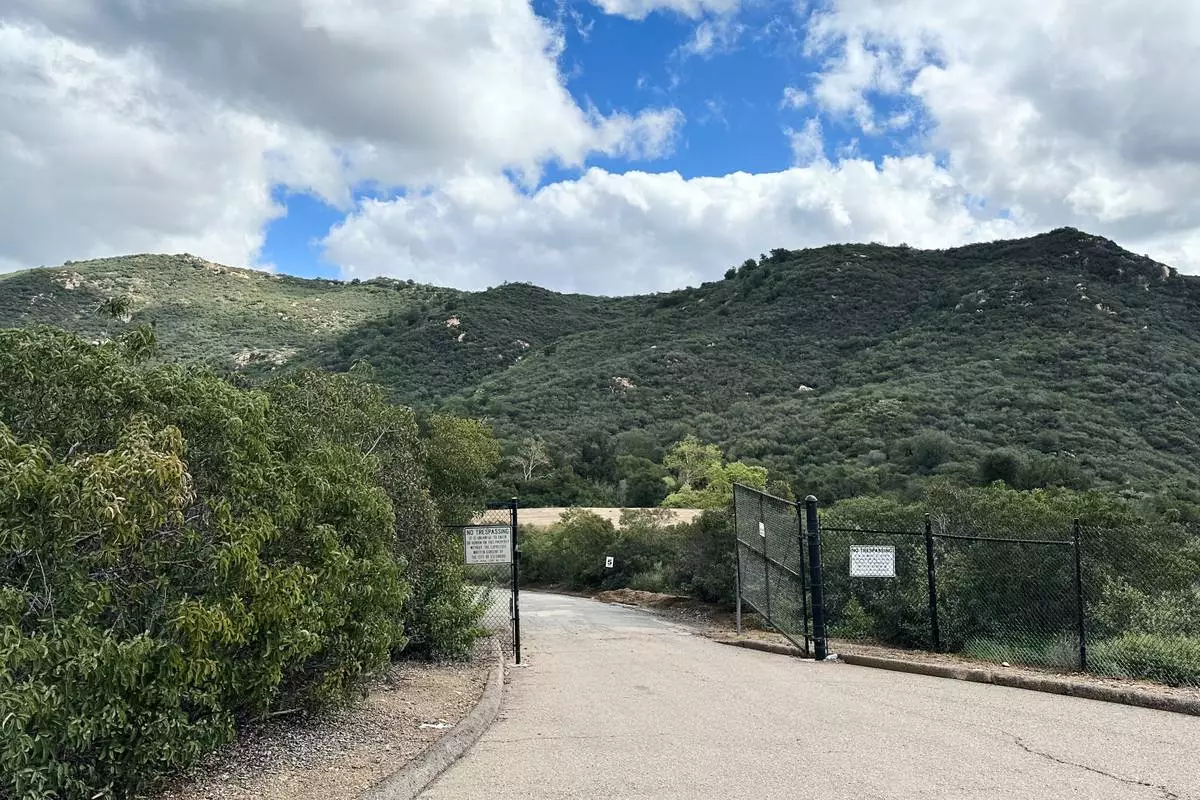
The entrance to the city's firing range is shown on Wednesday, Feb. 18, 2026 in Escondido, Calif. (AP Photo/Amy Taxin)
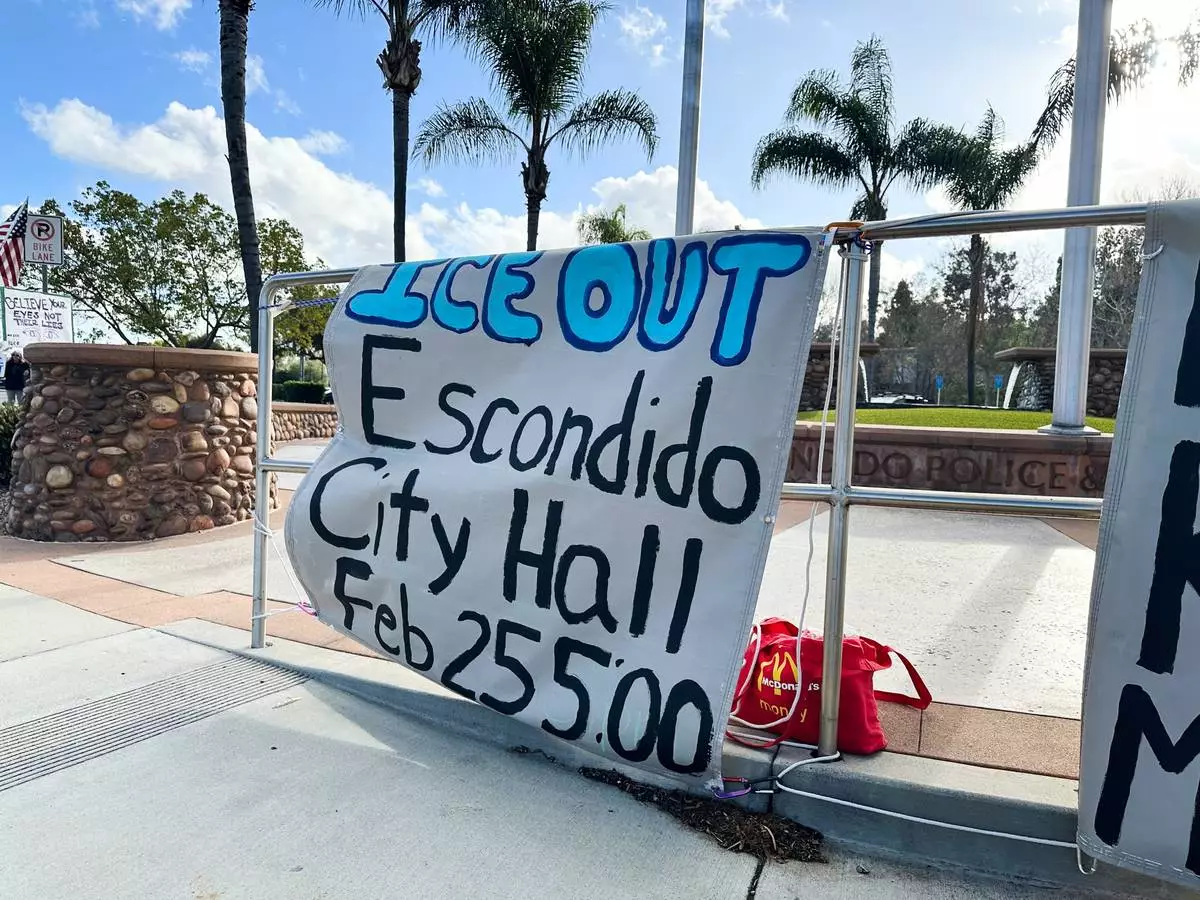
A sing advertises an upcoming rally on Wednesday, Feb. 18, 2026 in Escondido, Calif. (AP Photo/Amy Taxin)
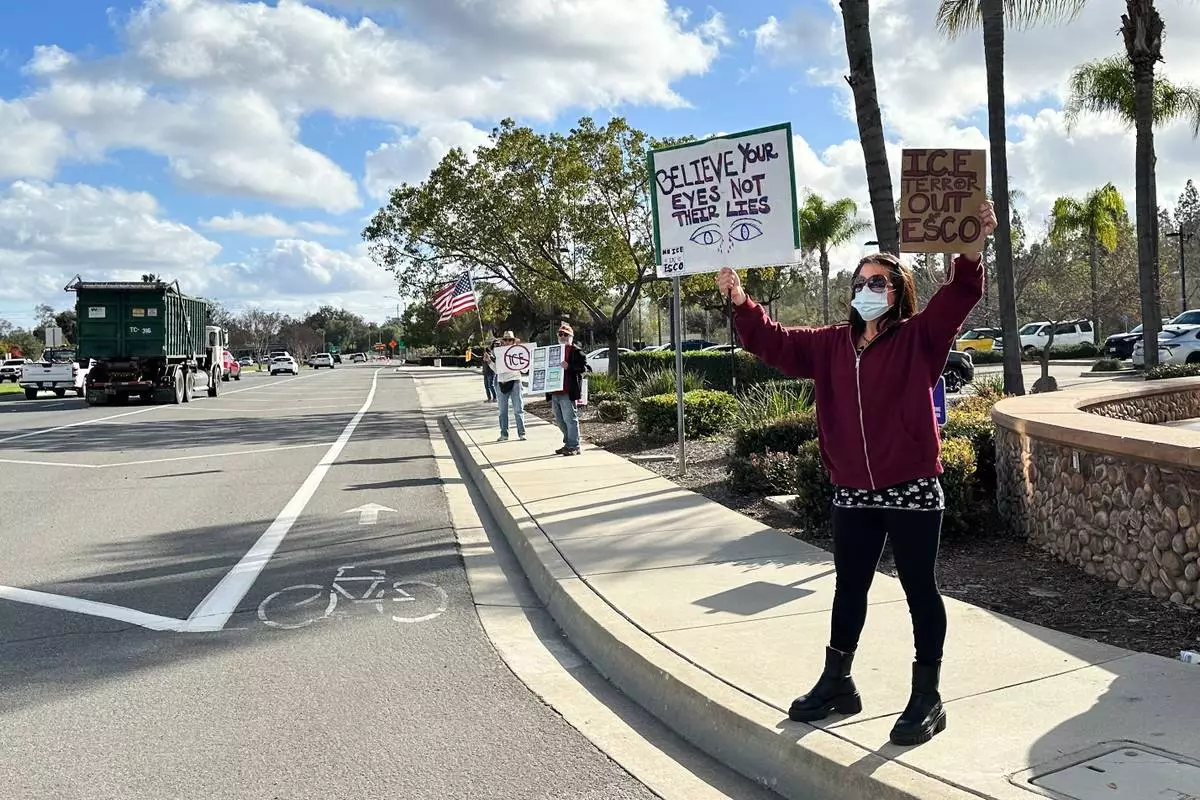
Demonstrators hold signs outside a police station on Wednesday, Feb. 18, 2026 in Escondido, Calif. (AP Photo/Amy Taxin)

Motorists drive under a city sign on Wednesday, Feb. 18, 2026 in Escondido, Calif. (AP Photo/Amy Taxin)