MEUDON, France--(BUSINESS WIRE)--Feb 25, 2026--
According to the Thales 2026 Data Threat Report, organizations across various markets including automotive, energy, finance and retail say the rapid pace of AI-driven transformation is now their biggest security challenge. Based on the report’s research, conducted by S&P Global 451 Research, 61% cite AI as their top data security risk. The concern is not only about malicious AI, but about the access it is being granted as it shifts from a tool to a trusted insider.
This press release features multimedia. View the full release here: https://www.businesswire.com/news/home/20260225599723/en/
As enterprises embed AI into workflows, analytics, customer service, and development pipelines, these systems are being granted broad, automated access to enterprise data, often with fewer controls than those applied to human users in a corporate environment.
“Insider risk is no longer just about people. It is also about automated systems that have been trusted too quickly,” says Sebastien Cano, Senior Vice President, Cybersecurity Products at Thales. “When identity governance, access policies, or encryption are weak, AI can amplify those weaknesses across corporate environments far faster than any human ever could.”
Visibility Gaps Are Widening as AI Expands Data Reach
The report reveals a troubling disconnect between AI adoption and data control. Only 34% of organizations know where all their data resides, whatever the level of criticality, and just 39% can fully classify it. Meanwhile, nearly half (47%) of sensitive cloud data remains unencrypted.
As AI systems ingest and act on data across cloud and SaaS environments, limited visibility makes enforcing least-privilege access increasingly difficult, that is granting only the strictly necessary access rights. This increases the extent of exposure if credentials are compromised.
Identity infrastructure is now the primary attack surface. Credential theft remains the leading attack technique against cloud management infrastructure, cited by 67% of organizations experiencing cloud attacks. At the same time, 50% rank secrets management among their top application security challenges, reflecting the growing complexity of governing machine identities, API (interfaces de programmation applicative) keys, and tokens at scale.
AI Is Powering More Convincing Attacks
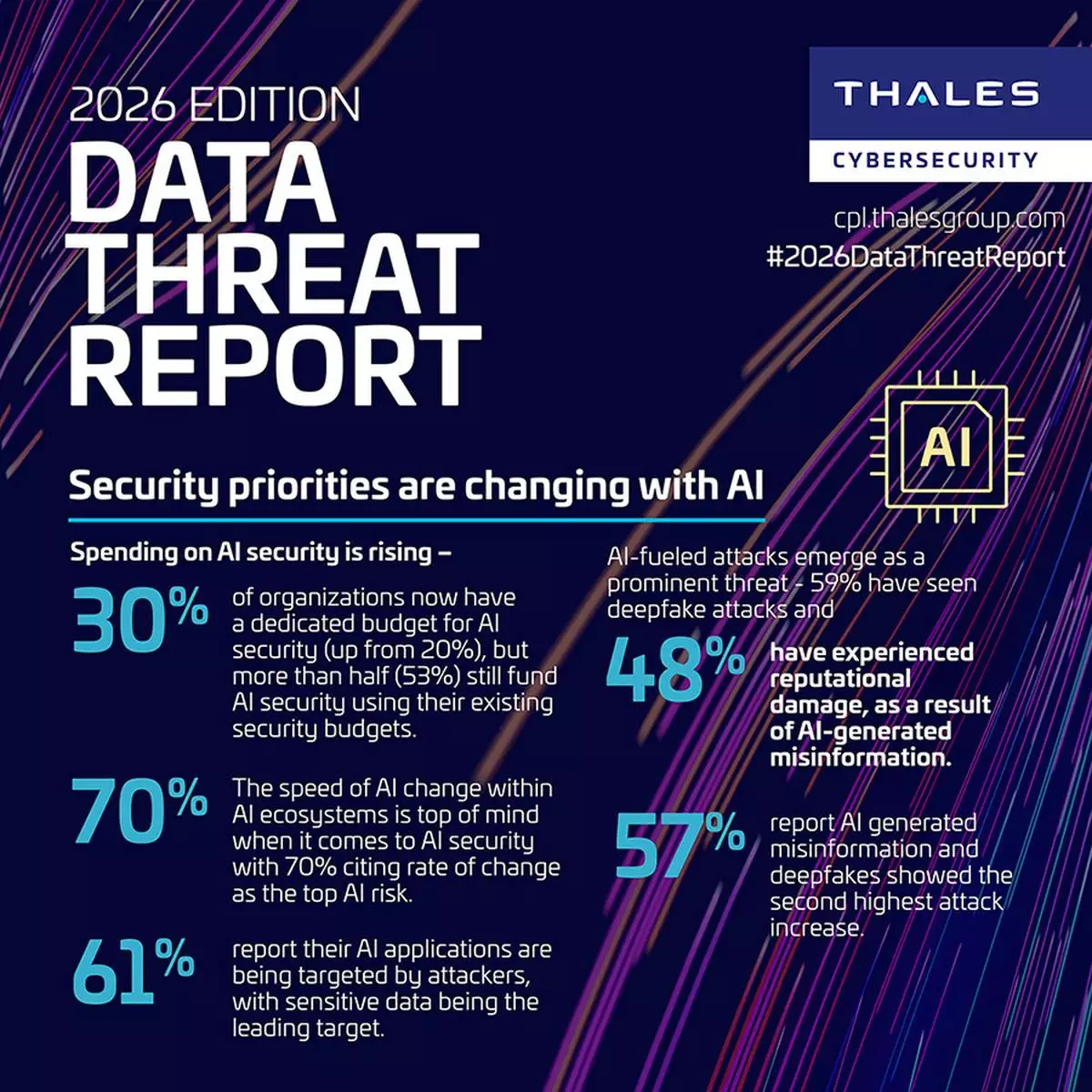
While organizations race to adopt AI, attackers are doing the same. Nearly 60% of companies report experiencing deepfake-driven attacks, and 48% report reputational damage tied to AI-generated misinformation or impersonation campaigns.
As AI introduces new risks, it also increases existing ones. Human error already contributes to 28% of breaches, and with automation layered on top, small mistakes can scale faster and spread wider.
Security Investment Is Shifting, But Not at the Pace of the new Risks
While organizations recognize the need to adapt, investment is not keeping pace with the rapid expansion of AI-driven access and automation. 30% now dedicate specific budgets to AI security, reflecting growing awareness. However, the majority (53%) still depend on traditional security programs built primarily for human users and perimeter-based controls. As machines increasingly authenticate, access, and act autonomously, many security strategies have yet to adjust to this shift in operating models.
“As AI becomes deeply embedded into enterprise operations, continuous data visibility and protection are no longer optional,” said Eric Hanselman, Chief Analyst at S&P Global 451 Research. “Organizations must treat data security strategy as foundational to innovation, not separate from it.” i
Trust Must Evolve as Machines Gain Access
AI is not replacing traditional threats; rather, it is intensifying them by increasing their speed, scale, and reach. As automated systems gain broader access to enterprise data, organizations must rethink identity, encryption, and data visibility as core infrastructure. The organizations that embed strong governance into their AI strategies will be better positioned to innovate securely and avoid turning AI into their newest insider threat.
For more information, please download the full report and join our webinar hosted by Eric Hanselman, Chief Analyst at S&P Global 451 Research .
About Thales
Thales (Euronext Paris: HO) is a global leader in advanced technologies for the Defence, Aerospace, and Cyber & Digital sectors. Its portfolio of innovative products and services addresses several major challenges: sovereignty, security, sustainability and inclusion.
The Group invests more than €4 billion per year in Research & Development in key areas, particularly for critical environments, such as Artificial Intelligence, cybersecurity, quantum and cloud technologies.
Thales has more than 83,000 employees in 68 countries. In 2024, the Group generated sales of €20.6 billion.
©Thales
WASHINGTON (AP) — President Donald Trump started in sales mode, using his State of the Union address to deliver an upbeat vision of the U.S. economy.
But that portrayal collides with the sentiment of Americans who remain anxious about their finances and feel they haven't benefited from Trump's policies. He took the high road to honor the gold medal-winning U.S. men’s Olympic hockey team and a war hero before pivoting abruptly to a darker tone as he ridiculed Democrats.
Here are takeaways from the speech.
Much of the nation is worried about the direction of the economy, but Trump says the good times are here, insisting repeatedly that rising costs are no longer a problem.
“The roaring economy is roaring like never before,” he said. He cheered the lower cost of gasoline, mortgage rates, prescription drug prices and the rising stock market: “Millions and millions of Americans are all gaining.”
Such optimism, as so many Americans are feeling economic strains, risks painting Trump as out of touch. Just 39% of U.S. adults approved of Trump's handling of the economy in February, according to AP-NORC polling.
Still, the president focused much of the first hour of his speech on the economy, something Republicans had urged him to do as they head into the midterm elections.
For a president who always seems to be spoiling for a fight, Trump also tried to summon Americans’ innate patriotic impulses. In addition to the hockey team, he singled out war heroes and those who had taken brave stands in other countries, using the moment to bestow numerous presidential medals in an effort to give the address a more positive gloss.
It underscored the president's media savvy and understanding that even if a moment isn't appreciated completely in real time, it can have an afterlife in the days following speech, especially on social media.
Yet in one revealing moment, Trump lamented why he couldn't give a congressional medal to himself.
Tributes to the Olympic hockey team and a World War II veteran didn't unify the room for long.
The Republican president soon took aim at Democrats and blamed them for many of the nation’s ills.
Trump said rising health care premiums are “caused by you,” suggested Democrats “are not protecting” Social Security and blamed them for the nation’s affordability crunch. “You caused that problem. You caused that problem,” Trump said as he glared at the Democratic side of the room.
He seemed to get angrier as the speech progressed.
“These people are crazy, I’m telling you, they’re crazy,” he said. “Democrats are destroying this country.”
Trump’s MAGA base loves such aggression. It’s unclear, however, if the rest of the country feels the same.
By Trump’s standards, he held his tongue when it came to the Supreme Court.
After the court struck down his tariff policy last week, Trump said the justices who voted against one of his signature issues were an “embarrassment to their families.” By Tuesday, he simply called the ruling “unfortunate.”
Trump sought to treat the ruling with indifference, insisting that tariff revenues were “saving” the U.S., ignoring the fact that the levies haven’t made a significant dent in government debt. He said the tariffs were paid by foreign countries even as virtually every study concludes that costs have been paid by U.S. firms and consumers.
At one point, he seemed to take the long view that history would ultimately vindicate him even if the Supreme Court would not.
“As time goes by, I believe the tariffs paid by foreign countries will, like in the past, substantially replace the modern day system of income tax, taking a great burden off the people that I love,” he said.
That is unlikely. The federal income tax is authorized by the 16th Amendment to the Constitution and the power to collect revenue is ultimately defined by Congress, not the president.
The president also used the speech to reprise his attack on the integrity of U.S. elections.
“Cheating is rampant in our elections,” Trump said.
Trump has made such claims for years, focused on his 2020 election loss, claims rejected by dozens of courts and his own attorney general at the time.
But the timing of Tuesday’s prime-time claims, less than nine months before voters across America are scheduled to decide control of Congress, was noteworthy. So, too, was Trump’s suggestion that he would take action to address a problem that doesn’t appear to exist.
“They want to cheat. They have cheated, and their policy is so bad that the only way they can get elected is to cheat,” Trump said of Democrats. “And we’re going to stop it. We have to stop it.”
Trump is calling on Congress to pass a bill requiring voters to show a photo ID before casting ballots. But he also recently vowed to enact an executive order to address the issue, although the White House has not clarified what it might entail.
Sometimes what’s not said is as notable as what is.
Trump has highlighted immigration since the very first speech in which he announced his 2016 presidential campaign. And on Tuesday night, he revived much of the same language he’s used throughout the past decade, blasting “criminal aliens” and warning of “drug lords, murderers all over our country.”
What he didn’t mention: the most aggressive immigration enforcement tactics that threatened to bring the U.S. to the brink earlier this year. He didn’t mention the deaths of two U.S. citizens in Minneapolis last month at the hands of federal agents.
Indeed, it was Rep. Rashida Tlaib, D-Mich., who shouted that “Alex wasn’t a criminal,” referring to Alex Pretti, one of the U.S. citizens killed in Minneapolis.
During her Democratic rebuttal, Virginia Gov. Abigail Spanberger said law enforcement must work to build trust in communities and said Trump “every minute spent sowing fear is a minute not investigating murders.”
Trump said nothing of his administration’s shift in tactics, including a drawdown of agents in the Twin Cities. And he made no acknowledgment of the broad concerns in the U.S. about Trump’s approach on immigration, as demonstrated by the 60% of U.S. adults who disapproved of his handling of the issue in February, according to AP-NORC polling.
Trump has already built up the largest U.S. military presence in the Middle East in decades. And in his speech, he outlined a rationale for using those forces to launch a major military strike against Iran.
The president said that Iran and its proxies have “spread nothing but terrorism, death and hate,” adding that its leaders killed at least 32,000 protesters in recent weeks, which is at the further end of estimates over the death toll. The U.S.-based Human Rights Activist News Agency has so far counted more than 7,000 dead and believes the death toll is far higher. Iran’s government offered its only death toll on Jan. 21, saying 3,117 people were killed.
Trump also warned that the nation has developed missiles that can threaten Europe and is working on missiles “that will soon reach” the U.S.
“My preference is to solve this problem through diplomacy. But one thing is certain, I will never allow the world’s number one sponsor of terror, which they are, by far to have a nuclear weapon. Can’t let that happen.”
The president, ever mindful of records that allow him to say he was the first, the best or had done the most, succeeded clearly on one thing: he beat his own record for the longest, clocking in at just under 1 hour, 48 minutes.
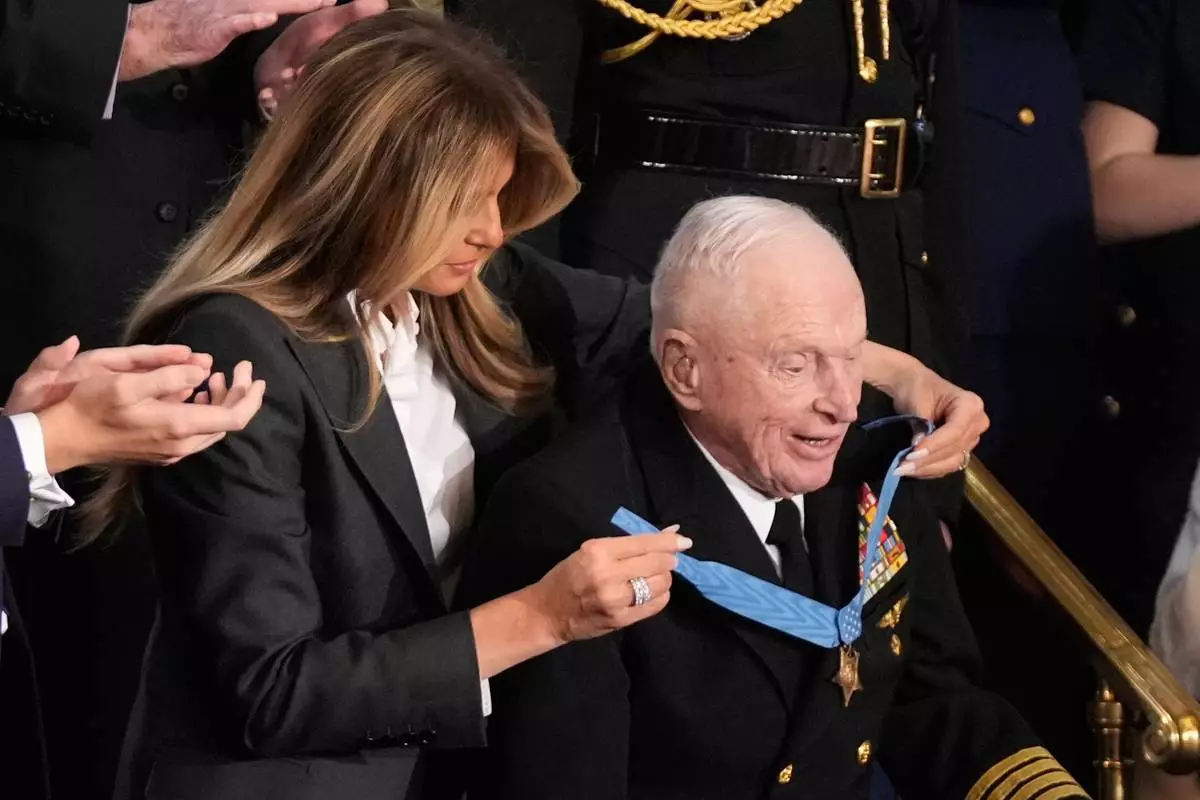
First lady Melania Trump awards World War II Navy pilot Capt. Royce Williams the Congressional Medal of Honor as President Donald Trump delivers the State of the Union address to a joint session of Congress in the House chamber at the U.S. Capitol in Washington, Tuesday, Feb. 24, 2026. (AP Photo/Mark Schiefelbein)
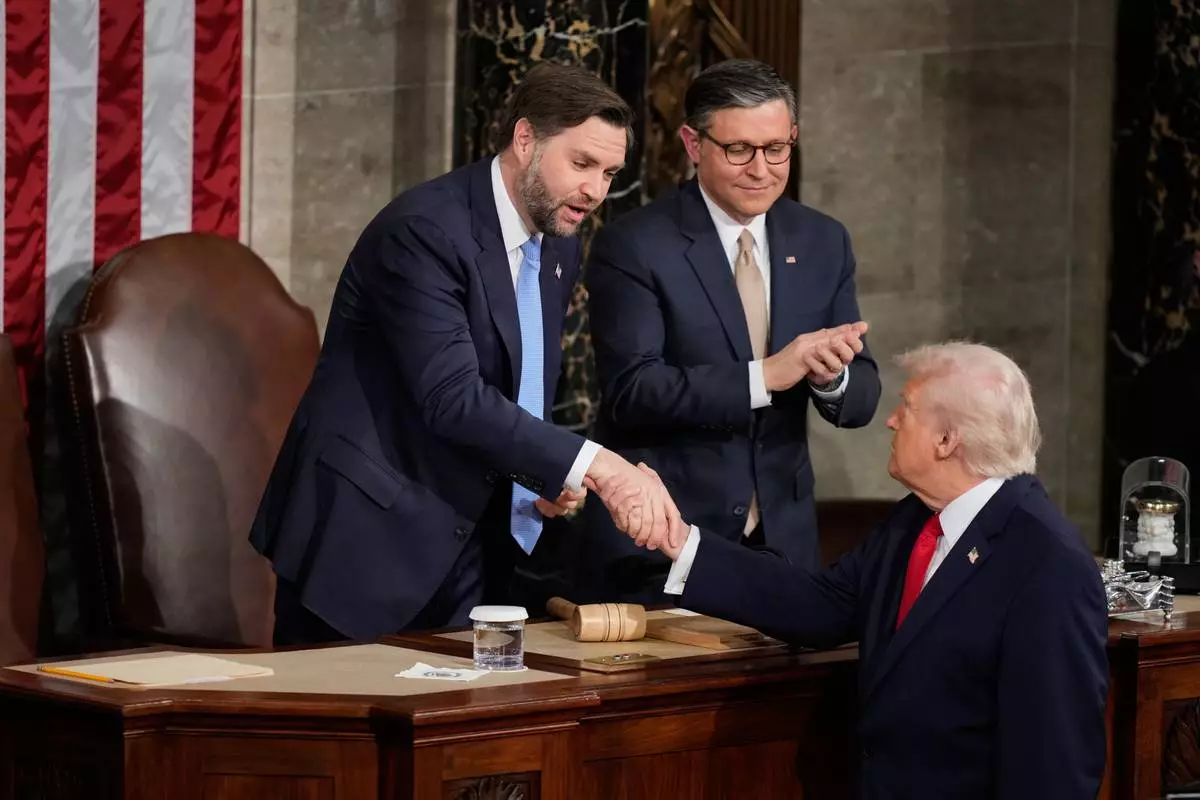
Vice President JD Vance shakes hands with President Donald Trump following his State of the Union address to a joint session of Congress in the House chamber at the U.S. Capitol in Washington, Tuesday, Feb. 24, 2026. House Speaker Mike Johnson is standing to the right of Vice President JD Vance. (AP Photo/Alex Brandon)
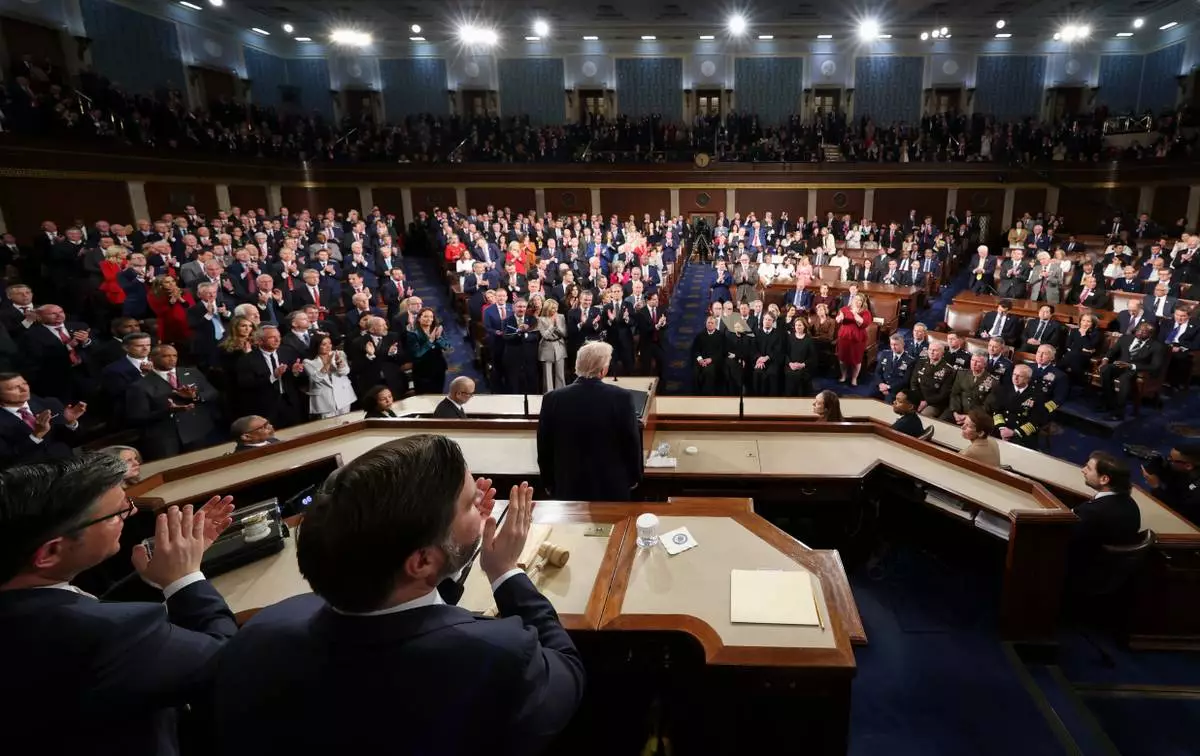
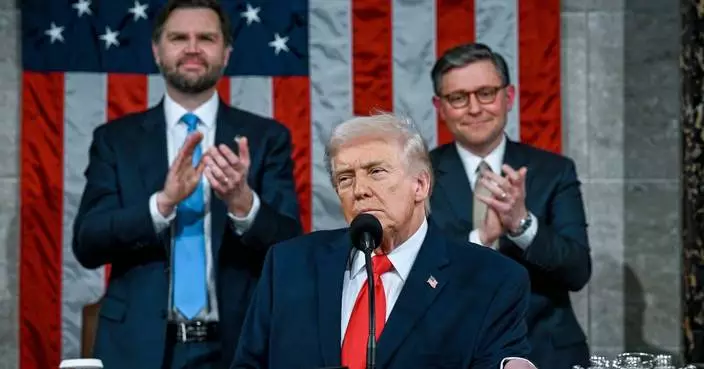
Members of the Congress give a standing ovation as President Donald Trump delivers the State of the Union address to a joint session of Congress in the House chamber at the U.S. Capitol in Washington, Tuesday, Feb. 24, 2026. (Jessica Koscielniak/Pool Photo via AP)
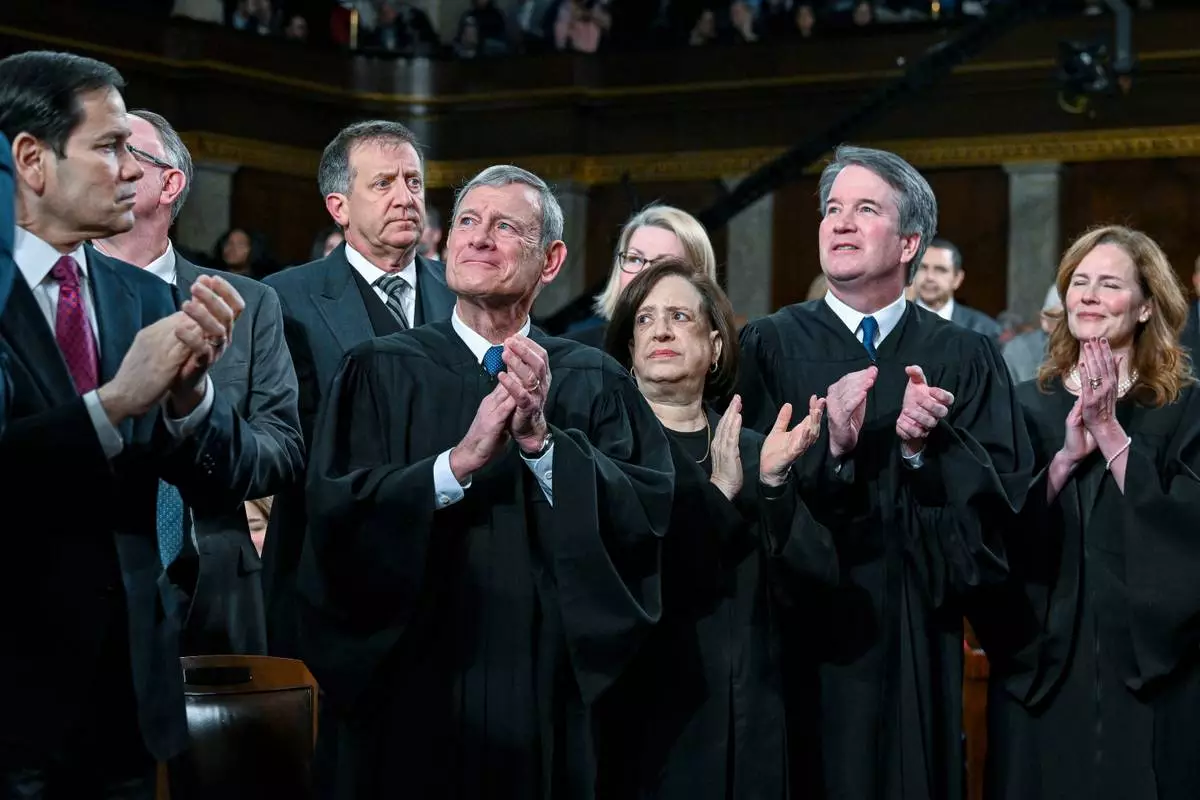
From left, Secretary of State Marco Rubio, Chief Justice John Roberts, Justice Elena Kagan, Justice Brett Kavanaugh and Justice Amy Coney Barrett, applaud before President Donald Trump delivers the State of the Union address to a joint session of Congress in the House chamber at the U.S. Capitol in Washington, Tuesday, Feb. 24, 2026. (Kenny Holston/The New York Times via AP, Pool)
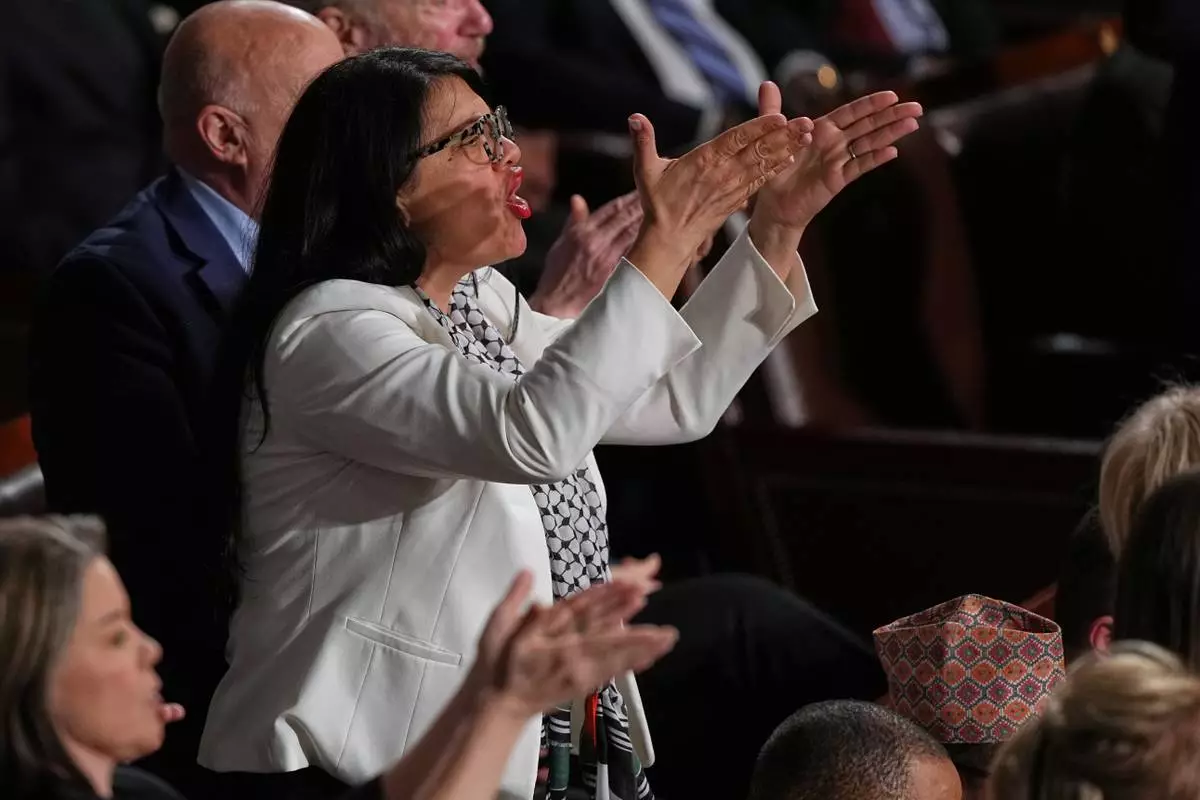
Rep. Rashida Tlaib, D-Mich., gestures as President Donald Trump delivers the State of the Union address to a joint session of Congress in the House chamber at the U.S. Capitol in Washington, Tuesday, Feb. 24, 2026. (AP Photo/Matt Rourke)
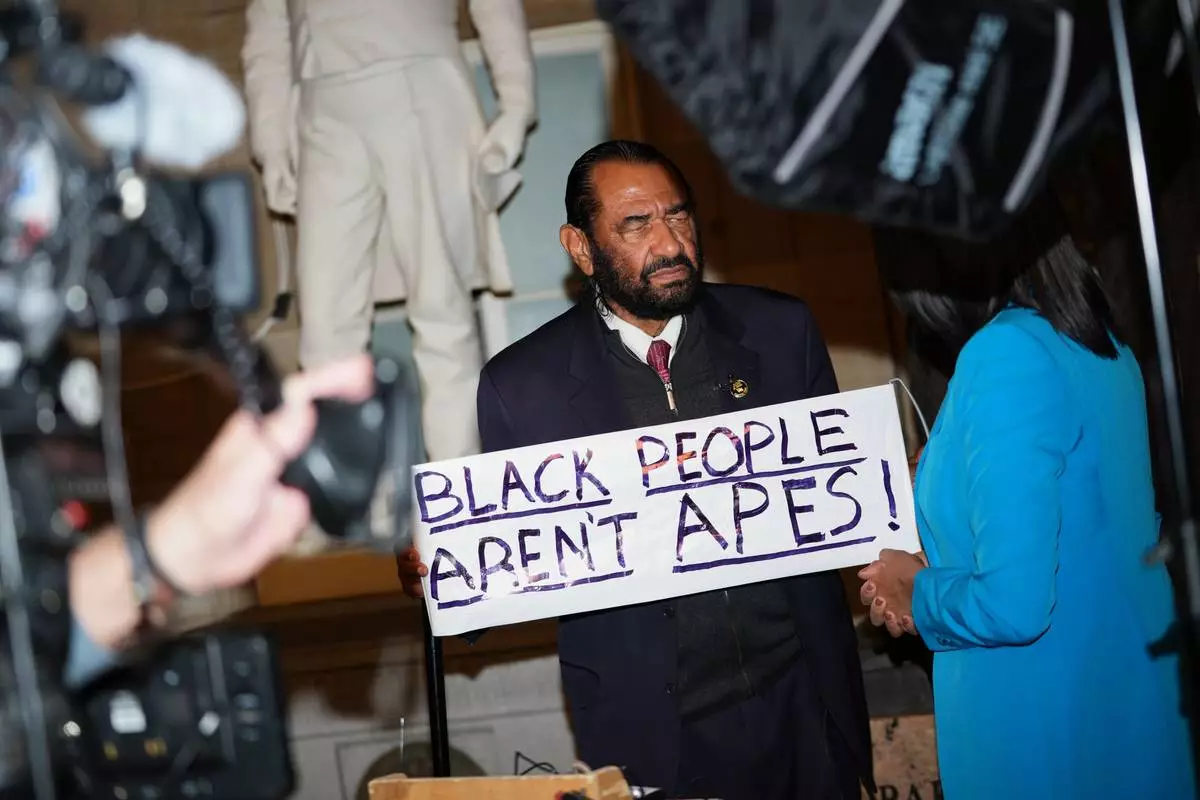
Rep. Al Green, D-Texas, speaks to the press after being escorted out of President Donald Trump's State of the Union address to a joint session of Congress in the House chamber at the U.S. Capitol in Washington, Tuesday, Feb. 24, 2026. (AP Photo/Allison Robbert)
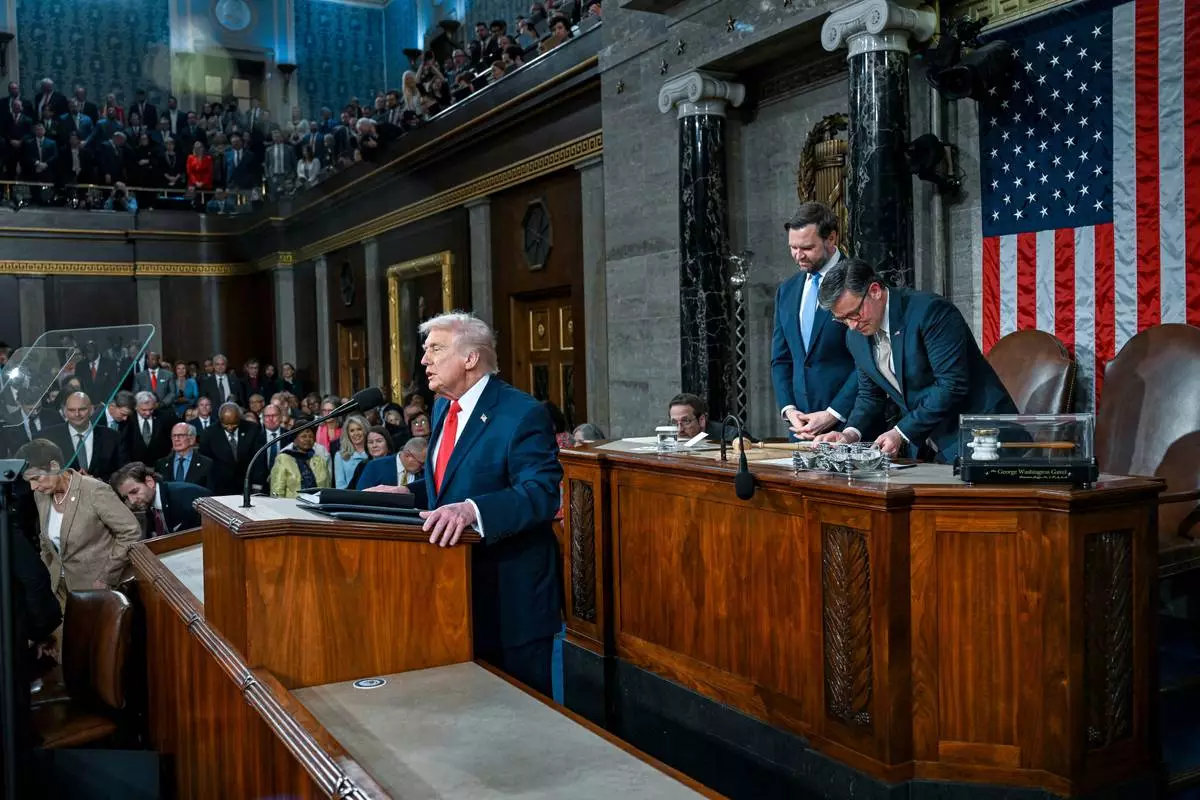
President Donald Trump delivers the State of the Union address to a joint session of Congress in the House chamber at the U.S. Capitol in Washington, Tuesday, Feb. 24, 2026. (Kenny Holston/The New York Times via AP, Pool)
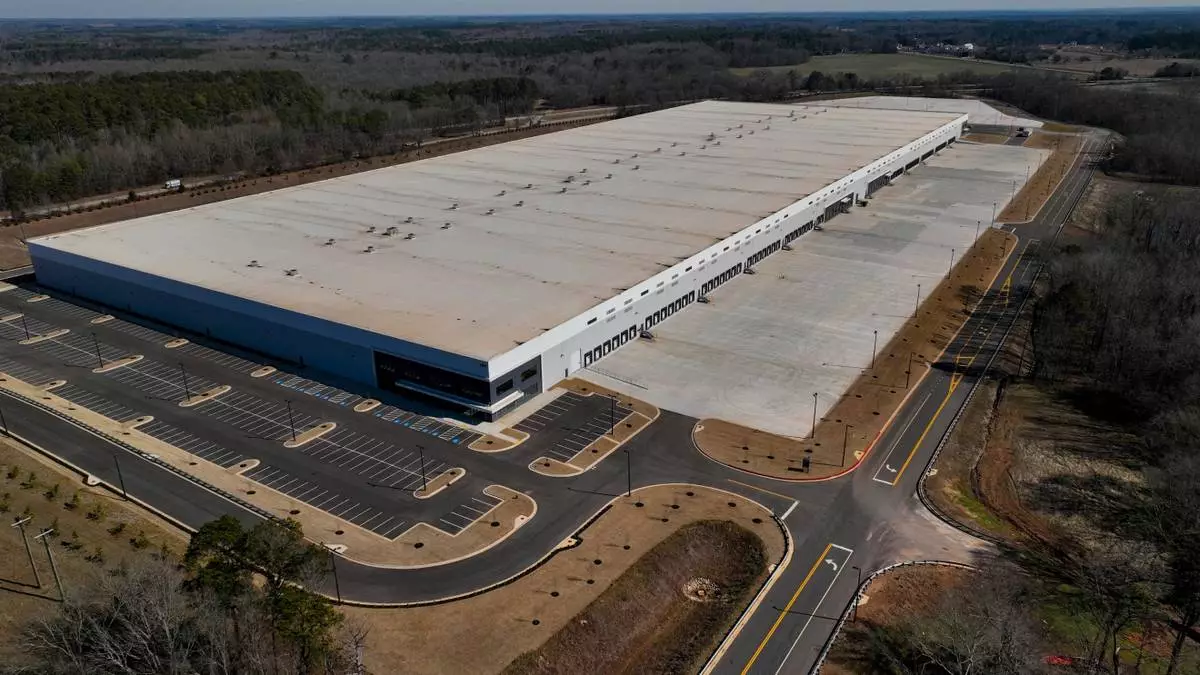
A newly built warehouse is seen on Friday, Feb. 6, 2026, in Social Circle, Ga., where officials are concerned about U.S. Immigrations and Customs Enforcement's plans connected to a $45-billion expansion of immigrant detention centers. (AP Photo/Mike Stewart)
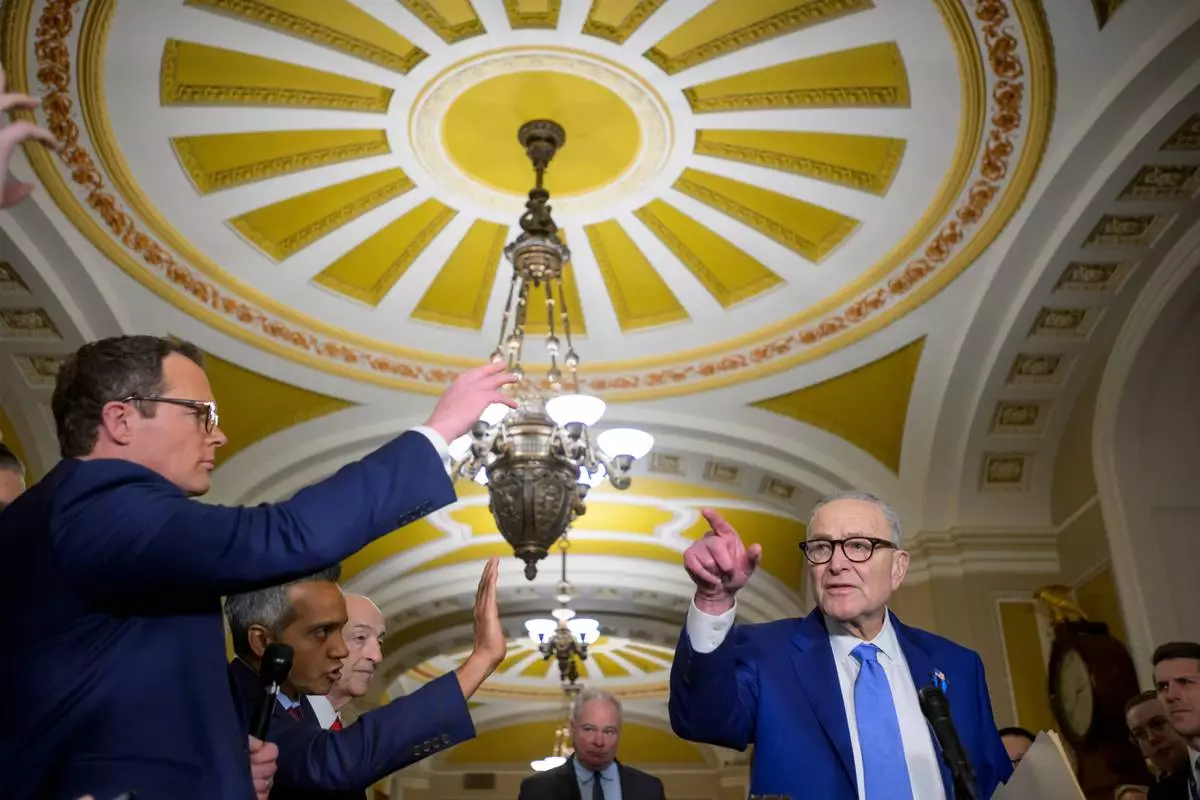
Senate Minority Leader Chuck Schumer, D-N.Y., speaks during the Senate Democrat policy luncheon news conference at the Capitol, Tuesday, Feb., 10, 2026, in Washington. (AP Photo/Rod Lamkey, Jr.)
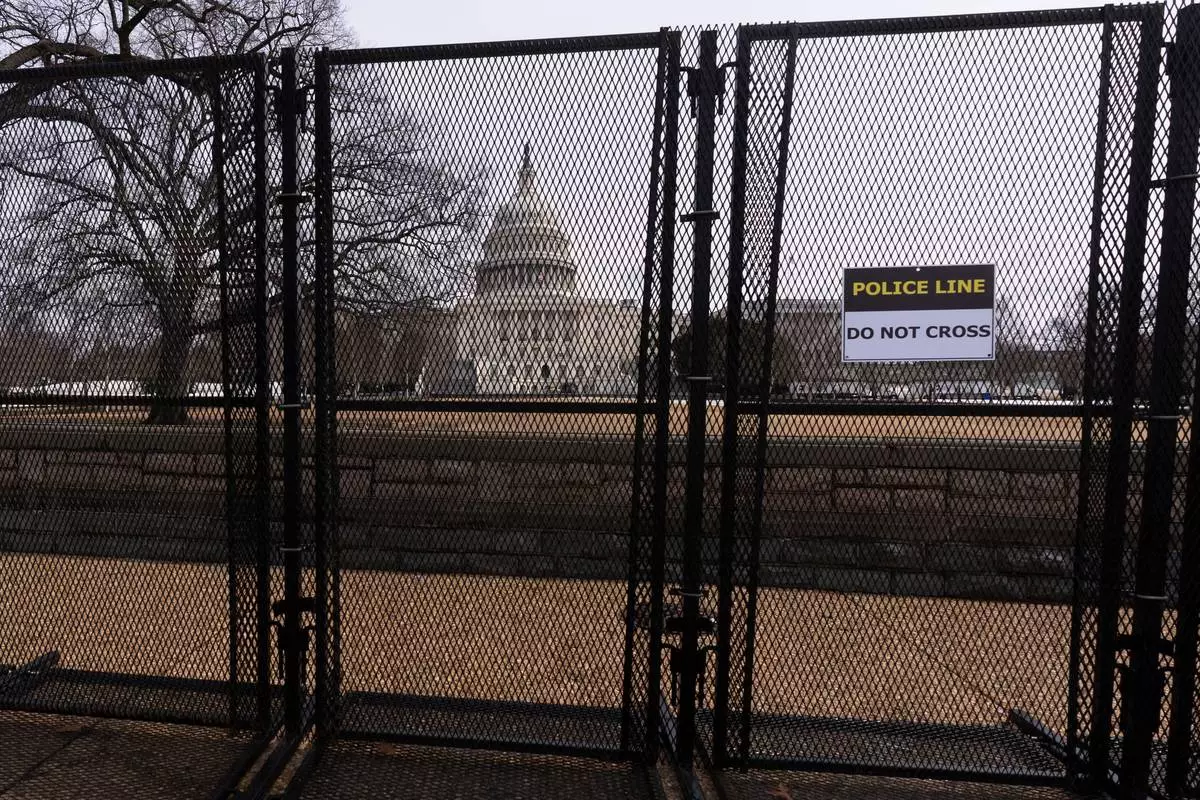
Security fencing is seen around the U.S. Capitol grounds in Washington on Monday, Feb. 23, 2026, ahead of President Donald Trump's State of the Union address on Tuesday. (AP Photo/Manuel Balce Ceneta)
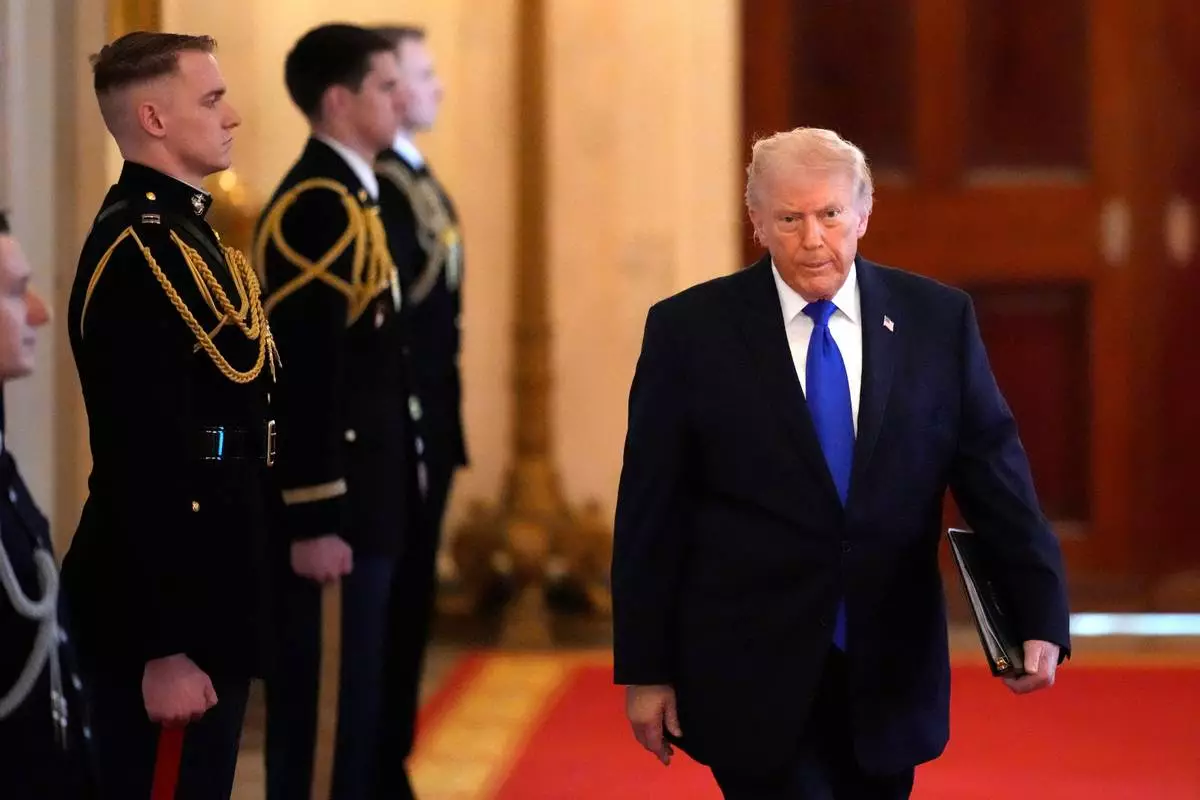
President Donald Trump arrives for an event to proclaim "Angel Family Day" in the East Room of the White House, Monday, Feb. 23, 2026, in Washington. (AP Photo/Alex Brandon)

An image is projected onto the exterior wall of the National Gallery of Art near the U.S. Capitol in Washington, Monday, Feb. 23, 2026, ahead of President Donald Trump's State of the Union address. (AP Photo/Matt Rourke)
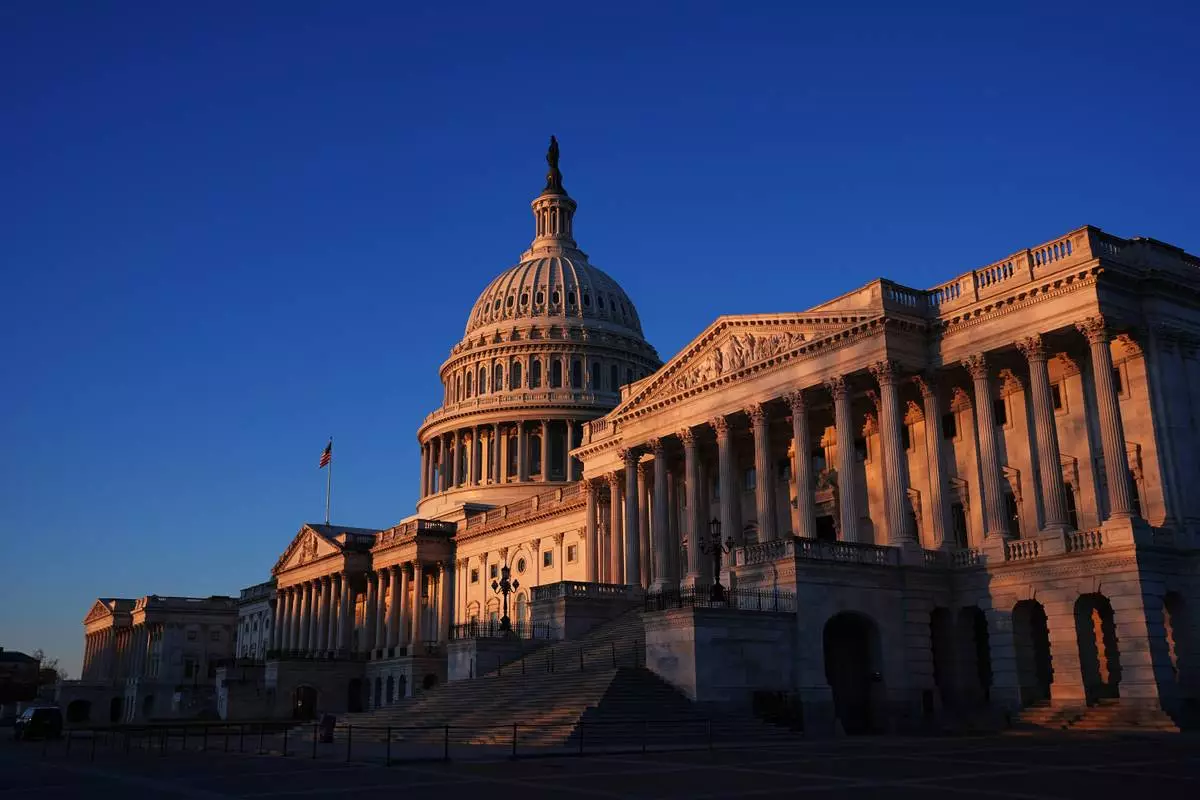
Shown is the U.S. Capitol in Washington, Tuesday, Feb. 24, 2026, ahead of President Donald Trump's State of the Union address Tuesday. (AP Photo/Matt Rourke)
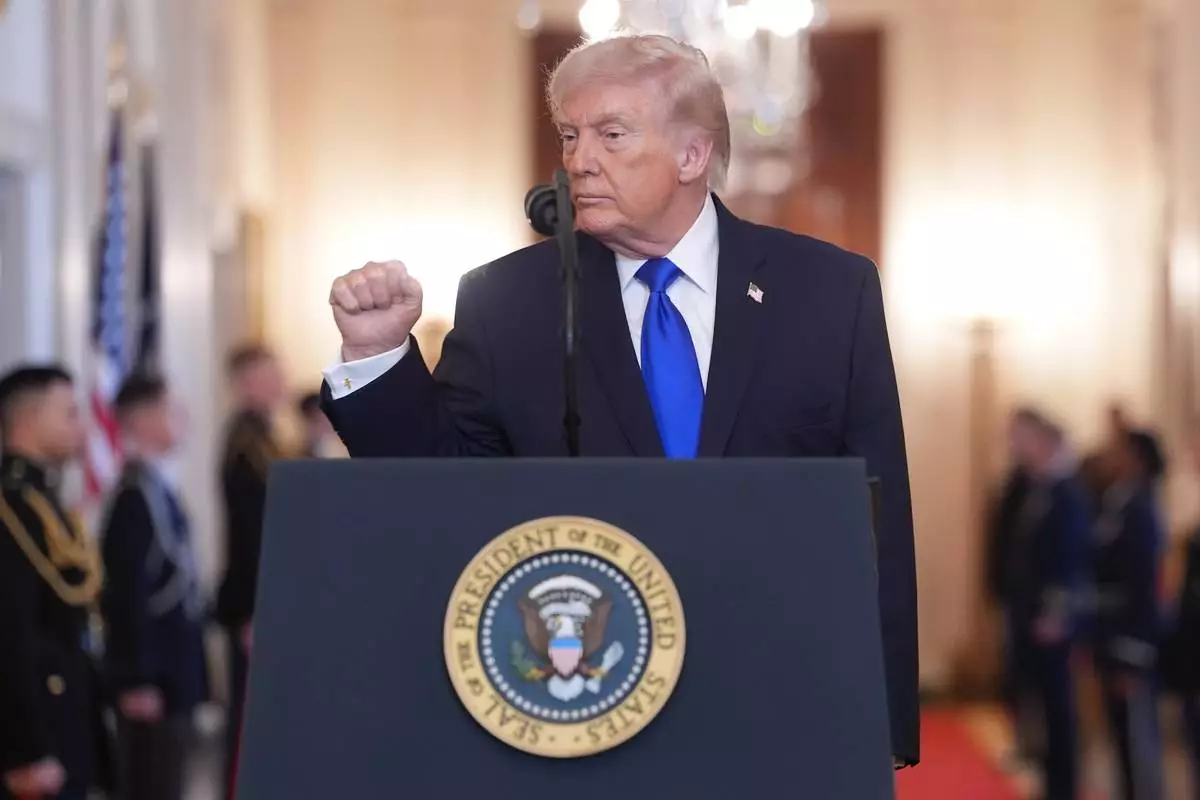
President Donald Trump during an event to proclaim "Angel Family Day" in the East Room of the White House, Monday, Feb. 23, 2026, in Washington. (AP Photo/Evan Vucci)