Skip to Content Facebook Feature Image

China willing to enhance political mutual trust, cooperation with Germany: premier

China

China

China

China willing to enhance political mutual trust, cooperation with Germany: premier

2026-02-25 19:48 Last Updated At:23:07

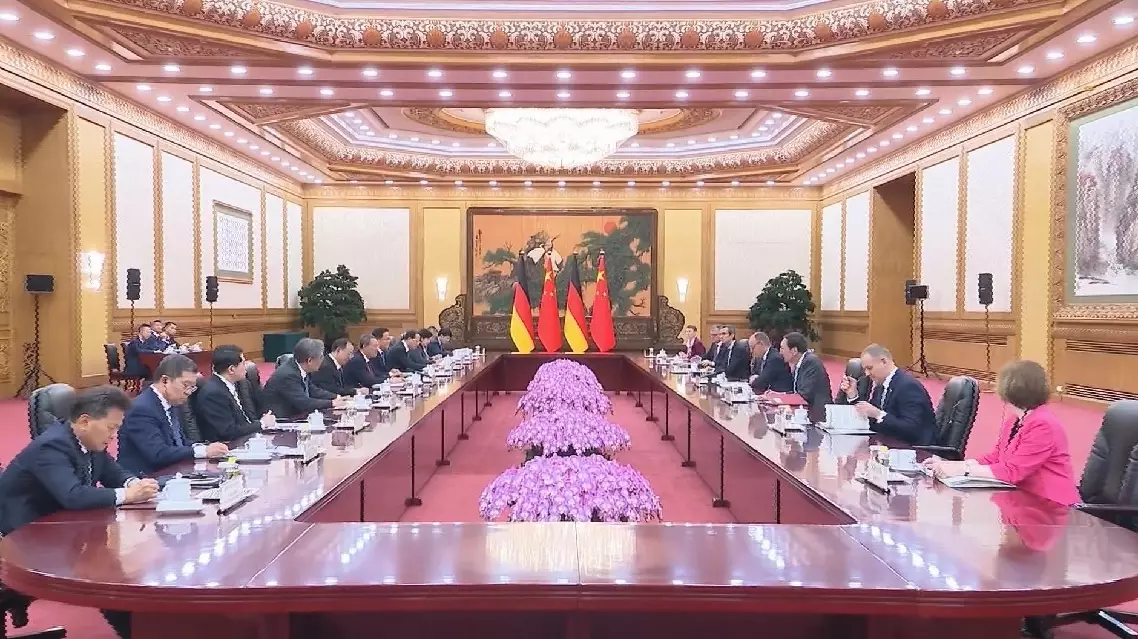
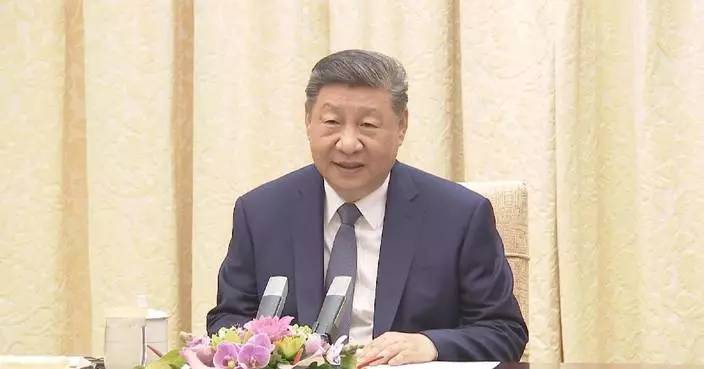
As this year marks the beginning of China's 15th Five-Year Plan period, China-Germany economic and trade cooperation will embrace increased opportunities over the next five years, Chinese Premier Li Qiang said on Wednesday when holding talks with German Chancellor Friedrich Merz in Beijing.

China is willing to work with Germany to give full play to dialogue mechanisms including government consultations, strengthen alignment of development strategies and policy communication, and expand and improve trade ties between the two nations, Li said.

Li called on both sides to invigorate traditional cooperation in sectors such as automobiles and chemicals, expand cooperation in emerging fields like artificial intelligence and biopharmaceuticals, and cultivate more new growth drivers for the economy.

China will import more high-quality products from Germany and encourage and support Chinese enterprises to invest in Germany, he said, expressing the hope that Germany will provide a fair, stable and predictable business environment.

Merz said that Germany is willing to strengthen high-level exchanges with China, maintain regular dialogue in various fields, promote the balanced and sustainable development of bilateral economic and trade relations, and foster cooperation in areas such as green transformation and climate change response.

Germany is also willing to strengthen communication and coordination with China and jointly advocate multilateralism and free trade, said the chancellor, noting that Germany is ready to play a positive role in advancing EU-China relations.

After the talks, the two leaders witnessed the signing of cooperation documents in fields such as green transition, customs, sports and media.

Merz arrived in Beijing on Wednesday morning for an official visit to China through Thursday. This is his first visit to China since taking office.
China willing to enhance political mutual trust, cooperation with Germany: premier
China willing to enhance political mutual trust, cooperation with Germany: premier

China willing to enhance political mutual trust, cooperation with Germany: premier
China willing to enhance political mutual trust, cooperation with Germany: premier

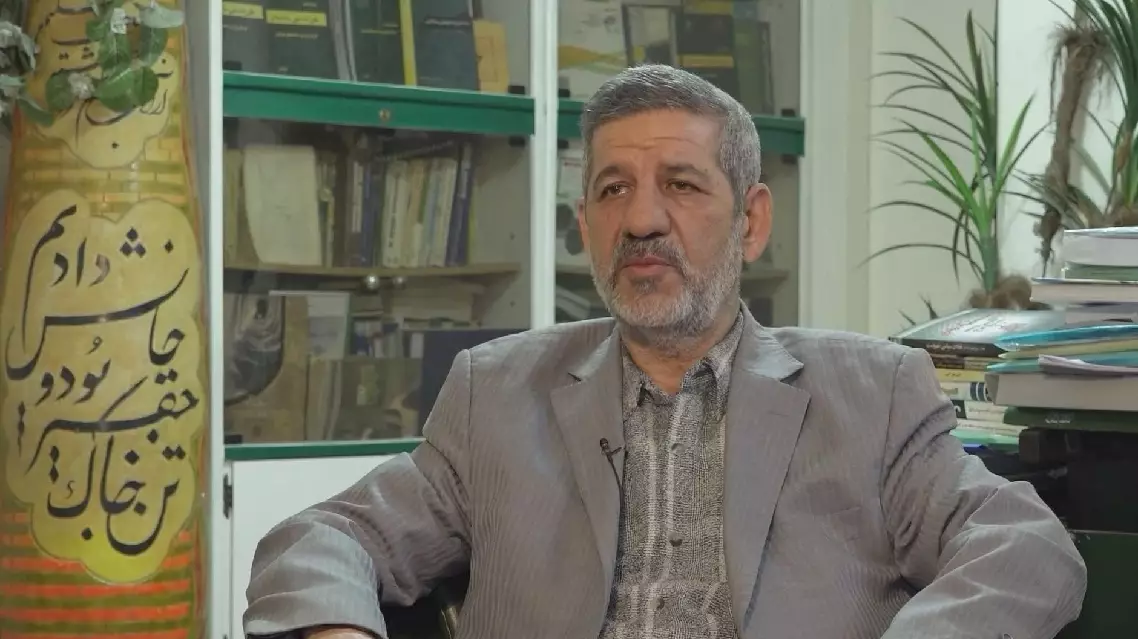
The direction of dialogue between the U.S. and Iran is increasingly determined not by words spoken at the negotiating table, but by military actions, according to military analyst Hossein Kanani Moghaddam.

After a week of intensive behind-the-scenes diplomatic maneuvering, a new round of U.S.-Iran talks is scheduled for Thursday in Geneva and is expected to focus on Iran's nuclear program.

Meanwhile, tensions are escalating between the negotiations and the realities in the region. The recent deployment of a U.S. Navy aircraft carrier to the region has raised concerns. While some see it as a deterrent, Iran views it as a threat.

In an interview with China Global Television Network (CGTN), Moghaddam said the key question is where any potential strike could originate.

"Arab countries in the region continue to assert that they will not permit the U.S. to use military bases on their soil for strikes against Iran. In my view, the deployment of U.S. aircraft carriers to the region is intended precisely to avoid reliance on those regional bases," said military analyst Hossein Kanani Moghaddam, who is also the former commander of Iran's Islamic Revolutionary Guard Corps (IRGC). He also said that Iran views its red line for any attack as absolute.

"If the U.S. attacks facilities inside Iran or targets the country's Supreme Leader, the entire region will inevitably be drawn into war. Iran has already made it clear to the Americans that, before targeting their regional bases, 2,000 missiles will be launched toward Israel," he said.

With a wide gap between Tehran's red lines and Washington's demands, the outlook for a deal appears increasingly uncertain, said the military expert.

"It seems we are approaching the zero hour as the countdown has begun. War or an agreement lies ahead, either the U.S. will back down, or Iran will offer major concessions," he said.

Direction of Iran-US talks determined by military actions away from negotiating table: analyst

Direction of Iran-US talks determined by military actions away from negotiating table: analyst

Recommended Articles