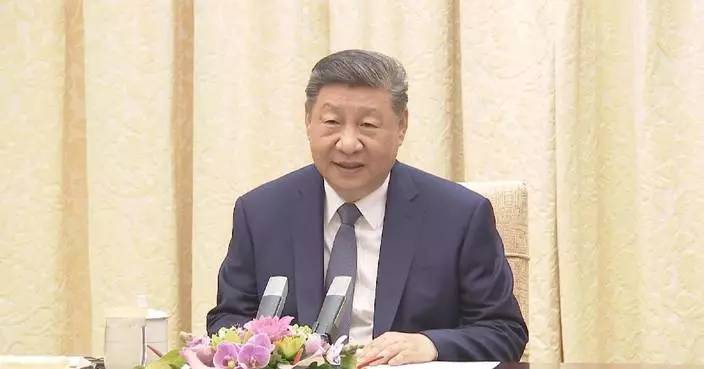
Chinese President Xi Jinping met with visiting German Chancellor Friedrich Merz in Beijing on Wednesday, calling for joint efforts to continuously push for new development of bilateral relations.
Noting that China and Germany are the world's second and third largest economies, Xi said the relationship between the two countries not only matters to the interests of both nations, but also has an important radiating effect on Europe and the world.
The current international situation is undergoing the most profound transformation since the end of World War II, he said.
Xi said that the more turbulent and intertwined the world becomes, the more China and Germany need to enhance strategic communication, increase strategic mutual trust, and promote the continuous new development of the all-round strategic partnership between the two countries.
Xi put forward three suggestions for the further development of China-Germany relations, namely the two countries should be reliable partners that support each other, be innovative partners featuring openness and mutual benefit, and be cultural partners built on mutual understanding and friendship.
Xi said China and Germany should uphold the central role of the United Nations, reinvigorate its leading role, and take the lead in being upholders of multilateralism, practitioners of international rule of law, defenders of free trade, and advocates of solidarity and coordination.
China supports Europe in pursuit of self-reliance and self-improvement, and hopes that the European side will work with China in the same direction to maintain the strategic partnership, uphold openness, inclusiveness, and win-win cooperation, achieve greater development of China-Europe relations, and make greater contributions to world peace and development, he said.
Merz said he was pleased to visit China when the Chinese people are celebrating the Spring Festival, wishing the Chinese people a happy and prosperous Year of the Horse. Since the establishment of diplomatic relations between Germany and China, friendly exchanges and close cooperation have been maintained, bringing benefits to the people of both countries, he said.
Merz said Germany values its relations with China, firmly adheres to the one-China principle, and is willing to work with China to carry forward the friendly tradition, uphold mutual respect and open cooperation, and continuously deepen the all-round strategic partnership between the two countries.
Germany looks forward to strengthening coordination with China to uphold free trade and oppose protectionism, he added.
During the meeting, the two leaders also exchanged views on the Ukraine crisis.
Xi outlined China's principled position on the Ukraine crisis, saying that seeking solutions through dialogue and negotiation is key to the issue.
Xi noted the necessity of ensuring the equal participation of all parties to lay a solid foundation for peace, addressing the legitimate concerns of all sides to strengthen the will for peace, and achieving common security to build a lasting framework for peace.
The two sides issued a joint press statement between the People's Republic of China and the Federal Republic of Germany.
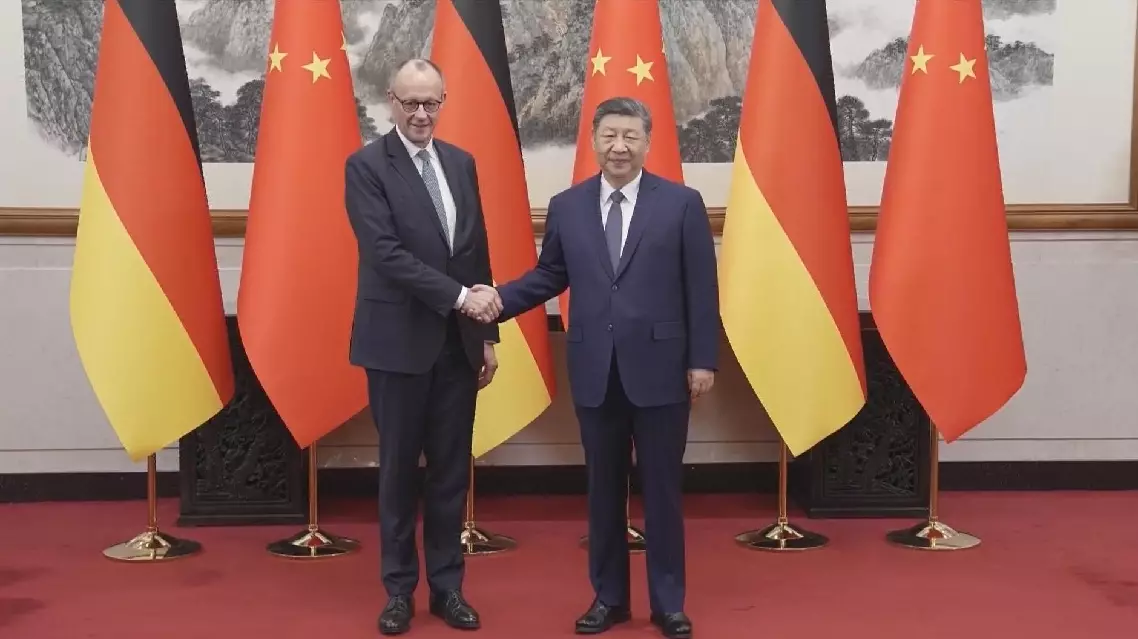
Xi meets German chancellor in Beijing
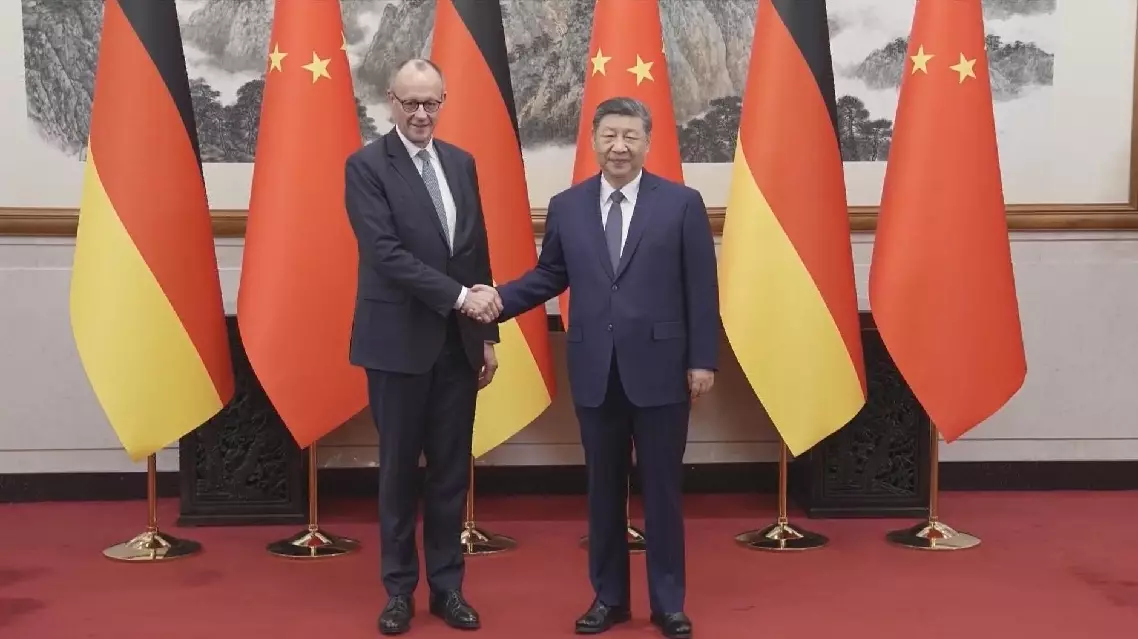
Xi meets German chancellor in Beijing