|
A study published in Science reveals that a healthy gut microbiota can enhance the efficacy of immunotherapy used to treat cancer, while antibiotics may impair its effect by reducing intestinal microbiota diversity.
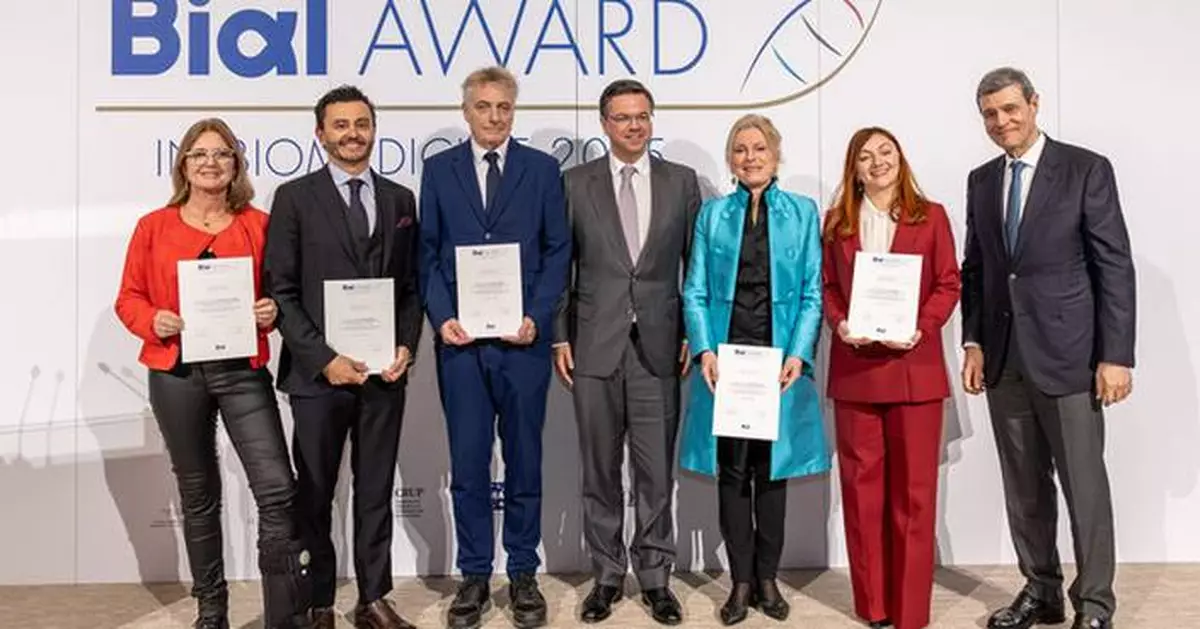
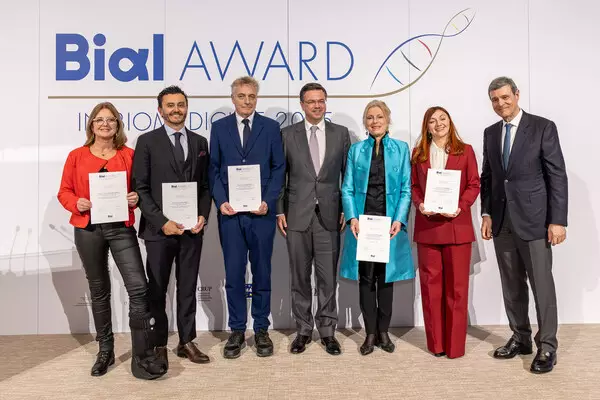
PORTO, Portugal, Feb. 25, 2026 /PRNewswire/ -- An international consortium of 48 researchers from institutions in France, Sweden, and the United States has won the 2025 edition of the Bial Award in Biomedicine, a €350,000 prize promoted by the Bial Foundation to recognise a published work of exceptional quality and scientific relevance in the field of biomedicine.
The winning study, Gut microbiome influences efficacy of PD‑1–based immunotherapy against epithelial tumors, is led by research duo Laurence Zitvogel (Gustave Roussy and Paris-Saclay University) and Guido Kroemer (Gustave Roussy and Paris Cité University), internationally renowned French academics.
The awarded research documents one of the most significant recent advances in the treatment of several types of cancer, as it establishes that the gut microbiome - the collection of bacteria residing in the human intestine - plays a decisive role in the effectiveness of immunotherapy.
Immunotherapy has revolutionised oncology by enabling the immune system to recognise tumour cells once again and attack them, saving many patients who previously had no effective therapeutic alternatives. However, over half of patients develop resistance to these therapies, leading to disease recurrence for reasons that are until now poorly understood. The distinguished study demonstrates that the gut microbiome plays a central role in this resistance and that its modulation can significantly improve treatment response and patient survival.
The authors show that the use of antibiotics can negatively impact the effectiveness of immunotherapy by reducing gut microbiota diversity. Analysis of cancer patients revealed that greater bacterial diversity is associated with better clinical outcomes. The study also identified specific gut bacterial species consistently associated with more favourable treatment responses.
The study was published in Science in 2018 and has already more than 5,800 scientific citations.
The 2025 edition of the Award received 58 nominations from 18 countries, covering areas such as cancer, infectious diseases, and neurodegenerative disorders. Previous editions distinguished research, later receiving prestigious international scientific prizes. Notably, two of the scientists who received the Bial Award in 2021, Katalin Karikó and Drew Weissman, were awarded the 2023 Nobel Prize in Physiology or Medicine for their discoveries that enabled the development of effective mRNA-based vaccines to prevent COVID ‑ 19.
A study published in Science reveals that a healthy gut microbiota can enhance the efficacy of immunotherapy used to treat cancer, while antibiotics may impair its effect by reducing intestinal microbiota diversity.
PORTO, Portugal, Feb. 25, 2026 /PRNewswire/ -- An international consortium of 48 researchers from institutions in France, Sweden, and the United States has won the 2025 edition of the Bial Award in Biomedicine, a €350,000 prize promoted by the Bial Foundation to recognise a published work of exceptional quality and scientific relevance in the field of biomedicine.
The winning study, Gut microbiome influences efficacy of PD‑1–based immunotherapy against epithelial tumors, is led by research duo Laurence Zitvogel (Gustave Roussy and Paris-Saclay University) and Guido Kroemer (Gustave Roussy and Paris Cité University), internationally renowned French academics.
The awarded research documents one of the most significant recent advances in the treatment of several types of cancer, as it establishes that the gut microbiome - the collection of bacteria residing in the human intestine - plays a decisive role in the effectiveness of immunotherapy.
Immunotherapy has revolutionised oncology by enabling the immune system to recognise tumour cells once again and attack them, saving many patients who previously had no effective therapeutic alternatives. However, over half of patients develop resistance to these therapies, leading to disease recurrence for reasons that are until now poorly understood. The distinguished study demonstrates that the gut microbiome plays a central role in this resistance and that its modulation can significantly improve treatment response and patient survival.
The authors show that the use of antibiotics can negatively impact the effectiveness of immunotherapy by reducing gut microbiota diversity. Analysis of cancer patients revealed that greater bacterial diversity is associated with better clinical outcomes. The study also identified specific gut bacterial species consistently associated with more favourable treatment responses.
The study was published in Science in 2018 and has already more than 5,800 scientific citations.
The 2025 edition of the Award received 58 nominations from 18 countries, covering areas such as cancer, infectious diseases, and neurodegenerative disorders. Previous editions distinguished research, later receiving prestigious international scientific prizes. Notably, two of the scientists who received the Bial Award in 2021, Katalin Karikó and Drew Weissman, were awarded the 2023 Nobel Prize in Physiology or Medicine for their discoveries that enabled the development of effective mRNA-based vaccines to prevent COVID ‑ 19.
** The press release content is from PR Newswire. Bastille Post is not involved in its creation. **
Discovery linking gut bacteria to cancer treatment wins the Bial Award in Biomedicine and earns €350,000 prize
|
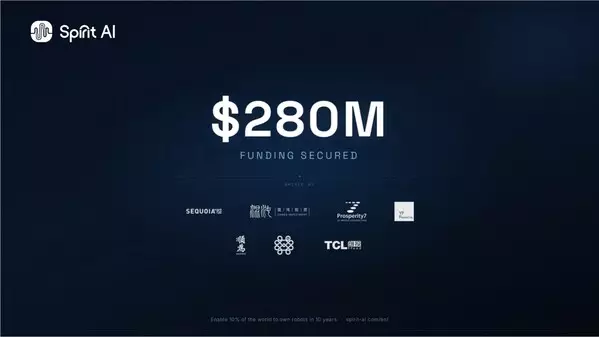
BEIJING, Feb. 25, 2026 /PRNewswire/ -- Spirit AI has raised $280 million USD to scale the deployment of general-purpose embodied models. The funding arrives as the industry pivots toward Scaling Law-driven VLA architectures—a trajectory supported by a diverse group of global financial and strategic investors.
This Beijing-based company is building a universal robotic brain by scaling with diverse human video and wearable sensor data. This path aligns Spirit AI with global peers like Google DeepMind and Physical Intelligence (Pi) in leveraging massive datasets for physical reasoning. The vision is powered by a core team from UC Berkeley, Tsinghua, and Peking University — averaging under age 30—who bridge frontier theory in multimodal LLMs and robot learning with industrial-scale deployment.
The "Dirty Data" Strategy: Scaling Beyond Curation
While many in the field have hit performance ceilings by over-curating "clean" datasets, Spirit AI is prioritizing real-world complexity. "Dirty data is the key to scaling VLA models," says Yang Gao, Co-founder & Chief Scientist of Spirit AI.
Dr. Gao currently serves as an Assistant Professor at Tsinghua University and holds a PhD from UC Berkeley. A prominent figure in robot learning, he has spearheaded a range of influential research while bridging academia and industry. His notable contributions include EfficientZero, scaling laws for imitation learning, and pioneering frameworks such as ViLa and CoPa.
The company argues that diverse, unstructured, and non-pre-scripted interaction is the essential catalyst for building models with true common sense.
- Data Velocity: Spirit AI has amassed over 200,000 hours of interaction data, with a roadmap to exceed 1 million hours by the end of 2026.
- Cost Disruption: Using proprietary wearable collection devices, Spirit AI has reduced data acquisition costs by 90% compared to traditional teleoperation.
- Benchmark Performance: In January 2026, Spirit v1.5 topped the RoboChallenge global leaderboard, demonstrating state-of-the-art generalization that rivals the world's leading embodied AI models.
Industrial Validation: The CATL Benchmark
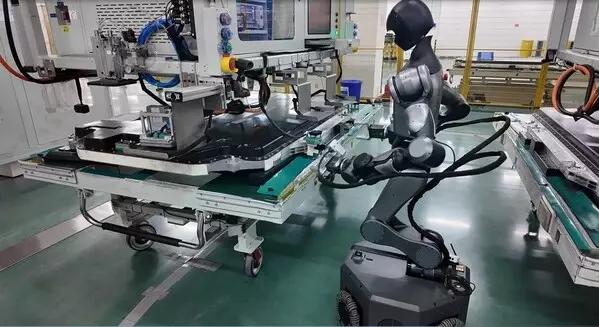
Spirit AI has applied VLA models to the production lines of CATL, the world's largest battery manufacturer.
On the floor, Spirit AI-powered agents handle flexible wire harnesses—a long-standing hurdle due to material unpredictability. Achieving a 99%+ success rate, these agents match the precision and cycle times of skilled human workers in complex manufacturing.
About Spirit AI
Spirit AI builds the "Universal Brain" for the next generation of robotics. By deploying general-purpose embodied models that bridge simulation and reality, the company provides robots with the robust generalization and physical precision required for the real world. Spirit AI is moving beyond the lab to integrate versatile robotic agents into the modern workforce, accelerating the arrival of real-world embodied AI.
Media Contact: pr@spirit-ai.com
BEIJING, Feb. 25, 2026 /PRNewswire/ -- Spirit AI has raised $280 million USD to scale the deployment of general-purpose embodied models. The funding arrives as the industry pivots toward Scaling Law-driven VLA architectures—a trajectory supported by a diverse group of global financial and strategic investors.
This Beijing-based company is building a universal robotic brain by scaling with diverse human video and wearable sensor data. This path aligns Spirit AI with global peers like Google DeepMind and Physical Intelligence (Pi) in leveraging massive datasets for physical reasoning. The vision is powered by a core team from UC Berkeley, Tsinghua, and Peking University — averaging under age 30—who bridge frontier theory in multimodal LLMs and robot learning with industrial-scale deployment.
The "Dirty Data" Strategy: Scaling Beyond Curation
While many in the field have hit performance ceilings by over-curating "clean" datasets, Spirit AI is prioritizing real-world complexity. "Dirty data is the key to scaling VLA models," says Yang Gao, Co-founder & Chief Scientist of Spirit AI.
Dr. Gao currently serves as an Assistant Professor at Tsinghua University and holds a PhD from UC Berkeley. A prominent figure in robot learning, he has spearheaded a range of influential research while bridging academia and industry. His notable contributions include EfficientZero, scaling laws for imitation learning, and pioneering frameworks such as ViLa and CoPa.
The company argues that diverse, unstructured, and non-pre-scripted interaction is the essential catalyst for building models with true common sense.
- Data Velocity: Spirit AI has amassed over 200,000 hours of interaction data, with a roadmap to exceed 1 million hours by the end of 2026.
- Cost Disruption: Using proprietary wearable collection devices, Spirit AI has reduced data acquisition costs by 90% compared to traditional teleoperation.
- Benchmark Performance: In January 2026, Spirit v1.5 topped the RoboChallenge global leaderboard, demonstrating state-of-the-art generalization that rivals the world's leading embodied AI models.
Industrial Validation: The CATL Benchmark
Spirit AI has applied VLA models to the production lines of CATL, the world's largest battery manufacturer.
On the floor, Spirit AI-powered agents handle flexible wire harnesses—a long-standing hurdle due to material unpredictability. Achieving a 99%+ success rate, these agents match the precision and cycle times of skilled human workers in complex manufacturing.
About Spirit AI
Spirit AI builds the "Universal Brain" for the next generation of robotics. By deploying general-purpose embodied models that bridge simulation and reality, the company provides robots with the robust generalization and physical precision required for the real world. Spirit AI is moving beyond the lab to integrate versatile robotic agents into the modern workforce, accelerating the arrival of real-world embodied AI.
Media Contact: pr@spirit-ai.com
** The press release content is from PR Newswire. Bastille Post is not involved in its creation. **
Spirit AI Lands $280M to Scale Embodied AI Through "Dirty Data"

Spirit AI Lands $280M to Scale Embodied AI Through "Dirty Data"
Spirit AI Lands $280M to Scale Embodied AI Through "Dirty Data"