Japanese Prime Minister Sanae Takaichi's erroneous remarks on China's Taiwan region show her disregard of historical facts and ignorance of the historical context, said a Japanese lawyer.
Citing the four political documents between China and Japan, Masatoshi Uchida, the lawyer, said that the Taiwan question is entirely China's internal affairs.
"If the four political documents between China and Japan are taken into consideration, her remarks are absolutely groundless. The documents confirm that Taiwan is a part of China, so the Taiwan question is China's internal affairs. I think her erroneous remarks show that she completely ignores historical facts, and doesn't understand the historical context at all," he said.
Noting that Japan's post-war development could not have been achieved without the path of peace, Uchida said that it will be dangerous to Japan if the government deviates from the principle, ignores the lessons of its war history, and continues to push for military expansion.
"What was the basis for Japan's post-war revival? That is not going to war and not investing a large amount of funds in armaments. It is precisely based on such a principle that we have come this far. And if Japan changes this, what kind of society will it become? If Japan ignores history and only thinks about problems from the present perspective, it will be in great danger. That would show Asia that Japan has not truly reflected on its history," he said.

Takaichi's remarks show her ignorance of history: Japanese lawyer
The direction of dialogue between the U.S. and Iran is increasingly determined not by words spoken at the negotiating table, but by military actions, according to military analyst Hossein Kanani Moghaddam.
After a week of intensive behind-the-scenes diplomatic maneuvering, a new round of U.S.-Iran talks is scheduled for Thursday in Geneva and is expected to focus on Iran's nuclear program.
Meanwhile, tensions are escalating between the negotiations and the realities in the region. The recent deployment of a U.S. Navy aircraft carrier to the region has raised concerns. While some see it as a deterrent, Iran views it as a threat.
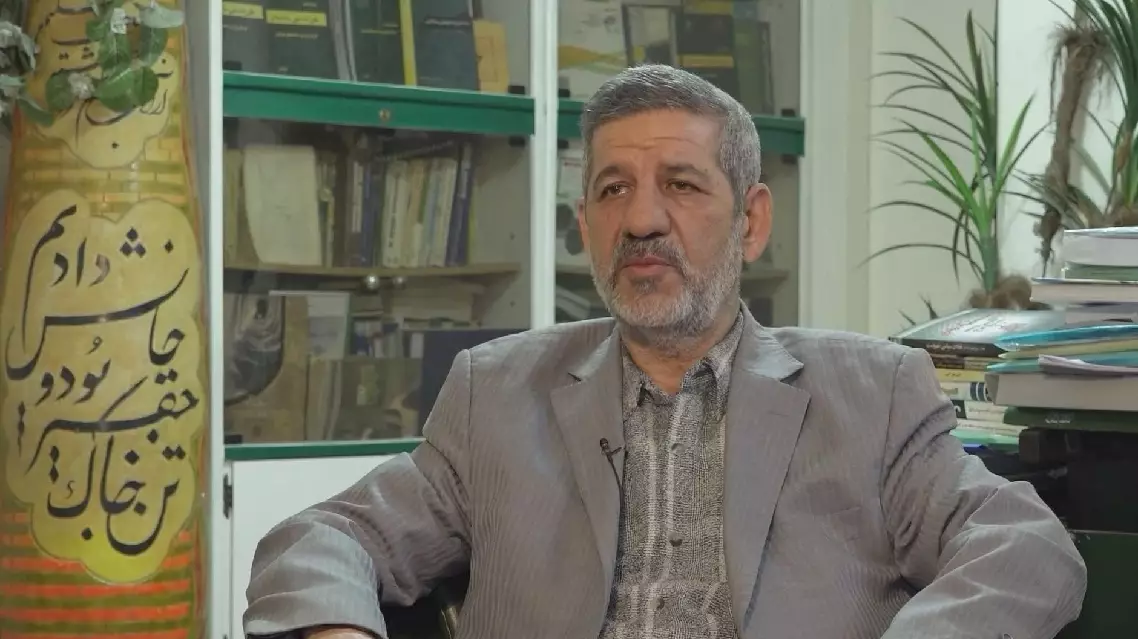
In an interview with China Global Television Network (CGTN), Moghaddam said the key question is where any potential strike could originate.
"Arab countries in the region continue to assert that they will not permit the U.S. to use military bases on their soil for strikes against Iran. In my view, the deployment of U.S. aircraft carriers to the region is intended precisely to avoid reliance on those regional bases," said military analyst Hossein Kanani Moghaddam, who is also the former commander of Iran's Islamic Revolutionary Guard Corps (IRGC). He also said that Iran views its red line for any attack as absolute.
"If the U.S. attacks facilities inside Iran or targets the country's Supreme Leader, the entire region will inevitably be drawn into war. Iran has already made it clear to the Americans that, before targeting their regional bases, 2,000 missiles will be launched toward Israel," he said.
With a wide gap between Tehran's red lines and Washington's demands, the outlook for a deal appears increasingly uncertain, said the military expert.
"It seems we are approaching the zero hour as the countdown has begun. War or an agreement lies ahead, either the U.S. will back down, or Iran will offer major concessions," he said.
Direction of Iran-US talks determined by military actions away from negotiating table: analyst