SEOUL, South Korea--(BUSINESS WIRE)--Feb 25, 2026--
NHN (KOSPI: 181710) (CEO: Chung Ujin), a global game developer and publisher, announced today the official global launch of 'Abyssdia,' a highly anticipated collection RPG developed by Ring Games. Now available in North America and other global markets, the game invites players into a stylized, high-stakes adventure to restore a world consumed by a mysterious dark void.
This press release features multimedia. View the full release here: https://www.businesswire.com/news/home/20260225019231/en/
Set against the backdrop of the ‘Abyss Fissure’—a phenomenon that has contaminated the world with distorted energy—Abyssdia casts players as a ‘Tuner’. As the only ones capable of recalibrating the world’s unstable frequencies, Tuners must lead a squad of elite warriors known as ‘Vanguards’ to restore balance and reclaim peace.
At the heart of Abyssdia is its Chained Action Combat, a 4-player real-time system emphasizing elemental synergies and seamless skill combinations. Success on the battlefield depends on the player’s ability to strategically pair Vanguards based on their unique weapon styles and hidden skill triggers.
Beyond the combat, the game focuses heavily on emotional immersion. Each Vanguard features a deeply personal narrative brought to life through cinematic cutscenes and character-specific musical themes. A standout feature is the ‘Let's Eat Together’ system, a high-fidelity interactive mode where players bond with their Vanguards over their favorite meals. This system replaces traditional stat-grinding with meaningful character interactions, allowing players to witness the evolving emotions and expressions of their team.
To celebrate the global debut, NHN is offering a massive rewards package for all new players. Anyone who logs in during the launch period will receive the SR-rank character ‘Elena’ for free, along with essential growth materials including 1,400 EST, 10,000 Manarings, 10 Draw Tickets, and 100 EXP Potions.
The celebration continues with a series of limited-time events designed to accelerate player progression. Through March 23, a special Global Launch Login Bonus will reward players who log in for 10 days with a total of 20 Premium Draw Tickets and 20 Draw Tickets.
Players can also dive into the ‘Endless Rabbit’ Story Quest, available until March 17, which highlights the narrative of the fan-favorite character, Rachel. By completing these dedicated story missions, players can collect exclusive event currency to exchange for premium growth materials and Vanguard Gift Boxes in the event shop.
Furthermore, a set of Progressive Missions running through May 7 will offer a steady stream of rewards, including EST, Stamina Potions, and Draw Tickets, as players reach key gameplay milestones.
Abyssdia is now available for free download on the Google Play, App Store, and Google Play Games (PC).
For more information and the latest updates, please visit the official Abyssdia website.
Official Social Media Channels
Facebook : https://www.facebook.com/ABYSSDIA/
X : https://x.com/ABYSSDIA_EN
YouTube : https://www.youtube.com/@ABYSSDIA_EN
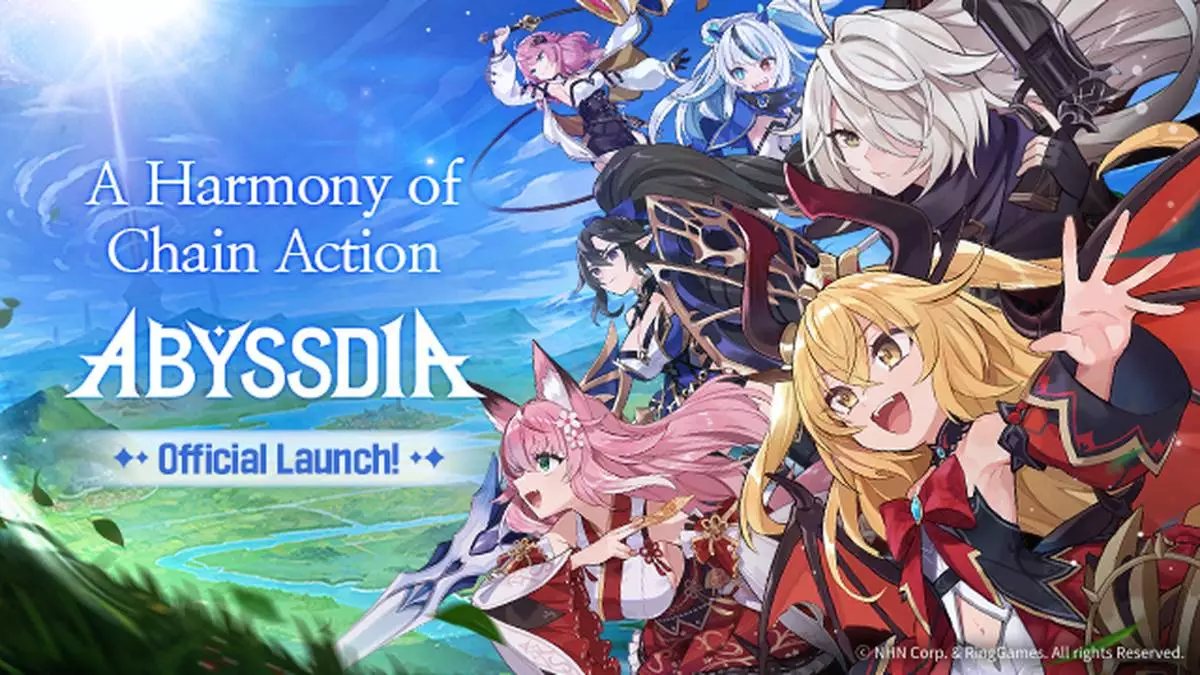
NHN officially launches its new collection RPG, Abyssdia, featuring stylized characters and a unique Chained Action Combat system (Image: NHN)
KYIV, Ukraine (AP) — Two people were killed after a Russian drone attacked a minibus in the southern Ukrainian city of Kherson, local officials said Saturday, in the latest barrage of civilian areas, a hallmark of Moscow’s full-scale invasion of its neighbor.
Seven people were also wounded in the attack, regional head Oleksandr Prokudin said. Hours later Russia attacked another minibus in Kherson, wounding the driver, he said.
Meanwhile, along the northern border with Belarus, Ukraine recorded “rather unusual” activity on Friday, Ukrainian President Volodymyr Zelenskyy said in a post on Telegram on Saturday. Without elaborating, he said activity was seen on the Belarusian side of the border and that Ukraine would act if matters escalated.
“We are closely documenting and keeping the situation under control. If necessary, we will react,” he said.
Belarus, a close ally of the Kremlin, has allowed Russia to use its territory as a staging ground to send troops into Ukraine and to host some of Moscow’s tactical nuclear weapons.
On Ukraine's Black Sea coast, a Russian strike damaged port infrastructure in the city of Odesa. No casualties were reported.
Ukrainian civilians have endured relentless air assaults since Russia launched a full-scale invasion of its neighbor more than four years ago. U.S.-brokered talks between Moscow and Kyiv over the past year have brought no respite, with Russia rejecting Ukraine’s offer of a ceasefire, and in recent weeks the Iran war has diverted international attention from Ukraine’s plight.
Meanwhile, on the roughly 1,250-kilometer (750-mile) front line, Russia claimed Saturday it had taken control of the village of Myropillia in Ukraine’s northeastern Sumy region.
It was not possible to independently verify the battlefield claims, and Ukraine did not immediately comment.
In Russia, local officials in the Krasnodar region said that a fire that broke out Friday following a Ukrainian strike on an oil terminal in the Black Sea city of Tuapse was put out on Saturday.
Ukrainian drones have hit the oil refinery and export terminal in Tuapse on four occasions in just over two weeks, sparking fires that prompted local evacuations and sent up massive plumes of smoke.
Ukraine has escalated its long-distance strikes against Russian oil facilities in an effort to slash Moscow’s oil exports, a key source of funding for its grinding invasion of Ukraine. But the economic impact is so far unclear, as the rise in oil prices from the Iran war, and a related easing of U.S. sanctions, have helped replenish the Kremlin’s coffers.
Follow AP’s coverage of the war in Ukraine at https://apnews.com/hub/russia-ukraine
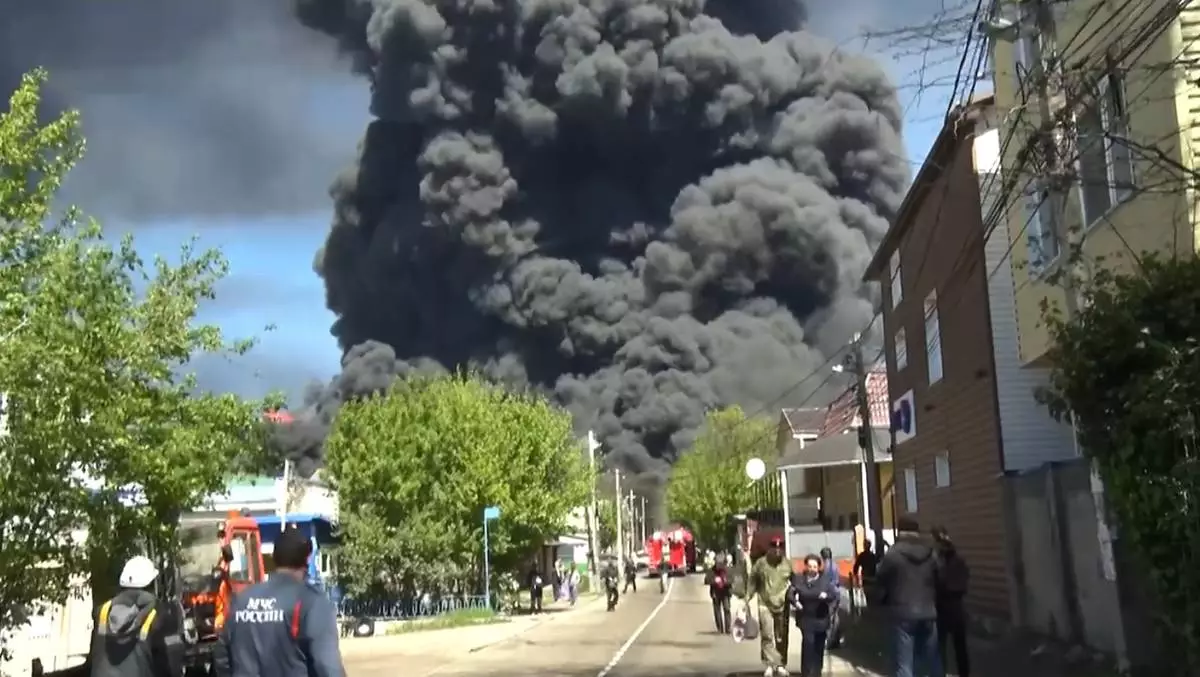
FILE - In this image taken from video released by Gov. Veniamin Kondratyev's Telegram channel, smoke rises after a drone attack on the oil refinery and terminal in Tuapse, Russia, Wednesday, April 29, 2026. (Gov. Veniamin Kondratyev Telegram channel via AP, File)
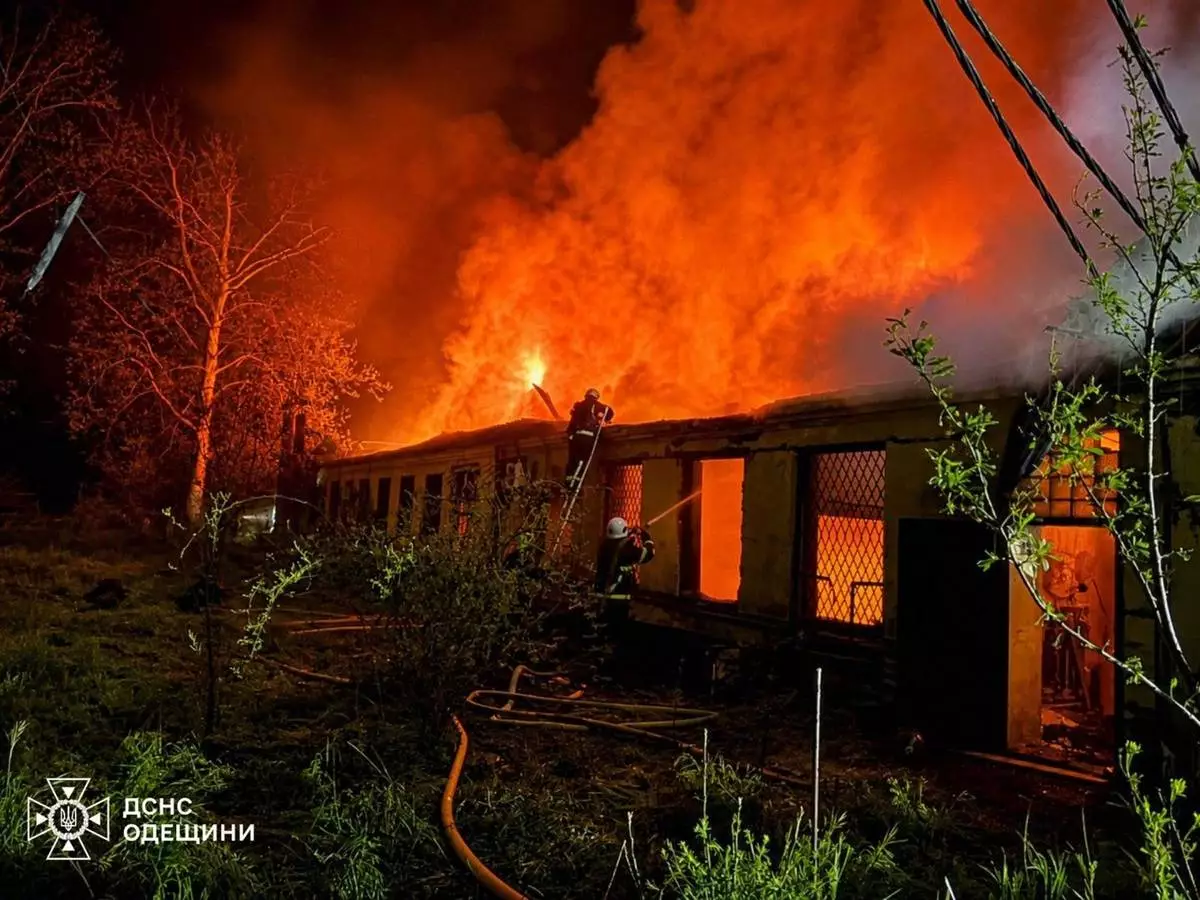
In this photo provided by the Ukrainian Emergency Service, firefighters put out a fire a building following a Russian drone attack in Odesa region, Ukraine, Saturday, May 2, 2026. (Ukrainian Emergency Service via AP)
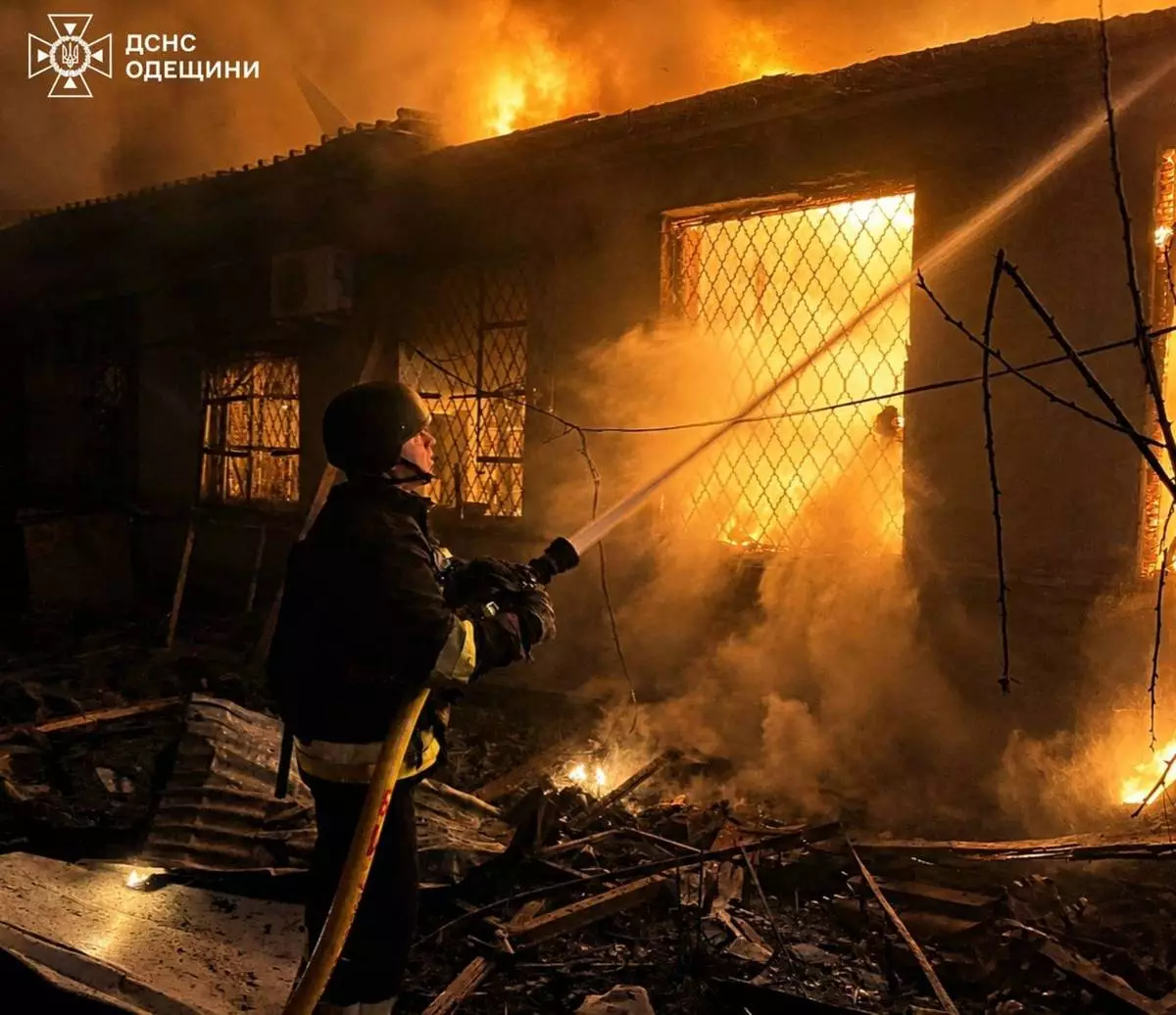
In this photo provided by the Ukrainian Emergency Service, firefighters put out a fire a building following a Russian drone attack in Odesa region, Ukraine, Saturday, May 2, 2026. (Ukrainian Emergency Service via AP)